
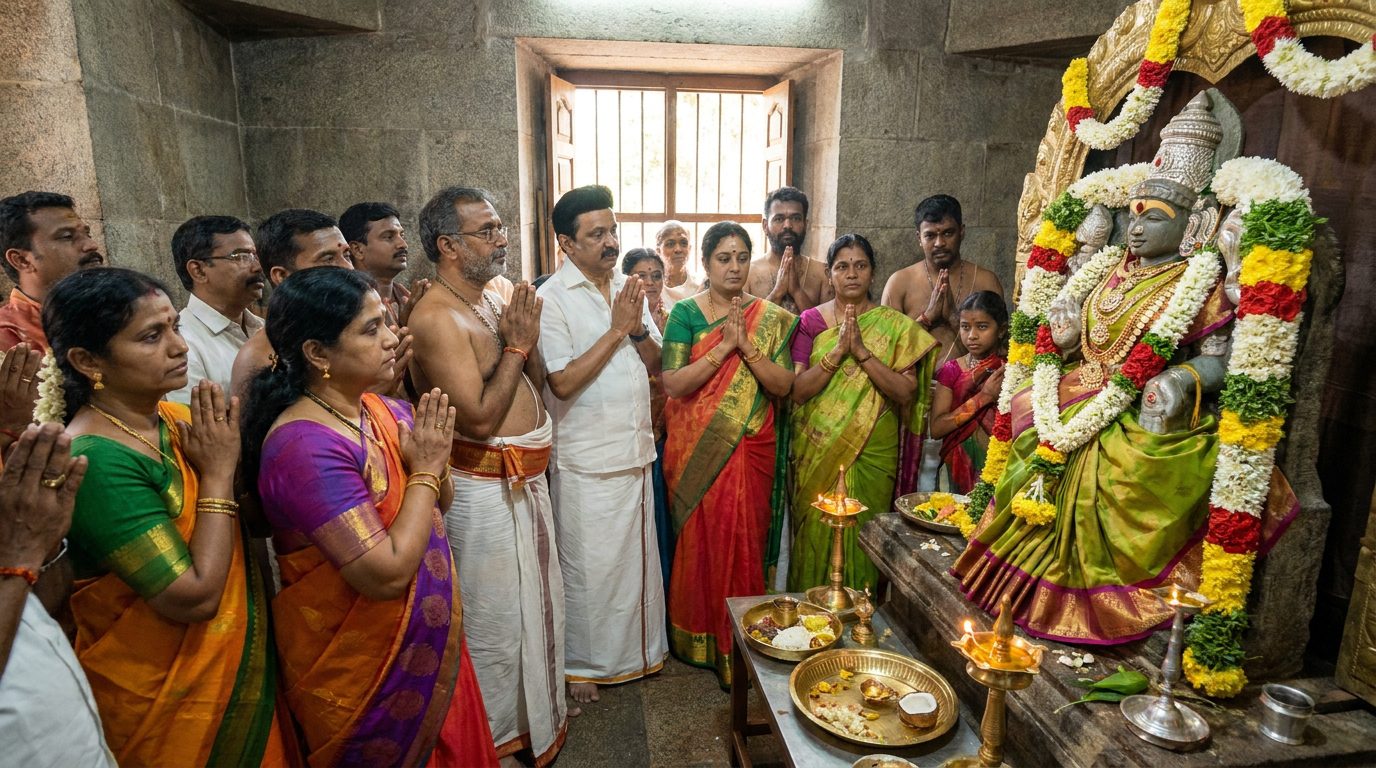
Deity Darshan is one of the most beautiful and accessible gifts of Bhakti Yoga, the path of loving devotion to God. The word darshan comes from Sanskrit and means “to see” or “to behold.” But in Bhakti, darshan is more than looking. It is a sacred exchange of love.
When we come before the Deity in a temple, home altar, or sacred space, we are not simply observing a statue or religious symbol. We are approaching the personal presence of the Divine, lovingly revealed in a form we can see, serve, honor, and relate to.
In the Bhakti tradition, God is not far away or impersonal. God is a loving person, full of beauty, compassion, playfulness, wisdom, and mercy. The Deity is a sacred form through which the Supreme Lord accepts our worship and offers us a chance to build a real relationship.
For many people, Deity Darshan may feel unfamiliar at first. Some may wonder, “How can God be present in a form made of stone, wood, metal, or paint?” This is a sincere and important question. Bhakti scriptures explain that God is unlimited. Because God is not limited by matter, He can kindly appear through matter for the sake of His devotees.
Just as a photograph can connect us emotionally with someone we love, the Deity connects the heart with the living presence of God. Yet in Bhakti, the Deity is even more than a reminder. When worship is performed with devotion, according to sacred guidance, the Lord lovingly agrees to be present in that form.
Deity Darshan invites us into a simple but profound practice: to stand before God with humility, offer our heart, and receive grace.
The Meaning of Darshan in Bhakti Yoga
Darshan Means Seeing and Being Seen
In everyday life, we often think seeing is something we do. We look at a sunset, a painting, or a loved one. But in spiritual life, darshan is mutual. We see the Lord, and the Lord sees us.
This is deeply comforting. Many of us move through life feeling unseen, unheard, or forgotten. During Deity Darshan, we come before the One who sees everything within our heart—our hopes, wounds, questions, mistakes, and sincere desires. We do not need to pretend.
The Lord’s glance is not judgmental in the ordinary sense. It is purifying, compassionate, and awakening. In Bhakti, the loving glance of God is considered a form of mercy. Even a brief moment of sincere darshan can plant a spiritual seed.
Darshan Is a Relationship, Not a Ritual Alone
A ritual can be performed mechanically, but Bhakti asks for the heart. Deity Darshan is not merely a religious custom. It is a relationship in motion.
When we visit the Deity, we may bring flowers, incense, food, prayers, songs, or simply folded hands. These offerings are meaningful because they carry our intention. In the Bhagavad-gita, Lord Krishna says:
“If one offers Me with love and devotion a leaf, a flower, fruit, or water, I will accept it.”
— Bhagavad-gita 9.26
This verse is central to Bhakti Yoga. God does not ask for wealth, perfection, or high status. He asks for love. A simple flower offered sincerely may be more spiritually powerful than a grand offering made with pride.
Darshan Awakens the Heart
The heart is naturally meant to love. But in the rush of daily life, that love can become scattered, disappointed, or covered by stress. Deity Darshan gently turns the heart back toward its original home: loving connection with God.
By seeing the beautiful form of the Lord, hearing kirtan, chanting sacred names, and praying sincerely, the heart becomes softened. Over time, this practice can bring peace, clarity, humility, and joy.
Why Does God Appear as the Deity?
The Compassion of the Divine
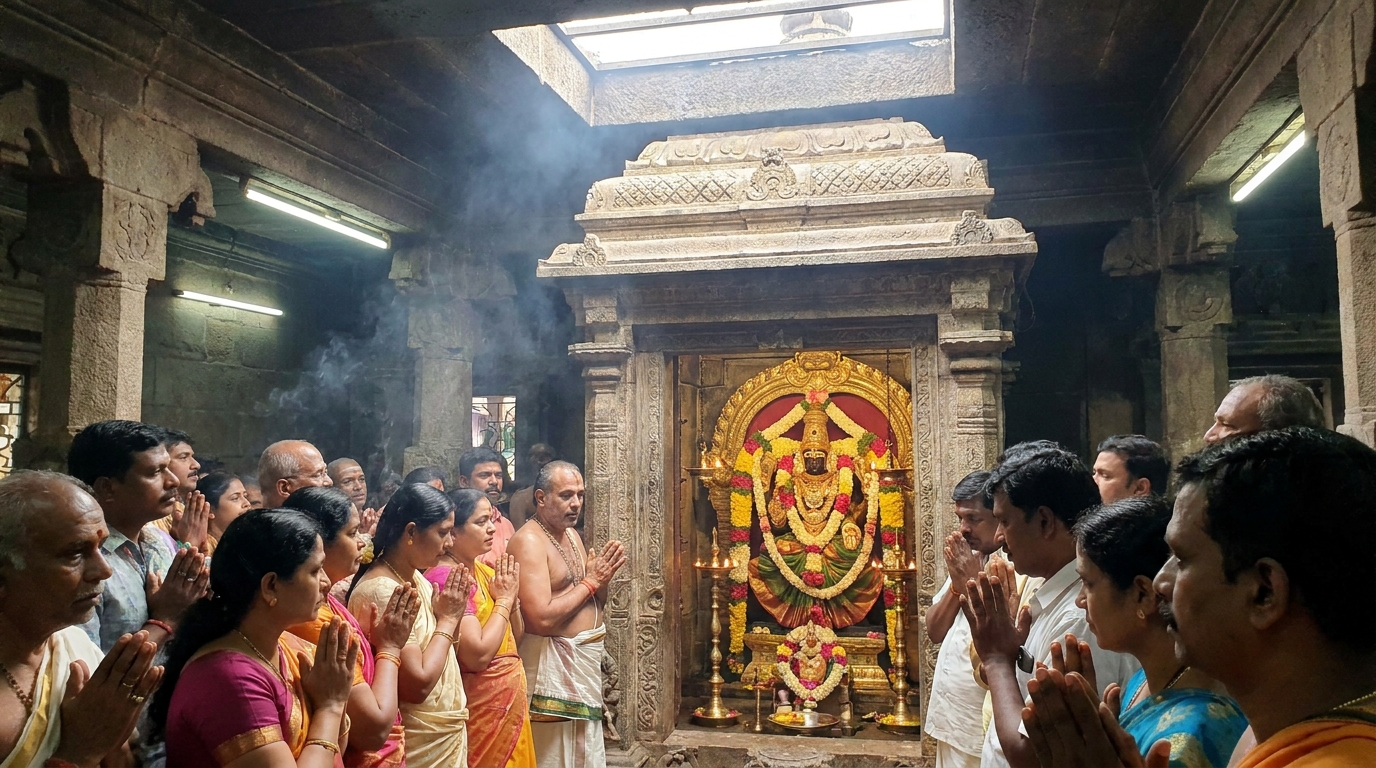
Bhakti scriptures describe God as both unlimited and intimately available. The Supreme Lord is beyond our material senses, yet out of love, He becomes accessible.
This is the heart of Deity worship. The Lord accepts a visible form so that we can serve Him in practical ways. We can offer a lamp, prepare food, decorate the altar, sing, bow, clean the temple, or simply gaze with devotion.
In the Srimad-Bhagavatam, one of the most beloved Bhakti scriptures, we learn again and again that the Lord responds to the love of His devotees. He is not forced to appear. He chooses to appear out of kindness.
Form Does Not Limit God
Some people worry that worshiping the Deity limits God to a physical object. But Bhakti teaches the opposite. God’s ability to appear in the Deity shows that He is not limited.
The sun can shine through many windows without becoming trapped in any one window. Similarly, God can be present in the heart, in sacred sound, in scripture, in the world, and in the Deity form. His presence in one place does not reduce His presence elsewhere.
The Deity is not an idol in the sense of something imagined or separate from God. Rather, the Deity is a sacred manifestation authorized by scripture and worshiped with devotion.
We Need a Personal Point of Connection
Human beings naturally relate through form, sound, name, service, and affection. We keep photos of family members. We set a place at the table for someone we love. We hold meaningful objects because they help us remember.
The Deity gives our spiritual life a personal center. Instead of thinking of God only as an abstract force, we can learn to relate to Him as the beloved Lord, friend, protector, and source of all love.
This is especially important in Bhakti Yoga, where the goal is not only liberation from suffering, but loving relationship with God.
Please visit our website for more information on our articles: articles.
How to Prepare for Deity Darshan
Come as You Are, but Come with Respect
Everyone is welcome to receive darshan. You do not have to be born into a particular background, know Sanskrit, or have mastered philosophy. Bhakti is open-hearted.
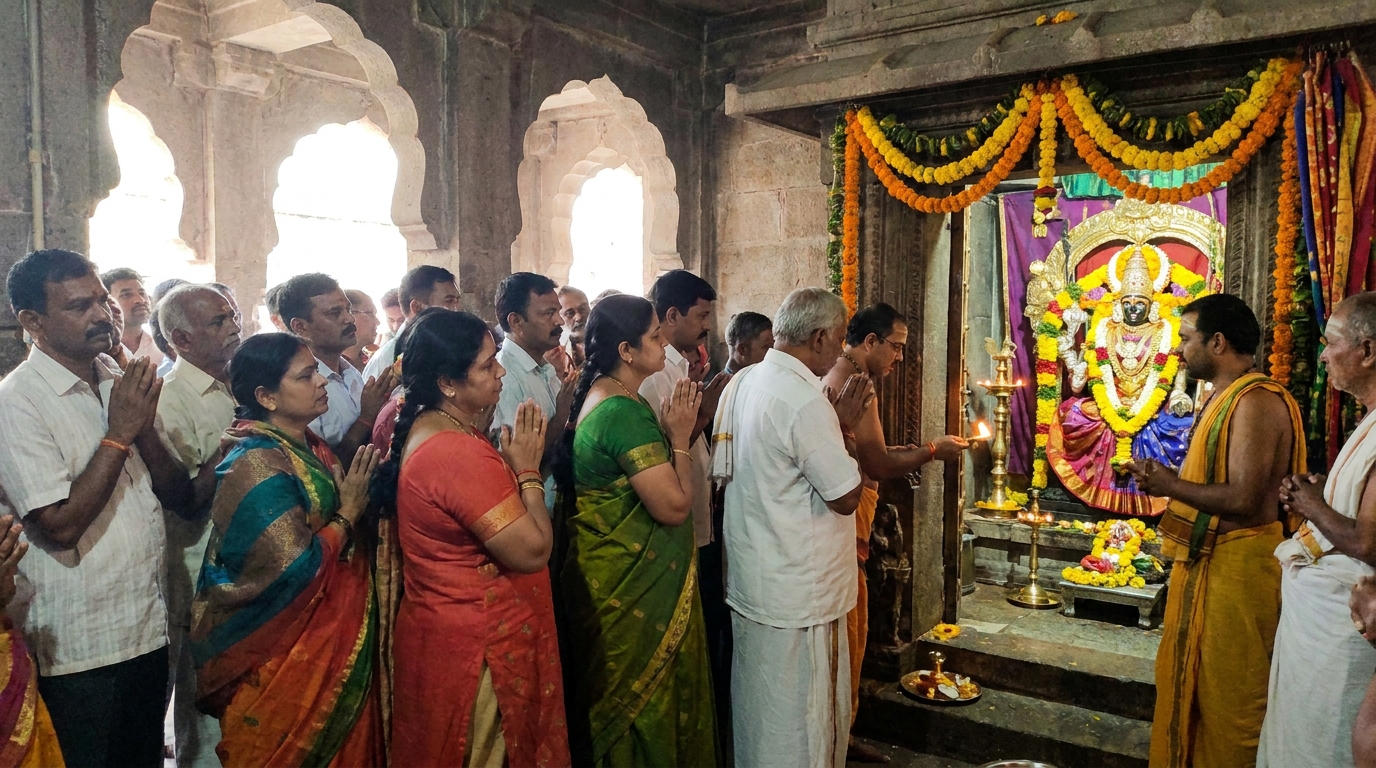
At the same time, darshan is sacred. A respectful mood helps us receive more deeply. Before entering a temple room or approaching a home altar, pause for a moment. Take a breath. Let the mind settle. Remember, “I am about to come before the Lord.”
If possible, wear clean and modest clothing. Turn off or silence your phone. Avoid loud conversation. These simple acts prepare the heart.
Offer a Simple Prayer
You may not know traditional prayers, and that is okay. Speak honestly. A prayer can be as simple as:
“Dear Lord, please help me remember You.”
“Please guide me.”
“Thank You for letting me come here.”
“Please accept whatever love I have.”
In Bhakti, sincerity matters more than eloquence. God understands every language, including the quiet language of tears, longing, gratitude, and even confusion.
Bring an Offering if You Can
Many visitors like to bring flowers, fruit, or a small donation. If you are visiting a temple, ask someone what is appropriate. In many Bhakti communities, food offerings are prepared according to certain standards and then offered to the Deity before being shared as prasadam.
Prasadam means “mercy” or “grace.” It refers to food that has been lovingly offered to God and then received as a spiritual blessing. Eating prasadam is a powerful and joyful practice in Bhakti Yoga.
Even if you bring nothing external, you can offer your attention. In a distracted world, sincere attention is a precious gift.
What to Do During Deity Darshan
First, Be Present
When you stand before the Deity, try not to rush. Let your eyes rest gently on the Lord. Notice the form, the clothing, the flowers, the ornaments, the expression, the altar, and the atmosphere.
You do not need to force a feeling. Sometimes devotion feels warm and natural. Sometimes the heart feels dry. Both are welcome. The practice is to keep showing up.
Darshan is not about having a dramatic experience every time. It is about building a faithful relationship.
Bowing and Offering Respect
In many Bhakti temples, people bow when they enter the temple room or see the Deity. Bowing is a gesture of humility. It says, “I am not the center. I honor the Divine.”
Some may offer pranams, a Sanskrit word meaning respectful obeisances or bows. Men may bow fully on the ground, and women may bow in a kneeling or respectful posture, depending on local custom. If you are unsure, simply fold your hands and bow your head.
The important thing is the mood: gratitude, reverence, and openness.
Chant the Holy Names
Chanting is at the heart of Bhakti Yoga. The Sanskrit word mantra means a sacred sound that helps free the mind. The most widely known mantra in the Krishna Bhakti tradition is the Maha-mantra, or “great mantra”:
Hare Krishna Hare Krishna
Krishna Krishna Hare Hare
Hare Rama Hare Rama
Rama Rama Hare Hare
This mantra is a prayer asking to be engaged in loving service to God. “Hare” calls upon the divine energy of the Lord, “Krishna” means the all-attractive Lord, and “Rama” means the source of spiritual joy.
During darshan, you may softly chant, sing with others, or listen. Sacred sound helps the mind focus and opens the heart to grace.
Offer Your Heart
A beautiful practice during Deity Darshan is to mentally offer whatever you are carrying.
You can offer your gratitude.
You can offer your worries.
You can offer your family.
You can offer your work.
You can offer your pain.
You can offer your desire to grow.
Bhakti does not ask us to hide our humanity. It teaches us to bring everything into relationship with God.
Understanding the Temple Atmosphere
The Temple as a Spiritual Home
A Bhakti temple is not only a building. It is a spiritual home centered around the service of the Lord. The Deity is treated as the honored beloved guest, or more deeply, as the master and heart of the community.
There may be daily offerings, worship ceremonies, chanting, scripture classes, meals, festivals, and opportunities to serve. Each part of temple life is meant to help people remember God and grow in devotion.
For newcomers, the temple may feel both inspiring and unfamiliar. You may see people ringing bells, offering lamps, singing in call-and-response, or bowing. Please know that questions are welcome. Most devotees are happy to explain.
Arati: Offering Light with Love
One common ceremony during Deity Darshan is called arati. Arati is a devotional ceremony in which items such as incense, lamps, water, cloth, flowers, fans, and peacock feathers may be offered to the Deity.
The lamp is especially meaningful. It represents offering our love and inviting divine light into our hearts. As the lamp is offered before the Lord, devotees often sing prayers and kirtan.
After the lamp has been offered to the Deity, it may be brought to the congregation. People often place their hands over the flame and touch their hands to their head or heart, symbolically receiving the Lord’s mercy.
Kirtan: Singing as Spiritual Practice
Kirtan means congregational chanting or singing of the names of God. It is joyful, powerful, and open to everyone. You do not need a trained voice. You do not need to know the melody perfectly.
In kirtan, we sing to connect. We sing to remember. We sing to cleanse the heart.
The Srimad-Bhagavatam describes hearing and chanting about the Lord as essential practices of devotion. These practices gradually awaken love for God and free the heart from fear and selfishness.
When kirtan happens in front of the Deity, darshan becomes even more alive. The eyes see the Lord, the ears hear His names, the voice chants, and the heart begins to soften.
Deity Darshan at Home
Creating a Simple Sacred Space
You do not need to live near a temple to practice Deity Darshan. Many people create a small altar at home. This may include pictures or Deity forms of Krishna, Rama, Vishnu, Radha-Krishna, Gaura-Nitai, or another worshipable form of the Lord according to one’s tradition and guidance.
A home altar can be simple: a clean shelf, a cloth, a picture, a candle or ghee lamp, flowers, and a small place for offerings. The most important ingredients are cleanliness, respect, and sincerity.
If you are new, begin with a picture rather than formal Deity worship, unless you have guidance from experienced devotees. Formal Deity worship carries commitments, but simple home worship can be practiced by anyone.
Morning Darshan Practice
A beautiful way to begin the day is to spend a few minutes before your altar.
You might:
- Offer a small prayer
- Chant the Maha-mantra
- Read one verse from the Bhagavad-gita
- Offer water or a flower
- Sit quietly and ask for guidance
- Dedicate your day to service
Even five sincere minutes can change the direction of the day. Instead of beginning with anxiety, messages, or rushing, you begin by remembering God.
Evening Reflection
At night, return to your altar if you can. Offer the day back to the Lord.
You may say:
“Whatever I did well, please accept it. Whatever I did poorly, please help me learn. Please let me remember You tomorrow.”
This kind of honest reflection turns daily life into spiritual growth. Bhakti is not separate from our ordinary responsibilities. It brings divine purpose into them.
The Inner Mood of Darshan
Humility Opens the Heart
Humility does not mean thinking we are worthless. It means recognizing that we are dependent on grace. It means becoming teachable, grateful, and honest.
When we come before the Deity, humility helps us receive. A proud heart may look but not truly see. A humble heart may stand at the back of the temple and still receive deep mercy.
The great Bhakti saints often prayed not for wealth, fame, or power, but for sincere devotion. This is the treasure of darshan: the chance to ask for love of God.
Patience Is Part of the Path
Sometimes people come to spiritual life hoping for immediate peace or a sudden mystical experience. While such moments can happen, Bhakti usually grows like a garden.
We water the seed through chanting, prayer, service, scripture, and association with devotees. Over time, the heart changes. Old habits loosen. Faith becomes stronger. Compassion grows. The name of God becomes sweeter.
Deity Darshan is one of the ways we keep watering that seed.
Seeing with Love, Not Consumption
In modern life, we are trained to consume images quickly. We scroll, judge, compare, and move on. Deity Darshan invites a different kind of seeing.
We do not look at the Lord as an object for our enjoyment. We come to be transformed. We come to serve. We come to remember that beauty has a divine source.
This shift from consuming to serving is central to Bhakti Yoga. It gradually heals the restless heart.
Common Questions About Deity Darshan
Is Deity Worship Idol Worship?
This is a common and sincere question. In Bhakti, Deity worship is not considered idol worship because devotees are not worshiping matter as God. They are worshiping God who mercifully agrees to appear through a sacred form.
The difference is presence and authorization. The Deity is worshiped according to scripture, prayer, and devotional practice. The Lord is invited and served with love.
Just as God can hear prayers spoken through sound waves, He can also accept worship through a visible form. For the unlimited Lord, this is not difficult.
Do I Need to Be Hindu to Receive Darshan?
No. Deity Darshan is open to people of all backgrounds. Bhakti Yoga is a universal path of love for God. You may come with faith, curiosity, questions, or even uncertainty.
The Lord sees the sincerity of the heart, not the label of the body. Many people from many cultures have found comfort, wisdom, and spiritual awakening through darshan, chanting, and devotional service.
What If I Do Not Feel Anything?
That is completely okay. Spiritual practice is not measured only by immediate emotion. Sometimes the heart is tired. Sometimes the mind is busy. Sometimes we are carrying pain.
Simply come respectfully. Look at the Deity. Offer a small prayer. Chant if you can. Over time, the practice works gently.
The sun acts even when we do not immediately feel its warmth. In the same way, sincere darshan purifies the heart, even when we do not notice dramatic results.
Can Children Receive Darshan?
Yes, children are especially welcome. Deity Darshan can help children develop a natural relationship with God through beauty, music, stories, flowers, and prasadam.
Parents can keep it simple. Encourage children to fold their hands, say thank you to Krishna, offer a flower, or sing along in kirtan. The goal is not pressure, but joyful connection.
The Role of Scripture in Deity Darshan
Bhagavad-gita: Offering with Love
As mentioned earlier, the Bhagavad-gita teaches that the Lord accepts even simple offerings when they are given with devotion. This helps us understand the spirit of Deity Darshan.
The Lord does not need our flower, fruit, or lamp. Everything already belongs to Him. But He accepts the love behind the offering. Like a loving parent who treasures a child’s handmade gift, God receives our small offerings with affection.
This gives great hope. No one is too poor, too new, or too imperfect to begin.
Srimad-Bhagavatam: Hearing, Chanting, Remembering
The Srimad-Bhagavatam describes nine forms of devotional service, including hearing about God, chanting His names, remembering Him, serving His feet, worshiping Him, offering prayers, becoming His servant, becoming His friend, and surrendering everything.
Deity Darshan naturally includes many of these practices. We see the Lord, hear His names, chant, pray, bow, serve, and remember. In this way, darshan becomes a doorway into a complete spiritual life.
The Saints Teach by Example
Throughout the Bhakti tradition, saints have shown deep love for the Deity. They did not see the Deity as stone or metal. They saw their beloved Lord.
Their example teaches us that spiritual vision develops through devotion. At first, we may see with ordinary eyes. Gradually, through chanting and service, we begin to perceive with the heart.
This is not forced imagination. It is awakened relationship.
Practical Ways to Deepen Your Deity Darshan
Visit Regularly
If you live near a temple, try to visit regularly. Weekly, monthly, or whenever possible, let darshan become part of your spiritual rhythm.
Regular practice builds relationship. Just as friendships grow through repeated contact, our connection with the Lord deepens when we keep coming back.
Serve in Some Small Way
Service is the life of Bhakti. Ask if there is a way you can help. You might assist with cleaning, cooking, gardening, greeting guests, arranging flowers, supporting events, or distributing prasadam.
Service turns darshan from passive seeing into active loving exchange. We begin to think, “How can I please the Lord? How can I support the devotees? How can I help others receive grace?”
Learn the Songs and Prayers
Many temples sing traditional prayers during arati or kirtan. Learning even one song can help you feel more connected.
Do not worry about perfect pronunciation at first. Learn gradually, respectfully, and with joy. Sanskrit is sacred, but Bhakti is compassionate. The Lord hears the heart behind the sound.
Read Before or After Darshan
Reading a short passage from the Bhagavad-gita or Srimad-Bhagavatam before or after darshan can deepen the experience. Scripture gives us spiritual understanding, and darshan gives us personal connection.
Together, they nourish both the head and the heart.
Keep a Darshan Journal
Some people find it helpful to write after visiting the temple or spending time at their home altar. You might note:
- What prayer did I offer today?
- What did I feel grateful for?
- What struggle did I bring to God?
- What inspiration came?
- What small step can I take next?
A journal helps us notice spiritual growth over time.
Deity Darshan and Daily Life
Seeing God in the Temple and Beyond
Deity Darshan trains our vision. We begin by seeing God on the altar, and gradually we learn to see His presence everywhere.
We may begin to recognize God’s kindness in sunlight, food, friendship, forgiveness, and sacred sound. We may begin to see other living beings as children of God. This vision naturally leads to compassion.
True darshan does not end when we leave the temple. It changes how we live.
Bringing Devotion into Work and Family
Bhakti Yoga is practical. After darshan, we return to our duties with a different mood. Work can become service. Family life can become a place of patience and love. Challenges can become opportunities to remember God.
Before beginning a task, we can pray, “May this be pleasing to You.” Before eating, we can offer our food. Before speaking, we can ask for kindness. These small practices extend darshan into the whole day.
Healing Through Sacred Relationship
Many people carry loneliness, grief, guilt, or spiritual hunger. Deity Darshan offers a sacred relationship that does not depend on our perfection. The Lord patiently receives us again and again.
This does not mean spiritual life avoids honest inner work. Rather, Bhakti gives us strength to face ourselves with hope. We are loved, guided, and invited to grow.
The Lord’s presence reminds us: we are not alone.
A Simple First Darshan Practice
Step One: Pause
Before approaching the Deity or altar, pause and take three gentle breaths. Let the body and mind slow down.
Step Two: Offer Respect
Fold your hands or bow your head. If you know how to bow according to the local custom, you may do so. If not, a sincere gesture is enough.
Step Three: Look with Devotion
Gently look at the Deity. Notice the Lord’s form. Receive the moment as a blessing.
Step Four: Chant or Pray
Chant the Maha-mantra softly, or offer a prayer in your own words. Speak honestly and simply.
Step Five: Listen
After praying, be quiet for a moment. You may not hear words, but the heart can receive peace, direction, or strength.
Step Six: Take One Step of Service
Ask yourself, “What is one loving action I can take today?” It may be forgiving someone, chanting one round, reading one verse, offering food, helping at the temple, or speaking kindly.
Darshan becomes complete when it inspires loving action.
The Gift of Being Seen by God
At the heart of Deity Darshan is a tender truth: we are invited into a relationship with the Divine.
We come to see God, but we also come to be seen by God. We bring our devotion, but we also receive mercy. We offer a flower, but we receive spiritual strength. We stand before the Lord for a few moments, and those moments can quietly reshape our life.
Bhakti Yoga teaches that every soul is eternal, loved, and capable of awakening pure love for God. Deity Darshan is one doorway into that awakening. It is not only for the advanced, the learned, or the religiously confident. It is for the sincere.
Whether you are visiting a temple for the first time, returning after many years, creating a small altar at home, or simply feeling curious, you are welcome. Come gently. Come honestly. Come with whatever faith you have.
Take one sincere step toward God—through chanting, prayer, service, or simply standing before the Lord with an open heart. The path of Bhakti is walked one loving step at a time, and everyone is welcome.
FAQs
What is deity darshan?
Deity darshan refers to the act of seeing or having a visual encounter with a deity in Hinduism. It is considered a sacred and auspicious experience for devotees.
How is deity darshan typically conducted?
Deity darshan is usually conducted in temples, where devotees can have the opportunity to see the deity in the sanctum sanctorum or inner sanctum. Devotees may also have the chance to offer prayers, flowers, and other offerings during deity darshan.
What are the benefits of deity darshan?
Devotees believe that deity darshan can bring blessings, peace of mind, and spiritual upliftment. It is also seen as a way to seek the deity’s guidance and protection.
Are there any specific guidelines or customs to follow during deity darshan?
Devotees are typically expected to follow certain customs and guidelines during deity darshan, such as dressing modestly, removing footwear before entering the sanctum sanctorum, and maintaining a respectful and reverent attitude.
Can deity darshan be conducted outside of a temple setting?
While deity darshan is traditionally conducted in temples, some devotees may also have the opportunity to have deity darshan during religious processions, festivals, or special events where the deity is taken out of the temple for public viewing.

