

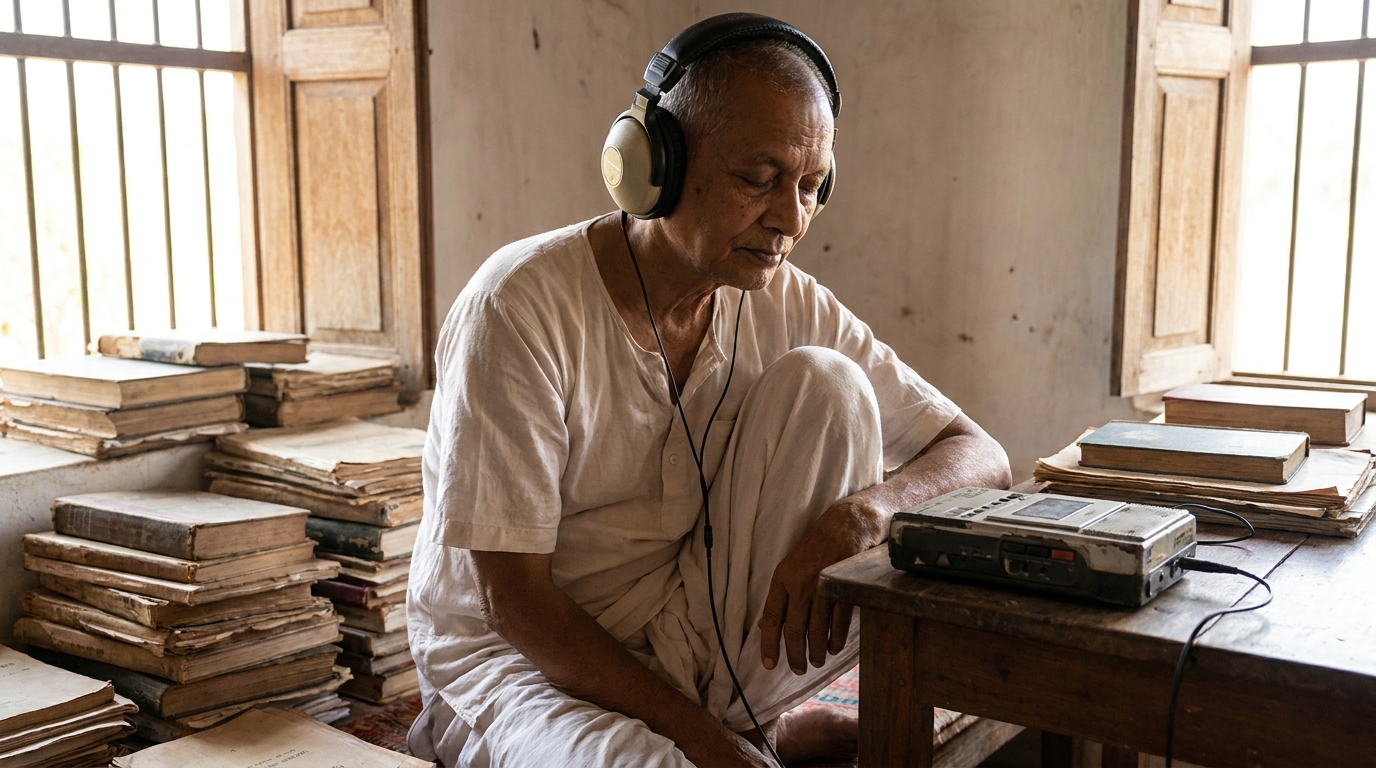
Sravanam, sometimes written as śravaṇam, is a Sanskrit word that means “hearing” or “listening.” In the path of Bhakti Yoga, Sravanam means hearing about God, divine names, sacred stories, spiritual wisdom, and the lives of saints with an open and sincere heart.
In simple words, Sravanam is the practice of nourishing the soul through sacred listening.
This may include listening to:
- Kirtan, or devotional chanting
- Mantra meditation, such as the Hare Krishna Maha-mantra
- Readings from the Bhagavad Gita or Srimad Bhagavatam
- Spiritual talks and classes
- Prayers and devotional music
- Stories of Krishna, Rama, saints, and holy teachers
- The heartfelt reflections of sincere devotees
At The Bhakti House, Sravanam is not presented as something distant, complicated, or only for people born into a certain tradition. It is a gentle and practical doorway into spiritual life. Anyone, from any background, can begin by simply listening.
You do not have to know Sanskrit. You do not have to be perfect. You do not have to change everything overnight.
You can begin with one sincere moment of hearing.
Sravanam in Bhakti Yoga: The First Step of Devotional Life
Bhakti Yoga is the yoga of love and devotion. It teaches us how to reconnect with God through the heart, through loving service, prayer, chanting, remembrance, and community.
In the Srimad Bhagavatam, one of the most beloved scriptures in the Bhakti tradition, nine main practices of devotion are described. The first is Sravanam, hearing. The second is Kirtanam, chanting or glorifying God.
This is deeply meaningful.
Before we speak, sing, serve, or understand, we first learn to listen.
Hearing Opens the Heart
In daily life, many of us are surrounded by noise. Notifications, opinions, worries, news, and inner anxieties compete for our attention. Sravanam gently redirects our hearing toward something sacred.
When we hear divine sound, the heart begins to soften.
Sacred listening does not force change. It invites change.
A person may enter a kirtan feeling tired, anxious, or spiritually disconnected. Yet after hearing the Holy Name, listening to wisdom, or sitting in prayerful sound, something within begins to feel lighter. This is one of the quiet miracles of Sravanam.
Sravanam and the Holy Name
In Bhakti Yoga, the Holy Name of God is considered especially powerful. Names such as Krishna, Rama, Govinda, Radha, Gopala, Narayana, and many others are not understood as ordinary sounds. They are seen as spiritually alive.
The Hare Krishna Maha-mantra is one of the most well-known mantras in the Bhakti tradition:
Hare Krishna Hare Krishna
Krishna Krishna Hare Hare
Hare Rama Hare Rama
Rama Rama Hare Hare
“Maha-mantra” means “great mantra.” A mantra is a sacred sound that helps free the mind and awaken the heart.
Even if someone does not fully understand the philosophy, simply hearing the mantra can bring peace, clarity, and a sense of connection.
The Health Benefits of Sravanam for the Mind

When we speak about the benefits of Sravanam for health, we do so with humility and care. Sacred listening is not a replacement for medical treatment, therapy, or professional support. If someone is struggling with physical or mental health concerns, they should seek appropriate care.
At the same time, many people find that Sravanam supports their overall well-being in powerful and practical ways.
Reducing Stress Through Sacred Sound
Stress often comes from the mind constantly moving between the past and future. We regret, worry, plan, replay, compare, and fear.
Sravanam helps bring the mind into the present moment.
When we listen to a mantra, a devotional song, or a spiritual teaching, our attention is gently gathered. Instead of being scattered in many directions, the mind rests on sacred sound.
This kind of focused listening can help the nervous system settle. The breathing may slow. The body may relax. The heart may feel less burdened.
In this way, Sravanam becomes a simple daily practice for reducing stress and creating inner calm.
Supporting Mental Clarity
The Bhagavad Gita teaches that the mind can be either our friend or our enemy, depending on how it is trained. When the mind is absorbed only in material worries, it often becomes restless. When it is connected to divine wisdom, it becomes clearer and more peaceful.
Listening to spiritual teachings helps us remember deeper truths:
- I am more than my temporary problems.
- My worth is not based on success or failure.
- God is present in my life.
- I can choose service over selfishness.
- I can grow through difficulty.
- Love is the real purpose of life.
These reminders are medicine for the mind.
Sravanam gives us spiritual perspective. It helps us see life not only through fear, but through faith.
Creating Healthier Thought Patterns
What we hear shapes what we think.
If we constantly hear criticism, fear, gossip, and negativity, the mind becomes colored by those impressions. But if we regularly hear wisdom, prayer, and divine names, the mind gradually becomes purified.
In Bhakti Yoga, this purification is not about becoming proud or judgmental. It is about becoming more loving, humble, steady, and compassionate.
Sacred hearing plants sacred thoughts.
Over time, Sravanam can help replace inner noise with remembrance, gratitude, and prayer.
Sure, here is the sentence with the clickable link:
Check out our latest posts on posts.
Emotional Healing Through Sravanam
Many people come to spiritual life carrying invisible pain. Some carry grief. Some carry loneliness. Some carry shame, disappointment, or old wounds. Sravanam can become a gentle companion in the healing process.
Feeling Held by Divine Presence
One of the beautiful gifts of devotional listening is the feeling that we are not alone.
When we hear the names of God, or stories of Krishna’s kindness, or songs of longing for divine love, the heart may begin to feel held. We may not have all the answers, but we sense that there is a loving presence walking with us.
This is especially important in times of sorrow.
In the Bhagavad Gita, Krishna tells Arjuna that He is seated in the hearts of all living beings. This means God is not far away. He is not only in temples or holy places. He is present within the heart.
Sravanam helps us remember that presence.
Softening the Heart
Life can make the heart hard. Pain, disappointment, and fear can cause us to close ourselves off from others and from God.
Sacred listening gently softens the heart again.
A devotional song may bring tears. A scripture passage may bring hope. A story of a saint’s surrender may awaken courage. A mantra may help us release emotions we did not know we were holding.
These moments are not weaknesses. They are signs that the heart is becoming alive again.
Transforming Loneliness Into Connection
Many people today are surrounded by people yet feel deeply alone. Sravanam can help create connection in two ways.
First, it connects us inwardly with God.
Second, it connects us outwardly with spiritual community.
When people gather to hear kirtan, wisdom, and sacred stories, a beautiful shared space is created. No one has to pretend. No one has to be perfect. Together, we listen, chant, pray, and grow.
This kind of sacred community can support emotional health in a very real way.
Physical Well-Being and the Practice of Listening
The body, mind, and spirit are connected. When the mind is anxious, the body often carries that tension. When the heart is peaceful, the body may also begin to feel more balanced.
Sravanam works primarily on the heart and consciousness, but its benefits can also support physical well-being.
Calming the Nervous System
Gentle devotional sound can help create a peaceful atmosphere. Soft kirtan, mantra meditation, or scripture recitation may support relaxation and help the body shift away from constant stress.
Many people enjoy listening to sacred sound while:
- Resting in the morning
- Walking outdoors
- Cooking
- Driving
- Preparing for sleep
- Practicing yoga or stretching
- Sitting quietly in prayer
The practice is simple, but its effect can be deep.
When the ears receive sacred sound, the whole being can begin to settle.
Supporting Better Sleep Habits
Many people struggle with sleep because the mind remains active at night. Instead of ending the day with screens, worry, or overstimulation, one can end the day with Sravanam.
Listening to calming mantras, prayers, or devotional readings before sleep can help create a peaceful transition from activity to rest.
A simple evening practice may be:
- Turn off unnecessary devices.
- Sit comfortably or lie down.
- Listen to a gentle kirtan or sacred reading.
- Breathe slowly.
- Offer the day to God in your own words.
- Rest with gratitude.
This is not a performance. It is a loving offering.
Encouraging Healthier Lifestyle Choices
When we regularly hear spiritual wisdom, we naturally become more thoughtful about how we live.
Sravanam can inspire us to choose food, habits, relationships, and routines that support purity, compassion, and balance. In Bhakti Yoga, health is not only about the body looking a certain way. It is about using the body as a sacred gift in service to God and others.
When we hear about the value of human life, the importance of kindness, and the power of devotion, we may feel inspired to live more consciously.
Sravanam and Spiritual Health
Health is not complete without spiritual health.
A person may have comfort, success, and knowledge, yet still feel empty inside. Bhakti Yoga teaches that the soul naturally longs for loving connection with God. Sravanam nourishes this deepest part of who we are.
Feeding the Soul
Just as the body needs food, the soul needs spiritual nourishment.
Sacred sound is food for the soul.
In the Srimad Bhagavatam, hearing about Krishna is described as purifying and uplifting. These teachings explain that divine sound enters the heart and cleanses away the dust of material conditioning.
This “dust” can be understood as the layers of forgetfulness that cover our natural love for God: pride, envy, fear, selfishness, and distraction.
Through Sravanam, the heart gradually becomes clearer.
Awakening Faith
Faith does not always appear suddenly. For many people, faith grows slowly through sincere hearing.
We hear a verse. We hear a mantra. We hear someone share how devotion changed their life. We hear a story of God’s mercy. Something touches us.
Then we return again.
Little by little, faith awakens.
In Bhakti, faith is not blind belief. It is a living trust that grows through practice, experience, and grace.
Remembering Our Relationship With God
Bhakti Yoga teaches that our deepest identity is not temporary. We are spiritual beings, beloved parts of the Divine, meant for loving relationship with God.
Sravanam helps us remember this.
When we hear about Krishna’s love for His devotees, Rama’s compassion, Radha’s devotion, or the prayers of saints, we begin to understand that spiritual life is not dry or distant. It is personal. It is relational. It is filled with love.
This remembrance is the foundation of spiritual health.
Sravanam in the Scriptures
The practice of Sravanam is deeply rooted in authentic Bhakti scriptures. These sacred texts are not meant only for scholars. They are meant to guide real human beings through real life.
Srimad Bhagavatam and the Nine Practices of Bhakti
The Srimad Bhagavatam describes nine forms of devotional service:
- Sravanam — hearing
- Kirtanam — chanting
- Vishnu Smaranam — remembering God
- Pada-sevanam — serving the Lord’s feet
- Archanam — worship
- Vandanam — offering prayers
- Dasyam — serving as a servant
- Sakhyam — serving as a friend
- Atma-nivedanam — full surrender
Sravanam comes first.
This shows how important hearing is. Through hearing, the heart becomes inspired to chant, remember, serve, pray, and surrender.
Bhagavad Gita and Listening With Humility
The Bhagavad Gita begins with Arjuna listening.
Arjuna is confused, overwhelmed, and emotionally shaken on the battlefield. He turns to Krishna and says, in essence, “I am your student. Please guide me.”
This is the mood of Sravanam.
We do not listen just to collect information. We listen because we need guidance. We listen because we are humble enough to admit that our own mind does not always know the way.
Krishna then speaks timeless wisdom about the soul, duty, devotion, and surrender.
For us, this means that when life feels like a battlefield, we too can pause and listen for divine guidance.
The Power of Hearing From Devotees
In Bhakti tradition, it is especially recommended to hear from sincere devotees, people who are trying to live what they speak.
Why?
Because spiritual sound carries not only information, but mood. When someone speaks with humility, love, and devotion, the heart receives more than words. It receives inspiration.
This does not mean we worship personalities blindly. It means we value authentic spiritual association and seek guidance from those who help us remember God.
How to Practice Sravanam in Daily Life
Sravanam is beautifully simple. You can practice it at home, in the car, at a temple, in a yoga studio, while walking, or in a community gathering.
The most important ingredient is sincerity.
Begin With a Small Daily Practice
If you are new to Sravanam, begin gently.
You might listen for five or ten minutes a day. Choose a devotional song, mantra, or spiritual talk that helps your heart feel peaceful and connected.
Try this simple morning practice:
- Sit comfortably.
- Take a few slow breaths.
- Offer a short prayer: “Dear God, please help me hear with an open heart.”
- Listen to a mantra or sacred teaching.
- Sit quietly for one minute afterward.
- Carry one thought or prayer into your day.
Small practices done regularly can create deep transformation.
Listen While Doing Service
Bhakti Yoga is practical. It does not require us to leave ordinary life behind. Instead, it teaches us how to spiritualize ordinary life.
You can practice Sravanam while cooking, cleaning, driving, gardening, or preparing offerings. Listening to kirtan or scripture while doing service can turn daily tasks into devotional meditation.
This is especially helpful for busy people. Parents, students, workers, caregivers, and householders can all bring sacred sound into daily responsibilities.
Join Satsang
Satsang means “association with truth” or “spiritual company.” It often refers to gathering with others to chant, hear wisdom, pray, and share devotional life.
Joining satsang can strengthen your Sravanam practice because community helps us stay inspired.
When we listen together, the heart feels supported. We remember that we are not walking alone.
A Bhakti gathering may include:
- Kirtan
- Japa meditation, or personal mantra chanting
- Scripture discussion
- Prasadam, sanctified vegetarian food offered to God
- Prayer
- Service opportunities
- Honest spiritual friendship
Hear With the Heart, Not Only the Ears
Sravanam is not passive entertainment. It is active, loving listening.
To hear deeply, we can ask:
- What is God teaching me through this?
- How can I apply this wisdom today?
- What quality can I cultivate?
- What attachment can I soften?
- How can I serve more lovingly?
- How can I remember God in this situation?
Even one sentence heard with sincerity can change the direction of a day.
Sravanam for Families, Children, and Community Health
The benefits of Sravanam are not only individual. Sacred listening can bless families and communities.
Creating a Peaceful Home Atmosphere
The sounds we bring into our homes matter.
A home filled with harsh noise, conflict, or constant distraction may feel restless. But a home where mantras, prayers, and wisdom are heard regularly can become spiritually nourishing.
This does not mean every moment must be serious or formal. Bhakti is joyful. Children can hear kirtan while playing. Families can listen to stories of Krishna before bedtime. Friends can gather for a simple meal and a short reading.
Sacred sound slowly changes the atmosphere.
Helping Children Develop Spiritual Impressions
In Bhakti, impressions are called samskaras. A samskara is a deep impression formed in the heart and mind through repeated experiences.
When children hear divine names, devotional songs, and stories of kindness, courage, and devotion, beautiful samskaras are planted.
They may not understand everything at once. That is okay.
The heart remembers.
Healing Through Shared Listening
Many relationships suffer because people do not truly listen to each other. Sravanam trains us in sacred listening, and this can improve how we listen in human relationships too.
When we practice hearing with humility, patience, and respect, we become better friends, partners, parents, and community members.
Listening to God helps us listen more lovingly to others.
The Inner Attitude That Makes Sravanam Powerful
The practice of Sravanam becomes most transformative when it is done with the right mood.
Humility
Humility means being open to receive. It does not mean thinking we are worthless. It means recognizing that divine wisdom is greater than our limited perspective.
A humble listener thinks, “There is something here for me to learn.”
Faith
Faith may begin as a small willingness.
You may not feel certain about everything. You may have questions. You may come from another tradition or no tradition at all. Still, you can listen with openness.
Bhakti welcomes sincere inquiry.
Gratitude
Gratitude makes the heart soft.
When we listen to sacred sound, we can remember: “This is a gift. I am being given a chance to reconnect with God.”
Even a few minutes of sacred hearing is a blessing.
Service Mood
In Bhakti, spiritual practices are not only for our own peace. They help us become more loving servants of God and all living beings.
After hearing, we can ask: “How can I serve?”
This completes the circle. We hear, we remember, we chant, we pray, and we serve.
Common Questions About Sravanam and Health
Do I Need to Be Hindu to Practice Sravanam?
No. Sravanam is open to everyone.
While the word comes from the Sanskrit language and is central to Bhakti Yoga, the heart of the practice is universal: sacred listening that brings us closer to God.
People from all backgrounds can benefit from hearing divine names, prayers, wisdom, and devotional music.
What If I Do Not Understand Sanskrit?
That is completely okay.
Sacred sound works on many levels. You can also listen to translations, explanations, and talks in your own language. Over time, simple Sanskrit words may become familiar.
For example:
- Bhakti means loving devotion.
- Yoga means connection.
- Mantra means sacred sound for the mind and heart.
- Kirtan means devotional chanting.
- Sravanam means hearing sacred truth.
Understanding can grow naturally.
Can Sravanam Help Anxiety or Depression?
Many people find Sravanam calming, uplifting, and supportive during emotional struggle. It may help reduce feelings of isolation, bring spiritual comfort, and create healthier mental patterns.
However, Sravanam should not be seen as a substitute for medical care, counseling, or crisis support. Bhakti Yoga can work beautifully alongside responsible professional help.
God’s mercy can come through prayer, community, doctors, therapists, and many forms of care.
How Long Should I Listen Each Day?
Start with what is realistic.
Five minutes of sincere hearing is better than one hour done with pressure and guilt. As your taste grows, you may naturally want to hear more.
The key is consistency and sincerity.
A Simple Sravanam Practice for Health and Spiritual Growth
Here is a gentle practice you can try this week.
Morning: Begin With Sacred Sound
Before checking your phone, listen to a short mantra or prayer. Let the first sound of the day be something holy.
Offer your day to God.
Midday: Remember Through Wisdom
Take a short pause during lunch or a break. Listen to a verse from the Bhagavad Gita, a Bhakti reflection, or a few minutes of kirtan.
Let your mind reset.
Evening: Release the Day
At night, listen to soft chanting or a devotional reading. Offer your worries, successes, mistakes, and hopes to God.
Rest in divine care.
Weekly: Gather With Others
If possible, join a kirtan, temple program, Bhakti circle, or online satsang. Hearing in community strengthens the heart.
Spiritual growth becomes easier when we walk together.
Sravanam as a Path of Love
The deepest benefit of Sravanam is not only stress relief, emotional balance, or better habits, though these are beautiful blessings.
The deepest benefit is love.
Through hearing, we begin to remember God. Through remembering, we begin to chant. Through chanting, we begin to serve. Through service, the heart becomes purified. Through purification, love awakens.
This is the gift of Bhakti Yoga.
Sravanam invites us into a relationship. Not a cold system. Not a rigid identity. Not a performance of spirituality. It invites us into loving connection with the Supreme Person, who is known by many names and lovingly approached in many ways.
In the Bhakti tradition, Krishna is understood as the all-attractive Lord, the source of love, beauty, wisdom, and joy. To hear about Krishna is to water the root of the heart.
When the root is watered, the whole tree becomes nourished.
Everyone Can Begin With One Sincere Step
Sravanam is simple, but it is not small.
One moment of sacred listening can plant a seed. One mantra can bring peace. One verse can guide a decision. One kirtan can soften years of heaviness. One sincere prayer can open the heart to grace.
You are welcome as you are.
Whether you are new to Bhakti Yoga, returning after a long time, healing from pain, seeking peace, or simply curious, you can begin today. Sit quietly. Listen to the Holy Name. Hear a little wisdom. Offer one prayer. Serve someone with kindness.
God sees the heart.
Everyone is welcome to take one sincere step toward God.
FAQs
What is Sravanam?
Sravanam is a Sanskrit term that refers to the act of listening or hearing. In the context of spirituality, it is often associated with the practice of actively listening to spiritual teachings, scriptures, or discourses.
What is the significance of Sravanam in spirituality?
In many spiritual traditions, Sravanam is considered an important practice for gaining knowledge, understanding, and insight into spiritual truths. It is believed that through attentive listening, one can deepen their understanding of spiritual principles and ultimately progress on the path of spiritual growth.
How is Sravanam practiced?
Sravanam is typically practiced by actively listening to spiritual discourses, lectures, or readings from sacred texts. This can be done individually or in a group setting, and the focus is on attentively absorbing the teachings being presented.
What are the benefits of Sravanam?
The practice of Sravanam is believed to have several benefits, including gaining knowledge and wisdom, deepening one’s spiritual understanding, and fostering a sense of inner peace and contentment. It is also seen as a way to cultivate a deeper connection with spiritual teachings and principles.
Are there any specific traditions or religions that emphasize Sravanam?
Sravanam is a concept that is emphasized in various spiritual traditions, including Hinduism, Buddhism, and Jainism. In these traditions, the act of listening to spiritual teachings and scriptures is considered an important aspect of spiritual practice and growth.

