

Dāsyam is a beautiful Sanskrit word that means “servitorship” or “loving service.” In Bhakti Yoga, the path of devotion, dāsyam is one of the main ways the heart awakens love for God.
At first, the word “servant” may feel uncomfortable. In many modern settings, service can be associated with being used, overlooked, or treated as less important. But dāsyam in Bhakti Yoga is something very different. It is not forced service. It is not service from fear, guilt, or pressure.
Dāsyam is joyful, voluntary, loving service offered to the Divine.
It is the soul saying, “How can I help? How can I love? How can I offer my life in a way that pleases God and benefits others?”
In Bhakti, God is not seen as distant or impersonal. God is the Supreme Person, full of love, beauty, wisdom, and compassion. Different traditions may call the Divine by different names—Krishna, Rama, Vishnu, Allah, Yahweh, the Lord, the Beloved, the Source. Bhakti Yoga welcomes sincere seekers from all backgrounds and invites us to develop a living relationship with God.
Dāsyam is one of the sweetest ways to enter that relationship.
Service as a Relationship of Love
In ordinary life, we naturally serve what we love.
A parent wakes in the night to care for a child. A friend drives across town to help someone in need. A gardener waters a delicate plant. A musician practices for hours to honor the music they love.
When love is present, service does not feel like slavery. It becomes an expression of the heart.
In the same way, dāsyam is not about losing ourselves. It is about finding our true self in loving connection with God. Bhakti scriptures teach that the soul is not merely the body, mind, or ego. The soul is eternal, spiritual, and naturally meant for loving relationship with the Divine.
In the Chaitanya tradition of Bhakti, a famous teaching says:
jīvera svarūpa haya kṛṣṇera nitya-dāsa
This means, “The true nature of the living being is to be an eternal servant of Krishna.”
This may sound simple, but it is profound. Our deepest identity is not based on our job, status, nationality, success, or failures. Our deepest identity is that we belong to God, and our greatest joy comes from loving service.
Dāsyam as a Path for Everyone
You do not need to live in a monastery to practice dāsyam. You do not need to know Sanskrit, wear traditional clothing, or have a perfect meditation practice. Dāsyam begins with a sincere heart.
It can be practiced while washing dishes, caring for children, serving food, working honestly, chanting God’s names, helping a neighbor, offering your talents, or praying quietly in your room.
Bhakti Yoga is practical spirituality. It invites us to bring devotion into daily life, one small offering at a time.
The Nine Processes of Bhakti Yoga
Dāsyam is traditionally listed as one of the nine processes of Bhakti Yoga. These nine forms of devotion are described in the Śrīmad-Bhāgavatam, one of the most loved scriptures in the Bhakti tradition.
The verse says:
**śravaṇaṁ kīrtanaṁ viṣṇoḥ smaraṇaṁ pāda-sevanam
arcanaṁ vandanaṁ dāsyaṁ sakhyam ātma-nivedanam**
A simple translation is:
“Hearing about the Lord, chanting His names, remembering Him, serving His feet, worshiping Him, offering prayers, serving Him, becoming His friend, and surrendering everything to Him.”
These nine practices are doorways into devotion. Dāsyam, loving service, is one of those sacred doorways.
Śravaṇam: Hearing with an Open Heart
Śravaṇam means “hearing.” In Bhakti, hearing spiritual wisdom is not just collecting information. It is allowing sacred sound to touch the heart.
We may hear scripture, the names of God, the stories of saints, or the teachings of realized souls. This hearing softens us. It reminds us that life has a deeper purpose.
When we hear about God’s compassion, kindness, and loving nature, the desire to serve naturally grows.
Kīrtanam: Chanting the Holy Names
Kīrtanam means “chanting” or “glorifying.” In Bhakti Yoga, chanting the names of God is central because divine names are understood to carry spiritual presence.
A common mantra in the Bhakti tradition is:
**Hare Krishna Hare Krishna
Krishna Krishna Hare Hare
Hare Rama Hare Rama
Rama Rama Hare Hare**
“Hare” calls upon the Divine energy of love. “Krishna” means the all-attractive Lord. “Rama” means the source of spiritual joy.
Chanting cleanses the heart and helps us remember who we are. When we chant sincerely, service becomes more natural because the heart becomes more connected.
Dāsyam: Service That Becomes Worship
Among the nine processes, dāsyam gives us a very practical question to carry into daily life:
“How can I serve?”
This question can transform our home, our work, our relationships, and our spiritual practice. It shifts us from “What can I get?” to “What can I offer?”
And in that shift, we often find unexpected joy.
Why Selfless Service Brings Joy
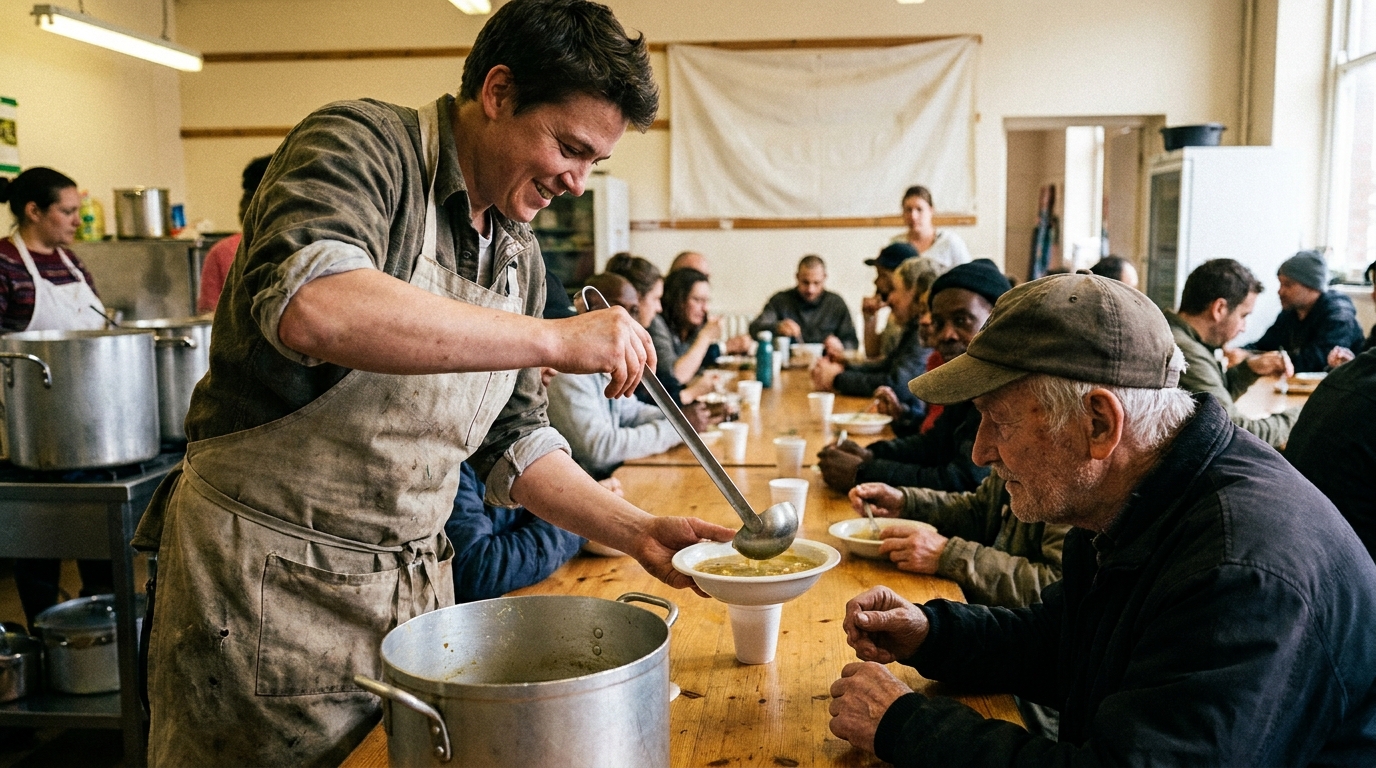
Many people wonder: “If I serve selflessly, won’t I become exhausted? Won’t people take advantage of me?”
This is an important question. Bhakti does not ask us to ignore wisdom, boundaries, or self-care. True selfless service is not unhealthy people-pleasing. It is not saying yes to everything. It is not neglecting your body, mind, or responsibilities.
Selfless service means offering your actions to God with love, while acting with humility, discernment, and compassion.
The Difference Between Ego-Service and Soul-Service
Sometimes we serve because we want to be seen as good. Sometimes we help others but secretly expect praise, control, or appreciation. This is very human. Most of us have mixed motives.
Bhakti Yoga does not shame us for this. Instead, it gently purifies our intention.
Ego-service says, “I am the doer. I am important. I need recognition.”
Soul-service says, “God, please let me be an instrument. Let this action be useful. Let this serve love.”
The more we practice, the more service becomes light. We do not carry the whole world on our shoulders. We remember that God is the ultimate protector, guide, and source of strength.
Service Frees Us from Self-Centered Anxiety
Much of our suffering comes from being trapped in the small room of “me” and “mine.”
My worries. My image. My plans. My discomfort. My success. My failure.
When we serve with devotion, the heart opens. We begin to feel connected to something larger than our personal story. We remember that every living being is sacred. We experience dignity not from being admired, but from being aligned with love.
The Bhagavad-gītā, a foundational scripture of Bhakti Yoga, teaches the art of offering our work to God. Krishna says:
**yat karoṣi yad aśnāsi yaj juhoṣi dadāsi yat
yat tapasyasi kaunteya tat kuruṣva mad-arpaṇam**
“Whatever you do, whatever you eat, whatever you offer or give away, whatever discipline you practice—do that as an offering to Me.”
This verse is deeply practical. It means our whole life can become sacred. Cooking can be prayer. Work can be worship. Parenting can be service. Cleaning can be devotion. Speaking kindly can be an offering.
Joy Comes from Alignment
The soul is naturally loving. When we live only for ourselves, something feels incomplete. But when we offer ourselves in service to God and others, we feel more aligned with our spiritual nature.
This is why dāsyam brings joy.
Not always dramatic joy. Sometimes it is quiet joy. A peaceful heart. A sense of purpose. A gentle confidence that says, “This life is meaningful when offered in love.”
Please visit our website for more information on our articles: articles.
Hanuman: The Great Example of Dāsyam

One of the most beloved examples of dāsyam in Bhakti tradition is Hanuman, the devoted servant of Lord Rama.
Lord Rama is an incarnation of God celebrated in the Rāmāyaṇa, the sacred epic that tells the story of His life, His virtues, and His loving relationships. Hanuman is known for his strength, humility, courage, and unwavering devotion.
Strength Used in Service
Hanuman had extraordinary power. He could leap across oceans, defeat powerful enemies, and perform impossible tasks. Yet he never used his strength for ego or domination. He used everything in service to Rama.
This is a powerful lesson for us.
Our talents are not accidents. Our intelligence, creativity, voice, hands, time, resources, and life experience can all become offerings.
Dāsyam does not mean becoming passive. It means becoming empowered for sacred purpose.
A person who practices dāsyam may be a teacher, artist, parent, business owner, nurse, student, musician, activist, cook, gardener, or monk. The outer role may vary. The inner mood is the same:
“Let my gifts serve God’s love in the world.”
Humility in Greatness
Despite his greatness, Hanuman remained humble. He did not think, “I am the hero.” He thought, “I am Rama’s servant.”
This humility was not weakness. It was the secret of his strength.
Humility in Bhakti does not mean hating ourselves. It means seeing clearly: everything we have is a gift. Our abilities come from God. Our opportunities come by grace. Our breath itself is not fully in our control.
When we recognize this, gratitude grows. And from gratitude, service becomes natural.
“I Am Yours”
The heart of Hanuman’s devotion can be expressed in one simple prayer:
“I am Yours.”
This is dāsyam.
Not as a dry duty, but as a loving surrender. Not as a loss of dignity, but as the highest dignity. To belong to God is the soul’s deepest freedom.
Practicing Dāsyam in Daily Life
Dāsyam becomes real when it enters our daily routine. We may appreciate the idea of service, but Bhakti invites us to live it—gently, sincerely, and step by step.
Here are practical ways to cultivate dāsyam in everyday life.
Begin the Day with an Offering
Before looking at your phone or rushing into responsibilities, pause for a moment.
You might pray:
“Dear Lord, please guide me today. Let my thoughts, words, and actions be an offering. Help me serve with kindness, humility, and love.”
This simple morning prayer can change the direction of the day. It reminds us that life is not random. Today is an opportunity to love.
Even if the day becomes busy or messy, the intention matters. Bhakti is a path of returning again and again.
Offer Your Food
In Bhakti Yoga, food is often prepared and offered to God before being eaten. This practice is called offering prasāda.
Prasāda means “mercy” or “grace.” When food is prepared with love and offered to God, it becomes spiritually uplifting.
You can do this very simply at home. Prepare vegetarian food with care, place it before a picture of God or on a clean space, and offer a prayer:
“Dear Lord, this food is Yours. Please accept it with love.”
Then receive it with gratitude.
This small act teaches the heart: “I am not the owner. I am a caretaker. Everything can be offered.”
Serve the People Around You
Sometimes we imagine spiritual service as something grand. But often, the most important service is right in front of us.
Listening patiently. Speaking gently. Encouraging someone. Cleaning a shared space. Helping without announcing it. Forgiving. Making someone feel seen. Caring for those who depend on us.
Our family, friends, coworkers, and neighbors are not obstacles to spiritual life. They are opportunities to practice love.
Of course, service should be balanced with healthy boundaries. Bhakti is not about enabling harm. Serving others includes serving truth, wisdom, and spiritual well-being.
Chant While You Serve
Chanting and service nourish each other.
You can chant softly while cooking, driving, walking, cleaning, or preparing for the day. The holy names bring remembrance into action. They help us serve with a softer heart.
Even a few minutes of chanting can shift the atmosphere within.
If you are new to chanting, begin simply. Repeat a name of God that is meaningful to you. Or chant the Hare Krishna mantra slowly, listening to each word.
The practice is not about performance. It is about connection.
Offer Your Work
Many people spend much of life working. Bhakti Yoga teaches that work can become spiritual when offered to God.
This does not mean everyone must work in a temple or spiritual organization. It means we bring devotion into whatever honest work we do.
You can ask:
“Am I working with integrity?”
“Am I using my skills to benefit others?”
“Can I offer the results to God?”
“Can I remain humble in success and steady in difficulty?”
When work becomes offering, the heart becomes freer. We still do our best, but we are less controlled by praise, blame, gain, or loss.
Dāsyam and the Cleansing of the Heart
One of the great gifts of dāsyam is purification. In Bhakti, purification does not mean becoming harsh, rigid, or judgmental. It means the heart becomes cleaner, softer, and more loving.
The more we serve, the more we see our own inner patterns. We may notice pride, impatience, resentment, laziness, or the desire for recognition. This can be humbling.
But it is also grace.
Service Reveals What Needs Healing
When we try to serve, hidden parts of the ego often appear.
We may think, “Why didn’t anyone thank me?”
“Why is someone else getting attention?”
“I always have to do everything.”
“My way is better.”
These thoughts do not mean we are failing. They mean we are becoming aware.
Awareness is the beginning of transformation.
In Bhakti Yoga, we bring these things honestly before God. We do not pretend to be pure. We pray for purification.
“Dear Lord, please help me serve without pride. Please help me become sincere. Please help me love You and Your children.”
This prayer itself is powerful.
From Obligation to Affection
In the beginning, service may feel like discipline. We may serve because we know it is good for us. Over time, as the heart softens, service becomes affection.
We begin to want to serve.
This is similar to spiritual chanting. At first, chanting may feel like practice. Later, it becomes nourishment. The holy names become a shelter.
Dāsyam matures in the same way. What begins as duty becomes delight.
Seeing God in Everyone
The Bhagavad-gītā teaches that a wise person sees with equal vision. This does not mean we ignore differences or act without discernment. It means we recognize the spiritual essence in all beings.
Every person is a soul. Every living being belongs to God.
When we remember this, service becomes more sacred. We are not merely helping “someone lower” or “someone needy.” We are serving a beloved child of God.
This vision protects us from arrogance and deepens compassion.
The Balance of Service and Surrender
Dāsyam is active, but it is also surrendered. We make sincere effort, and we trust God with the results.
This balance is important.
If we only act, we may become proud or exhausted. If we only surrender without action, we may become passive or sentimental. Bhakti brings both together: loving effort and humble dependence on grace.
Doing Our Best Without Controlling the Outcome
Krishna teaches in the Bhagavad-gītā that we have a right to our actions, but not to control the fruits of those actions. This wisdom is deeply connected to dāsyam.
We serve because service is right, healing, and pleasing to God. But we cannot always control how others respond. We cannot control whether we are appreciated. We cannot control every result.
When we offer the outcome to God, the heart becomes peaceful.
We can say:
“Lord, I have tried. Please accept this offering. Please use it however You wish.”
This is freedom.
Boundaries Can Be Part of Service
Selfless service does not mean becoming unhealthy, resentful, or unsafe.
Sometimes the most loving service is to say no. Sometimes it is to rest. Sometimes it is to step back from a harmful situation. Sometimes it is to ask for help.
Your body and mind are also gifts from God. Caring for them can be part of your service.
Bhakti is not a path of burnout. It is a path of loving sustainability. We serve best when we are connected, honest, and spiritually nourished.
Receiving Service with Gratitude
Dāsyam also teaches us how to receive.
Many people find it easier to serve than to be served. But receiving help with humility can also be spiritual. It allows others to express love. It reminds us that we are not independent controllers.
Community is built when service flows both ways.
At The Bhakti House, this spirit is central: we come together to chant, learn, pray, cook, clean, listen, support, and grow. Everyone brings something. Everyone receives something. And in the center is God’s grace.
Dāsyam in Community
Bhakti Yoga is deeply personal, but it is not meant to be lonely. Spiritual community, called sanga, means the company of sincere seekers and devotees.
Sanga helps us remember. It gives us encouragement when our practice feels weak. It gives us opportunities to serve in real, practical ways.
Serving Together Softens the Heart
When people serve together, something beautiful happens.
One person cooks. Another cleans. Someone sings. Someone welcomes guests. Someone watches the children. Someone sets up chairs. Someone offers a prayer. Someone quietly washes pots after everyone has eaten.
No service is small when it is offered with love.
In Bhakti, the value of service is not measured only by visibility. A hidden service may be very dear to God because it is free from pride.
Learning from Devotees
In the Bhakti tradition, the word sādhu refers to a saintly person or sincere devotee. We learn dāsyam by observing those who live it.
A true devotee may not announce their humility. They simply serve. They are steady, kind, forgiving, and joyful in giving. Their life teaches more than many lectures.
Being around such souls inspires us. We begin to think, “I also want to live like that. I want to become useful in God’s service.”
Community as a Training Ground for Love
Community is not always easy. People have different personalities, needs, habits, and opinions. Sometimes this can be challenging.
But this is also why community is powerful.
It gives us a real place to practice patience, forgiveness, humility, communication, and service. Love becomes practical. Devotion becomes embodied.
Dāsyam is not an idea we keep in our head. It is practiced in relationships.
Common Obstacles in Selfless Service
Every sincere path has challenges. Dāsyam is joyful, but it also reveals where we need growth.
The good news is that obstacles are not signs of failure. They are invitations to go deeper.
Wanting Recognition
Most of us want to be appreciated. This is natural. But when recognition becomes the main reason we serve, our joy becomes fragile.
If someone praises us, we feel happy. If no one notices, we feel hurt.
Bhakti gently invites us to shift our audience. Instead of serving for applause, we serve for God’s pleasure.
God sees every sincere effort. Even if no human being notices, the Divine knows.
This remembrance gives strength.
Comparing Our Service to Others
Comparison can steal the sweetness from service.
We may think, “Their service is more important than mine,” or “I do more than they do.” Both thoughts disturb the heart.
In Bhakti, every sincere offering matters. A flower offered with love may be more spiritually powerful than a grand act done with pride.
Krishna says in the Bhagavad-gītā:
patraṁ puṣpaṁ phalaṁ toyaṁ yo me bhaktyā prayacchati
“If one offers Me a leaf, a flower, a fruit, or water with devotion, I accept it.”
The key is not the size of the offering. The key is devotion.
Becoming Tired or Resentful
If service becomes dry, heavy, or resentful, it may be time to pause and reconnect.
Ask yourself:
“Am I chanting and praying enough?”
“Am I serving beyond my capacity?”
“Am I attached to being needed?”
“Do I need guidance?”
“Have I forgotten to offer the results to God?”
Sometimes a small adjustment restores the heart. More chanting. More honest prayer. A conversation with a trusted spiritual friend. A healthier schedule. A simpler service.
Service should deepen love, not destroy us.
The Inner Mood of Dāsyam
The external action matters, but the inner mood matters even more.
Two people may do the same task. One may do it with irritation and pride. Another may do it with gratitude and prayer. The outer action looks similar, but the spiritual experience is different.
Dāsyam asks us to bring devotion into the heart of action.
“Please Let Me Be an Instrument”
A simple prayer for dāsyam is:
“Dear God, please let me be an instrument of Your love.”
This prayer is humble and powerful. It reminds us that we are not the source of love; we are meant to carry love. We are not the ultimate controller; we are servants of the Divine will.
When we live with this prayer, ordinary moments become sacred.
Serving Without Superiority
True service never looks down on others.
If we think, “I am serving you because I am better than you,” that is not dāsyam. That is ego disguised as kindness.
Dāsyam sees others with respect. It recognizes that God is present in everyone’s heart. It serves with gentleness, not superiority.
The servant of God is not harsh. The servant of God tries to become compassionate.
Letting Love Lead
Rules, routines, and discipline are helpful in spiritual life. But the heart of Bhakti is love.
Dāsyam is not mechanical labor. It is loving offering.
When love leads, even simple service becomes beautiful. A cup of water offered with love can nourish the soul. A floor swept with devotion can become worship. A kind word spoken in God’s remembrance can change someone’s day.
Dāsyam as a Lifelong Practice
Dāsyam is not mastered in one day. It grows over a lifetime.
We begin where we are. Some days we feel inspired. Some days we feel distracted. Some days service feels joyful. Some days it reveals our impatience. Still, we keep returning.
This returning is part of devotion.
Small Steps Are Sacred
You do not need to transform your entire life overnight.
Begin with one small step:
Chant for five minutes.
Offer your meal.
Help someone without expecting praise.
Say a prayer before work.
Volunteer in a spiritual community.
Read one verse from the Bhagavad-gītā.
Thank God for one blessing.
Ask, “How can I serve today?”
Small sincere steps have great power when they are repeated with love.
Growing from Duty to Devotion
At first, we may practice because we want peace, healing, or direction. That is natural and good.
Over time, Bhakti matures. We begin to serve not only for what we receive, but because love itself is meaningful. We begin to understand that serving God is the soul’s joy.
This is the beauty of dāsyam: it takes the ordinary human desire to help, belong, and love, and lifts it into divine relationship.
The Goal Is Love of God
The ultimate aim of Bhakti Yoga is prema, pure love of God.
Prema is not ordinary emotion. It is the awakened love of the soul, free from selfishness and full of joy. Dāsyam helps lead us toward that love by training the heart to offer, remember, and surrender.
In serving God, we discover that God has always been serving us—with sunlight, breath, food, friendship, guidance, forgiveness, and countless unseen blessings.
Our service is a small response to infinite grace.
A Simple Dāsyam Practice for Today
If you would like to bring dāsyam into your life today, try this simple practice.
Pause
Take a quiet breath. Place your hand on your heart if that feels natural.
Remember that you are a soul, loved by God.
Pray
Offer a simple prayer:
“Dear Lord, please guide me. Let me serve today with humility and love. Please accept whatever I can offer.”
Chant
Chant a name of God or the Hare Krishna mantra for a few minutes. Listen carefully. Let the sound soften your heart.
Offer One Service
Choose one practical act of service. Keep it simple.
Wash something. Cook something. encourage someone. Give your time. Help without needing credit. Offer your work. Make your home more peaceful. Serve at a temple or spiritual gathering. Feed someone. Pray for someone.
Do it as an offering.
Release the Result
At the end, say:
“God, this was for You. Please accept it.”
Then let go.
This is dāsyam in practice.
Everyone Is Invited into the Joy of Service
Dāsyam is a path of joyful selfless service. It is the art of turning life into an offering. It teaches us that we are not isolated beings struggling for meaning. We are eternal souls, deeply loved by God, invited into a relationship of service, prayer, chanting, and love.
You do not have to be perfect to begin. You do not have to have all the answers. You do not have to come from a particular culture, religion, or background.
Bhakti Yoga welcomes the sincere heart.
Whether you are new to spiritual life or have been practicing for many years, dāsyam offers a gentle and powerful way forward. Ask God, “How can I serve?” Then listen. Then take one small step.
May your service become prayer. May your prayer become love. May your love become joy. And may you always know that you are welcome to take one sincere step toward God today.
FAQs
What is Dāsyam?
Dāsyam is a concept in Hinduism that refers to the practice of selfless service or serving others without any expectation of reward or recognition.
How is Dāsyam practiced?
Dāsyam is practiced through acts of kindness, compassion, and service to others. It can be expressed through various forms of service such as volunteering, helping those in need, and performing acts of charity.
What is the significance of Dāsyam in Hinduism?
In Hinduism, Dāsyam is considered a noble and virtuous practice that is seen as a way to express devotion to the divine. It is believed that serving others selflessly can lead to spiritual growth and inner joy.
What are the benefits of practicing Dāsyam?
Practicing Dāsyam can lead to a sense of fulfillment, inner peace, and joy. It also helps in cultivating empathy, compassion, and a sense of interconnectedness with others.
How can one incorporate Dāsyam into their daily life?
One can incorporate Dāsyam into their daily life by looking for opportunities to help others, being mindful of the needs of those around them, and performing acts of kindness and service without expecting anything in return.

