

Beginning a daily meditation routine can feel both inspiring and a little intimidating. You may wonder, “Am I doing it right?” “How long should I sit?” “What if my mind keeps wandering?” These are very human questions, and they are welcome here.
At The Bhakti House, we understand meditation not as a performance, but as a relationship. It is a way of turning the heart toward God, the Divine, the Source of all love. In the Bhakti Yoga tradition, meditation is not only about becoming calm, though calmness may come. It is about remembering our deepest identity: we are spiritual beings, meant to love and be loved by the Supreme.
Bhakti Yoga is the yoga of devotion. The Sanskrit word bhakti means loving devotion, heartfelt service, or the offering of love to God. This path welcomes people from every background. Whether you are new to spirituality, returning after many years, rooted in another faith tradition, or simply curious, you can begin with one sincere step.
A daily meditation routine for beginners does not have to be complicated. It can include quiet breathing, chanting sacred names, prayer, reading wisdom, and offering your day in service. Even five or ten minutes, done with sincerity, can open the heart.
Why Begin a Daily Meditation Routine?
A daily meditation routine creates a sacred rhythm in your life. Just as the body needs food, rest, and movement, the heart needs spiritual nourishment. Meditation gives us time to pause, breathe, remember what matters, and reconnect with God.
Meditation Helps Calm the Mind
The mind is often busy. It jumps from the past to the future, from worries to plans, from desires to disappointments. In the Bhagavad-gita, one of the most beloved texts of Bhakti Yoga, the mind is described as restless and difficult to control. Arjuna, the student and warrior, honestly tells Krishna that controlling the mind seems harder than controlling the wind.
Krishna does not shame him. Instead, He teaches that the mind can be guided through practice and detachment. This is encouraging for beginners. A wandering mind does not mean you are failing. It simply means you are human.
Every time you gently return your attention to the sacred sound, prayer, or breath, you are strengthening your spiritual focus.
Meditation Opens the Heart
In Bhakti Yoga, meditation is not emptying the heart. It is filling the heart with divine remembrance. The Sanskrit word smaranam means remembrance—remembering God with affection.
When we meditate on God’s names, qualities, and presence, our heart gradually softens. We may become more patient, more forgiving, more grateful, and more compassionate. This is one of the signs that meditation is touching something real within us.
Meditation Supports Spiritual Growth
A beginner’s meditation practice can become the foundation for a meaningful spiritual life. Over time, daily meditation may help you:
- Respond instead of react
- Feel more grounded during stress
- Develop gratitude
- Build a prayerful relationship with God
- Become more aware of your thoughts and choices
- Serve others with greater humility and love
Spiritual growth is not about becoming perfect overnight. It is about becoming sincere, steady, and open to grace.
Preparing Your Space and Heart
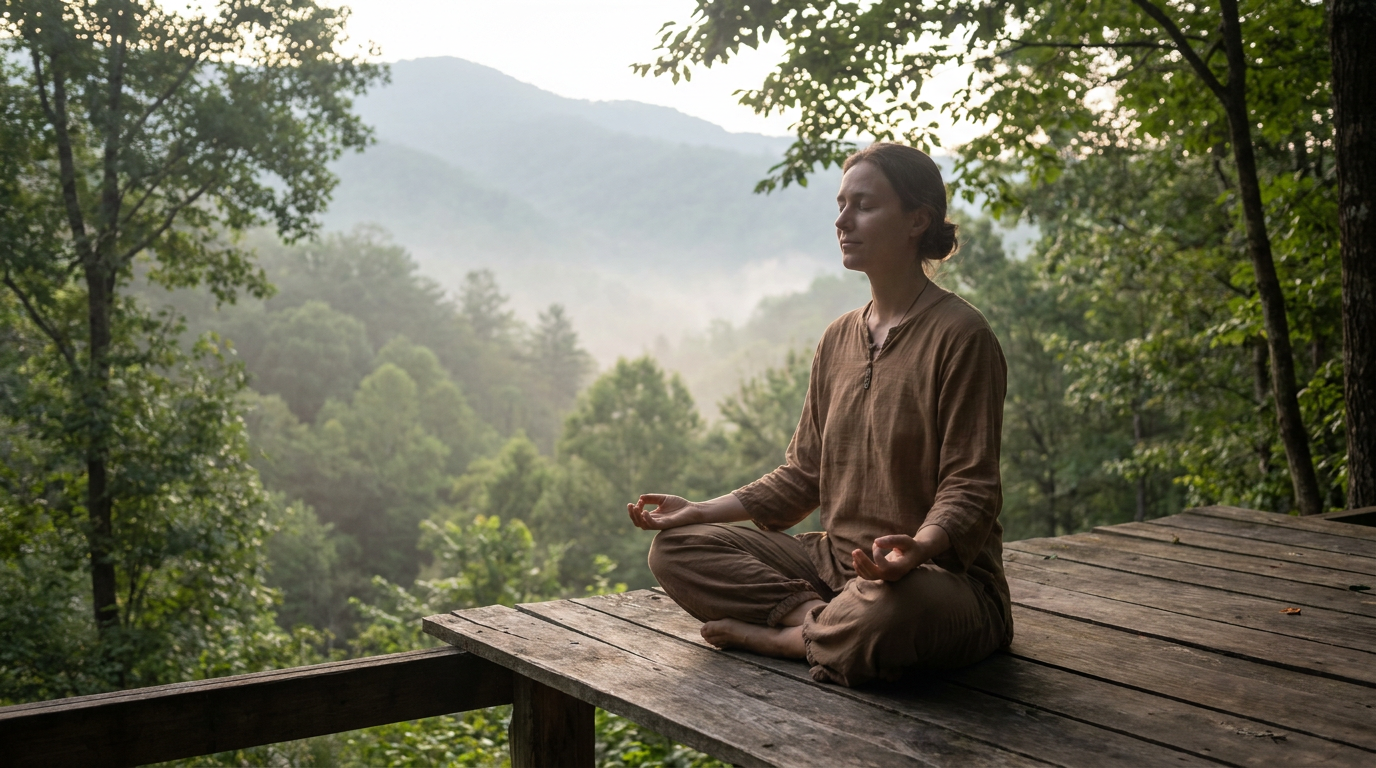
Before you begin your daily meditation routine, it can be helpful to prepare both your physical space and your inner mood. You do not need anything fancy. A small, clean corner of your room can become a sacred place.
Create a Simple Sacred Space
Choose a quiet spot where you can sit comfortably each day. You might place a candle, a small picture of Krishna, Rama, Jesus, Mary, a saint, a spiritual teacher, or any sacred image that helps you feel connected to God. You may also keep prayer beads, scripture, flowers, or incense nearby.
In Bhakti Yoga, the external environment can support the internal mood. A peaceful space reminds the mind, “This is time to turn inward and upward.”
If you do not have a quiet home, do not worry. You can meditate in a parked car, on a bench, during a walk, or even silently before beginning work. God is not limited by location.
Choose a Regular Time
For many beginners, morning is the best time for meditation. The mind is usually clearer before the demands of the day begin. In the Bhakti tradition, early morning is considered especially sacred because it is naturally quieter and more peaceful.
But if morning is not possible, choose another time you can keep consistently. The best time for meditation is the time you will actually practice.
You might begin with:
- 5 minutes each morning
- 10 minutes before bed
- One short chanting session during lunch
- A few minutes of prayer after waking
Consistency matters more than length. A small daily offering is powerful.
Begin with Humility
Humility is a beautiful doorway into meditation. You do not need to pretend to be advanced or spiritually strong. You can begin exactly where you are.
A simple prayer before meditation might be:
“Dear God, please guide me. Please help me remember You. Please accept this small offering of my time and heart.”
This mood is central to Bhakti Yoga. Meditation becomes less about controlling everything and more about lovingly offering ourselves.
Sure, here is the sentence with the clickable link:
Check out our latest posts on posts.
A Beginner-Friendly Daily Meditation Routine

Here is a simple daily meditation routine for beginners. You can follow it as written or adjust it to fit your life. The goal is not pressure. The goal is connection.
Step 1: Sit Comfortably and Breathe
Begin by sitting in a comfortable position. You may sit on a cushion, chair, or mat. Keep your back upright but not stiff. Let your hands rest gently on your lap.
Close your eyes or soften your gaze. Take a few slow breaths.
Inhale gently.
Exhale slowly.
Let your shoulders relax. Let your jaw soften. Notice that you are here, now, in the presence of God.
Breath awareness can help settle the body and mind. In Sanskrit, prana means life energy or vital breath. When we breathe with awareness, we become more present to the life God is giving us in this very moment.
You may silently say:
“Thank You for this breath.”
This simple gratitude can turn breathing into prayer.
Step 2: Offer a Short Prayer
Before chanting or silent meditation, offer a short prayer. Prayer makes meditation personal. It reminds us that we are not alone. We are reaching toward a loving Divine Person, the source of all compassion.
You might pray:
“Dear Lord, please help me remember You today. Please cleanse my heart of fear, pride, and distraction. Please let my thoughts, words, and actions become an offering of love.”
If you are unsure how to pray, speak honestly. God receives sincerity more than polished language.
Step 3: Chant a Sacred Mantra
A central practice in Bhakti Yoga is mantra meditation. The word mantra comes from Sanskrit and can be understood as a sacred sound that helps free or guide the mind. Man refers to the mind, and tra suggests protection or liberation.
One of the most cherished mantras in the Bhakti tradition is the Hare Krishna mantra:
Hare Krishna Hare Krishna
Krishna Krishna Hare Hare
Hare Rama Hare Rama
Rama Rama Hare Hare
This mantra is a prayer calling out to God through divine names. Krishna means “the all-attractive one.” Rama means “the source of joy.” Hare addresses the divine energy of love, often understood as the compassionate energy of God who helps us reconnect with Him.
You do not have to fully understand everything at first. Just as sunlight warms us whether or not we understand physics, sacred sound can nourish the heart when received with sincerity.
You can chant softly aloud, whisper, or repeat the mantra in your mind. If you have prayer beads, you can chant one mantra on each bead. If not, simply chant for a set amount of time.
For beginners, try chanting for 5 minutes daily.
Step 4: Sit in Quiet Remembrance
After chanting, sit quietly for a minute or two. Notice how your heart feels. Notice your thoughts without judging them. If the mind wanders, gently return to the sacred name or to a simple prayer.
In Bhakti meditation, silence is not empty. It is a space to listen. Sometimes we may feel peace. Sometimes we may feel restless. Both are okay. God is present in both.
Spiritual life matures when we learn to show up, not only when meditation feels sweet, but also when it feels ordinary.
Step 5: Read One Verse or Reflection
A powerful addition to a daily meditation routine is reading a small portion of scripture. You do not need to read much. Even one verse can guide your whole day.
The Bhagavad-gita offers practical wisdom for daily life. In one famous teaching, Krishna says that whoever offers Him a leaf, a flower, fruit, or water with love and devotion, He accepts it. This is a deeply comforting verse. It tells us that God is not looking for wealth, status, or perfection. He is looking for love.
After reading, ask yourself:
- What is one word or idea I can carry today?
- How can I practice this teaching in my relationships?
- What can I offer to God today?
This turns study into meditation.
Step 6: End with an Offering
Before you rise, offer your day.
You might say:
“May my thoughts, words, and actions today be pleasing to You. Please help me serve with kindness. Please guide me back when I forget.”
This final step connects meditation with daily life. Bhakti Yoga is not meant to stay on the cushion. It is meant to enter our conversations, work, family life, meals, and choices.
How Long Should Beginners Meditate Each Day?
One of the most common questions is, “How long should I meditate as a beginner?” The honest answer is: start small and be steady.
Start with 5 to 10 Minutes
If you are new to meditation, begin with 5 to 10 minutes daily. This may seem short, but it is enough to build the habit. A daily meditation routine should feel inviting, not overwhelming.
You might begin like this:
- 1 minute of breathing
- 1 minute of prayer
- 5 minutes of mantra chanting
- 1 minute of silence
- 1 minute of offering your day
That is a complete practice.
As you grow, you can increase to 15, 20, or 30 minutes. Some Bhakti practitioners chant for longer periods, especially using prayer beads, but there is no need to rush. Love grows naturally when it is nourished.
Make It Realistic
A routine that fits your actual life is better than an ideal routine you never do. If you have children, demanding work, health challenges, or a busy household, adapt your practice with compassion.
You can chant while walking. You can pray while cooking. You can listen to kirtan, devotional chanting, during your commute. You can pause for three mindful breaths before answering a difficult email.
The heart of meditation is remembrance. If your day is full, bring remembrance into the fullness.
Build Slowly
Think of meditation like watering a seed. You do not pour a flood on it once and then forget it for weeks. You give a little water daily. In the same way, your heart responds to regular care.
A beginner’s meditation routine may feel simple, but over time, it becomes sacred ground.
The Role of Chanting in Bhakti Meditation
Chanting is one of the most accessible and joyful forms of meditation. It can be practiced alone or in community. It can be soft and contemplative or musical and expressive.
What Is Kirtan?
Kirtan is a Sanskrit word that means glorification or singing of sacred names. In Bhakti Yoga, kirtan often includes call-and-response chanting with music. One person leads, and others respond. Instruments such as harmonium, drum, and hand cymbals may be used, but the most important instrument is the heart.
Kirtan is meditation through sound. It gives the busy mind something sacred to rest upon. It also allows emotions to be offered to God—joy, sadness, longing, gratitude, and hope.
For beginners, kirtan can feel wonderfully natural. You do not need a trained voice. You only need willingness.
Why Sacred Sound Matters
The Bhakti scriptures teach that God’s names are spiritually powerful because they are connected with God’s presence. This is a profound idea: when we chant sincerely, we are not merely repeating ordinary sound. We are inviting divine remembrance into the heart.
The Srimad Bhagavatam, a treasured Bhakti scripture, repeatedly praises hearing and chanting about God as a means of purifying the heart. Purifying does not mean becoming harsh or judgmental. It means becoming clearer, softer, and more loving.
Sacred sound gradually helps uncover the soul’s natural love.
Chanting When the Mind Wanders
Your mind will wander during chanting. This is normal. Please do not be discouraged.
When you notice the mind has drifted, gently return to the mantra. No anger. No self-criticism. Just return.
Each return is an act of devotion.
You may find it helpful to listen carefully to each syllable:
Ha-re Krish-na
Ha-re Krish-na
Krish-na Krish-na
Ha-re Ha-re
Let the sound carry you.
Common Challenges for Beginners
Every sincere practitioner faces challenges. Meditation is simple, but not always easy. The good news is that obstacles can become part of your growth.
“I Can’t Stop Thinking”
You do not need to stop all thoughts. Meditation is not a battle against the mind. It is a practice of redirecting attention.
Imagine a child wandering away in a garden. A loving parent does not scream; they gently guide the child back. Treat your mind like that. Firmly, kindly, repeatedly bring it back to the sacred sound or prayer.
Over time, the mind learns where home is.
“I Don’t Feel Anything”
Some days meditation feels peaceful. Other days it feels dry. This is natural.
In Bhakti Yoga, sincerity is more important than emotional experience. Feelings come and go, but devotion deepens through steady practice.
If you do not feel anything, you can still offer your time. Sometimes the most powerful meditation is the one we do when it does not feel easy.
Love is not only a feeling. Love is also showing up.
“I Keep Missing Days”
If you miss a day, begin again. Do not let guilt become another obstacle.
Spiritual life is not about perfectionism. It is about returning. Every sunrise is an invitation. Every breath is another chance.
You might say:
“Today I begin again.”
That simple humility is beautiful.
“I’m Not Sure What I Believe”
You are still welcome. Meditation can begin with openness. You do not have to have every belief settled before you pray or chant.
You might start with:
“If You are there, please guide me.”
This honest prayer has great power. God meets us in sincerity.
Bringing Meditation into Daily Life
A daily meditation routine does not end when you open your eyes. The real fruit of meditation appears in how we live.
Practice Mindful Speech
After meditation, try to carry a little more awareness into your words. Before speaking, ask:
- Is it true?
- Is it kind?
- Is it helpful?
- Is it pleasing to God?
This does not mean we avoid difficult conversations. It means we speak with care.
Bhakti Yoga teaches that the tongue can be used for sacred sound, prayer, and kind speech. In this way, ordinary communication becomes spiritual practice.
Offer Your Work
In the Bhagavad-gita, Krishna teaches the practice of offering our actions. This is called karma yoga, the yoga of selfless action. In Bhakti, this offering becomes personal: “I am doing this for You.”
Whether you are caring for children, studying, working, cleaning, serving customers, leading a team, or resting to heal your body, you can offer it.
A simple inner prayer can transform your work:
“May this be service.”
The Sanskrit word seva means service. In Bhakti Yoga, service is love in action. Meditation nourishes the heart, and service expresses that nourishment in the world.
Eat with Gratitude
Meals can become meditation too. Before eating, pause and offer thanks. In Bhakti tradition, food offered to God with love is called prasadam, meaning mercy or grace.
Even if you are not familiar with formal offerings, you can begin simply:
“Dear God, thank You for this food. May it nourish me so I can serve with love.”
This small pause can change your relationship with food from consumption to gratitude.
Remember God During Transitions
Daily life is full of transitions: waking, driving, beginning work, eating, resting, going to sleep. These moments are wonderful opportunities for brief meditation.
You can chant one mantra before starting the car. You can take three breaths before opening your laptop. You can say a bedtime prayer.
These small practices help create a life of remembrance.
A Sample Daily Meditation Routine for Beginners
Here is a simple 15-minute routine you can try for one week. Adjust as needed.
Morning Practice: 15 Minutes
Minute 1–2: Settle and breathe
Sit comfortably. Take slow breaths. Let the body relax.
Minute 3–4: Offer prayer
Speak to God sincerely. Ask for guidance and an open heart.
Minute 5–11: Chant mantra
Chant the Hare Krishna mantra or another sacred name of God that is meaningful to you. Chant softly, clearly, and with attention.
Minute 12–13: Sit quietly
Rest in silence. Let the sacred sound remain in your heart.
Minute 14: Read one verse or reflection
Read a short teaching from the Bhagavad-gita, Psalms, the Srimad Bhagavatam, or another sacred text that inspires love of God.
Minute 15: Offer your day
Pray that your actions may become service.
Midday Reset: 1 to 3 Minutes
Pause during the day. Take a breath. Repeat a sacred name or short prayer.
You might say:
“Please help me remember You.”
This small reset can bring you back to center.
Evening Reflection: 5 Minutes
Before bed, reflect gently:
- Where did I remember God today?
- Where did I forget?
- What am I grateful for?
- Who can I forgive?
- How can I serve better tomorrow?
End with gratitude, not self-criticism. Spiritual reflection should help the heart grow, not shrink.
Creating a Routine That Lasts
A lasting meditation routine is built with kindness, patience, and support.
Keep It Simple
Beginners often try to do too much too quickly. A simple routine is easier to maintain. Choose a time, place, and practice you can repeat.
Your foundation might be:
- Sit
- Breathe
- Pray
- Chant
- Offer
That is enough.
Connect with Community
Spiritual practice becomes stronger in community. In Sanskrit, sadhu-sanga means association with spiritually minded people. We are shaped by the company we keep.
Joining a kirtan, meditation group, satsang, temple gathering, church prayer circle, or Bhakti Yoga community can help you feel encouraged. You can learn from others, ask questions, and remember that you are not walking alone.
The Bhakti path is personal, but it is also shared. Love grows when it is given and received.
Be Patient with the Process
Meditation is a lifelong friendship with the soul and with God. Some days will feel bright. Some days will feel cloudy. The sun is still there.
Try not to measure your progress only by mystical feelings or perfect concentration. Notice instead:
- Am I becoming a little more patient?
- Am I more willing to forgive?
- Am I remembering to pray?
- Am I serving with more love?
- Am I becoming more honest with myself and God?
These are beautiful signs of growth.
The Heart of Bhakti Yoga Meditation
At its essence, Bhakti Yoga meditation is about love. It is not merely a stress-reduction technique, though it may reduce stress. It is not only mindfulness, though it deepens awareness. It is a path of relationship.
We chant because we long to remember.
We pray because we know we need grace.
We serve because love wants to move.
We study scripture because wisdom lights the path.
We meditate because the heart is searching for its eternal home.
In the Bhagavad-gita, Krishna lovingly assures that even a little progress on the spiritual path can protect one from great fear. This is a compassionate teaching for beginners. No sincere effort is wasted. No prayer is too small. No chant disappears. Every offering of love is received.
You do not need to become someone else to begin. You can come with your questions, your hopes, your wounds, your longing, your imperfect attention, and your sincere heart.
God is not far away. The Divine can be approached through one humble prayer, one sacred name, one act of service, one moment of remembrance.
So begin gently. Sit for five minutes. Chant one mantra. Offer one meal. Read one verse. Speak one kind word. Take one sincere step.
Everyone is welcome on the path of Bhakti Yoga. Wherever you are starting from, may your daily meditation routine become a doorway to peace, devotion, and a deeper loving relationship with God.
FAQs
What is a daily meditation routine?
A daily meditation routine is a regular practice of setting aside time each day to engage in meditation. This can involve various techniques such as mindfulness meditation, guided meditation, or focused breathing exercises.
Why is it beneficial for beginners to start a daily meditation routine?
Starting a daily meditation routine can help beginners develop a consistent practice, reduce stress, improve focus and concentration, enhance self-awareness, and promote overall well-being. It can also help beginners build a foundation for a lifelong meditation practice.
How can beginners establish a daily meditation routine?
Beginners can establish a daily meditation routine by setting aside a specific time each day for meditation, finding a quiet and comfortable space, choosing a meditation technique that resonates with them, and gradually increasing the duration of their meditation sessions as they become more comfortable with the practice.
What are some tips for maintaining a daily meditation routine?
Some tips for maintaining a daily meditation routine include setting realistic goals, being consistent with the practice, finding a supportive community or teacher, being patient with oneself, and being open to adjusting the routine as needed.
What are some recommended meditation techniques for beginners?
Recommended meditation techniques for beginners include mindfulness meditation, body scan meditation, loving-kindness meditation, and guided meditation. It’s important for beginners to explore different techniques and find one that suits their preferences and needs.

