

There is a quiet sacredness within every heart. Beneath our worries, stories, ambitions, and wounds, there is a longing to love and be loved completely. In the Bhakti tradition, this longing is not seen as a weakness or a problem to solve. It is honored as the soul’s natural call toward God.
Bhakti Yoga is the path of divine love. The word bhakti comes from Sanskrit and means loving devotion, heartfelt service, and a living relationship with the Divine. It is not limited to one culture, background, or type of person. Bhakti welcomes everyone: seekers, skeptics, lifelong practitioners, beginners, the joyful, the grieving, the restless, and the hopeful.
To cultivate the divine within is not to become someone else. It is to gently uncover who we truly are: spiritual beings with a deep capacity for love, compassion, prayer, and connection. Nurturing the heart is a daily practice. It happens through chanting, remembrance, service, sacred wisdom, community, and sincere effort.
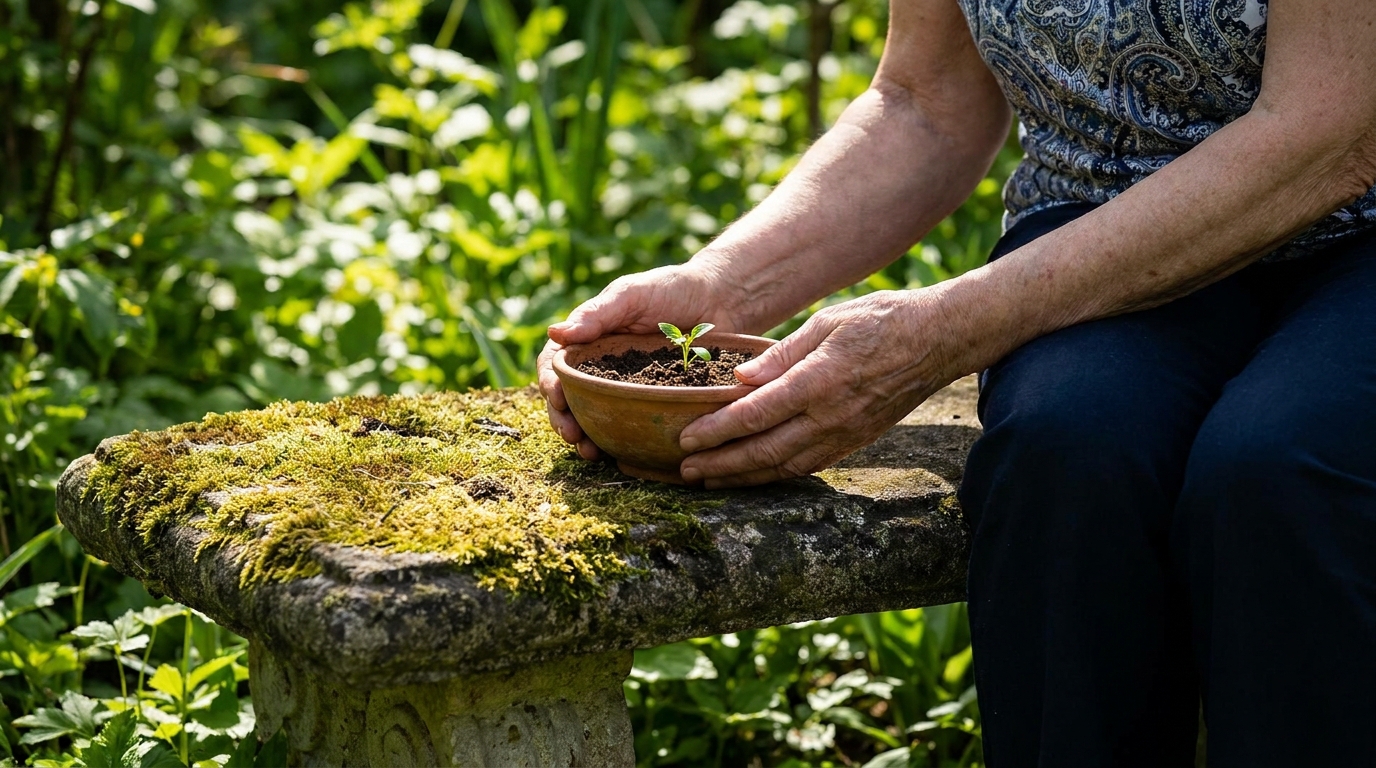
The heart is like a garden. Whatever we water will grow.
If we water resentment, fear, distraction, and selfishness, those qualities become strong. But if we water gratitude, humility, compassion, and devotion, the heart begins to bloom. Bhakti Yoga gives us simple, beautiful tools for tending this inner garden.
The Divine Within Every Being
In the Bhagavad Gita, one of the central scriptures of Bhakti Yoga, Krishna teaches that the Divine is present in the heart of all living beings. This means every person carries sacred worth. Every person is more than their body, job, past mistakes, or current struggles.
This vision changes how we treat ourselves and others. We begin to see life not as random or meaningless, but as an opportunity to awaken love. The person in front of us becomes worthy of respect. Our own life becomes worthy of care.
To nurture the heart, we begin by remembering: there is something holy within me, and there is something holy within everyone I meet.
The Soul’s Natural Longing
Many people feel an ache that worldly success cannot fully satisfy. We may have comfort, relationships, or achievements, yet still feel incomplete. Bhakti explains that this longing is the soul’s longing for loving connection with God.
In Sanskrit, the soul is called atma. The atma is our true self: eternal, conscious, and full of the potential for love. Bhakti Yoga helps us nourish the atma by reconnecting with the Supreme Source of love, whom many traditions call God. In the Bhakti tradition, God is often lovingly addressed as Krishna, meaning “the all-attractive one.”
You do not need to know everything to begin. You do not need to be perfect. You only need sincerity.
Bhakti Yoga: A Practical Path of Love
Bhakti is not merely a belief system. It is a way of living. It asks us to bring love into our thoughts, words, choices, relationships, and daily responsibilities.
The beauty of Bhakti Yoga is that it is deeply practical. It can be practiced in a temple, at home, in the car, while cooking, while walking, while parenting, while working, or while sitting quietly with a troubled heart.
What Makes Bhakti Different?
Many spiritual paths emphasize knowledge, discipline, meditation, or self-control. Bhakti includes these, but places love at the center.
The goal is not simply to become calm. The goal is to awaken loving relationship with the Divine. Calmness may come. Wisdom may come. Inner strength may come. But they grow naturally when the heart is connected to God through devotion.
In the Bhagavad Gita 9.26, Krishna says that if someone offers Him a leaf, a flower, fruit, or water with love and devotion, He accepts it. This verse is deeply comforting. It reminds us that God is not impressed by wealth, status, or external show. God looks at the heart.
A small offering made with love can become sacred.
Devotion in Daily Life
Bhakti Yoga does not ask us to abandon life. Instead, it teaches us how to spiritualize life.
Cooking can become an offering. Work can become service. Speech can become prayer. Music can become meditation. Family life can become a place to practice patience and compassion. Even our struggles can become opportunities to turn toward God.
A simple question can transform the day:
“How can I offer this with love?”
This question softens the ego and opens the heart.
The Role of Sincerity
In Bhakti, sincerity is more important than appearance. We may not always feel spiritually strong. We may be distracted, tired, doubtful, or wounded. Still, if we turn toward God with honesty, that turning is valuable.
The devotional path is not about pretending to be saintly. It is about bringing our real heart to the Divine and allowing grace to work within us.
Chanting: Awakening the Heart Through Sacred Sound
One of the most beloved practices of Bhakti Yoga is chanting sacred names of God. This practice is called kirtan when done with music and community, and japa when done quietly or personally, often using prayer beads.
Sacred sound is central to Bhakti because sound enters deeply. A song can move us. A kind word can heal us. A prayer can steady us. The names of God, chanted with sincerity, gradually cleanse and awaken the heart.
The Maha Mantra
A central mantra in the Bhakti tradition is the Maha Mantra. Maha means “great,” and mantra means a sacred sound or phrase that helps free the mind and connect the heart with the Divine.
The Maha Mantra is:
Hare Krishna Hare Krishna
Krishna Krishna Hare Hare
Hare Rama Hare Rama
Rama Rama Hare Hare
This mantra is a prayer. “Hare” addresses the divine energy of God. “Krishna” means the all-attractive Lord. “Rama” means the source of spiritual joy. In simple terms, the mantra is a heartfelt call: “O Lord, O Divine Energy, please engage me in Your loving service.”
You do not need to understand Sanskrit perfectly to receive benefit. Just as medicine can work even if we do not fully understand its chemistry, sacred sound can nourish the heart when received with openness.
Chanting as Meditation
Many people find silent meditation difficult because the mind is restless. Chanting gives the mind something sacred to hold. Instead of fighting thoughts, we gently return to the sound.
If you are new to chanting, you can begin simply:
Sit comfortably.
Take a few breaths.
Chant softly for five minutes.
Listen to the sound.
Let the heart be present.
There is no need to force emotion. Let the practice work slowly. Bhakti grows through regular, sincere contact.
Kirtan and Community
Kirtan is call-and-response chanting, often accompanied by instruments such as harmonium, drum, and cymbals. But at its heart, kirtan is not a performance. It is shared prayer.
In kirtan, people from many walks of life gather and sing together. Some know the words. Some do not. Some sing loudly. Some listen quietly. Everyone is included.
This shared chanting can soften loneliness. It reminds us that spiritual life is not meant to be walked alone. The heart grows in good company, just as a small flame grows brighter when protected from the wind.
Check out our latest articles at https://thebhaktihouse.org/blog.
Prayer: Speaking Honestly With God

Prayer is one of the simplest and most profound ways to nurture the heart. Prayer does not require eloquence. It requires honesty.
Sometimes prayer is gratitude. Sometimes it is longing. Sometimes it is tears. Sometimes it is silence. Sometimes it is simply, “Please help me.”
In Bhakti, prayer is relational. We are not speaking into emptiness. We are turning toward a loving Divine Person who knows us more deeply than we know ourselves.
Prayer Beyond Requests
Many of us first learn to pray when we need something. This is natural and human. But as devotion matures, prayer becomes more than asking God to arrange life according to our plans.
We begin to pray for guidance, purification, courage, humility, and love. We ask not only, “Please change my situation,” but also, “Please change my heart.”
This is a powerful shift.
A Bhakti prayer may be as simple as:
“Dear Lord, please help me remember You today.”
“Please let my words bring kindness.”
“Please guide me to serve.”
“Please help me forgive.”
“Please awaken love in my heart.”
Bringing Our Pain Into Prayer
A devotional life does not mean we never suffer. The saints of the Bhakti tradition often cried out to God with intense longing. Their prayers were not polished; they were alive.
If your heart is hurting, you do not need to hide that from God. Bring the grief. Bring the confusion. Bring the disappointment. Bhakti teaches that the Divine can receive the whole heart, not only the pleasant parts.
In time, prayer can transform pain into tenderness. It can help us feel held, even when life is uncertain.
Gratitude as a Daily Practice
Gratitude softens the heart and helps us recognize grace. Each day, we can pause and notice small gifts: a meal, a breath, a friendship, a moment of beauty, a lesson learned, a chance to begin again.
Gratitude is not denial of hardship. It is the practice of seeing that even within hardship, God’s mercy may be present in subtle ways.
Service: Love Made Visible
In Bhakti Yoga, service is called seva. Seva means offering our time, energy, talents, and care in a spirit of devotion. It is love made visible.
Service is not limited to formal temple activities. It can be cooking for others, listening with compassion, cleaning a sacred space, helping a neighbor, supporting a community, sharing wisdom, or doing one’s work with integrity and devotion.
Serving Without Ego
Service purifies the heart because it challenges the ego’s habit of asking, “What will I get?” Instead, seva asks, “How can I give?”
This does not mean we neglect healthy boundaries or self-care. True service is not burnout. It is loving offering, guided by wisdom.
When we serve, we learn humility. We remember that our abilities are gifts. We become instruments of grace rather than owners of outcomes.
Offering Our Work
The Bhagavad Gita teaches the practice of offering the results of our work to God. This means we do our best, but we do not cling tightly to praise, success, or control.
This is deeply practical in modern life. Whether we are students, parents, artists, professionals, caregivers, or volunteers, we can internally offer our efforts.
Before beginning a task, we might say:
“May this be of service.”
“May this work be offered to You.”
“May I act with honesty and kindness.”
This simple intention changes the energy of our work. It brings sacredness into ordinary moments.
Compassionate Service to Others
If the Divine lives in every heart, then serving others becomes a way of honoring God. Feeding someone, encouraging someone, forgiving someone, or caring for the earth can all become devotional acts.
Bhakti does not separate love of God from kindness toward living beings. A heart that is becoming spiritually awakened naturally becomes more compassionate.
Sacred Wisdom: Nourishing the Mind and Heart
The heart is nurtured not only through emotion, but also through wisdom. Sacred teachings give direction to our love. They help us understand who we are, why we suffer, and how to live in harmony with our spiritual nature.
Bhakti scriptures are like maps left by realized souls. They do not replace personal experience, but they guide it.
The Bhagavad Gita as a Guide
The Bhagavad Gita is a conversation between Krishna and Arjuna, a warrior facing moral confusion and emotional overwhelm. Arjuna is not sitting peacefully in a cave. He is on a battlefield, unsure of what to do.
This setting is important. It shows that spiritual wisdom is meant for real life, including moments of crisis.
Krishna teaches Arjuna about the soul, duty, meditation, devotion, and surrender. The Gita invites us to act with courage while remembering God. It teaches that we can live in the world without being spiritually lost in it.
The Srimad Bhagavatam and Stories of Devotion
Another treasured Bhakti scripture is the Srimad Bhagavatam, a sacred text filled with teachings, prayers, and stories of devotees. These stories show devotion in many forms: friendship, parental affection, surrender, courage, humility, and joyful love.
The Bhagavatam reminds us that God is not distant or impersonal. The Divine is deeply relational, full of beauty, compassion, playfulness, and love.
Hearing these sacred stories can awaken spiritual memory within the heart. They help us imagine a life centered not on fear, but on divine relationship.
Learning With Humility
Spiritual knowledge is not meant to make us proud. If study makes us harsh, judgmental, or arrogant, we have missed its purpose.
True wisdom makes the heart softer. It helps us become more patient, more truthful, more compassionate, and more devoted.
A humble student thinks, “How can I apply this teaching today?” Even one verse, deeply practiced, can change a life.
Healing the Heart Through Devotional Practice
Many people come to spiritual life carrying wounds. Some have experienced loss, betrayal, religious hurt, family pain, anxiety, shame, or loneliness. Bhakti Yoga does not dismiss these experiences. It offers a gentle path of healing through divine connection.
Healing the heart takes time. Devotional practice gives us a safe rhythm: chant, pray, serve, hear wisdom, keep company with sincere seekers, and begin again.
Softening Rather Than Forcing
Growth in Bhakti is organic. A flower opens by sunlight, not by being pulled apart. In the same way, the heart opens through grace and steady practice, not through pressure.
We do not need to force spiritual emotion. We show up. We chant even when distracted. We pray even when uncertain. We serve even in small ways. Gradually, the heart becomes receptive.
This gentle consistency is powerful.
Forgiveness and Freedom
Forgiveness is often a part of heart cultivation, but it must be approached with care. Forgiveness does not mean pretending harm did not happen. It does not always mean immediate reconciliation. It does not mean allowing abuse or injustice.
In Bhakti, forgiveness begins as a prayer for freedom from hatred. We ask God to help us release the poison of resentment while still acting with wisdom and boundaries.
Sometimes forgiveness takes a long time. That is okay. The heart heals in layers.
Transforming Desire
Bhakti does not say desire itself is bad. Rather, it teaches that desire becomes purified when connected to love for God.
We may begin with many desires: for comfort, recognition, pleasure, security, control. Through devotional practice, these desires gradually transform. We begin to desire truth, service, compassion, and remembrance of God.
This is not repression. It is refinement. The heart learns to seek deeper joy.
Building a Daily Practice of Divine Connection
A devotional life is built through small, sincere practices repeated over time. We do not need to change everything overnight. The most sustainable spiritual growth often begins with one simple step.
The key is regularity. Just as the body needs daily food, the heart needs daily nourishment.
A Simple Morning Offering
Morning is a powerful time to set intention. Before looking at your phone or entering the rush of the day, pause for a moment.
You might say:
“Dear Lord, thank You for this day. Please guide my thoughts, words, and actions. May I remember You and serve with love.”
This prayer takes less than a minute, but it can change the direction of the whole day.
Creating a Sacred Space
A sacred space does not need to be elaborate. It might be a small table, a shelf, or a quiet corner with a candle, scripture, prayer beads, flowers, or an image that reminds you of God.
This space becomes a place where the heart remembers. You can chant there, read there, pray there, or simply sit quietly.
The outer space supports the inner space.
Practicing Japa
Japa is personal mantra meditation, often done on beads. Many Bhakti practitioners chant the Maha Mantra daily as a way of focusing the mind and awakening devotion.
If you are beginning, you might chant one round on beads, or chant for five to ten minutes. The point is not speed or perfection. The point is attentive hearing and sincere calling.
When the mind wanders, gently bring it back. This returning is part of the practice.
Reading a Little Each Day
Even five minutes of sacred reading can nourish the heart. You might read a verse from the Bhagavad Gita, a passage from the Srimad Bhagavatam, or teachings from trusted Bhakti teachers.
After reading, ask:
“What quality is this teaching inviting me to practice?”
“How can I bring this into my relationships today?”
“What is God helping me see?”
Spiritual knowledge becomes alive when applied.
Community: Growing Together in Love
The Sanskrit word sanga means association or company. In Bhakti, spiritual community is deeply valued because our hearts are shaped by the people and environments we spend time with.
When we gather with others who are trying to live with devotion, we gain strength. We remember what matters. We feel less alone.
The Gift of Devotional Friendship
A devotional friend is someone who helps us remember God and our highest self. They may encourage us to chant, pray, serve, forgive, study, or keep going when we feel discouraged.
Such friendship is a sacred gift. It is not based on competition or image. It is based on shared sincerity.
In a healthy Bhakti community, people are welcomed as whole human beings. Questions are allowed. Growth is honored. Diversity of background is respected. The mood is humility, service, and care.
Welcoming All Backgrounds
Bhakti Yoga belongs to the soul. It is not limited by nationality, race, gender, age, education, or religious history. Some people come from Hindu families. Some come from Christian, Jewish, Muslim, Buddhist, interfaith, spiritual-but-not-religious, or no religious background. Some are simply curious.
All are welcome to explore with respect and sincerity.
The essence of Bhakti is love for God. Wherever there is sincere longing, the path can begin.
Learning Through Shared Practice
Sometimes the heart opens more easily in community than alone. Singing kirtan together, sharing prasadam, discussing scripture, or serving side by side can create deep spiritual nourishment.
Prasadam means “mercy” or “grace.” In Bhakti, it often refers to vegetarian food offered to God with love and then shared. Eating prasadam reminds us that nourishment is sacred and that food can be an expression of devotion.
A simple meal becomes a blessing when offered with love.
Obstacles on the Path and How to Meet Them
Every sincere seeker faces obstacles. Restlessness, doubt, laziness, pride, guilt, distraction, and discouragement may all arise. These do not mean we are failing. They mean we are human.
Bhakti Yoga teaches us to meet obstacles with humility, patience, and renewed dependence on grace.
When the Mind Is Restless
The mind is naturally active. During chanting or prayer, it may run everywhere. This is normal.
Rather than becoming frustrated, we gently return to the practice. Each return is an act of devotion. Each return says, “I want to remember.”
Over time, the mind becomes more accustomed to sacred focus.
When the Heart Feels Dry
There may be times when devotional practice feels dry. We may chant without emotion or pray without inspiration. This can be discouraging, but it is also part of purification.
Love matures through faithfulness. Just as we care for loved ones even when we are tired, we continue spiritual practice even when feelings fluctuate.
The heart may be quietly changing beneath the surface.
When Doubts Arise
Doubt is not the enemy if approached honestly. Doubt can invite deeper inquiry. Bhakti welcomes thoughtful questions when they are asked with humility.
We can bring doubts into prayer, study, and conversation with trusted practitioners. We do not need to suppress them or let them rule us.
A sincere question can become a doorway to deeper faith.
Living With a Devotional Heart in the Modern World
Modern life can be fast, noisy, and demanding. It often pulls our attention outward. Bhakti Yoga helps us bring the heart back to what is eternal.
We do not need to reject the modern world to live devotionally. We need to learn how to remember God within it.
Spiritualizing Technology
Technology can distract us, but it can also support devotion. We can listen to kirtan, join online classes, read sacred texts, connect with community, or set reminders to pause and pray.
The question is not only “Do I use technology?” but “How do I use it?” Does it increase forgetfulness or remembrance? Does it feed comparison or compassion?
With intention, even modern tools can support spiritual growth.
Bringing Bhakti Into Relationships
Relationships are one of the main places where the heart is tested and refined. Bhakti invites us to practice patience, forgiveness, honesty, and service with the people closest to us.
This does not mean becoming passive or avoiding difficult conversations. It means learning to speak truth with kindness and act from love rather than ego.
Before responding in conflict, we can pause and pray: “Please help me speak in a way that serves healing.”
This pause can be transformative.
Seeing Work as Service
Many of us spend much of life working. Bhakti offers a way to make work meaningful by connecting it to service.
We can work with integrity. We can treat colleagues with respect. We can offer the fruits of our labor. We can remember that our identity is deeper than our productivity.
When work becomes an offering, the heart feels less divided. Spiritual life is no longer separate from daily life.
The Divine Within Is Awakened by Love
Cultivating the divine within does not mean manufacturing holiness. It means uncovering the soul’s natural love through practices that connect us with God.
Bhakti Yoga is both simple and profound. Chant the holy names. Offer your food. Pray honestly. Serve with humility. Read sacred wisdom. Keep good company. Begin again when you stumble.
These practices gradually polish the mirror of the heart. We start to see more clearly. We become less controlled by fear and more guided by love. We discover that God has been near all along, patiently waiting for us to turn toward Him.
Grace Meets Effort
In Bhakti, spiritual growth is not achieved by effort alone. It is a meeting of our small effort with divine grace.
We take one step, and God helps us take the next. We offer a little attention, and the heart receives light. We chant imperfectly, and still the sacred sound works within us.
This should give us hope. The path does not depend on our perfection. It depends on sincerity and mercy.
The Courage to Begin Again
No matter how many times we forget, we can remember again. No matter how far we feel, we can turn again. No matter how unqualified we think we are, we can offer one prayer, one chant, one act of kindness.
Bhakti is a path of returning.
The saints often teach that God is more eager for us than we are for Him. Like the sun always shining beyond the clouds, divine love is constant. Our practices help us step back into that light.
One Sincere Step
Perhaps your step today is chanting the Maha Mantra once. Perhaps it is offering your meal with gratitude. Perhaps it is forgiving yourself enough to pray. Perhaps it is attending kirtan, reading a verse of the Bhagavad Gita, serving someone quietly, or simply saying, “God, I want to know You.”
That is enough to begin.
Everyone is welcome on the path of Bhakti Yoga. Whatever your background, wherever you are in life, the heart can be nurtured, healed, and awakened through divine love. Take one sincere step toward God today, and trust that grace will meet you there.
FAQs
What is the concept of nurturing the divine in the heart?
Nurturing the divine in the heart is the practice of cultivating a deep connection with the spiritual or divine aspect within oneself. It involves fostering qualities such as love, compassion, gratitude, and inner peace.
How can one nurture the divine in their heart?
Nurturing the divine in the heart can be achieved through various spiritual practices such as meditation, prayer, mindfulness, and self-reflection. It also involves living a life aligned with one’s values and principles.
What are the benefits of nurturing the divine in the heart?
Nurturing the divine in the heart can lead to a greater sense of inner peace, emotional well-being, and a deeper connection with oneself and others. It can also foster a sense of purpose and meaning in life.
Are there any specific religious or spiritual beliefs associated with nurturing the divine in the heart?
The concept of nurturing the divine in the heart is found in various religious and spiritual traditions, including but not limited to Christianity, Buddhism, Hinduism, and Sufism. However, the practice can also be approached from a non-religious or secular perspective.
How can one incorporate nurturing the divine in the heart into their daily life?
Incorporating the practice of nurturing the divine in the heart into daily life can involve setting aside time for spiritual practices, engaging in acts of kindness and compassion, and cultivating a mindset of gratitude and mindfulness in everyday activities.

