
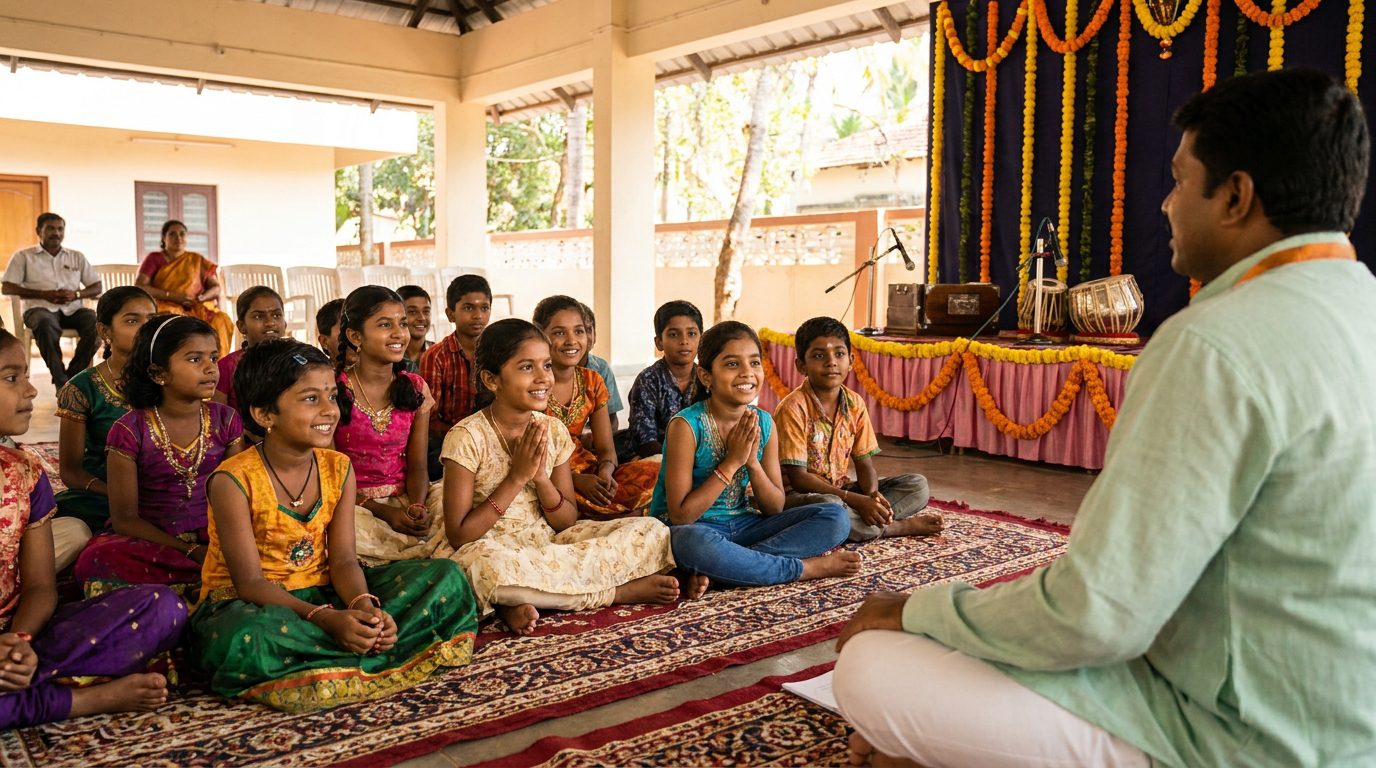
Many parents wonder, “Can children attend Bhakti programs?” The simple answer is yes—children are not only welcome, they are deeply valued.
In Bhakti Yoga, the path of loving devotion to God, spiritual life is not reserved only for adults, scholars, monks, or people who already know Sanskrit words and sacred rituals. Bhakti is for the whole family. It is for the curious child, the tired parent, the sincere beginner, the lifelong practitioner, and the person who simply feels drawn to something peaceful and sacred.
At The Bhakti House, we believe children bring a special kind of purity, joy, and honesty into spiritual gatherings. Their questions are real. Their hearts are open. Their energy reminds us that devotion is not meant to be stiff or distant—it is meant to be alive.
Whether your child sits quietly, sings loudly, asks questions, wanders a little, or simply absorbs the atmosphere, they are receiving something meaningful. A Bhakti program can become a beautiful place where children experience chanting, prayer, service, community, sacred stories, and the gentle presence of God.
Bhakti Yoga means “the yoga of devotion.” The Sanskrit word bhakti means loving service, devotion, or heartfelt love for God. It is not only a philosophy—it is a way of living with love, gratitude, humility, and remembrance of the Divine.
Because Bhakti is centered on love, children naturally belong in this path. A child may not understand every word of a scripture class or every detail of a Sanskrit mantra, but they can understand kindness. They can feel music. They can sense peace. They can learn to offer a flower, fold their hands, say a simple prayer, or chant the names of God.
Bhakti Is a Family Path
In many spiritual traditions, children are included in worship, singing, festivals, meals, and service. Bhakti is especially family-friendly because so much of it is experiential.
Children can participate through:
- Singing and chanting
- Dancing during kirtan
- Hearing sacred stories
- Offering flowers or lamps
- Eating sanctified vegetarian food, often called prasadam
- Helping with simple service
- Making art connected to spiritual themes
- Learning prayers or mantras
- Sitting with parents in a sacred space
In the Bhagavad-gita, one of the most beloved Bhakti scriptures, Krishna says that even a simple offering made with love is accepted: “If one offers Me with love and devotion a leaf, a flower, fruit, or water, I will accept it” (Bhagavad-gita 9.26). This verse is very comforting for families. It reminds us that devotion does not depend on age, wealth, education, or perfection. A child can offer a flower with love, and that offering is spiritually meaningful.
Children Learn Through Atmosphere
Children may not always learn through long explanations. They often learn through atmosphere.
When they see adults chanting peacefully, bowing respectfully, serving food lovingly, speaking kindly, and listening to sacred wisdom, they absorb those impressions. In Sanskrit, spiritual impressions are sometimes called samskaras. A samskara is an impression left on the heart and mind. Good spiritual impressions can stay with a child for a lifetime.
Even if a child seems distracted during a Bhakti program, the sacred sounds, the loving community, and the peaceful environment may be planting seeds within their heart.
What Happens at a Bhakti Program?
A Bhakti program may look slightly different depending on the community, temple, home gathering, or retreat. But most Bhakti programs include some combination of chanting, prayer, wisdom, service, and shared food.
If you are new, please do not worry about knowing what to do. You and your children can simply come as you are.
Kirtan: Sacred Chanting for All Ages
One of the main parts of many Bhakti programs is kirtan. Kirtan means devotional singing, often in a call-and-response style. A leader sings a mantra, and everyone responds together.
A mantra is a sacred sound or prayer that helps bring the mind and heart toward God. The word mantra can be understood as something that helps free the mind from anxiety and distraction.
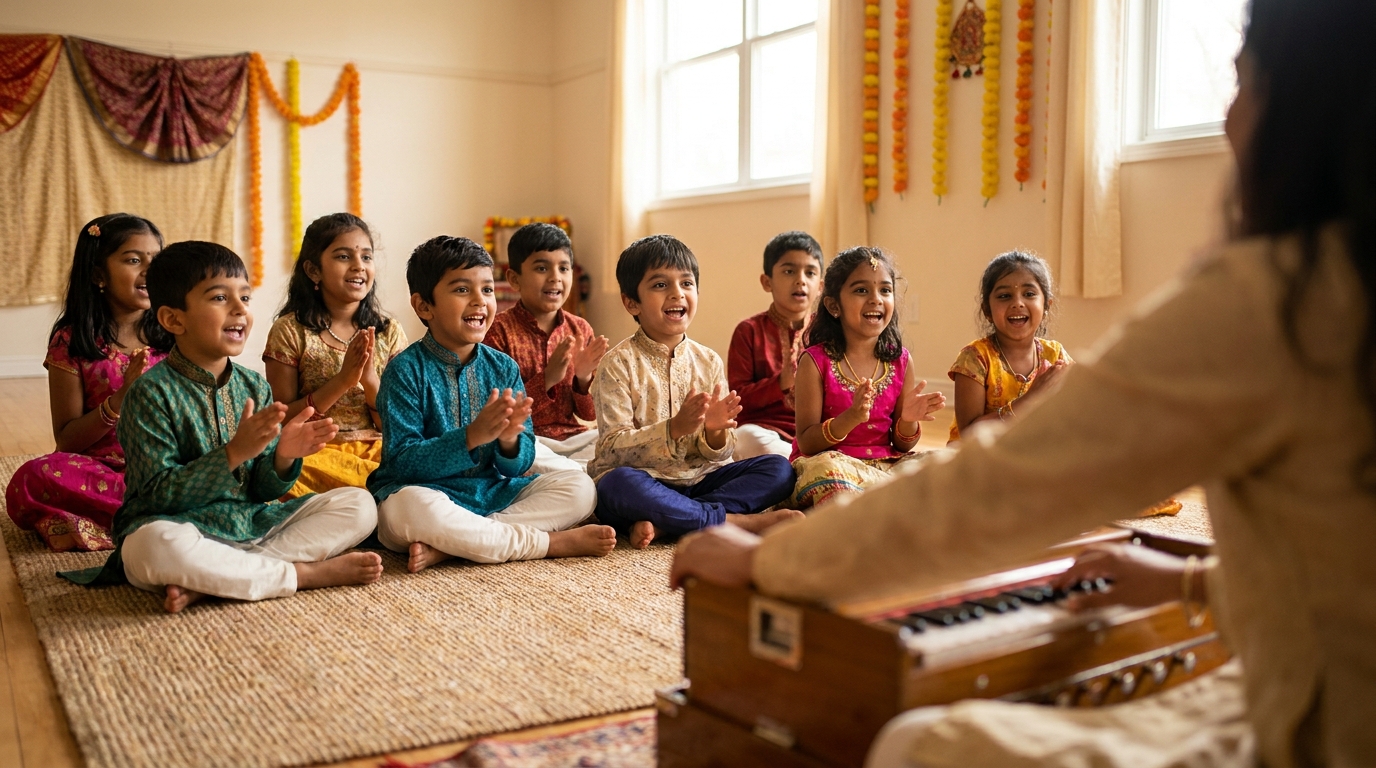
Children often love kirtan because it includes music, rhythm, clapping, and sometimes dancing. They do not need to understand every word to benefit. Sacred sound has a way of reaching the heart beyond language.
One of the most well-known Bhakti mantras is the Hare Krishna mantra:
Hare Krishna Hare Krishna
Krishna Krishna Hare Hare
Hare Rama Hare Rama
Rama Rama Hare Hare
In simple terms, this mantra is a prayer asking to be connected with God’s loving energy and divine presence. The names “Krishna” and “Rama” refer to God, who is all-attractive and the source of joy. “Hare” calls upon God’s compassionate spiritual energy.
For children, this can be presented simply: “We are singing God’s names with love.”
Scripture and Storytelling
Many Bhakti programs include a talk or discussion from sacred texts like the Bhagavad-gita, Srimad-Bhagavatam, or stories from the lives of saints.
The Bhagavad-gita is a conversation between Krishna and Arjuna about life, duty, the soul, and devotion. The Srimad-Bhagavatam is a sacred text filled with teachings, prayers, and stories of God and His devotees.
Children may not sit through a long talk the same way adults do, and that is okay. Some communities offer children’s activities during scripture discussion. In other settings, parents may bring quiet toys, coloring pages, books, or snacks to help children remain comfortable.
Sacred stories can be especially powerful for children. Stories of kindness, courage, honesty, friendship, humility, and devotion help children understand spiritual values in a natural way.
Prasadam: Sacred Food
Many Bhakti programs end with prasadam, vegetarian food that has been lovingly offered to God before being shared.
The Sanskrit word prasadam means mercy or grace. In Bhakti, food is prepared with care, offered to Krishna, and then honored as a gift. Children usually enjoy this part very much.
Sharing prasadam teaches gratitude. It also helps children see eating as something sacred, not just ordinary. Before meals, a family may say a simple prayer: “Dear God, thank You for this food. Please help us use our energy in kind and loving ways.”
Why Bhakti Programs Can Be Good for Children
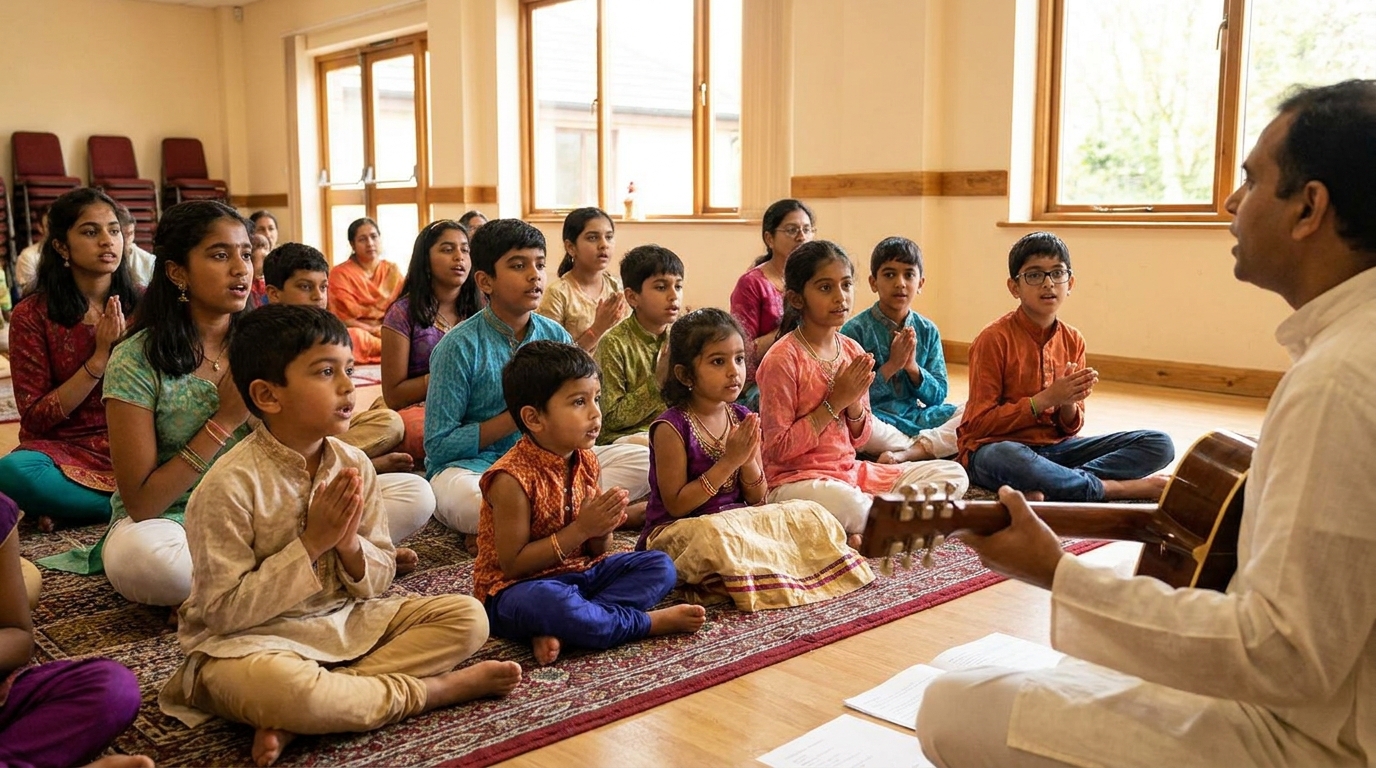
Children today face many pressures—screens, stress, comparison, overstimulation, and sometimes loneliness. A healthy spiritual community can give them grounding, beauty, and belonging.
A Bhakti program is not only about religious education. It is also about nourishing the heart.
Children Experience Peaceful Community
Children need safe, loving communities where they are seen and valued. In Bhakti gatherings, they can meet adults who are trying to live with compassion, self-control, humility, and service.
They may also meet other children and families who are exploring spiritual life. This can help them feel that devotion is not strange or separate from everyday life. It is something shared, joyful, and meaningful.
A child who grows up seeing people gather to chant, pray, serve, and honor sacred food receives a living example of spiritual culture.
Children Learn Service
Service is central to Bhakti Yoga. The Sanskrit word often used is seva, which means loving service offered for the pleasure of God and the benefit of others.
Children can learn seva in simple ways:
- Helping set out cushions
- Passing out song sheets
- Offering water to guests
- Picking up flower petals
- Helping clean after a meal
- Drawing cards for community members
- Welcoming newcomers with a smile
- Helping serve prasadam
Service helps children understand that love is not just a feeling. Love becomes real through action.
In the Bhagavad-gita 3.9, Krishna teaches that work can become sacred when done as an offering. For children, we can explain this simply: “When we help with love, our actions become spiritual.”
Children Learn Respect for God and Others
Bhakti programs gently teach reverence. Reverence means honoring what is sacred.
Children may learn to remove shoes in a temple room, speak softly during prayer, fold hands, bow, or avoid stepping on sacred books. These practices are not meant to create fear or pressure. They are ways to help the body and mind remember, “This is a special space.”
They also learn respect for others—elders, guests, teachers, friends, and people of different backgrounds. A true Bhakti community welcomes everyone as a soul, a spiritual being, part of God’s family.
Children Receive Spiritual Identity
Bhakti scriptures teach that we are not only the body or mind. We are atman, the soul—eternal, conscious, and loved by God.
This teaching can be very healing for children. It helps them understand that their worth is deeper than appearance, grades, popularity, abilities, or achievements.
A child can learn: “I am a soul. I am loved by God. Others are souls too. I can treat everyone with kindness.”
This simple spiritual identity can support emotional resilience and compassion.
Check out our latest posts at https://thebhaktihouse.org/blog.
What If My Child Is Noisy or Restless?
This is one of the most common concerns parents have. Many parents hesitate to attend Bhakti programs because they worry their child may cry, talk, run, or disturb others.
Please know this: children are children. A loving spiritual community understands that.
Of course, parents can guide their children gently and respectfully. But no one should feel ashamed because a child is still learning.
Spiritual Life Is Not About Perfect Behavior
Bhakti is not about appearing perfect. It is about sincerely turning toward God.
Sometimes a child will sit peacefully. Sometimes they will need to step outside. Sometimes they will chant. Sometimes they will spill something. This is family life, and it belongs in spiritual community.
In the Srimad-Bhagavatam, there are many examples of devotion appearing in simple, natural, and even unexpected ways. God sees the heart. A parent’s effort to bring a child into sacred association is itself an act of devotion.
Practical Tips for Parents
Parents can prepare in small ways to make the experience smoother:
- Explain where you are going before arriving
- Tell your child what they may see and hear
- Bring quiet activities like coloring or soft books
- Sit near an exit if your child may need breaks
- Bring water or simple snacks if appropriate
- Encourage participation without forcing it
- Step outside when needed, then return peacefully
- Celebrate small moments of engagement
You might say, “We are going to a Bhakti program. People will sing God’s names, listen to wisdom, and share special food. You can sing, clap, sit with me, or look at your book quietly.”
Clear expectations help children feel safe.
How Communities Can Support Families
Bhakti communities can also help parents by creating a welcoming environment.
This may include:
- A family-friendly seating area
- Children’s books or coloring supplies
- Short explanations of rituals
- Outdoor or quiet spaces for breaks
- Children’s kirtan or story time
- Patient, kind communication
- Opportunities for children to serve
- Respectful support without judgment
When families feel welcome, children can grow spiritually without pressure.
How Children Can Participate in Chanting and Prayer
Children do not need to chant perfectly or pronounce every Sanskrit word correctly. Their sincerity is more important than technical skill.
In Bhakti, chanting is a way to connect with God through sound. It can be joyful, peaceful, playful, and deeply personal.
Simple Mantras for Children
Children may begin with short, easy prayers or names of God:
- “Krishna”
- “Rama”
- “Govinda”
- “Gopala”
- “Hare Krishna”
- “Thank You, God”
- “Please guide me”
- “Please help me be kind”
Govinda is a name of Krishna meaning one who gives pleasure to the senses, cows, land, and all living beings. Gopala means the protector of the cows and the loving caretaker of all souls.
Children often connect with names of God when they are explained through affection: “Gopala is Krishna as a sweet cowherd boy who loves His friends, the animals, and the forest.”
Prayer in a Child’s Own Words
Bhakti encourages personal prayer. Children can speak to God in their own words.
They may pray:
“Dear Krishna, thank You for my family.”
“Dear God, please help my friend feel better.”
“Please help me not be scared.”
“Please help me share.”
“Thank You for prasadam.”
These simple prayers are very precious. They teach children that God is not far away. God is someone they can turn to with honesty.
Chanting at Home
A Bhakti program may inspire families to bring chanting into daily life at home.
This can be very simple:
- Sing one mantra before bedtime
- Play soft kirtan in the morning
- Chant together before meals
- Keep a small prayer space with a picture, candle, or flower
- Let children offer water, fruit, or flowers
- Practice gratitude as a family
Even five minutes of sincere chanting can change the atmosphere of a home.
Are Bhakti Programs Only for Hindu Families?
No. Bhakti Yoga is rooted in the ancient devotional traditions of India, and many of its scriptures and practices come from the Vedic tradition. At the same time, the heart of Bhakti is universal: love for God, compassion for others, prayer, chanting, humility, and service.
People from many backgrounds attend Bhakti programs. Some identify as Hindu. Some come from Christian, Jewish, Muslim, Buddhist, Sikh, spiritual-but-not-religious, or interfaith backgrounds. Some are simply curious.
Everyone is welcome.
Respecting Different Backgrounds
A healthy Bhakti community does not pressure children or families to reject their background. Instead, Bhakti invites us to deepen our relationship with God through love and devotion.
The names, stories, and practices of Bhakti may be new to some families. That is okay. Questions are welcome.
Children are often very open to learning. They may ask, “Who is Krishna?” or “Why do people bow?” or “Why are we singing the same words again?” These questions are beautiful opportunities.
We can answer simply:
“Krishna is a name for God.”
“We bow to show respect and gratitude.”
“We repeat the mantra because it helps our hearts remember God.”
Bhakti Is About the Heart
Krishna says in the Bhagavad-gita 4.11, “As all surrender unto Me, I reward them accordingly. Everyone follows My path in all respects.” This verse helps us understand that God meets each person according to their sincerity.
A child does not need to understand religious categories to begin a relationship with God. They can begin with love.
Teaching Children Bhakti Values in Everyday Life
Attending a Bhakti program is wonderful, but the deepest learning happens when spiritual values are practiced at home and in daily life.
Bhakti is not only what we do in a temple or gathering. It is how we speak, eat, work, forgive, share, and remember God throughout the day.
Kindness as Devotion
Children can learn that kindness is spiritual.
When they share toys, speak gently, help a sibling, feed an animal, or comfort a friend, they are practicing love in action. Parents can connect these actions to Bhakti by saying, “That was a beautiful service,” or “Krishna is pleased when we are kind to others.”
Gratitude Before Meals
Mealtime is a simple place to practice Bhakti.
Families can pause before eating and offer gratitude. If the food is vegetarian and prepared with devotion, it may be offered to God with a prayer. Even very young children can help by placing a flower nearby or saying, “Thank You, Krishna.”
This teaches that food is a gift, not something to take for granted.
Sacred Stories Before Bed
Children love stories. Bhakti offers many uplifting stories filled with devotion and wisdom.
Parents may share stories of:
- Prahlada, a young devotee who remembered God even in difficulty
- Dhruva, a child who sought God with determination
- Krishna’s childhood pastimes in Vrindavan
- Hanuman’s loyal service to Lord Rama
- The compassion of saints and teachers
These stories should be shared with warmth, not fear. The goal is to inspire love, courage, and trust in God.
Celebrating Festivals
Bhakti festivals are especially joyful for children. They may include music, drama, flowers, decorations, special food, and storytelling.
Festivals such as Janmashtami, the appearance day of Krishna, or Gaura Purnima, honoring Sri Chaitanya Mahaprabhu, can help children experience devotion as celebration.
Sri Chaitanya Mahaprabhu, a great saint and teacher of Bhakti, shared the practice of chanting God’s names widely. His mood was generous and welcoming. He taught that chanting is for everyone, regardless of background, education, or social position.
Helping Children Grow Without Pressure
One of the most important parts of guiding children spiritually is to avoid forcing devotion.
Bhakti means love. Love grows best in an atmosphere of trust, joy, and freedom.
Invitation Instead of Force
Parents can invite children to participate:
“Would you like to offer a flower?”
“Would you like to clap with the kirtan?”
“Would you like to help serve prasadam?”
“Would you like to hear a Krishna story?”
If they say no, that is okay. The invitation itself is meaningful.
Over time, children often become interested naturally when they see adults practicing sincerely.
Let Children Ask Questions
Children may ask honest and sometimes difficult questions:
“Is God real?”
“Why do we chant?”
“Can God hear me?”
“Why do bad things happen?”
“Do I have to believe this?”
These questions should be welcomed. A humble answer is often best: “That is a very good question. Let’s think about it together.” Or, “I am still learning too, but the scriptures teach that God is loving and present in our hearts.”
Faith becomes stronger when questions are treated with respect.
Model the Practice
Children learn more from what adults live than what adults say.
If parents chant but speak harshly, children notice. If parents pray but do not forgive, children notice. If parents attend programs but do not serve, children notice.
But when parents sincerely try—apologizing when they make mistakes, practicing gratitude, chanting with humility, serving others—children also notice.
Spiritual growth is not about being flawless. It is about returning to God again and again with sincerity.
Safety, Comfort, and Inclusion at Bhakti Programs
For children to thrive in spiritual spaces, they must feel safe and cared for. A Bhakti program should be welcoming not only in words, but also in practice.
Emotional Safety
Children should never be shamed for being young, curious, or energetic. Gentle guidance is helpful, but embarrassment and harshness can close the heart.
A devotional environment should reflect compassion. The goal is to help children associate God with love, shelter, and joy.
Physical Safety
Parents and communities should also be mindful of practical safety:
- Clear walkways
- Supervision around candles or lamps
- Safe food options and allergy awareness
- Clean spaces for children
- Respectful boundaries
- Trusted adults in children’s programs
- Clear communication with parents
Spiritual community should protect children and honor parents’ trust.
Inclusion for Different Needs
Some children are sensitive to loud sounds, crowds, textures, or long sitting. Some are neurodivergent. Some have disabilities or medical needs.
They are welcome too.
Families may use headphones during kirtan, take breaks outside, bring comfort items, or participate in shorter ways. Bhakti is not measured by how long a child sits still. It is measured by sincerity and connection.
A child who listens to one mantra with an open heart has taken a beautiful step.
Frequently Asked Questions About Children at Bhakti Programs
Many families feel more comfortable attending when they know what to expect. Here are some common questions.
What Age Is Appropriate?
Children of all ages can attend Bhakti programs, including babies and toddlers. The experience may look different depending on age.
Babies may simply rest in the sacred atmosphere. Toddlers may move around and enjoy music. Older children may sing, ask questions, serve, or join classes. Teenagers may appreciate deeper discussions, philosophy, music, meditation, and meaningful friendships.
Does My Child Need to Know Sanskrit?
No. Sanskrit is a sacred language used in many Bhakti prayers and scriptures, but children do not need to know Sanskrit to attend.
Simple explanations can help:
- Bhakti means loving devotion.
- Kirtan means singing God’s names together.
- Mantra means sacred sound or prayer.
- Prasadam means food offered to God with love.
- Seva means loving service.
Children usually learn naturally through repetition and experience.
What Should Children Wear?
Comfortable, modest clothing is usually best. Some families enjoy wearing traditional Indian devotional clothing, but it is not required.
If shoes are removed in the sacred space, you can explain to children: “We take off our shoes to show respect, like entering a special place.”
What If We Are New and Do Not Know Anyone?
You are still welcome. Many people come to Bhakti programs for the first time without knowing anyone.
You can arrive a little early, introduce yourself, and let someone know it is your first visit. Most Bhakti communities are happy to help you understand what is happening.
At The Bhakti House, the spirit is simple: come as you are, participate as you feel comfortable, and know that your sincere presence is valued.
The Spiritual Gift of Bringing Children to Bhakti
When parents bring children to Bhakti programs, they are giving them a gift beyond entertainment or education. They are giving them sacred sound, spiritual friendship, meaningful values, and memories connected to God.
A child may grow up remembering the sound of kartals, the warmth of prasadam, the fragrance of incense, the kindness of devotees, the joy of dancing, or the peace of sitting beside a parent during prayer.
These memories can become spiritual anchors later in life.
Seeds of Devotion
Bhakti teachers often speak of devotion as a seed planted in the heart. With hearing, chanting, prayer, and service, that seed is watered.
Children may not always show immediate interest. Sometimes the seed rests quietly. But no sincere spiritual impression is wasted.
In the Bhagavad-gita 2.40, Krishna says that even a little progress on this path can protect one from great fear. This is a hopeful teaching for parents. Every small act of devotion matters.
One mantra heard, one flower offered, one plate of prasadam honored, one story remembered—these can nourish the soul.
Parents Also Receive Grace
Bringing children to spiritual programs can require patience and humility. Parents may not hear the whole class. They may spend half the kirtan walking outside with a restless toddler. They may feel distracted.
But this too can be Bhakti.
Serving a child with love, helping them connect with God, and sacrificing personal comfort for their spiritual benefit is sacred service. God sees that effort.
Sometimes parents think, “I did not get much out of the program today.” But perhaps the offering was not only what you received. Perhaps it was what you gave.
A Gentle Invitation for Every Family
So, can children attend Bhakti programs? Yes, wholeheartedly.
Children are welcome in Bhakti because Bhakti is the path of love. They may come with wiggles, questions, laughter, tears, curiosity, and wonder. They may chant loudly or quietly. They may sit for a moment and then need to move. They may understand a little or simply feel the peace.
All of it can be part of their spiritual journey.
If you are a parent, grandparent, caregiver, or friend wondering whether to bring a child to a Bhakti gathering, please feel encouraged. You do not need to have everything figured out. You do not need to know all the prayers. You do not need a perfectly behaved child. You only need a sincere desire to take one step closer to God.
Come gently. Come humbly. Come with your family as you are.
At The Bhakti House, people of all backgrounds are welcome. Every soul is loved by God, and every sincere step matters. Whether your family begins with one kirtan, one prayer, one shared meal, one act of service, or one simple question, that step is precious.
May every child feel safe, loved, and spiritually nourished. May every parent feel supported. And may each of us, young or old, take one sincere step toward God today.
FAQs
1. What are Bhakti programs?
Bhakti programs are spiritual gatherings or events that focus on devotional practices, such as chanting, singing, and studying sacred texts, within the Bhakti tradition of Hinduism.
2. Can children attend Bhakti programs?
Yes, children are generally welcome to attend Bhakti programs, as the teachings and practices are often inclusive of all ages. However, it is advisable to check with the specific organizers or leaders of the program to ensure that it is suitable for children.
3. Are there any specific guidelines for children attending Bhakti programs?
Some Bhakti programs may have specific guidelines or expectations for children attending, such as maintaining respectful behavior and participating in age-appropriate activities. It is recommended to inquire about any such guidelines before bringing children to a Bhakti program.
4. What are the potential benefits for children attending Bhakti programs?
Children attending Bhakti programs may have the opportunity to learn about spiritual values, develop a sense of community and belonging, and cultivate a connection to their cultural and religious heritage.
5. Are there any age restrictions for children attending Bhakti programs?
While there may not be strict age restrictions for children attending Bhakti programs, it is important for parents or guardians to use their discretion and consider the appropriateness of the program for their child’s age and maturity level.

