
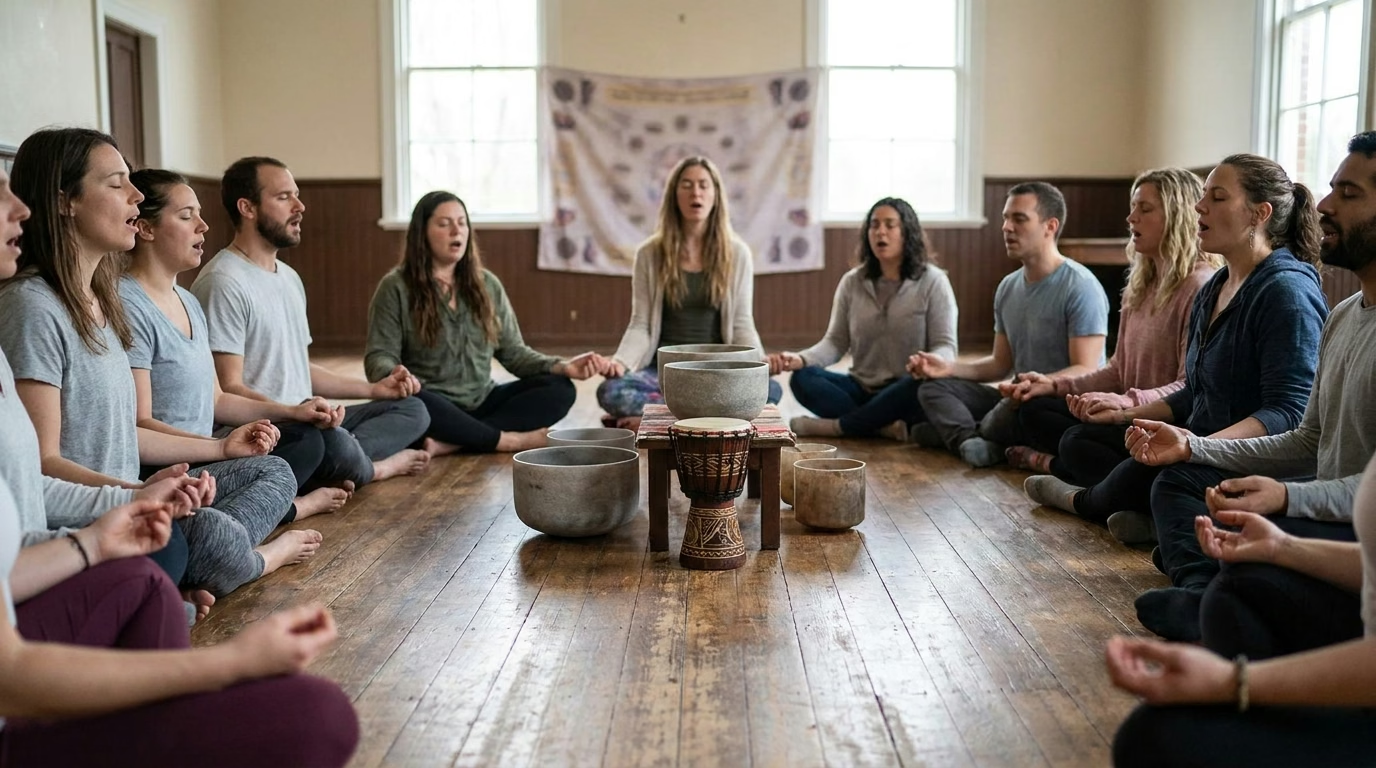
Attentive chanting is the loving practice of bringing the mind, heart, and voice into the sacred sound of God’s names.
In Bhakti Yoga, the yoga of devotion, chanting is not only a meditation technique. It is a relationship. It is a way of turning toward the Divine with sincerity, humility, and love.
Many people chant mantras such as the Hare Krishna maha-mantra:
Hare Krishna, Hare Krishna, Krishna Krishna, Hare Hare
Hare Rama, Hare Rama, Rama Rama, Hare Hare
The word mantra comes from Sanskrit. A simple way to understand it is “a sacred sound that helps free the mind.” Hare is a call to the Divine energy of love, Krishna means “the all-attractive One,” and Rama means “the source of joy and spiritual pleasure.”
So this mantra is a heartfelt prayer: “O Lord, O Divine Energy, please engage me in Your loving service.”
Attentive chanting means we are not simply repeating words. We are listening. We are offering. We are returning again and again to the holy name with faith, even when the mind wanders.
And the mind will wander. That is not a failure. It is part of the journey.
The beauty of Bhakti Yoga is that God meets us where we are. We do not need to be perfect to begin. We simply need to be sincere.
Why Focus Matters in Chanting Meditation
The Mind Naturally Wanders
Anyone who has tried meditation knows how active the mind can be.
We sit down to chant, and suddenly we remember an email, a conversation, a grocery list, a worry from yesterday, or a plan for tomorrow. The mind moves quickly, often without our permission.
In the Bhagavad-gita, a sacred conversation between Lord Krishna and Arjuna, Arjuna honestly says:
“The mind is restless, turbulent, obstinate, and very strong.”
This is found in Bhagavad-gita 6.34. Arjuna was a great warrior and a deeply spiritual soul, yet he admitted that controlling the mind felt as difficult as controlling the wind.
This honesty is encouraging for all of us. If our mind wanders during chanting, we are not alone. We are simply experiencing the human condition.
Lord Krishna responds with compassion. He says that the mind can be controlled by practice and detachment. In other words, we gently practice bringing the mind back, and we gradually release the distractions that pull us away.
Attentive chanting is exactly this practice.
Focus Is an Offering of Love
In Bhakti Yoga, attention is not just mental discipline. It is an offering.
When we chant with focus, we are saying, “My Lord, for these moments, I want to be with You.”
Just as we feel honored when someone listens to us with care, the heart becomes purified when we listen to the holy name with care.
The goal is not to force the mind harshly. The goal is to lovingly redirect it.
When a child learning to walk falls down, a loving parent does not condemn the child. The parent helps the child stand again. In the same way, when our attention falls away, we can gently stand it back up and return to the mantra.
This is attentive chanting.
Focused Meditation Awakens the Heart
Chanting with attention allows the sacred sound to enter more deeply.
We may begin by hearing the mantra with our ears, but gradually we begin to hear with the heart. The holy name cleanses the dust of forgetfulness, softens the ego, and awakens our natural longing for God.
In the Sri Chaitanya Charitamrita, an important Bhakti scripture, Sri Chaitanya Mahaprabhu teaches that chanting the holy names cleanses the mirror of the heart.
This is a very practical image. A mirror covered in dust cannot reflect clearly. In the same way, when the heart is covered by anxiety, pride, envy, fear, or distraction, we may struggle to see ourselves and God clearly.
Chanting is the gentle cleaning process.
The Spiritual Power of the Holy Name
The Holy Name Is Personal
In Bhakti Yoga, God’s name is not considered ordinary sound.
The holy name is understood to be spiritually powerful and non-different from the Lord. This means that when we chant with sincerity, we are not merely thinking about God from a distance. We are coming into contact with God through sound.
This may be a new idea for some readers, and that is okay. Bhakti welcomes thoughtful exploration.
We can begin simply: sacred sound has the power to change consciousness. Even ordinary words affect us deeply. A kind word can bring hope. A harsh word can cause pain. A song can awaken memories. A prayer can bring peace.
If ordinary sound has such power, what to speak of sound that carries the name of the Divine?
Chanting Is Accessible to Everyone
One of the most beautiful gifts of Bhakti Yoga is that chanting is available to all people.
You do not need to be born in a particular culture. You do not need to be fluent in Sanskrit. You do not need to have studied philosophy for years. You do not need to consider yourself “spiritual enough.”
You can begin where you are.
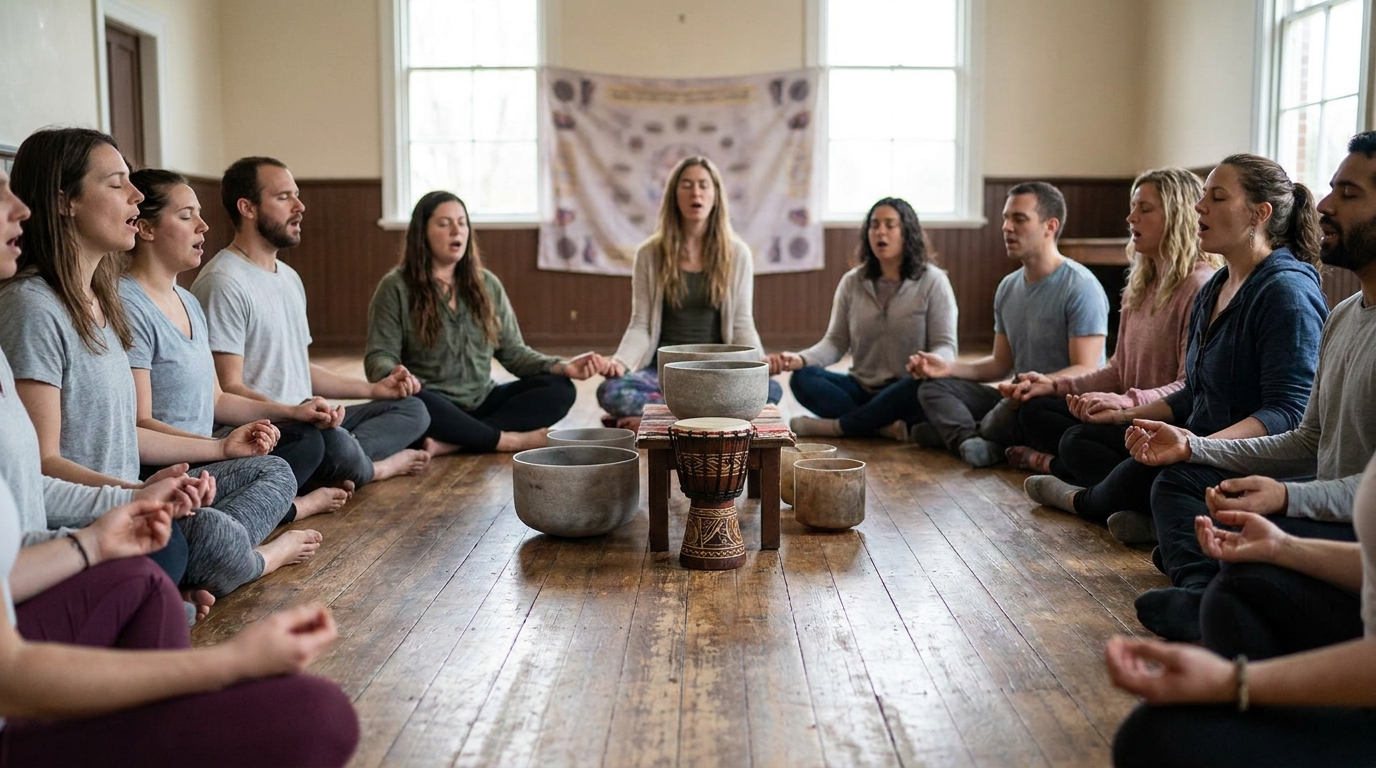
You can chant softly in your room, in your car, while walking, in a temple, in a yoga studio, or with friends in a kirtan gathering. Kirtan means devotional singing, usually done together with music and call-and-response chanting.
You can chant with beads, known as japa mala. Japa means personal, meditative repetition of a mantra, and mala means a string of beads used to count the mantras. Many practitioners chant on 108 beads as a daily spiritual practice.
But even one sincere mantra matters.
The holy name does not reject anyone. The holy name is merciful.
Scripture Encourages Chanting in This Age
The Srimad Bhagavatam, one of the central scriptures of Bhakti Yoga, recommends chanting the names of God as the most effective spiritual practice for this age.
Why?
Because life today is busy, noisy, and often overwhelming. Many people feel pulled in many directions. Attention is fragmented. Hearts are tired. Minds are overstimulated.
Chanting is simple, portable, and powerful. It does not require wealth, social status, or complicated rituals. It asks for the heart.
In the Brihan-naradiya Purana, a famous verse emphasizes:
“Chant the holy name, chant the holy name, chant the holy name of the Lord.”
This repetition is not accidental. It is compassionate urgency. The scriptures are saying, “Here is a path you can actually walk. Here is a practice that can reach you even in a distracted age.”
Check out our latest posts at https://thebhaktihouse.org/blog.
Practical Ways to Chant with More Attention
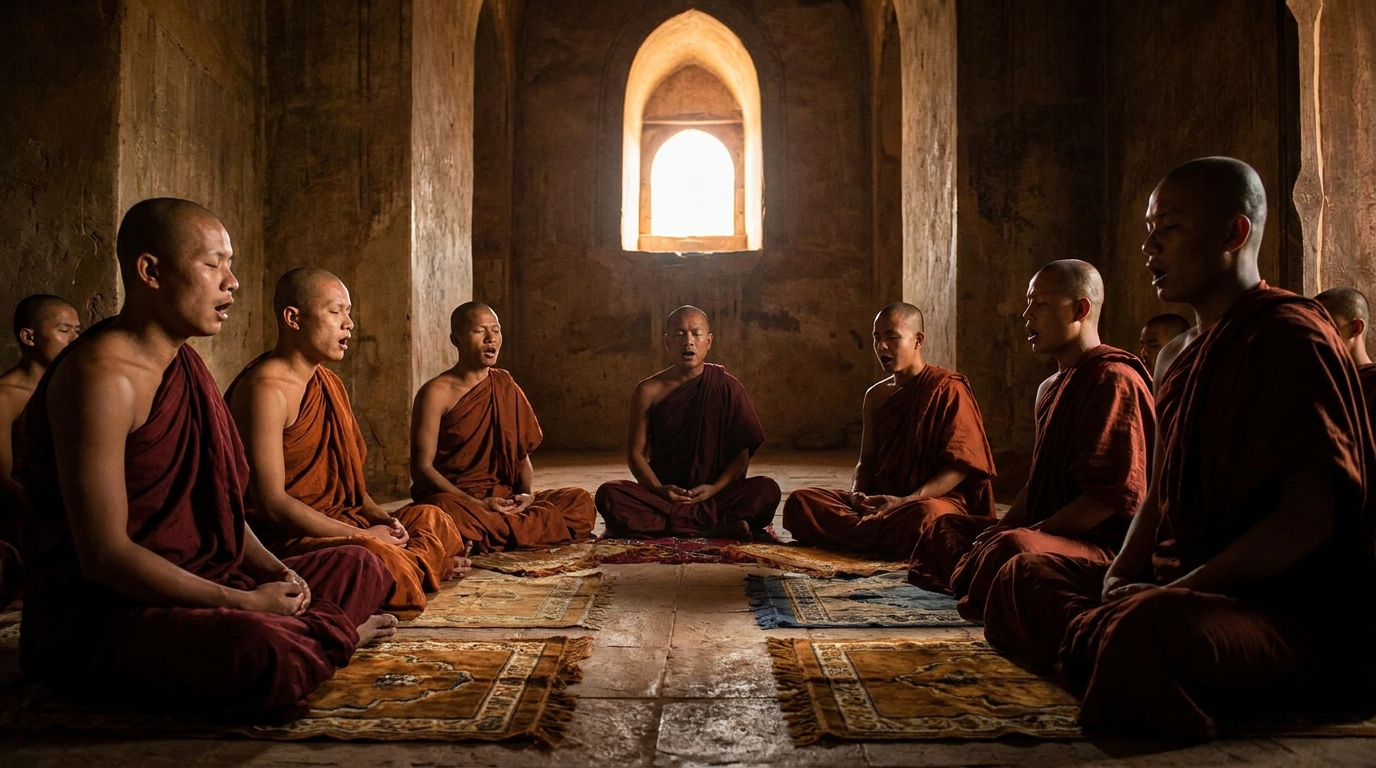
Begin with a Prayer
Before chanting, take a moment to pray.
It can be very simple:
“Dear Lord, please help me hear Your name. Please guide my mind back to You. Please let this chanting be an offering of love.”
Prayer softens the heart. It reminds us that chanting is not a mechanical performance. It is a conversation with the Divine.
If you come from a different faith background, you can pray in the language of your own heart. Bhakti Yoga honors sincerity. The essence is to approach God with humility and openness.
Create a Sacred Space
Your environment can support attentive chanting.
You might choose a clean, peaceful corner of your home. You may light a candle, offer incense, place a sacred picture, or keep your prayer beads nearby. These simple acts tell the mind, “This time is sacred.”
A sacred space does not need to be fancy. It just needs to be intentional.
If your home is busy, do what you can. A quiet chair, a walk in nature, or a few minutes before others wake up can become sacred when offered with love.
Listen to Each Word
One of the most important practices in attentive chanting is hearing.
Try to clearly pronounce and hear each word of the mantra:
Hare Krishna, Hare Krishna, Krishna Krishna, Hare Hare
Hare Rama, Hare Rama, Rama Rama, Hare Hare
Let the ears receive the sound. Let the mind rest in the sound. Let the heart be touched by the sound.
When thoughts come, do not fight them with frustration. Simply return to hearing.
This returning is the practice. This returning is meditation. This returning is devotion.
Slow Down When Needed
Sometimes we chant quickly because the mind is rushing. At other times, speed may be natural and joyful, especially in kirtan. But during personal japa meditation, it can help to slow down enough to hear.
If you notice that your mouth is chanting but your mind is elsewhere, pause for a moment. Take a breath. Begin again.
There is no shame in beginning again. In spiritual life, beginning again is a sacred skill.
Use Your Body to Support Your Mind
The body affects the mind.
Sit in a way that is comfortable but alert. Keep the spine gently upright if possible. Relax the shoulders. Breathe naturally.
Some people chant better while walking slowly. Others prefer sitting still. Some like to chant early in the morning when the mind is quieter. Others find evening chanting helps them release the day.
Experiment humbly. The goal is not to imitate someone else perfectly. The goal is to find a rhythm that helps you sincerely connect.
Common Obstacles in Attentive Chanting
Distraction
Distraction is probably the most common challenge.
We may chant while thinking about everything except the mantra. This can feel discouraging, but it is also revealing. Chanting shows us what is happening inside. It helps us notice the patterns of the mind.
Instead of judging yourself, become curious.
“What is pulling my attention?”
“What am I attached to?”
“What worry am I carrying?”
“What can I place at God’s feet today?”
In this way, even distraction can become part of spiritual growth.
Sleepiness
Sometimes we sit to chant and immediately feel sleepy.
This may mean we need more rest. Spiritual practice is not separate from caring for the body. A tired body can make meditation difficult.
Try chanting at a time when you are more awake. Wash your face. Sit with good posture. Chant aloud. Walk while chanting if needed.
The voice can help awaken attention.
Mechanical Repetition
Because chanting involves repetition, it can become mechanical if we are not careful.
But repetition itself is not the problem. Love often expresses itself through repetition. We say “thank you” many times. We say “I love you” many times. We breathe again and again. The sun rises again and again.
The question is whether the repetition is empty or offered.
If chanting feels dry, bring in prayer:
“Please help me chant with heart.”
“Please let me serve You.”
“Please allow me to remember You.”
Even dry chanting, done sincerely, is valuable. The heart may not always feel soft, but the practice is still working beneath the surface.
Expecting Instant Results
Modern life trains us to expect quick outcomes. We want fast peace, fast clarity, fast transformation.
Bhakti Yoga invites us into a lifelong relationship.
Some days chanting feels sweet and focused. Other days it feels difficult. Both days are part of the path.
A farmer waters the seed regularly, even before seeing the fruit. In the same way, we water the seed of devotion by chanting daily, trusting that growth is happening.
The Relationship Between Chanting and the Heart
Chanting Cleanses Inner Noise
Focused meditation through chanting gradually cleanses the heart of inner noise.
This does not mean we become emotionless. Bhakti is full of feeling. But our emotions become more connected to the soul and less controlled by the ego.
We begin to notice when anger rises. We become more aware of envy. We see our fears more honestly. And through chanting, we bring all of this before God.
The holy name does not ask us to hide. It invites us to be real.
Chanting Awakens Humility
Attentive chanting teaches humility because we quickly see that we cannot control the mind by ego alone.
We need grace.
Grace means divine help, mercy, and loving support from God. In Bhakti Yoga, spiritual progress is not only achieved by personal effort. It is received through sincere effort and divine mercy.
We do our part by showing up. God does what we cannot do by purifying the heart.
This balance is beautiful. We are responsible, but not alone.
Chanting Deepens Love
The ultimate purpose of chanting is love.
Not escape. Not spiritual pride. Not mystical achievement for its own sake.
The goal of Bhakti Yoga is prema, pure love of God. This love naturally extends to all living beings because every soul is connected to the Divine.
As chanting deepens, we may become kinder, more patient, more forgiving, and more eager to serve. These are signs that the holy name is touching the heart.
True attentive chanting does not make us cold or superior. It makes us more compassionate.
Chanting as a Daily Spiritual Practice
Start Small and Be Steady
If you are new to chanting, begin in a simple way.
You might chant for five minutes each morning. Or you may chant one round on japa beads. One round means chanting the full mantra once on each of the 108 beads.
If that feels like too much, begin with one sincere mantra.
Consistency matters more than dramatic beginnings. A small daily practice can become a doorway to deep transformation.
The Bhagavad-gita teaches that even a little progress on the spiritual path can protect one from great fear. This is a comforting reminder. No sincere effort is wasted.
Choose a Time That Supports You
Many Bhakti practitioners chant early in the morning, especially during the quiet hours before sunrise. This time is often called brahma-muhurta, a Sanskrit phrase referring to a spiritually favorable time before dawn.
But if early morning is not possible, do not be discouraged.
Choose a time you can realistically honor. The best time to chant is the time you will actually show up with sincerity.
Over time, your practice may naturally grow.
Chant Before Screens
One practical suggestion for modern life is to chant before checking your phone.
The first impressions of the morning shape the mind. If we begin the day with messages, news, and social media, the mind may become scattered before we even start.
If possible, give the first part of your day to sacred sound.
Even ten minutes of attentive chanting before entering the digital world can bring steadiness, clarity, and spiritual protection.
Keep a Gentle Journal
After chanting, you may write one or two sentences in a journal.
You could note:
“How was my attention today?”
“What prayer came up?”
“What distraction did I notice?”
“What am I grateful for?”
“How can I serve today?”
This is not for self-criticism. It is for awareness.
A gentle journal can help you see your spiritual growth over time.
Attentive Chanting in Community
The Gift of Kirtan
While personal chanting is powerful, chanting in community brings a special kind of joy.
Kirtan is the congregational singing of sacred mantras. Often one person leads, and others respond. There may be harmonium, drums, kartals, guitar, or simply voices.
In kirtan, people from many backgrounds can come together beyond labels. The music carries the mantra, and the mantra carries the heart.
You do not need a perfect voice. You do not need to know everything. You can simply listen, sing, clap, or sit quietly.
The holy name welcomes your presence.
Sangha: Spiritual Friendship
Sangha means spiritual community or association.
Attentive chanting becomes easier when we walk with others who value spiritual life. Friends can encourage us, chant with us, share wisdom, and remind us of our deeper purpose.
In Bhakti, community is not meant to be a place of judgment. It is meant to be a place of support and service.
We grow best when we are nourished by kindness, truth, and shared devotion.
Serving Together
Chanting naturally leads to service.
In Sanskrit, seva means loving service. It is the practice of offering our time, energy, talents, and care for the pleasure of God and the benefit of others.
When we chant attentively, the heart often asks, “How can I serve?”
Service may look like cooking a meal with love, helping at a temple or spiritual center, caring for family, feeding others, listening to someone in pain, cleaning a sacred space, sharing wisdom, or simply bringing more kindness into daily work.
Bhakti Yoga is not separate from life. It spiritualizes life.
The Inner Attitude of Attentive Chanting
Humility Opens the Door
A humble heart can receive the holy name deeply.
Humility does not mean thinking we are worthless. It means recognizing that we are souls dependent on God’s love. It means being honest about our limitations while trusting in divine mercy.
Sri Chaitanya Mahaprabhu gave a beautiful teaching for chanting:
“One should chant the holy name of the Lord in a humble state of mind, thinking oneself lower than a blade of grass, more tolerant than a tree, free from false pride, and ready to offer respect to others.”
This verse is often treasured by Bhakti practitioners because it describes the mood that helps chanting become constant and pure.
A blade of grass bends when stepped on. A tree gives shade even to those who cut it. This does not mean we allow harm or abandon healthy boundaries. It means we cultivate a heart that is not easily ruled by pride.
Gratitude Nourishes Attention
Gratitude helps the mind settle.
Before chanting, remember one gift in your life. Breath. Shelter. A friend. A lesson. The chance to pray. The mercy of another day.
Gratitude turns chanting from duty into offering.
When we chant with gratitude, we are less likely to rush. We become more present to the sacredness of the moment.
Dependence on Grace
Attentive chanting is not merely about becoming a better meditator. It is about becoming more dependent on God.
We can pray:
“I cannot control my mind alone. Please help me.”
“I cannot purify my heart alone. Please guide me.”
“I cannot love You purely alone. Please teach me.”
This dependence is not weakness. It is spiritual wisdom.
The soul is naturally connected to God, just as a ray of sunlight is connected to the sun. Chanting helps us remember that connection.
How Attentive Chanting Transforms Daily Life
More Peace in the Mind
Focused meditation through chanting can bring peace because it gives the mind a sacred place to rest.
The mind is always searching for something to hold. When it holds worries, it becomes anxious. When it holds resentment, it becomes bitter. When it holds the holy name, it becomes purified and strengthened.
This peace may come gradually. It may appear first as a few quiet moments. Then perhaps a calmer response in a difficult conversation. Then a deeper trust during uncertainty.
Spiritual growth often shows itself in small, real changes.
More Compassion for Others
As chanting softens the heart, we begin to see others differently.
Bhakti scriptures teach that every living being is a soul, an eternal spiritual person, beloved by God. This vision can transform how we relate to people, animals, and the world around us.
We may become less interested in judging and more interested in serving.
Attentive chanting helps us remember that we are not the center. God is the center. And when God is in the center, everyone has a place.
More Strength in Challenges
Chanting does not make life free from difficulty. But it gives us shelter within difficulty.
The holy name becomes a companion in grief, confusion, joy, transition, and decision-making. We can chant in hospital rooms, at kitchen sinks, on morning walks, before exams, after loss, and during times of gratitude.
God’s names can go anywhere with us.
This is one reason chanting is so merciful. No external situation can fully block our ability to call out to God.
A Simple Attentive Chanting Practice
Step 1: Pause
Before you chant, pause for a few breaths.
Let the body arrive. Let the mind know that this moment is for spiritual connection.
Step 2: Pray
Offer a simple prayer.
“Please help me hear. Please help me remember You. Please accept this chanting.”
Step 3: Chant Aloud
Chant clearly enough that you can hear yourself.
If using beads, move from one bead to the next with each full mantra. If not using beads, chant for a set amount of time.
Step 4: Listen
Let listening be your main practice.
When the mind wanders, return to the sound. Again and again.
Step 5: Offer the Results
At the end, offer the practice.
“Whatever attention I had, whatever sincerity I had, I offer to You. Please help me serve today.”
This completes the circle of Bhakti: chanting, prayer, remembrance, and service.
Everyone Can Take One Sincere Step
Attentive chanting is a powerful form of focused meditation, but it is also something very tender and personal. It is the soul calling out to God through sacred sound.
You may come with strong faith, uncertain faith, another faith, or no clear faith at all. You may come with questions. You may come tired, distracted, hopeful, or hesitant.
You are welcome.
Bhakti Yoga does not ask you to pretend. It invites you to begin sincerely.
Chant one mantra. Offer one prayer. Listen for one minute. Serve one person with love. Take one small step toward God.
The holy name is patient. The path of devotion is generous. And the Divine heart is always open to the sincere seeker.
Wherever you are, you can begin today.
FAQs
What is attentive chanting?
Attentive chanting is a practice of repeating a mantra or sacred words with full attention and focus, often used in meditation and spiritual practices.
How is attentive chanting practiced?
Attentive chanting is practiced by sitting in a comfortable position, taking deep breaths, and then repeating a chosen mantra or sacred words with full attention and focus, allowing the mind to become still and centered.
What are the benefits of attentive chanting?
Attentive chanting can help reduce stress, improve concentration, and promote a sense of inner peace and well-being. It is also believed to have spiritual and healing benefits.
Are there specific mantras used in attentive chanting?
There are various mantras used in attentive chanting, depending on the individual’s spiritual or religious beliefs. Some common mantras include “Om,” “Om Namah Shivaya,” and “Hare Krishna.”
Can anyone practice attentive chanting?
Yes, anyone can practice attentive chanting, regardless of their religious or spiritual beliefs. It is a simple and accessible practice that can be beneficial for anyone seeking to cultivate mindfulness and inner peace.

