

Arcana means worship offered with love. In the tradition of Bhakti Yoga, arcana is the practice of honoring the Lord through simple, sacred offerings—such as water, flowers, incense, food, prayers, and heartfelt attention.
The Sanskrit word arcana comes from the root meaning “to worship” or “to honor.” It is one of the beautiful ways the heart learns to relate to God personally. Rather than seeing worship as a distant ritual, arcana invites us to bring devotion into our daily home life.
In Bhakti Yoga, God is not understood as an abstract force only, but as a loving, personal Divine Reality who receives our affection. Many devotees worship Krishna, Rama, Vishnu, Narayana, or other forms of the Supreme Lord. Some may worship according to their family tradition, their spiritual lineage, or their sincere attraction of the heart.
At its essence, arcana is not about perfection. It is about relationship.
A flower offered with love, a lamp waved with humility, or a simple prayer spoken from the heart can become a doorway into deep spiritual connection.
As Krishna says in the Bhagavad-gita:
“If one offers Me with love and devotion a leaf, a flower, a fruit, or water, I will accept it.”
— Bhagavad-gita 9.26
This verse is the heart of home worship. Krishna does not ask for wealth, scholarship, or elaborate performance. He asks for love.
Why Create a Home Worship Practice?
A home worship practice helps transform ordinary space into sacred space. It reminds us that spiritual life is not separate from daily life. The kitchen, the living room, a quiet corner, or a small shelf can become a place of prayer, remembrance, and peace.
In our busy world, the mind is pulled in many directions. Work, family responsibilities, screens, worries, and endless tasks can make the heart feel scattered. Arcana gently gathers the heart and brings it back to God.
A Daily Anchor for the Heart
A meaningful home worship practice gives the day a spiritual center. Even five or ten minutes in front of your altar can change the mood of the whole day.
When we pause to offer a lamp, chant the holy names, or bow our head in prayer, we remember: “I am not alone. I belong to God. My life has a sacred purpose.”
This remembrance is a gift.
In Bhakti Yoga, this is called smaranam, or remembering the Lord. Arcana naturally supports remembrance because it engages the senses. We see the sacred form, smell the incense, touch the flowers, hear the mantra, and taste blessed food called prasadam.
Turning the Home Into a Place of Grace
A home altar does not need to be large or expensive. It simply needs to be cared for with respect.
When we create even a small place for God in our home, we are also making space for grace in our lives. The home becomes more than a place to sleep, eat, and work. It becomes a place where the soul is nourished.
Children, guests, family members, and friends may also feel the peaceful influence. They may not understand every detail, and that is okay. The atmosphere of sincere devotion speaks in a language beyond words.
A Practical Path for Spiritual Growth
Arcana trains us in beautiful qualities: cleanliness, gratitude, discipline, humility, attention, and love.
We learn to think, “What can I offer?” rather than only, “What can I receive?”
This shift is central to Bhakti Yoga. Bhakti means loving devotion. Yoga means connection. Bhakti Yoga is the path of reconnecting with God through love—through chanting, prayer, service, study, community, and remembrance.
Arcana is one practical expression of that love.
Setting Up a Simple Home Altar
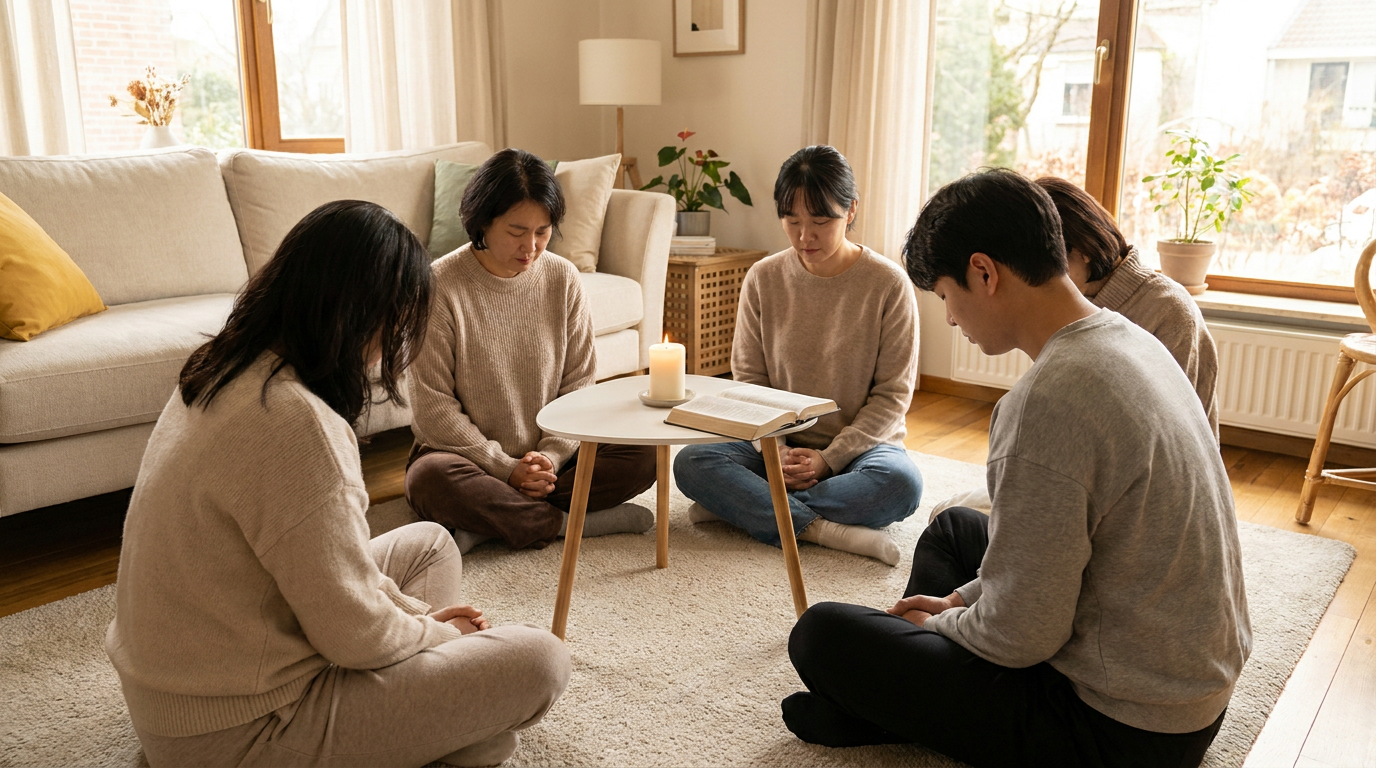
Creating a home altar is a sacred and joyful act. It does not need to be complicated. Begin with what is honest, clean, and manageable.
The altar is not for display. It is a place of meeting. It is where we come before God as we are—with gratitude, questions, tears, hopes, and offerings.
Choosing a Sacred Space
Choose a clean, peaceful location in your home. It may be a small table, a shelf, a cabinet, or a quiet corner. If possible, place it somewhere you can approach daily without too much disturbance.
The space should feel respectful. Try not to place the altar directly on the floor or in a place where it may be stepped over, ignored, or cluttered.
If your home is small, do not worry. A small altar maintained with love is more meaningful than a large altar neglected without attention.
What to Place on the Altar
A simple Bhakti altar may include:
- A picture or deity form of Krishna, Rama, Vishnu, Narayana, or another worshipable form of the Lord
- A picture of Sri Radha and Krishna, who represent divine love in its fullest beauty
- A picture of Lord Chaitanya, who shared the chanting of the holy names widely
- A picture of your guru or saints in your tradition, if you have them
- A small cloth
- A candle or ghee lamp
- Incense
- Fresh water
- Flowers or leaves
- A small bell
- A copy of the Bhagavad-gita or another sacred text
If you are new to Bhakti Yoga, you can begin with a picture of Krishna and a small offering bowl. That is enough.
Keeping the Altar Clean
Cleanliness is a form of love. Just as we would prepare our home thoughtfully for an honored guest, we care for the altar as a place where the Lord is welcomed.
Try to keep the altar free from dust. Replace old flowers. Change the water daily if possible. Keep offering plates separate from plates used for ordinary eating.
These simple habits help cultivate awareness. They teach the mind that worship is not casual or careless. It is tender, personal, and sacred.
Please visit our website for more information on our articles: articles.
Daily Arcana: Simple Practices You Can Begin Today
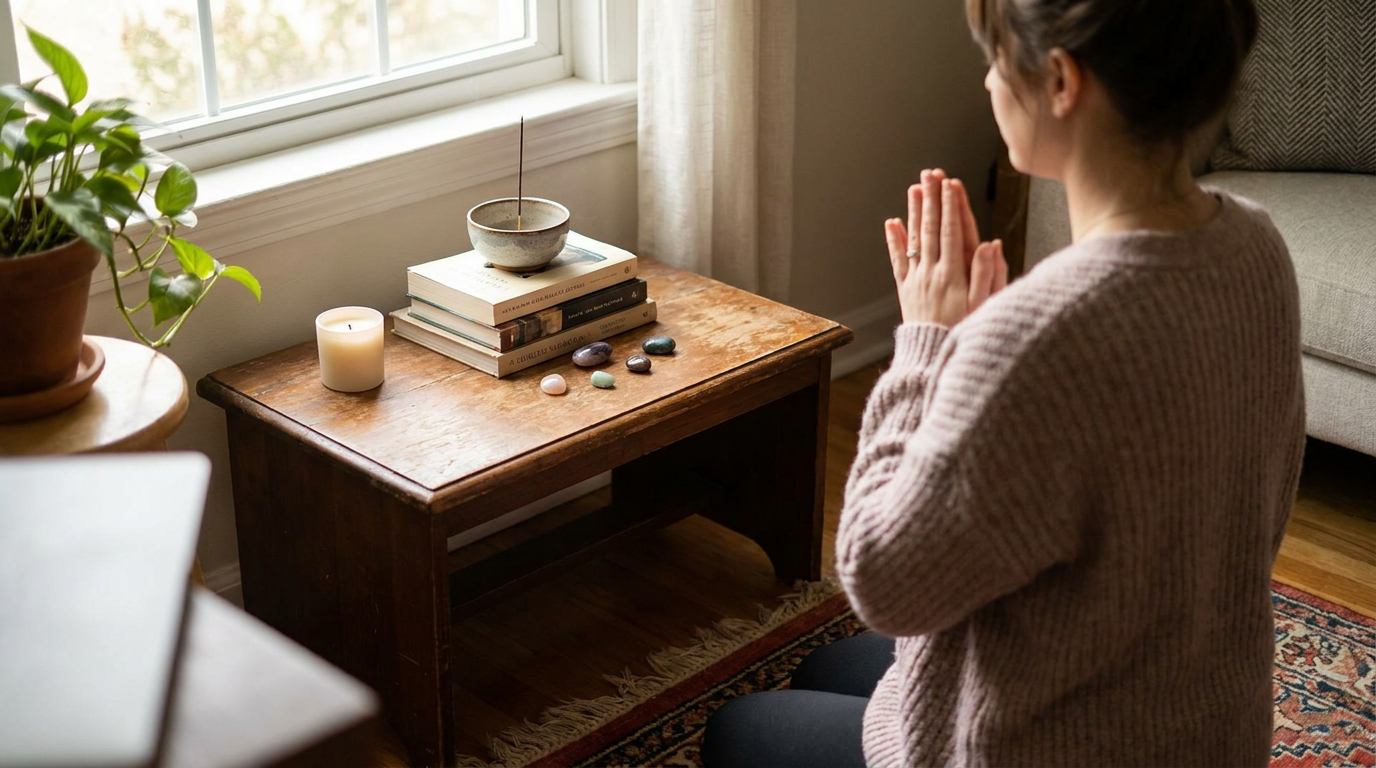
Home worship does not have to be long or difficult. It is better to practice simply and consistently than to begin with something elaborate and become overwhelmed.
A few sincere minutes each day can be powerful.
Begin With a Bow and a Prayer
When you approach the altar, pause. Take a breath. Bow your head, fold your hands, or simply stand quietly.
You may pray in your own words:
“Dear Lord, please help me remember You today. Please guide my thoughts, words, and actions. Please accept whatever I offer with love.”
Prayer does not require poetry. God hears sincerity.
In Bhakti, the mood is more important than the performance. We come not to impress God, but to open our hearts.
Offer Water, a Flower, or a Lamp
A very simple arcana practice may include offering:
- Fresh water
- A flower, leaf, or small fruit
- Incense
- A candle or lamp
- A few minutes of chanting
When offering, you can say softly, “Krishna, please accept this offering,” or “My Lord, this is for You.”
If you know mantras from your tradition, you may chant them. If not, simple prayer is welcome.
The Bhagavad-gita teaches that even a leaf, flower, fruit, or water is accepted when offered with devotion. This is deeply reassuring. It means everyone can participate.
Chant the Holy Names
Chanting is central to Bhakti Yoga. The holy names of God are considered non-different from the Lord Himself. When we chant, we are not merely repeating sound. We are calling out to the Divine.
A widely practiced mantra in the Bhakti tradition is the Hare Krishna maha-mantra:
Hare Krishna, Hare Krishna, Krishna Krishna, Hare Hare
Hare Rama, Hare Rama, Rama Rama, Hare Hare
Maha-mantra means “great mantra.” A mantra is a sacred sound that helps free the mind and awaken the heart. “Hare” calls upon the divine energy of the Lord. “Krishna” means the all-attractive one. “Rama” means the source of spiritual joy.
You can chant softly in front of your altar for a few minutes each day. You may chant on beads, sing with music, or simply repeat the mantra prayerfully.
Read a Small Passage of Scripture
Reading sacred wisdom nourishes the intelligence and steadies the heart. You might read a verse from the Bhagavad-gita, Srimad-Bhagavatam, or another authentic Bhakti scripture.
You do not need to read much. Even one verse, reflected on sincerely, can guide the whole day.
For example, the Bhagavad-gita teaches:
“Always think of Me, become My devotee, worship Me, and offer your homage unto Me.”
— Bhagavad-gita 18.65
This verse shows the natural flow of Bhakti: remember God, offer love, worship with devotion, and bow with humility. Arcana helps us practice all of these in a simple daily way.
Offering Food: The Practice of Prasadam
One of the most beautiful home worship practices in Bhakti Yoga is offering food to the Lord. After food is offered with love, it becomes prasadam, which means “mercy” or “grace.”
Prasadam is not ordinary food. It is food spiritualized by being offered to God.
Cooking With Devotion
When preparing food for offering, try to cook with a clean body, clean kitchen, and peaceful mind. Of course, real life can be busy. The point is to bring as much care and devotion as you can.
In many Bhakti traditions, devotees offer vegetarian food prepared without meat, fish, or eggs. Many also avoid onion and garlic for offerings, following traditional standards meant to support clarity and devotion.
If you are just beginning, do what you can with sincerity and keep learning.
While cooking, you can chant or pray. You can think, “This meal is for Krishna.” This changes cooking from a chore into loving service.
How to Offer Food at Home
Place a portion of the food on a clean plate reserved for the Lord. Set it on the altar. Offer a simple prayer.
You may say:
“My dear Lord, everything belongs to You. Please accept this food prepared with love.”
Then allow the offering to sit for a few minutes. You can chant during that time.
Afterward, the food may be returned and shared. Eating prasadam becomes a spiritual act. We receive not just nutrition, but mercy.
Sharing Prasadam With Others
Prasadam is meant to be shared. Offering and sharing sanctified food is one of the most joyful forms of service.
A simple plate of prasadam can bless a family meal. It can comfort a friend. It can bring spiritual warmth into a gathering.
The Srimad-Bhagavatam describes devotional service as naturally purifying and satisfying to the soul. When food is prepared and shared in a devotional mood, the home becomes a place of generosity and grace.
The Inner Mood of Arcana
While external practices are helpful, the heart of arcana is internal. The Lord accepts the devotion behind the offering.
This is important to remember. Sometimes we may worry, “Am I doing it correctly? Is my altar good enough? Are my mantras perfect?” While proper guidance is valuable, anxiety is not the goal.
The goal is loving remembrance.
Humility Over Performance
Arcana is not a performance. It is not meant to prove spiritual superiority. It is a sacred exchange between the soul and God.
Humility means recognizing, “I am dependent on divine grace.” It does not mean feeling worthless. In Bhakti, humility opens the heart to love.
We approach the altar not as masters of worship, but as servants learning to love.
Consistency Over Complexity
A short daily practice done with steadiness is often more transformative than an elaborate practice done occasionally.
If you can offer water and chant one round of mantra, begin there. If you can light a lamp and read one verse, begin there. If you can simply bow and say thank you, begin there.
Spiritual life grows by sincere steps.
Over time, your practice may naturally deepen. You may learn traditional prayers, offer more items, observe holy days, or receive guidance from teachers and experienced devotees. Let the growth be organic and joyful.
Love Over Ritualism
Ritual becomes meaningful when filled with love. Without love, even beautiful rituals can become dry. With love, even the simplest gesture becomes sacred.
A child offering a wildflower to Krishna with innocent affection may be worshiping more deeply than someone performing many rituals with pride.
This does not mean tradition is unimportant. Traditional forms protect and guide our devotion. But the life of the practice is love.
Learning Traditional Arcana With Guidance
As your home worship practice grows, you may feel inspired to learn more traditional forms of arcana. This can be very beautiful, especially when learned from qualified teachers in an authentic Bhakti lineage.
Traditional arcana may include specific mantras, purification practices, dress standards, offering sequences, deity care, and festival worship. These practices have been preserved by saints and teachers for generations.
The Role of Guru, Sadhu, and Shastra
In Bhakti Yoga, spiritual understanding is guided by guru, sadhu, and shastra.
Guru means spiritual teacher.
Sadhu means saintly person or sincere devotee.
Shastra means sacred scripture.
Together, they help us practice with balance. Scripture gives the foundation. Saints show us how to live it. The guru offers personal guidance and connection to the living tradition.
If you are new, do not feel pressured to understand everything at once. Bhakti is a lifelong journey. Ask questions. Visit temples. Attend satsang, which means gathering for spiritual truth. Listen to kirtan, or devotional chanting. Serve. Learn step by step.
Worshiping Deities at Home
Some devotees worship sacred deity forms, known as murtis. A murti is not considered an idol in the ordinary sense. In Bhakti understanding, when worship is performed according to scripture and devotion, the Lord mercifully agrees to be present in a form we can see, serve, and love.
This is a profound subject. If you feel called to bring deity worship into your home, it is wise to seek guidance from experienced devotees. Deity worship often includes commitments to regular care, cleanliness, offerings, and respect.
If you are not ready for that, worshiping pictures is a wonderful and accessible beginning.
Honoring Other Traditions and Backgrounds
At The Bhakti House, all sincere seekers are welcome. Some people come from Hindu families. Some come from Christian, Jewish, Muslim, Buddhist, Sikh, interfaith, or non-religious backgrounds. Some are exploring God for the first time.
Bhakti Yoga does not ask us to imitate someone else’s heart. It invites us to awaken our own loving relationship with the Divine.
If Sanskrit words or traditional practices feel unfamiliar, take your time. The essence is simple: remember God, chant God’s names, offer what you have, serve others, and grow in love.
Common Challenges in Home Worship
Every spiritual practice meets real-life challenges. This is natural. Rather than becoming discouraged, we can see these challenges as opportunities to deepen sincerity.
“I Don’t Have Enough Time”
Start small. Offer one minute.
Light a candle. Say a prayer. Chant one mantra. Offer your breakfast. Bow before leaving for work.
The Lord is not limited by time. A brief moment of sincere devotion can carry spiritual power.
As your taste grows, you may naturally make more time. Love has a way of reorganizing life gently from within.
“My Mind Is Distracted”
Everyone’s mind wanders. Do not be discouraged.
When you notice distraction, gently return. Look at the altar. Hear the mantra. Offer the distraction itself: “Krishna, even my restless mind belongs to You.”
Bhakti Yoga is not about pretending to be peaceful. It is about bringing the real mind, again and again, into divine connection.
“My Family Does Not Understand”
Practice with kindness and humility. Avoid forcing others. Let your devotion make you more patient, loving, responsible, and generous.
When family members see that your worship helps you become a better person, they may naturally respect it, even if they do not participate.
Keep your altar in a way that honors both your devotion and your shared home environment.
“I Feel Unworthy”
Many sincere people feel this. But Bhakti scriptures again and again show that God is merciful.
The Lord is not waiting for us to become perfect before accepting our love. He is inviting us to begin.
In the Bhagavad-gita, Krishna assures that even those who feel fallen or unqualified can cross beyond difficulty by taking shelter in Him. Bhakti is a path of grace. We do not earn God’s love; we learn to receive and respond to it.
Bringing Arcana Into Daily Life
A home worship practice does not end at the altar. The altar teaches us how to live.
Arcana trains the heart to see all of life as an offering.
Make Your Work an Offering
Before beginning work, you can pray, “May this be in service to You.”
Whether you are caring for children, writing emails, cleaning, studying, serving customers, teaching, cooking, or building something with your hands, you can offer the fruits of your work to God.
This is the spirit of karma-yoga, the yoga of selfless action. In Bhakti, karma-yoga becomes filled with devotion when our actions are offered for the pleasure of the Lord.
Serve the People Around You
If we worship God on the altar but neglect kindness toward others, our worship remains incomplete.
Every person is a beloved child of God. Service to others is a natural extension of arcana.
A kind word, a meal shared, a patient response, a listening ear, or a helping hand can all become offerings.
Bhakti Yoga is practical. It asks us to let devotion soften our speech, purify our intentions, and expand our compassion.
Remember God Throughout the Day
You may carry a small mantra in your heart as you move through the day.
While driving, walking, washing dishes, or waiting in line, chant softly or inwardly:
Hare Krishna, Hare Krishna, Krishna Krishna, Hare Hare
Hare Rama, Hare Rama, Rama Rama, Hare Hare
In this way, the altar expands. The whole world becomes a place of remembrance.
Creating a Weekly or Seasonal Rhythm
Daily worship is the foundation, but weekly and seasonal rhythms can also support devotion.
A Weekly Home Kirtan
Kirtan means singing or chanting the names of God, often with music. You can host a small kirtan at home with family or friends. It does not need to be polished.
A few voices, a simple drum, hand cymbals, guitar, harmonium, or even clapping hands can create a sacred atmosphere.
After kirtan, you might read a verse and share prasadam. This simple gathering can become a source of deep nourishment.
Observing Holy Days
Bhakti traditions include many sacred days, such as Janmashtami, the appearance day of Lord Krishna; Rama Navami, the appearance day of Lord Rama; Gaura Purnima, honoring Lord Chaitanya; and Ekadashi, a twice-monthly day for increased prayer and remembrance.
You can observe holy days at home by chanting more, reading scripture, preparing special offerings, fasting according to your capacity, or visiting a temple.
Holy days remind us that spiritual life has a sacred calendar. Time itself can become an offering.
Journaling Your Devotional Journey
Keeping a devotional journal can help you notice growth. You might write:
- What did I offer today?
- What prayer is on my heart?
- What verse inspired me?
- Where did I struggle?
- How did I feel God’s guidance or mercy?
Over time, you may see how small practices are quietly shaping your life.
A Simple Morning Arcana Practice
If you are wondering how to begin, here is a gentle morning practice you can adapt.
Step 1: Clean and Prepare
Wash your hands and face. Approach the altar with respect. If possible, keep the space quiet.
Step 2: Offer a Bow
Fold your hands or bow your head. Offer a simple prayer of gratitude.
Step 3: Offer Water or a Flower
Place fresh water or a flower before the Lord. Say, “Please accept this offering.”
Step 4: Light Incense or a Lamp
Offer incense or a candle while remembering that divine light can illuminate the heart.
Step 5: Chant
Chant the Hare Krishna maha-mantra or another name of God that is sacred to you. Even five minutes is a beautiful beginning.
Step 6: Read One Verse
Read a short passage from the Bhagavad-gita or another Bhakti scripture. Ask, “How can I live this today?”
Step 7: Offer Your Day
End by praying, “May my thoughts, words, and actions be pleasing to You. Please help me serve with love.”
This simple practice can be completed in ten to fifteen minutes, or shortened when needed.
Arcana as a Relationship of Love
The deepest purpose of arcana is to awaken love for God.
In Bhakti Yoga, love is not just an emotion. It is a way of seeing, serving, remembering, speaking, eating, working, and living. Arcana helps us practice this love in a tangible way.
We offer a flower, and slowly we learn to offer our pride.
We offer a lamp, and slowly we ask for the darkness of the heart to be removed.
We offer food, and slowly we learn that everything belongs to God.
We bow down, and slowly we discover the freedom of humility.
We chant, and slowly the heart begins to hear.
This is the kindness of the Bhakti path. It engages the whole person—body, mind, heart, and soul. It does not reject ordinary life. It sanctifies it.
Your home worship practice may be simple. It may be imperfect. It may change with seasons of life. But if it is sincere, it is meaningful.
The Lord is not far away. He is present in the holy name, in scripture, in the hearts of all beings, in prasadam, in the company of devotees, and in the quiet place where you turn toward Him with love.
Wherever you are beginning from, you are welcome. Take one sincere step. Offer one prayer. Chant one holy name. Place one flower, one cup of water, or one honest feeling before God.
Everyone is welcome to walk this path of love, and every sincere offering is seen.
FAQs
What is Arcana?
Arcana is a term used to describe the practice of building a meaningful home worship practice. It involves creating a sacred space within the home and engaging in rituals and practices that are meaningful to the individual or family.
How can I create a meaningful home worship practice?
Creating a meaningful home worship practice involves setting aside a dedicated space for worship, engaging in rituals and practices that hold personal significance, and incorporating elements such as meditation, prayer, and reflection.
What are some examples of rituals and practices for a home worship practice?
Examples of rituals and practices for a home worship practice include lighting candles, burning incense, setting up an altar with meaningful objects, engaging in prayer or meditation, reading sacred texts, and participating in acts of service or charity.
Why is it important to have a meaningful home worship practice?
A meaningful home worship practice can provide a sense of spiritual connection, peace, and grounding. It can also serve as a way to honor and connect with one’s personal beliefs and values, and can provide a source of comfort and guidance during challenging times.
How can I incorporate Arcana into my daily life?
Incorporating Arcana into daily life involves setting aside time for regular practice, integrating rituals and practices into daily routines, and being mindful of creating a sacred and intentional space within the home for worship and reflection.

