

Understanding Guru Etiquette in the Bhakti Tradition
Guru etiquette is the loving culture of honoring the spiritual guide who helps us remember God. In Bhakti Yoga, the path of devotion, a guru is not worshiped as an ordinary personality or respected merely as a teacher of information. The guru is honored as a sacred guide, a servant of the Divine, and a compassionate representative of spiritual wisdom.
The Sanskrit word guru means “heavy” or “weighty.” A true guru carries the weight of realized wisdom and helps remove the heaviness of ignorance from the heart. In simple words, a guru is someone who helps us move closer to God through instruction, example, prayer, chanting, and service.
Guru etiquette is not meant to create fear, distance, or blind following. At its heart, it is about love, humility, gratitude, and spiritual maturity. It teaches us how to receive guidance with an open heart and how to build a relationship rooted in reverence, trust, and sincerity.
In the Bhakti tradition, respect for the guru is deeply connected to respect for God. The Śrīmad-Bhāgavatam, one of the central scriptures of Bhakti Yoga, teaches that spiritual knowledge is best received through humility, service, and sincere inquiry. Similarly, the Bhagavad-gītā says:
“Approach a spiritual teacher with humility, inquiry, and service. The wise who have seen the truth can impart knowledge to you.”
— Bhagavad-gītā 4.34
This verse offers a beautiful foundation for guru etiquette: approach with humility, ask sincere questions, and serve with love.
Why Respect for the Guru Matters
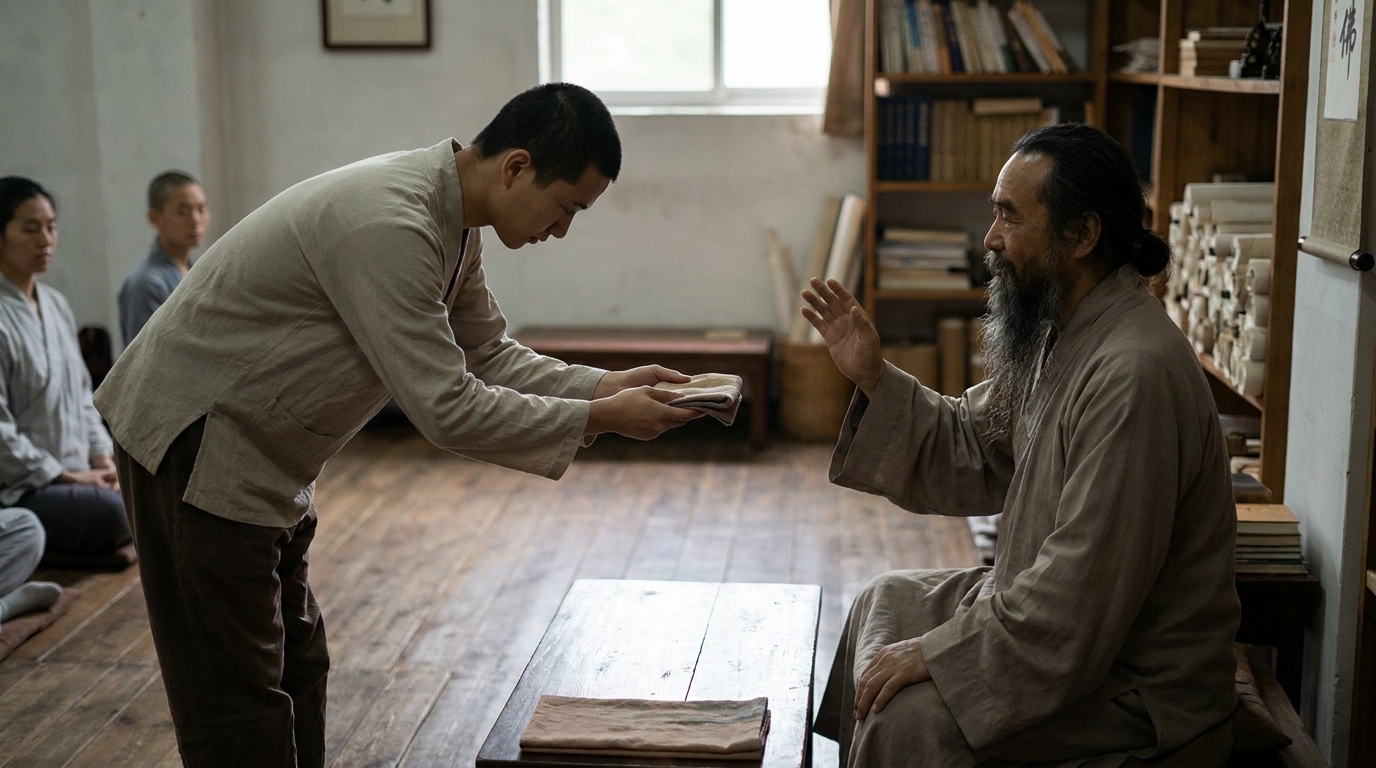
Respect for the guru is not about external formality alone. It is a spiritual practice that softens the heart and opens us to transformation. In Bhakti Yoga, we understand that knowledge is not only intellectual; it is received through grace, relationship, and sincerity.
When we approach a guru respectfully, we are not simply following cultural rules. We are training ourselves to become receptive. Just as a cup must be upright to receive water, the heart must be humble to receive spiritual wisdom.
Respect Opens the Heart to Guidance
Many of us come to spiritual life carrying pain, doubt, confusion, or pride. A genuine guru helps us see beyond the restless mind and reconnect with our eternal identity as a soul, a loving servant of God.
Respect creates the inner space where guidance can enter. If we approach spiritual teachings with arrogance, defensiveness, or casual disregard, we may hear the words but miss their deeper meaning. But when we listen with gratitude, even simple instructions can become life-changing.
Guru etiquette helps us remember: “I am here to learn. I am here to grow. I am here to become more loving.”
Reverence Protects the Sacred Relationship
The relationship between guru and disciple is sacred because it is centered on God. It is not based on control, popularity, or material gain. It is meant to help the disciple progress in devotion, character, and spiritual understanding.
Reverence protects that sacredness. It reminds us not to treat the guru casually, exploit their kindness, or reduce the relationship to personal convenience. A disciple does not see the guru as someone to use, impress, or argue with for ego’s sake. Rather, the disciple learns to relate with sincerity, honesty, and a spirit of service.
At the same time, true reverence is not blind sentiment. Bhakti scriptures encourage thoughtful inquiry and careful discernment. A genuine guru never asks a disciple to abandon conscience, compassion, scripture, or moral integrity. Real guru etiquette includes both devotion and wisdom.
Approaching the Guru with Humility and Sincerity

The first step in guru etiquette is learning how to approach the guru. This applies whether we are meeting a spiritual teacher in person, writing to them, attending a class, listening online, or serving in a community connected to them.
Humility does not mean thinking we are worthless. It means recognizing that spiritual growth requires help. It means being honest enough to admit, “I do not know everything. I need guidance. I want to learn how to love God more deeply.”
Offering Respectful Greetings
In many Bhakti communities, devotees greet the guru with folded palms and a bow. Folded palms are called añjali in Sanskrit, a gesture of prayerful respect. Bowing may be done by lowering the head or offering full prostration, depending on the tradition, setting, and one’s health or capacity.
Some devotees say praṇāms, meaning “respectful obeisances.” Others may say Hare Krishna, Radhe Radhe, Jai Sri Ram, or another sacred greeting according to their lineage. These greetings are not empty rituals. They are reminders that our meeting is sacred and centered on God.
If you are new, do not worry about doing everything perfectly. A sincere heart is more important than flawless external behavior. You may simply fold your hands, offer a respectful greeting, and observe how others conduct themselves.
Asking Questions with a Service Mood
Questions are welcome in Bhakti Yoga. The Bhagavad-gītā encourages paripraśna, sincere inquiry. This means asking questions not to challenge for ego, embarrass the teacher, or prove a point, but to understand and apply spiritual truth.
A respectful question might sound like:
“How can I practice chanting with more attention?”
“How do I balance family life and spiritual service?”
“What does it mean to surrender in daily life?”
“How can I overcome envy or anger through Bhakti practice?”
Good questions are honest, practical, and connected to spiritual growth. They help us bring Bhakti Yoga into our real lives.
Listening as an Act of Devotion
Listening is one of the most powerful forms of guru etiquette. In Sanskrit, devotional hearing is called śravaṇam. It is the first of the nine processes of Bhakti described in the Śrīmad-Bhāgavatam. When we listen to spiritual teachings attentively, the heart becomes purified.
Respectful listening means putting aside unnecessary distractions, resisting the urge to interrupt, and allowing the teaching to enter deeply. If we take notes, we can do so with gratitude. If something is difficult to understand, we can return to it later with prayer and inquiry.
Listening is not passive. It is a loving offering.
Discover a wide range of insightful articles that delve into various spiritual topics. These articles provide guidance and inspiration for your personal growth journey. Stay updated with the latest articles to enhance your understanding of spiritual practices.
Practical Guru Etiquette in Daily Life
Guru etiquette is not only for temple rooms, retreats, or formal ceremonies. It becomes real when we practice it in everyday life. The way we speak, serve, remember, and follow guidance reveals the depth of our respect.
Following Instructions with Care
One of the highest forms of honoring the guru is to sincerely follow their instructions. In Bhakti Yoga, this may include chanting the holy names of God, reading scripture, serving others, avoiding harmful habits, practicing compassion, and cultivating humility.
The instruction may be simple, but the practice can be profound. A guru may ask a disciple to chant a certain number of rounds on beads, attend satsanga—holy association—serve in a community, study scripture, or develop good character.
Following instructions does not mean becoming rigid or fanatical. It means trying sincerely, praying for strength, and returning again when we fall short. Bhakti is a path of grace. We grow by steady effort and divine mercy.
Speaking About the Guru Respectfully
Our speech shapes our consciousness. Speaking respectfully about the guru helps protect our own faith and the faith of others. This does not mean exaggerating, gossiping, or making the guru into a celebrity. It means speaking with gratitude, truthfulness, and care.
Avoid criticizing the guru casually, imitating them, joking about them in a disrespectful way, or discussing private matters without permission. If we have confusion or concern, we should seek guidance from mature devotees rather than spread negativity.
Bhakti culture values satya—truthfulness—and dayā—compassion. Respectful speech includes both.
Honoring the Guru’s Time and Energy
A spiritual teacher often serves many people. Good etiquette includes being considerate of their time and energy. Before asking for personal guidance, we can reflect: “Is this question something I can answer through scripture, senior devotees, or my own sincere practice?” If we do write or speak, we can be clear, concise, and grateful.
We should not demand constant attention, special treatment, or immediate replies. The guru’s presence is a gift, not something to be consumed. Patience is part of reverence.
Serving the Guru’s Mission
In Bhakti Yoga, serving the guru does not only mean personal service to the guru’s body. It also means serving their mission: helping others connect with God.
This may include cooking sacred food, cleaning the temple, welcoming newcomers, organizing kirtan, sharing spiritual books, caring for the community, supporting outreach, teaching children, or simply being kind to others.
Kīrtan, the congregational chanting of God’s names, is one of the most joyful expressions of this mission. When we chant together—Hare Krishna, Hare Rama, or other divine names—we serve the guru by sharing the medicine of the heart.
The Inner Mood of Reverence
External etiquette matters, but it should be supported by inner devotion. Without the right mood, etiquette can become mechanical. With the right mood, even the smallest gesture becomes an offering of love.
Gratitude for Spiritual Mercy
A disciple reflects, “By the grace of my guru, I have received access to chanting, scripture, prayer, service, and holy association.” This gratitude keeps the heart soft.
The Caitanya-caritāmṛta, a treasured Bhakti scripture about Sri Chaitanya Mahaprabhu, explains that by the mercy of guru and Krishna, one receives the seed of devotion. This seed must be watered by hearing and chanting.
That image is very practical. Our spiritual life is like a garden. The guru gives us the seed, but we must water it daily through practice. Guru etiquette is part of protecting that tender plant of devotion.
Avoiding Familiarity That Weakens Respect
Over time, if we have access to the guru or their community, we may become familiar. Familiarity can be healthy when it brings trust and warmth. But it becomes dangerous when it weakens reverence.
We may begin to think, “I know everything,” or “The guru is just like me.” In Bhakti, we honor the guru as a servant of God, while also remembering that the guru may appear in a human form and interact in ordinary ways. The challenge is to see the sacred within the simple.
A humble practitioner avoids taking spiritual gifts for granted. Every class, every instruction, every glance of kindness, every opportunity to serve is mercy.
Balancing Love and Boundaries
True guru etiquette includes healthy boundaries. Reverence does not mean emotional dependency. A sincere disciple does not try to possess the guru, compete for attention, or measure spiritual worth by external closeness.
Some disciples may live far away and rarely meet their guru, yet they may be deeply connected through faithful practice. Others may serve nearby but need to guard against pride. The real connection is not measured by physical proximity alone. It is measured by sincerity, obedience to spiritual principles, and growth in love for God.
Common Mistakes in Guru Etiquette and How to Avoid Them
Because spiritual life is a journey, mistakes happen. The goal is not to become discouraged, but to learn and improve. Guru etiquette becomes mature when we combine respect with self-awareness.
Treating the Guru Like a Material Celebrity
In the modern world, it is easy to project celebrity culture onto spiritual teachers. We may seek photos, status, public recognition, or emotional excitement more than actual transformation.
A guru is not a performer for our entertainment. The guru’s purpose is to awaken devotion. If our focus becomes external prestige—“I am close to the guru,” “The guru noticed me,” “I have a special position”—we may miss the deeper gift.
A better mood is: “How can I serve? How can I become more humble? How can I help others receive spiritual nourishment?”
Ignoring Instructions While Seeking Blessings
Many people ask for blessings, and blessings are beautiful. But the deepest blessing is the instruction itself. If the guru teaches us to chant, pray, read scripture, serve, and avoid harmful behavior, then following those instructions is how we receive the blessing fully.
It is not ideal to ask repeatedly for mercy while neglecting the practices already given. Of course, we may struggle. But even honest struggle, offered with sincerity, is meaningful. Bhakti Yoga welcomes imperfect people who keep turning toward God.
Comparing Gurus and Devotees
Comparison can poison the heart. We may compare one guru with another, one disciple with another, or one community with another. This can lead to pride, insecurity, or sectarianism.
Bhakti teaches us to honor all genuine servants of God. Different teachers may have different styles, services, and personalities, but if they are guiding souls toward love of God, they deserve respect.
A mature practitioner can be faithful to their own guru while honoring others. Loyalty does not require disrespecting anyone else.
Using “Guru Said” Without Humility
Sometimes disciples may quote the guru to win arguments or control others. This is not proper etiquette. The words of the guru should be shared with humility and context, not as a weapon.
If we are unsure how to apply an instruction, we can consult senior devotees and scripture. The purpose of spiritual instruction is to increase devotion, wisdom, and compassion—not ego.
Guru Etiquette in Community Life
Bhakti Yoga is often practiced in community, known as sanga or satsanga. Sat means truth or spiritual reality, and sanga means association. Holy association helps us stay inspired and accountable.
Guru etiquette naturally extends into how we treat the guru’s other disciples, followers, guests, and all living beings.
Respecting Godbrothers and Godsisters
Those who share the same guru are often called godbrothers and godsisters. This language reminds us that we are part of a spiritual family. We may have different backgrounds, ages, cultures, and personalities, but we are united by service to the Divine.
Respecting godbrothers and godsisters is a direct way of honoring the guru. If we claim to love the guru but mistreat those dear to the guru, our etiquette is incomplete.
This does not mean we will always agree. Community life brings challenges. But we can practice patience, forgiveness, honest communication, and humility. These are also forms of worship.
Welcoming Newcomers with Kindness
One of the most beautiful ways to serve the guru is to welcome newcomers. Many people arrive at a temple, kirtan, or spiritual gathering feeling shy, uncertain, or wounded by life. A warm smile, a simple explanation, or an invitation to join can be deeply meaningful.
We should avoid making newcomers feel judged for not knowing customs. Instead, we can gently explain: “We bow as a sign of respect,” or “This is prasadam, sacred food offered to God,” or “You are welcome to chant or simply listen.”
Prasadam means mercy. It refers to food offered to God with love and then shared. When we distribute prasadam with kindness, we extend the compassion of the guru’s mission.
Serving Without Seeking Recognition
In community life, many services happen quietly. Someone washes pots, arranges shoes, sweeps the floor, cuts vegetables, sets up chairs, or comforts a struggling devotee. These services may not be noticed by everyone, but they are seen by God.
The guru’s heart is pleased when we serve without pride. The Bhagavad-gītā teaches that devotion offered with love, even a leaf, flower, fruit, or water, is accepted by Krishna. The spirit behind the offering matters most.
Guru etiquette means remembering that service is not a performance. It is a prayer.
Scriptural Foundations for Honoring the Guru
Bhakti Yoga is not based on sentiment alone. It is rooted in sacred scripture, realized teachers, and living practice. The etiquette of honoring the guru appears throughout the Vedic and Bhakti traditions.
The Bhagavad-gītā on Humble Inquiry
As mentioned earlier, Bhagavad-gītā 4.34 teaches three essentials: humility, inquiry, and service. These three form a balanced approach to the guru.
Humility without inquiry may become passive. Inquiry without humility may become argumentative. Service without understanding may become mechanical. Together, they create a living relationship of learning and devotion.
This verse reminds us that a disciple is not meant to be mindless. A disciple is meant to be sincere, thoughtful, and willing to be transformed.
The Śrīmad-Bhāgavatam on Spiritual Shelter
The Śrīmad-Bhāgavatam encourages seekers to take shelter of a spiritual master who is fixed in truth and devoted to God. Shelter means guidance, protection, and nourishment for the soul.
Taking shelter does not mean escaping responsibility. Rather, it means accepting spiritual responsibility more deeply. Under the guidance of the guru, we learn how to live with integrity, devotion, and compassion.
The guru helps us see that every part of life—family, work, relationships, challenges, and joys—can be connected to God.
The Example of Sri Chaitanya Mahaprabhu
Sri Chaitanya Mahaprabhu, the great teacher of divine love and the chanting of God’s names, showed deep respect for His guru, Ishvara Puri. Although honored by His followers as the Supreme Lord Himself, Chaitanya Mahaprabhu demonstrated humility as a disciple.
His example teaches us that humility is not weakness. It is the ornament of the spiritually advanced. The more love of God awakens in the heart, the more naturally one honors others.
In the mood of Sri Chaitanya, Bhakti Yoga emphasizes chanting the holy names:
Hare Krishna Hare Krishna
Krishna Krishna Hare Hare
Hare Rama Hare Rama
Rama Rama Hare Hare
This maha-mantra, or “great mantra,” is a prayer to be engaged in loving service. Chanting helps us develop the humility and gratitude needed for proper guru etiquette.
When Reverence Requires Discernment
A complete guide to guru etiquette must also speak gently and clearly about discernment. Respect for the guru should never be used to silence legitimate concerns, excuse harm, or pressure someone into unhealthy situations.
Bhakti Yoga is a path of truth and love. Real reverence includes honesty, accountability, and protection of the vulnerable.
Choosing a Guru Carefully
Before accepting someone as a guru, a seeker should observe carefully. Are they faithful to scripture? Do they live with integrity? Do they inspire devotion to God rather than dependence on themselves? Are they humble? Are they accountable? Do mature devotees respect their character?
Traditionally, both guru and disciple examine one another. This protects the sacredness of the relationship. It is wise to take time, pray, study, serve, and seek guidance before making formal commitments.
Respect Does Not Mean Blindness
A genuine guru welcomes sincere questions and encourages spiritual growth. They do not exploit disciples financially, emotionally, physically, or spiritually. They do not demand worship for selfish purposes. They do not separate disciples from healthy support systems in a manipulative way.
If something feels deeply wrong, seek counsel from trusted, mature, and ethical devotees. Respectful discernment is not an offense. It is part of responsible spiritual life.
Honoring the Principle of Guru
Even when we encounter human complexity, the principle of guru remains sacred. God guides us through scripture, saints, the holy name, sincere devotees, and the Supersoul within the heart. The Sanskrit word Paramātmā means the Lord in the heart, who guides all beings.
If someone has been hurt or disappointed in spiritual life, Bhakti Yoga still offers healing. One can continue chanting, praying, reading scripture, and seeking safe, compassionate association. God’s mercy is never closed.
Living Guru Etiquette Through Chanting, Prayer, and Service
Ultimately, guru etiquette is meant to bring us closer to God. It is not only about how we sit, speak, bow, or write. It is about how we live.
A disciple honors the guru by becoming more kind, truthful, forgiving, steady, and devoted. The true offering is a transformed heart.
Chanting as Daily Connection
Chanting the names of God is central to Bhakti Yoga. The holy name is not different from the Lord, and through chanting we receive direct spiritual contact.
A simple daily practice may begin with a few minutes of chanting. You can chant softly, sing in kirtan, or repeat the mantra on beads. The important thing is sincerity.
Before chanting, you might pray:
“Dear Lord, dear spiritual guides, please help me chant with attention. Please soften my heart. Please engage me in loving service.”
This prayerful mood pleases the guru because it aligns us with the purpose of spiritual life.
Prayer as Honest Conversation
Prayer does not have to be fancy. You can speak to God from the heart. You can pray for guidance, forgiveness, strength, gratitude, and love.
You might say:
“Please help me understand how to serve.”
“Please protect me from pride.”
“Please help me honor my teachers and all living beings.”
“Please let my life become useful in Your service.”
Such prayers make guru etiquette alive. They turn external respect into inner transformation.
Service as Love in Action
Service, or seva, is love expressed through action. In Bhakti Yoga, seva may be offered to God, the guru, devotees, guests, family, neighbors, animals, and the world.
When we cook with devotion, speak kindly, clean a sacred space, help someone chant, share prasadam, or support a spiritual community, we are practicing Bhakti. The guru is honored when our life becomes an offering.
Seva teaches us that love is not only a feeling. Love is something we do.
A Gentle Checklist for Guru Etiquette
For those who appreciate practical reminders, here is a simple checklist. These are not rigid rules meant to create anxiety. They are loving supports for a respectful spiritual life.
Before Meeting or Contacting the Guru
Take a moment to pray and center yourself. Ask, “How can I approach with humility?”
Prepare your question if you have one. Keep it sincere and concise.
Dress and behave respectfully according to the setting and your capacity.
Avoid approaching with demands, gossip, or a casual attitude.
Remember that the guru’s time and energy are sacred.
During a Class or Darshan
Darshan means “sacred seeing” or receiving the presence of a holy person or deity. During darshan or class, listen attentively.
Turn off unnecessary distractions.
Avoid interrupting unless questions are invited.
Do not push forward or compete for attention.
Receive the teachings as personal guidance for your own growth.
Offer gratitude afterward, even silently in the heart.
After Receiving Instruction
Reflect on what you heard.
Write down practical steps.
Ask mature devotees for help if needed.
Begin applying the instruction in daily life.
Do not become discouraged if progress is gradual.
Offer your efforts to God with sincerity.
Bringing Guru Etiquette Into the Heart
Guru etiquette begins with respectful actions, but it matures into a devotional way of seeing. We begin to recognize that God is kindly sending guidance again and again—through teachers, scripture, chanting, community, nature, hardship, and grace.
The guru helps awaken our relationship with the Divine, but the journey must be walked daily. No one can chant for us in the deepest sense. No one can surrender our heart on our behalf. The guru points the way, blesses the journey, and teaches us how to love.
If you are new to Bhakti Yoga, please do not feel overwhelmed. You do not need to know every custom immediately. Begin with sincerity. Offer respect. Listen. Chant. Pray. Serve in whatever simple way you can.
If you have been practicing for many years, guru etiquette invites continual deepening. Reverence is not something we graduate from. The more we grow, the more grateful we become.
In the Bhakti House spirit, everyone is welcome—wherever you come from, whatever your background, whatever your level of experience. The path of Bhakti is a path of love, and love grows one sincere step at a time.
May we honor the guru not only with our words, but with our lives. May our chanting become more attentive, our service more humble, our questions more sincere, and our hearts more open to God’s grace.
You are warmly invited to take one sincere step today: chant one mantra, offer one prayer, read one verse, serve one person, or simply bow your heart before the Divine. God sees every honest effort, and no step toward love is ever lost.
FAQs
What is guru etiquette?
Guru etiquette refers to the set of respectful behaviors and practices that individuals should observe when interacting with a guru or spiritual teacher. This includes showing respect, listening attentively, and following the guidelines set by the guru to foster a positive and productive relationship.
Why is guru etiquette important?
Guru etiquette is important because it helps maintain a respectful and harmonious environment for learning and spiritual growth. It establishes boundaries and promotes mutual respect between the guru and the students, which is essential for effective teaching and guidance.
What are some common practices of guru etiquette?
Common practices of guru etiquette include greeting the guru with respect, using appropriate titles, being punctual for meetings or classes, actively listening without interrupting, and expressing gratitude for the teachings received. Additionally, it is important to dress modestly and refrain from engaging in distractions during sessions.
How should one address a guru?
Addressing a guru typically involves using respectful titles such as “Guruji,” “Swami,” or “Master,” depending on the tradition and the guru’s preference. It is advisable to ask the guru how they prefer to be addressed, as this shows respect for their position and personal preferences.
Can guru etiquette vary between different cultures or traditions?
Yes, guru etiquette can vary significantly between different cultures and spiritual traditions. Each tradition may have its own specific customs, rituals, and expectations regarding how to interact with a guru. It is essential to familiarize oneself with the particular etiquette of the tradition one is engaging with to show proper respect and understanding.

