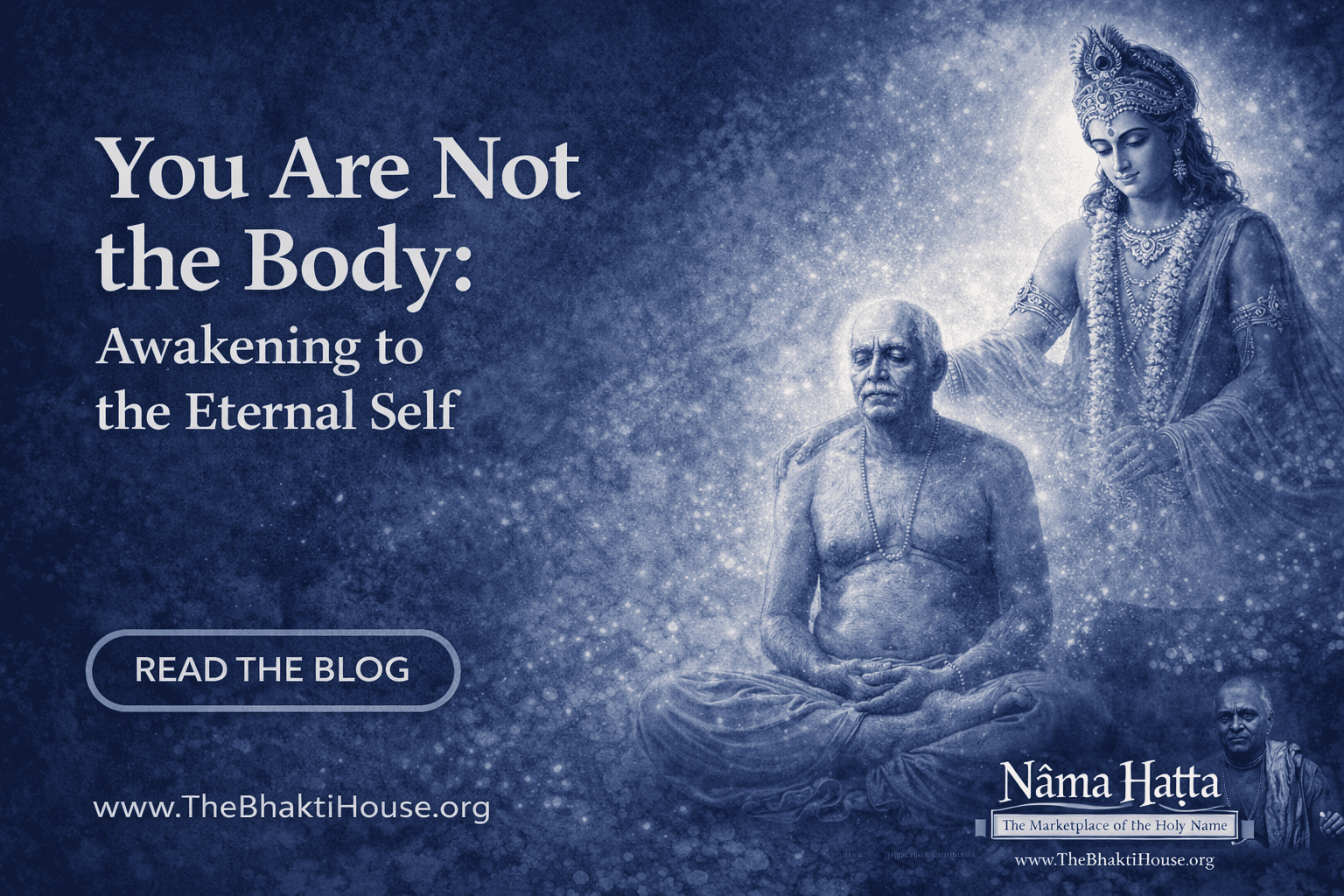
Chanting the holy name begins simply: sit, listen, and repeat a sacred name or mantra with sincerity. This accessible form of bhakti meditation does not require prior experience, perfect concentration, or advanced knowledge of Sanskrit. Anyone can begin by giving the sound their attentive presence.
Unlike meditation focused solely on self-improvement, bhakti meditation invites a personal relationship with the Divine. Through love, remembrance, and receptivity, the practitioner learns to turn inward while reaching beyond the limits of the individual self. Each repetition becomes an opportunity to listen and respond.
Whether you are approaching Kṛṣṇa with curiosity and commitment, chanting offers a practical beginning. This guide will show how a few sincere minutes can develop into a steady and meaningful spiritual practice.
Understanding the Holy Name
In bhakti traditions, divine names are more than labels. Names such as Kṛṣṇa and Rāma, along with the names in the Hare Kṛṣṇa mahā-mantra, are sacred points of connection with the Divine. To speak the name is to turn attention toward the presence, qualities, and loving relationship it represents.
This understanding distinguishes mantra chanting from mechanical repetition. Chanting the holy name does not depend on creating a particular emotional experience. Its value rests on attentive remembrance and heartfelt intention, even when the mind feels restless or the heart feels quiet.
Sound can gather a scattered mind. As attention returns to each syllable, the practitioner gradually becomes more present. At the same time, the sound can awaken devotion by reminding us that spiritual life involves relationship, gratitude, and loving service. In this way, chanting becomes both a meditation practice and an offering.
Different bhakti traditions honor different divine names and mantras. Choose one practice that you can approach respectfully and follow consistently. Correct pronunciation can support attentive practice; a beginner-friendly guide to Hindi pronunciation may help. For deeper context, explore chanting as a way to awaken the eternal self.
Preparing for Your First Chanting Meditation
Begin by choosing a consistent time and a quiet, comfortable place. Early morning, a lunch break, or the end of the day can work well. Even five to ten minutes is a meaningful beginning; regularity matters more than duration.
Keep the setting welcoming, not elaborate. A cushion can support an upright posture, while a timer can help you remain present without checking the clock. Prayer beads or a devotional image may deepen your focus, but neither is mandatory. You can also explore mindfulness through steady, intentional movement before sitting, if stillness feels difficult.
Settle your body and allow your shoulders to relax. Soften the breath without forcing it, then form a humble intention: listen carefully, remember the Divine, or offer the session in service. This simple inward orientation gives chanting the holy name a clear and receptive purpose.
Choose the form that best supports your attention. You may chant silently, repeat the name softly aloud, or join a group through kirtan. Silent chanting encourages inward listening, spoken chanting engages breath and voice, and kirtan offers the strength of shared devotion. There is no need to perform perfectly; begin sincerely and return gently when distractions arise.
A Simple Step-by-Step Chanting Practice
Begin by sitting in a relaxed, upright posture. Let your hands rest comfortably, soften your gaze or close your eyes, and take a few natural breaths. When you feel settled, repeat your chosen divine name or mantra at a steady, unforced pace.
Give the practice your full listening. Hear each syllable clearly, whether you chant silently, softly, or aloud. Notice the sound, feeling, rhythm, and meaning you can connect with. You do not need to create a special experience; sincere attention is enough.
For example, you might repeat the Hare Krishna maha-mantra:
Hare Krishna, Hare Krishna, Krishna Krishna, Hare Hare
Hare Rama, Hare Rama, Rama Rama, Hare Hare.
You may use this mantra or follow another authentic devotional tradition. Choose words that you can approach with respect and repeat consistently.
Thoughts, sounds, physical sensations, and emotions will naturally interrupt. When you notice that attention has wandered, acknowledge it without judgment. Then return gently to the holy name, listening to the next syllable and beginning again.
Continue for several minutes, allowing the breath and mantra to find a comfortable rhythm. If the mind becomes restless, reduce the pace slightly and renew your attention to the sound. If the practice feels peaceful, remain receptive without trying to hold onto the feeling.
When you are ready to stop, pause before moving into your next activity. Offer a quiet moment of gratitude for the opportunity to chant, and observe the mind as it is. Carry that attentive spirit into the rest of your day.
Making Chanting Part of Daily Life
Begin with a modest daily commitment, such as five or ten minutes. Increase gradually as the practice becomes natural; measure progress by consistency, not long sessions or dramatic spiritual sensations. A steady rhythm helps chanting the holy name extend beyond one meditation period.
Beginners may encounter boredom, restlessness, doubt, pronunciation concerns, or inconsistent motivation. Meet these obstacles with patience. Pronunciation matters, but sincere attention matters more; learn carefully, then continue without fear of mistakes. Returning gently is itself part of the discipline.
Chanting with others can renew commitment, whether through kirtan, a local gathering, or recorded devotional music. Reading devotional teachings or learning from a trusted teacher can provide context, while personal discernment remains essential. Over time, regular practice can cultivate steadiness, compassion, gratitude, and more conscious responses to daily events. It becomes training the mind through devotional discipline during both peaceful and difficult seasons.
Begin with One Sincere Chant
Bhakti meditation is an ongoing relationship of remembrance, not a test of mental control. Choose a sacred name, listen as you chant, and return gently whenever attention wanders. The aim is loving attention and openness to divine presence.
Begin chanting the holy name today for a few minutes. Let sincerity guide you, and allow consistency—not perfection—to shape your practice.