
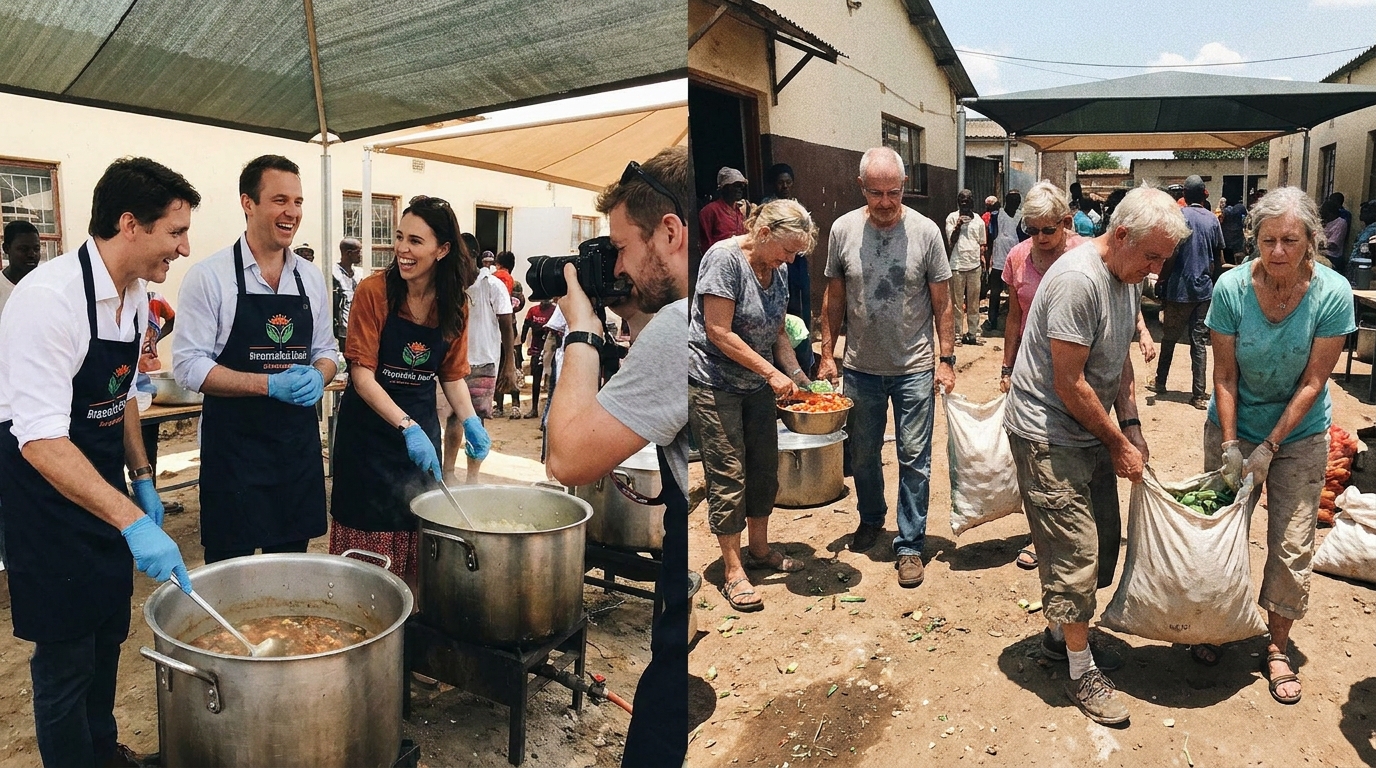
Have you ever noticed that in almost every spiritual community, a small handful of people seem to carry the weight of everything? They arrive first to set up the altar. They stay late to clean the kitchen. They answer the calls, organize the events, prepare the offerings, and somehow still show up the next day with a smile — even when their own hearts are heavy.
If you’re one of those people, we see you. And if you’ve ever wondered why the load feels so uneven, you’re not alone.
At The Bhakti House, we believe that seva — loving, selfless service — is one of the most beautiful expressions of devotion. But we also believe that when seva falls unevenly on a few shoulders while others step back, something sacred gets strained. Not just the people doing the work, but the very fabric of community itself.
This article is a gentle, honest exploration of unequal seva — why it happens, how it affects those who serve tirelessly, and most importantly, how we can lovingly address it so that everyone has the opportunity to grow through service.
Seva is a Sanskrit word that means “selfless service.” In the Bhakti tradition, seva is not just volunteer work or helping out. It is an act of love — an offering of your time, energy, and heart to God and to others without expecting anything in return.
In the Bhagavad Gita (Chapter 3, Verse 19), Lord Krishna encourages Arjuna to perform action without attachment to results:
“Therefore, without being attached to the fruits of activities, one should act as a matter of duty, for by working without attachment one attains the Supreme.”
This is the spirit of seva. It’s not about recognition. It’s not about being thanked. It’s about pouring your love into action as an offering to the Divine.
Seva as a Path of Transformation
When we serve with a sincere heart, something beautiful happens inside us. The ego softens. Gratitude grows. We begin to see God in the people around us — in the person we’re cooking for, in the child we’re watching, in the floor we’re mopping.
Seva purifies the heart. It is one of the foundational practices of Bhakti Yoga, alongside chanting (kirtan), prayer, and hearing spiritual wisdom (shravanam).
The Joy and the Burden
Here’s the tender truth: seva is deeply joyful — until it becomes a burden carried by too few. When the same devoted souls are doing everything while others participate only when it’s convenient, the joy can slowly turn into exhaustion, resentment, and even spiritual burnout.
And that’s not a failure of devotion. That’s a failure of community awareness.
Why Does Seva Become Unequal?
This is an important question to sit with honestly, without blame. Unequal seva doesn’t usually happen because people are selfish or uncaring. It often happens for quieter, more human reasons.
Some People Are Natural Givers
Some devotees have servant hearts. They see a need and they simply cannot walk past it. They were raised to help. They feel called to offer themselves. These are precious souls, and communities often lean on them — sometimes without realizing how heavily.
Others Feel Unsure or Unseen
On the other hand, many people hold back from serving because they feel they don’t know enough, aren’t skilled enough, or haven’t been asked. In spiritual communities, newcomers especially may feel like outsiders looking in, unsure of where they fit or how to contribute.
The “Someone Else Will Do It” Pattern
There’s a well-known pattern in groups where the more people are present, the less responsibility each person feels. Psychologists call this the “bystander effect.” In spiritual communities, it can sound like: “Oh, they’ve got it covered.” Meanwhile, “they” are the same three or four people who always have it covered — and they’re running on fumes.
Leadership Gaps and Unclear Expectations
Sometimes unequal seva persists because there’s no clear system for sharing responsibilities. Without gentle structure, the willing end up doing everything, and the willing-but-waiting never get invited in.
The Hidden Cost of Carrying Too Much
When we talk about unequal seva, we must speak tenderly about the real human cost — because the people carrying the most are often the last to speak up about their own pain.
Physical and Emotional Exhaustion
Bodies get tired. Hearts get heavy. A devotee who is cooking, cleaning, organizing, and showing up for every single gathering without rest will eventually face burnout. And burnout in a spiritual context can feel especially confusing — because the person may wonder, “If I truly loved God, wouldn’t I be able to keep going?”
The answer is: even the most devoted heart lives in a human body that needs rest, nourishment, and support.
Quiet Resentment
This is the one no one wants to talk about. But when a few people are doing everything and others are simply enjoying the fruits of that labor, resentment can creep in — quietly, subtly. It doesn’t mean the person isn’t devoted. It means they’re human. And pretending resentment doesn’t exist doesn’t make it go away. It just pushes it deeper.
Spiritual Discouragement
Perhaps the most heartbreaking cost is when someone who loves God and loves serving begins to pull away from community altogether — not because their love has faded, but because they feel unseen and unsupported. We cannot afford to lose these beautiful hearts.
In the Bhagavata Purana, we read about how the Lord Himself serves His devotees. If God does not consider service beneath Him, then surely we can serve one another — especially those who have been serving us.
Sure, here is the sentence with the clickable link:
You can find more bhakti articles here.
How to Lovingly Address Unequal Seva
Addressing this imbalance doesn’t require confrontation or guilt. It requires awareness, love, and a willingness to create a culture where everyone is invited to contribute — and where those who’ve been carrying the load are given permission to rest.
Start With Honest, Compassionate Conversations
The first step is simply naming the issue with kindness. Community leaders and members can open a conversation: “We’ve noticed that a few of our dear ones are carrying most of the seva. How can we share this sacred work more evenly so that everyone has the blessing of serving?”
Notice the language. It’s not about shaming those who haven’t helped. It’s about inviting them into the blessing.
Create Clear, Simple Seva Opportunities
Not everyone knows how to help. Make it easy. Create sign-up sheets. Offer a list of small, specific tasks — bringing flowers, setting up chairs, greeting newcomers, washing dishes after prasadam (sacred food). When people see a concrete way to help, they’re far more likely to step forward.
Rotate Responsibilities With Grace
No one person should always be the one leading kirtan setup, cooking for fifty, or managing communications. Rotation isn’t a sign of weakness — it’s a sign of a healthy, thriving community. It also gives more people the chance to develop their own gifts through service.
Celebrate and Acknowledge Those Who Serve
While true seva is done without expectation of reward, genuine appreciation is not flattery — it’s love. A heartfelt “thank you,” a moment of recognition during a gathering, or even a simple note of gratitude can replenish a weary soul.
As the Bhagavad Gita (Chapter 12, Verse 13-14) describes the qualities dear to the Lord — compassion, humility, contentment — we should recognize these very qualities in those who serve quietly among us.
Give Permission to Rest
This is crucial. Sometimes the most devoted servers need someone to look them in the eye and say, “You’ve done enough for today. Please sit down and let us take care of you.” Rest is not laziness. It is sacred. Even in the natural world, the earth rests in winter so it can bloom again in spring.
Building a Culture of Shared Seva
Addressing unequal seva isn’t a one-time fix. It’s an ongoing, living practice — just like chanting, just like prayer. It requires us to keep our eyes open and our hearts soft.
Mentoring New Servers With Patience
When someone new offers to help, resist the urge to take over because it’s faster to do it yourself. Teach them. Walk alongside them. Let them make the offering imperfect and beautiful. This is how community grows — not through perfection, but through shared participation.
Modeling Seva From Leadership
If community leaders serve visibly and humbly — not just directing but actually rolling up their sleeves — it sets a powerful tone. In the Bhakti tradition, the greatest leaders have always been the greatest servants. Chaitanya Mahaprabhu, the beloved saint of Bhakti, personally cleaned the Gundica Temple with His own hands, showing that no service is too small for even the most exalted soul.
Checking In Regularly
Make it a practice to regularly ask: Who is doing the most right now? Are they okay? Do they need support? These simple check-ins can prevent burnout before it begins and show your community members that they truly matter — not just for what they do, but for who they are.
Teaching Children and Newcomers the Joy of Seva
When young people and newcomers are gently included in service from the very beginning, they grow up understanding that seva is everyone’s privilege, not just one person’s obligation. Let children help arrange flowers. Let newcomers light the incense. These small acts plant deep seeds of devotion and belonging.
Seva Is Love Made Visible
At its heart, seva is not a task list. It is love made visible. When we cook for each other, we are feeding God. When we clean the space where we gather, we are preparing a home for the Divine. When we share the work, we are honoring the truth that we are all part of one spiritual family.
The Bhagavad Gita (Chapter 9, Verse 26) offers this tender promise from Lord Krishna:
“If one offers Me with love and devotion a leaf, a flower, fruit, or water, I will accept it.”
Notice — it says “a leaf.” Not a banquet. Not a flawless event. A single leaf, offered with love. This means that every act of seva, no matter how small, matters. And it means that no one person needs to offer the whole garden alone.
You Are Welcome Here — Exactly As You Are
Whether you’ve been serving tirelessly for years or you’ve been standing at the edges wondering if there’s a place for you — there is. There absolutely is.
If you’ve been carrying a heavy load, please know: it’s okay to rest. It’s okay to ask for help. Your worth is not measured by how much you do. It’s rooted in who you are — a beloved child of God.
And if you’ve been wanting to help but didn’t know how, this is your gentle invitation. You don’t need to be an expert. You don’t need to be perfect. You just need to be willing. Pick up one small act of love. Offer one leaf. Show up one extra time.
Bhakti is a path of the heart, and the heart grows strongest when it both gives and receives. Let us build communities where the work is shared, the weary are held, and everyone — everyone — is welcome to take one sincere step toward God.
With love and gratitude,
The Bhakti House �DiplomaIn

