
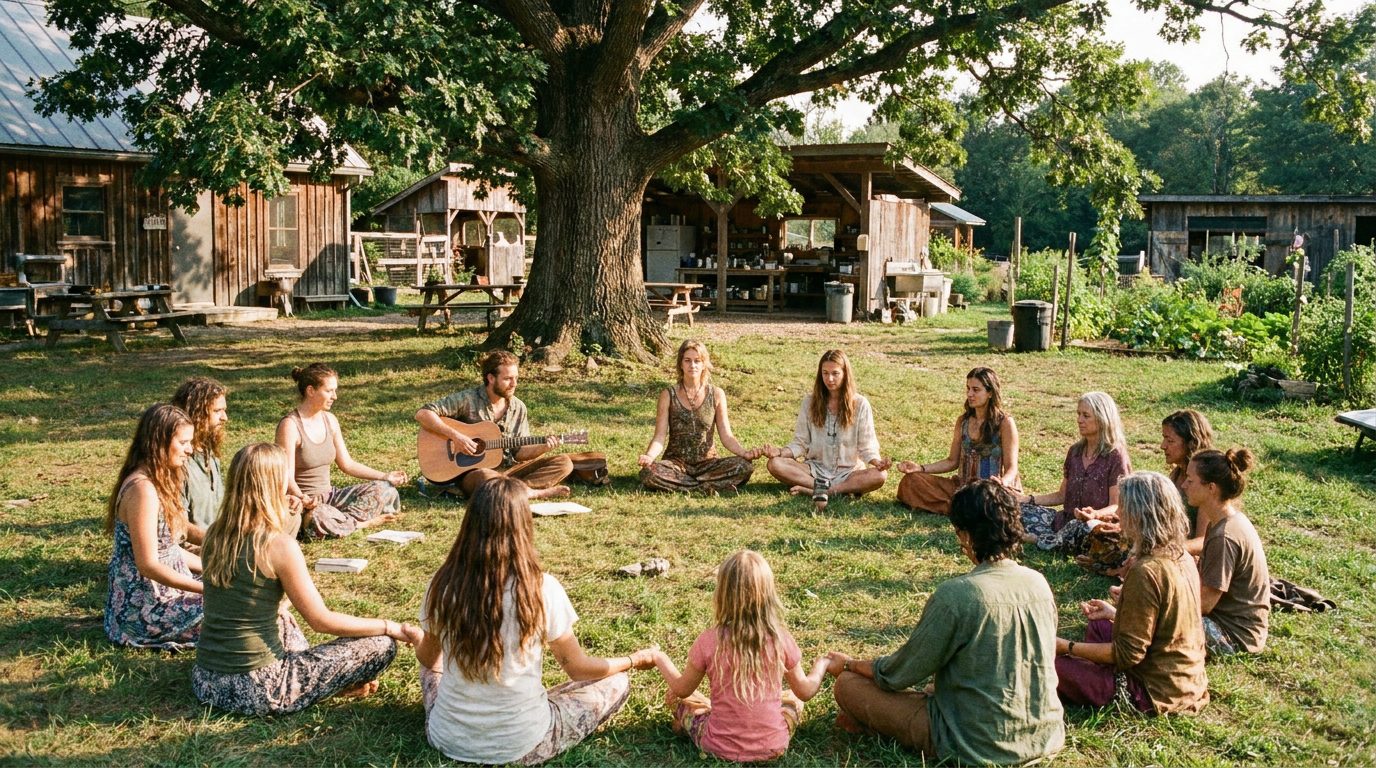
Welcome, dear friend. Whether you’ve been walking the path of Bhakti for decades or you’re simply curious about spiritual community life, we’re so glad you’re here. This conversation is one that matters deeply to The Bhakti House — and honestly, to every spiritual community on Earth.
Seva (pronounced SAY-vah) is a Sanskrit word that means “selfless service.” In Bhakti Yoga — the yoga of love and devotion — seva is one of the most beautiful and transformative practices available to us. When we serve God, the temple, or our spiritual community with a sincere heart, something extraordinary happens inside us. The false ego softens. The heart opens. We begin to taste the sweetness of living for something greater than ourselves.
The Bhagavad Gita (3.19) encourages us to perform our work as an offering, without attachment to results. Seva done in this spirit is genuinely purifying.
But here’s the honest truth that many communities struggle to talk about openly: seva is often distributed unevenly, and the most reliable, willing-hearted people end up carrying the heaviest loads — sometimes to the point of exhaustion, resentment, and even spiritual burnout.
This isn’t a small issue. It’s a real pattern that can quietly undermine the health and unity of even the most loving spiritual communities. And it’s something we need to address with both honesty and compassion.
Why the Reliable People Always End Up Doing More
The “Go-To Person” Pattern
You probably already know who these people are in your community. They’re the ones who show up early and leave late. They say “yes” before anyone else has time to consider the question. They cook, clean, organize, coordinate, set up, break down, teach, mentor, counsel — and they do it all with a smile.
They are beautiful souls. And they are often running on empty.
Here’s how the pattern typically works. A task needs to be done. The community leader or organizer looks around and thinks, “Who can I count on?” The answer is always the same handful of people. Not because others are incapable, but because these individuals have proven themselves dependable. They don’t complain. They don’t need to be reminded. They just do the work.
Over time, this creates an unspoken expectation. The reliable people become the default for everything.
The Silent Suffering of the Overburdened
What makes this pattern particularly painful in spiritual communities is that the overburdened individuals often feel they can’t say no. After all, this is seva. This is service to God. How can you turn down an opportunity to serve the Divine?
This kind of thinking, while understandable, actually distorts the true nature of Bhakti. The path of devotion is meant to be joyful, sustainable, and rooted in love — not obligation, guilt, or fear. When someone serves out of compulsion rather than genuine devotion, something essential is lost.
Sri Chaitanya Mahaprabhu, the great saint of Bhakti, taught that the essence of devotional life is love freely given. Forced love isn’t love at all.
Why Others Hold Back
On the other side of this equation, many community members don’t step forward for seva — and their reasons are worth understanding rather than judging:
- They don’t feel skilled enough. They see experienced volunteers and assume they’d just get in the way.
- They weren’t asked directly. General announcements like “We need help” often feel like they’re directed at someone else.
- They’re dealing with personal struggles. Not everyone’s life circumstances allow equal contribution, and that’s completely valid.
- The culture doesn’t make it easy to participate. Sometimes established volunteers unintentionally create an “inner circle” that feels difficult to break into.
- They simply haven’t been taught the value of seva. If a community doesn’t nurture a culture of shared service, people won’t naturally gravitate toward it.
Understanding these dynamics helps us move from frustration toward compassionate solutions.
What Scripture Teaches Us About Shared Responsibility
Bhakti scriptures are rich with wisdom about community, responsibility, and mutual care.
Every Person Has Something to Offer
In the Bhagavad Gita (18.46), Lord Krishna says that a person can attain perfection by worshipping the Lord through their own natural work. This is a profoundly inclusive teaching. It means that everyone — regardless of their skill set, background, or experience — has something meaningful to contribute to the community.
Seva isn’t only cooking a feast or leading a kirtan (devotional chanting). Seva is also sweeping a floor, greeting newcomers with warmth, helping someone carry their things, sending an encouraging message, or simply being present and attentive during a gathering.
When we broaden our definition of seva, we naturally broaden participation.
The Body Analogy
The Srimad Bhagavatam uses the beautiful metaphor of society as a body, where different parts serve different functions but all are essential. A spiritual community works the same way. The eyes cannot do the work of the hands, and the feet cannot do the work of the mouth — but without any one of these parts, the body suffers.
When a few people carry the burden that belongs to the whole body, the community isn’t functioning as it’s meant to. The “hands” are exhausted while the “feet” remain idle — not out of malice, but because no one invited the feet to walk.
Love Means Looking Out for Each Other
In the Upadesamrta (Text 4), Srila Rupa Goswami describes the exchanges of love between devotees: giving gifts and receiving gifts, sharing food, sharing one’s heart. These exchanges imply mutuality. A spiritual community built on love must be a place where care flows in every direction — not just from a few toward many.
If we truly love the people who serve the most, we must also be willing to protect them from overextension. That is an act of love too.
Sure, here is the sentence with the clickable link:
Check out our website for more bhakti articles.
Practical Steps Toward Equitable Seva Distribution
Now let’s talk about real, grounded solutions. These suggestions come from years of observing what works in healthy, thriving spiritual communities.
Create Clear Seva Roles and Rotations
One of the simplest and most effective practices is to define specific roles and create rotating schedules. When seva is organized and visible, people can see exactly where help is needed and commit to manageable portions of service.
A shared calendar, a sign-up board, or even a simple group message can transform how service flows in your community.
Ask People Directly and Personally
General announcements rarely inspire action. But a personal, warm, specific invitation almost always does. Instead of saying, “We need help with prasadam (sacred food) preparation,” try saying, “Hey Priya, we’d love your help chopping vegetables this Saturday from 10 to 12. Would you be open to that?”
When people are asked personally, they feel seen and valued. That feeling is often all it takes to inspire participation.
Normalize Saying No — And Saying “Not Right Now”
This is a big one. Spiritual communities must create a culture where saying no to a specific request is completely acceptable and carries no judgment or spiritual guilt. Saying no to one task doesn’t mean saying no to God. It means being honest about one’s capacity, which is itself a form of integrity and self-awareness.
When reliable people know they can say no without disappointing anyone, they’re actually more likely to keep serving joyfully for the long term.
Train and Mentor New Volunteers
Experienced seva workers sometimes fall into the trap of thinking, “It’s just easier if I do it myself.” And in the short term, that might be true. But in the long term, this approach creates a bottleneck and prevents new community members from growing through service.
Take the time to train others. Walk alongside them. Let them make mistakes and learn. This investment in people is itself a profound form of seva — it’s service that multiplies.
Celebrate Everyone’s Contributions
Recognition doesn’t have to be elaborate, but it should be genuine and regular. When people feel appreciated — truly appreciated — they naturally want to contribute more. Celebrate the person who quietly washed dishes just as much as the person who led the kirtan on stage.
In the eyes of Krishna, sincerity matters far more than visibility.
Protecting the Hearts of Your Most Dedicated Servants
Watch for Signs of Burnout
Burnout in spiritual communities often looks different than workplace burnout. It can manifest as:
- Loss of joy in practices that once brought deep happiness
- Irritability or resentment toward other community members
- Withdrawal from community events altogether
- A growing sense that one’s service “doesn’t matter” or isn’t appreciated
- Physical exhaustion and health issues from chronic overcommitment
If you notice these signs in someone — or in yourself — please take them seriously. The soul is resilient, but the body and mind need rest.
Create Sabbaticals and Rest Periods
Even in ancient Vedic culture, rest was honored as sacred. The cycles of nature teach us that periods of activity must be balanced with periods of restoration. Consider building intentional rest periods into your community’s seva structure. Give your hardest workers permission — even encouragement — to step back, rest, and simply receive for a season.
Leaders Must Model Healthy Boundaries
If community leaders consistently overwork themselves and wear exhaustion as a badge of honor, they inadvertently teach everyone else to do the same. Leaders who model healthy boundaries, delegate generously, and openly express their own limitations create a culture where everyone feels safe doing the same.
Building a Culture Where Everyone Serves With Joy
The ultimate goal isn’t just to distribute tasks more evenly — though that matters. The deeper goal is to build a community where seva feels like a privilege, not a burden. Where people serve because their hearts are overflowing, not because they feel trapped.
This requires ongoing attention, honest conversation, and a willingness to examine our community structures with humility. It requires us to ask uncomfortable questions: Are we taking certain people for granted? Are we making it easy for newcomers to participate? Are we confusing self-sacrifice with spiritual maturity?
The Bhakti path teaches us that God is a person — a loving, caring, supremely compassionate person who doesn’t want His children to suffer in the name of serving Him. Krishna says in the Bhagavad Gita (9.26) that He accepts even a leaf, a flower, a fruit, or water — if it’s offered with love. The emphasis is on love, not on the quantity of service.
A community that honors this truth will naturally become a place where seva is shared, celebrated, and sustainable.
You Are Welcome Here — Exactly As You Are
If you’re reading this and you recognize yourself as the overburdened servant, please hear this: your rest is sacred too. You are not less devoted when you take a step back. You are not failing God when you ask for help. You are honoring the body and mind He gave you.
If you’re reading this and you realize you could contribute more, please hear this with equal gentleness: there’s no condemnation here. Every moment is a fresh opportunity. You don’t need special skills or years of experience. You just need a willing heart.
And if you’re new to all of this — new to Bhakti, new to community, new to the idea of serving something greater than yourself — you are especially welcome. The Bhakti path doesn’t ask for perfection. It asks for sincerity.
Take one step. Just one sincere step toward God. Offer one small act of service with love. Chant one holy name with feeling. Show up once and see what happens.
That one step changes everything.
We’re walking this path together — and at The Bhakti House, there’s always room for you.

