
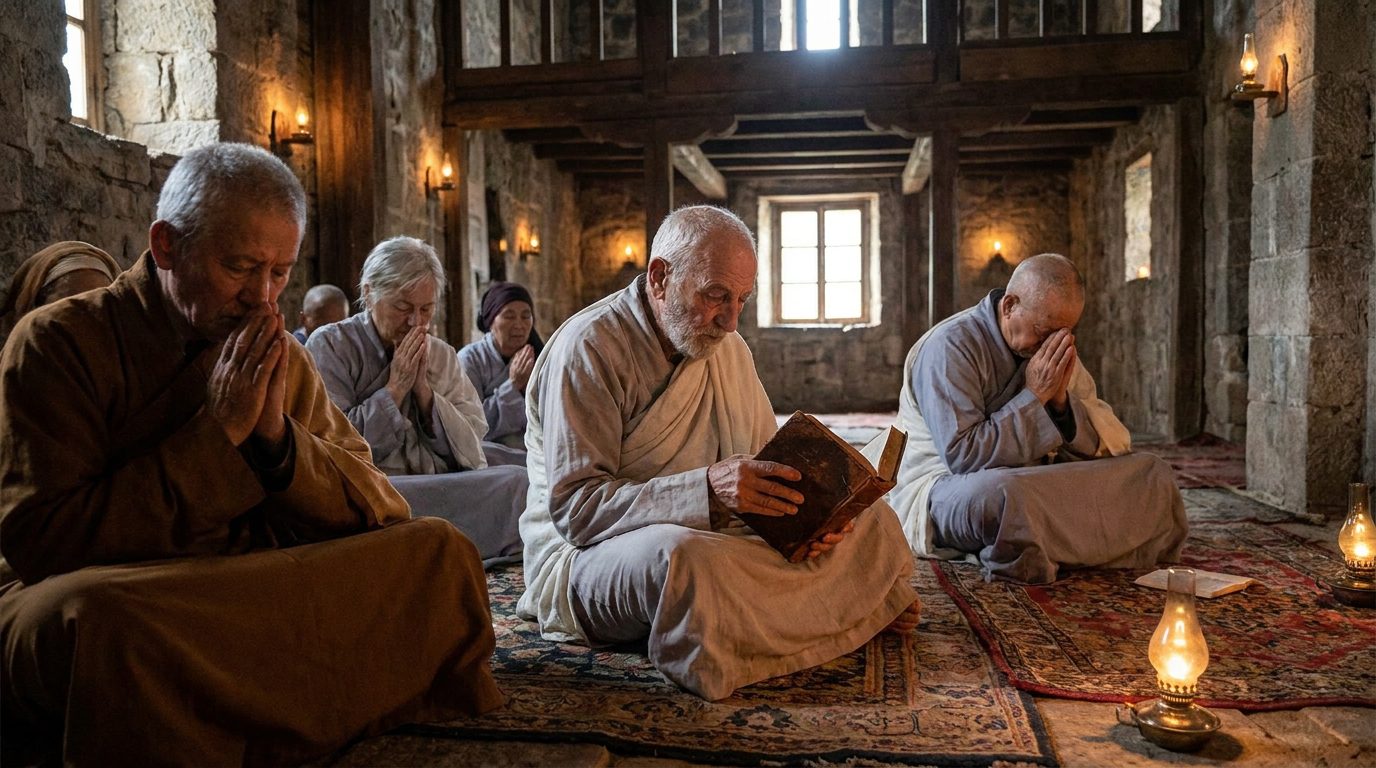
Sacred recitation is one of the simplest and most powerful spiritual practices available to every human being. It does not require wealth, high education, perfect health, or a special social position. It asks only for sincerity, a little time, and a willingness to turn the heart toward God.
In Bhakti Yoga, the path of loving devotion, sacred recitation often means chanting or softly repeating the holy names of God, prayers, mantras, and verses from sacred texts. The Sanskrit word mantra can be understood as “that which protects and uplifts the mind.” When we recite sacred sound with attention and humility, the mind begins to soften, the heart becomes cleaner, and our inner life becomes more connected to divine love.
At The Bhakti House, we welcome people of all backgrounds. Whether you are new to spiritual practice, returning after many years, or deeply rooted in another faith tradition, sacred recitation can become a gentle doorway into prayer, peace, and loving service.
What Is Sacred Recitation?
Sacred recitation is the practice of repeating divine names, prayers, mantras, or scripture with reverence. It can be done aloud, whispered, sung, or repeated silently in the mind.
In Bhakti Yoga, sacred sound is not considered ordinary sound. It is understood to carry spiritual presence. Just as the sun naturally brings light, sacred sound brings clarity, purification, and remembrance of God.
Recitation as a Relationship
In devotional life, recitation is not only a technique. It is relationship.
When we chant God’s names, we are calling out to the Divine Person with love. When we recite a prayer, we are opening our hearts. When we repeat a verse from scripture, we are allowing wisdom to enter our thoughts and actions.
This is why Bhakti Yoga is often called the yoga of the heart. The goal is not simply calmness, though calmness may come. The goal is loving connection with God and all living beings.
Sacred Sound in Daily Life
Many people think spiritual practice must happen only in a temple, church, mosque, synagogue, monastery, or formal sacred space. These places are beautiful and important. Yet sacred recitation can also happen while sitting at home, walking in nature, cooking, driving, or beginning the day before work.
A simple prayer spoken sincerely can transform an ordinary moment into a sacred offering.
Why Sacred Recitation Is So Powerful
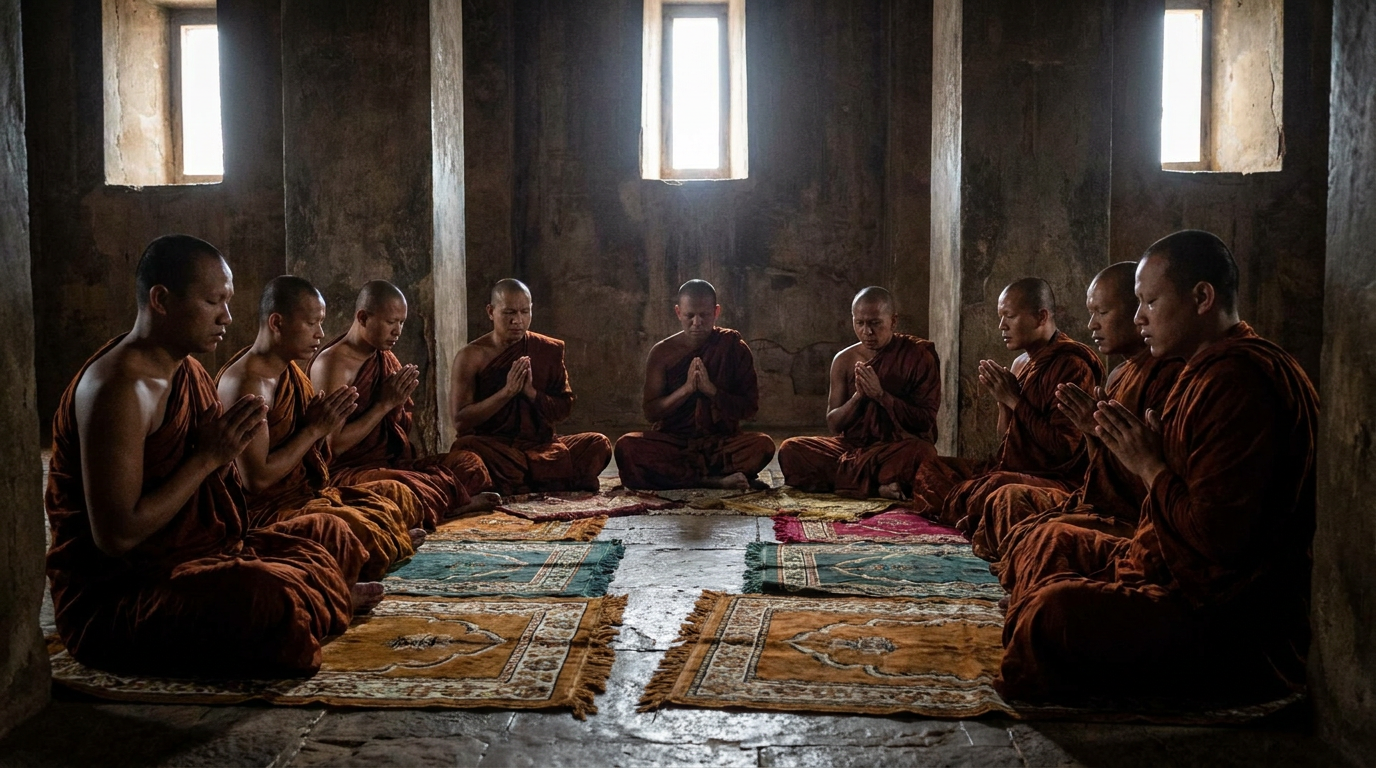
Sacred recitation works deeply because it engages the mind, heart, voice, breath, and intention. In a world filled with distraction, recitation gives us a loving center.
It Purifies the Mind
The mind is often filled with worry, memories, planning, comparison, and fear. Sacred recitation gently redirects the mind toward God.
The Bhagavad-gita, one of the most beloved scriptures of Bhakti Yoga, teaches that the mind can be either a friend or an enemy. When the mind is absorbed in selfish desire or anxiety, it becomes difficult to feel peace. But when the mind is guided toward divine remembrance, it becomes our friend.
Chanting sacred names and prayers gives the mind something holy to rest upon. Over time, the inner atmosphere changes.
It Awakens the Heart
Bhakti means devotion, loving service, or divine love. The heart may be covered by disappointment, pride, grief, or spiritual forgetfulness. Sacred recitation helps remove these coverings.
In the Srimad Bhagavatam, a central Bhakti scripture, hearing and chanting about God are described as cleansing the heart. This cleansing does not mean we become emotionless or detached from people. Rather, we become more compassionate, more honest, and more able to love without selfish expectation.
It Connects Us to a Living Tradition
When we recite sacred mantras and prayers, we join a stream of devotion that has flowed for thousands of years. Saints, sages, mothers, fathers, children, monks, householders, poets, and seekers have all taken shelter in sacred sound.
This can be deeply comforting. We are not alone. Our small voice becomes part of a great chorus of souls calling out to God.
Please visit our website for more information on our articles: articles.
The Bhakti Yoga Approach to Recitation
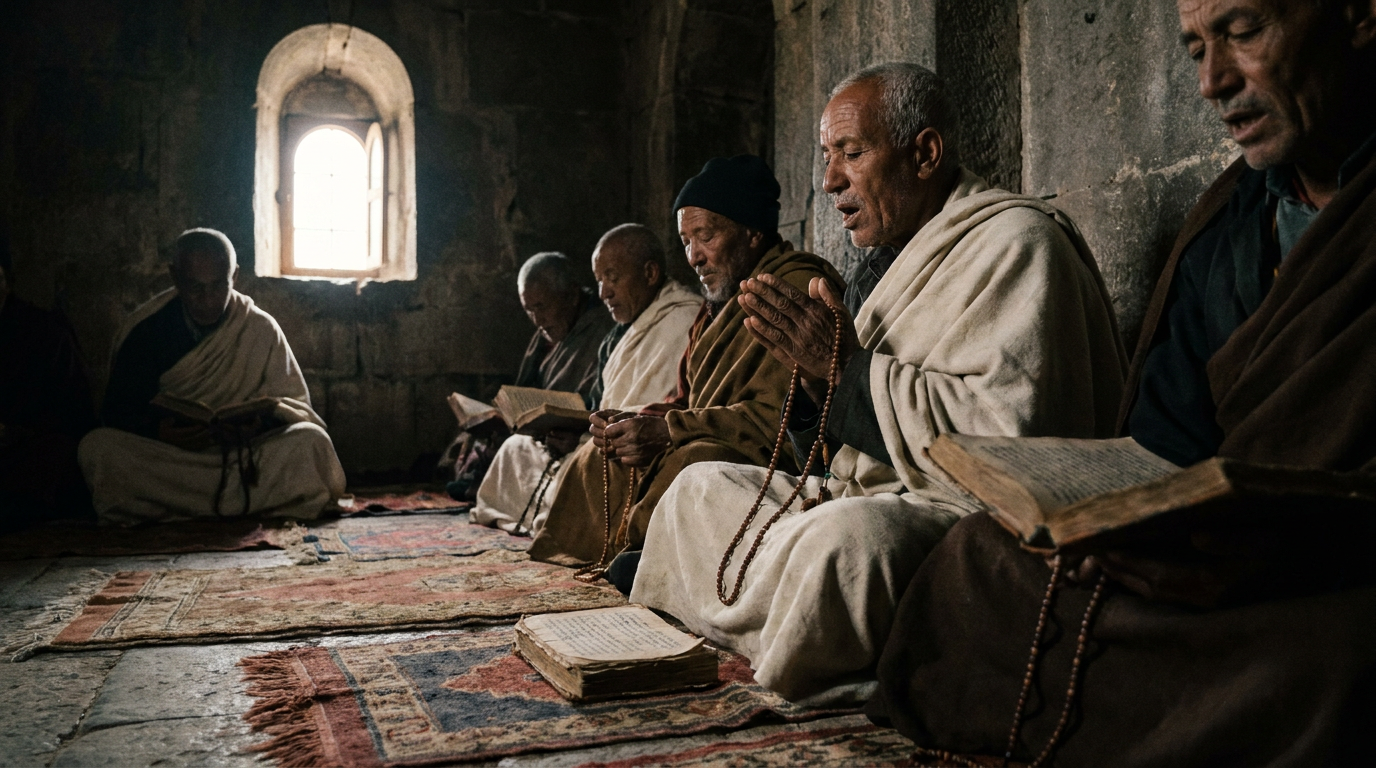
Bhakti Yoga is practical, personal, and loving. It does not ask us to abandon our humanity. It teaches us to spiritualize our humanity by offering our words, work, relationships, food, and time to God.
Sacred recitation is one of the main practices of Bhakti because it is accessible and transformative.
Nama: The Holy Name
The Sanskrit word nama means “name.” In Bhakti, the names of God are considered non-different from God’s presence. This means that when we sincerely chant divine names, we are not merely making sound. We are coming into contact with the Divine.
Different traditions call upon God with different names. In the Bhakti tradition, names such as Krishna, Rama, Govinda, Gopala, Radha, Hari, and Narayana are often chanted. Each name reveals a quality of God—beauty, joy, compassion, protection, sweetness, and loving relationship.
A well-known mantra in the Bhakti tradition is:
Hare Krishna, Hare Krishna, Krishna Krishna, Hare Hare
Hare Rama, Hare Rama, Rama Rama, Hare Hare
This is called the Maha Mantra, meaning “great mantra.” It is a prayer asking to be engaged in loving service to God. “Hare” calls upon the divine energy of love, “Krishna” means the all-attractive Lord, and “Rama” refers to the reservoir of spiritual joy.
Kirtan: Singing Together
Kirtan means devotional singing, often in a call-and-response style. One person leads, and others respond. Instruments such as harmonium, mridanga drum, kartals, guitar, or simple hand clapping may accompany the chanting.
Kirtan is joyful, communal, and healing. You do not need to be a trained singer. The purpose is not performance. The purpose is offering.
In kirtan, voices blend together, and hearts often open naturally. Some people feel peace. Some feel gratitude. Some feel tears. Some simply feel relieved to be in a space where they can be sincere.
Japa: Personal Mantra Meditation
Japa means the quiet repetition of a mantra, often using prayer beads. A traditional strand of Bhakti prayer beads has 108 beads. The practitioner chants one mantra on each bead, moving slowly and attentively.
Japa is personal and intimate. It is a time to sit with God, to listen inwardly, and to practice bringing the mind back with patience.
The mind may wander. That is normal. The practice is to gently return to the mantra again and again, without discouragement.
How to Begin a Sacred Recitation Practice
Starting is often easier than we imagine. You do not need to wait until life is calm or until you feel spiritually advanced. Sacred recitation is especially helpful when life is messy, uncertain, or tender.
Choose a Sacred Sound
Begin with a mantra, prayer, or divine name that feels authentic and respectful to you. If you are drawn to the Bhakti tradition, you may begin with the Maha Mantra or a simple prayer such as:
“Dear Lord, please guide me. Please help me remember You. Please let my life become an offering.”
You may also recite verses from the Bhagavad-gita, the Psalms, or prayers from your own tradition. The essential qualities are sincerity, reverence, and a desire to grow spiritually.
Create a Small Sacred Space
A sacred space does not need to be elaborate. It may be a clean corner with a candle, a picture of Krishna or a beloved form of God, flowers, scripture, or prayer beads.
The purpose is to remind the mind: “This time is for God.”
Even if you have only five minutes, those five minutes can become spiritually meaningful when offered with love.
Set a Realistic Time
Consistency is more important than quantity in the beginning. You might start with five minutes each morning. Or you may chant one round of japa beads. Or you may sing one kirtan before bed.
A small practice done daily can become a strong spiritual foundation.
Sit with Humility
Before beginning, take a gentle breath and offer a simple intention:
“May this recitation purify my heart. May it help me love God and serve others.”
This humble mood changes everything. Sacred recitation is not about proving spiritual achievement. It is about receiving grace.
Practical Ways to Deepen Your Practice
As sacred recitation becomes part of life, we may feel called to go deeper. The depth comes not from pressure, but from love.
Listen While You Chant
Chanting is not only speaking. It is also hearing.
In Bhakti, hearing sacred sound is essential. When chanting a mantra, try to listen carefully to each syllable. Let the ears receive what the tongue is offering. This helps gather the wandering mind and brings the heart into the practice.
If the mind drifts away, gently return to hearing. No shame is needed. Each return is an act of devotion.
Chant with Meaning
Understanding the meaning of a mantra or prayer helps the heart participate.
For example, when chanting the Maha Mantra, we can remember: “I am calling upon God and God’s loving energy. Please engage me in Your service. Please bring me closer to divine love.”
This simple meaning can turn repetition into prayer.
Bring Your Real Life into Prayer
Sacred recitation is not an escape from life. It is a way to bring life into relationship with God.
If you are grieving, chant with your grief. If you are grateful, chant with gratitude. If you are confused, chant with honesty. If you feel spiritually dry, chant anyway, gently and sincerely.
God does not require us to be polished before we pray. God receives the honest heart.
Practice in Community
While personal practice is important, chanting with others can nourish us deeply. A community of sincere seekers helps us stay encouraged.
In Bhakti communities, gathering for kirtan, scripture discussion, shared meals, and service creates a spiritual family. This is called sanga, meaning association or spiritual company.
Good association helps protect our practice. It reminds us of who we truly are: souls meant for loving relationship with God.
Sacred Recitation in Bhakti Scriptures
Bhakti scriptures repeatedly praise the power of hearing, chanting, and remembering God. These teachings are not abstract philosophy; they are practical guidance for the heart.
The Bhagavad-gita: Remembering God in Daily Life
In the Bhagavad-gita, Krishna teaches that we can remember Him while performing our duties. This is very important for modern life. Most of us have families, work, responsibilities, and many practical demands.
Bhakti Yoga does not require that everyone leave the world. Instead, it teaches us to bring remembrance of God into the world.
Sacred recitation helps us do this. A person may chant in the morning, remember a mantra before a meeting, offer food with prayer, or sing while cooking. These small acts gradually spiritualize the day.
The Srimad Bhagavatam: Hearing and Chanting Cleanses the Heart
The Srimad Bhagavatam describes hearing and chanting divine topics as a cleansing process. Just as dust gathers on a mirror, worldly impressions gather on the heart. Sacred sound wipes the mirror.
As the heart becomes clearer, we begin to see ourselves and others differently. We recognize that every living being is sacred, a soul, a beloved part of God. This vision naturally leads to compassion and service.
The Teachings of Sri Chaitanya: Chanting with Humility
Sri Chaitanya Mahaprabhu, a great teacher of divine love, emphasized the chanting of God’s holy names as the most accessible spiritual practice for this age. He taught that one should chant in a humble state of mind, offering respect to others and not demanding honor for oneself.
This humility is central. Sacred recitation is not meant to make us proud. It is meant to make us soft, kind, and available for service.
Common Challenges and Gentle Solutions
Every sincere practitioner faces obstacles. This does not mean we are failing. It means we are human, and spiritual growth is real work blessed by grace.
“My Mind Wanders Constantly”
This is perhaps the most common challenge. The mind wanders because it has been practicing distraction for a long time.
Do not be discouraged. Each time you notice the mind wandering and return to the mantra, you are strengthening your devotion. The return is part of the practice.
Try chanting a little slower. Listen more carefully. Sit in a quieter place if possible. Most importantly, be patient.
“I Do Not Feel Anything”
Sometimes sacred recitation feels sweet and alive. Other times it feels dry. Feelings come and go, but sincere practice has value even when emotions are quiet.
A farmer waters the seed even before seeing the fruit. In the same way, we continue chanting with faith that something sacred is growing within.
“I Am Not Pure Enough”
Bhakti begins wherever we are. We do not become pure first and then chant. We chant to become purified.
Sacred recitation is medicine for the heart. A person who is sick does not wait to become healthy before taking medicine. In the same way, we approach sacred sound with our imperfections and ask for help.
“I Am Too Busy”
Modern life can be very full. But sacred recitation can begin in small ways.
Chant for three minutes before checking your phone. Repeat a prayer while walking. Sing one mantra in the car. Keep prayer beads nearby. Offer one moment before eating.
Small sincere practices can open large doors.
Sacred Recitation as a Way of Service
In Bhakti Yoga, spiritual practice naturally leads to service. The Sanskrit word seva means loving service. When the heart is touched by sacred sound, we begin to ask, “How can I serve?”
Serving God Through Sound
When we chant, we are offering our voice to God. This is beautiful. The same voice that may have spoken worry, complaint, or harsh words can become an instrument of prayer.
This does not mean we become perfect overnight. But gradually, sacred recitation refines our speech. We may become more careful, truthful, encouraging, and compassionate.
Serving Others Through Presence
A person who chants sincerely often becomes more present for others. Sacred recitation gives inner strength, and from that strength we can listen better, forgive more easily, and respond with kindness.
This is one of the signs of real spiritual growth: our practice makes us more loving in daily relationships.
Offering the Fruits
Bhakti teaches us to offer the fruits of our actions to God. After chanting, we can pray:
“May any benefit from this practice be offered for the wellbeing of all beings. May my heart become useful in Your service.”
This mood protects us from selfish spirituality. We do not chant only for our own peace. We chant to become instruments of divine love.
Building a Daily Sacred Recitation Routine
A simple routine helps sacred recitation become steady and natural.
Morning Practice
Morning is a powerful time because the mind is usually quieter. Before entering the noise of the day, spend a few minutes with sacred sound.
You might:
- Wash your face and sit in a clean place
- Light a candle or offer a flower
- Say a short prayer
- Chant a mantra on beads or sing softly
- Read one verse from scripture
- Offer the day to God
Even ten minutes can change the direction of the whole day.
Midday Remembrance
During the day, take short pauses. Before eating, offer gratitude. Before difficult work, silently repeat a divine name. Before speaking in a tense situation, take one breath and remember God.
These moments are like small lamps placed along the path.
Evening Reflection
At night, sacred recitation can help us release the day. We can chant softly, thank God for blessings, ask forgiveness for mistakes, and pray for guidance.
A simple evening prayer might be:
“Dear Lord, thank You for carrying me today. Please forgive my shortcomings. Please help me remember You tomorrow and serve with a cleaner heart.”
This brings peace before sleep.
Sacred Recitation and Spiritual Growth
The power of sacred recitation is not only in immediate comfort. Over time, it reshapes our character and deepens our relationship with God.
From Anxiety to Trust
As we chant and pray, we remember that we are not the ultimate controllers. Life is held by a wisdom greater than our own. This remembrance can reduce anxiety and increase trust.
Trust does not mean passivity. We still act responsibly. But we act with prayerful dependence, knowing that God is present.
From Self-Centeredness to Love
The ego often asks, “How can I be praised? How can I be safe? How can I control?” Sacred recitation gently changes the question to, “How can I love? How can I serve? How can I remember God?”
This is a profound shift. It is the heart of Bhakti Yoga.
From Isolation to Belonging
Many people carry loneliness, even when surrounded by others. Sacred recitation reminds us that we belong to God. We are never spiritually alone.
When we chant divine names, we are entering a relationship that is eternal, intimate, and full of grace.
A Simple Guided Practice for Beginners
If you are new to sacred recitation, you can try this gentle practice today.
Step One: Sit and Breathe
Find a quiet place. Sit comfortably. Take three slow breaths. Let the body soften.
Step Two: Offer Your Intention
In your own words, say:
“Dear God, I am here. Please guide my heart. May this practice bring me closer to You.”
Step Three: Chant or Recite
Choose a mantra or prayer. If using the Maha Mantra, chant slowly:
Hare Krishna, Hare Krishna, Krishna Krishna, Hare Hare
Hare Rama, Hare Rama, Rama Rama, Hare Hare
Listen to each word. If the mind wanders, return gently.
Step Four: Sit in Silence
After chanting for a few minutes, sit quietly. Notice how you feel without judging it. Offer whatever is present.
Step Five: Carry It Forward
End with a prayer:
“May I remember You today. May I serve with kindness.”
Then take one small act of service into your day.
Everyone Can Begin
Sacred recitation is a gift. It is ancient, yet completely relevant for modern life. It is simple enough for a child and deep enough for a saint. It can be sung in community, whispered in sorrow, repeated in meditation, or carried silently in the heart.
You do not need to be perfect to begin. You do not need to understand everything. You only need a sincere willingness to turn toward God.
At The Bhakti House, we believe every soul is welcome on the path of love. Wherever you come from, whatever your history, and however close or far you may feel from spiritual life, you can take one sincere step today.
Chant one holy name. Offer one prayer. Read one sacred verse. Serve one person with kindness. Give one moment of your day to God.
That one sincere step matters. And by grace, one step can become a beautiful journey of love.
FAQs
What is sacred recitation?
Sacred recitation refers to the act of reading or chanting sacred texts or verses, often in a religious or spiritual context. It is a practice found in many different religious traditions around the world.
What are some examples of sacred recitation?
Examples of sacred recitation include the chanting of mantras in Hinduism and Buddhism, the recitation of the Quran in Islam, the reading of the Torah in Judaism, and the chanting of hymns and prayers in Christianity.
What is the purpose of sacred recitation?
The purpose of sacred recitation varies depending on the religious or spiritual tradition, but it is often seen as a way to connect with the divine, seek spiritual guidance, and cultivate inner peace and mindfulness.
How is sacred recitation practiced?
Sacred recitation is practiced in various ways, including individual or group chanting, reading aloud from sacred texts, and participating in rituals or ceremonies that involve reciting prayers or verses.
What are the benefits of sacred recitation?
Benefits of sacred recitation may include promoting a sense of calm and inner peace, fostering a deeper connection to one’s faith or spirituality, and serving as a form of meditation or mindfulness practice.

