
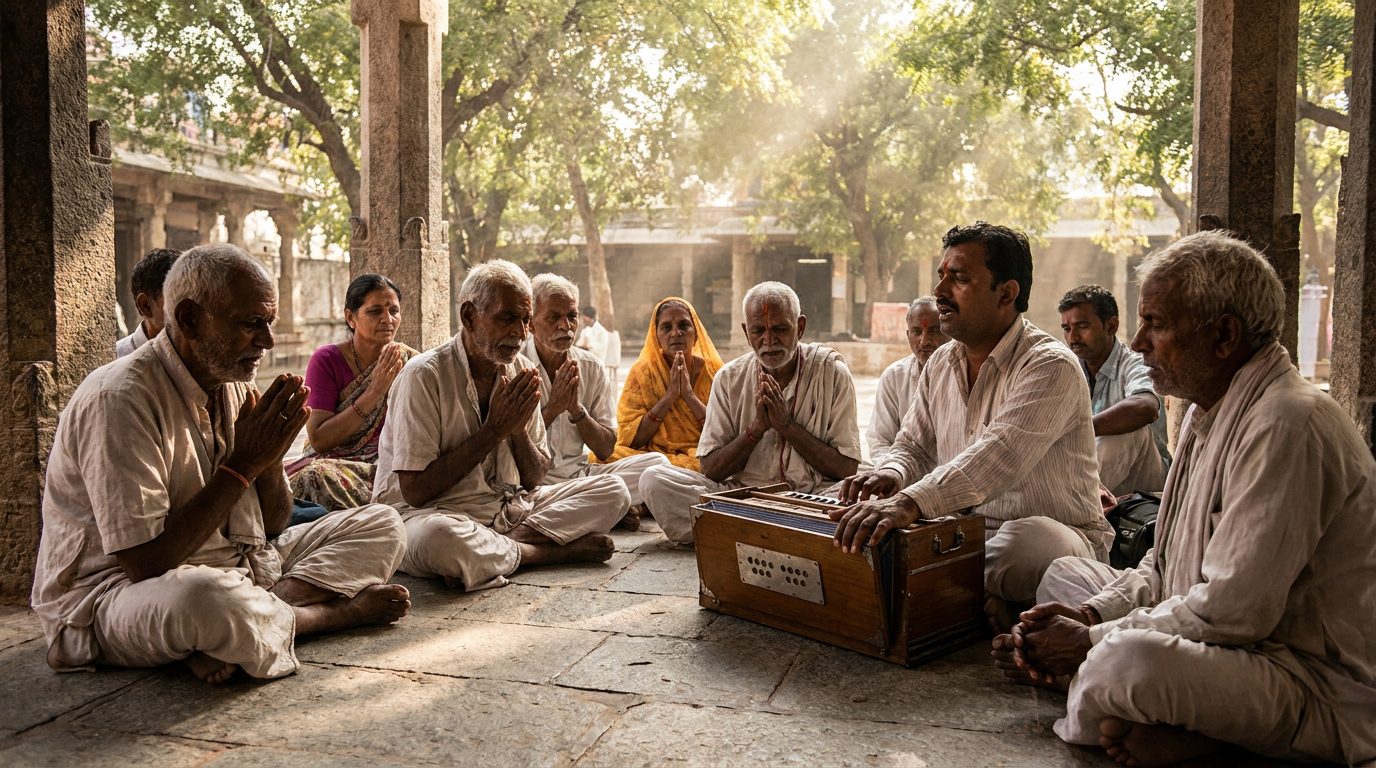
Navadha Bhakti means “nine forms of devotion” or “nine ways to love and serve God.”
The word nava means “nine,” and bhakti means loving devotion. In simple language, Navadha Bhakti is a beautiful map for spiritual life. It shows us that devotion is not limited to one personality type, one culture, one temple, or one style of prayer. There are many sincere ways to come closer to the Divine.
In the Bhakti tradition, God is not understood as distant or unreachable. God is the loving source of all life, the Supreme Person, known by many names—Krishna, Rama, Vishnu, Hari, Govinda, and countless others. Bhakti Yoga is the path of reconnecting with God through love.
Navadha Bhakti teaches that this love can be practiced through hearing, chanting, remembering, serving, worshiping, praying, becoming God’s servant, becoming God’s friend, and fully offering oneself.
These nine practices are described in the Śrīmad Bhāgavatam 7.5.23–24, where the young saint Prahlada shares them as the essence of devotional life:
*śravaṇaṁ kīrtanaṁ viṣṇoḥ
smaraṇaṁ pāda-sevanam
arcanaṁ vandanaṁ dāsyaṁ
sakhyam ātma-nivedanam*
Prahlada was only a child, yet his heart was filled with spiritual wisdom. He reminds us that Bhakti is not only for scholars, monks, or people born in a particular tradition. Bhakti is for every sincere heart.
The Heart of Navadha Bhakti
Bhakti Is a Relationship of Love
Bhakti Yoga is often called the yoga of love. While some paths emphasize knowledge, meditation, or discipline, Bhakti centers on relationship. It invites us to ask: “How can I love God today? How can I serve with more sincerity? How can I remember the Divine in my ordinary life?”
This is what makes Navadha Bhakti so practical. It does not ask us to abandon our humanity. Instead, it spiritualizes our humanity. We hear with love. We sing with love. We work with love. We pray with love. We serve with love.
The goal is not merely to perform religious activities. The goal is to awaken the heart.
The Nine Practices Are Connected
Although Navadha Bhakti is described as nine forms, they are not separate boxes. They naturally support one another.
When we hear sacred wisdom, we feel inspired to chant. When we chant, we remember God. When we remember God, we feel moved to serve. When we serve, prayer becomes more natural. When prayer deepens, surrender becomes possible.
In this way, Navadha Bhakti is like a garland. Each practice is a flower, and love is the thread that holds them all together.
A Path for Everyone
One of the most comforting truths of Bhakti Yoga is that everyone can begin from where they are.
You may have grown up in a devotional home, or you may be exploring spiritual life for the first time. You may feel full of faith, or you may carry doubts. You may know many Sanskrit words, or none at all. You may be steady in practice, or simply longing for peace.
Navadha Bhakti welcomes you.
The invitation is not to become perfect overnight. The invitation is to take one sincere step toward God.
1. Śravaṇam: Hearing About God
What Śravaṇam Means
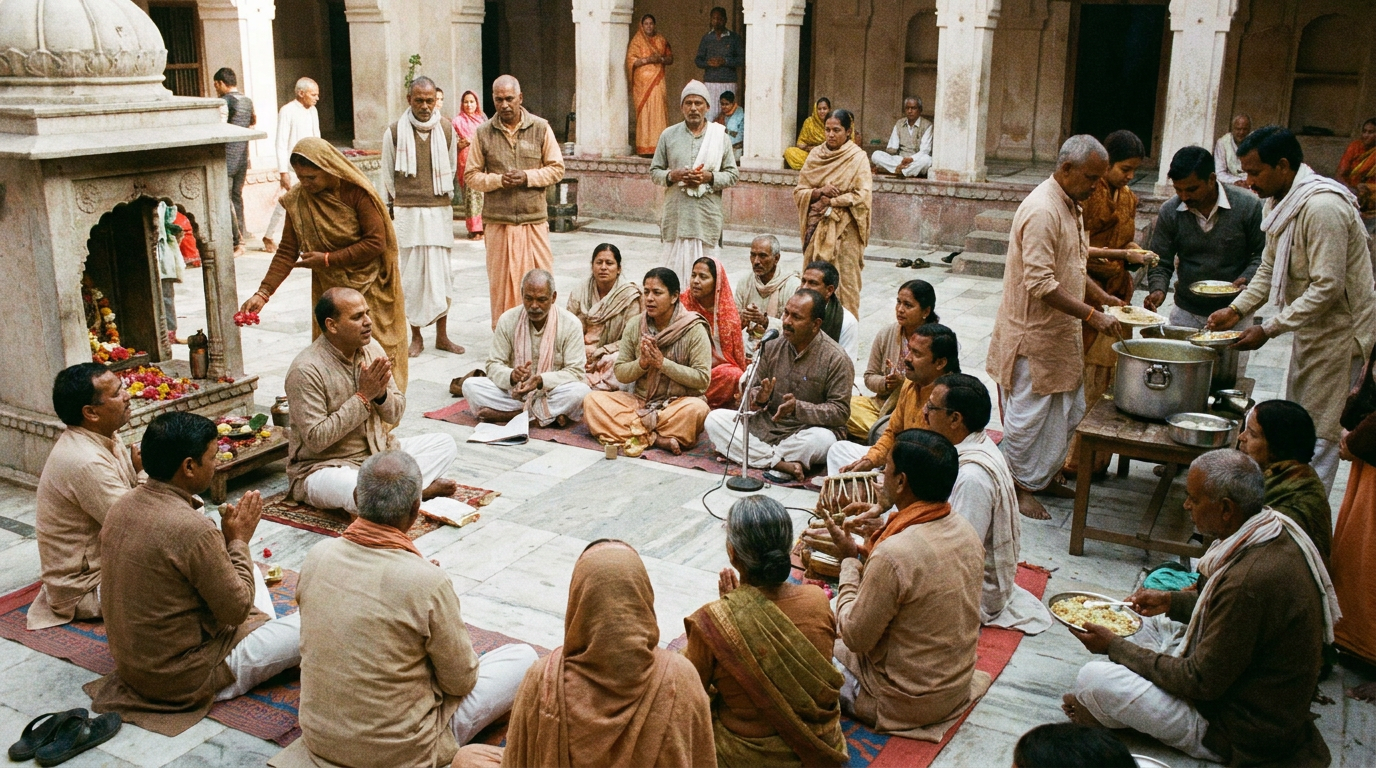
Śravaṇam means hearing. In Bhakti Yoga, it means hearing about God, the soul, the saints, sacred teachings, and divine pastimes.
Hearing is the beginning of transformation. What we listen to shapes our consciousness. If we constantly hear fear, anger, gossip, or distraction, the heart becomes restless. But when we hear sacred sound, wisdom, and stories of divine love, the heart becomes purified.
Śravaṇam is not passive listening. It is listening with openness, humility, and a desire to grow.
Hearing Sacred Scriptures
Authentic Bhakti scriptures such as the Bhagavad-gītā, Śrīmad Bhāgavatam, Rāmāyaṇa, and writings of the saints are treasured because they carry spiritual potency. They are not only books of information; they are invitations into relationship with God.
In the Bhagavad-gītā, Krishna teaches Arjuna with compassion in the middle of a battlefield. This reminds us that spiritual wisdom is not only for quiet moments. It is especially needed in the battlefield of daily life—our responsibilities, worries, relationships, and decisions.
Hearing scripture helps us remember who we truly are: not merely the body or mind, but an eternal soul, beloved by God.
Practical Ways to Practice Śravaṇam
You can practice śravaṇam by listening to a Bhakti class, reading a few verses of scripture, hearing kirtan, or listening to the life stories of saints.
Even ten minutes a day can nourish the heart.
You might begin your morning with one verse from the Bhagavad-gītā. You might listen to devotional music while cooking. You might attend satsang, which means “spiritual association” or “gathering in truth.”
The key is sincerity. Let sacred sound enter the heart.
Please visit our website for more information on our articles: articles.
2. Kīrtanam: Chanting and Singing God’s Names
What Kīrtanam Means
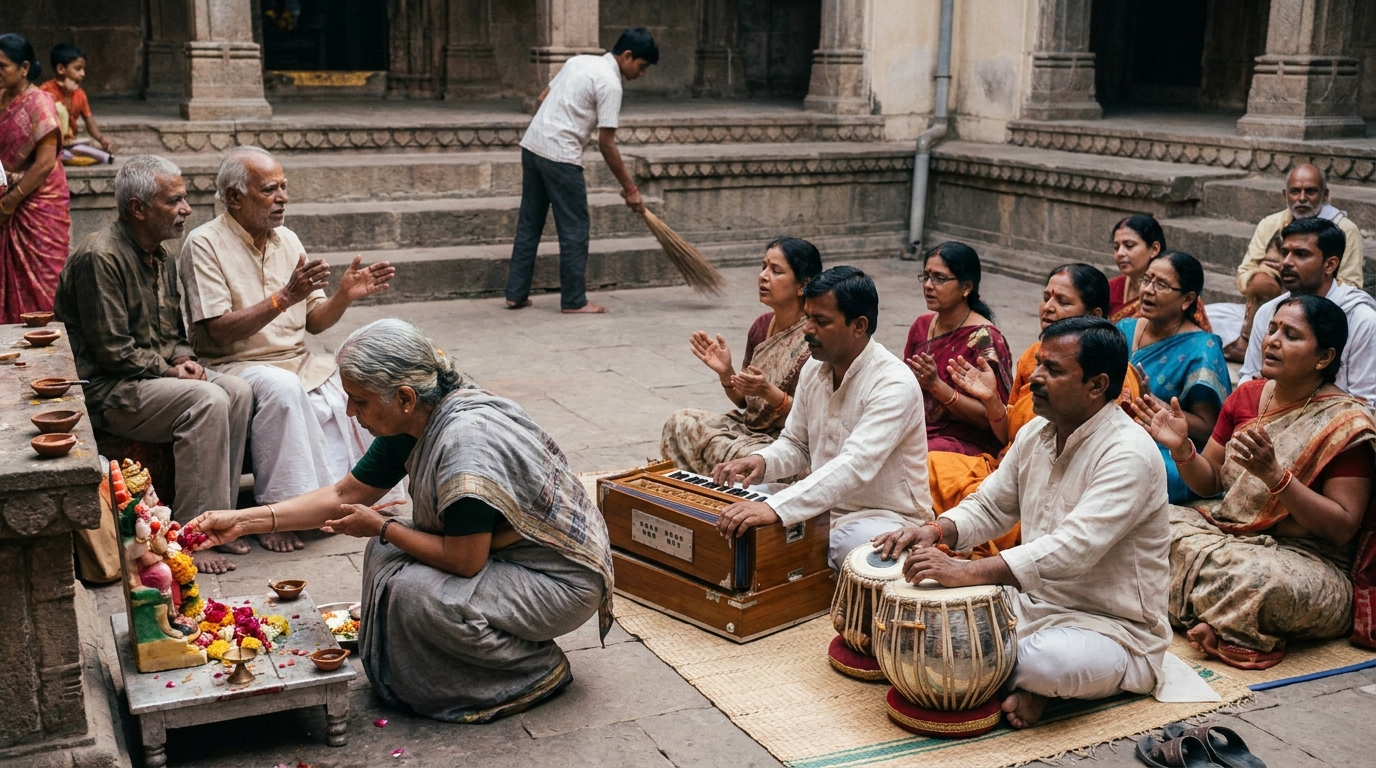
Kīrtanam means chanting, singing, or glorifying God. In Bhakti Yoga, this often takes the form of mantra meditation, devotional singing, or speaking about the Lord’s qualities and kindness.
A mantra is a sacred sound vibration that helps free the mind and awaken spiritual consciousness. One of the most beloved mantras in the Bhakti tradition is the Hare Krishna maha-mantra:
Hare Krishna Hare Krishna
Krishna Krishna Hare Hare
Hare Rama Hare Rama
Rama Rama Hare Hare
“Maha-mantra” means “great mantra.” It is a prayer calling upon God’s divine energy, asking to be engaged in loving service.
Why Chanting Is So Powerful
Chanting is central to Bhakti because it engages the voice, ears, mind, and heart. Even when the mind is restless, the holy name gives us a place to return.
The scriptures teach that God’s names are not ordinary sound. The name of God carries God’s presence. When we chant sincerely, we are not simply repeating words; we are reaching out to the Divine.
Chanting can be joyful and musical, as in kirtan. It can also be quiet and personal, as in japa meditation, where one chants on beads.
Practical Ways to Practice Kīrtanam
You can chant alone, with your family, in a temple, at a yoga studio, or with a community of seekers. You can sing loudly with instruments or softly in your heart.
If you are new, begin simply. Chant one mantra for five minutes. Let the sound guide you. You do not need a perfect voice. Bhakti is not a performance. It is an offering.
When we chant, we are saying, “God, please let me remember You. Please let me love You.”
3. Smaraṇam: Remembering God
What Smaraṇam Means
Smaraṇam means remembrance. It is the practice of keeping God in the mind and heart throughout the day.
This does not mean we must stop living our lives. Rather, we bring spiritual awareness into our lives. We remember God while working, walking, parenting, studying, cooking, resting, and serving others.
Bhakti Yoga teaches that the world becomes sacred when we see it in connection with God.
Remembering in Daily Life
Smaraṇam can be as simple as pausing before a meal and offering gratitude. It can be silently repeating a mantra while driving. It can be remembering Krishna’s kindness during a difficult conversation. It can be seeing the sunrise and thinking, “This beauty comes from the Divine.”
In the Bhagavad-gītā 9.22, Krishna says that for those who remember Him with devotion, He personally carries what they lack and preserves what they have. This is not a promise that life will be free from challenge, but it is a promise of divine care.
Remembrance helps us feel less alone.
A Gentle Practice for the Mind
The mind naturally wanders. Smaraṇam is not about judging ourselves for forgetting. It is about gently returning.
Each time we remember God, even for a moment, we water the seed of devotion.
A simple prayer can help: “My Lord, please help me remember You in this moment.”
4. Pāda-Sevanam: Serving the Lord’s Feet
What Pāda-Sevanam Means
Pāda means “feet,” and sevanam means “service.” Pāda-sevanam means serving the feet of the Lord.
In Indian spiritual culture, the feet of the Lord symbolize humility, shelter, and surrender. To serve the Lord’s feet means to approach God with a humble heart and a desire to serve.
This practice reminds us that devotion is not only emotion. Love becomes real through service.
Service as an Expression of Love
In Bhakti, service is called seva. Seva means selfless service offered with devotion. It may be simple or grand, visible or hidden.
Cleaning a temple floor can be seva. Cooking a meal for others can be seva. Helping a child, caring for the elderly, welcoming guests, or supporting a spiritual community can all become seva when offered to God.
The action itself may look ordinary, but the intention makes it sacred.
Serving God Through Serving Others
A beautiful teaching of Bhakti is that every living being is part of God. Therefore, when we serve others with compassion, we are serving God’s family.
Pāda-sevanam invites us to become humble. Instead of asking, “How can I be honored?” we ask, “How can I be useful? How can I bring comfort, kindness, and devotion into this space?”
This humility softens the heart.
5. Arcanam: Worshiping the Lord
What Arcanam Means
Arcanam means worship. It refers to offering love and respect to God through sacred forms, images, rituals, and personal offerings.
In Bhakti traditions, devotees may worship a deity form of Krishna, Rama, Vishnu, or another form of the Divine. A deity is not seen as an idol or ordinary object. Rather, it is a merciful form through which God accepts our service and allows us to focus our love.
Just as a photograph can connect us emotionally to someone dear, the deity helps us offer devotion in a personal way. But in Bhakti understanding, the deity is much more than a symbol. God kindly becomes accessible to our senses.
Simple Home Worship
Arcanam does not have to be elaborate. You can create a small sacred space at home with a picture of Krishna, Rama, or a form of God you feel drawn to. You can offer water, flowers, incense, a lamp, or food prepared with love.
Before eating, many Bhakti practitioners offer their food to God. This food, when offered with devotion, becomes prasāda, meaning “mercy” or “grace.” Eating prasāda reminds us that life itself is a gift.
Worship with Attention and Love
Ritual without heart can become mechanical. But simple worship with sincerity can become deeply transformative.
When offering a flower, you might pray, “Please accept this small offering. Please help my heart become pure.”
Arcanam teaches us to bring beauty, care, and reverence into spiritual life.
6. Vandanam: Offering Prayers
What Vandanam Means
Vandanam means offering prayers, respect, and heartfelt praise. Prayer is one of the most universal forms of devotion. People from many traditions pray. In Bhakti Yoga, prayer is a personal conversation with God.
Prayer may be spoken, sung, whispered, written, or silent.
It may be full of gratitude, longing, confession, surrender, or even tears.
Honest Prayer Is Welcome
Sometimes people feel they must be pure before they can pray. Bhakti teaches the opposite: prayer is how we become purified.
God already knows the heart. We do not need to pretend. We can come honestly.
“God, I am struggling.”
“Please guide me.”
“Thank You for today.”
“Please help me forgive.”
“Please teach me how to love You.”
These simple prayers are powerful because they are real.
Scriptural Prayers
The Bhakti scriptures are filled with prayers of saints and devotees. Queen Kunti’s prayers in the Śrīmad Bhāgavatam are full of humility and deep wisdom. The prayers of Prahlada show faith even in difficulty. The songs of great saints like Mirabai, Tulsidas, Narottama Dasa Thakura, and many others express longing for God with poetic beauty.
Reading or singing these prayers can teach our own heart how to pray.
7. Dāsyam: Serving as God’s Servant
What Dāsyam Means
Dāsyam means servitude, or the mood of being God’s servant. In modern language, the word “servant” can sound uncomfortable because it may remind us of exploitation or loss of dignity. But in Bhakti, becoming God’s servant is the highest dignity of the soul.
It means, “I belong to God. My life has a sacred purpose. Let me use my body, mind, words, and gifts in divine service.”
Freedom Through Service
The world often teaches us that freedom means doing whatever we want. Bhakti gently shows us a deeper freedom: freedom from selfishness, ego, and endless craving.
When we serve God, we become free from being controlled by every passing desire.
Dāsyam gives direction to life. Instead of living only for personal gain, we begin to live as instruments of compassion and devotion.
Hanuman as the Perfect Example
In the Rāmāyaṇa, Lord Hanuman is the shining example of dāsyam. His love for Lord Rama expresses itself through courageous, humble, tireless service. Hanuman does not seek fame. He seeks only to please Rama.
His life teaches us that devotion is active. Love runs, leaps, serves, protects, and never gives up.
We can pray to Hanuman for strength to serve with humility and courage.
8. Sakhyam: Friendship with God
What Sakhyam Means
Sakhyam means friendship. This is one of the sweetest aspects of Bhakti Yoga: God can be approached as a dear friend.
In the Bhagavad-gītā, Arjuna has a friendship with Krishna. He speaks with Krishna openly. He asks questions. He shares confusion. Krishna guides him with patience and love.
This teaches us that God is not offended by sincere questions. Spiritual friendship includes honesty.
Bringing God Into the Heart
To practice sakhyam, we can begin speaking to God throughout the day as we would speak to a trusted friend.
“Krishna, I don’t know what to do.”
“Rama, please walk with me today.”
“God, thank You for this small joy.”
“Please help me make the right choice.”
Friendship with God does not remove reverence. It deepens intimacy. We honor God’s greatness, and we also trust God’s closeness.
A Personal Path of Devotion
Some people naturally feel awe toward God. Others feel friendship, parental affection, or deep longing. Bhakti allows space for many devotional moods.
Sakhyam reminds us that the Divine is not only the ruler of the universe, but also the companion of the soul.
You are never truly alone.
9. Ātma-Nivedanam: Full Self-Surrender
What Ātma-Nivedanam Means
Ātma means “self,” and nivedanam means “offering” or “surrender.” Ātma-nivedanam means offering one’s whole self to God.
This is the culmination of Navadha Bhakti. It is the prayer: “My Lord, everything I have and everything I am belongs to You. Please guide my life.”
Surrender does not mean becoming passive or irresponsible. It means trusting God deeply while still doing our part with sincerity.
Surrender Is a Gradual Awakening
For many of us, full surrender may feel far away. That is okay. Bhakti is patient.
We can begin with small surrender.
Surrender one worry.
Surrender one habit.
Surrender one decision.
Surrender one day.
Surrender one prayer.
Each small offering prepares the heart for deeper trust.
In the Bhagavad-gītā 18.66, Krishna lovingly says, “Abandon all varieties of dharma and surrender unto Me. I shall deliver you from all sinful reactions. Do not fear.” This verse is not a threat; it is an embrace. Krishna is saying, “Come to Me. I will protect you. Do not be afraid.”
Living as an Offering
Ātma-nivedanam transforms life into worship. Our home, work, relationships, talents, and struggles can all be offered.
We begin to ask not only, “What do I want?” but “What would please God? What would help me grow in love?”
This is the heart of spiritual maturity.
Navadha Bhakti in the Life of Prahlada
A Child Saint with Deep Faith
Prahlada Maharaja, who taught the nine processes of devotion in the Śrīmad Bhāgavatam, is one of the most beloved examples of Bhakti. Though he was born in a family opposed to devotion, his heart remained fixed on Lord Vishnu.
His father, Hiranyakashipu, tried to turn him away from God, but Prahlada remained peaceful and compassionate. He did not hate his father. He prayed for him.
This shows the power of true devotion. Bhakti does not harden the heart. It makes the heart soft, fearless, and forgiving.
Devotion in Difficult Circumstances
Prahlada’s life reminds us that spiritual practice is not only for peaceful conditions. Sometimes devotion shines brightest in difficulty.
When life is challenging, śravaṇam and kīrtanam may become our shelter. Smaraṇam may become our strength. Vandanam may become our tears. Ātma-nivedanam may become our courage.
Prahlada teaches us that even if the world feels unsafe, God is near.
Navadha Bhakti in the Teachings of Lord Rama to Shabari
Another Beautiful Presentation of Ninefold Devotion
In the Rāmcharitmānas, the saint Tulsidas describes another beloved teaching of Navadha Bhakti. Lord Rama explains nine forms of devotion to Shabari, a humble devotee who waited for Him with love for many years.
This version includes practices such as keeping company with saints, hearing sacred stories, serving the guru’s feet, singing God’s qualities, chanting with faith, practicing self-control, seeing God everywhere, being content, and living with simplicity and sincerity.
Though the list is expressed differently, the heart is the same: devotion is love in action.
Shabari’s Simple Offering
Shabari is remembered for offering forest berries to Lord Rama with pure love. Her offering was not rich or impressive by worldly standards, but it was full of devotion.
Bhakti scriptures repeatedly remind us that God accepts the love behind the offering. In the Bhagavad-gītā 9.26, Krishna says that if one offers Him a leaf, flower, fruit, or water with devotion, He accepts it.
This verse is very dear because it makes devotion accessible to everyone. God does not require wealth. God asks for love.
How to Practice Navadha Bhakti Today
Begin with One Practice
Navadha Bhakti gives nine beautiful doors into devotional life. You do not have to master all of them at once.
You may begin with hearing.
Or chanting.
Or prayer.
Or service.
Or offering your food.
Or simply remembering God before sleep.
One sincere practice can awaken the others.
Create a Gentle Daily Rhythm
A simple Bhakti rhythm might look like this:
Begin the morning with a short prayer.
Read or hear one verse of scripture.
Chant a mantra for a few minutes.
Offer your food with gratitude.
Do one act of service.
Remember God before resting at night.
This is not about pressure. It is about relationship.
Just as friendship grows through regular contact, devotion grows through steady, loving connection.
Practice with Community
In Bhakti Yoga, spiritual community is very important. The Sanskrit word sanga means association. When we spend time with people who are sincerely trying to love God, our own devotion becomes nourished.
A community can help us chant, learn, ask questions, serve, celebrate, and continue when we feel weak.
The Bhakti House spirit is one of welcome: come as you are, bring your questions, bring your heart, and grow together in devotion.
Common Questions About Navadha Bhakti
Do I Have to Be Hindu to Practice Navadha Bhakti?
No. Navadha Bhakti comes from the Vedic and Bhakti traditions of India, and we honor that sacred source deeply. At the same time, the essence of Bhakti—hearing about God, chanting divine names, praying, serving, and surrendering—is universal.
People from many backgrounds can respectfully learn from and practice Bhakti Yoga.
The important qualities are sincerity, humility, and respect.
What If I Do Not Understand Sanskrit?
That is completely okay. Sanskrit is a sacred and beautiful language, but Bhakti is not limited by language.
You can begin by understanding the meaning simply:
Śravaṇam: hearing
Kīrtanam: chanting
Smaraṇam: remembering
Pāda-sevanam: serving
Arcanam: worshiping
Vandanam: praying
Dāsyam: serving as God’s servant
Sakhyam: friendship with God
Ātma-nivedanam: offering the self
Even if pronunciation takes time, God understands the heart.
Which of the Nine Is Most Important?
All nine are powerful. The Śrīmad Bhāgavatam honors each one as a genuine path of devotion.
Many teachers emphasize hearing and chanting as especially important for this age because they are simple, accessible, and purifying. But the best practice for you may be the one you can do sincerely and regularly.
Start where your heart feels invited.
What If My Practice Feels Dry?
This happens to everyone. Devotional life has seasons.
Sometimes chanting feels joyful. Sometimes it feels distracted. Sometimes prayer flows. Sometimes we feel silent. This does not mean we have failed.
Keep showing up gently. Ask for mercy. Seek good association. Hear sacred wisdom. Serve others. The heart softens over time.
Bhakti grows by grace and sincerity.
The Spiritual Fruit of Navadha Bhakti
A Softer Heart
The fruit of Navadha Bhakti is not pride in being religious. The fruit is a softer heart.
We become more grateful, more compassionate, more truthful, more forgiving, and more connected to God.
Devotion should make us kinder.
If our practice is real, it will slowly reduce ego and increase love.
Seeing Life as Sacred
Navadha Bhakti helps us see that every part of life can become spiritual. Our voice can chant. Our ears can hear. Our hands can serve. Our mind can remember. Our home can become a place of worship. Our relationships can become opportunities for compassion.
Nothing is too ordinary to be offered.
Bhakti does not always change our outer situation immediately, but it changes how we live within it.
Growing Closer to God
Ultimately, Navadha Bhakti is about relationship with God. The practices are not ends in themselves. They are ways of turning toward the One who has always loved us.
Like a child returning home, the soul finds rest in divine love.
Every mantra, every prayer, every act of service, every tear, and every sincere offering brings us closer.
A Simple Navadha Bhakti Meditation
A Prayerful Reflection
You may like to sit quietly and reflect on the nine forms of devotion in this way:
May my ears hear what is sacred.
May my voice chant the names of God.
May my mind remember the Divine.
May my hands serve with humility.
May my home become a place of worship.
May my heart offer honest prayers.
May my life become service.
May I walk with God as my dearest friend.
May I offer myself fully, step by step, in love.
This simple meditation can be practiced in the morning, before sleep, or anytime you need to reconnect.
One Step Is Enough to Begin
Please remember: you do not need to do everything perfectly. Bhakti is not a race. It is a relationship.
If today you chant one sincere mantra, that matters.
If you offer one prayer, that matters.
If you serve one person with love, that matters.
If you remember God for one moment, that matters.
The Lord sees the heart.
Everyone Is Welcome on the Path of Bhakti
Navadha Bhakti is a generous and practical path of love. It gives us nine ways to turn our daily life toward God: hearing, chanting, remembering, serving, worshiping, praying, serving as God’s servant, living in friendship with God, and offering ourselves fully.
These practices can be simple, but their effect is profound. They help us move from distraction to remembrance, from loneliness to relationship, from ego to service, and from fear to trust.
Wherever you are coming from, you are welcome. Whatever your background, questions, or level of experience, there is a place for you in Bhakti. Take one sincere step today—chant a holy name, say a prayer, hear sacred wisdom, offer your food, or serve someone with kindness.
God meets us in that sincere step, and by grace, one step becomes a lifelong journey of love.
FAQs
What is Navadha Bhakti?
Navadha Bhakti refers to the nine types of devotional practices in Hinduism that are considered the most effective ways to connect with the divine. These practices are considered essential for spiritual growth and are meant to cultivate a deep sense of devotion and love for the divine.
What are the nine types of Navadha Bhakti?
The nine types of Navadha Bhakti are: (1) Shravanam (hearing or listening to the divine stories and teachings), (2) Kirtanam (singing or chanting the divine names and glories), (3) Smaranam (remembering or meditating on the divine), (4) Padasevanam (serving the divine feet), (5) Archanam (offering worship and rituals to the divine), (6) Vandanam (offering prayers and prostrations to the divine), (7) Dasyam (serving the divine as a servant), (8) Sakhyam (developing a friendship with the divine), and (9) Atma Nivedanam (complete surrender of the self to the divine).
What is the significance of Navadha Bhakti?
Navadha Bhakti is significant as it provides a comprehensive framework for individuals to cultivate a deep and meaningful relationship with the divine. These practices are believed to purify the mind and heart, leading to spiritual growth and ultimately liberation (moksha) from the cycle of birth and death (samsara).
How can one practice Navadha Bhakti?
One can practice Navadha Bhakti by incorporating the nine types of devotional practices into their daily lives. This may include regularly listening to or reading sacred texts, engaging in devotional singing or chanting, meditating on the divine, performing acts of service and worship, and cultivating a sense of surrender and devotion in all aspects of life.
What are the benefits of practicing Navadha Bhakti?
The benefits of practicing Navadha Bhakti include spiritual growth, inner peace, a sense of connection with the divine, and ultimately, liberation from the cycle of birth and death. These practices are believed to purify the mind and heart, leading to a deeper understanding of the self and the divine.

