
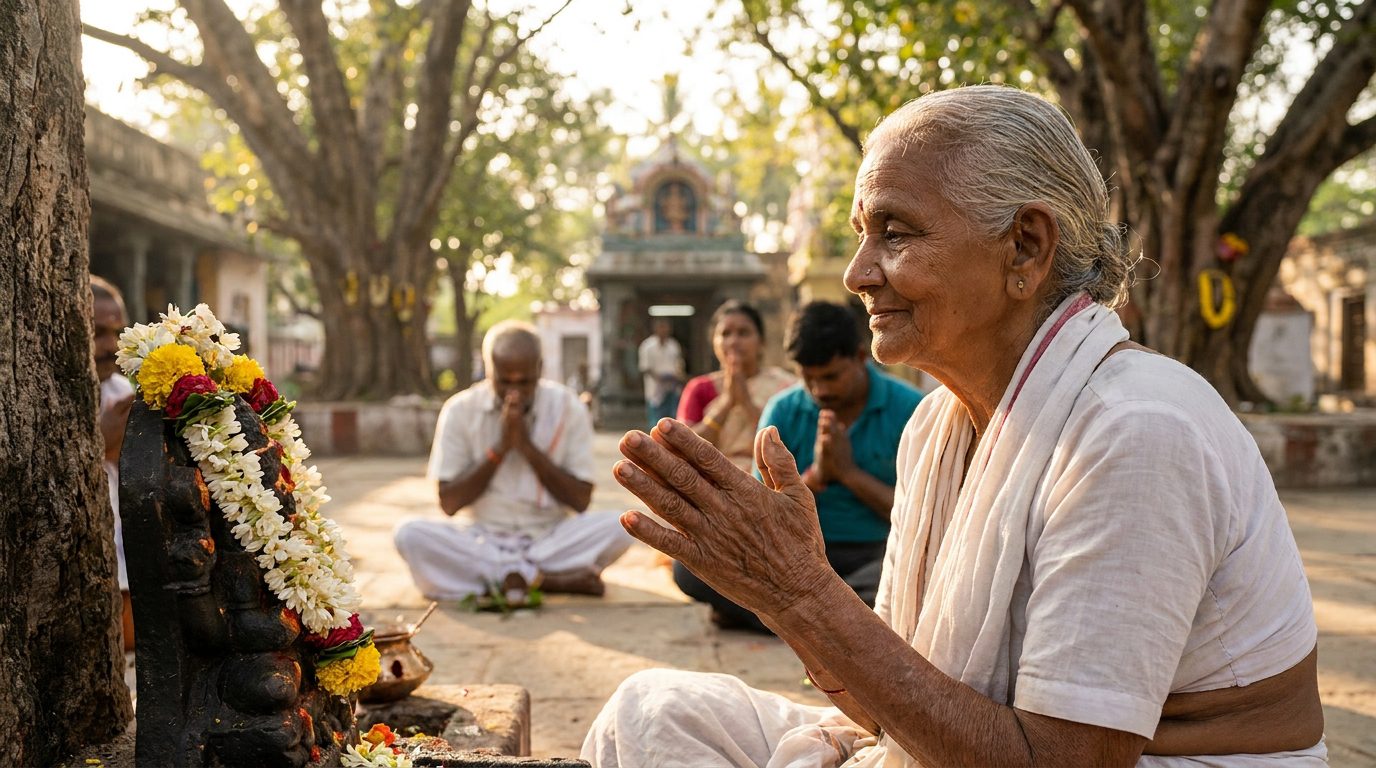
The Heart of Bhakti Devotion
Bhakti Yoga is often described as the yoga of love. The Sanskrit word bhakti means devotion, loving service, or heartfelt dedication to the Divine. It is not simply a belief system, a cultural tradition, or a set of rituals. At its deepest level, Bhakti is the awakening of the soul’s natural love for God.
In Bhakti devotion, love is not treated as a passing emotion. It is understood as the eternal purpose of the soul. We may experience love in many ways in this world—through family, friendship, service, creativity, nature, or community—but Bhakti teaches that all genuine love has its source in the Supreme Being. When love becomes purified, selfless, and directed toward God, it becomes the highest spiritual perfection.
This path is beautifully welcoming. You do not need to be born into a particular background, know Sanskrit, live in a monastery, or have everything figured out. Bhakti begins wherever we are. It grows through simple, sincere practices: chanting God’s names, offering prayers, hearing sacred wisdom, serving others, and gradually learning to live with a loving heart.
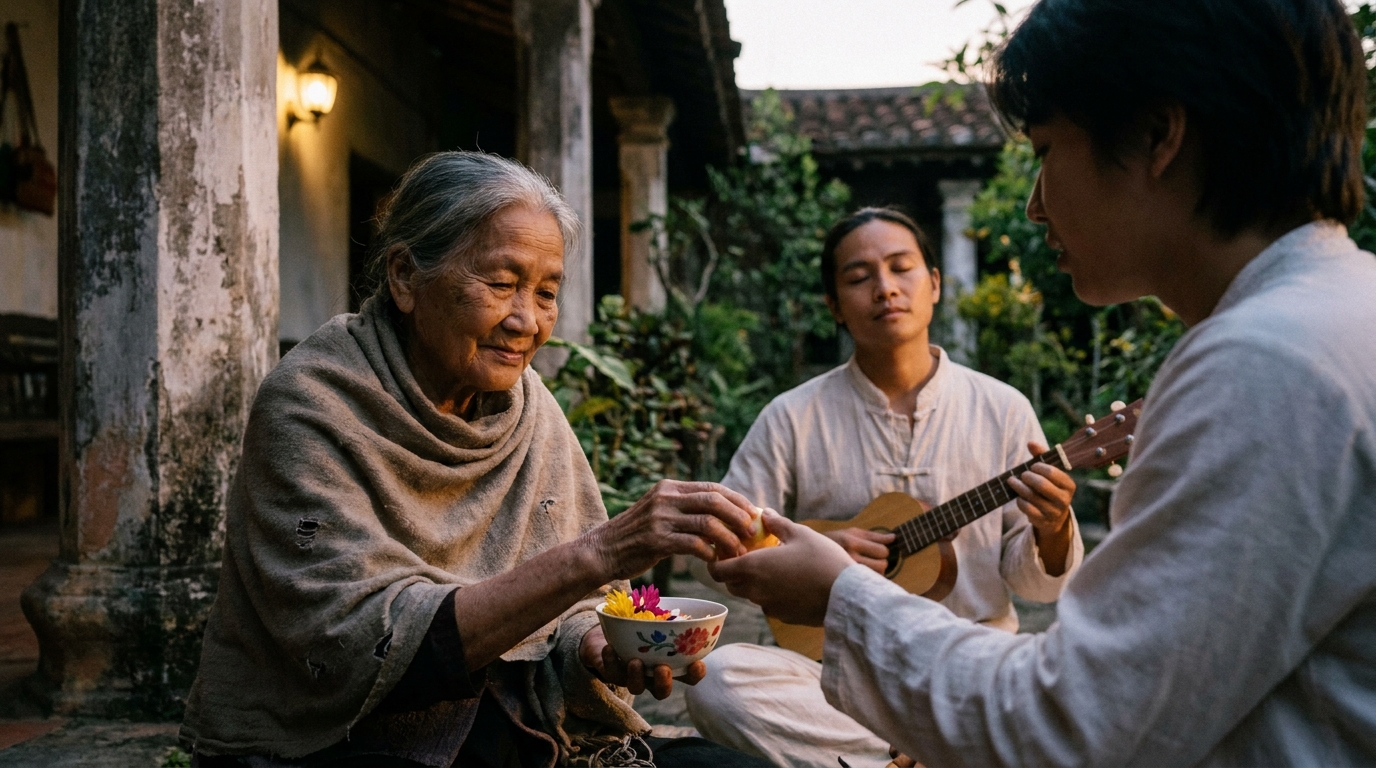
The great Bhakti scriptures repeatedly remind us that God is not conquered by wealth, scholarship, status, or external power. God is moved by love. A simple offering, made with devotion, becomes spiritually powerful.
In the Bhagavad-gita 9.26, Sri Krishna says:
“If one offers Me with love and devotion a leaf, a flower, a fruit, or water, I will accept it.”
This verse is a doorway into the heart of Bhakti Yoga. The offering itself may be small, but when love is present, it becomes unlimited.
Why Love Is the Soul’s Deepest Need
Every person longs to love and be loved. Beneath our ambitions, fears, responsibilities, and distractions, there is a tender desire for connection. We want to be known. We want to be accepted. We want our life to have meaning. Bhakti devotion honors this longing and gently points it toward its divine source.
The Soul Is Made for Relationship
In the Bhakti tradition, the self is understood as atma, the eternal soul. The soul is not the body, the mind, or the temporary roles we play. The body changes from childhood to youth to old age. The mind shifts with thoughts and emotions. But the conscious self—the one who observes, feels, hopes, and loves—continues.
Bhakti teaches that the soul is personal and relational. We are not empty. We are not meant to merge into nothingness. We are meant for loving connection with the Supreme Person, who is known by many names across spiritual traditions. In the Bhakti scriptures, God is lovingly addressed as Krishna, which means “the all-attractive one.”
This relationship between the soul and God is the foundation of Bhakti Yoga. We are not trying to become God. We are trying to remember our loving relationship with God.
Worldly Love Points Toward Divine Love
Love in this world can be beautiful, but it is often mixed with fear, expectation, attachment, or disappointment. We may love someone deeply, yet still feel insecure. We may give affection, but also hope to receive something in return. We may experience closeness, yet still face separation.
Bhakti does not reject human love. Rather, it helps us understand it. The love we experience in this world is like a reflection of the soul’s original love for God. When love is centered only on temporary things, it can bring joy but also pain. When love is connected to God, it becomes purified, steady, and expansive.
This does not mean we stop loving people. In fact, Bhakti helps us love others more deeply. When we see every living being as a beloved child of God, our compassion grows. Our relationships become less about control and more about service.
Love Beyond Ritual and Religion
Bhakti devotion includes practices such as chanting, worship, prayer, study, and sacred festivals. These practices are valuable, but they are meant to awaken love—not replace it. Without love, spiritual practice can become dry, mechanical, or prideful. With love, even the simplest act becomes sacred.
The Purpose Behind Spiritual Practice
It is possible to chant without attention, pray without feeling, or serve while seeking recognition. Bhakti gently invites us to bring our heart back into the practice. The goal is not spiritual performance. The goal is loving remembrance.
In the Srimad Bhagavatam, one of the most beloved Bhakti scriptures, pure devotion is described as service to God that is free from selfish motive and uninterrupted by external circumstances. This kind of devotion satisfies the self completely because it reconnects the soul with its natural purpose.
This teaching is very practical. It means that Bhakti is not dependent on perfect conditions. We can remember God while cooking, working, parenting, studying, walking, or resting. We can offer our ordinary life with extraordinary sincerity.
God Receives the Heart
One of the most comforting teachings of Bhakti Yoga is that God sees the intention. We may feel imperfect. We may feel distracted or unqualified. We may compare ourselves to others and think, “My devotion is too small.”
But Bhakti reminds us that sincerity is precious. A single prayer from the heart can open a spiritual doorway. A few moments of chanting can soften years of inner heaviness. A humble act of service can become an offering of love.
God does not need anything from us. The Divine is complete. Yet God lovingly accepts our offerings because love desires exchange. In Bhakti, the relationship between the soul and God is alive, intimate, and reciprocal.
Discover a wealth of knowledge by exploring our insightful articles. Our articles cover a wide range of topics to enhance your understanding. Stay informed and inspired by reading our latest articles.
Chanting as a Practice of Love
One of the central practices of Bhakti Yoga is chanting the holy names of God. In Sanskrit, this is called kirtan when sung together, and japa when repeated softly or personally, often on prayer beads. The word mantra means a sacred sound that helps free the mind and awaken spiritual consciousness.
Chanting is not merely music or meditation. It is a loving call to God.
The Power of the Holy Name
In the Bhakti tradition, God’s names are understood to be spiritually powerful because they are connected directly with God. Just as calling the name of someone we love brings their presence into our heart, chanting the holy names helps us remember and reconnect with the Divine.
One widely known Bhakti mantra is the Hare Krishna Maha-mantra:
Hare Krishna, Hare Krishna, Krishna Krishna, Hare Hare
Hare Rama, Hare Rama, Rama Rama, Hare Hare
Maha-mantra means “great mantra.” “Hare” is a call to God’s divine energy, “Krishna” means the all-attractive Lord, and “Rama” means the source of spiritual joy. In simple language, this mantra is a prayer: “O Lord, O divine energy of the Lord, please engage me in loving service.”
Anyone can chant. There is no cost, no requirement, and no barrier of background. The holy name meets us where we are.
Chanting Cleanses the Heart
Bhakti scriptures describe the heart as being covered by layers of dust—forgetfulness, selfish desire, fear, anger, envy, and sorrow. Chanting is like a gentle spiritual cleansing. It does not erase our humanity; it awakens our deeper identity.
At first, chanting may feel unfamiliar. The mind may wander. The heart may feel closed. But with patience, the practice becomes a refuge. The sound gradually enters places within us that ordinary words cannot reach.
Chanting can be joyful and musical, as in kirtan, where people gather to sing sacred names together. It can also be quiet and personal, like a whispered prayer in the early morning. Both are powerful when offered with sincerity.
Love Expressed Through Service
In Bhakti Yoga, love is not only something we feel. It is something we do. The Sanskrit word seva means service. Seva is loving action offered for the pleasure of God and the upliftment of others.
Service is one of the most practical ways devotion becomes real in daily life.
Serving God in Simple Ways
Bhakti devotion invites us to offer our daily activities to God. Cooking can become sacred when food is prepared with gratitude and offered in prayer. Work can become meaningful when done honestly and with a spirit of service. Family life can become a spiritual path when relationships are guided by patience, forgiveness, and care.
This is why Bhakti is not limited to temples or sacred spaces. The heart can become a temple when we live with remembrance. Our hands can become instruments of devotion when we use them to serve.
In the Bhagavad-gita 9.27, Krishna says:
“Whatever you do, whatever you eat, whatever you offer or give away, and whatever austerities you perform—do that as an offering to Me.”
This verse shows that Bhakti can include the whole of life. We do not need to divide our spiritual life from our everyday responsibilities. We can learn to offer everything.
Serving Others as Children of God
A mature Bhakti heart becomes compassionate. If we love God, we naturally begin to care for God’s creation. Every person, every animal, and every living being is spiritually connected to the Divine.
This vision changes how we treat others. We become less interested in judgment and more interested in kindness. We begin to ask, “How can I serve?” rather than “What can I get?”
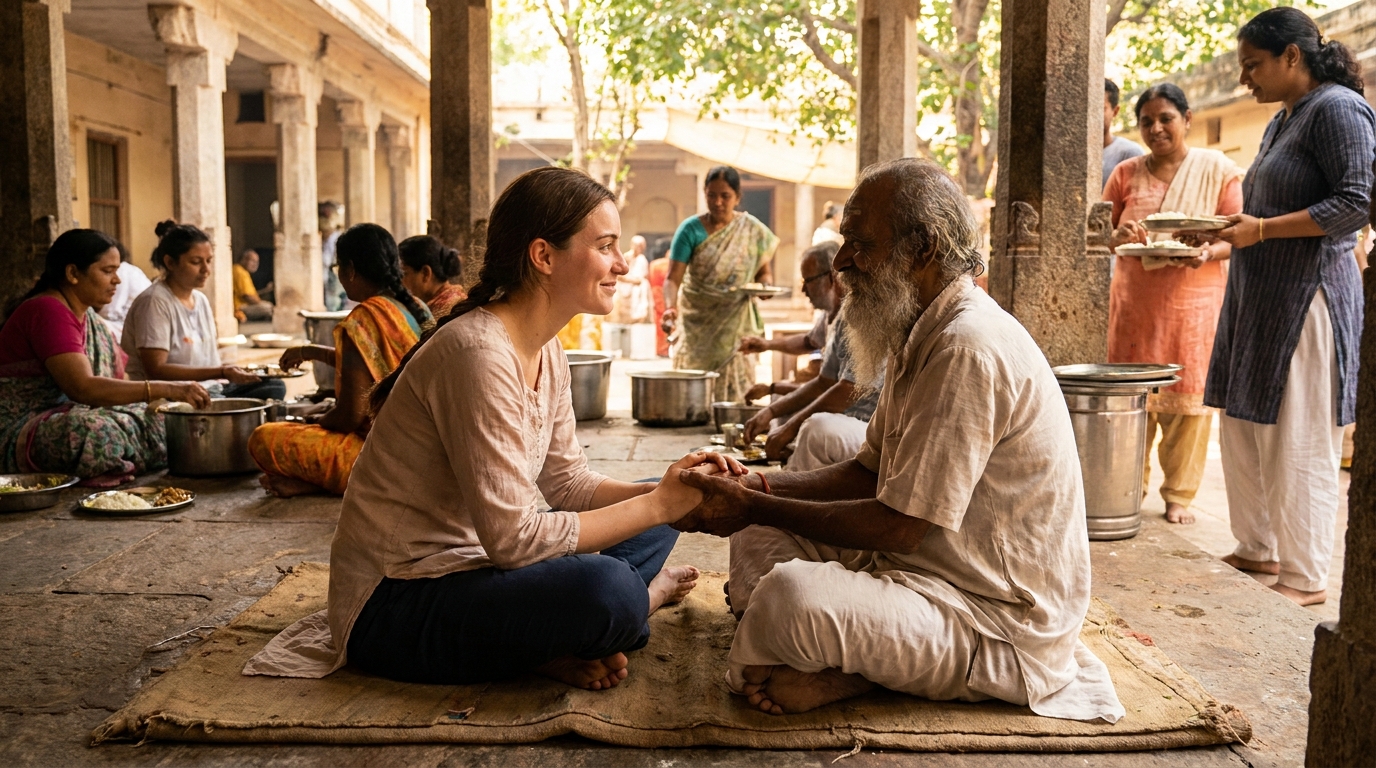
Service may look like feeding others, listening with compassion, supporting a spiritual community, caring for the earth, encouraging someone in pain, or simply offering a kind word. In Bhakti, no sincere service is small.
Love as the Goal, Not Just the Method
Many people come to spiritual life seeking peace, healing, clarity, or relief from suffering. These are natural and worthy reasons to begin. Bhakti Yoga can bring deep peace and inner strength. But the ultimate goal of Bhakti is even greater than peace. The goal is prema, pure love of God.
Prema means divine love that is selfless, joyful, and fully awakened. It is love without selfish demand. It is love that wants to please the Beloved. In Bhakti, prema is considered the highest perfection of life.
Moving From Need to Love
In the beginning, we may approach God with many needs: “Please help me. Please protect me. Please guide me. Please heal me.” These prayers are valid and beautiful. God welcomes them.
Over time, however, Bhakti gently transforms the heart. Our prayer begins to shift from “What can I receive?” to “How can I love You?” This is a sacred turning point.
This does not mean we stop asking for help. Rather, our relationship with God deepens. We begin to trust that God knows our needs. We become more interested in loving service than personal gain. This is the movement from fear-based spirituality to love-based devotion.
Love Is the Soul’s Fulfillment
The Bhakti tradition teaches that the soul cannot be fully satisfied by temporary achievements. We may gain success, possessions, recognition, or pleasure, yet still feel an emptiness inside. This emptiness is not a sign of failure. It is a sign that the soul is longing for eternal love.
When love for God awakens, the heart finds its true home. This love does not depend on changing circumstances. It can be present in joy and sorrow, in abundance and simplicity, in solitude and community.
Pure love of God is not sentimental weakness. It is the strongest force in existence. It gives courage, humility, compassion, and purpose. It helps us forgive. It helps us persevere. It helps us see beauty even in difficulty.
What Bhakti Scriptures Teach About Divine Love
Bhakti Yoga is rooted in a rich spiritual tradition, including sacred texts such as the Bhagavad-gita, Srimad Bhagavatam, and teachings of saints and acharyas, or spiritual teachers. These scriptures do not present love as an abstract idea. They reveal love as the living essence of reality.
The Bhagavad-gita: Love Through Surrender
The Bhagavad-gita is a conversation between Krishna and Arjuna on a battlefield, where Arjuna faces confusion, grief, and moral crisis. Krishna teaches many paths—wisdom, meditation, action, and devotion—but He concludes with a call to loving surrender.
In Bhagavad-gita 18.66, Krishna says:
“Abandon all varieties of separate duty and simply surrender unto Me. I shall deliver you from all sinful reactions. Do not fear.”
Surrender in Bhakti does not mean helplessness or blind obedience. It means trust. It means placing our heart in God’s care and allowing divine love to guide our choices. It means we stop trying to control everything and begin living in relationship with the Divine.
This surrender is not forced. Love can never be forced. It is offered freely.
The Srimad Bhagavatam: Hearing About God With Love
The Srimad Bhagavatam is especially cherished in Bhakti traditions because it describes the loving nature of God and the devotion of great saints. It teaches that hearing about God, chanting God’s names, remembering God, and serving God purify the heart.
One of its central messages is that the highest religion is that which awakens loving devotion to the Supreme Lord. This devotion must be unmotivated and uninterrupted to fully satisfy the soul.
This is a generous and inclusive teaching. It does not say the highest spiritual path is measured by labels, social identity, or external appearance. It says the true measure is awakened love.
The Saints of Bhakti: Love Made Visible
Throughout history, Bhakti saints have shown what divine love looks like in practice. They sang, served, prayed, wept, danced, wrote poetry, fed people, welcomed the humble, and called everyone toward God.
Their lives remind us that Bhakti is not dry philosophy. It is a living fire. It is soft-hearted and strong. It is deeply personal and widely compassionate.
The saints often prayed not for wealth, followers, beauty, or liberation, but for pure devotion. This spirit is expressed in the prayer of Sri Chaitanya Mahaprabhu, a great teacher of divine love:
“O Lord, I do not want wealth, followers, beautiful companions, or even liberation. I only want causeless devotion to You, birth after birth.”
This is the heart of Bhakti: love for God, not for reward, but because God is infinitely lovable.
How Love Transforms Daily Life
Bhakti devotion is not meant to remain only in temples, books, or songs. It is meant to transform how we live each day. When love becomes our spiritual goal, our choices begin to change.
Humility Becomes Natural
True love softens pride. In Bhakti, humility does not mean thinking badly of ourselves. It means seeing ourselves honestly: dependent on grace, connected to others, and eternally loved by God.
A humble heart is easier to guide. It can learn. It can apologize. It can receive mercy. It can appreciate others without feeling threatened.
Humility opens the door to deeper devotion because love cannot flourish in a heart hardened by ego.
Gratitude Replaces Entitlement
Bhakti teaches us to see life as a gift. Breath is a gift. Food is a gift. Friendship is a gift. The chance to chant, pray, serve, and remember God is a gift.
Gratitude helps us move from complaint to appreciation. It does not deny suffering, but it gives the heart strength to notice grace even in difficult times.
A grateful person becomes naturally devotional because gratitude wants to offer something back.
Relationships Become Sacred Opportunities
When love for God grows, our relationships become part of our spiritual practice. We begin to see each person as someone entrusted to our care, not someone existing merely for our comfort.
We may still face conflict, misunderstanding, and pain. Bhakti does not make us artificially perfect. But it gives us a higher purpose in relationships: to practice patience, truthfulness, compassion, forgiveness, and service.
This is where devotion becomes real. It is often easier to sing about love than to practice it with the people closest to us. Bhakti lovingly invites us to do both.
Practical Ways to Grow in Bhakti Love
The path of Bhakti is both profound and simple. We grow through repeated, sincere contact with God. Small daily practices can gradually awaken deep spiritual love.
Begin With Chanting
Set aside a few minutes each day to chant God’s names. You may chant the Hare Krishna Maha-mantra or another sacred name of God that is meaningful to you. Chant aloud, softly, or in your heart.
Try not to worry about being perfect. Just listen to the sound. Offer your attention as a gift. Even a few sincere minutes can nourish the soul.
Offer Your Food With Gratitude
Before eating, pause and offer your food to God with a simple prayer: “Dear Lord, thank You for this food. Please accept it with my love and bless me to use this energy in Your service.”
In Bhakti, food offered to God is called prasadam, which means mercy or grace. Receiving prasadam reminds us that life is sustained by divine kindness.
Read a Little Sacred Wisdom
Spend time with Bhakti scriptures such as the Bhagavad-gita or Srimad Bhagavatam. Even one verse a day can become a lamp for the heart.
Read slowly. Ask, “How can I live this today?” Sacred wisdom becomes powerful when it is applied with humility.
Serve Someone Without Expectation
Choose one act of service each day. It may be simple: helping a neighbor, encouraging a friend, cleaning a shared space, feeding someone, volunteering, or offering your skills for a good purpose.
The key is intention. Offer the act to God. Let service become a way of saying, “I love You.”
Pray Honestly
Prayer in Bhakti does not need to be formal. Speak to God with honesty. Share your gratitude, confusion, longing, and hope. Ask for guidance. Ask for a heart that can love.
A simple prayer may be: “Dear Lord, please help me remember You. Please teach me how to love and serve.”
God hears the heart.
Why Love Is Greater Than Liberation
Many spiritual paths speak of liberation—freedom from suffering, ignorance, and repeated birth and death. Bhakti honors liberation, but it teaches that love is even higher.
Why? Because liberation may free us from suffering, but love brings us into relationship. Freedom from pain is wonderful, but the soul longs for more than freedom. The soul longs for loving exchange with God.
In Bhakti, the devotee does not seek to disappear into spiritual peace. The devotee seeks to love, serve, remember, and be with the Divine. Love includes freedom, but freedom does not always include love.
The Bhakti saints often say that pure devotees do not even desire liberation if it means losing the opportunity to serve God. This is a very high mood, but it reveals the essence of the path: love is the treasure.
When we understand this, spiritual life becomes less about escaping the world and more about awakening our relationship with God. We still seek freedom from selfishness, illusion, and suffering, but only so our love can become clearer.
Everyone Is Invited Into Divine Love
One of the most beautiful truths of Bhakti Yoga is that divine love is not reserved for a spiritual elite. It is not limited by nationality, language, education, gender, age, wealth, or past mistakes. The soul belongs to God eternally, and God’s love is available to everyone.
Bhakti begins with sincerity. A sincere person may take one small step, and that step matters deeply.
Maybe your step is chanting one round of mantra. Maybe it is attending kirtan. Maybe it is offering a prayer before sleep. Maybe it is reading one verse of the Bhagavad-gita. Maybe it is forgiving someone, serving a meal, or simply saying, “God, I want to know You.”
No step toward God is wasted.
Love is the ultimate goal of Bhakti devotion because love is the nature of the soul, the heart of God, and the purpose of all spiritual practice. Chanting, prayer, service, scripture, and community are sacred gifts that help awaken that love. They bring us back to who we truly are: eternal souls meant for loving relationship with the Divine.
Wherever you are on your journey, you are welcome. Come as you are. Bring your questions, your hopes, your wounds, and your longing. Take one sincere step toward God today, and trust that divine love is already reaching toward you.
FAQs
What is Bhakti?
Bhakti is a spiritual practice in Hinduism that involves devotion and love towards a personal god or goddess.
Why is love considered the goal of Bhakti?
Love is considered the goal of Bhakti because it is believed that through pure and selfless love for the divine, one can attain spiritual liberation and union with the divine.
How is love expressed in Bhakti practices?
Love is expressed in Bhakti practices through various means such as singing devotional songs, chanting mantras, performing rituals, and engaging in acts of service to the deity.
Which deities are commonly worshipped in Bhakti traditions?
Commonly worshipped deities in Bhakti traditions include Lord Krishna, Lord Rama, Goddess Durga, Lord Shiva, and many others depending on the specific tradition or sect.
Can anyone practice Bhakti, regardless of their background?
Yes, anyone can practice Bhakti regardless of their background, as it is a path of devotion and love that is open to all individuals seeking a deeper connection with the divine.

