
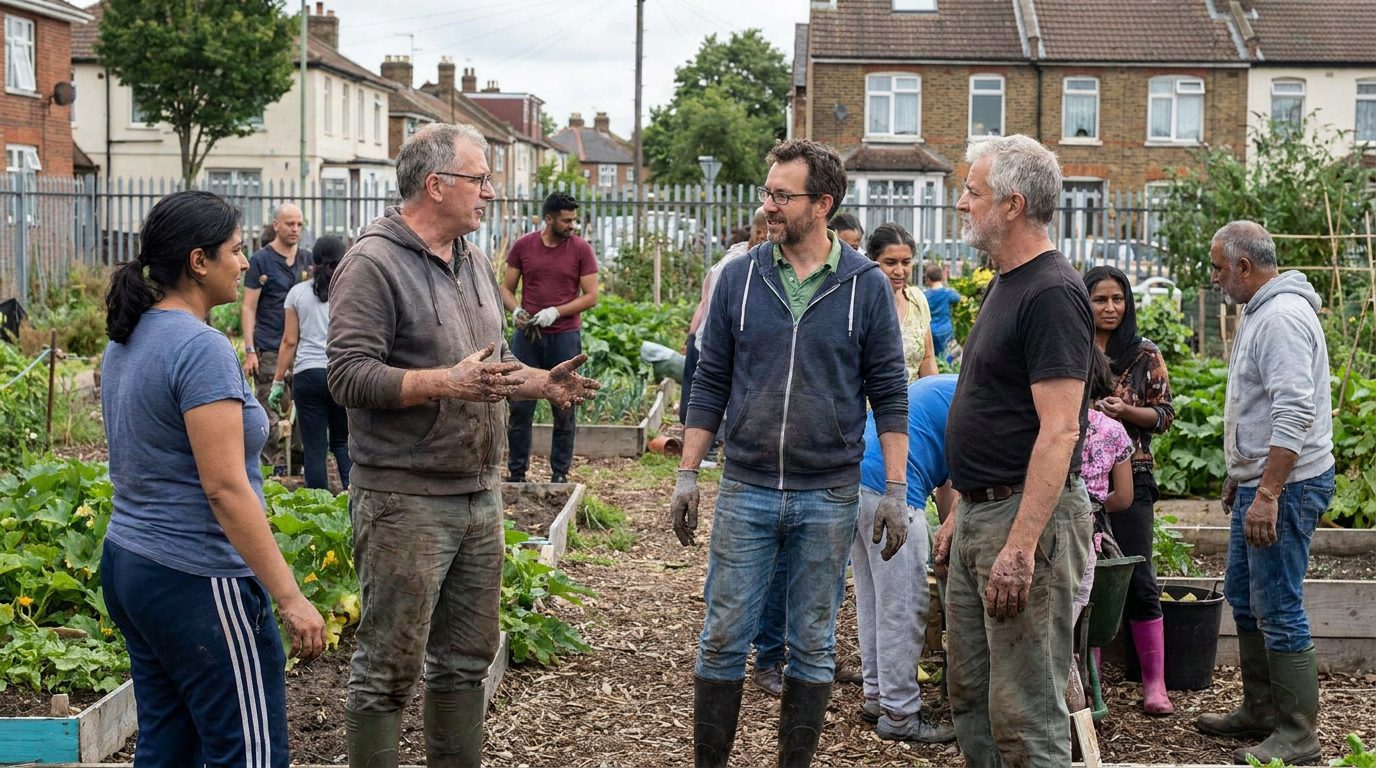
Spiritual life is deeply personal, but it is not meant to be walked alone.
Every heart is searching for love, meaning, safety, and a place to belong. Some people come to spiritual life after years of study. Some come through pain. Some come through music, meditation, yoga, friendship, or a quiet prayer whispered in a difficult season. In Bhakti Yoga, the path of devotion, we learn that this longing is sacred. It is the soul’s natural desire to reconnect with God, with others, and with our own true self.
Community matters because love grows in relationship.
In Sanskrit, the word sanga means “association” or “company.” The people we spend time with shape our thoughts, habits, hopes, and direction. In the Bhakti tradition, sadhu-sanga means the company of sincere spiritual people—those who help us remember God, live with compassion, and keep walking even when the path feels hard.
A spiritual community does not have to be perfect to be powerful. It simply needs to be sincere. When people gather to chant, pray, learn, serve, ask questions, share food, and encourage one another, the heart becomes stronger. Faith becomes more practical. Love becomes something we practice, not just something we speak about.
At the heart of Bhakti Yoga is relationship. Bhakti means “devotion” or “loving service.” Yoga means “connection.” So Bhakti Yoga is the path of reconnecting with God through love.
This love is not abstract. It is lived in the way we speak, serve, listen, forgive, and support one another. Spiritual community gives us a place to practice love in real time.
The soul longs to belong
Many people feel lonely even when surrounded by others. We may have coworkers, online followers, or social contacts, yet still feel spiritually unseen. The soul longs for something deeper than casual connection. It longs for loving exchange.
Bhakti scriptures teach that the soul is eternal, conscious, and naturally connected to God. In the Bhagavad-gita, Krishna explains that every living being is part of Him. This means we are not isolated spiritual accidents. We are beloved souls, connected to the Divine and to one another.
When we come into a community centered on God, we begin to remember this truth. We are not just bodies, jobs, roles, or past mistakes. We are spiritual beings learning how to love again.
Community reflects God’s love
In Bhakti, God is not understood as distant or impersonal. Krishna, a name for God meaning “the all-attractive one,” is described as deeply loving, personal, and present. The spiritual community can become a mirror of that divine love.
When someone welcomes us at the door, listens without judgment, offers a plate of sacred food, chants beside us, or prays for us, we may feel a small glimpse of God’s care. Community becomes a vessel for grace.
Of course, people are imperfect. Every community is made of humans who are learning. But when the center is sincere devotion, humility, and service, even imperfect people can help one another grow.
Love becomes practical
It is easy to think we are patient until we live or serve with others. It is easy to think we are humble until someone corrects us. It is easy to think we are compassionate until someone needs our time.
Community makes spiritual life practical. It brings our inner work into daily life.
We learn to listen. We learn to apologize. We learn to serve without needing applause. We learn to receive care without shame. These simple acts are sacred training in Bhakti.
Spiritual Community Helps Us Remember What Matters
Life is full of distractions. We wake up and quickly become absorbed in messages, responsibilities, worries, plans, and desires. Without support, it is easy for spiritual practice to become “something I will do later.”
Community gently helps us remember.
Sacred association shapes the heart
The Srimad-Bhagavatam, one of the cherished scriptures of the Bhakti tradition, repeatedly praises the power of spiritual association. It teaches that hearing and speaking about God in the company of sincere devotees purifies the heart and awakens devotion.
This is not about becoming religious in a narrow sense. It is about placing ourselves in environments that nourish our highest self.
If we spend time with people who are grateful, prayerful, kind, and service-minded, those qualities begin to awaken in us. If we spend time in spaces filled with sacred sound, meaningful conversation, and shared intention, our heart naturally turns toward God.
We need reminders, not pressure
A healthy spiritual community does not force faith. It invites remembrance.
At The Bhakti House and in genuine Bhakti spaces, the mood is not “you must believe exactly as I do.” The mood is, “Come as you are. Chant with us. Ask your questions. Take some spiritual food. Let your heart breathe.”
This kind of community helps us remember that God is near, that we are loved, and that spiritual growth is possible one sincere step at a time.
Devotion grows through repetition
All meaningful growth requires regular practice. We become physically healthy through repeated nourishment and movement. We become emotionally healthy through repeated honesty and healing. We become spiritually healthy through repeated remembrance of God.
In Bhakti Yoga, the main practices include chanting God’s names, prayer, hearing sacred wisdom, offering service, and honoring prasadam—food prepared and offered to God with love.
Community helps us make these practices steady. We may not always feel inspired alone, but when we gather with others, inspiration becomes easier. The group carries us when our own strength feels small.
Chanting Together Awakens the Heart

One of the most beautiful practices in Bhakti Yoga is kirtan, or call-and-response chanting of sacred names. In kirtan, people sing mantras together, often with instruments like harmonium, mridanga drum, kartals, guitar, or simply clapping hands.
A mantra is a sacred sound vibration that helps lift the mind and awaken the heart. The most well-known mantra in the Bhakti tradition is the Hare Krishna maha-mantra:
Hare Krishna, Hare Krishna, Krishna Krishna, Hare Hare
Hare Rama, Hare Rama, Rama Rama, Hare Hare
“Maha” means “great,” and “mantra” means a sound that helps free the mind. This mantra is a prayer: “O Divine Energy, O all-attractive Lord, O source of joy, please engage me in Your loving service.”
Sacred sound is accessible to everyone
You do not need to be a musician to chant. You do not need to have a perfect voice. You do not need to know Sanskrit. You do not need to understand everything right away.
Chanting is for the heart.
In the Bhagavad-gita, Krishna says that He accepts even a leaf, a flower, fruit, or water when offered with love and devotion. This verse reveals something beautiful: God is looking at the sincerity of the offering, not the external perfection.
In the same way, when we chant, God receives the intention of our heart. A soft voice, a hesitant voice, a tearful voice, a joyful voice—all are welcome.
Group chanting carries us
When we chant alone, the mind can wander. When we chant with others, the shared sound creates a spiritual shelter. The voices of the community help carry our attention back to the mantra.
Sometimes in kirtan, a person may come in heavy-hearted and leave feeling lighter. Not because all problems disappeared, but because the heart remembered a deeper reality: “I am not alone. God is here. Love is possible.”
This is one reason community matters so much. Together, we create sacred spaces where people can reconnect.
Kirtan softens the ego
The ego often says, “I am separate. I must control. I must be seen. I must be right.” Chanting together teaches something different.
In kirtan, many voices become one offering. We listen and respond. We lead and follow. We allow ourselves to be part of something greater than our individual story.
This softening is healing. It helps us move from self-centeredness to God-centeredness, from isolation to connection, from anxiety to surrender.
Check out our latest posts at https://thebhaktihouse.org/blog.
Community Supports Prayer, Service, and Daily Practice
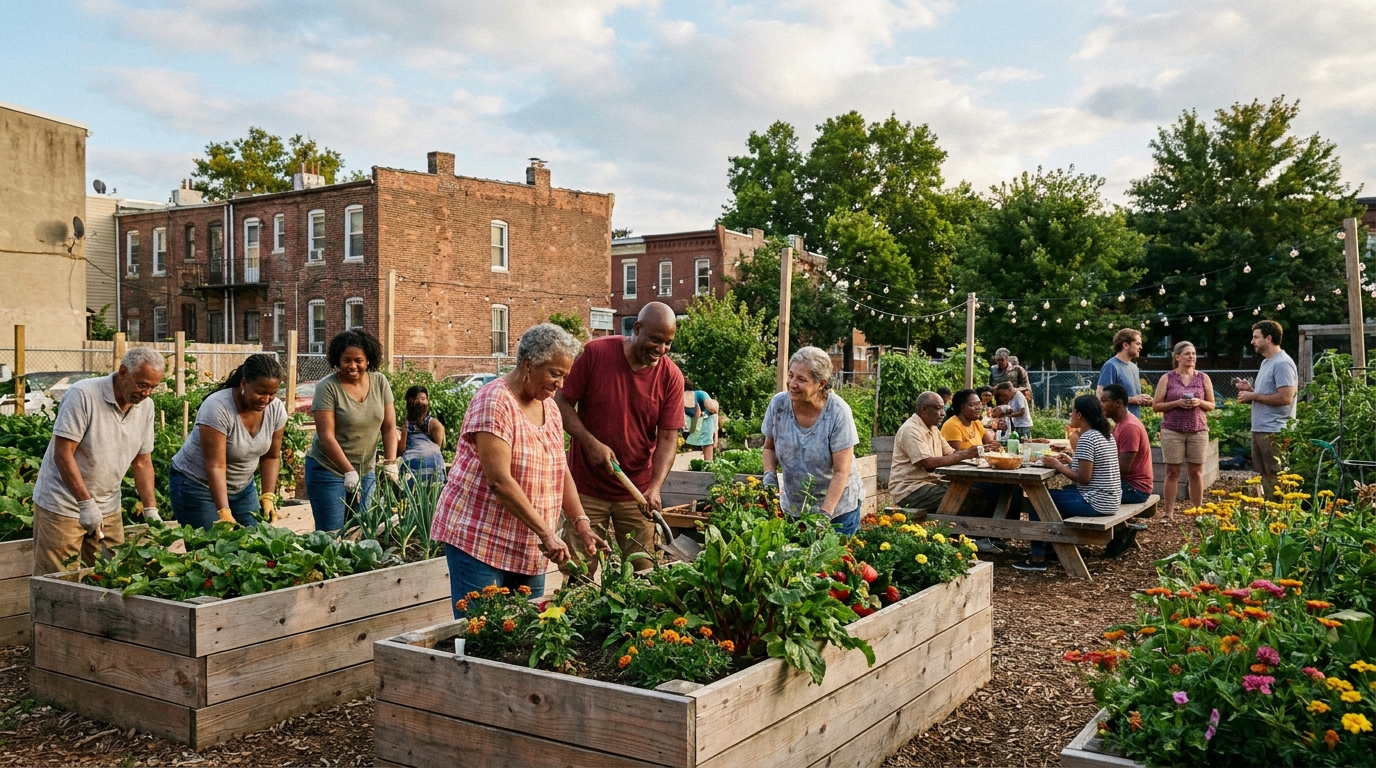
Spiritual life is not only about what happens in a temple, yoga studio, or gathering. It is about how we live each day. Community supports us in bringing devotion into ordinary moments.
Prayer becomes more natural
Prayer is simply speaking with God from the heart. It can be formal or informal, spoken aloud or silent, full of words or full of tears.
Some people feel unsure how to pray. Being around others who pray sincerely can teach us. We may hear someone say, “Krishna, please help me serve today,” or “God, please guide my heart,” and realize that prayer does not need to be complicated.
Community normalizes turning toward God.
Over time, prayer becomes less like an emergency tool and more like a relationship. We learn to thank God, ask for guidance, seek forgiveness, and offer our day.
Service gives devotion a body
In Sanskrit, seva means service. In Bhakti Yoga, service is love in action.
Community gives us many opportunities to serve. Someone cooks. Someone cleans. Someone welcomes guests. Someone plays music. Someone teaches children. Someone arranges flowers. Someone offers a ride. Someone washes pots after everyone has eaten.
None of these services are small when offered with love.
The Bhagavad-gita teaches that whatever we do, whatever we eat, whatever we offer, and whatever we give can be offered to God. This means daily actions can become devotional when done with the right intention.
We learn to receive as well as give
Many sincere people are comfortable serving but uncomfortable receiving support. Community teaches both.
Sometimes we are the one cooking the meal. Sometimes we are the one who needs to be fed. Sometimes we are strong. Sometimes we are tired. Sometimes we offer wisdom. Sometimes we need guidance.
A healthy spiritual community allows people to be human. It does not demand that everyone pretend to be advanced. It gives space for honesty, healing, and growth.
Spiritual Friendship Protects Us in Difficult Times
Everyone faces seasons of doubt, grief, temptation, discouragement, and confusion. Spiritual life does not remove all challenges, but it gives us shelter and direction within them.
Community is one of God’s gifts during difficult times.
We need people who help us turn toward God
When we struggle, the mind may tell us to isolate. We may feel ashamed, unworthy, or too tired to practice. Spiritual friends gently help us remember that we are not rejected by God because we are struggling.
In Bhakti, a devotee is not someone who never falls down. A devotee is someone who keeps turning back toward God.
The Bhagavad-gita offers great hope: even if a person has made mistakes, if they sincerely turn toward the Divine, they are to be seen as saintly because they are rightly determined. This does not excuse harmful behavior, but it reminds us that sincere transformation is always possible.
Honest questions are part of growth
Some people worry that joining a spiritual community means they must hide their doubts. But genuine Bhakti welcomes sincere questions.
Arjuna, the student in the Bhagavad-gita, begins with confusion. He questions Krishna deeply. He admits his weakness. He says, “I am confused about my duty.” And Krishna responds with compassion and wisdom.
This shows us that questioning can be sacred when it is honest and humble. A good community makes space for learning, not blind pressure.
Encouragement helps us continue
Sometimes a simple word from a spiritual friend can make all the difference:
“Come chant with us.”
“You are welcome here.”
“Try again tomorrow.”
“God sees your sincerity.”
“Let’s serve together.”
“I’m praying for you.”
These small offerings may seem ordinary, but they can help someone stay connected to spiritual life during a hard time.
Community Teaches Humility and Compassion
Spiritual community is beautiful, but it can also be challenging. People have different backgrounds, personalities, cultures, opinions, and wounds. This is not a problem to escape. It is part of the training.
Bhakti Yoga is the path of love, and love matures through humility and compassion.
Humility means remembering our dependence
Humility does not mean thinking we are worthless. It means seeing clearly: “I am loved by God, and I am dependent on grace.”
In community, we realize we do not know everything. We need teachers, friends, elders, scriptures, and the mercy of God. We need correction sometimes. We need forgiveness often.
The great Bhakti saint Chaitanya Mahaprabhu taught that one should chant the holy names in a humble state of mind, more tolerant than a tree, offering respect to others without demanding respect for oneself. This teaching is simple to repeat and lifelong to practice.
Community gives us the field to practice it.
Compassion grows when we know people’s stories
It is easy to judge from a distance. It is harder to judge when we sit with someone, hear their story, share a meal, and see their sincerity.
Community helps us move beyond labels. We meet people from different faith backgrounds, cultures, ages, and life experiences. We begin to see each person as a soul, a child of God, worthy of respect.
This vision is central to Bhakti. The wise see beyond the outer covering and honor the spiritual essence within all beings.
Forgiveness becomes part of the path
Because people are imperfect, misunderstandings will happen. In spiritual community, we learn to communicate, repair, forgive, and grow.
Forgiveness does not mean ignoring harm or avoiding healthy boundaries. It means we do not let resentment become our home. We bring pain into the light of prayer, wisdom, and honest conversation.
A community rooted in Bhakti should encourage accountability with compassion, truth with gentleness, and healing with patience.
Sacred Food and Shared Meals Build the Heart
In many Bhakti communities, people gather around prasadam. Prasadam means “mercy” or “grace.” It refers to vegetarian food prepared with love and offered to God before being shared.
This practice is simple and profound. Food nourishes the body, but prasadam nourishes the heart.
Eating together creates family
A shared meal has a way of softening barriers. People who may feel shy during discussion often open up while serving or honoring prasadam. Children, elders, newcomers, and long-time practitioners can sit together.
At the table, community becomes tangible.
Someone offers you rice, dal, vegetables, fruit, or sweets. Someone asks your name. Someone smiles. These simple acts say, “You belong here.”
Offering food teaches gratitude
Before food becomes prasadam, it is offered to God with prayer. This teaches us that nothing is truly separate from the Divine. The earth, rain, sunlight, farmers, cooks, and all ingredients are gifts.
When we honor prasadam, we practice gratitude. We remember that life is sustained by grace.
The Bhagavad-gita teaches that food offered in devotion becomes spiritually purifying. In practical terms, this means our eating can become a sacred act. Even our kitchen can become a place of prayer.
Service in the kitchen is sacred
Cooking, chopping, stirring, cleaning, and serving may seem ordinary, but in Bhakti these acts can be devotional offerings.
Many people first experience spiritual joy not through philosophy, but through service in the kitchen or serving prasadam to guests. They discover that love can be expressed through warm food, clean floors, and kind attention.
Community turns ordinary work into shared worship.
Spiritual Community Helps Us Grow Beyond Ourselves
One of the great blessings of community is that it expands our vision. Alone, we may focus mostly on our own peace, our own healing, our own questions. These are important. But spiritual life matures when we begin asking, “How can I serve?”
Bhakti is personal and generous
Bhakti Yoga begins in the heart, but it naturally flows outward. When we receive spiritual nourishment, we want to share it.
Community creates opportunities to serve beyond ourselves—through outreach, kirtan gatherings, food distribution, spiritual education, care for families, support for newcomers, and acts of compassion in the wider world.
This is not about superiority. It is about gratitude. We share because we have been given something beautiful.
We discover our gifts
Every person has something to offer. Some people are natural teachers. Some are organizers. Some are musicians. Some are quiet helpers. Some are good with children. Some are good listeners. Some bring beauty through art, cooking, gardening, writing, or hospitality.
In community, these gifts can be used in God’s service.
No sincere offering is insignificant. A flower placed on the altar, a chair arranged for a guest, a message of encouragement, a song sung with devotion—each can become part of a larger offering of love.
Service purifies our intention
At first, we may serve with mixed motives. We may want appreciation, belonging, recognition, or control. That is human. But if we keep serving and praying, our intention becomes clearer.
We begin to serve because service itself brings us closer to God.
This is spiritual growth. Not becoming impressive, but becoming sincere.
How to Find or Build a Spiritual Community
If you are longing for spiritual community, start gently. You do not need to rush. You do not need to pretend. You can take one sincere step.
Look for sincerity, not perfection
No community is flawless. But you can look for healthy signs:
People are welcomed with kindness.
Questions are allowed.
Scripture is shared with humility.
Service is valued more than status.
Chanting, prayer, and devotion are central.
Food is offered and shared with care.
Leaders are accountable and compassionate.
People are encouraged to grow at a natural pace.
A good spiritual community helps you become more loving, honest, prayerful, and connected to God.
Begin with simple participation
You might attend a kirtan night, a Bhakti Yoga class, a Sunday gathering, a scripture discussion, or a prasadam meal. You might volunteer for a small service. You might chant quietly and listen.
Let your heart observe. Notice where you feel encouraged to remember God.
You do not have to understand everything at once. Bhakti is a living path. Understanding deepens through practice.
Build community where you are
If there is no Bhakti community near you, you can begin simply.
Invite a friend to chant with you. Read a verse from the Bhagavad-gita together. Cook a vegetarian meal and offer it to God. Start a small prayer circle. Join online satsanga, which means “gathering in truth” or “spiritual association.” Listen to kirtan and sing along.
Community can begin with two sincere people remembering God together.
Krishna sees the heart.
The Deepest Community Is Centered on God
Spiritual community is not just a social group with spiritual language. Its deepest purpose is to help each person awaken love for God and love for all beings.
When God is at the center, community becomes sacred.
God is the true center
If a community is centered only on personalities, trends, or external success, it may become fragile. But when the center is Krishna—God, the all-attractive source of love—then everyone is invited into a higher purpose.
We gather not to impress one another, but to serve.
We chant not to perform, but to remember.
We study not to win arguments, but to become wise.
We eat not only to enjoy, but to receive grace.
We welcome not to grow numbers, but to share love.
This God-centered mood protects the heart of the community.
Unity does not mean sameness
People come to Bhakti from many backgrounds. Some are Hindu. Some are Christian, Jewish, Muslim, Buddhist, spiritual-but-not-religious, questioning, healing, or simply curious. Some know Sanskrit. Some are hearing Krishna’s name for the first time.
All are welcome.
Bhakti honors the soul beyond labels. Unity in spiritual community does not require everyone to be the same. It means we gather around shared sincerity: a desire to love God, serve others, and grow.
The community becomes a doorway to grace
A sacred community can become a doorway through which God’s mercy enters our life. Through a song, a meal, a verse, a smile, a service, or a conversation, the heart may awaken.
We may arrive thinking we are looking for people. Then slowly we realize: through these people, God has been looking for us.
One Sincere Step Is Enough to Begin
Community matters in spiritual life because love needs a place to grow. We need people who remind us of God, chant with us, pray with us, feed us, challenge us, forgive us, and serve beside us. We need sacred sound, shared meals, honest questions, and humble service. We need spaces where the soul can breathe.
Bhakti Yoga is a practical path. You can begin today by chanting one mantra, offering one prayer, reading one sacred verse, serving one person, or joining one gathering with an open heart.
You do not have to be perfect. You do not have to have all the answers. You do not have to belong to a certain culture or background. God sees sincerity.
At The Bhakti House, and in the heart of true Bhakti community, the invitation is simple: come as you are, take shelter in sacred sound, share in loving service, and let your heart take one sincere step toward God.
Everyone is welcome. Your step may be small, but when offered with love, it is deeply meaningful.
FAQs
What is the importance of community in spiritual life?
Community plays a crucial role in spiritual life as it provides support, encouragement, and a sense of belonging. It allows individuals to share their experiences, learn from others, and grow in their faith together.
How does being part of a community benefit spiritual growth?
Being part of a community provides opportunities for spiritual growth through shared practices, accountability, and the exchange of ideas. It also offers a sense of unity and connection with others on a similar spiritual journey.
What are some ways to actively engage with a spiritual community?
Actively engaging with a spiritual community can involve participating in group discussions, attending religious services, volunteering for community outreach programs, and forming meaningful relationships with fellow members.
Can spiritual growth be achieved without being part of a community?
While spiritual growth can be achieved individually, being part of a community can enhance the experience by providing support, guidance, and a sense of shared purpose. However, individual spiritual practices and self-reflection also play a significant role in personal growth.
How does community involvement impact one’s spiritual well-being?
Community involvement can positively impact one’s spiritual well-being by fostering a sense of connection, empathy, and compassion. It provides opportunities for individuals to practice their faith in a supportive environment and contribute to the well-being of others.

