
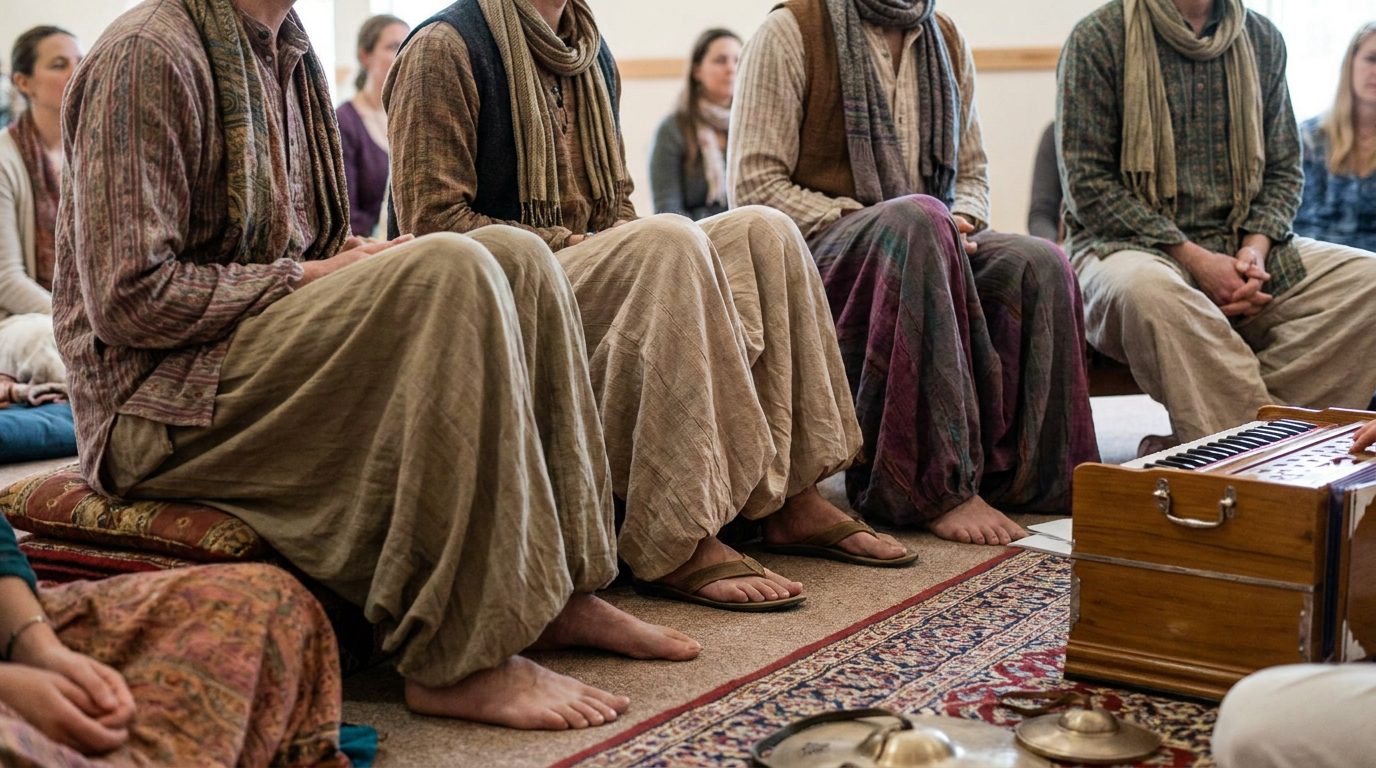
If you are wondering what to wear to a kīrtan or meditation session, please know this first: you are already welcome.
In Bhakti Yoga, the path of loving devotion, the heart matters more than the outfit. Kīrtan means “glorification” or “chanting,” and it usually refers to singing sacred mantras together, often with instruments, call-and-response singing, and a joyful atmosphere. Meditation may be quiet, guided, mantra-based, or contemplative. Both are invitations to turn inward, soften the heart, and reconnect with God.
Still, it is natural to ask, “What should I wear?” Many people come to a kīrtan or meditation gathering for the first time and wonder if there is a dress code, whether they should dress traditionally, or whether casual clothes are acceptable.
The simple answer is: wear something clean, comfortable, modest, and respectful—something that helps you participate without distraction.
At The Bhakti House, we welcome people of all backgrounds, cultures, beliefs, and levels of experience. You do not need to look a certain way to chant, pray, meditate, or begin a spiritual journey. The clothing is not the point. But thoughtful clothing can support the sacred mood, help you feel at ease, and show care for the shared space.
The Heart Comes First
Bhakti Is About Love, Not Appearance
Bhakti Yoga is the yoga of love and devotion. The Sanskrit word bhakti comes from a root that means loving service, devotion, and connection. In this tradition, we try to offer our thoughts, words, actions, and hearts to God with sincerity.
The Bhagavad-gītā, one of the central scriptures of Bhakti Yoga, offers a beautiful teaching:
“Whoever offers Me with love and devotion a leaf, a flower, fruit, or water, I accept it.”
— Bhagavad-gītā 9.26
This verse reminds us that God is not looking for wealth, status, fashion, or perfection. The offering becomes meaningful because of love. In the same way, what you wear to kīrtan or meditation is secondary to the consciousness you bring.
If your clothes are simple but your intention is sincere, that is beautiful. If you arrive after work, still in business clothes, that is welcome. If you come in yoga pants, jeans, a long skirt, or traditional Indian clothing, you are welcome.
Clothing Can Support Consciousness
Although Bhakti is not about external appearance, our outer choices can influence our inner state. Just as we might dress respectfully for a wedding, funeral, or sacred ceremony, we may choose clothing for kīrtan or meditation that helps us remember: “I am entering a space of prayer.”
This does not need to be complicated. Clean clothing, gentle colors, comfortable fabrics, and modest styles can help the mind settle. When the body feels at ease, the heart can more easily enter the practice.
Kīrtan and meditation are not performances. They are offerings. The best clothing is the kind that helps you offer yourself more fully.
What to Wear to a Kīrtan
Choose Comfortable Clothing for Sitting and Singing
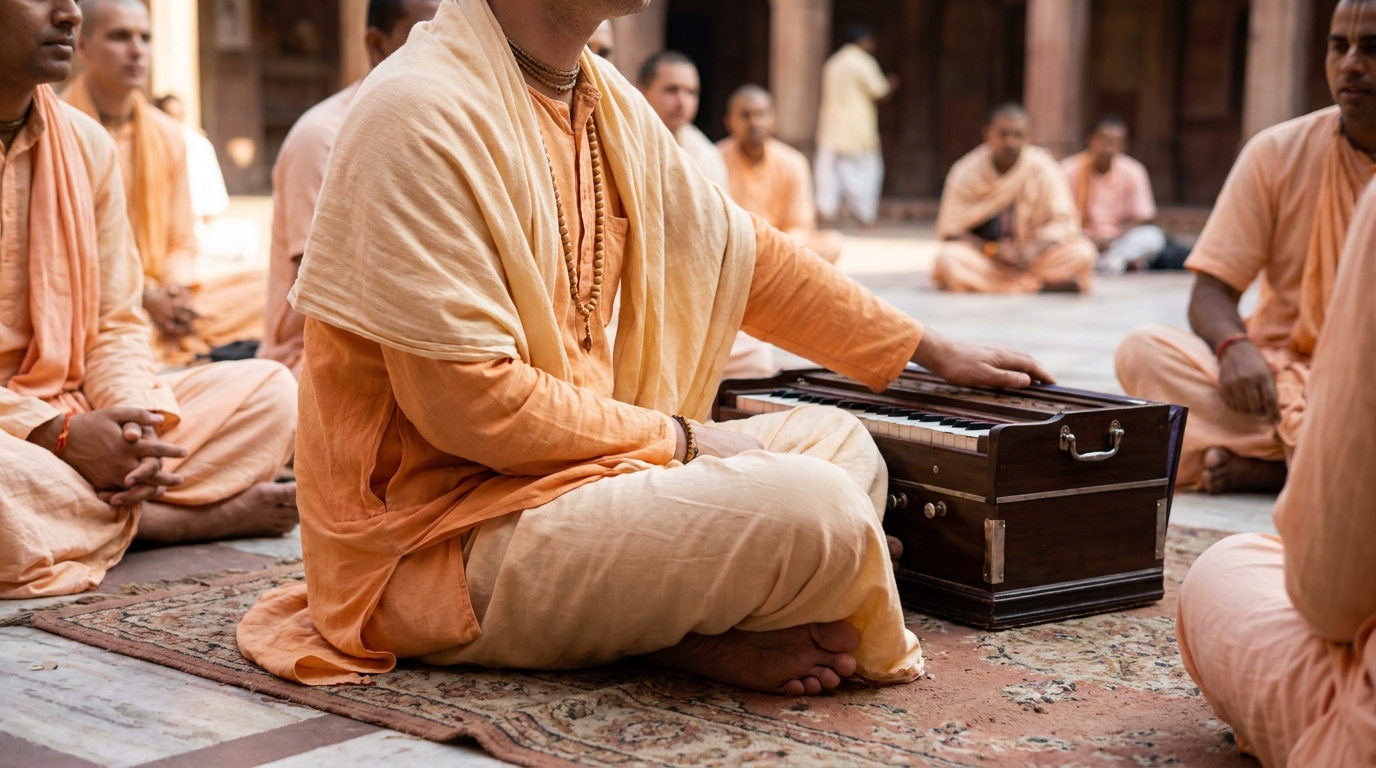
Kīrtan often involves sitting on the floor, clapping, swaying, standing, dancing, or simply listening. Because of this, comfort is important.
Good options include:
- Loose pants or yoga pants
- A long skirt or dress
- Comfortable jeans with stretch
- A soft shirt, kurta, sweater, or tunic
- Layers, such as a shawl, cardigan, or light jacket
You may be seated cross-legged, kneeling, or sitting in a chair. Choose clothing that allows you to move, breathe, and sit comfortably. If an outfit feels too tight, too short, too revealing, or needs constant adjusting, it may distract you from the chanting.
The goal is not to impress anyone. The goal is to be present.
Modesty Helps Create a Sacred Atmosphere
Modesty means different things in different cultures. In a Bhakti setting, modest dress generally means clothing that is respectful and not overly revealing. This helps maintain a devotional mood and allows everyone to feel comfortable.
You do not need to dress formally, but you may want to avoid:
- Very low-cut tops
- Very short shorts or skirts
- See-through clothing
- Clothing with offensive graphics or language
- Outfits meant mainly to attract attention
This is not about judgment. It is about creating a shared space where the focus can remain on mantra, prayer, and devotion.
The Sanskrit word sādhana means “spiritual practice.” When we gather for kīrtan, our clothing can become part of our sādhana—a small way of saying, “I am here to honor something sacred.”
Consider Natural and Breathable Fabrics
Kīrtan can be gentle and meditative, or it can become very lively. Sometimes people clap, dance, and sing with great enthusiasm. Breathable fabrics can help you stay comfortable.
Cotton, linen, bamboo, and other soft fabrics are often good choices. If you tend to get warm, wear layers that can be removed. If the space is cool, bring a shawl or sweater.
In many Bhakti communities, people appreciate simple, clean, natural clothing. But again, there is no need to buy anything special. Come as you are, with thoughtfulness and sincerity.
Check out our latest posts at https://thebhaktihouse.org/blog.
What to Wear to a Meditation Session
Wear Clothing That Allows Stillness
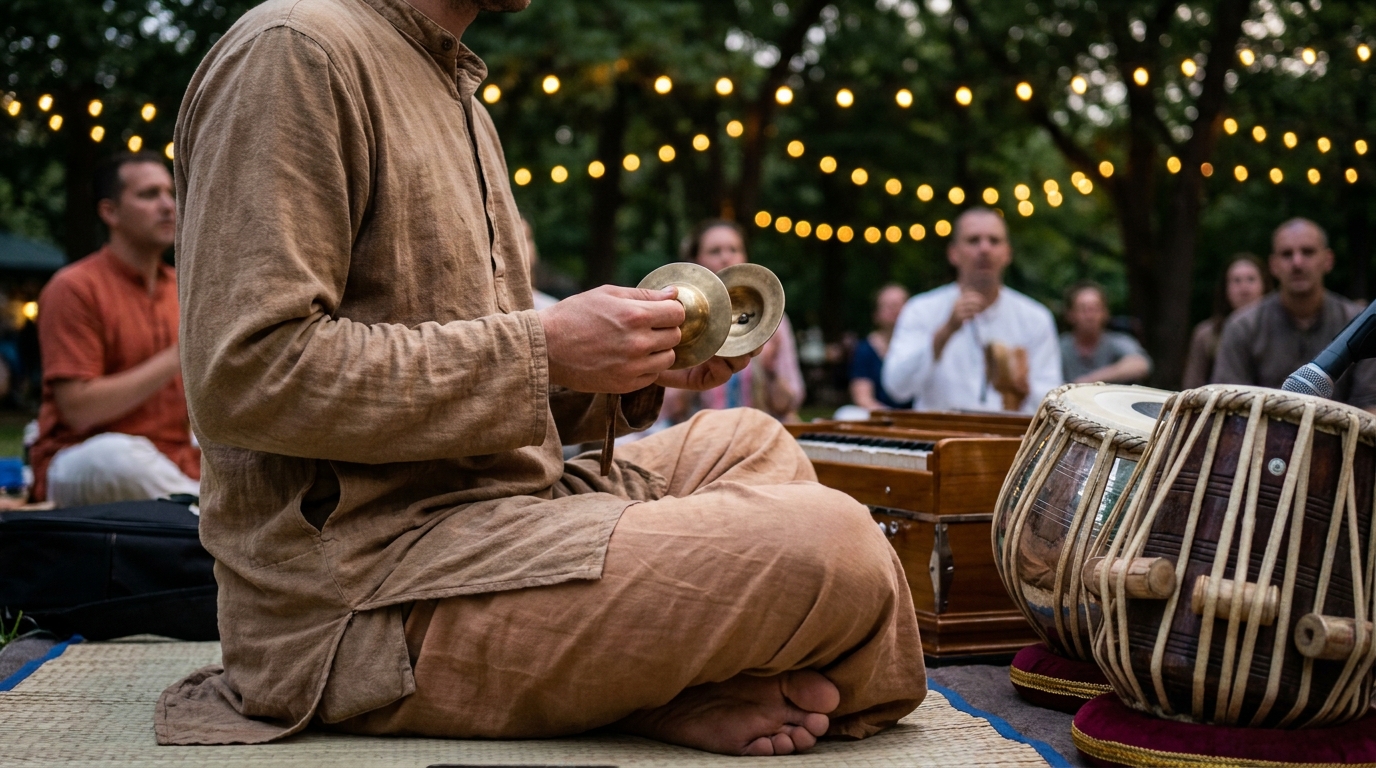
Meditation usually involves sitting quietly for a period of time. You may sit on a cushion, mat, bench, or chair. Since the body will be still, comfort becomes even more important.
Good meditation clothing includes:
- Loose-fitting pants
- Soft leggings or yoga pants
- A comfortable top
- A warm layer
- Socks, especially if shoes are removed
- A shawl or scarf for warmth and grounding
Avoid clothing that pinches, scratches, restricts breathing, or creates discomfort when sitting. A tight waistband or stiff fabric may become distracting after ten or twenty minutes.
Meditation invites the mind to become peaceful. Your clothing can help by making the body feel supported and relaxed.
Dress in Layers
Meditation rooms can feel cool once the body becomes still. Even if you feel warm when you arrive, you may get chilly during a silent meditation session.
A shawl is especially helpful. In many spiritual traditions, wrapping a shawl around the body creates a sense of inwardness and protection. It can feel like a gentle reminder to turn within.
You might bring:
- A light sweater
- A wrap or shawl
- Warm socks
- A soft scarf
Simple layers allow you to adjust without disturbing your meditation.
Avoid Strong Scents
This is an important part of dressing for meditation and kīrtan. Please avoid heavy perfumes, colognes, or strong scented products. Many people are sensitive to fragrance, and strong scents can be distracting in a shared spiritual space.
Clean is wonderful. Overly scented is usually not helpful.
A devotional gathering is an act of care. By keeping fragrances light or avoiding them altogether, we help others breathe, chant, and meditate peacefully.
Should You Wear Traditional Indian Clothing?
Traditional Clothing Is Welcome but Not Required
You may see people wearing traditional Indian devotional clothing at a kīrtan, such as a sari, kurta, dhoti, or shawl. These garments can be beautiful, sacred, and meaningful, especially within the Bhakti tradition that has been preserved and shared through India for thousands of years.
But please do not feel that you must wear Indian clothing to attend kīrtan or meditation.
Bhakti is for everyone. The holy name of God is not limited by culture, nationality, language, or clothing style. The Śrīmad-Bhāgavatam, a beloved Bhakti scripture, describes devotion as the natural function of the soul. In simple terms, this means that love for God is already within us, waiting to be awakened.
You do not have to dress like someone else to begin awakening that love.
Wearing Traditional Clothing Respectfully
If you do choose to wear traditional Indian clothing, do so with respect and appreciation. Learn the names of the garments if you can. Wear them in a way that honors their spiritual and cultural meaning.
For example:
- A kurta is a long tunic often worn by men and women.
- A sari is a traditional draped garment worn by women.
- A dhoti is a traditional cloth worn by men, often wrapped around the waist and legs.
- A tilaka is sacred clay marking worn on the body in some Vaiṣṇava traditions to remember the body as a temple of God. Vaiṣṇava means a devotee of Viṣṇu or Krishna, names of God in the Bhakti tradition.
If you are unsure, ask someone kindly. Most Bhakti communities are happy to help when questions are asked with humility.
Simple Devotional Dress
Many practitioners like to keep a few simple items for spiritual gatherings: a clean shawl, a modest tunic, soft meditation pants, or a fresh shirt reserved for sacred practice.
This is not necessary, but it can be meaningful. Putting on clean clothing for kīrtan or meditation can become a small ritual of preparation. It can help shift the mind from the busy world into a mood of prayer.
Before leaving home, you might pause and say quietly:
“May I come with humility. May I listen deeply. May my voice, mind, and heart be offered in love.”
That prayer matters more than the outfit.
Footwear, Bags, and Practical Details
Be Prepared to Remove Your Shoes
In many kīrtan and meditation spaces, shoes are removed before entering the main practice area. This is common in temples, yoga studios, and many devotional homes. Removing shoes helps keep the space clean and can also symbolize leaving the outside world behind.
Wear shoes that are easy to slip on and off. If you are not comfortable being barefoot, bring clean socks.
Practical options include:
- Slip-on shoes
- Sandals
- Simple flats
- Comfortable sneakers
- Clean socks for indoor use
If you are attending for the first time and are unsure of the custom, simply watch what others do or ask a host. No one expects you to know everything.
Bring Only What You Need
A kīrtan or meditation session is often a cozy gathering. Space may be limited, especially if people are sitting on the floor. Try to bring only what you need.
Helpful items may include:
- A water bottle
- A shawl or sweater
- A meditation cushion if needed
- A journal
- A small bag for personal items
- Any required medications
- A clean pair of socks
Try to silence your phone before entering. If possible, keep it tucked away. This small act can help you and others be fully present.
Consider Seating Needs
If sitting on the floor is difficult, please know that using a chair is completely acceptable. Bhakti Yoga is not about forcing the body into discomfort. The body is a sacred gift, and we care for it with kindness.
If you need back support, a chair, extra cushion, or space to stretch your legs, ask a host. Most spiritual communities want to support you.
Comfortable clothing can help here too. If you have knee, hip, back, or mobility concerns, wear something that allows you to sit in the way that is healthiest for you.
Clothing for Different Types of Kīrtan and Meditation Gatherings
Temple Kīrtan
If the kīrtan is held in a temple or formal devotional space, it is wise to dress a little more respectfully. This does not mean fancy. It means clean, modest, and mindful.
For temple kīrtan, you might wear:
- A long dress or skirt
- Loose pants and a modest top
- A kurta or tunic
- A shawl
- Clean, simple clothing without distracting images or words
Temples are sacred spaces where people come to worship, chant, bow, pray, and offer service. Dressing respectfully helps honor that atmosphere.
Yoga Studio or Wellness Center Kīrtan
Kīrtan in a yoga studio or wellness center may feel more casual. Many people wear yoga clothes, relaxed pants, leggings, or comfortable layers.
Even in a casual setting, modesty and cleanliness are still appreciated. Choose clothing that works well for sitting, singing, and possibly moving.
If you are coming from a yoga class, consider bringing a fresh top or layer. This can help you feel renewed and ready for the devotional mood.
Outdoor Kīrtan or Meditation
Outdoor gatherings are beautiful but require practical clothing. You may be sitting on grass, under trees, near the ocean, or in a park.
Consider:
- Weather-appropriate layers
- Comfortable shoes
- A hat or sun protection
- A blanket or mat
- Insect-conscious clothing if needed
- Warm clothing for evening events
Outdoor kīrtan can be joyful and expansive. Dress in a way that allows you to relax and participate without worrying about temperature, wind, or sitting conditions.
Home Gatherings and Satsang
The Sanskrit word satsang means “association with truth” or “gathering with spiritually minded people.” In Bhakti communities, satsang may include chanting, discussion, prayer, scripture, and prasāda.
Prasāda means “mercy” or “grace,” and it often refers to vegetarian food that has been lovingly offered to God before being shared. If a kīrtan or meditation session includes prasāda, you may be sitting on the floor to eat or share together afterward.
For home gatherings, dress comfortably and respectfully. You do not need to be formal, but it is kind to honor the home as a sacred space.
What Not to Wear: A Loving and Practical Guide
Avoid Clothing That Distracts You
The most common clothing issue is not whether something looks “spiritual.” It is whether it distracts you.
You may want to avoid:
- Tight waistbands
- Stiff jeans that make sitting difficult
- Tops that need constant adjusting
- Noisy jewelry
- Strong fragrance
- Clothing that makes you too hot or too cold
- Shoes that are hard to remove
A peaceful outfit is one you can forget about once the chanting or meditation begins.
Avoid Clothing That Distracts Others
Spiritual spaces are shared spaces. Bhakti teaches us to consider the comfort and upliftment of others. This is part of sevā, a Sanskrit word meaning “service.” Sevā is not only cooking, cleaning, or volunteering. It also includes small acts of care.
Dressing modestly, avoiding strong scents, silencing your phone, and making space for others are all forms of sevā.
In the Bhagavad-gītā, Krishna teaches that a person on the spiritual path acts for the welfare of others. In practical terms, we can ask: “Will my choices help create a peaceful environment?”
That question can guide us gently.
Avoid Worrying Too Much
While it is helpful to dress thoughtfully, please do not become anxious. Spiritual life should not feel like a fashion test.
If you arrive and realize you wore the “wrong” thing, do not worry. Chant anyway. Meditate anyway. Receive what is being offered. God is kind.
The holy names are not dependent on perfect circumstances. One of the most treasured practices in Bhakti Yoga is nāma-saṅkīrtana, the congregational chanting of God’s names. Nāma means “name,” and saṅkīrtana means “chanting together.” The power of the holy name is available to everyone.
Come sincerely, and you are in the right place.
Dressing as an Offering
Cleanliness as Care
In Bhakti Yoga, cleanliness is valued because it supports clarity and respect. Clean clothing can help us feel fresh and ready to enter sacred practice.
This does not mean expensive clothing. It simply means cared-for clothing. A simple clean T-shirt may be more devotional than an elaborate outfit worn with pride.
Before kīrtan or meditation, you might take a shower, wash your hands, wear fresh clothes, or take a moment to breathe and pray. These small acts can become offerings.
Simplicity as Beauty
There is a quiet beauty in simplicity. Bhakti does not ask us to become someone else. It invites us to uncover the loving self beneath the layers of ego, fear, and distraction.
Simple clothing can support a simple heart.
A soft shirt, loose pants, a shawl, and clean socks may be all you need. If you enjoy devotional clothing, that is also lovely. If you prefer plain everyday clothes, that is also lovely.
The question is not, “Do I look spiritual?”
The question is, “Can I be present, humble, and open?”
Intention as the Real Garment
There is a beautiful mood in devotional life: to dress the heart in humility.
Humility does not mean thinking badly of ourselves. It means remembering that we are loved, dependent on grace, and connected to all living beings. When we come to kīrtan or meditation, we come not as experts, but as souls seeking shelter.
You might wear the finest traditional clothing, or you might wear simple clothes after a long day. Either way, the real garment is intention.
Am I coming to listen?
Am I coming to chant?
Am I coming to serve?
Am I coming to remember God?
That is the clothing of Bhakti.
A Simple Outfit Guide for First-Time Visitors
For Women
Comfortable and respectful options may include:
- A long skirt with a modest top
- Loose pants with a tunic
- Leggings with a longer shirt or sweater
- A simple dress with enough room to sit comfortably
- A shawl or cardigan for layering
If you enjoy traditional clothing, a kurta, sari, or salwar kameez can be appropriate. Salwar kameez is a traditional outfit with loose pants and a tunic, often worn with a scarf.
Choose something that allows you to sit, breathe, chant, and relax.
For Men
Comfortable and respectful options may include:
- Loose pants or comfortable jeans
- A clean T-shirt or button-down shirt
- A kurta
- A sweater or shawl
- Simple, easy-to-remove shoes
If you are attending a temple, you may want to avoid sleeveless shirts or overly casual clothing. A clean, modest outfit is usually perfect.
For Children and Families
Children are welcome in many Bhakti spaces, though each gathering may have its own mood and structure. For children, comfort is especially important.
Good choices include:
- Soft clothing
- Layers
- Easy shoes
- Clothes suitable for sitting and moving
- Nothing too delicate if prasāda or art activities are involved
If your child makes noise or moves around, please do not feel ashamed. Spiritual community includes real life. A gentle awareness of others is helpful, but families should feel welcomed, not judged.
Preparing Internally Before You Arrive
Take a Moment of Prayer
What you wear is one part of preparation. The deeper preparation is internal.
Before leaving home, or before entering the room, pause for a moment. You may pray in your own words. You may speak to Krishna, Rama, God, the Divine, or simply open your heart.
A simple prayer could be:
“Please help me be present. Please help me receive what I need. Please let my chanting, silence, and service be sincere.”
Prayer does not need to be polished. God hears the heart.
Come With Curiosity
If you are new to Bhakti Yoga, you may hear Sanskrit mantras, see people bow, notice an altar, or observe customs that are unfamiliar. You do not need to understand everything right away.
The mantra most commonly sung in many Bhakti Yoga gatherings is the Hare Krishna mahā-mantra:
Hare Krishna, Hare Krishna, Krishna Krishna, Hare Hare
Hare Rama, Hare Rama, Rama Rama, Hare Hare
Mahā-mantra means “great mantra.” A mantra is a sacred sound or prayer that helps focus and purify the mind. In Bhakti, chanting is not just meditation; it is a loving call to God.
You can listen, chant softly, or simply be present. There is no pressure.
Let the Practice Change You Gently
The purpose of kīrtan and meditation is not only relaxation, though peace often comes. The deeper purpose is transformation of the heart.
Through chanting, prayer, service, and spiritual association, we begin to remember our relationship with God. We become softer, kinder, more grateful, and more steady. This growth may happen slowly, like sunrise.
Your clothing may help you arrive comfortably, but the real gift is what happens within.
Frequently Asked Questions About What to Wear
Can I Wear Jeans to Kīrtan?
Yes, you can wear jeans to kīrtan, especially if the gathering is casual. Choose jeans that are comfortable for sitting. If they are very tight or stiff, you may prefer loose pants.
A clean pair of jeans with a modest top is usually perfectly fine.
Can I Wear Yoga Clothes?
Yes, yoga clothes are common at many kīrtan and meditation sessions, especially in yoga studios. It is helpful to choose yoga clothing that feels modest and comfortable in a group setting.
If you are coming from a physical yoga class, you may want to bring a fresh layer or shawl.
Do I Need to Cover My Head?
Usually, no. Some traditions or temples may have customs around covering the head, especially for certain ceremonies, but most kīrtan and meditation sessions do not require it.
If you are unsure, ask the host. A scarf or shawl can be useful if you want the option.
Is Black Clothing Okay?
Yes, black clothing is generally okay. Some people prefer light or soft colors for meditation because they feel peaceful, but there is usually no strict rule.
Wear what is clean, respectful, and comfortable.
Should I Dress Up?
You do not need to dress up formally. However, dressing with care can be a beautiful gesture. Think more in terms of “respectful and comfortable” than “fancy.”
A spiritual gathering is not about showing status. It is about coming together in humility and love.
The Deeper Meaning of Sacred Gathering
We Come as We Are
One of the most comforting truths of Bhakti is that God meets us where we are. We do not have to become perfect before we begin. In fact, the practices of Bhakti are meant to purify and guide us from wherever we stand today.
The Bhagavad-gītā teaches that even a little progress on the spiritual path can protect one from great fear. This means every sincere step matters. Every mantra matters. Every prayer matters. Every act of service matters.
Even choosing to attend your first kīrtan or meditation session is meaningful.
We Practice Together
Kīrtan is often practiced in community because the heart becomes encouraged in the company of others. When voices join together in sacred sound, we may feel carried by something greater than ourselves.
Some people sing loudly. Some whisper. Some close their eyes and listen. Some cry. Some smile. Some feel awkward at first. All of this can be part of the journey.
What you wear should help you feel comfortable enough to join in whatever way is sincere for you.
We Offer Everything
In Bhakti Yoga, we learn that all parts of life can become spiritual when offered with love. Cooking, working, singing, cleaning, parenting, studying, and resting can all become offerings.
Even getting dressed can become an offering.
You may choose your clothes and think:
“May this body be used in service. May these hands clap in kīrtan. May this voice chant with sincerity. May this mind become peaceful. May this heart remember God.”
This is the essence of devotional life: not escaping the ordinary, but filling the ordinary with love.
A Final Word of Encouragement
If you are preparing for a kīrtan or meditation session, wear something clean, comfortable, modest, and respectful. Bring a layer. Avoid strong scents. Choose clothes that allow you to sit, breathe, chant, listen, and be present.
But most of all, come with an open heart.
You do not need special clothing, perfect knowledge, or prior experience. You do not need to know every mantra or understand every custom. Bhakti Yoga is a practical path of love—chanting, prayer, service, remembrance, and spiritual growth. It begins with sincerity.
Whether you are a lifelong seeker, a curious visitor, someone returning to spiritual life, or someone who is not sure what you believe, you are welcome.
Take one sincere step toward God. Come sit with us. Come chant one mantra. Come offer one prayer. Come as you are, and let the heart begin.
FAQs
What is a Kīrtan?
A Kīrtan is a form of devotional chanting that originates from India. It involves singing, chanting, and playing musical instruments to create a meditative and spiritual atmosphere.
What should I wear to a Kīrtan or meditation session?
It is recommended to wear comfortable and modest clothing to a Kīrtan or meditation session. Loose-fitting clothes made of natural fabrics such as cotton or linen are often preferred to allow for ease of movement and breathability.
Are there any specific clothing guidelines for attending a Kīrtan or meditation session?
While there are no strict rules for attire, it is generally respectful to avoid wearing revealing or overly casual clothing. Many participants choose to wear traditional Indian attire such as kurta-pajamas or simple, flowing dresses.
What type of footwear is appropriate for a Kīrtan or meditation session?
It is common to remove footwear before entering the space where the Kīrtan or meditation session is taking place. Participants may choose to wear comfortable sandals or slip-on shoes that can be easily removed.
Are there any specific accessories or jewelry that are commonly worn to a Kīrtan or meditation session?
Participants often wear simple and meaningful accessories such as mala beads, which are used for meditation and chanting. It is advisable to avoid wearing excessive jewelry or accessories that may be distracting during the practice.

