

In every spiritual tradition, there are sacred texts that do more than inform the mind. They soften the heart, awaken longing for God, and guide us into a life of deeper meaning. In the Bhakti Yoga tradition, one of the most beloved of these texts is the Śrīmad-Bhāgavatam.
The Śrīmad-Bhāgavatam, also known as the Bhāgavata Purāṇa, is a sacred scripture of devotion. It is treasured by saints, teachers, monks, householders, seekers, and lovers of God because it reveals the heart of Bhakti: loving relationship with the Divine.
At The Bhakti House, we understand that people come from many backgrounds. Some are new to Sanskrit, Hindu wisdom, or devotional practice. Some have practiced yoga for years but are just beginning to explore its spiritual roots. Some simply feel a quiet pull toward prayer, chanting, and a more God-centered life.
Wherever you are, the Śrīmad-Bhāgavatam offers a beautiful invitation: to live with love, to remember God, and to allow the heart to become purified through devotion.
The word Śrīmad means “beautiful,” “glorious,” or “full of spiritual richness.” Bhāgavatam comes from the word Bhagavān, which means “the Supreme Lord,” or “God as the all-attractive, all-loving Person.” So, Śrīmad-Bhāgavatam may be understood as “the beautiful scripture about the Supreme Lord and His devotees.”
It is one of the most important texts in the Bhakti Yoga tradition. Bhakti means loving devotion to God, and yoga means connection or union. Bhakti Yoga is the path of reconnecting the soul with God through love.
The Śrīmad-Bhāgavatam is not only a book of philosophy. It is a living river of divine stories, prayers, songs, teachings, and examples of saintly lives. It speaks to the deepest questions of the human heart:
Why am I here?
Who am I beyond the body and mind?
What is the purpose of life?
How can I love God?
How can I live with compassion, courage, and humility?
How can I find spiritual shelter in a difficult world?
A Scripture of Devotional Wisdom
The Śrīmad-Bhāgavatam contains twelve sections, called cantos. These cantos include teachings on creation, the nature of the soul, the lives of great saints and kings, the power of devotion, and the divine pastimes of Lord Kṛṣṇa.
Kṛṣṇa is a Sanskrit name for God meaning “the all-attractive one.” In Bhakti Yoga, Kṛṣṇa is understood as the Supreme Person, the source of all beauty, wisdom, strength, compassion, and love.
The Bhāgavatam is especially known for its Tenth Canto, which describes the loving pastimes of Kṛṣṇa in Vṛndāvana, the sacred village where He plays as a child, friend, beloved, and divine protector. These stories are not ordinary mythology. For devotees, they are sacred revelations of God’s intimate, loving nature.
A Natural Commentary on the Vedānta
The Śrīmad-Bhāgavatam is also considered a natural commentary on the Vedānta-sūtra, a classical philosophical text that explores the ultimate truth. Vedānta means “the conclusion of spiritual knowledge.”
While Vedānta can sometimes feel abstract or difficult, the Bhāgavatam brings these truths into the heart. It teaches not only that God exists, but that God is lovable. It teaches not only that the soul is eternal, but that the soul’s deepest joy is loving service.
This is why many Bhakti teachers say the Śrīmad-Bhāgavatam is the ripened fruit of the tree of Vedic wisdom. It gives the sweet essence: love of God.
Why the Śrīmad-Bhāgavatam Matters Today
In our modern world, many people are overwhelmed. We are surrounded by noise, speed, comparison, anxiety, and constant distraction. Even when life looks successful externally, the heart may still feel thirsty.
The Śrīmad-Bhāgavatam matters because it speaks directly to this thirst. It reminds us that we are not machines, consumers, or isolated individuals. We are eternal souls, loved by God, meant to live in loving relationship with the Divine and with all living beings.
It Gives Spiritual Direction
Many people today are searching for meaning. The Bhāgavatam gives a clear spiritual direction: turn toward God with sincerity.
This does not require perfection. It does not require being born into a certain culture or having advanced Sanskrit knowledge. The Bhāgavatam teaches that devotion can begin wherever we are.
A simple prayer, a moment of chanting, an act of service, a sincere question, a humble offering—these are all meaningful steps.
In the First Canto, the sages ask what is the highest good for all people. The answer given is devotional service to the Supreme Lord that is uninterrupted and without selfish motive. This kind of devotion brings deep satisfaction to the soul.
In simple words, the Bhāgavatam teaches: when love for God becomes the center of life, the heart becomes peaceful.
It Offers Shelter in Difficult Times
The Śrīmad-Bhāgavatam was spoken at a moment of urgency. King Parīkṣit, a noble ruler, learned that he had only seven days to live. Instead of panicking or clinging to worldly power, he turned fully toward spiritual truth.
He sat by the sacred river Ganges and asked the great sage Śukadeva Gosvāmī: “What should a person do at the time of death? What should we hear, chant, remember, and worship?”
This is one of the most compassionate openings in spiritual literature. It tells us that the Bhāgavatam is meant for real life, including fear, loss, uncertainty, and mortality.
We may not know the exact day of our death, but we all live with impermanence. The Bhāgavatam helps us ask: What truly matters? What will remain? What should I give my heart to?
Its answer is simple and profound: hear about God, chant God’s names, remember the Divine, serve with love, and live in a way that awakens the soul.
It Restores the Heart’s Capacity to Love
The Bhāgavatam teaches that the soul’s natural condition is love. But that love can become covered by selfishness, fear, pride, resentment, and forgetfulness of God.
Through hearing sacred wisdom and practicing Bhakti Yoga, the heart becomes cleansed. This is not a harsh or judgmental process. It is like sunlight entering a room that has been dark for a long time.
The Bhāgavatam does not ask us to hate the world. It teaches us to see the world as connected to God. Family, work, food, art, music, nature, friendship, and service can all become part of a devotional life when offered with love.
The Main Teachings of the Śrīmad-Bhāgavatam
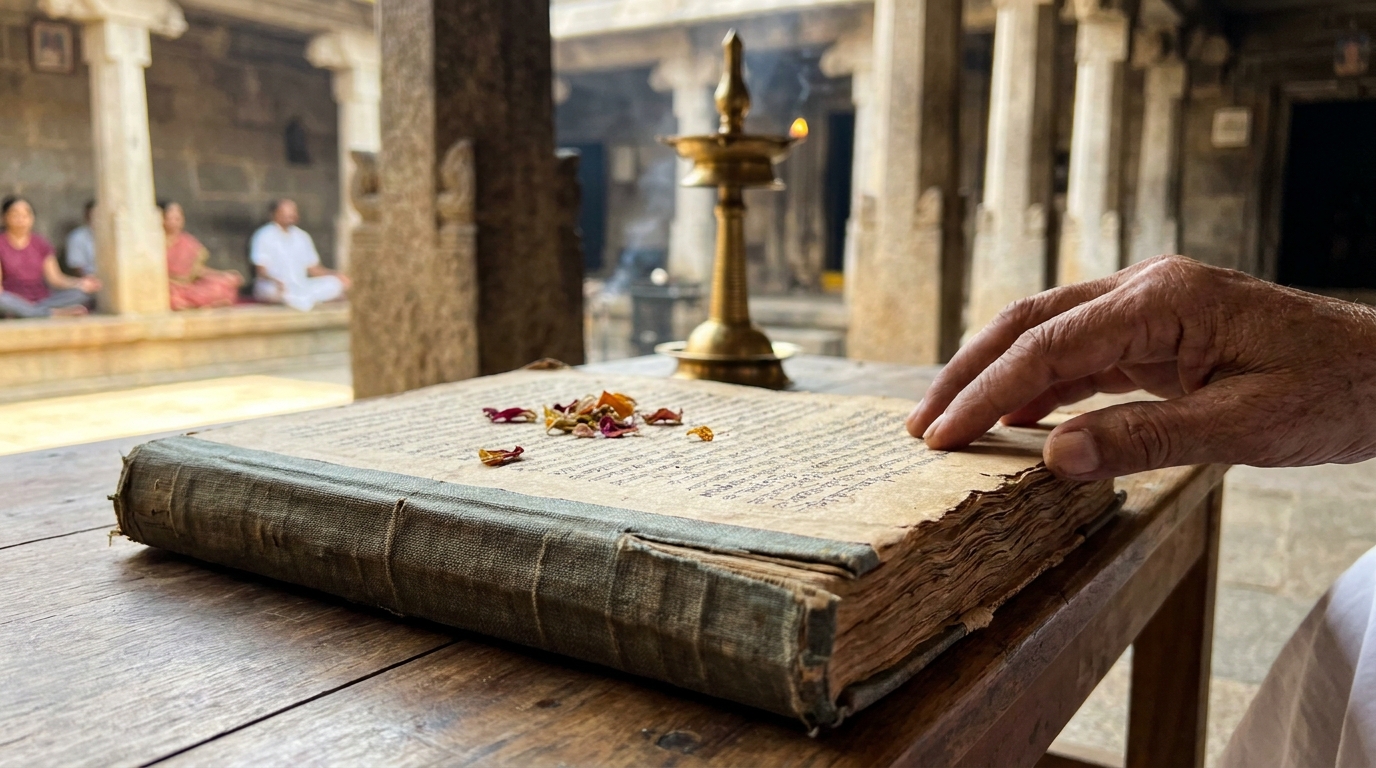
The Śrīmad-Bhāgavatam is vast and deep, but several essential teachings shine throughout its pages.
We Are Eternal Souls
One of the foundational teachings of Bhakti wisdom is that we are not merely the body or mind. The body changes from childhood to youth to adulthood to old age. The mind also changes, sometimes peaceful, sometimes restless. But the conscious self—the soul—continues.
In Sanskrit, the soul is called ātmā. The ātmā is eternal, conscious, and spiritual by nature. The Bhāgavatam reminds us that our deepest identity is not based on nationality, gender, profession, status, or past mistakes. We are souls, parts of God, meant for loving connection.
This understanding brings dignity to every person. It also encourages compassion toward all living beings.
God Is Personal and Loving
The Śrīmad-Bhāgavatam presents God not only as a distant power or abstract energy, but as Bhagavān, the Supreme Person. This does not mean God is limited like us. Rather, it means the Divine includes personality, love, beauty, intention, and relationship in their fullest form.
Kṛṣṇa’s pastimes in the Bhāgavatam reveal a God who plays, protects, loves, listens, and responds to devotion. He is the friend of the cowherd boys, the beloved of the gopīs, the joy of Mother Yaśodā, the protector of the innocent, and the shelter of the surrendered.
For many seekers, this is deeply healing. God is not only the ruler of the universe. God is also the one who longs for our love and invites us into relationship.
Hearing and Chanting Are Sacred Practices
The Bhāgavatam places great emphasis on śravaṇam and kīrtanam.
Śravaṇam means hearing. In Bhakti Yoga, hearing sacred teachings and stories about God is itself a spiritual practice. We listen not only to gather information, but to let divine sound enter the heart.
Kīrtanam means chanting or glorifying God. This may include singing sacred mantras, speaking prayers, or sharing spiritual wisdom. One of the most beloved mantras in the Bhakti tradition is the Hare Kṛṣṇa mahā-mantra:
Hare Kṛṣṇa Hare Kṛṣṇa
Kṛṣṇa Kṛṣṇa Hare Hare
Hare Rāma Hare Rāma
Rāma Rāma Hare Hare
Mahā-mantra means “great mantra.” A mantra is a sacred sound that helps focus and purify the mind. This mantra is a prayer asking to be engaged in loving service to God.
The Bhāgavatam teaches that hearing and chanting about God can cleanse the heart and awaken devotion. These practices are simple, accessible, and powerful.
Devotion Is Greater Than Material Achievement
The Śrīmad-Bhāgavatam repeatedly shows that worldly success alone cannot satisfy the soul. Wealth, fame, power, beauty, and intelligence all have their place, but they are temporary. If they are disconnected from God, they cannot give lasting fulfillment.
At the same time, the Bhāgavatam does not reject responsibility. Many of its great devotees are kings, parents, teachers, and workers in society. The point is not to abandon life, but to spiritualize life.
Devotion means offering our abilities, relationships, and responsibilities to God. A parent can serve God by raising children with compassion and spiritual values. A student can serve by learning with humility. A professional can serve through honesty and generosity. A musician can serve through sacred sound. A cook can serve by preparing food with love and offering it to God.
Check out our latest posts at https://thebhaktihouse.org/blog.
The Stories That Shape the Heart

One reason the Śrīmad-Bhāgavatam is so beloved is that it teaches through story. These stories are full of devotion, courage, surrender, and divine grace.
Prahlāda Mahārāja: Faith in the Midst of Fear
Prahlāda was a young boy born into a powerful royal family. His father, Hiraṇyakaśipu, was a tyrant who hated devotion to God. Yet Prahlāda’s heart was fixed on Lord Viṣṇu, a name of God meaning “the all-pervading Lord.”
Even when threatened, punished, and attacked, Prahlāda remained gentle and prayerful. He did not hate his father. He prayed for him.
Prahlāda’s story teaches us that devotion can live even in hostile environments. It shows that spiritual strength does not always look loud or forceful. Sometimes it looks like a child calmly remembering God.
For modern readers, Prahlāda’s example is deeply relevant. Many people feel pressure from society, family, or culture to forget spiritual life. Prahlāda reminds us that we can remain connected to God inwardly, with humility and courage.
Dhruva Mahārāja: From Hurt to Holy Longing
Dhruva was a young prince who felt deeply wounded when he was rejected and insulted. In pain, he went to the forest to seek God, initially desiring a kingdom greater than anyone else’s.
Through prayer, discipline, and meditation, Dhruva received the vision of Lord Viṣṇu. But when God appeared before him, Dhruva’s heart changed. He realized that the worldly reward he had desired was small compared to the treasure of divine presence.
He famously expressed that he had been searching for broken glass but had found a precious jewel.
Dhruva’s story is compassionate because it does not shame our mixed motives. Many of us begin spiritual life wanting relief, success, healing, or answers. The Bhāgavatam shows that if we sincerely turn toward God, our motives can become purified. Hurt can become prayer. Ambition can become devotion. Longing can become love.
Gajendra: A Cry from the Heart
Gajendra was an elephant king who was attacked by a crocodile while bathing in a lake. After struggling for a long time, he realized his own strength was not enough. In desperation, he called out to the Supreme Lord.
God heard his prayer and came to rescue him.
This story is simple and powerful. It reminds us that prayer does not need to be polished. Sometimes the most sincere prayer is a cry from the heart: “Please help me. Please guide me. Please let me remember You.”
In Bhakti Yoga, helplessness before God is not weakness. It is honesty. It opens the heart to grace.
The Gopīs: The Highest Love
The gopīs are the cowherd women of Vṛndāvana, known for their pure love for Kṛṣṇa. Their devotion is considered the highest expression of Bhakti because it is completely selfless. They do not love Kṛṣṇa for wealth, liberation, status, or reward. They love Him simply because He is their life.
Their love is sacred and profound. It should be approached with humility and guidance, not as ordinary romance. The Bhāgavatam uses their devotion to reveal the soul’s deepest longing: to love God fully, without selfishness.
For practitioners, the gopīs teach us to gradually move from asking, “What can God give me?” to “How can I love and serve God?”
How the Śrīmad-Bhāgavatam Supports Bhakti Yoga Practice
Bhakti Yoga is practical. It is not only something we study; it is something we live. The Śrīmad-Bhāgavatam supports a daily path of remembrance, chanting, prayer, service, and spiritual growth.
Hearing Sacred Wisdom
A beautiful way to begin is by regularly hearing or reading the Bhāgavatam. Even a few verses or a short passage each day can nourish the heart.
Because the text is deep, it is helpful to study with guidance from authentic teachers and commentaries in a devotional lineage. In Bhakti traditions, this lineage is called paramparā, meaning a chain of spiritual teachers who pass down wisdom with care and integrity.
Reading the Bhāgavatam is not about rushing. It is about receiving. We can pause and ask:
What is this teaching showing me about God?
What is it showing me about my heart?
How can I practice this today?
Chanting the Holy Names
The Bhāgavatam strongly recommends chanting the names of God, especially in this age of distraction and spiritual forgetfulness.
Chanting can be done in community through kīrtan, devotional singing with music and response. It can also be done quietly on beads as japa, a personal meditative repetition of mantra.
The holy names are not considered ordinary sound. In Bhakti Yoga, God’s name and God’s presence are understood to be spiritually connected. When we chant sincerely, we are placing ourselves in divine company.
Even if the mind wanders, the practice is still powerful. We gently return to the sound, again and again.
Prayer as Relationship
The Śrīmad-Bhāgavatam is filled with prayers. Some are poetic and philosophical; others are simple cries of surrender. Together, they teach us that prayer is not only asking for things. Prayer is relationship.
We can pray in our own words:
“God, please help me remember You.”
“Please guide my choices.”
“Please soften my heart.”
“Please let me serve someone today.”
“Please accept whatever I can offer.”
There is no need to pretend before God. Bhakti begins with sincerity. We can bring our gratitude, confusion, grief, longing, and hope into prayer.
Service as Love in Action
In Sanskrit, devotional service is called sevā. Sevā means loving service offered for the pleasure of God and the benefit of others.
The Bhāgavatam teaches that true devotion naturally expresses itself as compassion. If we love God, we begin to honor God’s presence in every living being.
Service can be simple:
Preparing and sharing sanctified food
Helping at a temple or spiritual community
Supporting someone who is struggling
Offering time, skills, or resources
Speaking kindly
Caring for the earth
Creating a peaceful home where God is remembered
Service purifies the heart because it shifts us from “What can I get?” to “How can I offer?”
The Śrīmad-Bhāgavatam and the Practice of Sacred Community
Spiritual growth is deeply supported by community. In Sanskrit, saintly association is called sādhu-saṅga. Sādhu means a saintly or sincere spiritual person, and saṅga means association or company.
The Bhāgavatam was spoken in community. Sages gathered together to hear. King Parīkṣit listened with full attention. Śukadeva Gosvāmī spoke with compassion. This sacred exchange shows us that spiritual wisdom is meant to be shared.
We Grow Through Hearing Together
When we hear the Bhāgavatam with others, our understanding deepens. Someone may ask a question we did not think to ask. Someone may share a realization that opens our heart. We may feel encouraged simply by being around others who are also trying to remember God.
Spiritual community does not require everyone to be perfect. In fact, real community is where we practice humility, forgiveness, patience, and service.
Devotion Welcomes Every Background
The Bhāgavatam’s message is universal. It honors the soul beyond external labels. A person may come from any country, race, religion, profession, or life story and still sincerely approach God through devotion.
Bhakti Yoga does not ask us to erase our background. It invites us to bring our whole self into loving relationship with the Divine.
At The Bhakti House, this is a cherished principle: everyone is welcome to come closer to God. You do not need to know all the philosophy. You do not need to pronounce every Sanskrit word perfectly. You do not need to have your life fully together.
You can begin with sincerity.
The Role of Humility
The Bhāgavatam praises humility again and again. Humility does not mean thinking we are worthless. It means recognizing that we are dependent on grace.
When we approach sacred wisdom humbly, we become teachable. We stop trying to control God and begin learning how to serve. We become more willing to listen, forgive, and grow.
Humility opens the doorway to devotion.
How to Begin Reading the Śrīmad-Bhāgavatam
For someone new to the Śrīmad-Bhāgavatam, the size and depth of the text may feel intimidating. But like any sacred journey, it begins one step at a time.
Start with a Prayer
Before reading, pause for a moment. You might say:
“Dear Lord, please help me receive something that will bring me closer to You. Please guide my heart.”
This simple act changes reading from a mental exercise into devotional practice.
Read Slowly and Reflectively
You do not need to read many pages at once. One verse, one story, or one teaching can be enough.
After reading, sit quietly and ask:
What quality of devotion do I see here?
What does this teach me about God?
What does this reveal about my own heart?
What small action can I take today?
The Bhāgavatam is not meant to be consumed quickly. It is meant to be lived.
Learn from Devotional Teachers
Because the Bhāgavatam contains profound spiritual truths, it is helpful to hear from teachers who practice Bhakti Yoga and belong to an authentic lineage.
A good teacher helps us understand the text in a way that increases humility, devotion, compassion, and practical service. The goal is not pride in knowledge, but transformation of the heart.
Connect Reading with Practice
The best way to understand the Bhāgavatam is to practice what it teaches.
If you read about chanting, try chanting.
If you read about service, offer service.
If you read about prayer, pray.
If you read about compassion, be kind to someone.
If you read about surrender, release one small attachment into God’s hands.
In this way, the scripture becomes alive.
The Heart of the Śrīmad-Bhāgavatam
The heart of the Śrīmad-Bhāgavatam is love of God. Its teachings, stories, prayers, and songs all point toward this one beautiful truth: the soul is meant for Bhakti, loving devotion.
This love is not sentimental or passive. It is courageous, practical, and transformative. It changes how we speak, eat, work, relate, forgive, and serve. It gives meaning to ordinary moments and hope in painful ones.
It Teaches Us to Remember God
To remember God is one of the great practices of Bhakti. The Bhāgavatam helps us remember by filling the mind with sacred sound and divine stories.
When we remember Kṛṣṇa, we begin to see life differently. Challenges become opportunities for surrender. Relationships become opportunities for service. Beauty becomes a reminder of the Divine. Even difficulties can become invitations to pray more sincerely.
It Invites Us into Loving Service
The Bhāgavatam does not end in theory. It invites us into sevā, loving service. Love naturally wants to serve. When the heart awakens, service becomes joyful rather than burdensome.
We may still have struggles, doubts, and imperfections. But Bhakti does not demand that we become perfect before approaching God. Rather, by approaching God, we become purified.
It Gives Hope to Every Seeker
Perhaps one of the most beautiful messages of the Śrīmad-Bhāgavatam is that no sincere effort is wasted.
A little hearing, a little chanting, a little prayer, a little service—these things matter. They plant seeds in the heart. Over time, by grace and practice, those seeds grow.
In Sanskrit, the seed of devotion is sometimes called bhakti-latā-bīja, the seed of the creeper of devotion. When watered by hearing and chanting, it grows toward the shelter of God.
Why It Matters for Your Life Right Now
The Śrīmad-Bhāgavatam matters because your soul matters. Your longing for peace matters. Your desire to love and be loved matters. Your questions, wounds, hopes, and prayers matter.
This sacred text reminds us that spiritual life is not far away. God is not far away. The path can begin here, in this breath, with one sincere offering.
You can chant one mantra.
You can read one verse.
You can offer your food with gratitude.
You can serve one person.
You can pray honestly.
You can take one step toward God.
And when you do, the Bhāgavatam assures us that God sees that step. The Lord in the heart responds to sincerity. The path of Bhakti is not about performance; it is about relationship.
The Śrīmad-Bhāgavatam is a lamp for the mind, a medicine for the heart, and a map for the soul. It matters because it teaches us how to live with devotion in a world that often forgets love. It matters because it reveals a God who is beautiful, personal, compassionate, and near. It matters because it invites every person, from every background, into the eternal practice of loving and serving the Divine.
May we approach this sacred scripture with humility. May we hear with open hearts. May we chant with sincerity. May we serve with kindness. May we grow, step by step, in love for God and compassion for all beings.
Everyone is welcome on this path. Wherever you are today, you can take one sincere step toward God—and that step is precious.
FAQs
What is the Śrīmad-Bhāgavatam?
The Śrīmad-Bhāgavatam is a sacred Hindu scripture that is considered one of the most important texts in the Vedic literature. It is a philosophical and literary classic that consists of 18,000 verses and is divided into twelve cantos.
What is the significance of the Śrīmad-Bhāgavatam?
The Śrīmad-Bhāgavatam is revered for its teachings on devotion, morality, and spirituality. It is considered to be a comprehensive guide to living a righteous and fulfilling life, and it is highly respected by followers of the Bhakti movement within Hinduism.
Why is the Śrīmad-Bhāgavatam important?
The Śrīmad-Bhāgavatam is important because it provides profound insights into the nature of reality, the purpose of life, and the path to spiritual enlightenment. It is also valued for its vivid descriptions of the various incarnations of the Hindu god Vishnu and the stories of his devotees.
How is the Śrīmad-Bhāgavatam relevant today?
The teachings of the Śrīmad-Bhāgavatam continue to be relevant today as they offer timeless wisdom on how to lead a meaningful and purposeful life. The text addresses universal themes such as love, compassion, and the pursuit of spiritual knowledge, which are applicable to people of all backgrounds and beliefs.
What are some key themes in the Śrīmad-Bhāgavatam?
Some key themes in the Śrīmad-Bhāgavatam include the importance of devotion to God, the concept of dharma (righteous duty), the nature of the material and spiritual worlds, and the process of self-realization through meditation and contemplation.

