
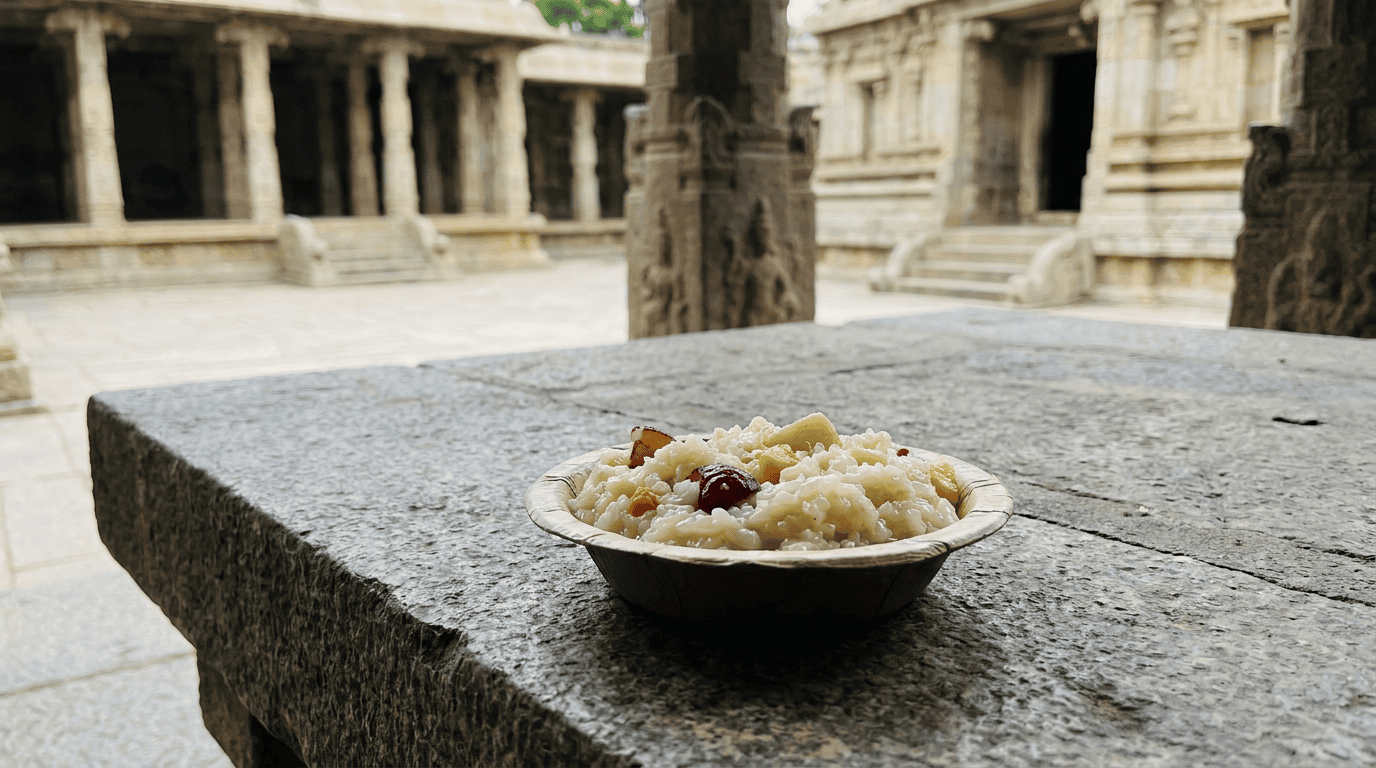
Prasādam, often written as “prasadam” in English, is sacred food that has been offered to God with love and devotion.
The Sanskrit word prasādam means “mercy,” “grace,” or “kindness.” In the Bhakti Yoga tradition, prasādam is not ordinary food. It is food that has been lovingly prepared and offered to the Supreme Lord, and then received back as a blessing.
This is one of the most beautiful and practical teachings of Bhakti Yoga: we can spiritualize daily life through love. Eating is something we do every day. Cooking is something many of us do often. Sharing food is natural to human life. Bhakti teaches that these ordinary acts can become sacred when done with devotion.
Prasādam is not limited to one culture, country, or type of person. Anyone can prepare it. Anyone can receive it. Anyone can be nourished by it—body, mind, and soul.
In many Bhakti communities, including temples, homes, kirtan gatherings, and places like The Bhakti House, prasādam is shared freely and joyfully. It is a way of saying, “You are welcome. You are loved. God’s grace is for everyone.”
Prasādam in the Heart of Bhakti Yoga
Bhakti Yoga is the path of loving devotion to God. The word bhakti means devotion, love, or loving service. The word yoga means connection. So Bhakti Yoga means reconnecting with God through love.
Prasādam is one of the most practical forms of Bhakti Yoga because it brings devotion into the kitchen, onto the plate, and into our relationships.
Food Offered With Love
In the Bhagavad-gītā, one of the most loved scriptures of Bhakti Yoga, Lord Krishna says:
“Whoever offers Me with devotion a leaf, a flower, a fruit, or water, I accept that loving offering from the pure-hearted soul.”
— Bhagavad-gītā 9.26
This verse is simple, powerful, and deeply comforting. Krishna does not ask for something expensive, rare, or difficult. He asks for love.
A leaf. A flower. A fruit. Water.
The heart of the offering is not the price of the ingredients. It is the devotion behind them.
This means anyone can begin. A student in a small apartment, a parent cooking for children, a grandparent making a simple meal, a person with limited money, or someone just beginning their spiritual journey—all can offer something with sincerity.
Receiving God’s Grace
When food is offered to God with love, it becomes prasādam—grace.
In Bhakti understanding, God is not hungry for our food. God is complete. But God accepts our love. Just as a loving parent treasures a simple drawing from a child, the Lord receives the devotion in the offering.
Then, by His kindness, that food becomes spiritually blessed. When we eat prasādam, we are not just feeding the body. We are receiving mercy.
This is why devotees often honor prasādam rather than simply “eat” it. The word “honor” reminds us to receive it with gratitude and reverence.
Sacredness in Daily Life
Many people think spirituality only happens in a church, temple, mosque, synagogue, meditation room, or during formal prayer. Bhakti Yoga gently expands this vision.
The kitchen can become a sacred space.
The dining table can become an altar of gratitude.
A simple meal can become a spiritual exchange.
Prasādam helps us remember that God is present in everyday life. We do not have to escape the world to grow spiritually. We can begin right where we are.
Why Prasādam Is Sacred
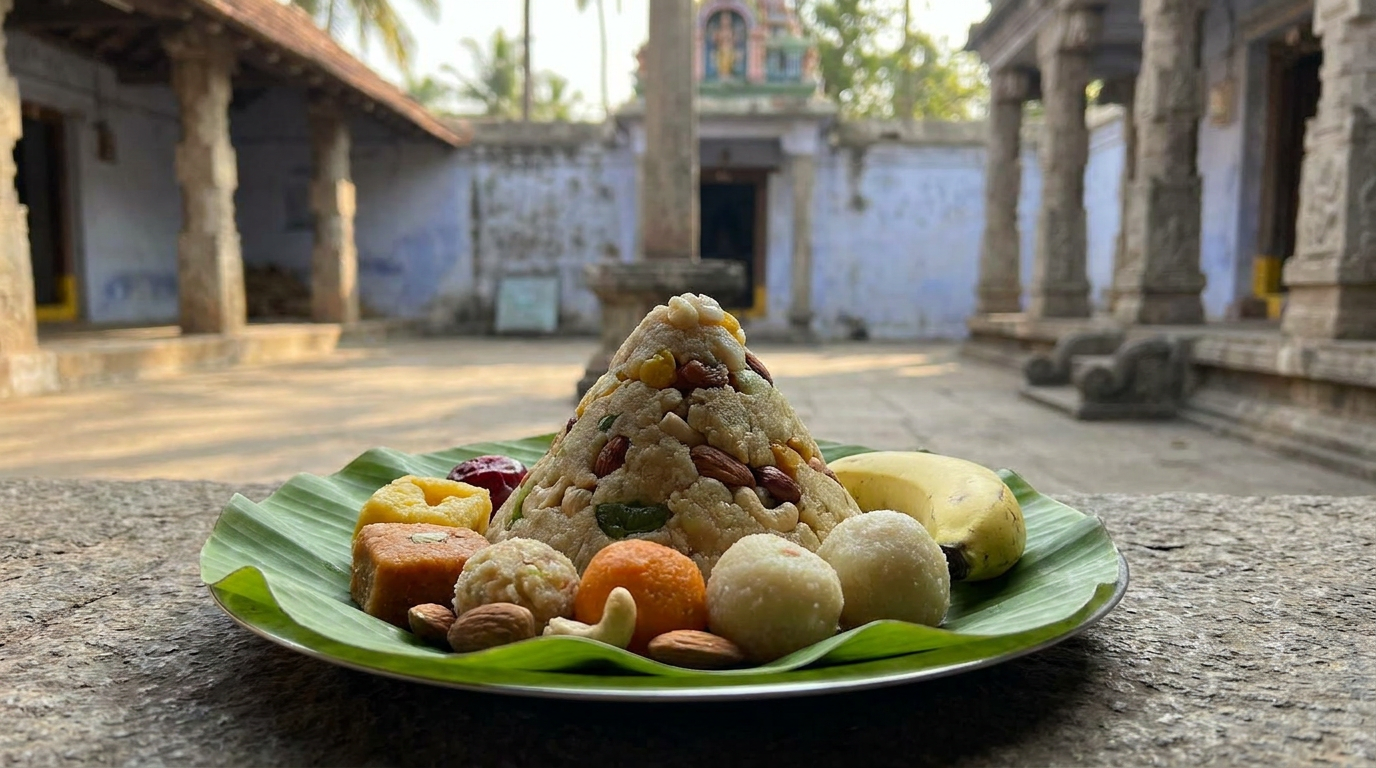
Prasādam is sacred because it has been connected to God through loving offering. In Bhakti Yoga, consciousness matters. The mood with which we cook, offer, serve, and receive food affects the heart.
Food carries more than calories. It carries intention. Anyone who has eaten a meal cooked by someone who loves them knows this. There is something different about food prepared with care.
Bhakti takes this truth deeper. When food is prepared for God, with gratitude and prayer, it becomes purified and purifying.
It Is Touched by Devotion
The sacredness of prasādam begins with devotion.
Devotion does not mean perfection. It means sincerity.
A person may not know many Sanskrit mantras. They may not understand all the philosophy. They may be new to spiritual life. Still, if they offer food to God with a humble heart, that offering has spiritual value.
In the Bhagavad-gītā, Krishna emphasizes bhakti—devotion—as the essential ingredient. The external item may be simple, but the inner offering is love.
This is encouraging for everyone. We do not need to wait until we are “advanced” to begin. We can start with what we have.
It Purifies the Heart
Bhakti scriptures explain that prasādam helps purify consciousness. This means it can soften the heart, awaken gratitude, and gradually reduce selfishness.
In the Bhagavad-gītā 3.13, Krishna says that those who eat food first offered in sacrifice are freed from impurities, while those who cook only for themselves become bound by karma.
The word karma means action and reaction. It is the law that our actions have consequences, both visible and subtle. When we cook only for our own enjoyment, we may deepen the feeling that life is centered on “me” and “mine.” But when we cook for God and share with others, our consciousness shifts.
We begin to think, “How can I serve?”
“How can I give?”
“How can this meal become an offering?”
This is spiritual growth in a very practical form.
It Connects Us With God
Prasādam is sacred because it creates relationship.
Bhakti Yoga is not only about self-improvement. It is about love between the soul and God. Prasādam helps us remember that God is a person who can receive our love and give love in return.
When we offer food, we say in our own way, “Dear Lord, this is for You.”
When we receive prasādam, we hear God’s gentle reply: “And now, this is My grace for you.”
This exchange is simple, tender, and transformative.
Sure, here is the sentence with the clickable link:
Check out our latest posts on posts.
How Prasādam Is Prepared
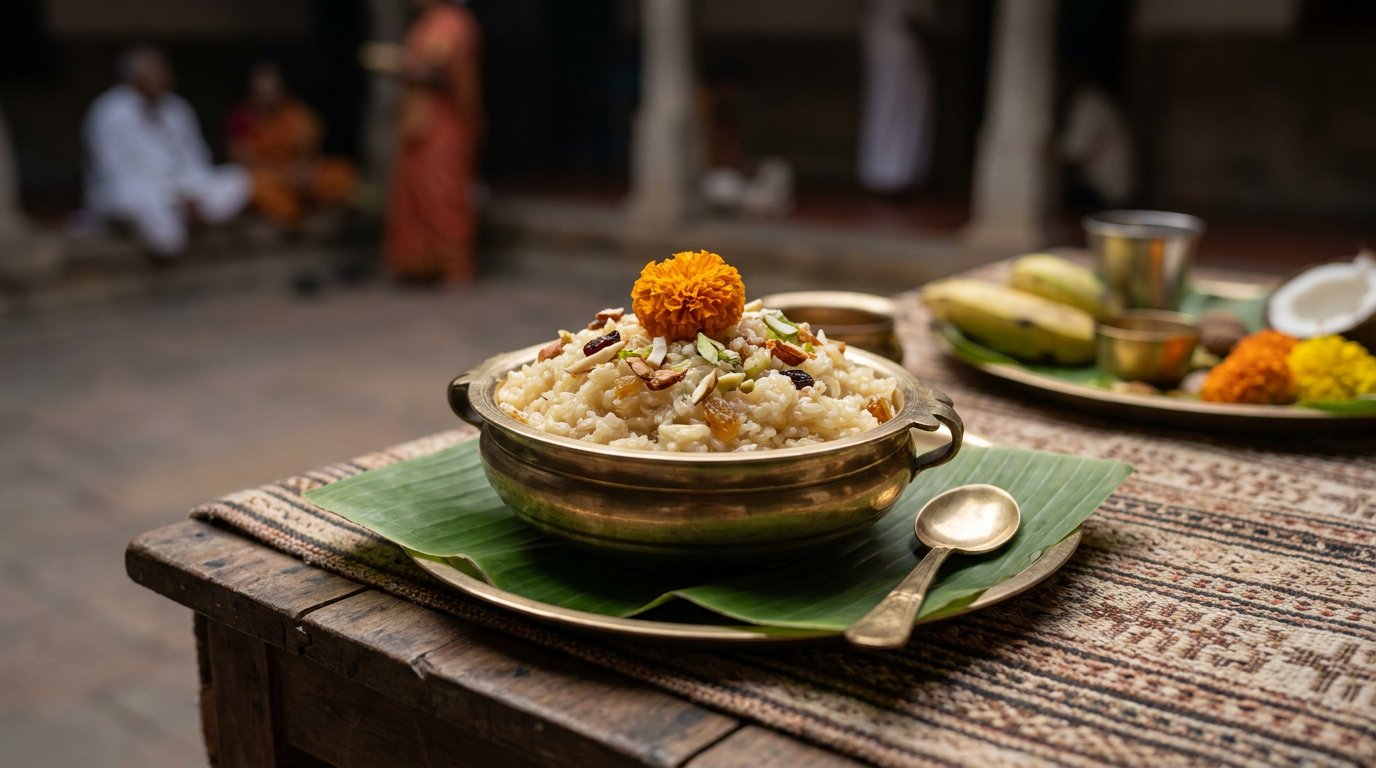
Preparing prasādam is not complicated, but it is meaningful. The process begins before the food reaches the altar. It begins in the heart.
In Bhakti Yoga, cooking can become meditation. Instead of cooking only with distraction, stress, or habit, we cook with remembrance.
Choose Pure Ingredients
Traditionally, prasādam is vegetarian and prepared without meat, fish, or eggs. Many Bhakti practitioners also avoid onions and garlic when preparing offerings, especially in temple worship, because these foods are considered stimulating to the mind according to yogic tradition.
The main principle is to choose ingredients that can be lovingly offered to Krishna. Fruits, vegetables, grains, beans, milk products, nuts, seeds, herbs, spices, and water can all become part of a beautiful offering.
If someone is vegan, they can also prepare many wonderful offerings using plant-based ingredients. The heart of prasādam is devotion.
For those new to Bhakti Yoga, it can be helpful to begin simply: fruit, rice, vegetables, soup, bread, or a small sweet. God accepts love more than complexity.
Cook With Cleanliness and Care
Cleanliness is valued in Bhakti practice because it supports clarity and respect. Washing hands, cleaning the cooking space, using fresh ingredients, and avoiding tasting the food before offering are traditional practices.
Why avoid tasting before offering?
Because the meal is prepared first for God. Just as we would not take a bite from a plate before serving an honored guest, devotees try to offer the food first and then receive it afterward as prasādam.
This practice trains the heart in humility. It gently reminds us, “I am not the center. Let me serve first.”
Add Prayer to the Process
While cooking, one can chant, pray, or simply keep a devotional mood. Many devotees chant the Hare Krishna maha-mantra:
Hare Krishna, Hare Krishna, Krishna Krishna, Hare Hare
Hare Rama, Hare Rama, Rama Rama, Hare Hare
The word mantra means a sacred sound that helps free the mind. The maha-mantra means the great mantra. It is a prayer calling out to the Divine Names of God, asking to be engaged in loving service.
But even if someone does not know any mantra, they can pray from the heart:
“Dear God, please accept this offering.”
“May this food nourish others.”
“May my life become an offering of love.”
“Please help me serve with humility.”
This is Bhakti: the offering of the heart.
How to Offer Food to God
Offering food can be done in a temple with traditional prayers, or at home in a very simple way. The outer form may vary, but the inner principle is the same: love, gratitude, and surrender.
Create a Small Sacred Space
If possible, set aside a clean place for offering. This may be a home altar with a picture of Krishna, Radha-Krishna, Lord Chaitanya, or another form of the Lord worshiped in the Bhakti tradition.
For someone from another background, this may simply be a quiet place where they sincerely turn their heart toward God.
Place the prepared food on a clean plate reserved for offerings if you can. A small cup of water may also be offered.
The food does not need to be fancy. Even one piece of fruit can be offered with deep devotion.
Offer With Words From the Heart
You can say a simple prayer:
“Dear Lord Krishna, please accept this food. I have prepared it for You with love. Please bless it and bless all who receive it.”
If you know traditional prayers, you may chant them. If not, sincerity is enough to begin.
Bhakti Yoga is not about pretending to be more advanced than we are. It is about taking honest steps toward God.
After offering, wait for a few moments. Some people chant during this time. Others sit quietly. Then the food is received back as prasādam and can be served.
Share It With Others
One of the sweetest parts of prasādam is sharing.
In Bhakti culture, distributing prasādam is considered a powerful act of compassion. It nourishes people physically and spiritually. It creates community. It welcomes newcomers. It reminds us that God’s mercy is not meant to be kept for ourselves.
At temples and Bhakti gatherings, prasādam is often served after kirtan, classes, festivals, or worship. People sit together, talk, laugh, rest, and receive. There is something deeply healing about sacred food shared in a spirit of love.
In a world where many people feel isolated, prasādam says, “Come sit with us. There is a place for you here.”
Prasādam and Spiritual Transformation
Prasādam is not magic in a cheap or mechanical sense. It is sacred because it is connected with God’s grace. When received with openness, it can support real spiritual transformation.
Change in Bhakti Yoga is often gentle and gradual. The heart softens through repeated contact with devotion: chanting, hearing scripture, prayer, service, and prasādam.
From Consumption to Gratitude
Modern life often trains us to consume without awareness. We eat quickly, scroll while eating, or treat food as fuel, entertainment, or comfort alone.
Prasādam invites us to slow down.
Before eating, we can pause and remember: “This is a gift.”
Gratitude changes the way we receive food. It reduces entitlement. It awakens humility. It helps us see that we are dependent on so many forms of mercy: the earth, rain, sunlight, farmers, cooks, family, community, and ultimately God.
The Śrīmad-Bhāgavatam, another central Bhakti scripture, repeatedly teaches that everything belongs to the Supreme Lord and is meant to be used in His service. When we remember this, life becomes sacred again.
From Self-Centeredness to Service
Preparing and sharing prasādam helps us move from self-centered living toward service-centered living.
Service is called seva in Sanskrit. Seva means loving service offered without selfish motive. In Bhakti Yoga, seva is not just a duty. It is an expression of love.
Cooking can be seva.
Serving can be seva.
Cleaning after a meal can be seva.
Donating ingredients can be seva.
Inviting someone to receive prasādam can be seva.
Even small acts become meaningful when offered to God.
This is very hopeful. Not everyone can spend hours in meditation each day. Not everyone can study scripture deeply right away. But almost everyone can offer something: a meal, a prayer, a helping hand, a kind word.
From Separation to Relationship
The deepest transformation of prasādam is that it helps us remember our relationship with God.
Bhakti scriptures teach that the soul is eternal and naturally connected to the Supreme Person. We may forget this relationship, just as a person may forget the sun on a cloudy day. But the relationship remains.
Every offering is a way of remembering.
Every bite of prasādam can become a quiet prayer: “Thank You.”
Every shared plate can become a bridge back to love.
Prasādam in Scripture and Tradition
The sacred practice of offering food is deeply rooted in Bhakti scriptures and has been lived for thousands of years by saints, families, monks, and communities.
Scripture gives the philosophy. Tradition gives the lived experience. Together, they show us that prasādam is both deeply spiritual and wonderfully practical.
The Bhagavad-gītā: Offer With Devotion
As mentioned earlier, Bhagavad-gītā 9.26 teaches that Krishna accepts simple offerings made with devotion.
This verse is central to understanding prasādam. It reveals God’s loving nature. Krishna is not distant or unreachable. He is willing to accept even a humble offering when it is made with love.
This gives dignity to every sincere person. You do not have to be wealthy. You do not have to be famous. You do not have to be perfect. You can offer a leaf, a flower, a fruit, or water.
In Bhakti Yoga, sincerity is the doorway.
The Bhagavad-gītā: Food and Karma
Bhagavad-gītā 3.13 explains that food offered in sacrifice frees one from impurity, while food cooked only for selfish enjoyment binds one to reaction.
In simple terms, when we use food for service to God, it helps free us. When we use food only for our own pleasure, it can deepen attachment.
This does not mean we should eat with fear. Rather, we can eat with awareness and love. Prasādam is not about guilt. It is about grace.
The Śrīmad-Bhāgavatam: Everything Can Be Spiritualized
The Śrīmad-Bhāgavatam teaches that when we engage our senses in the service of the Lord, our life becomes purified. Food, speech, work, music, art, family life, and friendship can all be connected to God.
This is one of the gifts of Bhakti Yoga. It does not reject the world as meaningless. It teaches us how to see the world as God’s energy and use it lovingly.
A kitchen becomes a temple.
A meal becomes mercy.
A home becomes a place of worship.
A community becomes a family of the soul.
Common Questions About Prasādam
Many people are curious when they first hear about prasādam. That curiosity is welcome. Bhakti Yoga encourages thoughtful questions asked with sincerity.
Is Prasādam Only for Hindus?
No. Prasādam is for everyone.
While the practice comes from the Bhakti tradition of India, God’s grace is not limited by nationality, ethnicity, religion, or background. Anyone can receive prasādam respectfully. Anyone can benefit from sacred food.
At Bhakti gatherings, it is common to see people from many walks of life sitting together and sharing prasādam. Some are lifelong practitioners. Some are new. Some are unsure what they believe. All are welcome.
Prasādam is an expression of spiritual hospitality.
Do I Have to Believe Everything to Receive Prasādam?
No. You can receive prasādam with respect and openness, even if you are still exploring.
Faith often grows through experience. Many people first encounter Bhakti Yoga not through philosophy, but through kirtan and prasādam. They hear sacred chanting, receive a plate of blessed food, and feel something peaceful in the heart.
That is a beautiful beginning.
Bhakti does not demand that we force belief. It invites us to take sincere steps and notice how the heart responds.
Can I Offer Food at Home?
Yes. Offering food at home is a wonderful practice.
Begin simply. Prepare vegetarian food with care. Place it before a picture of Krishna or in a clean sacred space. Say a heartfelt prayer. Wait a few moments. Then receive it as prasādam.
You may offer your breakfast, lunch, dinner, fruit, water, or even a simple snack. Over time, this practice can transform the atmosphere of your home.
What If I Make Mistakes?
Do not be discouraged. Everyone begins somewhere.
Maybe you forget a step. Maybe your mind wanders. Maybe the meal does not turn out perfectly. God sees the heart.
Bhakti Yoga is a path of relationship. In a loving relationship, sincerity matters more than flawless performance.
Try again. Learn gradually. Ask questions. Keep offering.
Why Do Devotees Serve Prasādam So Joyfully?
Because sharing prasādam is sharing mercy.
Devotees understand that spiritual life is not meant to be kept private in a closed heart. Love naturally wants to give. When someone serves prasādam, they are not only serving rice, vegetables, bread, or sweets. They are serving grace.
This is why prasādam distribution has been such an important part of Bhakti movements around the world. It feeds the hungry, welcomes the lonely, and blesses the curious.
How Prasādam Builds Community
Prasādam has a remarkable way of bringing people together. Around sacred food, barriers soften. Strangers become friends. Conversations become more honest. Hearts become more open.
In many spiritual communities, the prasādam meal after chanting or worship is where people truly connect. They ask questions. They share stories. They laugh. They find belonging.
Everyone Can Sit Together
One of the beautiful teachings of Bhakti is that every living being is a soul, part of God. We may have different bodies, cultures, languages, or life experiences, but spiritually we are family.
Prasādam helps us live that truth.
When people sit together to honor sacred food, social divisions can become less important. The plate becomes a place of equality. Everyone is receiving mercy.
Hospitality as Devotion
Offering prasādam to guests is a cherished form of devotion. In Bhakti culture, guests are welcomed warmly because they are seen as representatives of God’s kindness.
Hospitality does not have to be elaborate. A simple cup of water, a piece of fruit, or a small meal offered with love can carry deep spiritual power.
The mood is: “Please receive this blessing. Please feel at home. Please know that you are valued.”
Healing Loneliness Through Sacred Sharing
Many people today are spiritually hungry, emotionally tired, and socially disconnected. Prasādam can bring comfort in a very human way.
Sacred food says what words sometimes cannot:
You are not alone.
You are cared for.
Your life has meaning.
There is grace available to you.
This is one reason prasādam is so important at The Bhakti House and in Bhakti communities everywhere. It is devotion made visible, edible, and shareable.
Bringing Prasādam Into Your Daily Life
You do not need to change everything overnight. Bhakti Yoga grows beautifully through small, sincere practices.
If you feel inspired, begin with one meal a week. Or one piece of fruit. Or one glass of water offered with prayer.
The Lord is very kind. A small offering, made with sincerity, can open a new doorway in the heart.
Start With One Simple Offering
Choose something simple, such as fruit, rice, vegetables, or tea made without caffeine if you follow that standard. Prepare it cleanly. Place it before God. Say a prayer.
You might say:
“Dear Krishna, dear Lord, please accept this offering. Thank You for all You give. May my heart become more loving, and may this food bless everyone who receives it.”
Then pause.
Receive the food back as prasādam.
Eat with gratitude.
Make Mealtime Mindful
Before eating prasādam, take a moment to breathe and remember God. You can chant the Hare Krishna mantra softly, say a prayer, or simply offer thanks.
Try not to rush. Even if life is busy, one mindful moment can change the meal.
Honor prasādam with respect. Avoid wasting it when possible. Share it if you can.
Invite Others Gently
If you live with family or friends, you can introduce prasādam gently. You do not have to pressure anyone. Simply cook with love, offer the food, and share it with kindness.
Let people experience the warmth.
Bhakti grows best through invitation, not force.
You might say, “I offered this food with a prayer. I’d love to share it with you.”
That simple act can carry great spiritual beauty.
The Deeper Gift of Prasādam
At its heart, prasādam teaches us how to live.
It teaches us that everything we have is a gift.
It teaches us to offer before we take.
It teaches us to receive with gratitude.
It teaches us to share with others.
It teaches us that God is personal, loving, and near.
Prasādam is sacred food, but it is also sacred vision. It helps us see life differently.
Instead of asking only, “What can I enjoy?” we begin to ask, “What can I offer?”
Instead of seeing food as mine, we see it as God’s mercy.
Instead of eating in forgetfulness, we eat in remembrance.
This is a gentle revolution of the heart.
Love Is the Main Ingredient
The most important ingredient in prasādam is love.
Not culinary skill. Not wealth. Not status. Not religious pride.
Love.
A simple meal offered with devotion may be more spiritually powerful than a grand feast prepared for ego. Bhakti scriptures again and again remind us that God looks at the heart.
This is why prasādam is so accessible. Everyone has the capacity to offer love, even if it feels small at first.
And when we offer that love, God kindly helps it grow.
Grace That Can Be Tasted
Many spiritual truths feel abstract until we experience them. Prasādam makes grace tangible.
You can see it.
You can smell it.
You can serve it.
You can taste it.
You can share it.
It is theology on a plate, devotion in a bowl, mercy in the hand.
This is the genius of Bhakti Yoga. It brings the highest spiritual truths into everyday life so that every person can participate.
A Humble Invitation
Prasādam is one of the sweetest gifts of Bhakti Yoga. It reminds us that God’s mercy is not far away. It can enter our homes, our kitchens, our meals, and our hearts.
Whether you are deeply rooted in faith, newly curious, returning after a long journey, or simply hungry for peace, you are welcome. You do not need to have everything figured out. You do not need to be perfect. You can begin with one sincere step.
Offer a piece of fruit. Say a prayer. Chant the Holy Names. Share a meal. Serve someone with kindness. Receive prasādam with gratitude.
God sees the heart, and every sincere offering of love is meaningful.
May your life be nourished by grace. May your home be filled with devotion. May your heart remember that you are loved, guided, and always welcome to take one sincere step toward God.
FAQs
What is prasādam?
Prasādam is a Sanskrit word that refers to food that is first offered to a deity in Hinduism and then consumed as a blessed offering. It is considered to be sanctified and spiritually purifying.
Why is prasādam considered sacred?
Prasādam is considered sacred because it is believed to carry the blessings and grace of the deity to whom it is offered. Consuming prasādam is thought to bring spiritual benefits and purification to the individual.
What are the common types of prasādam?
Common types of prasādam include fruits, sweets, rice, and other vegetarian dishes. These offerings are often made during religious ceremonies, rituals, and festivals in Hindu temples and homes.
How is prasādam prepared and offered?
Prasādam is prepared with great care and cleanliness, and it is offered to the deity with devotion and reverence. After the offering, it is distributed to devotees as a symbol of the deity’s blessings.
What is the significance of consuming prasādam?
Consuming prasādam is believed to be a way of receiving the blessings and grace of the deity. It is also seen as a way to express gratitude and devotion to the divine.

