
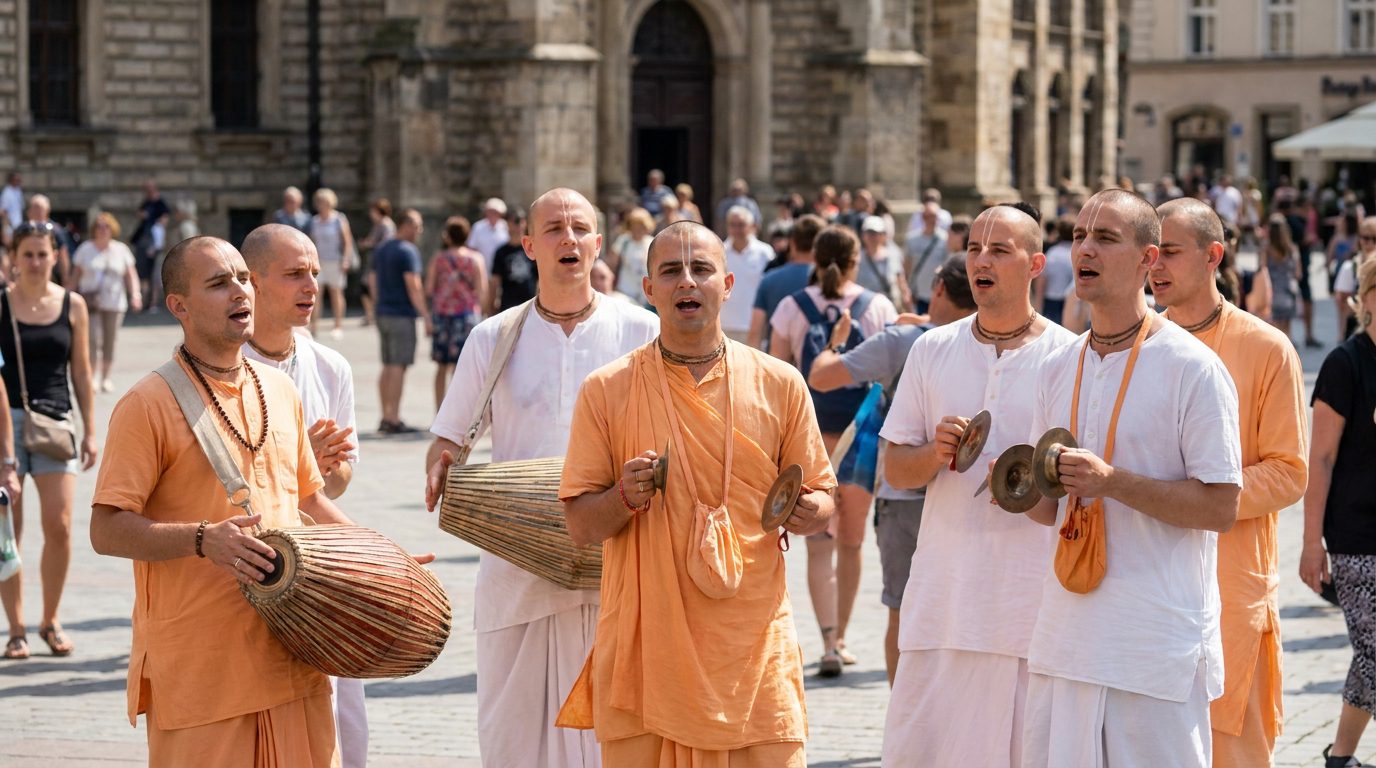
If you have ever walked through a city street, visited a yoga festival, watched a kirtan online, or passed a group of joyful people singing with drums and cymbals, you may have heard the words:
**Hare Krishna, Hare Krishna, Krishna Krishna, Hare Hare
Hare Rama, Hare Rama, Rama Rama, Hare Hare**
These sacred words are often called the Hare Krishna mantra or the Maha-mantra. In Sanskrit, maha means “great,” and mantra means a sacred sound that helps free the mind. So the Maha-mantra means “the great mantra for spiritual awakening.”
But what does “Hare Krishna” actually mean?
At first, it may sound foreign or mysterious. Yet its meaning is beautifully simple. It is a heartfelt prayer. It is a call to God. It is an invitation to love. It is a way of turning the heart toward the Divine, not through fear or pressure, but through sound, remembrance, and devotion.
In the Bhakti Yoga tradition, chanting “Hare Krishna” is not about belonging to a certain culture, race, nationality, or religious label. It is about the soul remembering its eternal relationship with God. Anyone can chant. Anyone can pray. Anyone can take one sincere step toward divine love.
What Is the Hare Krishna Mantra?
The full mantra is:
**Hare Krishna, Hare Krishna, Krishna Krishna, Hare Hare
Hare Rama, Hare Rama, Rama Rama, Hare Hare**
This mantra is made of three sacred names: Hare, Krishna, and Rama.
In Bhakti Yoga, the names of God are not considered ordinary sounds. They are understood to carry the presence, mercy, and love of the Divine. Just as calling someone’s name can bring their attention, chanting God’s names helps bring our attention back to God.
The Meaning of “Krishna”
The word Krishna is a Sanskrit name of God. It is often translated as “the all-attractive one.”
This is a very beautiful idea. Krishna means that the Divine is not only powerful or wise, but deeply lovable. Krishna attracts the heart through beauty, compassion, playfulness, kindness, wisdom, and love.
In the Bhagavad-gita, one of the central scriptures of Bhakti Yoga, Krishna speaks as the Supreme Person and lovingly guides Arjuna, a warrior facing confusion, fear, and moral difficulty. Krishna does not demand blind belief. He offers wisdom, friendship, and a path back to inner clarity.
So when we chant “Krishna,” we are calling out to the all-attractive Lord, the source of love and the best friend of every living being.
The Meaning of “Rama”
The word Rama means “the source of spiritual joy” or “the one who gives deep happiness.”
Many people search for happiness through success, relationships, entertainment, comfort, or recognition. These things may bring some satisfaction, but they often come and go. The name Rama points us toward a joy that is deeper than changing circumstances.
In Bhakti, Rama can refer to Lord Rama, the noble and compassionate form of God described in the Ramayana. It can also refer to Krishna as the reservoir of pleasure, or to Balarama, Krishna’s divine brother. In all cases, Rama reminds us that true joy comes from connection with God.
When we chant “Rama,” we are praying, “Please let me remember the spiritual happiness that comes from loving You.”
The Meaning of “Hare”
The word Hare is a call to God’s divine energy, especially the compassionate feminine energy of the Lord.
In the Bhakti tradition, God is understood together with His loving energy. Just as the sun cannot be separated from sunlight, the Divine is always present with divine love, grace, and compassion.
“Hare” is often understood as a call to Srimati Radharani, the greatest devotee of Krishna and the embodiment of pure love for God. She represents devotion itself—selfless, tender, and completely absorbed in pleasing Krishna.
So when we chant “Hare,” we are calling out to divine grace. We are asking to be engaged in loving service. We are praying, “O energy of the Lord, please help me love God.”
The Mantra as a Prayer of Love
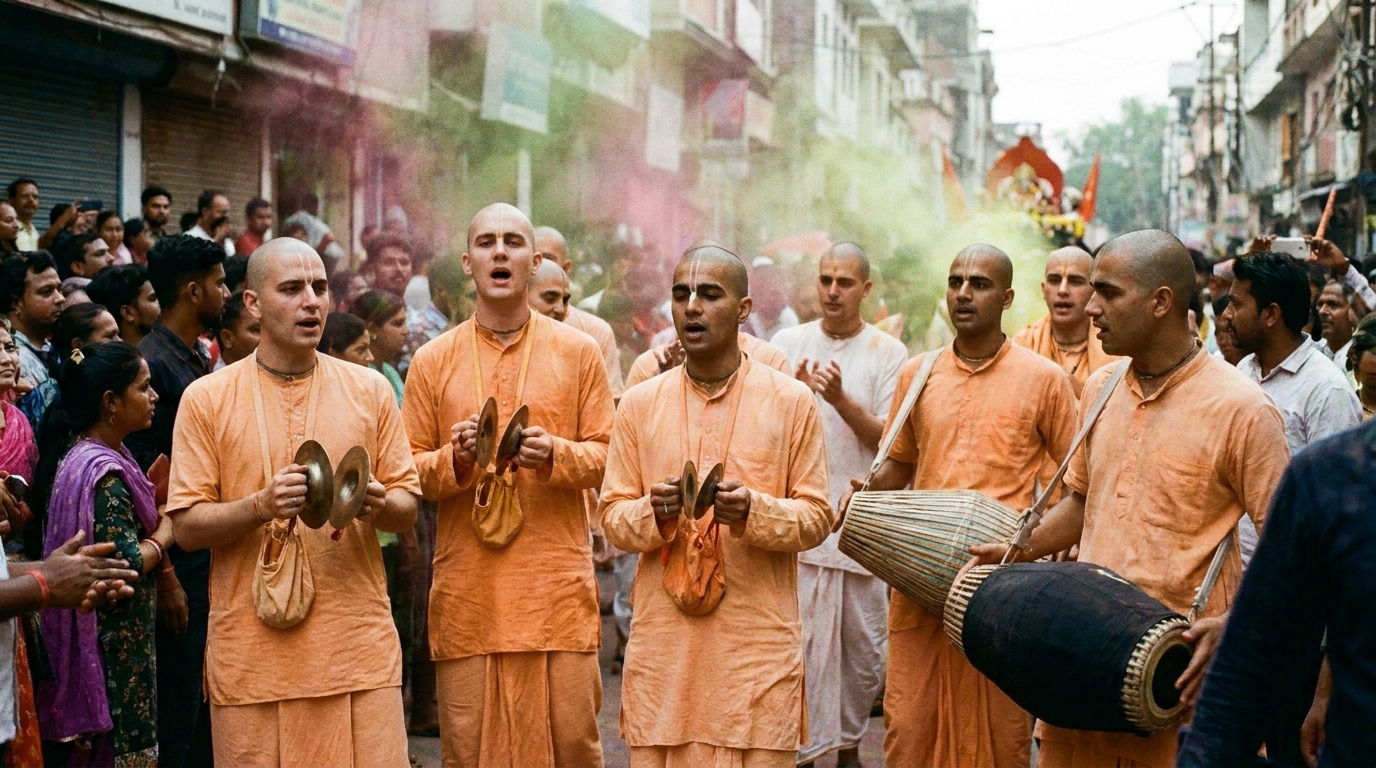
The Hare Krishna mantra is not a magic formula, a performance, or a religious slogan. At its heart, it is a prayer.
A simple way to understand the meaning is:
“O Lord, O divine energy of the Lord, please engage me in Your loving service.”
This is the mood of Bhakti Yoga. Bhakti means loving devotion. It is the path of offering the heart to God through chanting, prayer, service, remembrance, friendship, and surrender.
Not a Demand, But a Humble Call
Many of our prayers are requests: “Please give me this,” “Please fix that,” “Please remove this problem.” There is nothing wrong with bringing our needs to God. God is kind, and the heart should be honest.
But the Hare Krishna mantra gently takes us deeper. It is not mainly asking for money, success, health, or even peace. It is asking for love. It is asking to be reconnected with our true spiritual nature.
It is as if the soul is saying:
“I have wandered for so long. I have tried to enjoy separately. I have forgotten You. Please bring me back into loving relationship with You.”
This is why the mantra can be chanted in any condition. Happy or sad. Faithful or doubtful. Peaceful or distracted. Alone or with others. The mantra meets us where we are.
A Prayer Beyond Language
Even if someone does not understand Sanskrit, the sound of the mantra can still touch the heart.
In Bhakti scriptures, the holy names of God are described as spiritually complete. The name and the named are not separate in the same way material words are separate from objects.
For example, if we say “water,” the word does not quench our thirst. But in spiritual sound, God’s name carries God’s presence. This is a deep teaching, and it may take time to realize. But even in the beginning, many people feel that chanting brings calm, hope, softness, and clarity.
Check out our latest posts at https://thebhaktihouse.org/blog.
Why Do People Chant Hare Krishna?
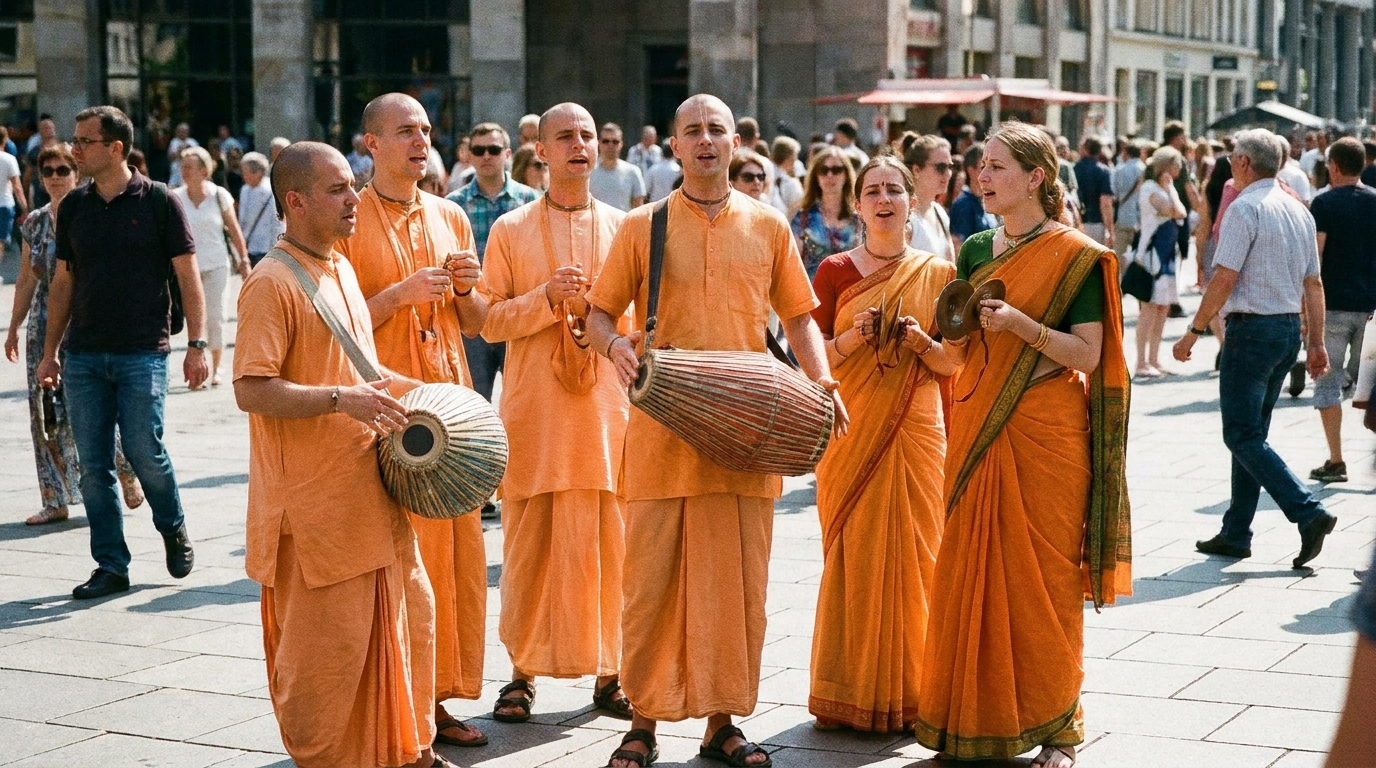
People chant Hare Krishna for many reasons. Some are looking for peace. Some are healing from pain. Some are curious about mantra meditation. Some are drawn by music and community. Some are seeking God.
All of these can be beautiful beginnings.
Chanting Cleanses the Heart
One famous verse from the Sri Chaitanya-charitamrita, a sacred text about Sri Chaitanya Mahaprabhu, says:
ceto-darpana-marjanam
This means that chanting cleanses the mirror of the heart.
The heart is like a mirror. In its pure state, it reflects our true identity as a soul, a beloved part of God. But over time, the mirror becomes covered by dust—stress, selfishness, fear, anger, envy, and forgetfulness.
Chanting helps clean that mirror.
This does not mean we become perfect overnight. Bhakti Yoga is a journey. But by chanting regularly, we begin to notice what is inside us. We become more aware. We become softer. We may feel inspired to forgive, to serve, to live more simply, and to remember God throughout the day.
Chanting Helps the Mind Rest
The mind is often noisy. It runs into the past and future. It compares, worries, judges, and plans. Mantra meditation gives the mind a sacred place to rest.
When we chant Hare Krishna, we gently bring the mind back to the sound:
Hare Krishna. Hare Krishna. Krishna Krishna. Hare Hare.
When the mind wanders, we return. Not with frustration, but with kindness.
This is practical spiritual life. Every return to the mantra is a small act of devotion.
Chanting Awakens Our Relationship With God
Bhakti Yoga teaches that we are not merely bodies, roles, or personalities. We are spiritual beings, eternal souls. Our deepest need is not just to be seen by the world, but to be reconnected with God in love.
Chanting is one of the most direct ways to awaken that relationship.
In the Bhagavad-gita 9.14, Krishna describes devoted souls as those who are always chanting His glories, striving with determination, bowing before Him, and worshiping Him with devotion.
This does not mean devotion must look dramatic or external. It can begin very quietly. A person may chant softly in their room, whisper a prayer while driving, or sing in a community kirtan with tears in their eyes. God sees the sincerity.
The Roots of the Hare Krishna Mantra
The Hare Krishna mantra is ancient. It comes from the Bhakti tradition of India and is especially emphasized in the teachings of Sri Chaitanya Mahaprabhu, a saint and divine teacher who appeared in Bengal over 500 years ago.
Sri Chaitanya taught that in this age, the simplest and most powerful spiritual practice is chanting the holy names of God.
The Maha-mantra in Scripture
The Hare Krishna mantra is found in the Kali-Santarana Upanishad, a sacred Vedic text. There it is recommended as the means for crossing beyond the difficulties of Kali-yuga.
Kali-yuga is described in Vedic wisdom as an age of quarrel, confusion, distraction, and spiritual forgetfulness. Many people today can relate to this description. Life can feel fast, divided, anxious, and overwhelming.
The mantra is presented as a merciful gift for such times. It does not require wealth, scholarship, social status, or perfect conditions. It requires sincerity.
Sri Chaitanya’s Gift of Kirtan
Sri Chaitanya Mahaprabhu spread the practice of kirtan, which means congregational chanting of God’s names, often with music.
Kirtan is one of the most joyful expressions of Bhakti Yoga. People gather, sing together, listen together, and let the heart open. There may be drums, cymbals, harmonium, clapping, dancing, or simply voices raised in prayer.
But the essence is not musical skill. The essence is devotion.
A person may sing beautifully or barely carry a tune. It does not matter. The offering of the heart is what matters.
A Global Practice of Devotion
Today, the Hare Krishna mantra is chanted all over the world. It has crossed languages, cultures, and generations. People chant it in temples, homes, yoga studios, retreat centers, public parks, hospitals, and quiet bedrooms.
This global reach reminds us of an important Bhakti teaching: every soul belongs to God.
No one is spiritually disqualified because of background, age, past mistakes, nationality, or level of knowledge. Bhakti begins with willingness.
How to Chant Hare Krishna in Daily Life
One of the most beautiful things about the Hare Krishna mantra is that it is practical. You do not need to wait for a perfect life before beginning. You can start right now, exactly as you are.
Chant Softly or Aloud
You can chant the mantra aloud, softly, or in your mind. If you are new, chanting aloud can help you focus because your ears hear the sound.
Try sitting comfortably, taking a breath, and chanting slowly:
Hare Krishna, Hare Krishna, Krishna Krishna, Hare Hare
Hare Rama, Hare Rama, Rama Rama, Hare Hare
Let the sound be simple. Let it be honest.
You do not need to force emotion. Just listen.
Practice Japa Meditation
Japa means personal mantra meditation, often done on beads. A traditional strand of japa beads has 108 beads. Practitioners chant the full mantra once on each bead.
But if you are beginning, you can start with a smaller commitment. You might chant for five minutes each morning. Or chant one round on beads. Or repeat the mantra while walking.
The key is regularity. A little sincere practice every day can gradually change the heart.
Join Kirtan With Others
Kirtan can be especially powerful because we are supported by community. Sometimes our own mind feels weak or distracted, but when we chant with others, their devotion helps carry us.
If you have a local Bhakti community, temple, or kirtan gathering, you may wish to attend. You do not need to know everything. You can simply listen, sing when comfortable, and receive the atmosphere.
At The Bhakti House, and in many Bhakti communities, the mood is welcome. Come as you are. Sit in the back if you like. Ask questions. Listen. Sing. Let the heart move at its own pace.
Chant During Ordinary Moments
Chanting does not have to be separate from daily life. You can chant while cooking, walking, cleaning, driving, or preparing for sleep.
Bhakti Yoga is not just a practice we do for a few minutes and then forget. It is a way of gradually spiritualizing our whole life.
The mantra helps us remember: “I am not alone. God is near. My life can be an offering.”
Bhakti Yoga: More Than Chanting Alone
Chanting Hare Krishna is central to Bhakti Yoga, but Bhakti is a whole way of living. It is the path of love in action.
Prayer From the Heart
Prayer in Bhakti does not need to be complicated. It can be very simple:
“Krishna, please guide me.”
“God, please help me remember You.”
“Please make me an instrument of Your kindness.”
“Please help me serve today.”
Honest prayer softens the heart. It helps us live in relationship with God, not just in theory.
Service as Spiritual Practice
Seva means service. In Bhakti Yoga, service is love expressed through action.
Cooking a meal for others, helping clean a sacred space, encouraging a friend, caring for family, offering your talents, supporting a community, or feeding someone in need can all become seva when done with devotion.
The Bhagavad-gita teaches that we can offer our work to God. This means spiritual life is not limited to a temple or meditation cushion. Our daily responsibilities can become sacred when offered with love.
Hearing Sacred Wisdom
Another important practice is sravanam, or hearing spiritual truth. Reading or listening to scriptures such as the Bhagavad-gita, Srimad Bhagavatam, and the songs of great Bhakti saints helps nourish our understanding.
Scripture is not meant to remain abstract. It is meant to guide how we live, speak, choose, forgive, and love.
For example, in Bhagavad-gita 18.66, Krishna invites us to surrender to Him and promises protection. Practically, this does not mean becoming passive or irresponsible. It means learning to trust God while doing our best, offering our life into divine care.
Spiritual Growth With Humility
Bhakti Yoga is not about proving we are advanced. It is about becoming more humble, more loving, more truthful, and more surrendered.
Sometimes people begin chanting and expect immediate bliss. Sometimes bliss comes. Sometimes distraction comes first. Sometimes old emotions rise. This is part of purification.
Spiritual growth is like tending a garden. We water the seed through chanting, prayer, service, and good association. We remove weeds patiently. In time, devotion grows.
Common Questions About “Hare Krishna”
Many sincere people have questions about the mantra. Questions are welcome. Bhakti is not afraid of inquiry.
Is Hare Krishna a Religion?
“Hare Krishna” refers to the chanting of God’s names and is associated with the Gaudiya Vaishnava tradition, a devotional branch of Hindu spiritual culture. It is also connected with the global Hare Krishna movement, formally known as ISKCON, founded by Srila A.C. Bhaktivedanta Swami Prabhupada.
At the same time, chanting Hare Krishna is a spiritual practice open to everyone. You do not have to “become” something externally to begin chanting. You can simply approach the mantra with respect and sincerity.
Bhakti Yoga honors the soul beyond labels. The practice invites us to deepen our love for God and compassion for all beings.
Do I Have to Understand Everything Before I Chant?
No. Understanding can grow through practice.
If a person is thirsty, they do not need to know the chemistry of water before drinking. In the same way, you can begin chanting and allow realization to come gradually.
Of course, learning is valuable. Studying the meaning of the mantra, hearing from sincere practitioners, and reading authentic scriptures can deepen your chanting. But the heart can begin today.
What If My Mind Wanders?
It will. Everyone’s mind wanders.
The practice is not to have a perfectly silent mind. The practice is to return to the holy name again and again. Each return is meaningful.
When you notice distraction, gently bring your attention back:
Hare Krishna, Hare Krishna, Krishna Krishna, Hare Hare.
Do not criticize yourself. The holy name is compassionate.
Can I Chant If I Am Not Perfect?
Yes. Especially then.
Bhakti does not begin when we become perfect. Bhakti is the process by which the heart becomes purified. We chant not because we are pure, but because we are seeking purification. We pray not because we have no struggles, but because we know we need grace.
The holy name is for the real person—the tired person, the hopeful person, the broken person, the grateful person, the confused person, the longing person.
God is not waiting for a polished version of you. He is inviting your sincere heart.
The Inner Mood of Chanting
The outer sound is important, but the inner mood gives life to the practice.
Listening With the Heart
Chanting is not only speaking; it is also listening. In fact, attentive hearing is one of the most important parts of mantra meditation.
When chanting, try to hear each word:
Hare
Krishna
Hare
Krishna
Let the sound enter. Let the name be received, not just produced.
Asking to Serve
The deeper meaning of the mantra is a prayer to be engaged in loving service. This is very different from trying to use God for our plans.
Of course, we may bring our needs to God. But gradually Bhakti transforms our question from “How can God serve my desires?” to “How can I serve God with love?”
This shift brings freedom. We no longer have to be the center of everything. We can rest in being loved by God and learn to love in return.
Chanting With Gratitude
Gratitude makes chanting sweet. Even if life is difficult, we can find small ways to thank God:
Thank You for this breath.
Thank You for this chance to pray.
Thank You for guiding me, even when I do not see the way.
Thank You for the holy name.
Gratitude opens the heart to grace.
What Happens When We Chant Over Time?
The fruit of chanting may be subtle at first. But with steady practice, many changes can unfold.
More Peace
The holy name can bring a peace that is not dependent on everything going perfectly. This peace comes from connection.
Life may still bring challenges, but chanting helps us remember that we are held by something greater than our circumstances.
More Compassion
As the heart softens, we begin to see others differently. Bhakti teaches that every living being is a soul, beloved by God. This vision naturally leads to compassion.
Chanting should make us kinder, not harder. More humble, not proud. More willing to serve, not more judgmental.
More Clarity
The Bhagavad-gita explains that spiritual wisdom helps us see what is truly beneficial. Chanting clears the inner space so we can make better choices.
We may become more aware of habits that keep us distracted or disconnected. We may feel inspired to simplify our life, choose uplifting association, and spend more time in spiritual practice.
More Love for God
The highest fruit of chanting is prema, pure love of God.
This is the treasure of Bhakti Yoga. It is not ordinary emotion. It is the soul’s awakened love—selfless, joyful, and eternal.
We may not feel pure love immediately, but every sincere chant is a step in that direction.
A Practical Way to Begin Today
If you feel curious, you can try a simple practice.
A Five-Minute Chanting Practice
Find a quiet place. Sit comfortably. Take a few natural breaths.
Then chant the mantra slowly for five minutes:
Hare Krishna, Hare Krishna, Krishna Krishna, Hare Hare
Hare Rama, Hare Rama, Rama Rama, Hare Hare
When your mind wanders, gently return to the sound.
At the end, you may offer a simple prayer:
“Dear God, please help me remember You. Please guide my heart. Please let my life become an offering of love.”
That is enough for a beginning.
Bring the Mantra Into Your Day
You might also choose one moment in your daily routine when you chant. For example:
Before looking at your phone in the morning
While walking outside
Before eating
During a stressful moment
Before going to sleep
Small sacred habits can reshape the heart over time.
Learn in Good Association
In Bhakti Yoga, satsanga means spiritual association—being with people who help us remember God. This can include attending kirtan, joining a study group, visiting a temple, reading with friends, or speaking with sincere practitioners.
Spiritual life grows in nourishing company. We all need encouragement.
The Heart of “Hare Krishna”
So, what does “Hare Krishna” actually mean?
It means calling out to God with love.
It means asking divine grace to engage us in service.
It means remembering that Krishna is all-attractive, Rama is the source of true joy, and Hare is the compassionate energy of the Lord who helps us return to love.
It means the soul is not alone.
It means there is a path home.
In a world filled with noise, the Hare Krishna mantra offers sacred sound. In a time of anxiety, it offers remembrance. In a culture of self-centered striving, it offers loving service. In moments of loneliness, it offers relationship with the Divine.
You do not have to understand everything. You do not have to be perfect. You do not have to come from any particular background.
You are welcome to begin with one sincere chant, one simple prayer, one small act of service, one open-hearted question.
May the holy names bring peace to your mind, softness to your heart, and a growing remembrance of God’s love. Everyone is welcome to take one sincere step toward God today.
FAQs
What is the meaning of “Hare Krishna”?
The phrase “Hare Krishna” is a mantra that is used in the practice of Krishna consciousness. It is a form of bhakti yoga, or the yoga of devotion, and is used to invoke the presence and blessings of the Hindu god Krishna.
What is the significance of chanting “Hare Krishna”?
Chanting the mantra “Hare Krishna” is believed to bring about a state of spiritual consciousness and connect the practitioner with the divine. It is considered a powerful tool for focusing the mind and cultivating a sense of devotion and love for Krishna.
Is “Hare Krishna” associated with a specific religious tradition?
Yes, the chanting of “Hare Krishna” is closely associated with the International Society for Krishna Consciousness (ISKCON), also known as the Hare Krishna movement. This movement was founded in the 1960s and is based on the teachings of the Bhagavad Gita and other Hindu scriptures.
How is the “Hare Krishna” mantra practiced?
The “Hare Krishna” mantra is typically chanted repetitively, either individually or in a group setting. It is often accompanied by the use of prayer beads, known as japa beads, which are used to keep track of the number of times the mantra is chanted.
What are the benefits of chanting “Hare Krishna”?
Practitioners believe that chanting the “Hare Krishna” mantra can bring about spiritual purification, inner peace, and a deep sense of connection with the divine. It is also thought to help quiet the mind and cultivate a sense of joy and love for Krishna.

