
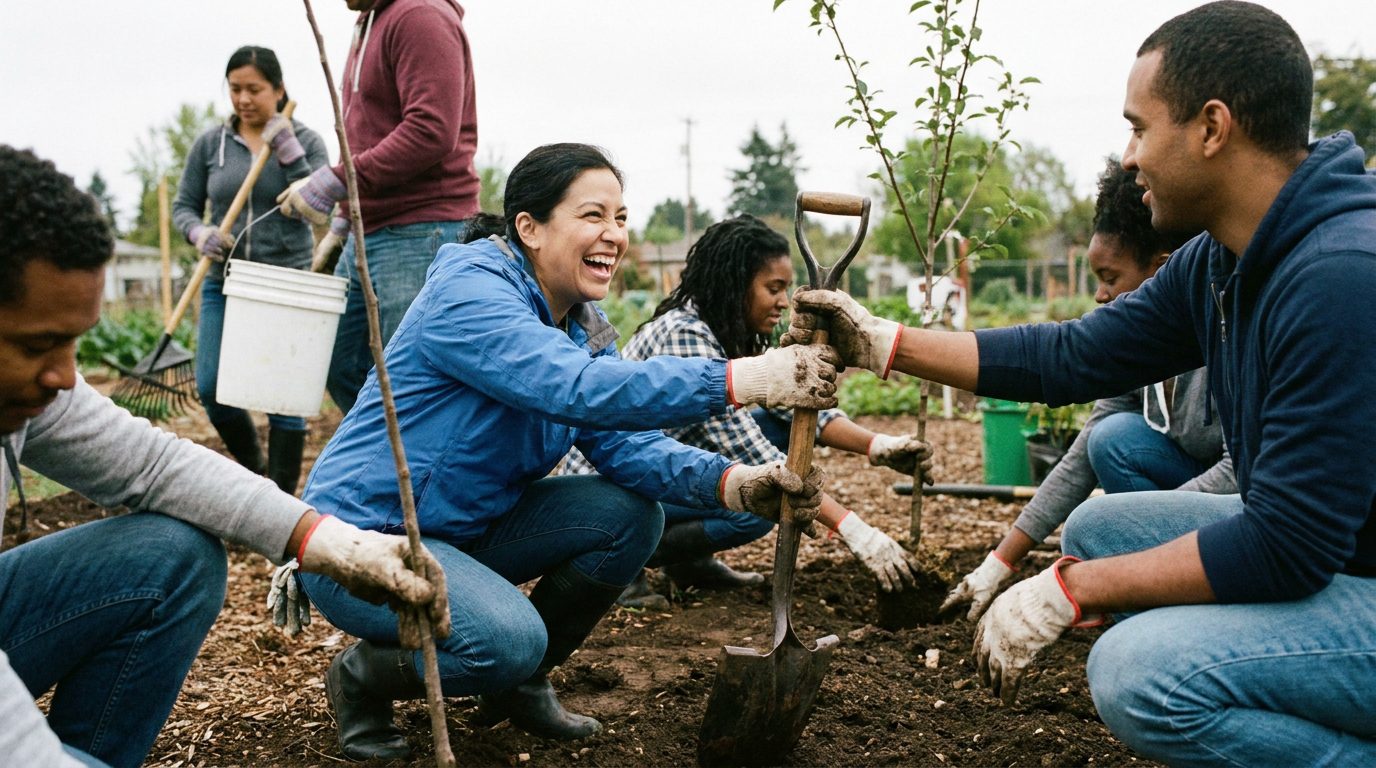
Volunteer service is the offering of our time, energy, skills, and heart for the benefit of others without expecting payment in return. In a spiritual community, volunteer service becomes even more meaningful because it is not only “helping out”—it is a sacred practice.
In Bhakti Yoga, the path of loving devotion, service is called seva. This Sanskrit word means “service offered with love.” Seva can be as simple as washing dishes, greeting guests, arranging flowers, cooking a meal, cleaning a floor, setting up chairs, sharing a kind word, or helping someone feel welcome.
The heart of volunteer service is not the size of the task. It is the sincerity behind it.
A person may lead a large project, and another person may quietly sweep the temple room after everyone leaves. In the eyes of devotion, both offerings can be deeply beautiful when done with love.
Bhakti Yoga teaches that our natural spiritual identity is to love and serve God and all living beings. When we volunteer in a spirit of humility, compassion, and devotion, ordinary work becomes a doorway to spiritual growth.
Why Volunteer Service Matters
Volunteer service matters because it helps people, builds community, purifies the heart, and connects us with a deeper purpose.
In today’s world, many people feel isolated, rushed, or disconnected. Volunteer service gently brings us back into relationship—with others, with ourselves, and with the Divine. It reminds us that life is not only about receiving. There is great joy in giving.
Service Softens the Heart
In Bhakti scriptures, the heart is often described as a place that can become covered by selfish desires, fear, pride, or distraction. Through sincere spiritual practice, the heart becomes cleansed and awakened.
The Bhagavad-gita, one of the most beloved texts of Bhakti Yoga, teaches that we can offer our work to God. Krishna says:
“Whatever you do, whatever you eat, whatever you offer or give away… do that as an offering to Me.”
— Bhagavad-gita 9.27
This verse is very practical. It means that spiritual life is not limited to a church, temple, mosque, synagogue, meditation room, or sacred space. Our daily actions can become sacred when offered with love.
When we volunteer, we practice this teaching. We may be cooking, organizing, cleaning, teaching, driving, gardening, fundraising, singing, or welcoming guests. But internally we can think, “May this be pleasing to God. May this serve others. May this help my heart become more loving.”
Service Builds Real Community
A spiritual community is not built only by beautiful words or inspiring events. It is built by people showing up for one another.
Someone comes early to prepare the space. Someone stays late to clean. Someone remembers the newcomer’s name. Someone cooks with care. Someone donates quietly. Someone listens when another person is going through difficulty.
These small acts become the foundation of trust.
At The Bhakti House, service is understood as an expression of love. No one needs to be perfect, advanced, or fully knowledgeable to serve. We simply begin where we are, with whatever sincere capacity we have.
Service Gives Purpose to Our Talents
Each person has gifts. Some are natural teachers. Some are musicians. Some are organizers. Some are artists. Some are good with children. Some are patient listeners. Some are skilled with technology. Some are strong and practical. Some are prayerful and quiet.
Bhakti Yoga does not ask us to reject our nature. It invites us to spiritualize it.
The Bhagavad-gita explains that it is better to serve according to one’s nature than to imitate someone else. This is a compassionate teaching. We do not have to become someone we are not. We can offer who we are.
Your talents, when connected to loving service, become more than abilities. They become offerings.
Volunteer Service in Bhakti Yoga

Bhakti Yoga is the yoga of devotion, love, and relationship with God. The word bhakti means loving devotion. The word yoga means connection. So Bhakti Yoga means reconnecting with God through love.
This path includes chanting sacred names, prayer, study, worship, friendship, humility, and service. Volunteer service is one of the most practical ways to live Bhakti Yoga in everyday life.
Seva: Service with Love
Seva is not forced labor, social pressure, or a way to prove spiritual superiority. True seva is voluntary, joyful, and sincere.
Of course, not every service will feel glamorous. Sometimes seva means doing what needs to be done. Sometimes it is inconvenient. Sometimes we may feel tired, unnoticed, or challenged. These moments are also part of the practice.
In Bhakti Yoga, we learn to serve not for praise, status, or recognition, but as an offering. This does not mean volunteers should be exploited or ignored. Healthy spiritual communities should appreciate, support, and care for those who serve. But internally, the devotee practices offering the fruits of service to God.
This is called karma-yoga when our work is offered spiritually, and it becomes especially sweet when done with bhakti, loving devotion.
Chanting and Service Go Together
One of the central practices of Bhakti Yoga is chanting the holy names of God. Many people chant the maha-mantra, a Sanskrit prayer:
Hare Krishna Hare Krishna
Krishna Krishna Hare Hare
Hare Rama Hare Rama
Rama Rama Hare Hare
“Hare” addresses the Divine energy of God. “Krishna” means the all-attractive Lord. “Rama” means the source of spiritual joy.
Chanting helps awaken love in the heart. Service helps express that love in action.
When chanting and service come together, spiritual life becomes balanced. Chanting nourishes our inner connection, and service allows that connection to flow outward. We receive grace, and then we share kindness.
Service as Prayer in Motion
Prayer does not only happen with folded hands or closed eyes. Prayer can also happen through action.
A meal cooked for others can be a prayer. A floor cleaned before a sacred gathering can be a prayer. A flower placed on an altar can be a prayer. A message sent to encourage someone can be a prayer. A patient conversation can be a prayer.
When the heart says, “God, please use me in service,” our whole life can gradually become prayer in motion.
Check out our latest articles at https://thebhaktihouse.org/blog.
Different Types of Volunteer Service
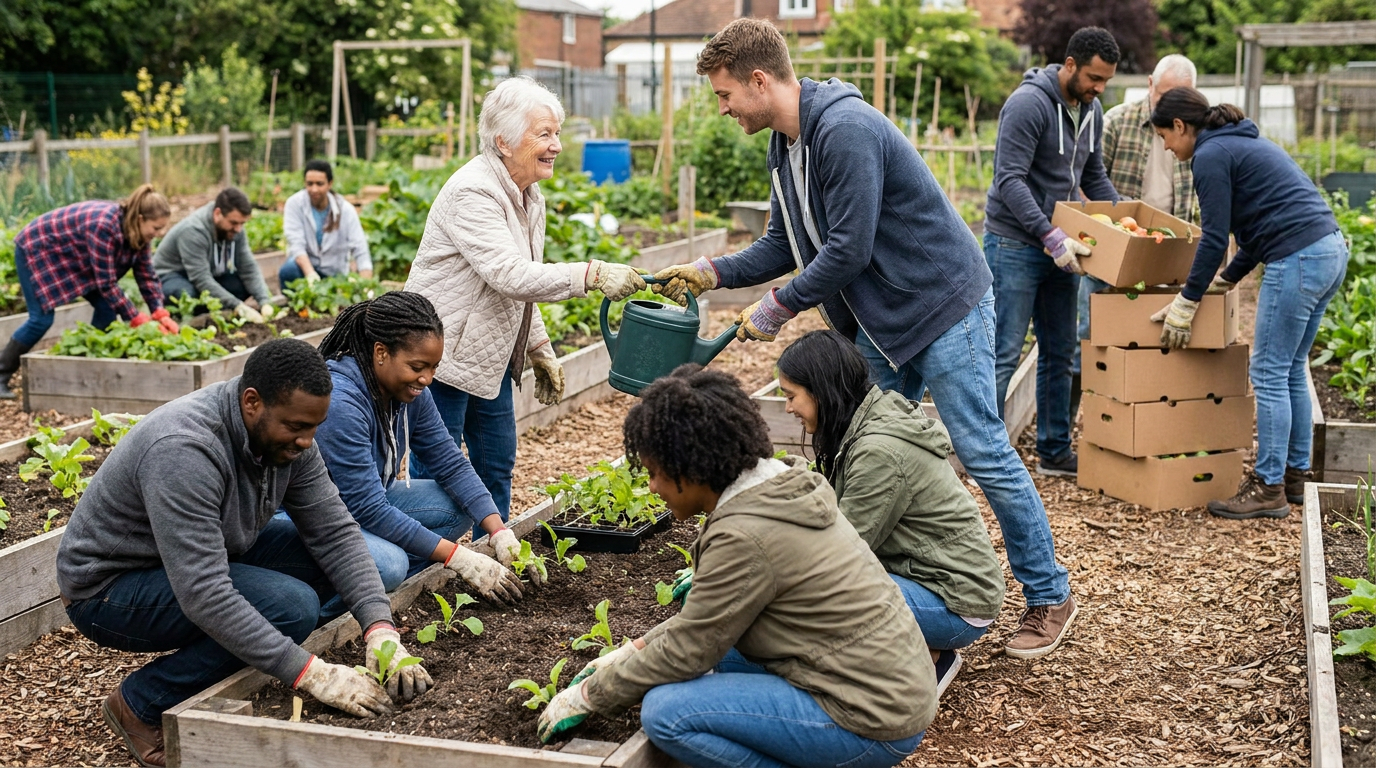
Volunteer service can take many forms. Some people serve in visible ways, and others serve quietly behind the scenes. Both are valuable.
The best service is often the one that matches your capacity, season of life, and sincere interest.
Hospitality and Welcoming
Hospitality is one of the most important forms of service in any spiritual community.
A newcomer may feel nervous, uncertain, or out of place. A warm smile, a kind greeting, or a simple explanation can help them feel at home.
Welcoming service may include greeting guests at the door, helping people find a seat, explaining the schedule, introducing visitors to others, or answering basic questions. This service requires sensitivity and humility. The goal is not to overwhelm people, but to help them feel respected and included.
People of all backgrounds should feel welcome in a Bhakti space. Whether someone is new to spirituality, from another faith tradition, returning after many years, or simply curious, hospitality says: “You belong here. We are happy you came.”
Cooking and Serving Prasadam
In Bhakti Yoga, food offered to God with love is called prasadam, which means “mercy” or “grace.” Devotees prepare vegetarian food with care, offer it to Krishna, and then share it with others.
Cooking prasadam is a deeply devotional service. It is not just about ingredients. It is about consciousness.
The cook may pray, chant, and prepare the meal with cleanliness and gratitude. The food then becomes spiritually uplifting, nourishing not only the body but also the heart.
Serving prasadam is also a beautiful volunteer opportunity. You may help plate meals, distribute food, clean the kitchen, wash pots, or organize community feasts. Many people first experience Bhakti through a warm plate of prasadam served with love.
Kirtan, Music, and Sacred Sound
Kirtan is devotional chanting, often sung call-and-response with instruments. It is one of the most joyful and accessible practices of Bhakti Yoga.
Volunteers may serve by singing, playing instruments, setting up sound equipment, arranging song sheets, helping with livestreams, or creating a peaceful atmosphere for chanting.
You do not have to be a professional musician to support kirtan. Even listening attentively and chanting with sincerity is a form of participation. Sacred sound is meant for everyone.
The scriptures of Bhakti describe chanting as especially powerful in this age because it is simple, direct, and open to all. Through kirtan, hearts soften, minds become peaceful, and community grows naturally.
Cleaning and Caring for Sacred Space
Cleaning may seem ordinary, but in Bhakti it is highly honored.
Caring for a sacred space teaches humility and attentiveness. When we clean, we help create an environment where others can pray, chant, hear wisdom, and feel peace.
Sweeping, mopping, arranging cushions, taking out trash, cleaning bathrooms, watering plants, and organizing supplies are all important services. These tasks may not always be noticed, but they are deeply appreciated.
In devotional life, we try to see that God is present everywhere. Therefore, cleaning becomes a meditation: “May this place be beautiful for the Lord and welcoming for all souls.”
Teaching, Mentoring, and Sharing Wisdom
Some volunteers serve by helping others learn. This may include leading study groups, teaching children, offering workshops, mentoring newcomers, or helping explain Bhakti philosophy in simple language.
Bhakti teachings should be shared with compassion, not arrogance. The goal is not to show how much we know, but to help others connect with truth in a practical way.
The Srimad-Bhagavatam, a central Bhakti scripture, emphasizes hearing and speaking about God as a way to awaken devotion. But this sharing must be done with care. People come with different backgrounds, wounds, questions, and levels of understanding. A good teacher listens, serves, and speaks with kindness.
Administration, Technology, and Organization
Many essential volunteer services happen through practical organization.
Someone may help with emails, websites, forms, social media, event planning, scheduling, bookkeeping, photography, graphic design, or data entry. These services may not always seem “spiritual” at first glance, but they support the mission of sharing Bhakti.
When done with devotion, administration becomes seva. A spreadsheet can serve a sacred purpose. A well-designed flyer can invite someone to kirtan. A thoughtful email can help a new guest take the next step.
Bhakti does not reject practical skills. It spiritualizes them.
Outreach and Compassionate Service
Volunteer service may also extend beyond the walls of the temple or spiritual center.
This can include food distribution, visiting the sick, supporting families, environmental projects, interfaith service, prison outreach, college programs, or helping those in need.
Bhakti Yoga teaches that every living being is a soul, a beloved part of God. Compassionate service helps us practice seeing others with spiritual vision.
When we serve the vulnerable, lonely, hungry, or discouraged, we are reminded that devotion is not only a private feeling. It is love expressed in the world.
How to Begin Volunteering
Beginning volunteer service can feel exciting, but it may also feel intimidating. You may wonder, “Do I know enough? Am I spiritual enough? Will I fit in?”
The answer is simple: you can begin sincerely from where you are.
Start Small and Be Consistent
You do not need to take on a large responsibility immediately. In fact, it is often better to start small.
You might volunteer once a month, help after one program, bring supplies, wash dishes for thirty minutes, greet guests, or assist with setup. Small, consistent service is powerful.
In spiritual life, steadiness is more important than dramatic beginnings. A little service offered regularly can transform the heart over time.
Ask Where Help Is Needed
One of the simplest ways to begin is to ask, “How can I help?”
This question carries humility. It shows that we are willing to serve the real needs of the community, not only our own preferences.
Of course, it is also healthy to communicate your abilities and limits. You might say, “I can help for one hour,” or “I am good with organizing,” or “I would love to learn kitchen service,” or “I am new and happy to do something simple.”
Good service grows through honest communication.
Learn the Mood of the Community
Every spiritual community has a culture. Before taking on major responsibilities, it is helpful to observe, listen, and learn.
How are sacred items handled? What is the kitchen standard? How are guests welcomed? What is the schedule? Who coordinates each area? What values guide the service?
In Bhakti, the mood matters. We are not only completing tasks; we are cultivating devotion, respect, and cooperation.
Serve Under Guidance
Guidance protects both the volunteer and the community. A service coordinator, mentor, or experienced devotee can help you understand what is needed and how to do it well.
Serving under guidance is not a sign of weakness. It is a sign of maturity. In Bhakti Yoga, spiritual knowledge is traditionally received through relationship, humility, and service.
The Bhagavad-gita encourages seekers to approach spiritual teachers with inquiry and service. This does not mean blind following. It means learning with sincerity, respect, and openness.
Balance Enthusiasm with Sustainability
Many people feel inspired when they first begin volunteering and may want to do everything. Enthusiasm is beautiful, but it should be balanced with wisdom.
If we overcommit, we may become exhausted or resentful. Sustainable service considers family, work, health, spiritual practice, and rest.
Bhakti is a lifelong path. We do not need to burn out. We can serve in a way that is steady, honest, and nourishing.
The Inner Attitude of Service
Volunteer service is not only about what we do. It is also about how we do it.
Two people may perform the same task externally, but internally the experience may be very different. One may serve with pride and frustration. Another may serve with gratitude and prayer.
Bhakti Yoga gently invites us to examine the heart.
Humility
Humility does not mean thinking poorly of ourselves. It means understanding that our gifts are blessings and that we are instruments of divine grace.
A humble volunteer does not need to be the center. They are happy when the service is successful, even if no one notices them.
Humility also helps us learn. We can receive feedback without collapsing or becoming defensive. We can make mistakes and grow.
In Bhakti, humility is essential because love cannot fully blossom in a heart dominated by ego.
Gratitude
Volunteer service becomes joyful when we remember that the opportunity to serve is itself a gift.
We may think, “I am giving my time.” That is true. But we are also receiving purification, friendship, purpose, and spiritual nourishment.
Gratitude changes the atmosphere of service. It helps us see even small tasks as blessings.
Cooperation
Community service requires cooperation. Sometimes we must adjust our preferences. Sometimes we work with people who think differently, move at a different pace, or communicate in a different style.
These moments are not obstacles to spiritual life. They are spiritual life.
Bhakti grows through relationship. Learning to cooperate with patience and respect is a powerful form of devotion.
Offering the Results
In the Bhagavad-gita, Krishna teaches the principle of offering the fruits of our work. This means we do our best, but we do not become overly attached to praise, control, or outcome.
Sometimes a program goes beautifully. Sometimes things go wrong. Sometimes people appreciate us. Sometimes they forget. Sometimes our service is easy. Sometimes it stretches us.
Offering the results means we continue with faith: “God, I offer this to You. Please accept whatever is sincere.”
Common Challenges in Volunteer Service
Volunteer service is beautiful, but it is not always easy. Challenges will come. When they do, we can meet them with honesty, maturity, and devotion.
Feeling Unnoticed
Many volunteers quietly wonder, “Does anyone see what I’m doing?”
This is natural. Everyone needs encouragement. Spiritual communities should be mindful to appreciate volunteers sincerely.
At the same time, Bhakti invites us to deepen our motivation. We can remember that God sees every sincere effort. No act of service is forgotten spiritually.
Even a small offering made with love has eternal value.
Comparing Ourselves to Others
We may compare our service to someone else’s. “They sing better.” “They know more.” “They are more involved.” “Their service is more important.”
Comparison can steal joy.
Bhakti teaches that every soul has a unique relationship with God. Your service does not need to look like someone else’s. A garland maker, a cook, a speaker, a cleaner, a donor, a parent raising children with devotion, and a person praying quietly all have meaningful roles.
The question is not, “Am I better than others?” The question is, “Am I offering sincerely?”
Burnout
Burnout can happen when we serve beyond our capacity, lack support, or forget our inner spiritual practices.
To prevent burnout, maintain a healthy rhythm of chanting, prayer, rest, honest communication, and personal nourishment. Service should bring us closer to God, not make us bitter or disconnected.
If you feel overwhelmed, speak with a coordinator or mentor. Adjusting service is not failure. It can be wisdom.
Conflict
Where there are people, there may be misunderstandings. Even in spiritual communities, conflict can arise.
When it does, we can practice respectful communication, forgiveness, and accountability. Bhakti does not mean pretending everything is fine. It means addressing difficulties with sincerity and compassion.
A good question to ask is: “How can we protect the relationship while solving the problem?”
Pride
Sometimes service can subtly feed pride. We may begin to think, “This place depends on me,” or “My way is best,” or “I deserve more recognition.”
These thoughts can come to anyone. We do not need to feel ashamed, but we should be honest.
Chanting, prayer, scripture, and serving under guidance help us return to humility. We can remember that all strength, intelligence, and opportunity come by grace.
The Spiritual Benefits of Volunteer Service
Volunteer service transforms us gradually. The changes may be quiet, but they are real.
The Heart Becomes Cleaner
Bhakti scriptures describe devotional service as a cleansing process. Through hearing, chanting, remembering, and serving, the heart becomes purified.
This does not mean we become perfect overnight. It means we begin to notice our selfishness, impatience, pride, and fear—and we receive the strength to grow beyond them.
Service reveals what is in the heart and gives us a sacred way to heal.
Love Becomes Practical
Many people speak about love. Volunteer service asks us to live it.
Love may mean arriving early. Love may mean staying late. Love may mean doing a task no one wants. Love may mean being patient with a difficult person. Love may mean offering our best without demanding attention.
In Bhakti, love is not only emotion. Love is devotion expressed through action.
Faith Deepens
When we serve, we often experience unexpected grace.
A newcomer feels touched. A kirtan becomes powerful. A meal nourishes someone deeply. A problem gets solved at the last moment. A tired heart feels renewed.
Through these experiences, faith becomes more than theory. We begin to feel that God is present, guiding and accepting our sincere efforts.
We Discover Our Spiritual Identity
Bhakti Yoga teaches that we are not merely the body or mind. We are eternal souls, beloved parts of God. Our deepest nature is to love and be loved.
Volunteer service helps us experience this truth.
When we serve with sincerity, we may feel a kind of happiness that is different from ordinary pleasure. It is quieter, deeper, and more nourishing. This joy comes from living closer to our true nature.
Volunteer Service as a Daily Practice
You do not have to wait for a formal volunteer opportunity to practice seva. Service can become part of daily life.
Serve at Home
Home life offers many opportunities for devotion. Cooking, cleaning, caring for children, supporting family members, and creating a peaceful environment can all be offered to God.
You might place a small altar or sacred space in your home. You might offer your food with a simple prayer. You might chant while doing chores. You might practice speaking kindly as an offering.
Spiritual life begins where we are.
Serve at Work
Work can also become service when performed with integrity, compassion, and dedication.
You may serve coworkers through patience, honesty, encouragement, and excellence. You may offer your efforts to God before beginning the day. You may avoid gossip and choose kindness.
Even if your workplace is not openly spiritual, your consciousness can be.
Serve Through Your Words
Words have power. They can heal or harm.
Volunteer service includes how we speak. We can encourage others, thank volunteers, welcome newcomers, speak truth gently, and avoid unnecessary criticism.
In Bhakti, speech becomes sacred when used to glorify God, uplift others, and share wisdom with humility.
Serve Through Prayer
Sometimes we cannot physically volunteer as much as we wish. Health, distance, family responsibilities, or work may limit us.
Prayer is also service.
You can pray for the community, for those suffering, for the teachers, for the volunteers, for the food distribution, for the kirtan, for the children, and for all souls to feel divine love.
A sincere prayer is never small.
How Communities Can Care for Volunteers
A complete guide to volunteer service must also speak about the responsibility of the community. Volunteers should not be treated as tools. They are people with hearts, needs, and spiritual journeys.
Offer Clear Communication
Volunteers thrive when expectations are clear. What time should they arrive? What should they bring? Who do they report to? What is the standard? How long will the service take?
Clear communication reduces confusion and helps people serve with confidence.
Provide Training
Training is a form of kindness. Whether someone is learning kitchen service, altar care, child safety, hospitality, sound setup, or administration, guidance helps them succeed.
Training also protects sacred standards and builds trust.
Appreciate Sincerely
Appreciation should be genuine, not performative. A simple “thank you” can mean a lot.
Communities can appreciate volunteers publicly and privately, while also remembering that the deepest goal is devotional growth, not ego-building.
Encourage Healthy Boundaries
A loving community does not pressure people to serve beyond their capacity. It encourages honesty, rest, and balance.
When volunteers feel safe to say “yes” sincerely and “no” honestly, service becomes healthier for everyone.
Create a Culture of Devotion
The best volunteer culture is not only efficient—it is devotional.
This means chanting together, praying before service, remembering the purpose, speaking respectfully, resolving conflicts maturely, and keeping God at the center.
When devotion is present, even hard work becomes joyful.
A Simple Volunteer Service Checklist
If you are ready to begin or deepen your volunteer service, here are some gentle steps:
Reflect on Your Intention
Ask yourself: “Why do I want to serve?”
Possible answers may be: to help others, to grow spiritually, to express gratitude, to become part of community, to offer my talents, or to please God.
Your intention does not have to be perfect. Just begin honestly.
Notice Your Capacity
Consider your time, energy, skills, and responsibilities. Can you serve weekly, monthly, or occasionally? Do you prefer behind-the-scenes work or people-facing service? Are you physically able to lift and move items, or would administrative help be better?
Serving wisely helps you remain steady.
Speak with a Coordinator
Reach out and ask about current needs. Let them know your availability and interests. Be open to starting with simple tasks.
Prepare Spiritually
Before service, take a moment to pray or chant. You might say:
“Dear Lord, please let this service be offered with love. Please help me be humble, useful, and kind.”
This simple prayer can change the whole mood.
Serve, Learn, and Grow
After serving, reflect gently. What went well? What did you learn? Did you feel connected? Is there anything to improve?
Spiritual growth is a journey. Every sincere step matters.
Everyone Has Something to Offer
Sometimes people think, “I don’t have much to give.” But in Bhakti, every sincere offering is precious.
The Bhagavad-gita says that if one offers Krishna a leaf, a flower, fruit, or water with love, He accepts it. The emphasis is not on wealth or size. The emphasis is devotion.
This teaching is deeply comforting. God is not impressed by external show. God is moved by love.
You may offer an hour. You may offer a song. You may offer a meal. You may offer your professional skill. You may offer a donation. You may offer a listening ear. You may offer a prayer. You may offer your tears, your questions, your hope, your longing.
Nothing sincere is wasted.
Volunteer service is a beautiful way to live Bhakti Yoga in practical daily life. Through seva, we learn to love beyond words. We chant, pray, cook, clean, welcome, teach, organize, encourage, and care. We grow not by becoming important, but by becoming available to grace.
Wherever you are on your spiritual path, you are welcome. Whether you are new to Bhakti, from another tradition, unsure what you believe, or already walking a devotional path, there is a place for your sincere heart.
May we each take one humble step toward God today—one prayer, one chant, one act of kindness, one moment of service offered with love. Everyone is welcome to begin.
FAQs
What is volunteer service?
Volunteer service refers to the act of individuals offering their time and skills to assist others or contribute to a cause without expecting financial compensation.
Why is volunteer service important?
Volunteer service is important as it helps address social issues, supports community development, and provides assistance to those in need. It also allows individuals to gain new skills, build relationships, and make a positive impact on society.
How can I find volunteer opportunities?
There are various ways to find volunteer opportunities, including contacting local non-profit organizations, using online platforms dedicated to volunteer work, reaching out to community centers, and checking with religious institutions or schools.
What are the benefits of volunteering?
Volunteering offers numerous benefits, such as personal fulfillment, skill development, networking opportunities, improved mental and physical health, and the chance to make a difference in the lives of others.
What should I consider before volunteering?
Before volunteering, it’s important to consider factors such as the time commitment, the specific skills or interests you want to utilize, the organization’s mission and values, and any potential costs or travel requirements associated with the volunteer opportunity.

