
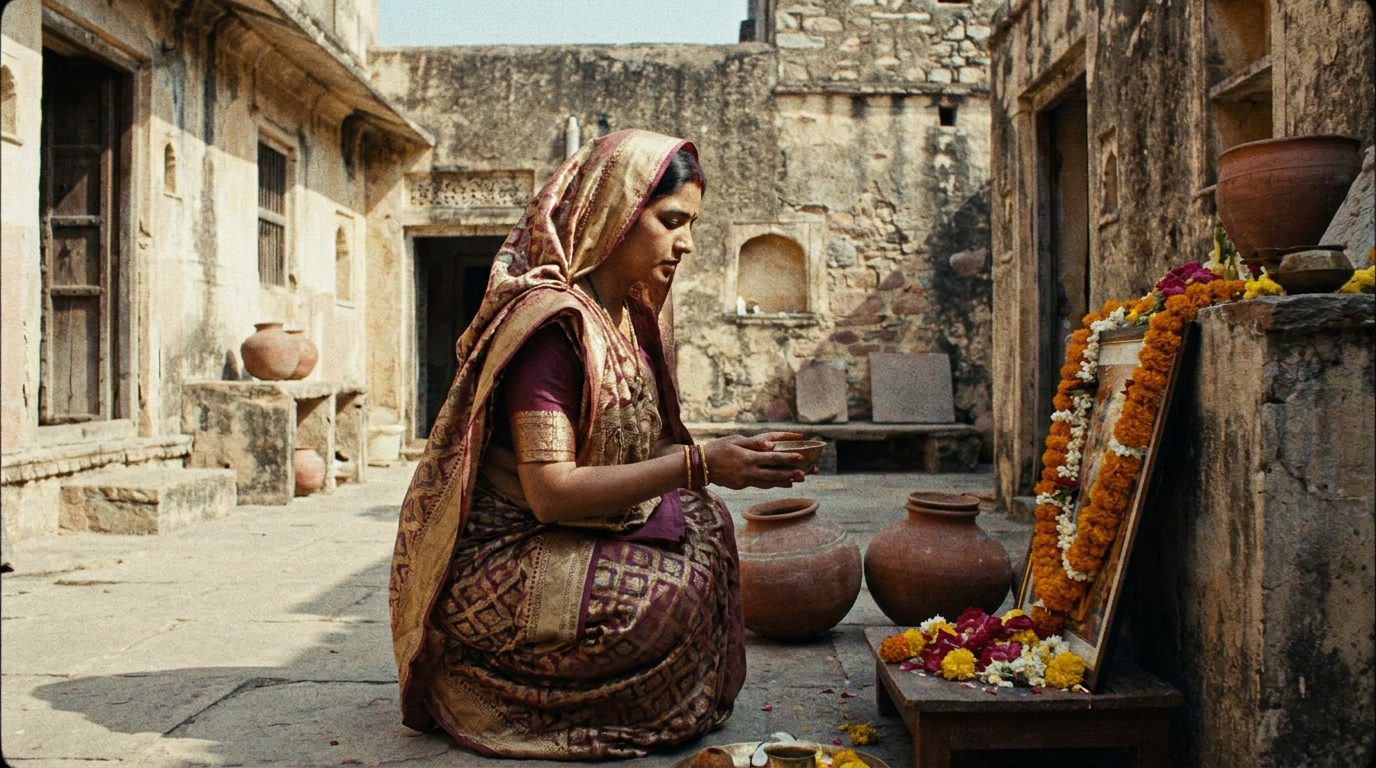
Rādhā. Even the sound of Her name carries something sacred — a sweetness that has moved the hearts of poets, saints, and seekers for thousands of years. Yet for many people, especially those new to the path of Bhakti Yoga, Rādhārāṇī remains a beautiful mystery. Who is She, really? Why do devotees speak Her name with such reverence, often even before the name of Kṛṣṇa Himself?
Whether you grew up hearing about Rādhā or you are encountering Her for the very first time, this article is for you. We will explore Her identity, Her love, Her significance in Bhakti philosophy, and most importantly, how understanding Rādhā can transform the way we practice devotion in our everyday lives.
You are welcome here, exactly as you are.
Rādhā — sometimes called Rādhārāṇī (“rāṇī” means queen) or Śrīmatī Rādhikā — is understood in the Bhakti tradition as the supreme beloved of Lord Kṛṣṇa. She is not merely a historical or mythological figure. In the deepest Bhakti theology, She is the eternal counterpart of the Divine, the embodiment of the highest love that exists.
In simple terms, if Kṛṣṇa is God — the Supreme Source of everything — then Rādhā is His most intimate energy, the very personification of divine love itself. She is not separate from Him, yet She appears as a distinct person so that the most beautiful exchange of love can take place.
Rādhā as the Hlādinī Śakti
In Sanskrit, “hlādinī śakti” means the “pleasure potency” — the energy of divine bliss. The Bhakti teachers explain that God possesses many energies, but the hlādinī śakti is the most intimate one. Rādhā is that energy in personal form.
Śrīla Prabhupāda, the beloved founder-ācārya of the International Society for Krishna Consciousness, explains this beautifully in his purport to Śrī Caitanya-caritāmṛta, Ādi-līlā 4.56:
> “The pleasure potency of Kṛṣṇa’s internal energy is called hlādinī, and the most advanced form of that hlādinī energy is Śrīmatī Rādhārāṇī.”
This means Rādhā is the supreme expression of joy, love, and devotion. When we experience even a tiny spark of genuine spiritual happiness — that warmth in the heart during chanting, that peace during prayer — it originates from Her energy.
Rādhā in the Bhakti Scriptures
Rādhā’s glories are celebrated across many sacred texts, including the Brahma-vaivarta Purāṇa, the Padma Purāṇa, the Garga Saṁhitā, and especially the writings of the Gosvāmīs of Vṛndāvana. While Her name does not appear explicitly in the Bhagavad-gītā, the broader Vaiṣṇava literature reveals Her central importance.
In the Śrī Caitanya-caritāmṛta, Ādi-līlā 4.83, Kṛṣṇadāsa Kavirāja Gosvāmī writes:
> “Among the gopīs, Śrīmatī Rādhārāṇī is the foremost. She surpasses all in beauty, in good qualities, in good fortune and, above all, in love.”
This tells us something extraordinary: Rādhā is not simply one devotee among many. She is the best devotee, the supreme lover of God. Her love is the standard, the highest peak of what devotion can become.
The Love Between Rādhā and Kṛṣṇa — More Than a Love Story
In popular culture, Rādhā and Kṛṣṇa are sometimes presented as romantic figures — a divine couple whose story inspires art, music, and dance. While this artistic tradition is beautiful and has its place, the Bhakti tradition invites us to go much deeper.
The love between Rādhā and Kṛṣṇa is not ordinary romance. It is called “prema” — pure, selfless, unconditional spiritual love. It is love without any trace of selfishness, without any desire for personal gain. Rādhā’s only wish is Kṛṣṇa’s happiness, and Kṛṣṇa’s greatest joy is found in Rādhā’s love.
The Selflessness of Rādhā’s Devotion
What makes Rādhā’s love so extraordinary is its complete selflessness. She does not love Kṛṣṇa to get something in return. She does not love Him because He is God, or because He is powerful, or because He might grant Her blessings. She loves Him simply because… She loves Him. That is the purest definition of Bhakti.
Śrīla Prabhupāda captures this beautifully in The Nectar of Devotion (his summary study of Bhakti-rasāmṛta-sindhu by Śrīla Rūpa Gosvāmī), where he explains that the highest devotion is “ahaitukī” — without cause or motivation. Rādhā’s love is the ultimate example of this.
For those of us on the Bhakti path, this teaches a profound practical lesson: real devotion is not about what we get from God. It is about what we give — our sincerity, our attention, our love, however small it may feel right now.
Separation and Longing — The Deepest Devotion
One of the most moving aspects of Rādhā’s story is the theme of separation, known in Sanskrit as “viraha.” When Rādhā is separated from Kṛṣṇa, Her longing for Him intensifies Her love to unimaginable depths. The Bhakti tradition teaches that this feeling of loving separation is actually the highest stage of devotion — even higher than being in the direct presence of the Lord.
This might seem paradoxical, but think of it this way: when you deeply miss someone you love, your awareness of them becomes overwhelming. Every thought, every heartbeat is filled with them. Rādhā’s separation from Kṛṣṇa is like that, but on an infinite spiritual scale.
Śrī Caitanya Mahāprabhu, whom Gauḍīya Vaiṣṇavas understand to be Kṛṣṇa Himself appearing in the mood of Rādhā, expressed this in His own famous prayer, the Śikṣāṣṭaka (verse 7):
> “My Lord, O Kṛṣṇa, son of the King of Vraja, I do not find even a moment’s relief. Without Your presence the entire world seems empty.”
This verse gives us a window into Rādhā’s heart. It shows us that the deepest devotion is not necessarily about feeling happy — it is about feeling connected, even in longing, even in tears.
Why Rādhā Matters to Every Seeker
You might be wondering: “This is all very beautiful, but what does Rādhā have to do with me and my spiritual life?” The answer is: everything.
Rādhā as the Gateway to Kṛṣṇa
In the Bhakti tradition, devotees often say that the mercy of Rādhā is even more accessible than the mercy of Kṛṣṇa. She is supremely compassionate. Because Her very nature is love, She naturally wants to help every soul reconnect with the Divine.
Śrīla Prabhupāda often emphasized that approaching Kṛṣṇa through Rādhā — through Her mercy and Her devotees — is the most effective path. This is why in the Hare Kṛṣṇa mahā-mantra, the name “Hare” comes first:
Hare Kṛṣṇa, Hare Kṛṣṇa, Kṛṣṇa Kṛṣṇa, Hare Hare / Hare Rāma, Hare Rāma, Rāma Rāma, Hare Hare
“Hare” is the vocative form of “Harā,” which refers to Śrīmatī Rādhārāṇī — the one who steals (harā) the mind of Kṛṣṇa. So every time we chant, we are first calling upon Rādhā’s mercy to help us reach Kṛṣṇa. How beautiful is that?
Rādhā as the Perfect Teacher of Devotion
Even if we feel like beginners — even if our chanting is distracted, our prayers are clumsy, and our service is imperfect — Rādhā shows us what devotion looks like at its fullest. She is the ideal we are gently growing toward.
She doesn’t judge us for being imperfect. She inspires us by showing what the heart is truly capable of when it is fully turned toward God.
Check out our website for more articles: more articles.
How Rādhā Inspires Practical Bhakti in Daily Life
Understanding Rādhā is not just an intellectual exercise. It can genuinely change how we practice devotion every single day.
Chanting with Greater Heart
When we chant the Hare Kṛṣṇa mahā-mantra, we can remember that we are calling out to both Rādhā and Kṛṣṇa. We can chant with the intention of asking Rādhārāṇī for Her mercy, for the ability to love God more sincerely. Even one round of japa (meditation on the mantra using prayer beads) chanted with this awareness can feel profoundly different.
Serving with Love, Not Obligation
Rādhā’s service to Kṛṣṇa is never done out of duty or obligation. It flows naturally from love. When we cook an offering, clean the temple, help a fellow seeker, or simply offer a kind word — we can aspire to serve in Her spirit: joyfully, selflessly, with our whole heart.
Cultivating Humility
Rādhā, despite being the greatest of all devotees, is also the most humble. She never announces Her own greatness. In the Caitanya-caritāmṛta, Madhya-līlā 8.100, the great devotee Rāmānanda Rāya describes the pinnacle of spiritual perfection, and it always leads back to Rādhā’s mood of humble, self-forgetting love.
For us, this means that the more we grow in devotion, the more naturally humble we should become — not as a performance, but as a genuine softening of the heart.
Embracing Spiritual Emotions
The Bhakti path is not dry or merely philosophical. It is rich with emotion — joy, longing, gratitude, tenderness, even holy tears. Rādhā gives us permission, so to speak, to feel deeply in our spiritual life. We do not have to suppress our emotions; we learn to spiritualize them, offering them to God.
Rādhā in the Bhakti Community — Celebrating Her Presence
Across the world, Bhakti communities celebrate Rādhā in many beautiful ways. One of the most cherished festivals is Rādhāṣṭamī, the appearance day of Śrīmatī Rādhārāṇī, which is observed with fasting, chanting, elaborate worship, and heartfelt prayers. It is a day when devotees especially meditate on Her glories and beg for Her grace.
Rādhā-Kuṇḍa — The Most Sacred Place
In the holy land of Vṛndāvana, India, there is a sacred lake called Rādhā-kuṇḍa. It is considered by Gauḍīya Vaiṣṇava ācāryas to be the holiest place in all of creation, because it is the site most dear to Rādhā. Śrīla Rūpa Gosvāmī glorifies Rādhā-kuṇḍa extensively, and pilgrims travel from around the world to bathe in its waters and pray for devotion.
Rādhā in Sacred Art and Kīrtana
From the classical paintings of Rajasthan to the ecstatic kīrtanas (devotional songs) sung in temples and living rooms across the globe, Rādhā’s presence fills the Bhakti world with color, melody, and grace. Whether you encounter Her through a beautiful mūrti (sacred image) on an altar or through the tears of a devotee singing Her name, She has a way of reaching the heart.
The Mystery That Invites Us Deeper
We began by calling Rādhā “enigmatic,” and in truth, She will always remain so. No amount of words can fully capture who She is. The great ācāryas tell us that even Kṛṣṇa Himself is forever discovering new dimensions of Rādhā’s love. In fact, this is one of the reasons He appeared as Śrī Caitanya Mahāprabhu — to experience the depth of Rādhā’s love from Her own perspective.
As stated in Śrī Caitanya-caritāmṛta, Ādi-līlā 1.6:
> “Desiring to understand the glory of Rādhārāṇī’s love, the wonderful qualities in Him that She alone relishes through Her love, and the happiness She feels when She realizes the sweetness of His love, the Supreme Lord Hari, richly endowed with Her emotions, appeared from the womb of Śrīmatī Śacīdevī, as the moon appears from the ocean.”
If God Himself takes birth to understand Rādhā’s love, then surely this is a mystery worth spending our whole lives exploring.
No matter where you are on your spiritual journey — whether you have been chanting for decades or you have never chanted a single mantra — the door to Rādhā’s mercy is always open. She does not ask for our perfection. She asks only for our sincerity.
So take one small step today. Chant the Hare Kṛṣṇa mahā-mantra, even just once, with an open heart. Offer a quiet prayer to Rādhārāṇī, asking for the gift of genuine devotion. Pick up a book about Her glories. Visit a Bhakti community near you. Or simply sit in stillness and let your heart whisper Her name.
Everyone is welcome on this path. You are welcome. Rādhā is waiting with open arms.
Hare Kṛṣṇa. 💙
FAQs
1. Who is Rādhā?
Rādhā is a central figure in Hinduism, particularly in the Vaishnavism tradition. She is considered to be the eternal consort of Lord Krishna and is revered as his greatest devotee.
2. What is Rādhā’s significance in Hinduism?
Rādhā’s love for Krishna is seen as the highest form of devotion, and their relationship is often used as a symbol of the soul’s longing for union with the divine. Rādhā is also considered to be a symbol of compassion and unconditional love.
3. What are some popular stories or legends about Rādhā?
There are many stories and legends about Rādhā and Krishna’s divine love. One popular story is the “Rasa Lila,” which describes the ecstatic dance of Rādhā and Krishna along with the gopis (cowherd girls) in the forests of Vrindavan.
4. How is Rādhā worshipped in Hinduism?
Rādhā is worshipped alongside Krishna in temples and during various Hindu festivals, particularly during the festival of Holi. Devotees often sing devotional songs and recite prayers in honor of Rādhā’s love for Krishna.
5. What is the significance of Rādhā in the context of devotion and spirituality?
Rādhā’s love for Krishna is seen as the epitome of selfless devotion and spiritual surrender. Her story is often used to illustrate the concept of divine love and the path of devotion (bhakti) in Hinduism.

