
Mindfulness is often described as being present, awake, and aware. In Bhakti Yoga, mindfulness becomes even more personal and heart-centered. It is not only about noticing the breath or calming the mind. It is about remembering our relationship with God, the Divine source of love, wisdom, and shelter.
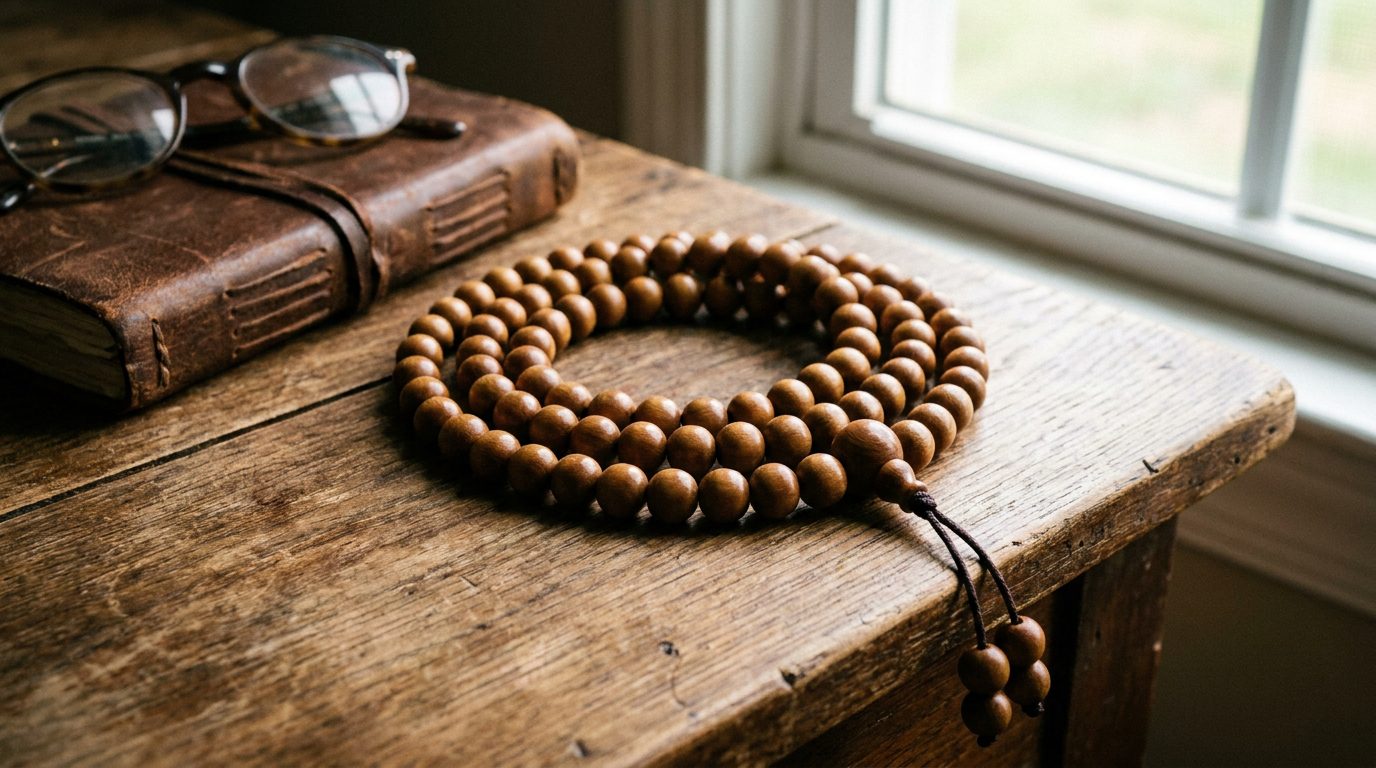
A string of 108 beads, often called a meditation mala, can become a simple and sacred companion on this journey. Each bead invites us to pause, breathe, chant, pray, and return to the heart. Whether you are new to meditation, returning after a long time, or already walking a spiritual path, the mala offers a practical way to become steady and sincere.
In Sanskrit, the word japa means quiet repetition of a sacred sound or mantra. A mantra is a spiritual sound vibration that helps protect, guide, and uplift the mind. When we chant on 108 beads, we are giving the restless mind a loving direction. We are not forcing the mind to be silent. We are giving it something beautiful to rest upon.
Bhakti Yoga, the yoga of devotion, teaches that the heart is transformed through loving remembrance. Chanting, prayer, service, and sacred association help us reconnect with the Divine. The 108 beads are not magic in themselves, but when used with sincerity, they can help us create a daily practice of mindfulness, devotion, and spiritual growth.
What Are 108 Beads for Meditation?
A mala is a strand of prayer beads traditionally used for meditation, chanting, and spiritual reflection. Most japa malas have 108 beads, plus one larger bead known as the guru bead or Krishna bead. This larger bead marks the beginning and end of one full round of chanting.
In Bhakti Yoga, devotees often chant sacred names of God on the beads. One widely practiced mantra is the Hare Krishna maha-mantra:
Hare Krishna Hare Krishna
Krishna Krishna Hare Hare
Hare Rama Hare Rama
Rama Rama Hare Hare
The word maha means “great,” and mantra means “sacred sound for the mind.” So maha-mantra means “the great mantra.” This prayer calls upon the Divine energy and the all-attractive Lord, asking to be engaged in loving service.
The Meaning of Japa
Japa is the personal, meditative repetition of a mantra. It is usually quieter than kirtan, which is devotional chanting together with music and community. Both are important in Bhakti Yoga.
Japa gives us a private space to meet the Divine. It may happen in the early morning, during a lunch break, on a walk, or in a peaceful corner of the home. The beads help the fingers move gently from one mantra to the next, giving the body a simple rhythm and the mind a steady anchor.
Why 108 Beads?
The number 108 is honored in many spiritual traditions. There are different explanations for its significance, and we can receive them with humility rather than rigid certainty.
In Bhakti traditions, 108 is often connected with sacred wholeness and divine remembrance. It is also associated with the 108 principal gopis, the great devotees of Krishna known for their pure love. Some traditions connect 108 with cosmic patterns, sacred mathematics, and the completeness of spiritual practice.
Practically speaking, 108 beads give us a meaningful amount of time to settle into meditation. One full round is long enough for the mind to soften and short enough to be approachable for daily practice.
The Guru Bead
The larger bead on the mala is not chanted on in the same way as the other beads. When we reach it, we pause, offer gratitude, and turn the mala around to begin another round if we wish.
In Bhakti Yoga, guru means “teacher” or “one who brings light.” The guru bead reminds us that spiritual life is not a path of ego or self-display. We receive wisdom through grace, scripture, teachers, community, and the quiet guidance of God within the heart.
Mindfulness Through the Bhakti Lens
Mindfulness often begins with awareness of the present moment. In Bhakti Yoga, presence becomes loving presence. We are not simply becoming aware of what is happening; we are learning to bring everything into relationship with God.
The Bhagavad-gita, one of the most beloved texts of Bhakti Yoga, teaches that the mind can be both friend and enemy. When guided, it becomes our friend. When uncontrolled, it can pull us into anxiety, distraction, and forgetfulness. Meditation with 108 beads is a practical way to befriend the mind.
Mindfulness as Remembrance
A key Sanskrit word in Bhakti is smaranam, which means “remembrance.” In the Srimad Bhagavatam, hearing and chanting about God are described as powerful practices for awakening devotion. These practices help us remember who we are beyond temporary stress, roles, and worries.
Mindfulness asks, “Where is my attention?”
Bhakti asks, “Can I offer my attention with love?”
This small shift changes everything. The practice is no longer only about self-improvement. It becomes an offering. Each bead becomes a moment to say, “I am here, Lord. Please guide me. Please help me remember You.”
The Mind Needs a Loving Anchor
Many people struggle with meditation because they believe they must stop all thoughts. But the mind is naturally active. In Sanskrit, the mind is sometimes compared to a flickering flame or a restless wind.
Instead of fighting the mind, mantra meditation gives it a sacred sound to return to. When thoughts wander, we gently come back to the mantra. No shame. No harshness. Just return.
This returning is the practice. Every time we come back, we strengthen spiritual mindfulness.
Presence with the Holy Name
In Bhakti Yoga, the holy names of God are understood to be spiritually powerful and non-different from the Divine. This means chanting is not just symbolic. It is a way of being in contact with God through sound.
For someone new to this idea, it may help to approach it simply: sacred sound changes consciousness. What we hear and repeat shapes the heart. When we chant divine names with sincerity, we invite divine qualities—peace, compassion, humility, courage, and love—into our lives.
Check out our latest posts at https://thebhaktihouse.org/blog.
How to Use 108 Beads for Meditation
Beginning a bead meditation practice does not need to be complicated. You do not need to be perfect, advanced, or fully peaceful before you begin. The beads are there to support you as you are.
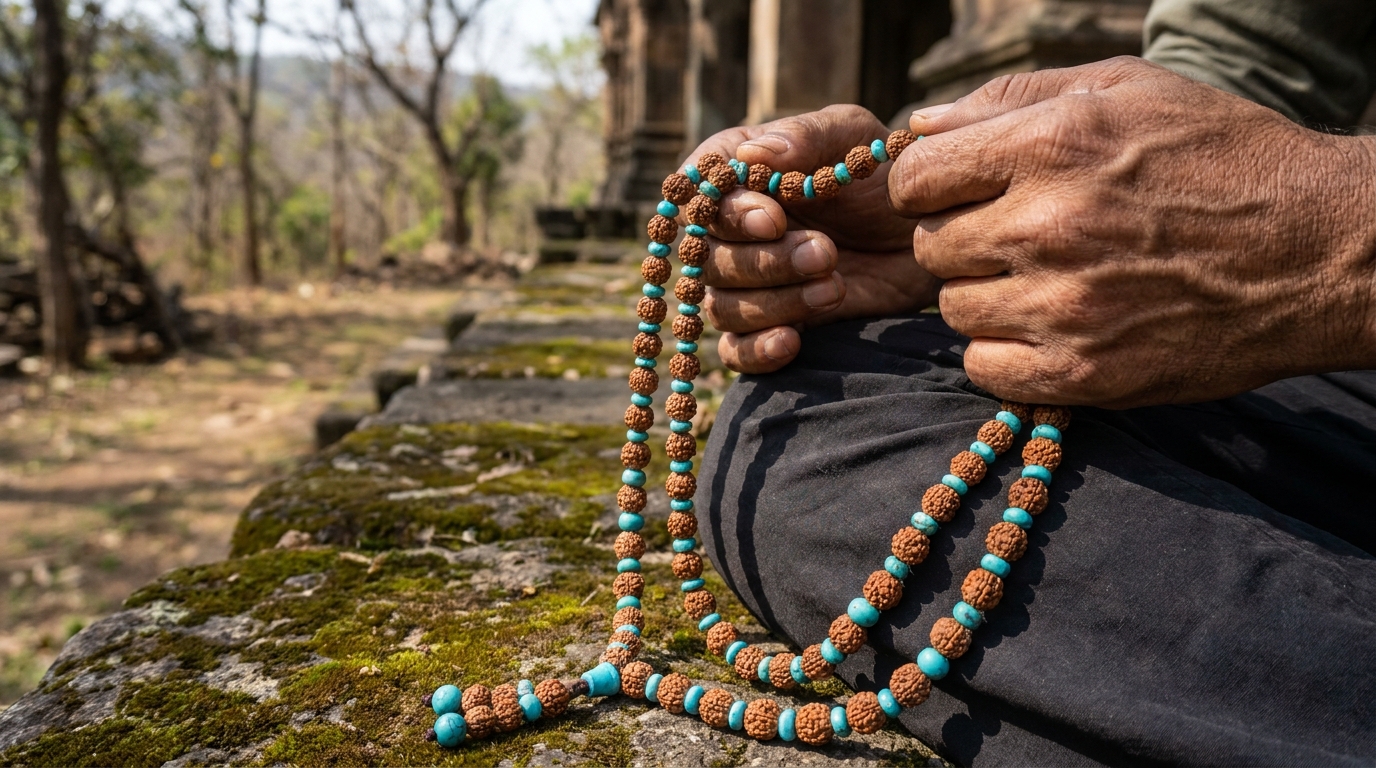
Choose a quiet place if possible. Sit comfortably. Take a few natural breaths. Hold the mala in your right hand or in a way that feels respectful and steady. Begin at the bead next to the guru bead. Chant your mantra once on each bead, then move to the next.
Step 1: Set a Simple Intention
Before chanting, pause for a moment. You may offer a prayer in your own words:
“Dear Lord, please help me chant with sincerity.”
“Please guide my mind back to You.”
“May this practice awaken love, humility, and service in my heart.”
In Bhakti Yoga, intention matters. Even if the mind is scattered, a sincere prayer opens the door to grace.
Step 2: Chant and Listen
Chant the mantra clearly enough that you can hear it. Listening is one of the most important parts of japa. The ears receive the sacred sound, and the heart slowly becomes nourished.
If you are chanting the Hare Krishna maha-mantra, you can softly repeat:
Hare Krishna Hare Krishna
Krishna Krishna Hare Hare
Hare Rama Hare Rama
Rama Rama Hare Hare
Move one bead after completing the full mantra. Continue until you return to the guru bead.
Step 3: Return Without Judgment
Your mind will wander. This is normal. You may think about tasks, conversations, memories, or plans. When you notice this, gently return to the sound.
There is no need to become discouraged. In fact, noticing distraction is a sign of growing awareness. Each return is an act of devotion.
A humble practitioner may think, “My mind wandered so many times.” But the heart can also say, “And by grace, I returned so many times.”
Step 4: Complete One Round
One full round of 108 beads may take around 7 to 15 minutes, depending on the pace of chanting. Some people chant one round daily. Others chant more. In many Bhakti traditions, initiated practitioners may take vows to chant a certain number of rounds each day, but beginners can start gently.
It is better to chant one round with sincerity than to set a large goal and feel overwhelmed. Spiritual life grows through steadiness.
Step 5: Close with Gratitude
When you finish, pause at the guru bead. Offer thanks. You might sit quietly for a moment and notice how you feel.
Gratitude seals the practice. It reminds us that meditation is not something we conquer. It is something we receive.
The Spiritual Power of Mantra Meditation
Mantra meditation is deeply rooted in Bhakti scriptures. The Bhagavad-gita teaches that among sacrifices, Krishna says He is japa, the chanting of sacred names. This shows the high place given to prayerful repetition and remembrance.
The Srimad Bhagavatam especially glorifies hearing and chanting the names and qualities of God as a path for purification in this age. The practice is simple, but not shallow. It touches the deepest part of the self.
Sacred Sound and the Heart
In Bhakti, sound is not considered ordinary when it is connected to God. Sacred sound enters the heart and gradually cleanses layers of fear, pride, envy, and forgetfulness.
This cleansing may not always feel dramatic. Sometimes it appears as a little more patience. A little more compassion. A little more honesty. A little more desire to serve rather than control.
These small changes are signs of spiritual growth.
Chanting as Prayer
The Hare Krishna maha-mantra can be understood as a prayer: “O Lord, O Divine Energy of the Lord, please engage me in Your loving service.”
This is very different from asking God only for material things. It is a prayer to become aligned with love. It is a prayer to become useful, kind, and spiritually awake.
When we chant on 108 beads, we are repeating this prayer again and again, allowing it to shape us from within.
The Practice of Hearing
Bhakti Yoga places great importance on hearing. We may chant with the tongue, but we meditate with the ears. When the mind runs away, the sound calls it back.
This is why japa is both active and receptive. We make the effort to chant, and we also receive the mantra by listening. In that exchange, the heart begins to soften.
108 Beads as a Daily Mindfulness Tool
A mala can support spiritual life in very practical ways. It gives structure to our meditation. It creates a beginning and an ending. It helps us track our chanting without needing a phone or timer.
In a world of constant notifications, the beads invite us into sacred simplicity. One bead. One breath. One mantra. One offering.
Morning Meditation
Many practitioners find the early morning especially helpful for japa. The mind is often quieter before the demands of the day begin. In Sanskrit, the early morning spiritual time is sometimes called brahma-muhurta, a peaceful period before sunrise that supports meditation and prayer.
But if early morning is not possible, do not feel excluded. Bhakti is not limited to one schedule. Chant when you can, and gradually your life may begin to make more room for it.
Mindfulness During Stress
When anxiety rises, the mala can help bring the mind back to shelter. You may not always be able to chant a full round, but even a few beads can help.
Pause. Hold the beads. Chant slowly. Listen carefully.
This simple action can interrupt spiraling thoughts and reconnect you with spiritual grounding. It reminds the body to breathe and the heart to trust.
Creating a Sacred Space
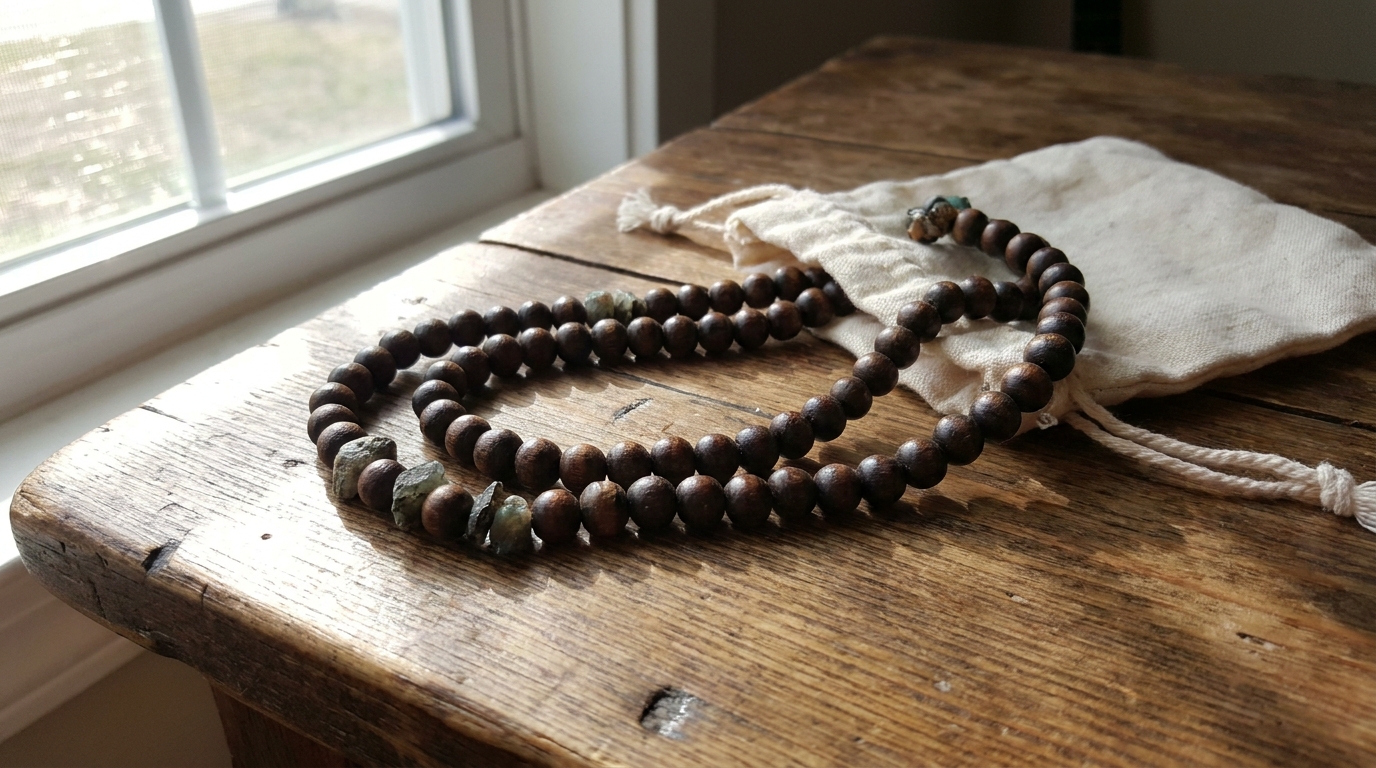
You may keep your beads in a clean bead bag or on a small altar. An altar does not need to be elaborate. It can include a picture of Krishna, Radha, Rama, Vishnu, saints, sacred teachers, or any form of God that inspires devotion. You might add a candle, flowers, scripture, or a simple cloth.
The purpose is not decoration. The purpose is remembrance. A sacred space tells the mind, “Here, I return to what matters most.”
Common Challenges in Bead Meditation
Everyone faces challenges in meditation. Restlessness does not mean you are failing. Sleepiness, distraction, doubt, and inconsistency are all part of the human journey.
Bhakti Yoga encourages humility. We do not pretend to be advanced. We simply keep showing up.
“My Mind Wanders Constantly”
This is perhaps the most common experience. The mind has been wandering for many years, so it may not become steady immediately. Be patient.
When the mind wanders, do not argue with it. Do not become angry. Just return to the mantra. Over time, the habit of returning becomes stronger.
The Bhagavad-gita acknowledges that the mind is difficult to control, but it also teaches that practice and detachment make it possible. Practice means we keep returning. Detachment means we do not follow every thought.
“I Don’t Feel Anything”
Sometimes meditation feels peaceful. Sometimes it feels dry. In Bhakti, we try not to measure the value of practice only by emotion. Feelings come and go, but sincere chanting is always meaningful.
A seed does not sprout the moment it is planted. It needs watering, sunlight, and time. Mantra meditation waters the seed of devotion in the heart.
“I’m Not Religious Enough”
You are welcome as you are. Bhakti Yoga is a path of relationship, not a performance of spiritual identity. You do not need to have everything figured out to begin chanting.
If you are curious, you can start with openness: “If You are there, please help me know You.” This kind of honest prayer is deeply valuable.
“I Struggle with Consistency”
Start small. Choose a practice you can keep. One round a day. Or five minutes. Or chanting while walking. The goal is to create a living connection, not a burden.
Community can also help. Joining kirtan, reading scripture with others, or practicing at The Bhakti House can make meditation feel supported and joyful.
Bhakti Yoga: More Than Meditation Alone
While 108 beads are a powerful tool, Bhakti Yoga is a complete way of life. It includes chanting, prayer, service, study, friendship, and offering our daily activities to God.
The Sanskrit word bhakti means devotion or loving service. It is the heart’s natural movement toward the Divine. Bhakti does not reject the world; it teaches us to spiritualize our life by acting with love and remembrance.
Chanting and Kirtan
Kirtan is group chanting, often with instruments like harmonium, mridanga drum, and kartals, or hand cymbals. In kirtan, many voices come together in call and response.
If japa is like a quiet personal conversation with God, kirtan is like a joyful family gathering. Both nourish the soul.
Many people first experience Bhakti through kirtan because it is accessible and heart-opening. You do not need to know Sanskrit perfectly. You can listen, respond, clap, or simply sit and receive.
Prayer in Daily Life
Prayer can be formal or simple. It can happen while cooking, driving, working, caring for children, or walking outside. In Bhakti, we learn to speak to God honestly.
We can pray for guidance. We can pray for forgiveness. We can pray for strength to serve. We can pray for the well-being of others.
Over time, prayer helps us feel less alone. Life becomes a conversation with the Divine.
Service as Meditation
Seva means service. In Bhakti Yoga, service is not just volunteering; it is love in action. Cooking a meal, cleaning a sacred space, helping a guest feel welcome, sharing wisdom, listening to someone with compassion—all can become offerings.
The Bhagavad-gita teaches that whatever we do, whatever we eat, whatever we offer or give, can be offered to God. This transforms ordinary life into spiritual practice.
Study and Reflection
Sacred texts give guidance and nourishment. The Bhagavad-gita helps us understand the self, the mind, karma, devotion, and surrender. The Srimad Bhagavatam offers stories and teachings that awaken love for God. The Narada Bhakti Sutra describes devotion as the highest love.
Study is not meant to make us proud. It is meant to make us wise, soft-hearted, and steady.
The Inner Transformation of 108 Beads
The true power of mindfulness with 108 beads is not only relaxation. Relaxation may come, and it is a blessing. But the deeper gift is transformation.
As we chant daily, we may begin to see ourselves differently. We are not merely the body, the job, the past, or the mind’s changing moods. Bhakti scriptures teach that we are atma, the spiritual self, eternal and beloved by God.
From Distraction to Devotion
Modern life pulls attention in many directions. The mala helps gather that scattered attention and offer it back to the Divine.
Each bead becomes a small act of devotion. Each mantra becomes a step away from forgetfulness and toward love.
This is not about escaping life. It is about entering life more deeply, with God at the center.
From Anxiety to Shelter
Anxiety often grows when we feel we must control everything. Chanting reminds us that we are held by a reality greater than ourselves.
This does not mean we avoid responsibility. Rather, we act with sincerity and offer the results. The Bhagavad-gita teaches this spirit of offering: do your duty, but do not cling anxiously to the outcome.
Japa helps us practice that surrender bead by bead.
From Self-Centeredness to Service
As the heart becomes purified, we naturally become more sensitive to others. We begin to ask, “How can I serve?” instead of only, “What can I get?”
This shift is one of the beautiful fruits of Bhakti Yoga. Love becomes practical. Devotion becomes kindness. Meditation becomes service.
Practical Tips for Choosing and Caring for a Mala
If you are beginning, choose a mala that feels respectful and comfortable. Traditional Bhakti malas are often made from tulasi wood. Tulasi is a sacred plant beloved in Krishna devotion. Other malas may be made from wood, seeds, or gemstones.
The material can support your mood, but the most important ingredient is sincerity.
Keep Your Beads Clean and Respected
Many practitioners keep their japa beads in a bead bag to protect them. Try not to place them directly on the floor or use them casually as decoration if they are dedicated for spiritual practice.
Respect for the beads helps train the mind to respect the practice.
Use Them Regularly
A mala becomes spiritually meaningful through use. Like a path in a garden, it becomes clear by walking it again and again.
Even if your chanting feels imperfect, continue. The beads are patient teachers.
Bring Your Beads into a Routine
You might chant:
- After waking up
- Before checking your phone
- Before meals
- During a walk
- Before sleep
- After reading a verse from the Bhagavad-gita
Linking japa with an existing habit makes consistency easier.
A Simple 108-Bead Meditation Practice for Beginners
Here is a gentle practice you can try today.
Prepare
Find a quiet place. Sit comfortably. Take three slow breaths. Hold your mala and begin at the bead next to the guru bead.
Offer
Say a simple prayer: “Dear God, please let this practice bring me closer to You. Please help me chant with attention and love.”
Chant
Repeat your chosen mantra once on each bead. If you are practicing Bhakti mantra meditation, you may chant the Hare Krishna maha-mantra. Listen to each word as carefully as you can.
Return
When thoughts come, gently return to the sound. Let the mantra be your home.
Close
When you reach the guru bead, pause. Offer gratitude. Sit quietly for a few moments and carry that remembrance into your day.
Everyone Can Begin with One Sincere Bead
The path of Bhakti Yoga is wonderfully simple and endlessly deep. A strand of 108 beads can help us practice mindfulness, but more than that, it can help us practice love. Through chanting, prayer, service, and remembrance, the heart gradually awakens.
You do not have to be perfect to begin. You do not have to know all the philosophy. You do not have to come from a particular background, culture, or tradition. God sees sincerity.
At The Bhakti House, everyone is welcome—seekers, beginners, skeptics, lifelong practitioners, and anyone longing for peace, meaning, and a deeper connection with the Divine. Take one sincere step today. Hold one bead. Chant one mantra. Offer one prayer. Serve one person with love.
That one step toward God is never small.
FAQs
What are 108 beads used for?
108 beads are commonly used in meditation and prayer practices. They are often strung together to create a mala, which is a type of prayer beads used in Hinduism and Buddhism.
What is the significance of the number 108 in relation to the beads?
The number 108 holds spiritual significance in many Eastern traditions. It is believed to represent the wholeness of existence, with the number 1 representing the universe, 0 representing emptiness or completeness, and 8 representing infinity.
How are 108 beads used in meditation?
During meditation, practitioners use the 108 beads to count their breaths or recite a mantra. Each bead is touched or moved as the practitioner focuses on their breath or repeats their chosen mantra, helping to maintain concentration and mindfulness.
What materials are 108 beads typically made from?
108 beads can be made from a variety of materials, including gemstones, wood, seeds, or metal. Each material may hold its own symbolic meaning and energy, adding to the spiritual significance of the beads.
Are 108 beads used in any other cultural or religious practices?
In addition to Hinduism and Buddhism, the use of 108 beads can also be found in other spiritual traditions, such as yoga and certain forms of meditation. The significance of the number 108 and the use of prayer beads may vary across different cultures and belief systems.

