
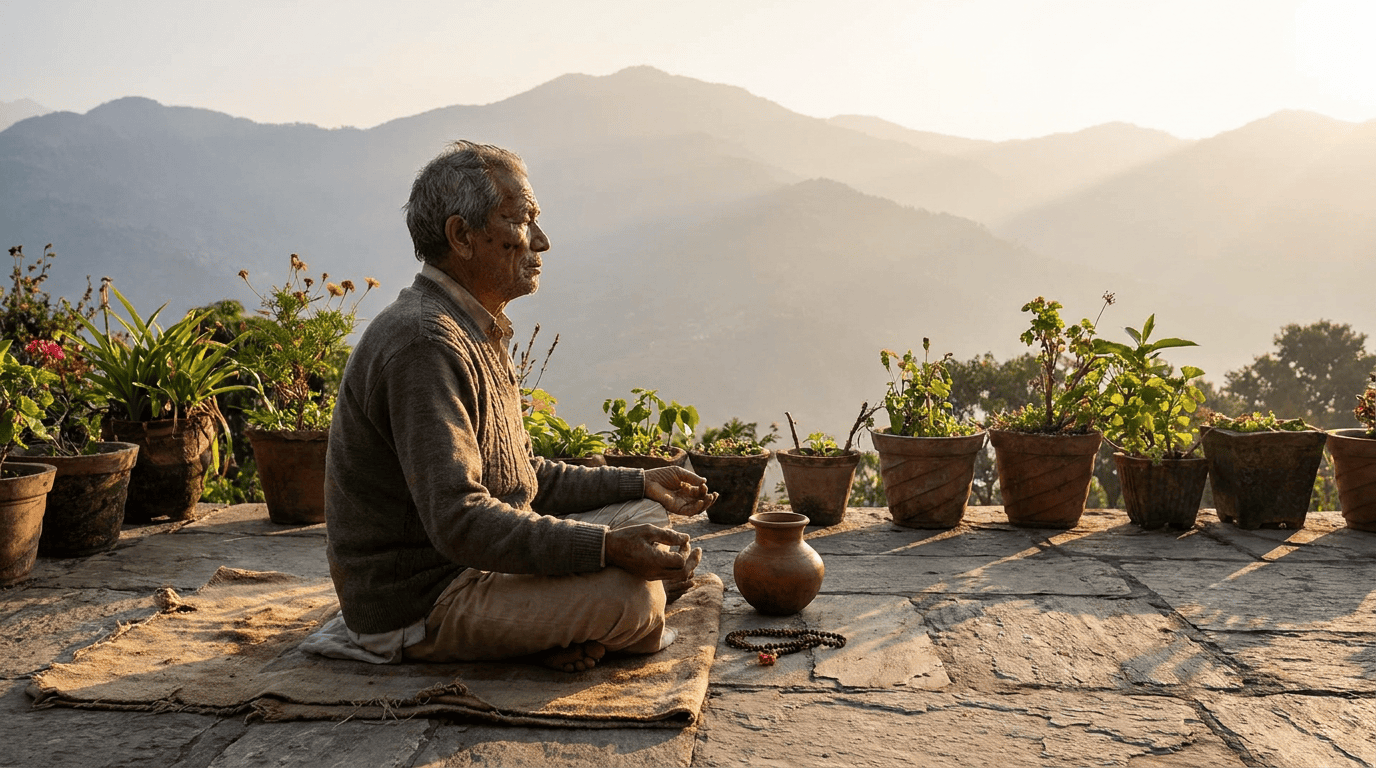
Sadhana is a Sanskrit word that means “spiritual practice” or “a means of accomplishment.” In simple terms, sadhana is the daily practice that helps us remember who we truly are and reconnect with God.
In the Bhakti Yoga tradition, sadhana is not meant to be dry, harsh, or mechanical. It is a loving offering. It is the sacred rhythm of turning the heart toward the Divine again and again.
Just as the body becomes strong through regular nourishment and movement, the soul becomes awakened through steady spiritual nourishment. Chanting, prayer, meditation, sacred study, service, and community are all forms of sadhana. They help us uncover the inner potential already resting within the heart.
Bhakti Yoga teaches that we are not simply the body or the mind. We are spiritual beings, eternal souls, naturally meant for a loving relationship with God. Sadhana helps us remember this truth, not as a theory, but as a lived experience.
Sadhana Is a Relationship, Not a Performance
Sometimes people hear the word “practice” and imagine pressure, perfection, or spiritual achievement. But in Bhakti, sadhana is not about proving ourselves. It is about offering ourselves.
God is not waiting for us to become flawless before we approach. The beauty of Bhakti Yoga is that we begin exactly where we are—with our questions, our wounds, our hopes, our distractions, and our longing.
A simple prayer offered sincerely may be more powerful than an elaborate ritual performed without heart. A few minutes of honest chanting may soften the soul more deeply than hours of spiritual activity done with pride.
Sadhana is the humble art of showing up.
The Meaning of Inner Potential
When we speak of “unlocking inner potential,” we are not only talking about becoming more productive, confident, or peaceful—though these blessings often come naturally through spiritual practice. At a deeper level, inner potential means awakening the soul’s natural qualities: love, compassion, wisdom, patience, courage, and devotion.
In the Bhagavad-gita, one of the most cherished scriptures of Bhakti Yoga, Krishna explains that the soul is eternal and cannot be destroyed by any material circumstance. This means our deepest identity is not limited by past mistakes, social labels, fear, or temporary struggles.
Sadhana helps us live from that deeper identity.
Why Daily Spiritual Practice Matters
Life moves quickly. The mind is pulled in many directions—responsibilities, relationships, worries, screens, ambitions, and fears. Without conscious spiritual practice, it is easy to forget what matters most.
Sadhana brings us back.
Even a small daily practice can become a sacred anchor. It gives the heart a place to rest. It reminds us that we are loved, guided, and never spiritually alone.
The Mind Needs Gentle Training
In the Bhagavad-gita, the mind is described as restless and difficult to control. Many of us know this from experience. We sit down to pray, and suddenly we remember ten things we forgot to do. We try to chant, and the mind wanders into memories, plans, or anxieties.
This does not mean we are failing. It means we are human.
Sadhana is the gentle training of the mind to return to God. Not once, but many times. Each return is meaningful. Each return is an offering.
Like guiding a child back home with kindness, we guide the mind back to the holy name, back to prayer, back to gratitude, back to service.
Consistency Opens the Heart
Spiritual growth often happens quietly. A single day of practice may not seem dramatic, but over time, sincere sadhana changes the inner landscape.
A person who chants regularly may notice they become less reactive. A person who prays daily may begin to feel guided in difficult decisions. A person who serves others may find their heart expanding beyond self-centered concerns.
The change may be gradual, but it is real.
Just as drops of water can fill a pot, small acts of devotion fill the heart with spiritual strength.
Sadhana Creates Sacred Space in Ordinary Life
One of the gifts of Bhakti Yoga is that it does not ask us to reject the world in order to remember God. Instead, it teaches us how to spiritualize our daily life.
Cooking can become an offering. Work can become service. Family life can become a place of compassion and patience. Music can become prayer. Walking can become meditation. Conversation can become encouragement.
Sadhana helps us see that God is not confined to a temple, church, mosque, monastery, or yoga studio. The Divine can be remembered anywhere.
The Core Practices of Bhakti Sadhana
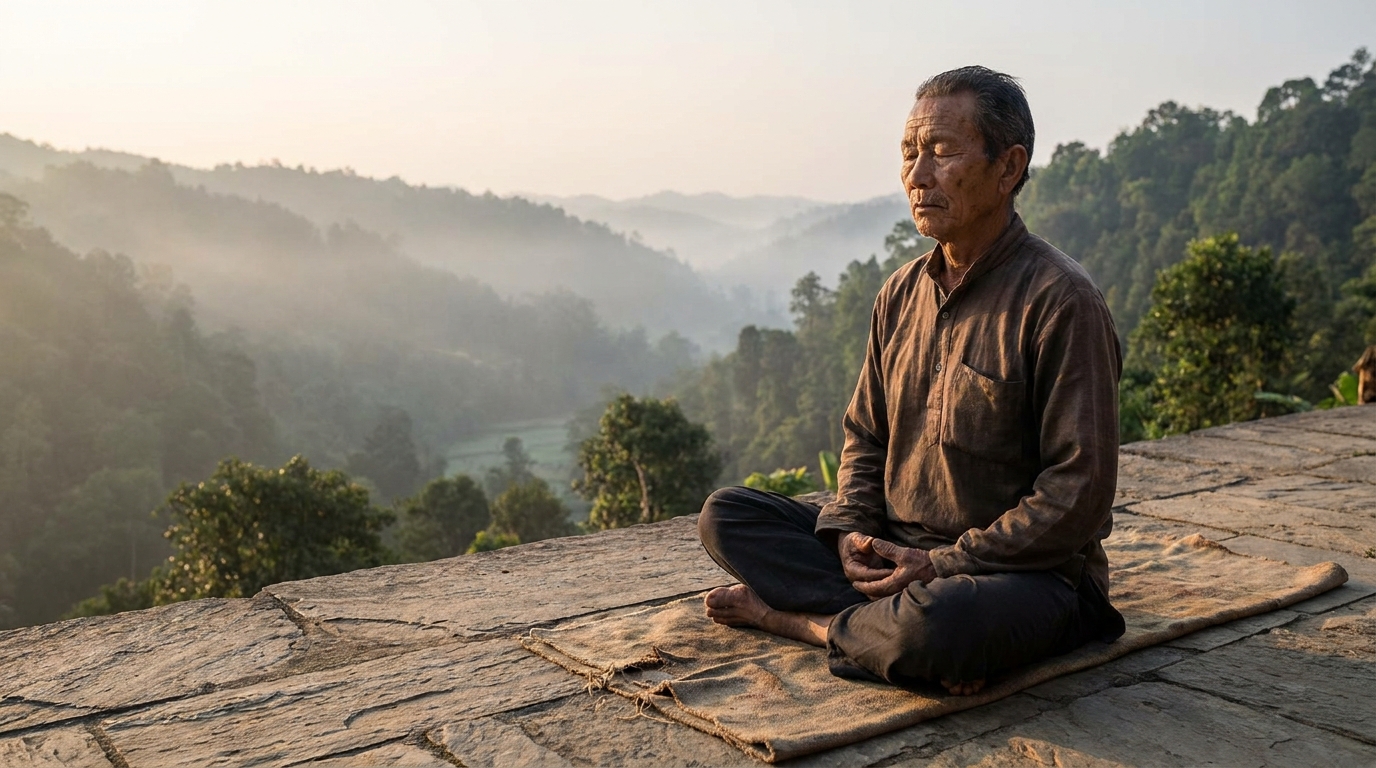
Bhakti Yoga is the yoga of love and devotion. Its practices are simple, accessible, and deeply transformative. They are not limited by age, background, culture, education, or previous spiritual experience.
Everyone can begin.
Chanting the Holy Names
Chanting is one of the central practices of Bhakti Yoga. In Sanskrit, mantra means “that which frees the mind.” A mantra is a sacred sound vibration that connects the heart with God.
One of the most well-known mantras in the Bhakti tradition is the maha-mantra, or “great mantra”:
Hare Krishna, Hare Krishna, Krishna Krishna, Hare Hare
Hare Rama, Hare Rama, Rama Rama, Hare Hare
“Hare” refers to the divine energy of God. “Krishna” means the all-attractive Lord. “Rama” means the source of spiritual joy. When we chant, we are calling out to God with love: “Please engage me in Your service. Please help me remember You.”
Chanting can be done softly, loudly, alone, or with others. It can be sung with instruments in kirtan, which means devotional chanting together, or repeated quietly on beads in japa, which is personal mantra meditation.
The power of chanting is not dependent on musical skill. It depends on sincerity.
Prayer from the Heart
Prayer is another essential part of sadhana. Prayer does not need to be formal or poetic. We can speak to God honestly.
We can pray with gratitude: “Thank You for guiding me.”
We can pray with need: “Please help me through this.”
We can pray with humility: “Please show me how to serve.”
We can pray with longing: “Please help me love You more.”
In Bhakti Yoga, prayer deepens our relationship with the Divine. It opens the heart and invites grace. Sometimes prayer changes our circumstances. Sometimes it changes how we see our circumstances. Both are gifts.
Seva: Service with Love
Seva means “service.” In Bhakti, service is not merely volunteering or doing good deeds, though it may include both. Seva is action offered with love to God and to all living beings.
We can serve by feeding others, listening with compassion, cleaning a sacred space, sharing wisdom, supporting a community, caring for family, protecting nature, or offering our talents for a higher purpose.
Service purifies the heart because it moves us from “What can I get?” to “How can I give?” This shift unlocks a deep inner freedom.
The Bhagavad-gita teaches that work offered to God can free us from selfish attachment. This means we do not have to abandon our responsibilities to become spiritual. We can transform them through intention.
Study of Sacred Wisdom
Sacred study is also an important part of sadhana. Scriptures such as the Bhagavad-gita, Srimad-Bhagavatam, and the writings of great saints offer guidance for the soul.
However, study in Bhakti is not meant to make us proud or argumentative. It is meant to make us humble, clear, and compassionate.
When we read even one verse and ask, “How can I live this today?” scripture becomes practical. It becomes a lamp for daily life.
For example, in the Bhagavad-gita, Krishna encourages Arjuna to act with devotion, remember Him, and offer the results of work. This teaching can help us approach our day with less anxiety and more trust.
Satsanga: Spiritual Community
Satsanga means “association with truth” or “spiritual company.” The people we spend time with influence our thoughts, values, and habits. A loving spiritual community helps us stay inspired.
In Bhakti, community is not about judgment or belonging to an exclusive group. It is about walking together toward God.
When we chant together, serve together, study together, and share honestly, our individual sadhana becomes stronger. We remember that spiritual life is not a lonely path.
Check out our latest posts at https://thebhaktihouse.org/blog.
How Sadhana Unlocks Inner Potential
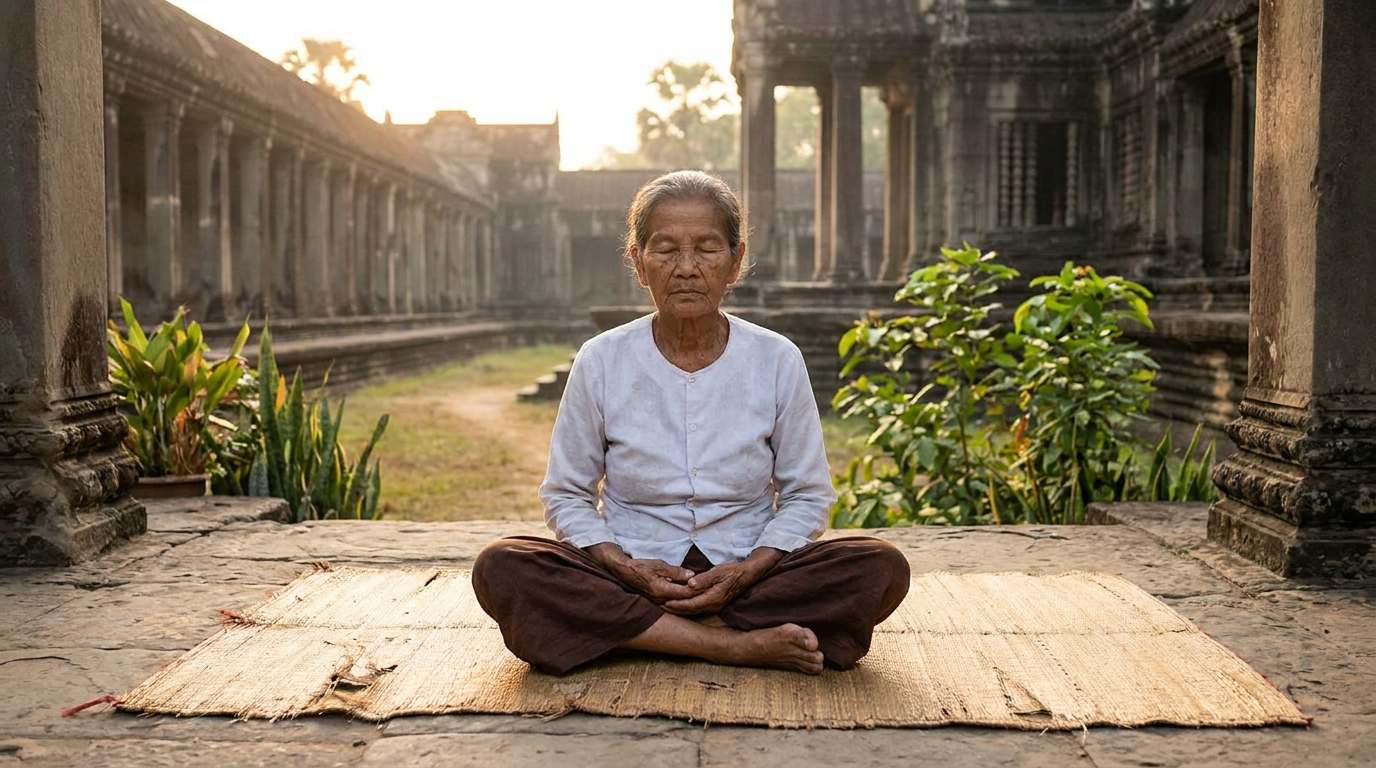
Sadhana does not add something artificial to us. It removes what covers our original nature. Like dust on a mirror, distractions and unhealthy patterns can cover the soul’s brightness. Spiritual practice gently cleans the mirror of the heart.
From Restlessness to Peace
Many people begin spiritual practice because they are searching for peace. The world may offer temporary relief, but the soul longs for something deeper.
Chanting, prayer, and meditation calm the nervous system, but they also do more than that. They connect us to the eternal. They remind us that we are held by a love greater than our circumstances.
Over time, sadhana helps us respond rather than react. We begin to pause before speaking harshly. We begin to notice our motives. We begin to choose compassion where we once chose defensiveness.
This is inner potential awakening.
From Fear to Trust
Fear often comes from the feeling that we are alone and everything depends on us. Bhakti Yoga gently teaches another way: we are responsible, but we are not the ultimate controller.
Krishna says in the Bhagavad-gita that He is the well-wisher of all living beings. To meditate on this truth is deeply healing.
Sadhana helps us cultivate trust—not passive avoidance, but active faith. We still do our duty. We still make wise choices. We still care deeply. But we learn to place the results in God’s hands.
This trust brings strength.
From Self-Centeredness to Love
The more we practice devotion, the more the heart expands. We begin to see others not as obstacles, competitors, or strangers, but as souls.
This vision is at the heart of Bhakti Yoga. Every living being is beloved by God. Every person carries sacred worth.
Sadhana helps us live this truth. It softens prejudice, envy, and pride. It inspires kindness in small daily ways: a patient response, a generous act, a sincere apology, a prayer for someone who is suffering.
Love becomes practical.
From Confusion to Purpose
Many people feel uncertain about their purpose. Sadhana brings clarity because it connects our actions to something eternal.
Our ultimate purpose in Bhakti is to awaken love for God and express that love through service. This purpose can be lived in many ways—through parenting, art, teaching, healing, business, cooking, gardening, music, caregiving, or quiet prayer.
Purpose is not always about doing something impressive. Sometimes it is about doing something ordinary with devotion.
A simple life filled with love may be spiritually extraordinary.
Building a Simple Daily Sadhana
The best sadhana is one that is sincere and sustainable. It is better to begin with a small practice done regularly than to make a large promise that becomes overwhelming.
God sees the heart. Start where you are.
Begin with Morning Remembrance
Morning is a powerful time for spiritual practice. Before the day becomes busy, we can offer our first thoughts to God.
This may be as simple as sitting for five minutes, taking a few deep breaths, and praying:
“Dear Lord, please guide my thoughts, words, and actions today. Let me be an instrument of love and service.”
You may also chant a mantra, read a short passage from scripture, or write down one intention for the day.
A sacred morning does not need to be long. It needs to be sincere.
Create a Chanting Practice
If you are new to chanting, begin gently. You might chant the maha-mantra for five minutes daily. You may use beads, a timer, or simply your voice.
If the mind wanders, return to the sound. If emotions arise, offer them. If you feel nothing at first, continue with patience.
The holy name is compared to spiritual medicine. Sometimes healing begins before we fully understand it.
You can also join kirtan, where mantras are sung in call-and-response. Kirtan is joyful, communal, and welcoming. It allows the heart to open through sacred sound.
Offer Your Food
In Bhakti Yoga, food can become spiritualized through offering. Before eating, pause and offer gratitude to God. If you cook, you can prepare food with love and offer it before taking it yourself.
Food offered to God is called prasada, meaning “mercy” or “grace.” When we receive prasada, eating becomes more than nourishment for the body; it becomes nourishment for the heart.
A simple prayer before a meal can transform the atmosphere:
“Dear Lord, thank You for this food. May it nourish me so I can serve with love.”
Read a Little Sacred Wisdom
Daily study does not have to be long. Even five or ten minutes can make a difference.
You may read a verse from the Bhagavad-gita and reflect:
“What is this teaching me about my life today?”
“How can I apply this with humility?”
“How does this help me remember God?”
Sacred wisdom gives direction to devotion. It helps us avoid sentimentality without understanding, and it helps us bring spiritual principles into real decisions.
End the Day with Reflection
Evening reflection is a beautiful way to close the day. You can ask:
“Where did I remember God today?”
“Where did I act from ego or fear?”
“What am I grateful for?”
“What do I need to offer and release?”
This is not meant for self-condemnation. It is a loving check-in with the soul. Every day gives us lessons. Every day gives us opportunities to begin again.
Common Obstacles in Sadhana
Every sincere practitioner faces challenges. Obstacles do not mean we are unqualified. They are part of the path.
“I Don’t Have Enough Time”
Many people feel too busy for spiritual practice. But sadhana does not always require extra hours. It can begin with small sacred pauses.
Chant while walking. Pray before starting the car. Listen to kirtan while cooking. Offer your work before opening your laptop. Read one verse before bed.
The goal is not to escape life, but to bring devotion into life.
“My Mind Is Too Distracted”
A distracted mind is not a disqualification. It is the very reason we practice.
When the mind wanders during chanting or prayer, gently return. Do not become discouraged. Each return strengthens devotion.
Think of sadhana like tending a garden. Some days the soil feels dry. Some days weeds appear. Still, we water the seeds. In time, growth comes.
“I Don’t Feel Spiritual”
Feelings rise and fall. Some days practice feels sweet. Other days it may feel ordinary. Bhakti teaches us to keep offering the heart, even when emotions are quiet.
Love is not only a feeling. Love is also commitment, attention, and service.
If you do not feel spiritual, pray honestly: “I do not feel connected today, but I still want to turn toward You.” That prayer is deeply spiritual.
“I Feel Unworthy”
Many people carry guilt, shame, or the belief that they are too far from God. But Bhakti Yoga is a path of grace.
The Srimad-Bhagavatam shares many stories of people transformed by even a small connection with devotion. The message is clear: no sincere effort is wasted.
God is not repelled by our brokenness. He is drawn to our sincerity.
Come as you are.
Sadhana as a Path of Love in the Modern World
In today’s world, many hearts are tired. People are searching for peace, meaning, belonging, and healing. Sadhana offers a practical spiritual path that can be lived in the middle of modern life.
It does not demand that we become someone else. It invites us to become more truly ourselves.
Bringing Devotion into Work
Work can be stressful when it is driven only by pressure, comparison, or fear. But when work becomes an offering, it changes.
Before beginning your workday, you might pray: “May my work today be of service. May I act with integrity, patience, and care.”
This simple shift can bring dignity to even difficult tasks. It reminds us that our value is not measured only by outcomes.
Bringing Devotion into Relationships
Relationships are one of the most powerful places for spiritual growth. They reveal our attachments, expectations, wounds, and capacity for love.
Sadhana helps us become more present and compassionate. It teaches us to listen, forgive, speak truthfully, and serve without always needing recognition.
Seeing others as souls does not mean ignoring healthy boundaries. Rather, it helps us act with both love and wisdom.
Bringing Devotion into Suffering
No spiritual path can promise a life without pain. But Bhakti Yoga gives us a way to move through suffering with meaning and connection.
In difficult times, sadhana may become very simple: chanting through tears, whispering a prayer, accepting prasada, hearing sacred music, or sitting with devotees who remind us of God’s love.
Sometimes the deepest spiritual growth happens when our heart is most vulnerable. In those moments, we may discover that God was nearer than we knew.
The Grace Behind Sadhana
While sadhana involves our effort, Bhakti Yoga always reminds us that spiritual growth is ultimately nourished by grace.
We practice, but God gives the strength.
We chant, but the holy name purifies the heart.
We serve, but devotion is awakened by mercy.
We take one step, and the Divine lovingly meets us.
This balance of effort and grace keeps us humble. We do not become proud of our practice, and we do not despair over our imperfections.
A Small Offering Can Be Great
In the Bhagavad-gita, Krishna says that if one offers Him a leaf, a flower, fruit, or water with devotion, He accepts it. This verse is deeply comforting. God is not asking for wealth, status, or perfection. He is asking for love.
A small offering made with devotion becomes spiritually powerful.
This is the heart of sadhana. It is not the size of the practice that matters most. It is the sincerity.
The Heart Is the Real Temple
Temples and sacred spaces are beautiful gifts. They help us remember, gather, and worship. But Bhakti also teaches that the heart itself can become a temple.
When we chant, the heart is cleansed.
When we pray, the heart opens.
When we serve, the heart expands.
When we remember God, the heart becomes sacred ground.
Sadhana is how we care for that inner temple day by day.
A Gentle Invitation to Begin
Unlocking inner potential through sadhana is not about becoming spiritually impressive. It is about becoming more loving, more honest, more surrendered, and more awake to God’s presence.
You do not need to have everything figured out. You do not need to know all the Sanskrit words. You do not need to belong to a particular culture or background. Bhakti Yoga is a path of the heart, and the heart’s language is sincerity.
Begin with one simple step.
Chant for a few minutes. Offer a prayer. Read one verse. Serve someone with kindness. Sit in gratitude. Come to kirtan. Share a meal of prasada. Ask God to guide you.
Every sincere step matters.
At The Bhakti House, all are welcome—seekers, skeptics, beginners, lifelong practitioners, and everyone in between. Wherever you are on your journey, you are invited to take one sincere step toward God today. That step may be small, but with love and grace, it can open the door to a life of deep spiritual growth.
FAQs
What is Sadhana?
Sadhana is a Sanskrit term that refers to the spiritual practice or discipline undertaken by an individual to attain a specific goal, such as self-realization or enlightenment.
What are the different types of Sadhana?
There are various types of Sadhana, including mantra Sadhana (chanting of sacred sounds or words), yoga Sadhana (practice of yoga postures and breathing exercises), and meditation Sadhana (cultivation of mindfulness and concentration).
What are the benefits of practicing Sadhana?
Practicing Sadhana can lead to increased self-awareness, inner peace, and spiritual growth. It can also help individuals develop discipline, focus, and a deeper connection to their inner selves.
How often should one practice Sadhana?
The frequency of Sadhana practice can vary depending on individual preferences and spiritual goals. Some people may choose to practice Sadhana daily, while others may opt for a less frequent schedule, such as weekly or monthly.
Are there any specific guidelines for practicing Sadhana?
While the specifics of Sadhana practice can vary based on the type of Sadhana being pursued, common guidelines include finding a quiet and peaceful space for practice, maintaining consistency in practice, and seeking guidance from a qualified teacher or guru if necessary.

