
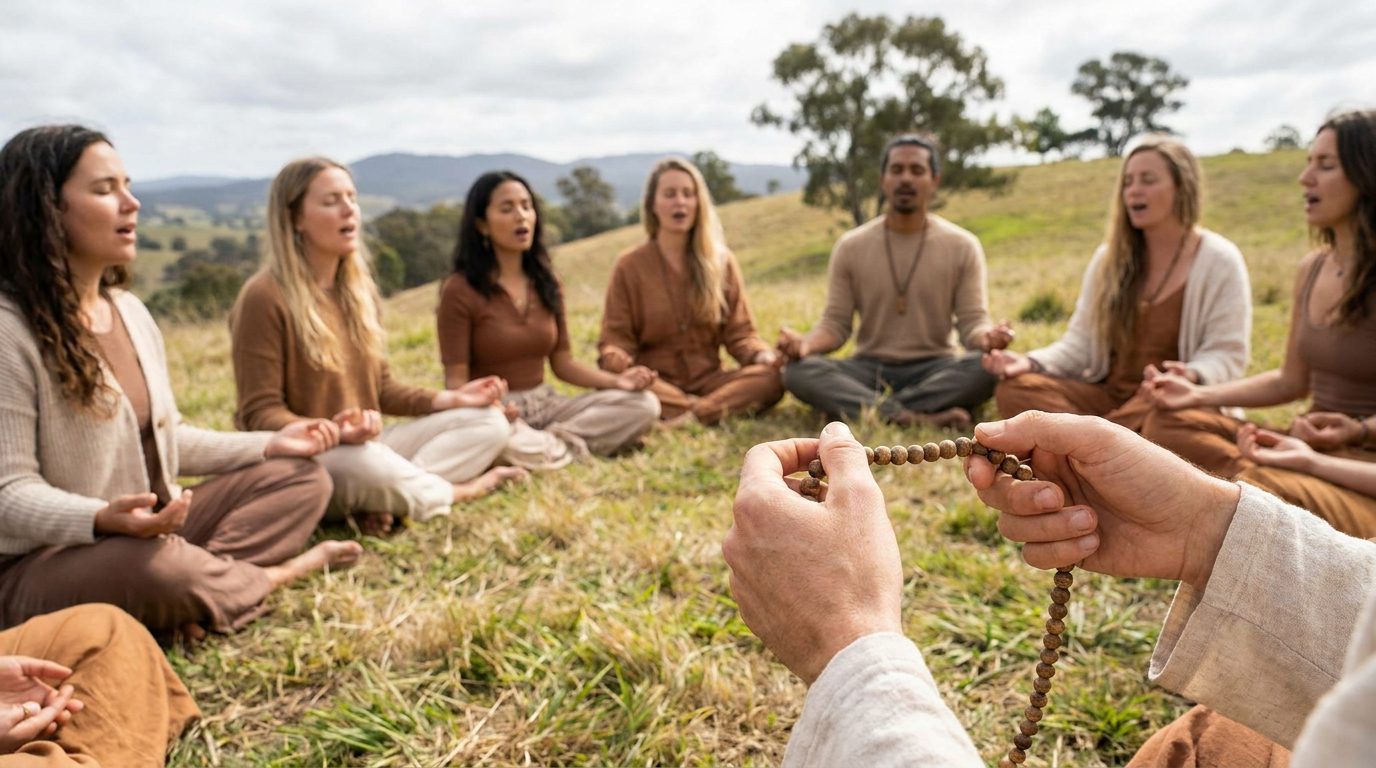
There is a special kind of mercy that enters the heart when we chant the holy names of God out loud.
Not as a performance. Not to impress anyone. Not to prove our devotion.
But as a simple, honest offering.
In Bhakti Yoga, the path of loving devotion, chanting is one of the most accessible and powerful spiritual practices. The Sanskrit word often used is kirtan, which means glorifying or praising the Divine, especially through sacred sound. When we chant loudly, whether alone in a room, softly with family, or joyfully in a group, we give our mind, voice, breath, and heart to God.
The practice is simple, but its effects can be deep. Loud chanting can calm the mind, awaken devotion, purify the heart, build spiritual courage, and connect us with something far greater than ourselves.
Whether you are new to spiritual life, returning after a long time, or already walking the path of Bhakti, loud chanting welcomes you as you are.
What Is Loud Chanting in Bhakti Yoga?
Loud chanting means using the voice to call upon God’s names with sincerity and attention. In the Bhakti tradition, God has many beautiful names, and each name carries divine presence, compassion, and power.
One of the most beloved mantras in the Bhakti Yoga tradition is the Maha Mantra, which means “the great mantra”:
Hare Krishna Hare Krishna
Krishna Krishna Hare Hare
Hare Rama Hare Rama
Rama Rama Hare Hare
A mantra is a sacred sound vibration that helps the mind become focused and spiritually uplifted. The word can be understood as “that which protects or frees the mind.” Rather than being ordinary sound, mantra is received through spiritual tradition and practiced with faith, humility, and love.
Chanting as a Call of the Heart
Loud chanting is not merely singing or reciting words. It is a call from the soul.
When we chant “Krishna,” we are calling to the all-attractive Lord. When we chant “Rama,” we are calling to the source of spiritual joy. When we chant “Hare,” we are calling upon the divine energy of the Lord, asking to be engaged in loving service.
Even if we do not fully understand everything at first, the sound itself carries mercy. Like the sun rising whether or not we understand astronomy, the holy name acts on the heart when we receive it sincerely.
The Difference Between Loud Chanting and Silent Meditation
Silent meditation has a sacred place in many traditions. It can bring stillness, awareness, and inner discipline. But loud chanting offers something especially helpful for our busy age.
Our minds are often restless. Thoughts run in many directions. Anxiety, distraction, and emotional heaviness can make silent meditation difficult.
Loud chanting gives the mind something holy to hear, the tongue something holy to speak, and the heart something holy to remember. It engages more of our being. We are not only thinking of God—we are speaking, hearing, breathing, and feeling our way toward God.
Kirtan and Japa
In Bhakti Yoga, two common forms of chanting are kirtan and japa.
Kirtan usually means chanting out loud, often with music and others. It may include instruments like harmonium, mridanga drum, kartals, guitar, or simply clapping hands. In kirtan, one person may lead and others respond, creating a shared prayerful atmosphere.
Japa means personal mantra meditation, often chanted on beads. Many practitioners chant the Maha Mantra on a string of 108 beads, known as japa mala. Japa can be soft or audible, but hearing oneself chant is very important.
Both practices nourish the heart. Loud chanting can strengthen both personal and shared devotion.
Why Loud Chanting Is So Powerful

The power of loud chanting comes from sacred sound. In Bhakti Yoga, divine sound is not separate from God. This is a very beautiful and important teaching.
The Padma Purana, a respected Bhakti scripture, explains that the holy name of the Lord is fully spiritual and non-different from the Lord Himself. This means that when we chant God’s names with sincerity, we are not dealing with a symbol only. We are meeting divine presence through sound.
Sacred Sound Cleanses the Heart
The heart naturally longs for love, truth, and belonging. But over time it becomes covered by fear, pride, envy, regret, distraction, and the endless demands of daily life.
The great Bhakti teacher Sri Chaitanya Mahaprabhu described the chanting of God’s names as ceto-darpana-marjanam, “the cleansing of the mirror of the heart.” This phrase comes from His famous prayer, the Sikshashtakam.
A mirror covered in dust cannot reflect clearly. In the same way, when the heart is covered, we may forget who we are and what we truly need. Loud chanting gently wipes away that dust.
We may not notice everything changing at once. But little by little, we may feel more peaceful, more forgiving, more grateful, and more connected to God.
Chanting Gives the Mind a Higher Taste
Many of us try to control the mind by force. We tell ourselves, “Stop worrying. Stop being angry. Stop comparing. Stop overthinking.” But the mind does not easily stop.
Bhakti Yoga offers another way: give the mind a higher taste.
When we chant loudly, the mind hears the holy name again and again. The sound becomes a shelter. Instead of feeding the mind with fear or endless noise, we feed it with divine remembrance.
In the Bhagavad-gita, Lord Krishna says, “Always think of Me, become My devotee, worship Me, and offer your homage unto Me” (Bhagavad-gita 18.65). Loud chanting helps us practice this teaching in a very practical way. We remember God not as a distant idea, but through living sound.
The Voice Becomes an Offering
Every day our voices are used for many things. We speak about work, family, problems, plans, opinions, and worries. Sometimes our words heal. Sometimes they hurt.
Loud chanting transforms the voice into an offering.
Instead of using the tongue for complaint, gossip, or harshness, we use it to glorify God. This does not make us perfect overnight, but it begins to redirect our energy.
In Bhakti, this is called seva, or loving service. Seva means offering our abilities for God’s pleasure and the upliftment of others. Loud chanting is seva through sound.
Check out our latest posts at https://thebhaktihouse.org/blog.
The Spiritual Benefits of Loud Chanting
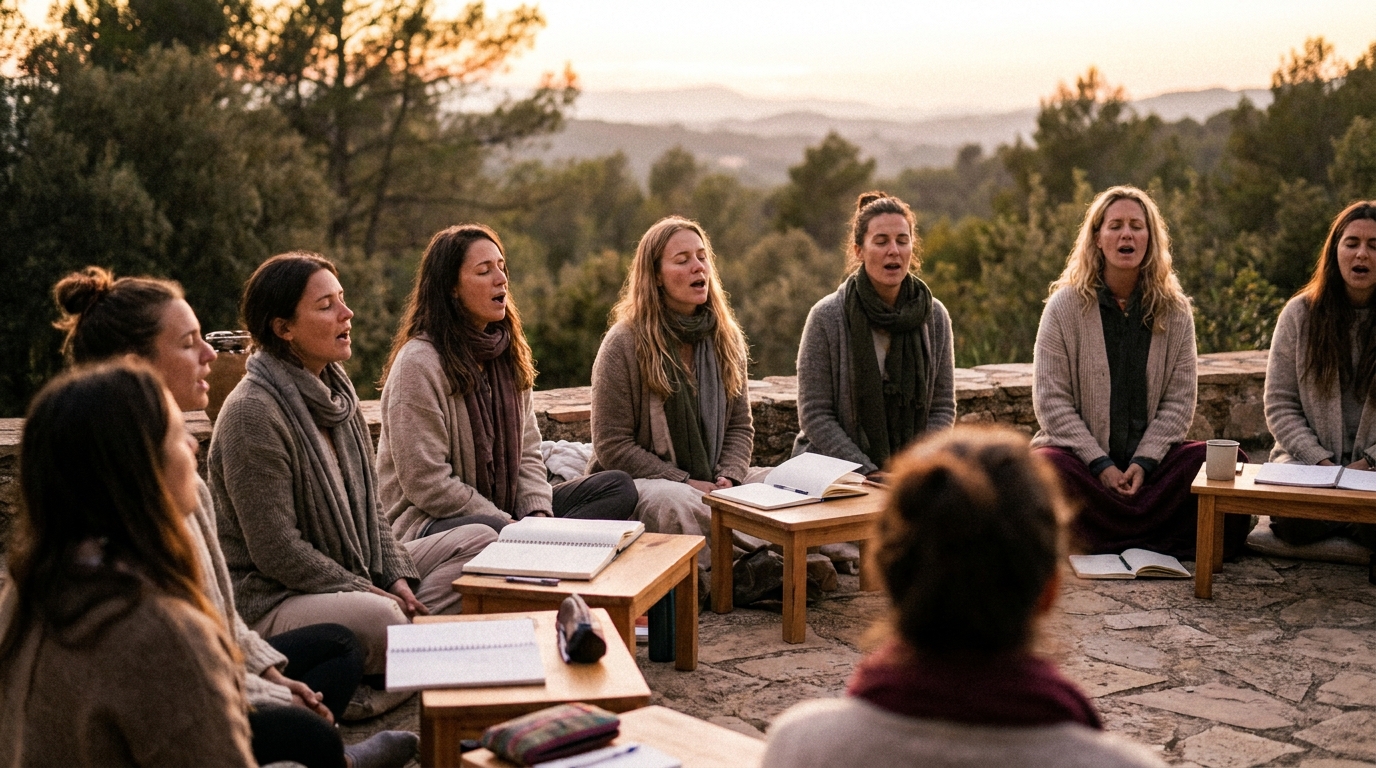
The benefits of loud chanting are both spiritual and practical. It touches the soul, but it also meets us in our everyday human experience.
Loud Chanting Awakens Devotion
Devotion is not something artificial. It already exists within the soul. Bhakti Yoga teaches that our deepest identity is spiritual. We are not merely the body, the mind, or the roles we play. We are eternal souls, naturally meant to love and be loved by God.
Loud chanting awakens that sleeping love.
At first, chanting may feel like a practice. We make time, sit down, sing, listen, and try to focus. But gradually the heart may soften. The name becomes familiar. Prayer becomes more natural. God feels nearer.
This awakening is not forced. It is nurtured.
Like watering a seed, loud chanting gives devotion the nourishment it needs to grow.
Loud Chanting Brings Emotional Healing
Many people carry quiet pain. Some carry grief, disappointment, loneliness, shame, or spiritual confusion. Loud chanting creates a safe space where we can bring all of that before God.
We do not need to pretend. We do not need to have perfect faith. We do not need to hide our brokenness.
We can chant from where we are.
Sometimes the holy name may bring tears. Sometimes it may bring joy. Sometimes it may simply bring steadiness. All of these can be forms of grace.
In the Srimad Bhagavatam, a foundational Bhakti scripture, it is said that hearing and chanting about the Lord cleanses the desire for things that do not truly satisfy the soul (Srimad Bhagavatam 1.2.17). Practically, this means sacred sound helps us release what burdens us and reawaken what nourishes us.
Loud Chanting Builds Spiritual Courage
It takes courage to chant out loud.
We may feel shy. We may wonder what others will think. We may feel our voice is not good enough. We may fear we are not spiritual enough.
But Bhakti is not about having a polished voice. It is about having a sincere heart.
When we chant loudly, we gently step beyond self-consciousness. We begin to care more about pleasing God than protecting our image. This is a beautiful kind of freedom.
Even chanting alone can build courage. The simple act of hearing your own voice call God’s names can remind you: “I am a soul. I belong to God. I can turn toward Him.”
Loud Chanting Creates Spiritual Community
Group chanting, or kirtan, has a unique power. When many people chant together, hearts become united in a shared intention. Differences of age, background, culture, and life story begin to soften.
One person may be new. Another may have chanted for years. One may be joyful. Another may be hurting. Yet all can sit together and chant.
This is one of the gifts of Bhakti Yoga: it welcomes everyone into a circle of sacred sound.
No one needs to be an expert. No one needs to know all the philosophy. Everyone can participate by listening, repeating, clapping, singing, or simply receiving the atmosphere.
How Loud Chanting Works on the Heart
To understand loud chanting, we can think about the relationship between sound, memory, and love.
We all know that sound affects us. A kind word can encourage us for years. A harsh word can wound deeply. Music can change our mood. A familiar voice can comfort us.
If ordinary sound has such influence, sacred sound has even greater potential.
Hearing Is the First Step
In Bhakti Yoga, hearing is essential. The Sanskrit word sravanam means hearing, especially hearing about God. Chanting and hearing go together. When we chant loudly, we also hear what we chant.
This hearing is not passive. It is devotional listening.
We may ask ourselves while chanting: “Can I really hear the name? Can I bring my mind back to the sound? Can I receive this as a gift?”
The mind will wander. That is normal. When it does, we gently return to the sound. Not with frustration, but with patience.
Each return is an act of devotion.
Repetition Deepens Relationship
Some people wonder why mantras are repeated so many times. But repetition is natural in love.
We say the names of those we love. We remember them often. We may repeat meaningful words, prayers, songs, or memories because they connect us with someone dear.
In the same way, repeating the holy name deepens our relationship with God.
The goal is not mechanical repetition. The goal is heartfelt remembrance. But even when the heart feels dry, the practice still has value. Just as clouds may cover the sun, our feelings may come and go. The holy name remains powerful.
The Holy Name Meets Us Personally
One beautiful mystery of chanting is that the same mantra may touch people in different ways.
For one person, loud chanting brings peace. For another, it brings joy. For another, it brings repentance. For another, it brings hope.
God knows each heart. The holy name meets us personally, in the way we most need.
This is why we do not need to compare our chanting experience with anyone else’s. Bhakti is intimate. Your sincere chanting is seen and received by God.
Practical Ways to Begin Loud Chanting
Loud chanting does not require special qualifications. You can begin with what you have: your voice, your breath, your attention, and a little willingness.
Start Small and Sincere
If you are new to chanting, begin with five or ten minutes a day. Choose a simple mantra, such as the Maha Mantra, and chant it clearly enough that you can hear yourself.
You do not need to chant loudly in a way that strains your voice. “Loud chanting” simply means audible, intentional, and heartfelt. Let the sound be steady and natural.
You might begin your practice with a short prayer:
“Dear Lord, please help me chant with sincerity. Please let this sound bring me closer to You. Please guide my heart.”
Then chant.
Create a Sacred Space
A sacred space does not have to be elaborate. It may be a quiet corner, a small altar, a candle, a picture of Krishna, a scripture, or simply a clean place where you can sit peacefully.
The external space helps the internal space.
Try to keep your phone away or on silent. Sit comfortably. Take a few deep breaths. Remember that chanting is not another task to complete. It is time with God.
Chant with Others When You Can
If possible, join a kirtan gathering, temple program, satsang, or Bhakti community. Satsang means spiritual association, or being in the company of those seeking truth.
Chanting with others can give strength when personal practice feels difficult. The devotion of others can encourage our own devotion. Sometimes we arrive tired or distracted, and through group chanting we leave lighter.
If you do not have a local community, you can chant with online kirtans, recordings, or friends over a call. While in-person chanting has a special sweetness, sincere connection can happen in many ways.
Use Music, but Keep the Heart Central
Music can support loud chanting beautifully. Melody, rhythm, and instruments can help the mind engage. But the heart of kirtan is not musical talent. It is devotion.
A simple chant with a sincere heart is spiritually powerful.
If you play an instrument, offer it. If you cannot sing on pitch, offer your voice anyway. If you are too shy to sing loudly in a group, begin by softly responding. If all you can do is listen, listen with faith.
Bhakti makes room for everyone.
Overcoming Common Obstacles in Loud Chanting
Every spiritual practice has challenges. Loud chanting is simple, but the mind may still resist. This does not mean we are failing. It means we are practicing.
“My Mind Wanders”
This is perhaps the most common obstacle. The mind wanders to responsibilities, memories, worries, plans, and random thoughts.
When this happens, gently return to the sound.
Do not spend your chanting time criticizing yourself. The holy name is not waiting for you to become perfect. The holy name is helping you become purified.
A helpful practice is to focus on one mantra at a time. Hear each word. Let the tongue pronounce it clearly. Let the ear receive it. Let the heart follow.
“I Feel Shy or Embarrassed”
Many people feel shy when chanting out loud, especially at first. This is understandable. Our voices can feel very personal.
Begin in private. Chant in your room, in your car, while walking in nature, or in any place where you feel comfortable. Over time, your confidence will grow.
Remember: God is not judging your voice the way the world might. God receives the intention.
The Bhagavad-gita teaches that Krishna accepts even a leaf, a flower, fruit, or water when offered with love and devotion (Bhagavad-gita 9.26). If He accepts a simple leaf offered with love, surely He accepts a sincere voice, however imperfect it may sound.
“I Don’t Feel Anything”
Sometimes chanting feels sweet. Sometimes it feels ordinary. Sometimes it may even feel dry.
Do not be discouraged.
Spiritual growth is not measured only by immediate emotion. A seed may be growing underground long before we see a sprout. In the same way, chanting may be working deeply even when we do not feel dramatic changes.
Continue with humility. Ask for taste. Ask for help.
A simple prayer can be: “My Lord, I do not have much devotion, but I want to want You. Please let me keep chanting.”
That kind of honesty is beautiful.
“I Am Not Sure I Am Qualified”
Bhakti Yoga begins exactly where we are. We do not become qualified first and then chant. We chant, and the chanting purifies and qualifies us.
The holy name is merciful. It is especially given for those of us who feel weak, distracted, uncertain, or spiritually hungry.
In this age, the Bhakti scriptures repeatedly recommend the chanting of God’s names as the most practical and powerful spiritual process. The Brihan-naradiya Purana emphasizes chanting the holy name as the essential path for this age. This is not because other practices have no value, but because chanting is so accessible and merciful.
You can chant in any condition. You can begin today.
Loud Chanting in Daily Life
One of the most beautiful things about loud chanting is that it can enter ordinary life. It is not limited to a temple, yoga studio, or formal meditation time.
Chant in the Morning
Morning is a precious time for spiritual practice. Before the world becomes loud, we can become loud for God.
Even a few minutes of morning chanting can shape the whole day. It reminds us that we are not alone. It places God at the center before our responsibilities begin.
You might chant while sitting before an altar, walking outside, or softly singing as you prepare for the day.
Chant During Transitions
Daily life is full of transitions: driving, cooking, cleaning, walking, waiting, resting.
These moments can become sacred.
Instead of filling every gap with scrolling or worry, we can chant. Even one mantra chanted with attention can shift the atmosphere of the mind.
This is not about escaping responsibilities. It is about carrying remembrance into them.
Chant When the Heart Is Heavy
When you feel anxious, angry, lonely, or overwhelmed, try chanting out loud. You may not feel like it at first. That is okay.
Begin gently.
Let the holy name hold what you cannot hold alone. Let your voice become a bridge between pain and prayer.
Sometimes the most powerful chanting comes not from a joyful mood, but from a desperate, sincere heart calling out for shelter.
Chant in Celebration
Chanting is not only for difficult times. It is also for gratitude, joy, and celebration.
When something beautiful happens, chant. When you feel thankful, chant. When you gather with loved ones, chant. When food is offered, chant. When life feels blessed, chant.
Loud chanting teaches us to bring God into every season of the heart.
The Mood That Deepens Loud Chanting
Technique can help, but mood is essential. Bhakti is the path of the heart. The inner attitude we bring to chanting matters deeply.
Chant with Humility
Sri Chaitanya Mahaprabhu taught that one should chant the holy name in a humble state of mind, feeling oneself lower than a blade of grass, more tolerant than a tree, and ready to offer respect to others without expecting honor in return.
This instruction is not meant to make us feel worthless. Rather, it frees us from pride and defensiveness. Humility opens the heart.
When we chant humbly, we stop trying to control the experience. We receive.
Chant with Prayer
Chanting is already prayer, but we can also consciously pray within it.
We can pray: “Please engage me in Your service. Please cleanse my heart. Please help me love You. Please help me be kind. Please guide my life.”
Prayer makes chanting personal.
The holy name is not a sound we use for our own ego. It is a relationship we enter with reverence and love.
Chant with Service
The fruit of chanting is not only inner peace. It is loving action.
As loud chanting purifies the heart, it naturally inspires service. We may become more patient with family, more compassionate toward strangers, more honest in work, more generous with time, and more eager to help others spiritually.
This is practical Bhakti Yoga: chanting, prayer, service, and spiritual growth woven into daily life.
If our chanting is genuine, it should gradually soften how we treat others.
The Transforming Power of Chanting Together
There is something unforgettable about a room filled with people chanting the holy names. Voices rise and fall. The drum keeps a heartbeat. Hands clap. Some sing loudly. Some close their eyes. Some simply listen.
And in that shared sound, hearts begin to remember.
Kirtan Welcomes All Backgrounds
You do not need to be Hindu to chant. You do not need to be Indian. You do not need to know Sanskrit. You do not need to understand every detail of theology before beginning.
Bhakti Yoga is a universal path of love for God.
Of course, it is important to approach the tradition respectfully, learning from authentic teachers and scriptures. But the holy name itself is generous. It invites all sincere souls.
Many people first experience kirtan as music, then gradually discover it is prayer. Others come through philosophy, yoga, meditation, or curiosity. However one arrives, the invitation is the same: come and chant.
Group Chanting Dissolves Isolation
Modern life can feel lonely. Even surrounded by people, the heart may feel unseen.
Kirtan creates sacred belonging. We are not only individuals struggling separately. We are souls gathered before God.
The repeated response in kirtan teaches us to listen and answer. The leader calls, and the community responds. This simple pattern becomes a spiritual lesson: God calls, and we respond. The heart calls, and grace responds.
The Atmosphere Becomes Purified
Sacred sound changes the atmosphere of a place.
A home where chanting happens becomes spiritually warmed. A community where chanting happens becomes centered. A heart where chanting happens becomes gradually illumined.
This is why many Bhakti practitioners bring kirtan into homes, temples, yoga spaces, streets, retreats, and gatherings. The holy name is meant to be shared.
Not aggressively. Not with pressure. But with love.
Loud Chanting and the Journey of Spiritual Growth
Loud chanting is both a beginning and a lifelong companion. It is simple enough for a child, yet deep enough for the greatest saints.
From Sound to Relationship
At first, we may experience chanting as sound. Then as peace. Then as practice. Then as prayer. Over time, by grace, chanting becomes relationship.
We begin to feel that God is not far away. The holy name becomes shelter, friend, guide, and beloved presence.
This is the heart of Bhakti Yoga: not merely liberation from suffering, but awakening love for the Supreme Person.
From Self-Centeredness to God-Centeredness
So much of life trains us to ask, “What do I want? How do I look? What do others think of me? How can I control everything?”
Chanting gently turns us toward another question: “How can I love? How can I serve? How can I remember God?”
This shift is deeply healing. It does not erase our responsibilities or personality. It purifies them.
We still work, care for family, create, study, and live in the world. But loud chanting helps us do these things with a heart connected to God.
From Noise to Sacred Sound
The world is full of noise. News, opinions, advertisements, entertainment, and inner chatter compete for our attention.
Loud chanting gives us a different sound to live by.
It does not deny the world’s difficulties. It gives us strength to meet them with spiritual clarity.
When the holy name becomes part of our life, we begin to carry a sacred rhythm within us. Even in busy places, the heart can remember.
A Simple Loud Chanting Practice You Can Try Today
If you would like to begin, here is a gentle practice.
Step 1: Choose a Time
Pick five to fifteen minutes. Morning is ideal, but any sincere time is good.
Step 2: Sit or Stand Comfortably
Keep your spine relaxed and your breath natural. You may sit before an altar, in a quiet room, or anywhere peaceful.
Step 3: Offer a Short Prayer
Say in your own words, “Dear Lord, please help me chant with sincerity. Please guide my heart toward You.”
Step 4: Chant the Maha Mantra Out Loud
Hare Krishna Hare Krishna
Krishna Krishna Hare Hare
Hare Rama Hare Rama
Rama Rama Hare Hare
Chant clearly enough to hear yourself. If you know a melody, sing it. If not, simply recite it.
Step 5: Listen
Let your ears receive the sound. When the mind wanders, gently return.
Step 6: End with Gratitude
After chanting, pause for a moment. Thank God for the opportunity. Carry the sound into your day.
This small practice can become a doorway to deep spiritual life.
Everyone Can Take One Sincere Step
The power of loud chanting is not reserved for saints, scholars, musicians, or those who seem spiritually advanced. It is for everyone.
It is for the joyful and the grieving.
For the confident and the uncertain.
For the lifelong seeker and the person just beginning.
For those who understand Sanskrit and those who only know that their heart is hungry for something real.
Bhakti Yoga teaches that God is attracted by sincerity. Loud chanting is one way we can offer that sincerity with our whole being—voice, breath, mind, and heart.
If you can chant one mantra today, chant one. If you can attend one kirtan, attend one. If you can whisper a prayer, whisper it. If you can serve someone with kindness, serve. If you can simply listen to the holy name, listen.
No sincere step toward God is ever wasted.
You are welcome as you are. Your voice is welcome. Your questions are welcome. Your heart is welcome. Take one humble step into sacred sound, and let the holy name gently lead you closer to divine love.
FAQs
What is loud chanting?
Loud chanting refers to the act of chanting or reciting words or phrases in a loud and powerful manner. It is often used in religious or spiritual practices, as well as in protests or demonstrations.
What are the purposes of loud chanting?
Loud chanting can serve various purposes, including expressing devotion or reverence in religious ceremonies, creating a sense of unity and solidarity in group settings, and making a powerful statement in protests or demonstrations.
What are the potential effects of loud chanting?
Loud chanting can have a powerful impact on both the participants and the surrounding environment. It can create a sense of energy and focus, evoke strong emotions, and draw attention to a cause or message.
What are some examples of loud chanting in different contexts?
Examples of loud chanting can be found in religious rituals such as Hindu kirtan, Buddhist chanting, and Christian hymns. It is also commonly used in protests, rallies, and sports events to convey a message or show support for a cause.
How can one participate in or experience loud chanting?
One can participate in or experience loud chanting by joining religious or spiritual gatherings, attending protests or demonstrations, or engaging in group activities that involve chanting or reciting in a loud and powerful manner.

