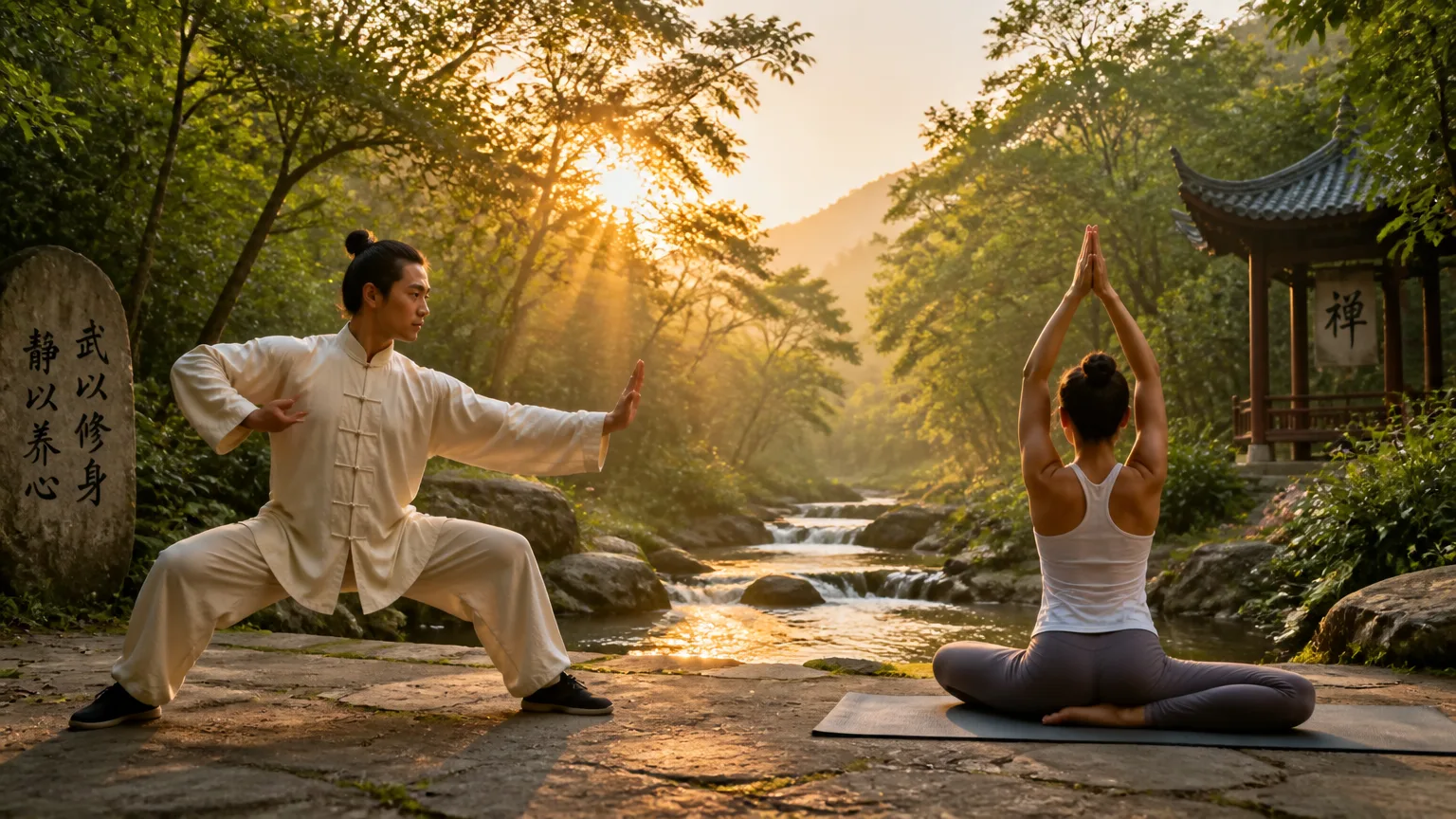
Kung Fu and Yoga, while distinct in their cultural origins, converge in their commitment to mindfulness and personal development. Both practices stem from rich traditions rooted in Eastern philosophies, where the mind-body connection plays a pivotal role. Kung Fu, with its martial roots, emphasizes discipline and self-awareness through rigorous physical training and mental focus. Similarly, Yoga encourages practitioners to cultivate inner peace and awareness through breath control and meditative movement.
The practice of Kung Fu involves not only mastering physical techniques but also understanding the deeper spiritual principles that guide them. This holistic approach fosters resilience and clarity of thought. Yoga, on the other hand, promotes flexibility and balance, reinforcing mental fortitude through structured poses and meditation.
Together, Kung Fu and Yoga create a powerful synergy. They invite individuals to explore their physical limits while nurturing their mental and emotional well-being. By examining how these two disciplines interact, we can uncover valuable insights into the nature of mindfulness, discipline, and overall personal growth. This exploration promises not only to deepen our understanding of each practice but also to enhance our journey toward a more mindful existence.
1. Understanding Mindfulness in Kung Fu
Kung Fu transcends mere physical practice; it embodies a philosophy that integrates mindfulness into its core. At the heart of Kung Fu lies the principle of being fully present in each movement. Practitioners learn to focus their minds on the flow of energy, or “Qi,” which is cultivated through deliberate and fluid motions.
Breathing techniques play a crucial role in enhancing mindfulness. For instance, practitioners often synchronize their breaths with their movements. This harmony not only improves physical performance but also cultivates mental clarity. When executing a kick or a punch, a deep, controlled breath helps to center the mind, allowing the practitioner to remain focused and aware of their surroundings.
Meditation is another fundamental aspect of Kung Fu training. Before or after physical practice, students frequently engage in meditation to quiet the mind and sharpen concentration. This ritual fosters a deep sense of introspection, enabling individuals to connect with their inner selves. Through meditation, practitioners develop resilience and emotional stability, essential qualities for both martial arts and daily life.
Moreover, the repetitive nature of Kung Fu forms serves as a meditative practice in itself. Each movement demands precision and awareness, offering a unique opportunity to cultivate mindfulness. As students repeat these forms, they learn to let go of distractions, honing their ability to maintain focus under pressure.
In combining these techniques, Kung Fu not only enhances physical prowess but also nurtures a mindful approach to life, aligning closely with the principles found in yoga. This synergy enriches the practitioner’s journey toward comprehensive well-being and personal growth.
2. The Role of Breath in Yoga and Kung Fu
Breath control, or pranayama in yoga, plays a pivotal role in fostering mindfulness. It serves as a bridge between the body and mind, enabling practitioners to cultivate awareness of their thoughts and emotions. In yoga, techniques such as Ujjayi breathing help regulate the breath, creating a rhythm that anchors practitioners in the present moment. This focus on breath allows for deeper meditation and enhances the overall experience of each pose.
Similarly, Kung Fu emphasizes breath as a vital component of performance and mental clarity. Practitioners often utilize techniques like “silk reeling,” which involves coordinating breath with movement. This practice not only increases physical stamina but also sharpens concentration. As one Kung Fu instructor noted, “Breath is the foundation of every movement; it is the pulse of our practice.”
Both disciplines recognize that mindful breathing can transform experiences. For instance, during a challenging yoga session, maintaining a steady breath can help practitioners navigate discomfort with grace. In Kung Fu, breath control can mean the difference between a successful technique and a missed opportunity.
The interconnectedness of breath in yoga and Kung Fu illustrates how these practices complement each other. By incorporating breath awareness from both disciplines, practitioners can foster a deeper sense of mindfulness, enhancing their overall well-being. This synergy not only enriches their individual practices but also promotes a holistic approach to personal growth.
3. Physical Discipline and its Mental Correlate
Both Kung Fu and Yoga demand rigorous physical discipline, fostering a deep connection between body and mind. In Kung Fu, practitioners execute precise movements and stances that require not only strength but also balance and coordination. Similarly, Yoga emphasizes alignment and stability through various postures, or asanas, which enhance physical control and awareness.
The shared focus on body postures in these disciplines cultivates mental clarity. For instance, a Kung Fu stance, such as the Horse Stance, requires unwavering concentration and grounding. This mirrors the balance found in Yoga’s Tree Pose, where maintaining stability encourages mindfulness. Each practice reinforces the other, as mastering physical forms leads to heightened awareness and focus in both disciplines.
Moreover, the discipline cultivated through repeated practice enhances spiritual growth. In Kung Fu, the repetitive nature of its forms instills patience and perseverance, qualities that transcend physical training. Likewise, the practice of Yoga encourages introspection and self-discipline, promoting a deeper understanding of oneself.
As practitioners engage in Kung Fu and Yoga, they develop not only physical strength but also mental resilience. This dual focus fosters a holistic approach to mindfulness, enabling individuals to navigate life’s challenges with greater ease. The synergy between these practices illustrates how physical discipline serves as a foundation for mental clarity and spiritual development, enriching the overall journey toward personal growth.
4. Building Community through Shared Practice
Community plays a pivotal role in both Kung Fu and Yoga, enriching the personal experiences of practitioners. In Bhakti Yoga, the emphasis on devotion and connection fosters a sense of belonging. This communal bond mirrors the supportive environment found in Kung Fu schools, where students train together, encouraging one another through shared challenges.
Group practices amplify the mindfulness experience. In a Kung Fu class, for instance, practitioners move in unison, synchronizing their breath and movements. This collective engagement cultivates a heightened awareness of the present moment, enhancing their individual mindfulness. Similarly, in Yoga, practitioners gather to share energy and intention, deepening their connection to the practice and each other.
The social aspect of these disciplines nurtures accountability and motivation. When individuals train together, they inspire one another to push beyond their limits. In a Kung Fu dojo, a student may find strength in the presence of peers during a rigorous sparring session. In a yoga studio, shared moments of stillness during meditation help individuals experience a deeper connection to their practice.
Moreover, community involvement extends beyond the mat. Both Kung Fu and Yoga schools often engage in outreach activities that strengthen their ties to the broader community. These initiatives not only foster personal growth but also promote values of compassion and service, essential components of mindfulness.
In essence, the synergy between Kung Fu and Yoga is amplified through community. The shared practice not only enhances individual mindfulness but also builds lasting relationships that enrich the spiritual journey.
5. Harmonizing Energies: Yin, Yang, and Prana
In both Yoga and Kung Fu, the concepts of energy flow are fundamental to achieving balance. Central to this philosophy is the idea of Yin and Yang, which represents the duality of existence. Yin embodies qualities such as softness, receptivity, and introspection, while Yang symbolizes strength, action, and assertiveness. Together, they illustrate the importance of balance in life, encouraging practitioners to cultivate harmony within themselves.
In Yoga, the notion of Prana refers to the vital life force that flows through the body. This energy is harnessed through breath control and mindful movement, creating a sense of inner peace and vitality. Similarly, Kung Fu practitioners focus on Qi, the equivalent concept of energy. Through techniques like stance work and flowing movements, they activate and circulate Qi, promoting both physical strength and mental clarity.
The interplay between Prana and Qi highlights a shared objective in both disciplines: fostering a mindful state through energy awareness. For example, during a Yoga session, practitioners may engage in deep breathing to enhance their connection to Prana. In Kung Fu, a similar focus on breath during forms helps to cultivate Qi, grounding the practitioner in the present moment.
By embracing these energy concepts, individuals can cultivate a deeper understanding of their inner landscapes. This awareness not only enriches their practice of Kung Fu and Yoga but also supports their overall journey toward mindfulness and balance in everyday life.
Bringing Together Wisdom and Practice
In conclusion, the exploration of Kung Fu and Yoga reveals a profound synergy that enhances mindfulness and personal growth. By integrating the physical discipline of Kung Fu with the meditative aspects of Yoga, practitioners can cultivate a balanced approach to life. This combination not only fosters greater self-awareness but also nurtures resilience in the face of challenges.
Engaging with both disciplines allows individuals to draw on the strengths of each. For instance, the breath control techniques from Yoga can significantly enhance the focus required in Kung Fu forms. Conversely, the fluid movements of Kung Fu can deepen one’s experience of mindfulness during Yoga practice. Together, they create a holistic framework for spiritual development.
As you embark on this journey, consider incorporating elements from both Kung Fu and Yoga into your routine. Explore community classes that promote shared learning and foster a sense of belonging. By doing so, you not only enrich your own practice but also contribute to a supportive environment for others.
Ultimately, the fusion of Kung Fu and Yoga cultivates a more profound understanding of mindfulness, encouraging a life filled with purpose, compassion, and connection. Embrace this synergy to enhance your path toward holistic well-being and spiritual growth.