
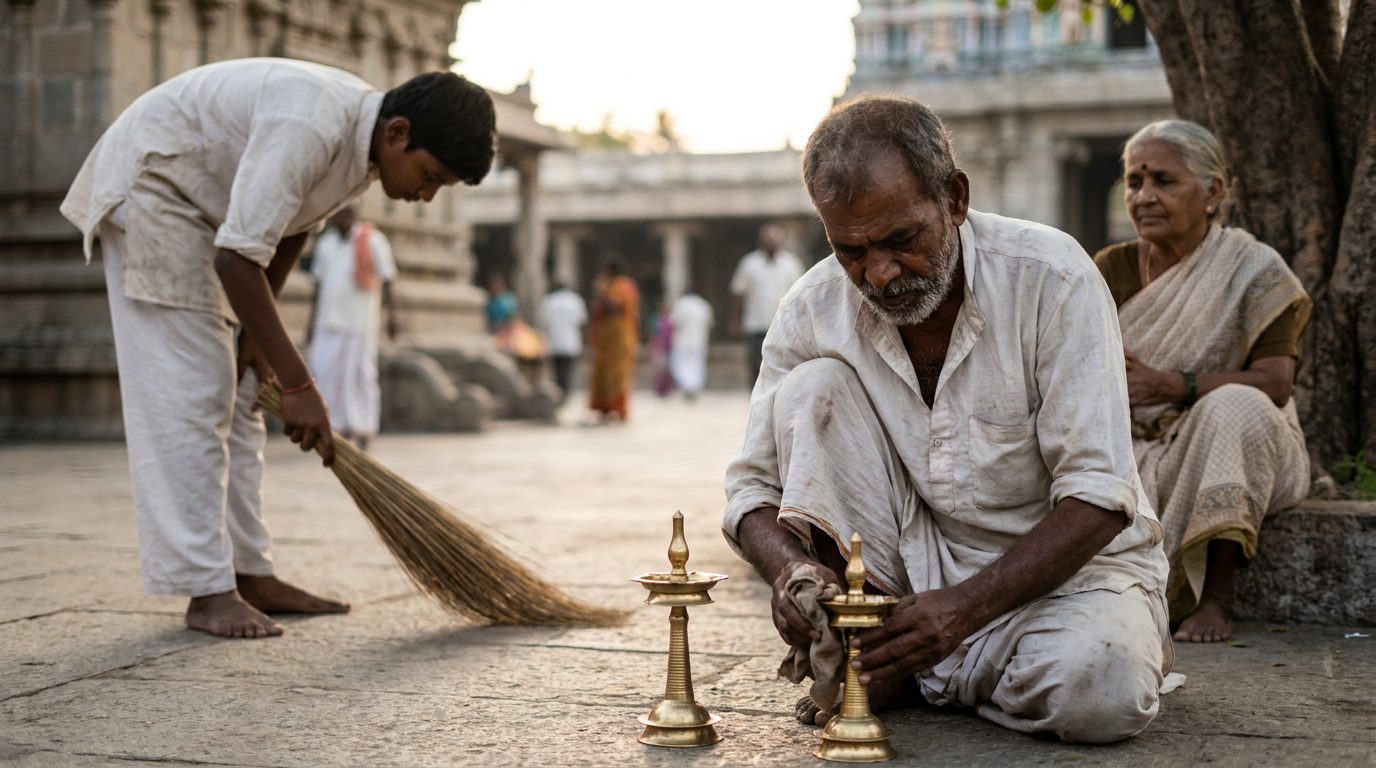
In the heart of Bhakti Yoga, every soul is invited into a living relationship with God. This relationship is not theoretical or distant. It is personal, loving, and practical. Among the beautiful devotional relationships described in the Bhakti tradition, one of the most steady and purifying is called dāsya-rasa.
The Sanskrit word dāsya means “servitude” or “service,” and rasa means “spiritual taste,” “relationship,” or “flavor of love.” So dāsya-rasa refers to the devotional mood of serving the Divine with love, humility, loyalty, and joy.
For some people, the word “servitude” may sound heavy or uncomfortable. In ordinary life, service can sometimes be connected with exploitation, pressure, or inequality. But in Bhakti Yoga, spiritual service is something very different. It is not forced. It is not degrading. It is the soul’s free and loving offering to the Supreme Person, known in Sanskrit as Bhagavān, “the One who possesses all beauty, wisdom, strength, fame, wealth, and renunciation.”
Dāsya-rasa is the heart’s joyful recognition: “I belong to God, and my greatest happiness is to serve with love.”
Dāsya-rasa is one of the main loving relationships described in the Bhakti scriptures. It is the mood of being a devoted servant of the Lord—not as a servant in fear, but as a servant in love.
In this relationship, the devotee sees God as the beloved Master, Lord, Protector, and guide. The devotee’s joy comes from pleasing God through sincere action, prayer, remembrance, and offering.
The Meaning of Dāsya
The word dāsa means “servant.” In the Bhakti tradition, many saints and teachers humbly identify themselves as servants of God. This is not a statement of low self-worth. It is a statement of deep spiritual identity.
The soul, called ātman in Sanskrit, is understood to be eternal, conscious, and naturally connected with the Supreme. The soul is not the body, the mind, the job title, the bank account, or the social role. The soul’s real nature is loving service.
The Bhagavad-gītā explains that all living beings are eternal parts of God:
> “The living beings in this conditioned world are My eternal fragmental parts.”
> — Bhagavad-gītā 15.7
This means we are not separate from God’s care. We are not abandoned. We are spiritual beings with an eternal relationship with the Divine.
Dāsya-rasa helps us live from that truth.
The Meaning of Rasa
The word rasa can be translated as “taste,” “mood,” or “relationship.” In Bhakti Yoga, rasa refers to the unique flavor of love exchanged between the soul and God.
Just as human relationships have different moods—respect, friendship, parental care, romantic affection—spiritual love also has many varieties. The Bhakti tradition describes relationships with God that include peaceful reverence, service, friendship, parental affection, and intimate love.
Dāsya-rasa is the loving mood of service. It is deeply respectful, steady, and practical. It teaches us how to turn everyday life into worship.
Servitude as Love, Not Fear
In material life, service is often mixed with ego, obligation, resentment, or imbalance. But spiritual service is rooted in freedom.
A devotee in dāsya-rasa does not serve because God needs something. God is complete. The devotee serves because love naturally wants to express itself.
When we love someone, we want to do something for them. We cook, listen, help, encourage, protect, clean, support, and show up. Service is love made visible.
In the same way, dāsya-rasa is love made visible through action.
Dāsya-rasa in the Bhakti Scriptures
The Bhakti scriptures give many beautiful examples of devotees who embody the mood of loving service. These sacred stories are not merely ancient history. They are mirrors for our own hearts.
They show us how to live with devotion in the middle of duty, struggle, uncertainty, and ordinary daily life.
Hanumān: The Perfect Servant of Lord Rāma
One of the most beloved examples of dāsya-rasa is Hanumān, the great servant of Lord Rāma. Lord Rāma is an incarnation of God described in the Rāmāyaṇa, and Hanumān is celebrated for his courage, humility, strength, and unwavering devotion.
Hanumān never acts for his own fame. Though he has extraordinary power, he uses everything in the service of Rāma. His body, words, intelligence, and life are dedicated to pleasing the Lord.
When Hanumān crosses the ocean to find Sītā, the wife of Lord Rāma, he does so not for personal recognition but out of love. His strength comes from devotion.
This teaches us something very practical: our talents become sacred when offered in service.
Some people can sing. Some can organize. Some can cook. Some can teach. Some can listen deeply. Some can care for children, elders, animals, or the earth. In dāsya-rasa, nothing is too small when offered with love.
Arjuna: Service Through Surrender
In the Bhagavad-gītā, Arjuna begins as a confused and grieving warrior. He does not know what to do. His mind is overwhelmed. He turns to Krishna, who is God Himself, and says:
> “I am Your disciple, and a soul surrendered unto You. Please instruct me.”
> — Bhagavad-gītā 2.7
This is a powerful moment of dāsya-bhāva, the mood of service and surrender. Arjuna does not become passive. He does not run away from responsibility. Instead, he asks Krishna how to act in a way that is aligned with divine will.
This is deeply relevant for us.
Sometimes we imagine surrender means giving up our life. But in Bhakti Yoga, surrender means giving our life to God. We still work, care for family, study, create, serve, and make decisions. But we do so with prayerful awareness: “How can this be pleasing to You?”
The Servants of Krishna in Vṛndāvana
In the sacred land of Vṛndāvana, where Krishna performs His childhood pastimes, many devotees serve Him in dāsya-rasa. They prepare His seat, bring His flute, assist His parents, care for His cows, and help arrange His joyful activities.
Their service is intimate and full of affection. They do not serve Krishna as a distant ruler only. They serve Him as their beloved Lord, whose happiness is their life.
This reveals a special feature of Bhakti: God is not only majestic and all-powerful. He is also personal, sweet, and approachable. The Infinite allows Himself to be loved.
Why Servitude Is Spiritually Liberating
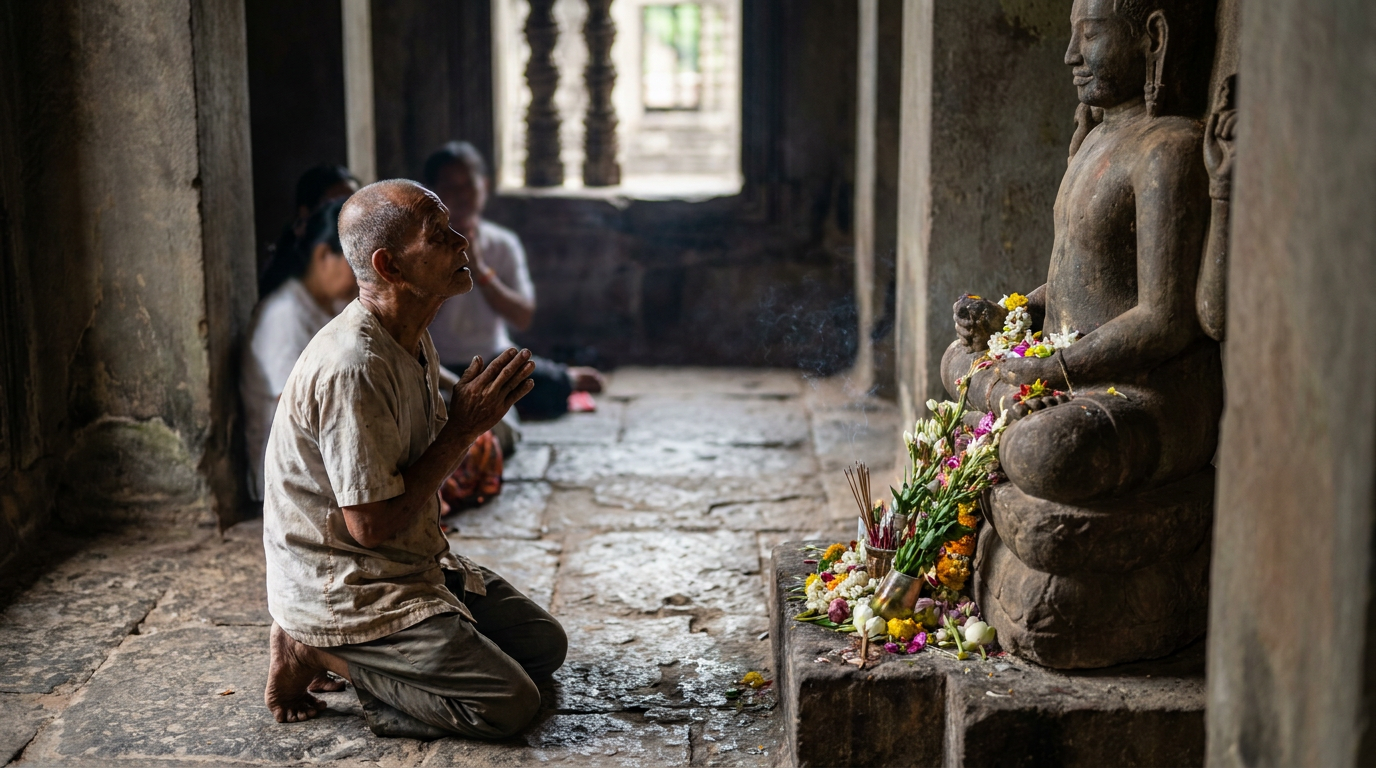
At first, it may seem strange to say that servitude brings freedom. The modern world often teaches that freedom means independence: “I do what I want, when I want, how I want.”
But Bhakti Yoga gently asks us to look deeper. Are we truly free when we are controlled by anger, fear, craving, pride, comparison, or restlessness? Are we free when our happiness depends on praise, success, comfort, or control?
Dāsya-rasa offers another kind of freedom: freedom from the tyranny of the ego.
Freedom from False Ego
The Sanskrit term ahaṅkāra means “false ego,” or the mistaken idea that “I am the center” and “everything is meant for my enjoyment.”
False ego makes us anxious. It constantly asks: “Am I respected? Am I winning? Am I noticed? Am I in control?”
Service softens this burden. When we serve God and others, the heart becomes lighter. We begin to remember, “I am not the controller. I am not alone. I am a servant of the Divine.”
This does not make us weak. It makes us grounded.
A humble person is not someone who thinks, “I am worthless.” True humility means, “I am loved by God, and everything I have is meant to be used in love.”
Service Purifies the Heart
The Śrīmad-Bhāgavatam, one of the central scriptures of Bhakti Yoga, teaches that hearing and chanting about God cleanses the heart:
> “By regularly hearing the Bhāgavatam and serving the pure devotee, all that is troublesome to the heart is almost completely destroyed, and loving service unto the Lord becomes established.”
> — Śrīmad-Bhāgavatam 1.2.18
Service is not just external activity. It is a spiritual practice that purifies motivation.
At first, we may serve with mixed intentions. We may want appreciation. We may compare our service with others. We may become discouraged if no one notices.
But over time, by chanting, prayer, and honest self-reflection, service becomes sweeter and more selfless. We begin to serve because service itself connects us with God.
A Cure for Isolation
Many people today feel lonely, even while surrounded by communication. The heart longs to belong.
Dāsya-rasa restores our sense of belonging. It teaches: “I belong to God. My life has a purpose. My actions can be offerings.”
This simple shift can transform daily life. Washing dishes can become service. Working honestly can become service. Caring for a loved one can become service. Offering kind words can become service. Chanting the holy names can become service.
No sincere offering is wasted.
Please visit our website for more information on our articles: articles.
Practicing Dāsya-rasa in Daily Life
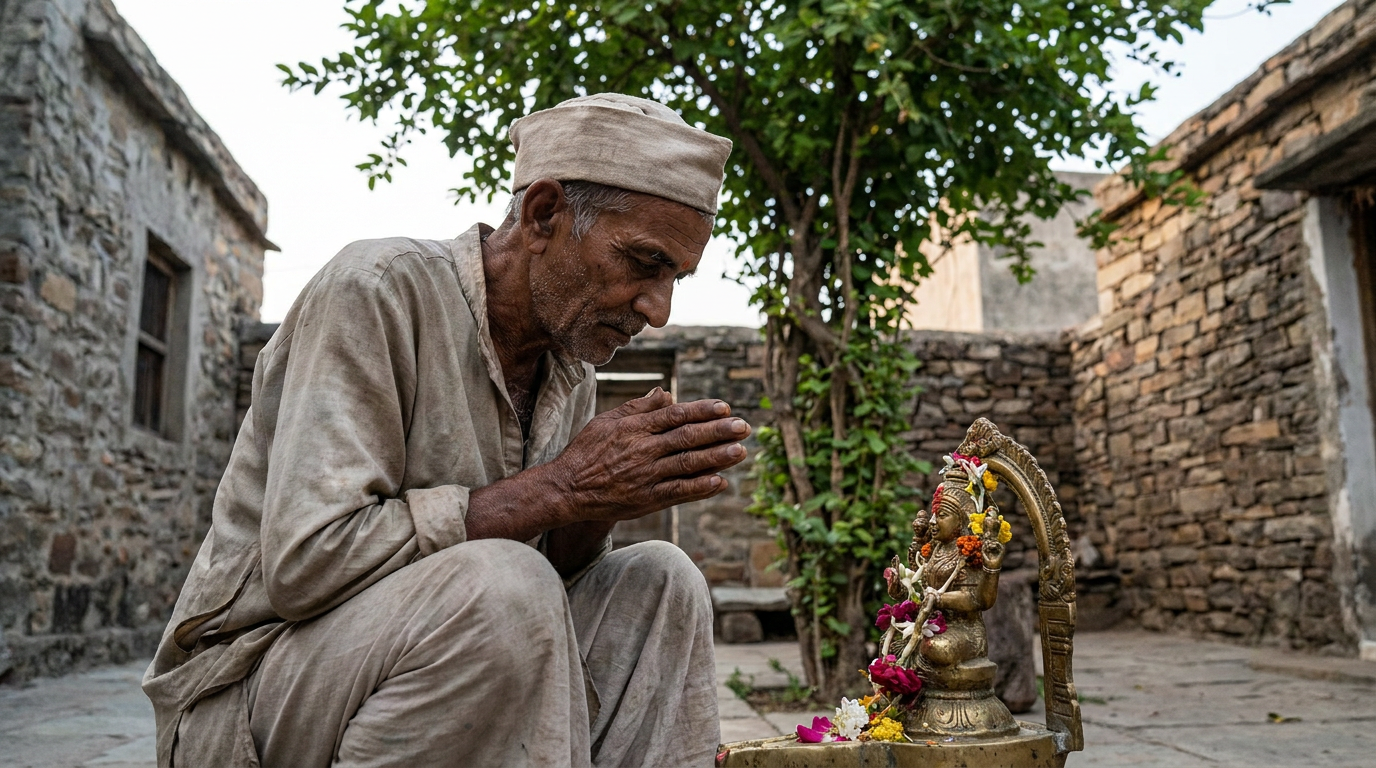
Dāsya-rasa is not only for saints living in temples or forests. It is a practical path for householders, students, workers, parents, seekers, and anyone who wants to live with more devotion.
The beauty of Bhakti Yoga is that it meets us where we are. We do not have to wait until life is perfect. We begin with one sincere offering.
Begin the Day with Prayer
A simple morning prayer can set the direction of the heart:
“Dear Lord, please guide me today. Let my thoughts, words, and actions become offerings to You. Help me serve with humility and love.”
This prayer does not need to be complicated. The heart’s sincerity matters more than eloquent language.
In dāsya-rasa, prayer is not only asking God for things. Prayer is also placing ourselves in God’s care and asking to become useful in divine service.
Chant the Holy Names
Chanting is one of the central practices of Bhakti Yoga. In Sanskrit, chanting God’s names is called nāma-saṅkīrtana or japa, depending on whether it is done collectively or personally.
The most widely known mantra in the Krishna Bhakti tradition is the mahā-mantra, meaning “great mantra”:
Hare Krishna, Hare Krishna, Krishna Krishna, Hare Hare
Hare Rama, Hare Rama, Rama Rama, Hare Hare
“Hare” calls upon the divine energy of the Lord, often understood as Śrī Rādhā, the embodiment of pure devotion. “Krishna” means the all-attractive Supreme Person. “Rama” means the source of spiritual joy.
Chanting is a direct way to serve God with the tongue, ears, and heart. Even if the mind wanders, we gently return. Each mantra is an offering.
Offer Your Food
Another simple practice is offering food to God before eating. In the Bhagavad-gītā, Krishna says:
> “If one offers Me with love and devotion a leaf, a flower, fruit, or water, I will accept it.”
> — Bhagavad-gītā 9.26
This verse is wonderfully inclusive. Krishna does not demand wealth or extravagance. He asks for love.
Before eating, we can pause and say, “Dear Lord, please accept this offering.” In the Bhakti tradition, food offered to God becomes prasāda, which means “mercy” or “grace.”
Eating prasāda reminds us that life is a gift, not something we own.
Serve Others as God’s Beloved Children
Dāsya-rasa does not mean we serve God while neglecting people. Real devotion softens the heart toward all living beings.
The Bhagavad-gītā teaches that the wise see all beings with equal vision:
> “The humble sages, by virtue of true knowledge, see with equal vision a learned priest, a cow, an elephant, a dog, and a person considered outcaste.”
> — Bhagavad-gītā 5.18
When we understand that every soul belongs to God, compassion becomes natural. Serving people, animals, and the world can become part of our devotional life when done with God-centered consciousness.
This might look like feeding someone, forgiving someone, listening patiently, protecting nature, giving time, sharing wisdom gently, or simply treating others with dignity.
Do Your Work as an Offering
Not everyone can spend hours in formal spiritual practice each day. But everyone does something. Everyone has duties, relationships, and responsibilities.
Dāsya-rasa invites us to spiritualize our work.
Before beginning a task, we can pause and think, “May this be pleasing to You.” During the task, we can practice honesty, patience, and care. After the task, we can offer the results to God.
This is the essence of karma-yoga, the yoga of offering action. When karma-yoga is filled with devotion, it becomes Bhakti Yoga.
The Inner Qualities of Dāsya-rasa
Dāsya-rasa is not measured only by how much we do. It is measured by the quality of the heart.
A person may perform a large service with pride, while another may offer a small service with deep love. God sees the heart.
Humility
Humility is the doorway to devotional service. It allows us to learn, grow, and receive grace.
Śrī Caitanya Mahāprabhu, the great teacher of divine love and the golden avatāra of Krishna, gave a famous instruction:
> “One should chant the holy name of the Lord in a humble state of mind, thinking oneself lower than a blade of grass, more tolerant than a tree, free from pride, and ready to offer respect to all.”
> — Śikṣāṣṭakam 3
This humility is not self-hatred. It is freedom from the demand to be honored. It is the spaciousness to honor others.
In dāsya-rasa, humility allows service to become sweet.
Loyalty
A servant in love is loyal. Loyalty means steadiness, even when emotions rise and fall.
Some days we may feel inspired. Other days we may feel dry, distracted, or tired. Dāsya-rasa teaches us to continue offering something, even if small.
A short prayer. One round of chanting. A kind action. A moment of remembrance. A simple offering of food. These steady practices build spiritual strength over time.
Gratitude
Gratitude transforms service from duty into joy.
Instead of thinking, “I have to serve,” the devotee begins to feel, “I get to serve.” This shift is grace.
We did not create our own life. We did not create the sun, water, air, food, or the beating of the heart. Everything is given. Service becomes a natural response to divine generosity.
Attentiveness
Loving service is attentive. It asks, “What is needed? How can I help? What would please the Lord?”
In temple worship, this attentiveness may appear as carefully preparing flowers, cleaning the altar, cooking for the Deity, or singing with concentration. In home life, it may appear as showing patience with family, creating a clean and peaceful space, or remembering God while doing ordinary tasks.
Attention is love in action.
Common Misunderstandings About Dāsya-rasa
Because the language of servitude can be misunderstood, it is helpful to clarify what dāsya-rasa is not.
Bhakti Yoga never asks us to become spiritually unconscious, emotionally unhealthy, or passive in the face of harm. True service is rooted in love, wisdom, and dignity.
It Is Not Self-Erasure
Dāsya-rasa does not mean that your personality disappears. In Bhakti, each soul is unique. Each person has particular gifts, tendencies, and ways of loving God.
Spiritual service does not erase individuality. It purifies individuality.
Hanumān’s service is heroic. Arjuna’s service is thoughtful and courageous. The servants of Krishna in Vṛndāvana serve with sweetness and intimacy. Each devotee expresses love in a distinct way.
Your service will also have your own God-given flavor.
It Is Not Blind Obedience to Humans
Serving God is not the same as allowing oneself to be controlled or harmed by others. Spiritual humility should never be used to justify abuse, manipulation, or injustice.
In Bhakti Yoga, guidance is important, but authentic guidance should lead us toward love, truth, compassion, and remembrance of God—not fear, dependency, or exploitation.
A sincere devotee can be humble and also have healthy boundaries. We can serve with love while using intelligence and discernment.
It Is Not Inferior to Other Relationships
Sometimes people may think dāsya-rasa is a “lower” relationship because it involves service. But in Bhakti, every genuine relationship with God is sacred.
Dāsya-rasa has its own beauty: steadiness, reverence, dedication, and willingness to please the Lord. It is foundational to all forms of devotion. Even in friendship, parental affection, or intimate love of God, service remains present.
Love always serves.
Dāsya-rasa and the Holy Name
The practice of chanting reveals the heart of dāsya-rasa. When we chant, we are not trying to control God. We are calling out, serving the holy name with our attention, and allowing the name to purify us.
The Bhakti tradition teaches that God’s names are not ordinary sounds. The holy name carries God’s presence, mercy, and love.
Chanting as Service
When we chant, we offer our voice. When we listen, we offer our ears. When we return the wandering mind to the mantra, we offer our attention.
This is dāsya-rasa in a very accessible form.
You do not need to be advanced to begin. You do not need perfect pronunciation to be sincere. You do not need to belong to a certain culture or background. The holy name is a gift for everyone.
From Duty to Taste
At first, chanting may feel like a discipline. We may set aside time because we know it is good for us, even if the heart feels restless.
Over time, by grace, chanting becomes nourishment. The name becomes shelter. The heart begins to taste peace.
This movement—from duty to taste—is part of spiritual growth. In Sanskrit, spiritual taste is called ruci. It cannot be forced, but it can be invited through steady practice, good association, and sincere prayer.
Calling with Dependence
Dāsya-rasa deepens when we chant with dependence: “My Lord, I need Your mercy. Please engage me in Your service.”
This prayer is simple and powerful. It expresses the essence of the servant’s heart.
Not “God, fulfill my ego,” but “God, let me be useful in Your love.”
The Role of Community in Devotional Service
Bhakti Yoga is personal, but it is not meant to be isolated. Spiritual community, called satsaṅga, means “association with those who seek truth.” It helps nourish devotion and keep the heart encouraged.
The Bhakti House spirit is one of welcome: people of all backgrounds, cultures, ages, and life experiences can come together to chant, learn, serve, and grow.
Serving Together
When devotees serve together, something beautiful happens. Cooking, cleaning, singing, organizing, teaching, gardening, welcoming guests, and caring for one another become shared offerings.
Community service teaches patience. We learn that not everyone does things the same way. We learn to appreciate different gifts. We learn to ask forgiveness and to forgive.
This is also dāsya-rasa.
Serving God includes learning how to serve alongside God’s children.
Learning from Devotees
In Bhakti Yoga, we learn not only from books but from people whose lives reflect devotion. A sincere devotee teaches by example: how they speak, how they listen, how they chant, how they respond to difficulty, how they serve without needing recognition.
The scriptures recommend associating with those who remind us of God. This does not mean judging others as “spiritual” or “not spiritual.” It means seeking the kind of company that awakens our best self and brings us closer to love.
Welcoming Newcomers
A true culture of service includes hospitality. When someone enters a sacred space, they should feel seen, respected, and welcomed.
Dāsya-rasa is not only serving the altar or chanting beautifully. It is also noticing the person standing alone. It is explaining a mantra kindly. It is making room. It is remembering that every soul is precious to God.
Growing Deeper in the Mood of Service
Dāsya-rasa can begin with simple actions, but it can deepen into a lifelong path of love. The more we serve, the more we discover the sweetness of belonging to God.
This journey is gradual. We do not need to pretend to be more advanced than we are. Bhakti grows through sincerity, not performance.
Offer What You Have
Sometimes people hesitate to begin spiritual life because they feel unqualified. They may think, “I don’t know enough,” “I’m not pure enough,” or “I don’t have much to give.”
But Krishna asks for love. A leaf, a flower, fruit, or water—offered with devotion—is accepted.
This means everyone can serve.
A busy parent can offer care. A student can offer study. A musician can offer song. A person in pain can offer tears. A person with little time can offer one sincere mantra. A person with questions can offer honest seeking.
God receives the heart.
Serve Without Needing Recognition
One of the great lessons of dāsya-rasa is learning to serve even when no one notices.
This can be difficult. The ego likes applause. But hidden service has a special sweetness because it is more directly between the soul and God.
Cleaning a space after everyone leaves, praying for someone silently, doing a needed task without announcing it, forgiving quietly—these offerings purify the heart deeply.
Krishna knows. That is enough.
Let Service Shape the Heart
Service is not only something we do. It is something that gradually shapes who we become.
By serving, we become more patient. By chanting, we become more centered. By offering food, we become more grateful. By caring for others, we become more compassionate. By praying, we become more dependent on grace.
Dāsya-rasa trains the heart to love in action.
Dāsya-rasa in Times of Difficulty
Devotional service is not only for peaceful times. In fact, the mood of service can become especially meaningful when life is hard.
When we face illness, grief, conflict, uncertainty, or disappointment, we may not be able to do what we once did. But we can still offer our heart.
Serving Through Surrender
Sometimes service means action. Sometimes service means acceptance. Sometimes service means waiting with faith.
We can pray, “Lord, I do not understand this situation, but I want to remain connected to You. Please show me how to serve in this moment.”
This kind of surrender is not weakness. It is courage.
Arjuna’s surrender in the Bhagavad-gītā came in a moment of crisis. His confusion became the doorway to divine wisdom.
Offering Pain
Bhakti Yoga does not ask us to hide our pain. We can bring our whole heart to God—our joy, fear, anger, exhaustion, and longing.
In dāsya-rasa, even suffering can become an offering when we turn toward God rather than away. We can say, “Please use this to soften me. Please help me remember You. Please let me become more compassionate.”
God is not distant from our suffering. The Lord is present in the heart as Paramātmā, the indwelling guide and witness.
Small Service Still Matters
When life is difficult, we may not be able to do much. But Bhakti is merciful.
One mantra matters. One prayer matters. One act of kindness matters. One moment of remembering God matters.
The path of devotion is not all-or-nothing. It is a relationship. And in a loving relationship, every sincere gesture counts.
The Joy of Belonging to God
At its heart, dāsya-rasa is the joy of belonging. The soul no longer has to wander through life asking, “Who am I? What is my purpose? Where is my home?”
The answer begins to shine: “I am God’s servant. I am loved. My life can be an offering.”
This identity is simple, but it is profound. It can carry us through success and failure, praise and criticism, clarity and confusion.
A Stable Spiritual Identity
Worldly identities change. Our bodies change, relationships change, careers change, moods change, and circumstances change. But the soul’s relationship with God is eternal.
To remember “I am a servant of God” gives stability. It does not remove all challenges, but it gives us a way to meet them with devotion.
Love Expressed Through Action
Dāsya-rasa teaches that love is not only a feeling. Love is shown through action.
We may say we love God, but service asks us to embody that love. Can we speak more kindly? Can we chant more attentively? Can we offer our food? Can we use our talents for a higher purpose? Can we forgive? Can we help someone without expecting anything back?
These are practical steps on the path of love.
The Servant Becomes Dear
The Bhakti scriptures repeatedly show that God is conquered by love. The Supreme Lord, who needs nothing, becomes deeply pleased by the sincere service of His devotee.
This is one of the sweetest mysteries of Bhakti: the Infinite accepts the small offerings of the finite soul.
A flower. A song. A tear. A prayer. A humble act of service.
When offered with love, these become spiritually priceless.
A Simple Practice to Begin Today
If you feel drawn to dāsya-rasa, you do not need to wait for a perfect moment. You can begin today with a small practice.
Morning Intention
When you wake up, place your hand on your heart and say:
“Dear Lord, I belong to You. Please guide me today. Let me serve with love.”
One Offering
Choose one ordinary action and consciously offer it to God. It may be cooking, working, cleaning, studying, caring for a child, or calling someone who needs encouragement.
Before you begin, say silently: “This is for You.”
A Few Minutes of Chanting
Chant the holy names for a few minutes. If you are new, start gently:
Hare Krishna, Hare Krishna, Krishna Krishna, Hare Hare
Hare Rama, Hare Rama, Rama Rama, Hare Hare
Listen to the sound. Let the mind come back when it wanders. Offer the effort.
Evening Reflection
Before resting, ask yourself:
“How did I serve today? Where did I forget? What can I offer tomorrow?”
Do this without harsh judgment. Spiritual growth happens through honesty and grace.
Everyone Is Welcome on the Path of Service
Dāsya-rasa is a sacred devotional relationship, but it is also wonderfully practical. It teaches us to live with humility, purpose, gratitude, and love. It reminds us that our lives are not random. Our gifts are not accidental. Our relationships, duties, and daily actions can all become offerings to God.
Whether you are new to Bhakti Yoga or have been practicing for many years, the mood of loving service can deepen your spiritual life. You do not need to change your background, deny your questions, or pretend to be someone else. Come as you are, and begin with sincerity.
God is not looking for perfection. God is looking for the heart.
May we learn from Hanumān’s loyalty, Arjuna’s surrender, and the loving servants of Krishna. May we chant with humility, pray with honesty, serve with care, and grow in devotion step by step.
Everyone is welcome to take one sincere step toward God today—one prayer, one mantra, one offering, one act of service, one movement of the heart toward love.
FAQs
What is Dāsya-rasa?
Dāsya-rasa is one of the five primary rasas, or relationships, described in Hindu philosophy and literature. It is the relationship of servitude or devotion, where the devotee sees themselves as a servant of the divine.
How is Dāsya-rasa expressed?
Dāsya-rasa is expressed through acts of service, obedience, and devotion to the object of worship, whether it be a deity, guru, or spiritual figure. It involves a deep sense of humility and surrender.
What are some examples of Dāsya-rasa in Hindu mythology?
In Hindu mythology, examples of Dāsya-rasa can be seen in the devotion and service of Hanuman to Lord Rama, and the devotion of Arjuna to Lord Krishna in the Bhagavad Gita.
How does Dāsya-rasa relate to other rasas?
Dāsya-rasa is one of the five primary rasas, which also include śānta (peace), vātsalya (parental love), sakhya (friendship), and mādhurya (romantic love). Each rasa represents a different type of relationship with the divine.
How is Dāsya-rasa practiced in Hinduism?
Dāsya-rasa is practiced through acts of devotion, service, and surrender to the divine. This can include rituals, prayers, and acts of selfless service to the object of worship.

