
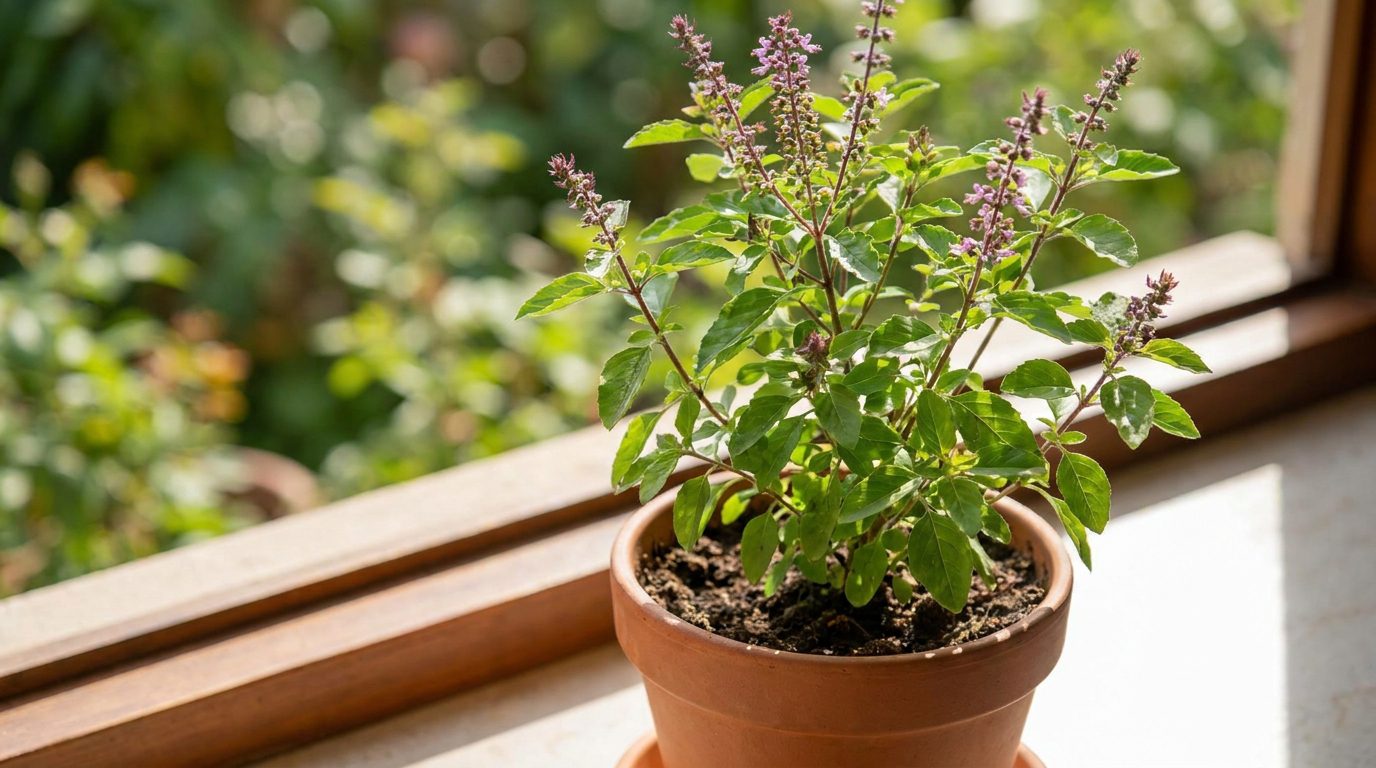
In the heart of Bhakti Yoga, there is a sacred plant loved by devotees all over the world: Tulasi Devi.
To some, Tulasi may first appear as a beautiful basil plant. To others, she is already familiar as a cherished presence in the home, temple, or garden. But in the Bhakti tradition, Tulasi is honored as a beloved servant of Sri Krishna, a compassionate spiritual guide, and a daily reminder that even the smallest offering made with love can become sacred.
Whether you are new to Bhakti, exploring devotional spirituality, or already caring for Tulasi at home, this guide is offered with humility and warmth. May it help you understand Tulasi not only as a plant, but as a doorway into prayer, service, chanting, and a more loving relationship with God.
Tulasi, also spelled Tulsi, is a sacred plant deeply revered in the Bhakti Yoga tradition. The Sanskrit word “Tulasi” means “the incomparable one.” She is known botanically as Ocimum sanctum or Ocimum tenuiflorum, often called holy basil in English.
But for devotees of Krishna, Tulasi is much more than an herb. She is honored as Tulasi Devi, a divine personality and a beloved servant of the Lord. In temples and homes, devotees offer Tulasi leaves to Krishna, chant prayers to her, circumambulate her, and care for her with affection.
Tulasi as a Sacred Person
In Bhakti Yoga, we learn to see life through the eyes of devotion. This means recognizing that God’s energy is present everywhere, and that every living being deserves respect. Tulasi is especially honored because scriptures describe her as very dear to Krishna.
In the Padma Purana, it is said that Krishna does not accept an offering of food unless it is accompanied by a Tulasi leaf. This does not mean God is hungry or demanding. Rather, it teaches us that devotion is the true ingredient in any offering. Tulasi represents pure devotion, and when we offer her leaves with love, our hearts are invited into that same spirit.
Tulasi and Bhakti Yoga
Bhakti Yoga is the yoga of love and devotion. The word “bhakti” means loving service to God. It is not limited by nationality, background, language, gender, age, or previous religious experience. It is a path of the heart.
Tulasi helps us practice Bhakti Yoga in simple, daily ways. Watering her can become a prayer. Offering her leaves can become an act of surrender. Sitting near her while chanting can create a peaceful atmosphere for remembering God.
Through Tulasi, we learn that spiritual life is not only found in grand moments. It is found in small, sincere offerings made every day.
The Spiritual Significance of Tulasi Devi
Tulasi Devi holds a cherished place in the lives of devotees because she connects us with Krishna’s loving service. Her presence invites humility, purity, and remembrance.
Dear to Krishna
The scriptures repeatedly glorify Tulasi as dear to Lord Krishna. In the Bhagavad-gita, Krishna says:
“If one offers Me with love and devotion a leaf, a flower, fruit, or water, I will accept it.”
— Bhagavad-gita 9.26
This verse is often quoted in Bhakti communities because it reveals God’s heart. Krishna is not asking for wealth, status, or perfection. He is asking for love. Even a simple leaf, when offered sincerely, becomes spiritually powerful.
For devotees, Tulasi is the most beloved leaf to offer. When we place Tulasi on food prepared for Krishna, we are asking her to help us offer our love properly.
A Symbol of Pure Devotion
Tulasi teaches us that devotion is not about showing off. A plant serves quietly. She grows, offers fragrance, gives leaves, and blesses the home by her presence.
In this way, Tulasi becomes a living teacher. She reminds us that true spiritual growth often happens gently and quietly. We may not always feel advanced. We may still struggle with distraction, pride, doubt, or fear. Yet if we continue to serve, chant, pray, and offer ourselves sincerely, our hearts gradually soften.
A Bridge Between the Home and the Temple
For many people, Tulasi transforms an ordinary home into a sacred space. Her presence encourages regular prayer and mindful living.
You do not need to live in a monastery to practice devotion. You can begin in your apartment, kitchen, garden, or windowsill. Tulasi teaches that the home can become a place of worship when we invite Krishna into daily life.
A small altar, a candle, sacred music, a strand of chanting beads, and a lovingly cared-for Tulasi plant can support a beautiful devotional rhythm.
The Story of Tulasi in Bhakti Tradition
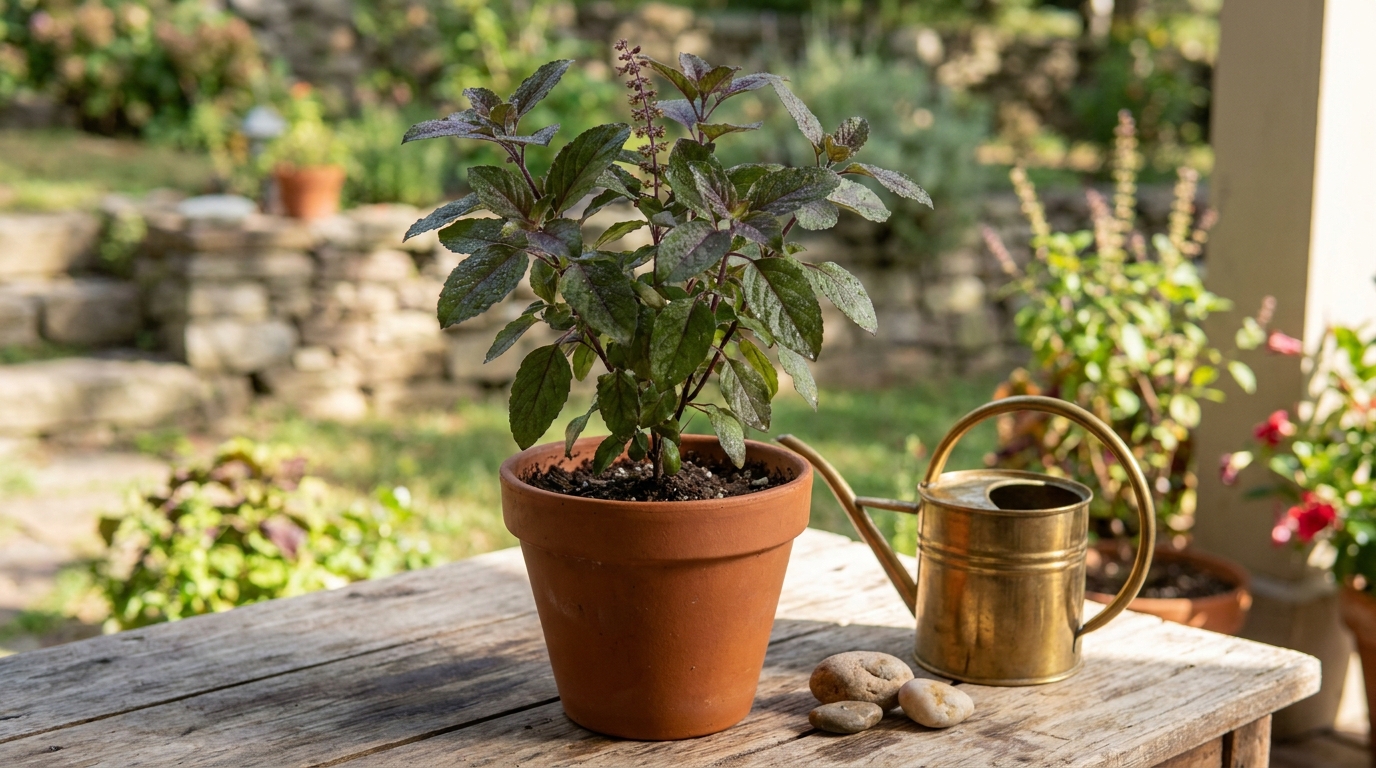
The stories of Tulasi Devi are found in various Puranic scriptures. These sacred histories are rich with symbolism and devotional meaning. Different traditions may tell the details in slightly different ways, but the heart of the story remains the same: Tulasi Devi is deeply connected with pure love for Krishna.
Vrinda Devi and the Sacred Forest
Tulasi is often associated with Vrinda Devi, the presiding goddess of Vrindavan, the sacred land where Krishna performs His intimate pastimes. The word “Vrindavan” can be understood as “the forest of Vrinda.”
Vrindavan is not only a physical place in India. It is also a spiritual reality, a place of divine love. Devotees understand Vrinda Devi as one who arranges Krishna’s loving pastimes and helps souls come closer to Him.
When we honor Tulasi, we are also remembering Vrindavan—the mood of loving service, simplicity, and deep devotion.
Tulasi and the Power of Faithfulness
Some stories describe Tulasi Devi as a great devotee whose faithfulness and purity were extraordinary. Through these stories, we are reminded that devotion is powerful. The love of a devotee is never ordinary.
Rather than approaching these stories only as mythology or history, Bhakti teachers often encourage us to ask: What is this teaching my heart?
Tulasi’s stories teach us steadiness, surrender, and the sacredness of loving service. They remind us that God values devotion above all external qualifications.
Seeing with Devotional Vision
For newcomers, it may feel unfamiliar to relate to a plant as a sacred person. Bhakti Yoga gently invites us to expand our vision.
In everyday life, we already relate personally to nature in many ways. We speak lovingly to pets, feel peace under trees, and sense gratitude for rivers, mountains, flowers, and sunlight. Bhakti deepens this awareness by teaching that creation is not separate from the Creator’s loving energy.
Honoring Tulasi does not require blind belief. It begins with respect. We can approach her humbly and say, “If you are dear to Krishna, please help me grow in love and devotion.”
Please visit our website for more information on our articles: articles.
How to Care for Tulasi at Home
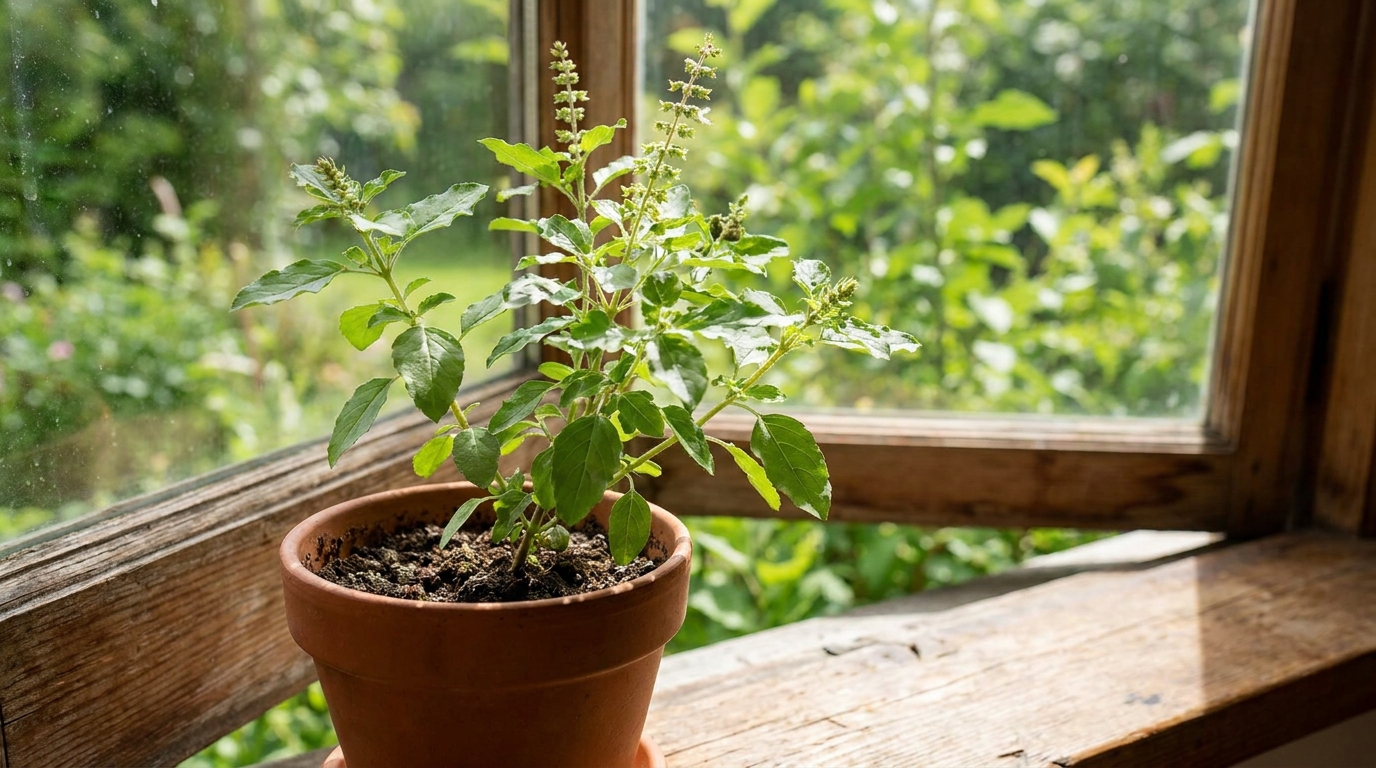
Caring for Tulasi is a sacred service, but it is also practical. Like any plant, she needs proper light, water, air, and attention. Devotees often say that Tulasi care teaches patience, gentleness, and consistency.
Light and Location
Tulasi generally loves sunlight. If you live in a warm climate, she may do well outdoors with several hours of sun each day. If you live in a colder climate, she can be kept indoors near a bright window or under a grow light.
She does not like frost. In cold seasons, bring her indoors before temperatures drop too low. A warm, bright, peaceful place is best.
Many devotees keep Tulasi near an altar or in a clean, respected area of the home. If this is not possible, simply choose the best available place and care for her sincerely.
Watering Tulasi
Tulasi likes moist but not waterlogged soil. Overwatering can harm her roots, while underwatering may cause her leaves to wilt.
A simple practice is to check the soil with your finger. If the top layer feels dry, offer water. If it still feels wet, wait. Different climates and seasons affect how often she needs water.
When watering Tulasi, you may softly chant the Hare Krishna maha-mantra or offer a prayer. The Hare Krishna mantra is:
Hare Krishna, Hare Krishna, Krishna Krishna, Hare Hare
Hare Rama, Hare Rama, Rama Rama, Hare Hare
“Hare” calls upon the divine energy of the Lord, “Krishna” means the all-attractive Supreme Person, and “Rama” means the source of spiritual joy. Chanting while serving Tulasi helps turn a simple action into meditation.
Soil, Drainage, and Pot Size
Tulasi needs well-draining soil. A pot with drainage holes is important. If water collects at the bottom, the roots may rot.
A balanced potting mix with good aeration is usually helpful. Some devotees add natural compost or gentle organic fertilizer. Avoid harsh chemicals when possible, especially if leaves will be offered.
As Tulasi grows, she may need a larger pot. Repotting should be done carefully and respectfully, ideally when the plant is healthy and the weather is supportive.
Pruning and Healthy Growth
Pruning helps Tulasi grow fuller and stronger. You can gently pinch back the tops of branches to encourage new growth. Remove dried leaves carefully.
In the devotional mood, we do not treat Tulasi casually. Before touching or pruning, it is good to wash your hands and offer a simple prayer: “Dear Tulasi Devi, please allow me to serve you.”
This helps us remember that care is not control. It is service.
How to Offer Tulasi Leaves
Offering Tulasi leaves is one of the most cherished practices in Krishna Bhakti. The purpose is not ritual for ritual’s sake, but loving connection.
Asking Permission
Before picking Tulasi leaves, devotees traditionally offer prayers and ask permission. This cultivates humility and gratitude.
A simple prayer could be:
“Dear Tulasi Devi, you are dear to Lord Krishna. Please allow me to offer your leaves in His service. Please help me grow in devotion.”
This prayer can be spoken in your own words. God understands the language of the heart.
When to Pick Leaves
Traditionally, Tulasi leaves are picked in the morning after bathing or washing hands, and not after sunset. Many devotees avoid picking leaves on certain sacred days, such as Dvadashi, the day after Ekadashi fasting. Practices may vary among communities, so if you are connected with a teacher or temple, you can ask for guidance.
If you are just beginning, do not become anxious. Start with respect and sincerity. Bhakti grows through practice, not fear.
How to Pick Leaves Respectfully
Pick only what you need. Use your fingertips gently, and avoid damaging the plant. Do not break branches unnecessarily.
If leaves have naturally fallen and are clean, they may also be offered. Dried Tulasi leaves can be used in offerings as well.
Devotees usually avoid using Tulasi leaves for ordinary cooking or casual herbal tea if the plant is being worshiped as Tulasi Devi. Instead, her leaves are offered to Krishna and then honored as prasadam.
Offering Food with Tulasi
In Bhakti Yoga, food offered to Krishna with love becomes prasadam, which means “mercy” or “grace.” Preparing and offering food is a beautiful daily practice.
You can prepare vegetarian food with care, place it before a picture or deity of Krishna, and offer a prayer:
“My dear Lord Krishna, this food is prepared for You with love. Please accept it.”
Then place a Tulasi leaf on the preparation, or on each plate being offered. After a few moments of prayer, the food can be honored as prasadam.
This practice transforms eating into gratitude. It reminds us that life is a gift and that nourishment is sacred.
Tulasi Worship and Daily Devotional Practice
Tulasi worship can be simple or elaborate. What matters most is sincerity. If you are new, begin gently. A small daily practice done with love is better than a complicated routine done with stress.
Offering Water
One of the simplest ways to serve Tulasi is to offer water. As you water her, you can chant, pray, or simply express gratitude.
You might say:
“Dear Tulasi Devi, please bless this home with devotion. Please help me remember Krishna today.”
This small act can set the tone for the day. It brings the mind back to what is sacred.
Circumambulating Tulasi
Circumambulation means walking around something sacred as an act of respect. In Sanskrit, this is called parikrama. Devotees often walk around Tulasi, usually clockwise, while chanting prayers or the Hare Krishna mantra.
This practice reminds us to place devotion at the center of our lives. As the body moves around Tulasi, the heart is invited to revolve around God.
Even three or four gentle circles can become a meaningful prayer.
Singing Tulasi Prayers
Many temples sing the Tulasi arati prayer, honoring Tulasi Devi and asking for her mercy. “Arati” is a worship ceremony in which offerings such as a lamp, incense, flowers, or song are presented to the Lord or His devotees.
If you do not know the traditional prayers, you can begin with the Hare Krishna mantra or a simple English prayer. Over time, you may learn the traditional songs.
The goal is not performance. The goal is loving remembrance.
Chanting Near Tulasi
Many devotees love to chant japa near Tulasi. “Japa” means soft, personal repetition of a sacred mantra, often using beads. The Hare Krishna maha-mantra is especially central in the Bhakti tradition.
Chanting near Tulasi can help the mind become peaceful. Her presence reminds us that chanting is not mechanical. It is a call of the soul.
When we chant, we are not merely repeating sounds. We are reaching toward God, asking to be reconnected in love.
Tulasi Beads and Neck Beads
Tulasi wood is also used to make sacred beads. These include japa beads for chanting and neck beads worn by devotees.
Tulasi Japa Beads
Japa beads help practitioners count their mantra meditation. A traditional strand has 108 beads, plus one larger bead called the Krishna bead. Devotees chant the Hare Krishna mantra on each bead, moving bead by bead in prayerful attention.
Tulasi japa beads are considered especially sacred because Tulasi is dear to Krishna. When we chant on Tulasi beads, we are asking for her help in chanting purely.
If you are new to chanting, you can begin with a small number of repetitions each day. Even one round, or a few minutes of sincere chanting, can nourish the heart.
Tulasi Neck Beads
Many Bhakti practitioners wear Tulasi neck beads, also called kanthi mala. “Mala” means a garland or strand of beads. Wearing Tulasi beads is a sign of devotion and a reminder that we belong to Krishna.
This is not meant to be a badge of superiority. It is a humble prayer: “May I remember God. May my words, actions, and life become purified through service.”
Some people wear one strand when beginning their practice, while initiated devotees may wear multiple strands according to their tradition. If you are unsure, ask a trusted teacher or local temple community.
Respecting Tulasi Beads
Tulasi beads should be treated respectfully. Avoid placing them on the floor or in unclean places. If they break, they can be repaired or respectfully placed in a sacred river, garden, or at the base of a tree, depending on local guidance.
The essence is mindfulness. Sacred objects help train the heart to live with reverence.
Tulasi in Scripture
The Bhakti scriptures offer many beautiful teachings about Tulasi. These teachings are not meant to create pride or sectarianism. They are meant to awaken devotion.
Bhagavad-gita: The Heart of Offering
As mentioned earlier, Krishna says in the Bhagavad-gita 9.26:
“If one offers Me with love and devotion a leaf, a flower, fruit, or water, I will accept it.”
This verse reveals the accessibility of Bhakti Yoga. Anyone can offer a leaf. Anyone can offer water. Anyone can offer love.
Tulasi deepens this teaching because she is the leaf most beloved in Krishna’s worship. When we offer Tulasi, we are reminded that God accepts the heart behind the offering.
Srimad-Bhagavatam: Devotional Atmosphere
The Srimad-Bhagavatam, a central scripture of Bhakti Yoga, describes the Lord as being decorated with Tulasi leaves and flowers offered by devotees. These descriptions help us meditate on the beauty of personal devotion.
The Bhagavatam teaches that hearing, chanting, remembering, serving, worshiping, praying, becoming a servant, becoming a friend, and surrendering everything to God are all forms of Bhakti. Tulasi naturally supports many of these practices.
We hear about her glories. We chant near her. We remember Krishna through her. We serve by caring for her. We worship by offering her leaves. We pray for her blessings.
Puranas: Glories of Tulasi
Texts such as the Padma Purana and Skanda Purana contain many praises of Tulasi Devi. They describe the spiritual benefit of seeing, touching, watering, planting, and offering Tulasi.
For modern readers, it is helpful to understand these statements through the lens of devotion. The benefit is not magical in a cheap sense. Rather, Tulasi engages us in loving service. That service purifies the heart.
When we water Tulasi, we become less self-centered. When we offer her leaves, we remember Krishna. When we bow before her, we practice humility. These are true spiritual blessings.
Common Questions About Tulasi
Many sincere seekers have practical questions about Tulasi. It is good to ask. Bhakti is not about pretending to know everything; it is about learning with humility.
Is Tulasi the Same as Basil?
Tulasi is related to basil, but she is not the same as common culinary basil used in Italian cooking. Tulasi is often called holy basil and has varieties such as Rama Tulasi, Krishna Tulasi, and Vana Tulasi.
In Bhakti practice, the focus is not only botanical. Tulasi is honored as sacred because of her relationship with Krishna.
Can Anyone Grow Tulasi?
Yes, anyone can grow Tulasi with respect and care. You do not need to be born into a particular culture or tradition. Bhakti Yoga welcomes all sincere hearts.
If you are willing to care for her, learn about her, and treat her respectfully, growing Tulasi can be a beautiful part of your spiritual journey.
What If My Tulasi Plant Dies?
This can be painful for devotees. If Tulasi leaves her plant form, do not feel condemned or hopeless. Plants can die due to climate, pests, disease, watering mistakes, or natural cycles.
Offer gratitude for the time you had to serve her. If possible, place the dried plant respectfully in a garden, sacred place, or natural setting. Then learn and try again.
Bhakti is not about perfection. It is about sincere service and growth.
Can I Use Tulasi Medicinally?
Tulasi is widely known in Ayurveda, the traditional healing system of India, for supporting wellness. Many people drink tulsi tea or use holy basil supplements.
However, if you are growing Tulasi specifically for Krishna’s worship, devotees traditionally reserve her leaves for offering to Krishna rather than casual personal use. After Tulasi leaves are offered, they become prasadam and may be honored respectfully.
For medical use, consult a qualified healthcare provider, especially if pregnant, nursing, taking medications, or managing a health condition.
Do I Need a Guru to Worship Tulasi?
A guru, or spiritual teacher, is very helpful in Bhakti Yoga. The word “guru” means one who brings us from darkness to light. A genuine teacher guides us in scripture, practice, and character.
Still, you can begin honoring Tulasi with sincerity even before formally accepting a guru. Start by chanting, praying, reading authentic Bhakti texts, visiting a temple if possible, and associating with kind devotees.
Spiritual life grows naturally when watered by humility and good company.
Tulasi and the Practice of Humility
Tulasi teaches humility in a very personal way. We may think we are caring for her, but gradually we realize she is caring for us.
Learning to Serve
In modern life, we are often trained to ask, “What can I get?” Bhakti gently changes the question to, “How can I serve?”
Tulasi service is simple, but it is powerful. We wake up and notice her needs. We adjust our schedule. We become attentive to sunlight, water, temperature, and cleanliness. In caring for another living being, the heart becomes softer.
This mood of service can then extend to family, neighbors, coworkers, strangers, animals, and the earth.
Becoming Patient
Plants do not grow according to our ego’s timeline. Tulasi may sprout slowly, recover slowly, or change with the seasons. She teaches patience.
Spiritual growth is also like this. Sometimes we feel inspired. Sometimes we feel dry. Sometimes our chanting is focused; sometimes the mind wanders everywhere. Still, we continue.
Tulasi reminds us: keep watering the root. Keep chanting. Keep praying. Keep serving. Growth is happening, even when we cannot see it.
Offering Imperfect Love
Many people hesitate to begin spiritual practice because they feel unqualified. “My mind is restless.” “I do not know the prayers.” “I have made mistakes.” “I am not pure.”
Bhakti Yoga begins exactly where we are. Krishna asks for love, not perfection. Tulasi helps carry our imperfect offerings to Him.
A single leaf offered with sincerity can become greater than a feast offered with pride.
Bringing Tulasi Into Family and Community Life
Tulasi can become a beautiful center for family devotion and community connection. Children, elders, newcomers, and longtime practitioners can all participate.
Teaching Children Reverence
Children often naturally love plants. Inviting them to help water Tulasi, sing to her, or offer a flower nearby can teach reverence in a gentle way.
Rather than making spirituality heavy, Tulasi worship can feel joyful and tender. Children learn that sacred life is not far away. It is growing right in the home.
Sharing Tulasi Seeds and Plants
Many devotees share Tulasi seeds or young plants as an act of kindness. If you do this, it is helpful to also share basic care instructions and the spiritual meaning of Tulasi.
This sharing should be done respectfully. Tulasi is not a decoration or trend. She is a sacred presence. When we share her, we share an invitation to devotion.
Creating a Devotional Home
A home with Tulasi can become a place of peace. This does not mean the home will be free from challenges. Family life may still include stress, noise, bills, disagreements, and responsibilities.
But Tulasi gives everyone a point of return. Her presence quietly says: remember Krishna. Offer your day. Speak kindly. Serve one another. Begin again.
A Simple Daily Tulasi Practice for Beginners
If you are new, here is a gentle practice you can try. It may take only five to ten minutes.
Step One: Offer Respect
Come before Tulasi with clean hands and a respectful heart. You may bow your head or fold your palms.
Say, “Dear Tulasi Devi, please help me grow in love for God.”
Step Two: Offer Water
Check the soil. If she needs water, offer it slowly and attentively. If she does not need water, simply sit with her for a moment.
Step Three: Chant
Chant the Hare Krishna mantra once, three times, or for a few minutes:
Hare Krishna, Hare Krishna, Krishna Krishna, Hare Hare
Hare Rama, Hare Rama, Rama Rama, Hare Hare
Let the sound be a prayer, not a performance.
Step Four: Offer Your Day
Say in your own words: “Krishna, please guide me today. May my thoughts, words, and actions become an offering.”
Step Five: Serve Someone
Let your Tulasi practice flow into real life. Send a kind message. cook with love, forgive someone, do your work honestly, or help a person in need.
Bhakti becomes real when devotion enters our relationships.
Tulasi as a Pathway to Krishna
Tulasi Devi is a gentle guide into the heart of Bhakti Yoga. She teaches us that the spiritual path is not distant or complicated. It can begin with a leaf, a prayer, a song, a sip of water offered with love.
Through Tulasi, we learn to see the sacred in daily life. We learn that God is personal and loving. We learn that service purifies the heart. We learn that chanting can bring us home.
Most of all, Tulasi reminds us that we are welcome. No matter where we come from, what we have done, or how much we know, we can begin again. Krishna is approachable through love, and Tulasi helps us offer that love.
If you feel inspired, take one sincere step today. Chant one mantra. Offer one prayer. water a sacred plant. Visit a temple. Read one verse of the Bhagavad-gita. Serve one person with kindness.
Everyone is welcome on the path of Bhakti. Tulasi Devi’s blessings are not reserved for the perfect, but offered to the sincere. May she guide us gently toward Krishna, one loving step at a time.
FAQs
What is Tulasi?
Tulasi, also known as holy basil, is a sacred plant in Hindu culture and is widely used in traditional medicine for its various health benefits.
What are the health benefits of Tulasi?
Tulasi is known for its anti-inflammatory, antioxidant, and antimicrobial properties. It is used to treat respiratory disorders, skin conditions, and digestive issues. It is also believed to have stress-relieving and immune-boosting properties.
How is Tulasi used in traditional medicine?
Tulasi leaves are commonly used to make herbal teas, extracts, and essential oils. It is also used in Ayurvedic medicine to prepare various remedies for different health conditions.
What are the cultural and religious significance of Tulasi?
In Hindu culture, Tulasi is considered a sacred plant and is often grown in households and temples. It is believed to be the incarnation of the goddess Tulsi and is used in various religious rituals and ceremonies.
How to grow and care for Tulasi plants?
Tulasi plants require well-drained soil, plenty of sunlight, and regular watering. They can be grown from seeds or cuttings and are relatively easy to care for. It is important to protect the plants from frost and extreme temperatures.

