
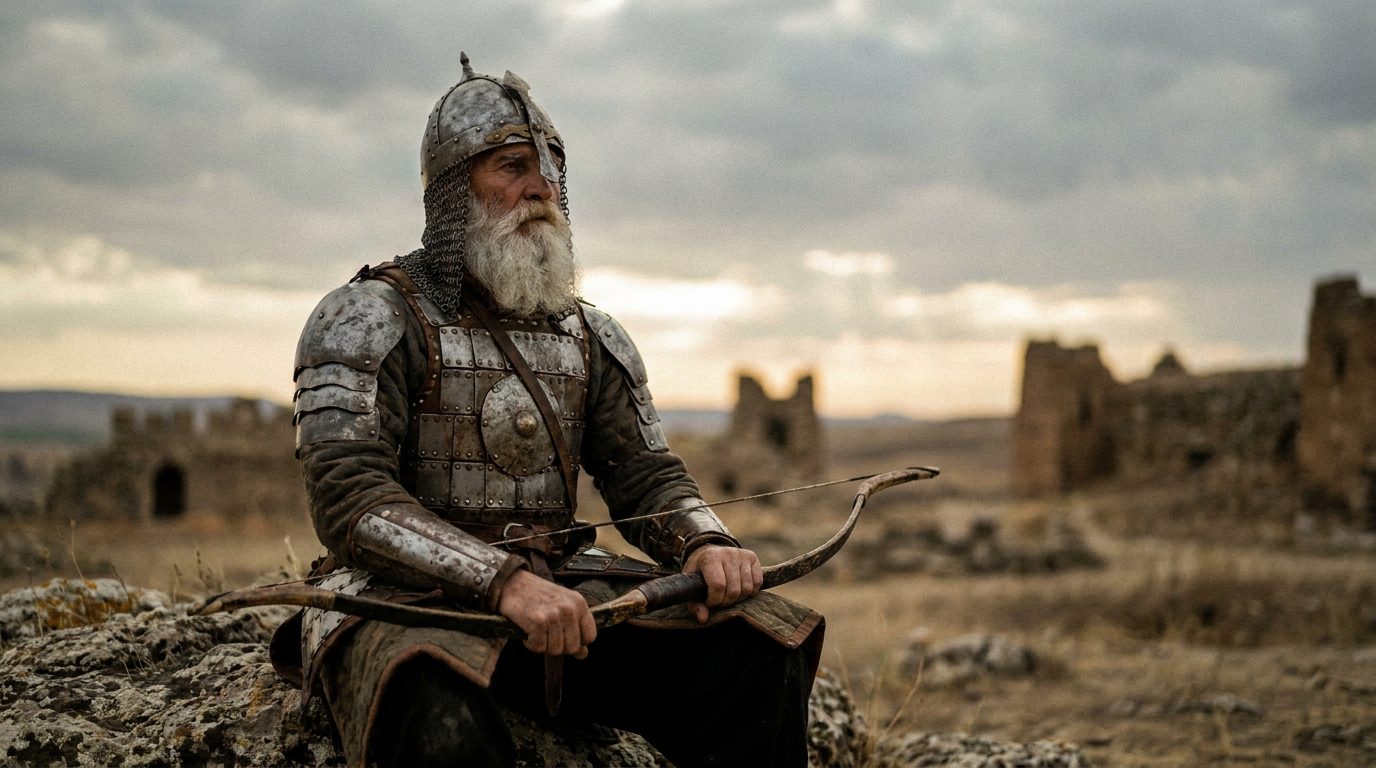
There are souls whose devotion shines so brightly that their stories echo across thousands of years, touching hearts in every generation. Bhīṣma — the grand patriarch of the Mahābhārata — is one such soul. His life is a breathtaking tapestry of sacrifice, unwavering commitment, and deep, sometimes hidden, love for God.
Whether you’re new to the world of Bhakti or you’ve been walking this path for years, the story of Bhīṣma has something profound to offer. It reminds us that loyalty, even when misunderstood by the world, can become one of the most powerful expressions of devotion.
Welcome, dear reader — wherever you are on your journey. Let’s explore the life of this extraordinary devotee together, with open hearts and a willingness to learn.
Bhīṣma was born as Devavrata, the son of King Śāntanu of the Kuru dynasty and the sacred river goddess Gaṅgā. From birth, he was extraordinary — trained in warfare, scripture, and dharma (righteous duty) by some of the greatest teachers of his age.
But what made Bhīṣma legendary was not his skill with weapons or his royal lineage. It was a single, breathtaking vow.
The Vow That Shook the Heavens
When his father Śāntanu fell in love with a fisherwoman named Satyavatī, her father refused the marriage unless Satyavatī’s future sons would inherit the throne. Devavrata, seeing his father’s anguish, made an incredible sacrifice: he vowed to never marry, never have children, and never claim the throne — all so that his father could be happy.
This vow was so fierce, so absolute, that the celestial beings showered flowers from the sky and gave him the name Bhīṣma, meaning “one who has taken a terrible vow.” The Sanskrit root of the word carries the sense of something fearsome and awe-inspiring.
From that day forward, Bhīṣma lived entirely for others. His personal desires were laid down at the altar of duty and love.
A Life Defined by Selflessness
Think about that for a moment. A young prince, full of potential, with the world at his feet — and he gave it all away. Not for fame. Not for spiritual merit. Simply because his father was suffering.
This kind of selflessness is at the very heart of Bhakti. In devotion, we learn to place the well-being of others — and ultimately, the will of God — above our own desires. Bhīṣma’s vow was, in many ways, his first great act of devotion.
Bhīṣma’s Loyalty to the Kuru Throne
After taking his vow, Bhīṣma dedicated his entire life to protecting and serving the Kuru dynasty. He raised generations of princes, guided kings, and served as the unshakable pillar of the family — even when that family began to fracture from within.
Serving Through Impossible Circumstances
As the Kuru dynasty grew, so did its conflicts. Bhīṣma watched as Dhṛtarāṣṭra’s sons — the Kauravas, led by the proud and envious Duryodhana — tormented the righteous Pāṇḍavas. He witnessed injustice after injustice: the poisoning of Bhīma, the rigged dice game, the humiliation of Draupadī, and the exile of the Pāṇḍavas.
And yet, Bhīṣma remained bound to the Kuru throne.
Why? This is perhaps the most misunderstood aspect of Bhīṣma’s character. He was not blind to Duryodhana’s wickedness. He spoke out against it many times. But his vow — his sacred commitment to serve and protect the throne of Hastināpura — held him in place.
The Pain of Duty
There is a deep and sometimes painful lesson here. Sometimes loyalty doesn’t look the way the world expects it to. Sometimes the most devoted souls find themselves in positions where their outer actions seem to contradict their inner truth.
Bhīṣma’s heart was always with dharma. His heart was always with Kṛṣṇa. But his body, bound by his vow, stood on the side of the Kauravas when the great war of Kurukṣetra began.
This tension — between inner devotion and outer obligation — is something many of us experience in our own lives. We may find ourselves in situations that feel contradictory, where our hearts long for one thing while our circumstances demand another. Bhīṣma’s story assures us that God sees the heart, even when the world only sees the surface.
Bhīṣma and Kṛṣṇa: A Hidden Love
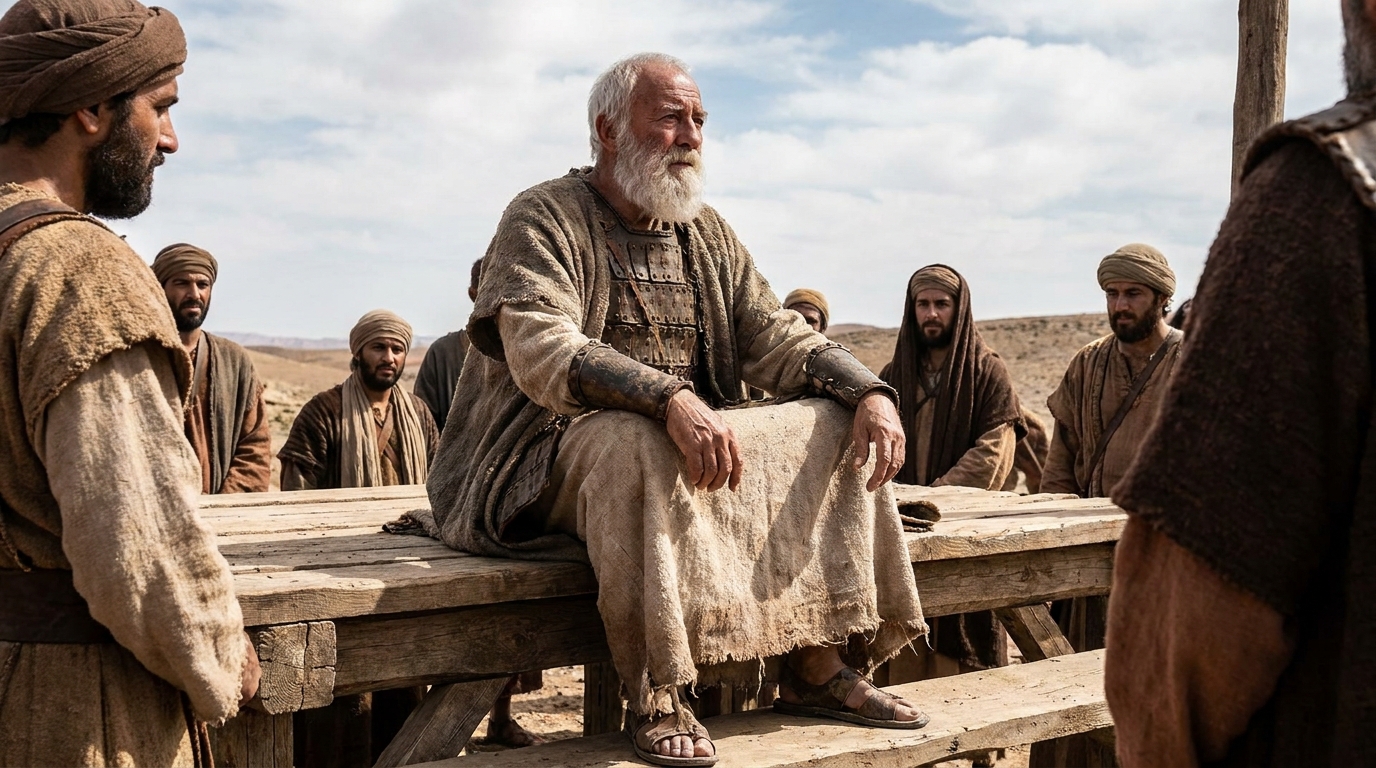
Here is where the story becomes truly beautiful for those of us on the Bhakti path. Beneath Bhīṣma’s stern exterior, beneath his warrior’s armor and his political obligations, there burned a deep and abiding love for Lord Kṛṣṇa — the Supreme Personality of Godhead.
Kṛṣṇa’s Promise and Bhīṣma’s Devotion
Before the battle of Kurukṣetra, Lord Kṛṣṇa vowed that He would not take up weapons in the war. He would serve only as the charioteer for Arjuna. But Bhīṣma’s fighting was so fierce, so devastating to the Pāṇḍava army, that Kṛṣṇa Himself — overcome with what the scriptures describe as transcendental emotion — picked up a chariot wheel and rushed toward Bhīṣma on the battlefield.
And what did Bhīṣma do? He dropped his weapons. He folded his hands. And with tears of ecstasy in his eyes, he welcomed the Lord’s charge.
This is one of the most intimate moments in all of Bhakti literature. Bhīṣma wanted Kṛṣṇa to break His vow — because it meant that the Lord was personally engaging with him. What greater honor could a devotee receive than to have God Himself rush toward you?
The Sweetness Behind the Battle
In the Śrīmad-Bhāgavatam, which is the ripened fruit of all Vedic literature, Bhīṣma’s devotion is revealed in its full glory. As he lay on his bed of arrows after the war, preparing to leave his body, Bhīṣma spoke some of the most moving prayers in all of scripture.
He said:
> “Let me now invest my thinking, feeling and willing, which were so long engaged in different subjects and occupational duties, in the all-powerful Lord Śrī Kṛṣṇa. He is always self-satisfied, but sometimes, being the leader of the devotees, He enjoys transcendental pleasure by descending on the material world, although from Him only the material world is created.”
> — Śrīmad-Bhāgavatam 1.9.32 (vedabase.io)
What a beautiful statement. After a lifetime of duty, sacrifice, and pain, Bhīṣma’s final desire was simply to fix his mind, heart, and will on Kṛṣṇa.
Sure, here is the sentence with the clickable link:
Check out our website for more articles: more articles.
Bhīṣma’s Final Teachings: Wisdom from a Bed of Arrows

After the great war concluded, Bhīṣma lay on the battlefield on a bed of arrows, waiting for the auspicious moment to leave his body. During this time, he shared extraordinary wisdom with Yudhiṣṭhira and the assembled sages.
Dharma, Devotion, and the Art of Letting Go
Bhīṣma spoke extensively about dharma — righteous conduct in governance, society, family, and personal life. His teachings fill entire sections of the Mahābhārata (the Śānti Parva and Anuśāsana Parva). But the pinnacle of all his wisdom was this: above all forms of dharma, devotion to the Supreme Lord is the highest path.
This aligns perfectly with Lord Kṛṣṇa’s own teaching in the Bhagavad-gītā (18.66):
> “Abandon all varieties of religion and just surrender unto Me. I shall deliver you from all sinful reactions. Do not fear.”
> — Bhagavad-gītā 18.66 (vedabase.io)
Bhīṣma’s life was, in essence, a journey toward this ultimate surrender. All his duties, all his sacrifices, all his battles — they were steps on the path that led him, at last, to fix his consciousness fully on the lotus feet of Kṛṣṇa.
Meditating on Kṛṣṇa at the Moment of Death
The Śrīmad-Bhāgavatam beautifully describes how Bhīṣma meditated on Kṛṣṇa in his final moments. He remembered the Lord’s form on the battlefield — His beautiful face covered with dust and sweat, His hair scattered by the wind, His compassionate glance toward His devotees.
Bhīṣma prayed:
> “On the battlefield [where Śrī Kṛṣṇa attended Arjuna out of friendship], the weights of His body shook with each step, and the bangles on His feet jingled musically. Let my mind be fixed upon this beautiful form of Lord Śrī Kṛṣṇa.”
> — Śrīmad-Bhāgavatam 1.9.34 (vedabase.io)
This is Bhakti in its purest expression — remembering God with love at the most crucial moment of life. Bhīṣma shows us that no matter how complex or difficult our life has been, the final destination can be one of pure, blissful devotion.
What Bhīṣma’s Story Teaches Us About Bhakti Today
You might be thinking, “This is an incredible story, but how does it apply to my life?” That’s a wonderful question, and the answer is deeply encouraging.
Loyalty to Our Spiritual Commitments
Bhīṣma teaches us the power of commitment. In Bhakti Yoga, we make commitments too — to chant God’s holy names, to serve others, to live with integrity and love. There will be times when these commitments feel difficult, when the world pulls us in different directions. Bhīṣma reminds us to stay steady.
Even a simple practice — like chanting the Hare Kṛṣṇa mahā-mantra each day — becomes a sacred vow when done with sincerity:
Hare Kṛṣṇa, Hare Kṛṣṇa, Kṛṣṇa Kṛṣṇa, Hare Hare / Hare Rāma, Hare Rāma, Rāma Rāma, Hare Hare
God Sees the Heart
Perhaps the most comforting lesson from Bhīṣma’s life is this: God sees what is hidden. The world may have seen Bhīṣma standing on the wrong side of a war, but Kṛṣṇa saw the love in his heart. When Bhīṣma left his body, he attained the Lord’s supreme abode.
As the Bhagavad-gītā (8.5) confirms:
> “And whoever, at the end of his life, quits his body remembering Me alone at once attains My nature. Of this there is no doubt.”
> — Bhagavad-gītā 8.5 (vedabase.io)
No matter where you are right now — no matter what struggles, contradictions, or imperfections you carry — your sincere heart is seen and cherished by God.
Service Is the Highest Expression of Love
Bhīṣma served his entire life. He served his father, his family, his kingdom, and ultimately, his Lord. Bhakti Yoga is, at its core, a path of loving service — seva. Whether it’s cooking a meal for someone in need, chanting with sincerity, offering a kind word, or simply showing up with an open heart — every act of genuine service brings us closer to the Divine.
An Invitation to Begin
Dear friend, Bhīṣma’s story is vast and ancient, but its essence is timeless and simple: love God with all your heart, serve others with all your strength, and trust that even in the most complicated circumstances, grace is always at work.
You don’t need to take a fearsome vow like Bhīṣma. You don’t need to be a warrior or a scholar. All you need is one sincere step — one honest prayer, one heartfelt chant, one moment of genuine surrender.
Everyone is welcome here. Whatever your background, whatever your story, the path of Bhakti is open to you. As Kṛṣṇa Himself promises in the Bhagavad-gītā (9.34):
> “Engage your mind always in thinking of Me, become My devotee, offer obeisances to Me and worship Me. Being completely absorbed in Me, surely you will come to Me.”
> — Bhagavad-gītā 9.34 (vedabase.io)
Take that one step today. Chant a name of God. Offer a prayer from the heart. Read a verse of scripture. Light a candle of devotion in your life — and watch how the Lord, in His infinite kindness, fans it into a flame.
With love and gratitude,
The Bhakti House �DiplomaHare Kṛṣṇa 🙏
FAQs
What is Bhīṣma known for?
Bhīṣma is known for his unwavering commitment to truth and righteousness, his unparalleled skills in warfare, and his role as a key character in the Indian epic, the Mahabharata.
What is Bhīṣma’s role in the Mahabharata?
Bhīṣma plays a central role in the Mahabharata as the grand-uncle of the Pandavas and the Kauravas. He is a respected and revered figure who is known for his wisdom, loyalty, and dedication to duty.
What is the significance of Bhīṣma’s vow of celibacy?
Bhīṣma’s vow of celibacy, known as Brahmacharya, is a key aspect of his character. He took this vow to ensure the happiness of his father and to serve his kingdom. This vow also plays a crucial role in the events of the Mahabharata.
How did Bhīṣma acquire his name?
Bhīṣma was originally named Devavrata, but he acquired the name Bhīṣma, which means “terrible” or “fearsome,” due to his prowess in battle and his ability to strike fear in his enemies.
What is the significance of Bhīṣma’s death in the Mahabharata?
Bhīṣma’s death is a significant event in the Mahabharata. He is granted the boon of choosing the time of his death, and he chooses to die on a bed of arrows after the end of the war, symbolizing his sacrifice and devotion to duty.

