
A peacock fan is more than a decorative object. In many homes, temples, yoga spaces, and sacred gatherings, it is a symbol of beauty, devotion, protection, and loving service. Whether you are completely new to Bhakti Yoga or have spent years practicing chanting, prayer, and altar worship, this guide is meant to help you understand the meaning and practical use of a peacock fan with care and respect.
In the Bhakti tradition, beauty is not separate from spirituality. Beauty can soften the heart. It can remind us that life is sacred. A peacock fan, with its shimmering colors and natural elegance, invites us to pause, breathe, and remember the Divine.
Bhakti Yoga means “the path of devotion” or “the path of loving connection with God.” The Sanskrit word bhakti means love, devotion, or heartfelt service. This path is simple and profound: we offer our voice through chanting, our hands through service, our heart through prayer, and our daily life through sincerity.
A peacock fan can become part of that loving offering. It may be used on a home altar, in kirtan gatherings, in temple ceremonies, or simply as a beautiful reminder to live with devotion.
What Is a Peacock Fan?
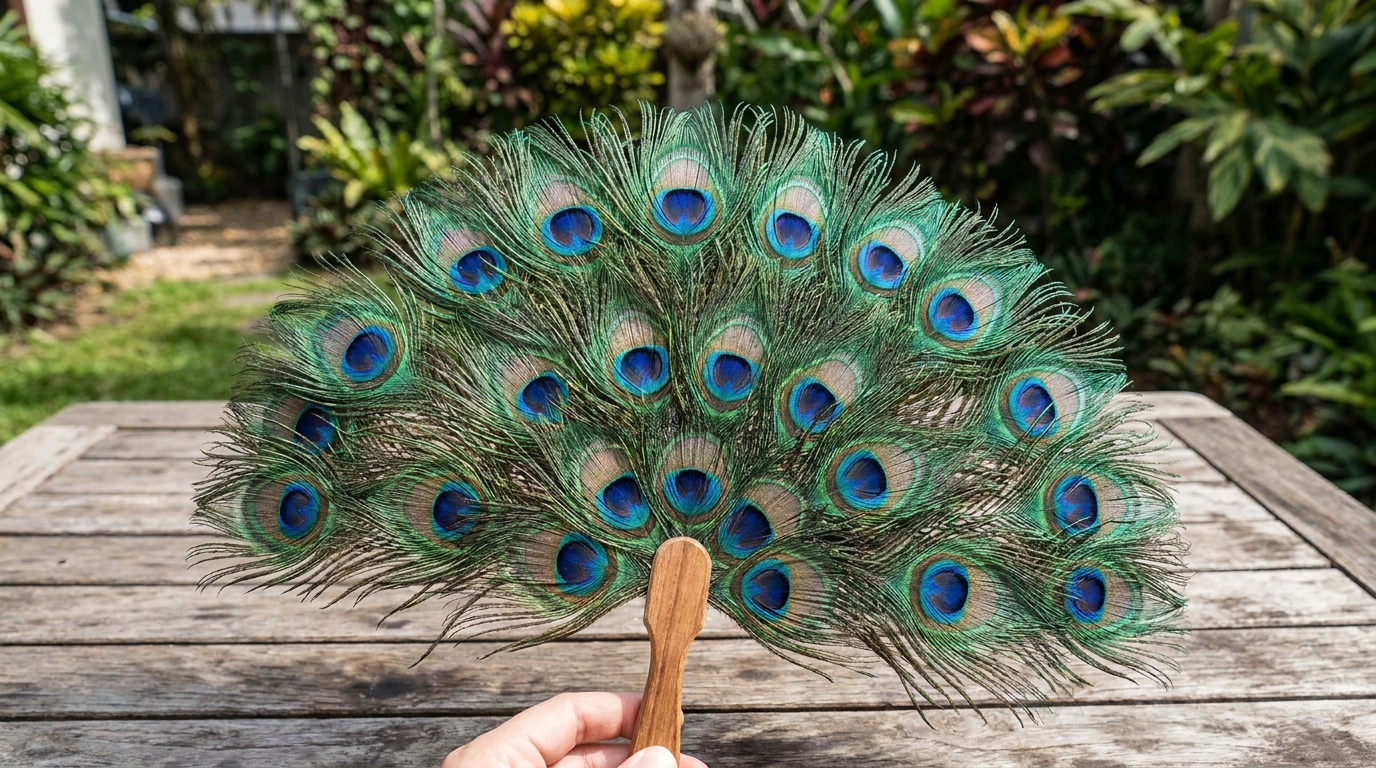
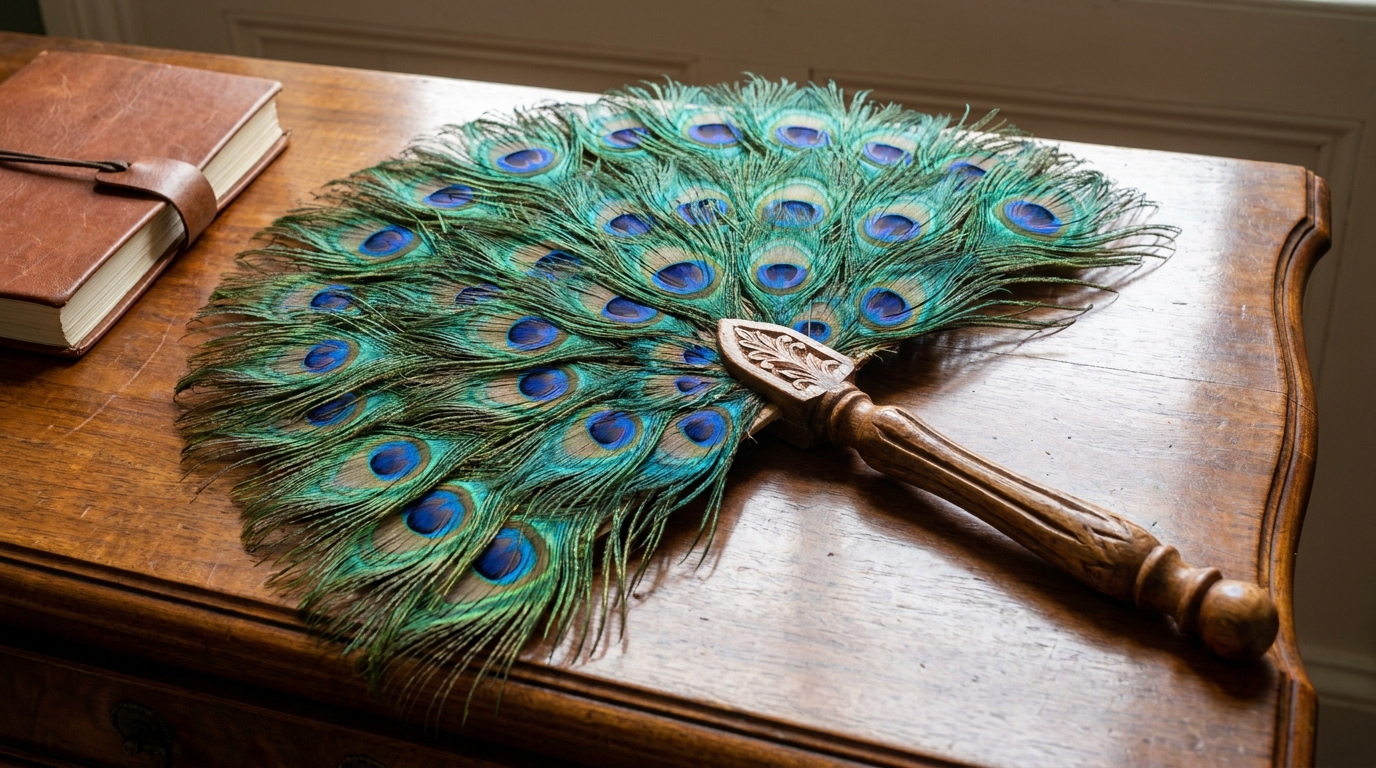
A peacock fan is traditionally made from peacock feathers arranged in a graceful fan shape. Some are small and handheld, while others are large and ceremonial. They may have wooden, metal, bamboo, or decorative handles, and they are often used in spiritual spaces, cultural ceremonies, dance, home décor, and sacred rituals.
The Natural Beauty of Peacock Feathers
Peacock feathers are known for their jewel-like colors: deep blue, emerald green, gold, bronze, and subtle shades that change with the light. The famous “eye” pattern of the feather has inspired spiritual symbolism across many cultures.
In devotional settings, these feathers are often seen as a reminder of divine artistry. They help us remember that creation itself is full of wonder. When we look at a peacock feather, we may feel invited into gratitude: “How beautiful is this world, and how loving must be the Source of such beauty?”
Peacock Fans in Sacred Spaces
In many Bhakti temples and home altars, peacock fans may be used in seva, which means “service.” Seva is not ordinary work. It is service done with love and humility. When a devotee offers a fan before the Deity or sacred image of God, the act is not about performance. It is about care.
Just as we might fan a beloved guest on a warm day, devotees may fan the Lord as an expression of hospitality and affection. This simple gesture teaches us that love is practical. Love serves. Love offers comfort. Love pays attention.
Peacock Fans as Decorative and Devotional Items
Many people also keep peacock fans as part of spiritual home décor. They may be placed near an altar, meditation area, yoga room, or reading corner. Even if you do not use the fan ceremonially, it can still serve as a sacred reminder.
A peacock fan can gently say to the heart: “Make this place peaceful. Make this life beautiful. Remember God.”
The Spiritual Symbolism of the Peacock in Bhakti
The peacock holds a special place in many sacred traditions of India, especially in relation to Lord Krishna. Krishna is often depicted wearing a peacock feather in His hair. This feather is simple, natural, and beautiful, yet it carries deep meaning for devotees.
Krishna and the Peacock Feather
In the Bhakti scriptures, Krishna is described as the Supreme Person who attracts all hearts through His beauty, sweetness, wisdom, and love. One of His most beloved forms is as a cowherd boy in Vrindavan, a sacred village where He plays His flute, cares for the cows, and shares loving pastimes with His devotees.
The peacock feather in Krishna’s crown reminds us that God is not only powerful and majestic, but also playful, intimate, and approachable. He is not far away from the heart. He invites relationship.
For someone new to Bhakti, this may be a tender idea: God can be loved personally. We can speak to God. We can sing to God. We can offer something simple, like a flower, a fruit, a prayer, or even our honest tears.
Beauty Offered Back to Its Source
In the Bhagavad-gita, one of the foundational texts of Bhakti Yoga, Krishna says:
“Whoever offers Me with love and devotion a leaf, a flower, a fruit, or water, I accept it.”
— Bhagavad-gita 9.26
This verse is very important. Krishna does not say we must offer something expensive or complicated. He says the key is love and devotion.
A peacock fan, when offered with sincerity, becomes meaningful because of the heart behind it. The object is beautiful, but the devotion is what makes it sacred.
Humility and Splendor Together
The peacock is visually magnificent, yet in Bhakti we are reminded not to become proud of beauty, talent, knowledge, or spiritual practice. Everything we have is a gift.
A peacock fan can teach us this balance. It is splendid, but it is used in service. Its beauty becomes humble when it is offered to God.
This is one of the secrets of Bhakti Yoga: our gifts become purified when we use them lovingly.
Check out our latest articles at https://thebhaktihouse.org/blog.
How Peacock Fans Are Used in Bhakti Practice
Peacock fans can be used in several devotional ways, especially in altar worship, kirtan, and sacred gatherings. If you are new, please know there is no pressure to do everything perfectly. Bhakti begins with sincerity.
Offering Service on a Home Altar
Many people create a small home altar as a peaceful place for prayer, chanting, and remembrance. An altar may include sacred images, candles, incense, flowers, scripture, or meaningful devotional items.
A peacock fan may be placed near the altar and used gently as an offering. You might fan the sacred image of Krishna, Radha-Krishna, Rama, Narasimha, or another form of God you worship. You may also use it before a picture of your guru or saintly teachers, if that is part of your tradition.
The mood is simple: “Dear Lord, please accept this small service.”
During Kirtan and Chanting
Kirtan means devotional chanting, usually in a call-and-response style. In Bhakti Yoga, sacred sound is central because chanting helps awaken the heart. The most well-known mantra in many Bhakti communities is the Hare Krishna maha-mantra:
Hare Krishna Hare Krishna
Krishna Krishna Hare Hare
Hare Rama Hare Rama
Rama Rama Hare Hare
A mantra is a sacred sound or prayer that helps focus the mind and connect the heart with God. The word maha-mantra means “great mantra.”
During kirtan, peacock fans may be used as part of the atmosphere of worship. They may decorate the altar, be carried in a procession, or be used gently in service to the Deities.
Temple Ceremonies and Arati
Arati is a devotional ceremony where items such as incense, lamps, water, cloth, flowers, and fans are offered to the Lord. Each item represents loving service through the elements of creation.
A fan offering may symbolize comfort and honor. Traditionally, fans are offered during warmer seasons or in particular parts of worship. Peacock fans are especially beautiful in arati because they express both elegance and affection.
For newcomers, arati can feel mysterious at first. But the essence is very simple: we offer the best of what we have to God, and then we receive grace in return.
Personal Prayer and Reflection
Even if you do not perform formal rituals, a peacock fan can support personal prayer. You may keep it in a prayer space as a reminder to become more gentle, more loving, and more aware of God’s presence.
Before beginning prayer, you might look at the fan and say:
“May my heart become as beautiful as an offering. May my life become service. May I remember You today.”
This is Bhakti. It is not limited to temples. It can be practiced in a bedroom, a kitchen, a car, a garden, or a busy workplace.
Choosing the Right Peacock Fan
If you are looking for the best peacock fan for devotional use, home décor, or gifting, it helps to consider size, quality, purpose, and ethical sourcing. The “ultimate peacock fan guide” is not only about appearance. It is also about intention.
Decide How You Will Use It
First, consider your purpose.
Will the peacock fan be used on a home altar?
Will it be part of temple worship?
Will it be used for kirtan decoration?
Will it be displayed in a yoga studio or meditation space?
Will it be given as a devotional gift?
For altar worship, a smaller or medium-sized fan may be easier to handle. For temple ceremonies or decorative use, a larger fan may be appropriate. For travel or festivals, a compact, sturdy fan may be best.
Look for Quality Craftsmanship
A good peacock fan should feel secure and well-made. The feathers should be arranged evenly, and the handle should be comfortable to hold. If the fan is meant for worship, it should be clean, respectful, and durable.
Check for:
- Strong feather placement
- A comfortable handle
- Smooth edges
- Balanced weight
- Secure binding
- A shape that opens beautifully
A devotional item does not have to be luxurious, but it should be treated with care.
Consider Ethical and Natural Sourcing
Peacocks naturally shed their feathers, and many traditional feather items are made from naturally molted feathers. When possible, choose sellers who are transparent about ethical sourcing.
This matters because Bhakti teaches compassion for all living beings. The Sanskrit word ahimsa means nonviolence or non-harming. While ahimsa can be practiced in many ways, one simple way is to be mindful about what we buy and how it affects other beings.
Choosing ethically sourced feathers can help align your purchase with a devotional heart.
Choose a Style That Inspires Devotion
Some peacock fans are simple and rustic. Others are ornate, with carved handles, fabric backing, beads, or decorative borders. There is no single correct style for everyone.
Ask yourself: “Does this fan inspire reverence? Does it help me remember God? Does it feel appropriate for the sacred space I am creating?”
In Bhakti, the inner mood matters most. Choose something that supports your sincere practice.
How to Care for a Peacock Fan
A peacock fan is delicate and should be cared for gently. Proper care helps preserve its beauty and keeps it suitable for devotional use.
Keep It Clean and Dry
Peacock feathers can be damaged by moisture, dust, and rough handling. Store your fan in a dry place away from humidity. If dust gathers, use a soft, dry cloth or a very gentle feather duster.
Avoid using water, cleaning sprays, or chemicals. These can damage the natural shine of the feathers.
Store It Respectfully
If your peacock fan is used for worship, keep it in a clean place. You may store it near your altar, in a cloth bag, or on a shelf reserved for sacred items.
Respectful storage is part of devotional consciousness. When we care for sacred items, we train the heart to become attentive and grateful.
Handle With Gentle Hands
Hold the fan by the handle rather than the feathers. Avoid bending, crushing, or pulling the feathers. If children are present, you can kindly teach them that this is a special item used with love and care.
This can become a sweet teaching moment: sacred things are not untouchable because God is distant, but they are handled lovingly because God is dear.
Refreshing Your Devotional Space
Over time, you may want to refresh your altar or prayer space. You can gently rearrange your peacock fan, add fresh flowers, clean the area, or light incense before chanting.
A clean and beautiful sacred space can support a clear and peaceful mind. But remember: God accepts the heart. Even a small, simple altar can be full of devotion.
Creating a Bhakti-Inspired Space With a Peacock Fan
A peacock fan can be part of a larger devotional environment that nourishes your spiritual life. Your space does not need to be elaborate. It only needs to invite remembrance.
Begin With a Simple Altar
If you are new to home practice, begin simply. You might place a small cloth on a table or shelf. Add a sacred image, a candle, a flower, and perhaps a scripture such as the Bhagavad-gita.
Then place the peacock fan nearby. Let it be part of the offering, not just decoration.
Your altar can become the spiritual heart of your home. It is a place to return to when life feels heavy, confusing, or rushed.
Add Sacred Sound
Bhakti Yoga is deeply connected to sacred sound. You can play soft kirtan, chant japa, or sing prayers. Japa means personal mantra meditation, often practiced by repeating a mantra on beads.
Even a few minutes of chanting each day can shift the atmosphere of the home. The mind may still wander, and that is okay. Gently bring it back to the sound.
A peacock fan placed near your chanting space can remind you: “I am here to offer my attention with love.”
Use Natural Beauty
Fresh flowers, plants, candles, incense, and natural materials can help create a peaceful devotional space. A peacock fan fits beautifully with this atmosphere because it carries the beauty of nature.
In Bhakti, nature is not seen as separate from God. It is divine energy. When we bring natural beauty into worship, we are honoring the Creator through creation.
Keep the Space Welcoming
A Bhakti-inspired space should not feel exclusive or intimidating. It should feel warm and welcoming. Friends, family, children, and guests of all backgrounds should be able to sense peace there.
You do not need to hide your devotion, and you also do not need to pressure anyone. Let the beauty of the space speak gently.
Peacock Fans in Scripture, Culture, and Devotional Imagination
While the exact object of a peacock fan may vary across communities, the peacock and its feathers are deeply woven into the devotional imagination of Krishna Bhakti.
Vrindavan and the Mood of Loving Service
Vrindavan is the sacred land associated with Krishna’s childhood and youth. In Bhakti literature, Vrindavan is not only a physical place but also a state of heart: a place where every tree, bird, river, and breeze serves Krishna with love.
Peacocks are often described as dancing in joy when Krishna plays His flute. Their feathers become symbols of celebration, beauty, and divine attraction.
When we use a peacock fan in devotional service, we may remember this Vrindavan mood: “Let my life become part of the song of devotion.”
The Bhagavatam and the Beauty of Krishna
The Srimad Bhagavatam, also called the Bhagavata Purana, is one of the most cherished scriptures in the Bhakti tradition. It describes Krishna’s form, qualities, and loving pastimes in deeply poetic language.
Devotees meditate on Krishna decorated with a peacock feather, forest flowers, and a flute. These details are not merely artistic. They help the heart develop personal loving remembrance.
For many practitioners, seeing a peacock fan near the altar brings to mind Krishna’s sweetness and the joyful devotion of Vrindavan.
Sacred Objects as Teachers
In Bhakti Yoga, sacred objects can quietly teach us. A lamp teaches us to offer light. Incense teaches us to let our life become fragrant with good qualities. Water teaches purity. Flowers teach softness and impermanence.
A peacock fan teaches beauty in service.
It asks us: “What beauty has God placed in you? Can you offer it back?”
Maybe your beauty is kindness. Maybe it is music. Maybe it is patience, cooking, organizing, teaching, listening, cleaning, or caring for someone who is struggling. All of these can become Bhakti when offered with love.
Practical Ways to Use a Peacock Fan in Daily Spiritual Life
You do not have to wait for a festival or formal ceremony to bring devotional meaning into your day. A peacock fan can support small, sincere practices.
Morning Offering
In the morning, stand or sit near your altar. Take a moment to breathe. You may gently hold the peacock fan or simply look at it.
Offer a short prayer:
“Dear Lord, please guide my thoughts, words, and actions today. May I serve with love.”
This can take less than one minute, but it sets a sacred direction for the day.
Before Chanting
Before chanting your mantra, you may use the fan as a reminder to cool the restless mind. The mind often runs toward worries, plans, and distractions. Bhakti does not demand that the mind become perfect before practice. Instead, practice gradually purifies the mind.
You can pray:
“Please help me hear this sacred sound with sincerity.”
Then chant. Even one round of japa, one kirtan song, or five minutes of mantra meditation can be meaningful.
During Festivals
Peacock fans are especially beautiful during Bhakti festivals such as Janmashtami, the appearance day of Lord Krishna, or Radhastami, the appearance day of Srimati Radharani, Krishna’s most beloved devotee.
They can be used to decorate the altar, honor sacred images, or create a joyful devotional atmosphere. Festivals remind us that spiritual life is not only discipline. It is also celebration.
As a Reminder of Service
Place the peacock fan somewhere you will see it regularly. When you notice it, pause and ask:
“How can I serve today?”
This question is powerful. It can transform ordinary life. Serving God and others may look like making a meal, speaking kindly, forgiving someone, giving charity, chanting with attention, or doing your work honestly.
Bhakti Yoga brings devotion into real life.
Common Questions About Peacock Fans
Many sincere people have questions about using peacock fans, especially if they are new to Bhakti practices. Questions are welcome. Spiritual life grows through honest inquiry.
Do I Have to Be Hindu to Use a Peacock Fan?
No. People of all backgrounds are welcome to appreciate and use a peacock fan respectfully. Bhakti Yoga is a path of love for God, and love is not limited by birth, nationality, or background.
If you are drawn to the beauty and meaning of the peacock fan, approach it with humility and respect. Learn from authentic sources, ask sincere questions, and allow your heart to grow naturally.
Is a Peacock Fan Required for Bhakti Yoga?
No. Bhakti Yoga does not require a peacock fan or any expensive item. The heart is the main offering.
Krishna says He accepts even a leaf, flower, fruit, or water when offered with love. This means that sincere devotion is available to everyone.
A peacock fan can be a beautiful support, but it is not the essence. The essence is loving remembrance and service.
Can I Use a Peacock Fan Only for Decoration?
Yes, you can use it decoratively. However, if you understand its sacred associations, you may find that it naturally invites a more devotional mood.
Even as décor, it can become meaningful when placed respectfully and connected with gratitude, prayer, or spiritual intention.
What If I Make Mistakes in Worship?
Everyone makes mistakes. Bhakti is not about cold perfection. It is about relationship.
If you use a peacock fan in worship and feel unsure, simply pray: “Please forgive any mistakes. Please accept my sincere intention.”
This humble mood is very dear in Bhakti. Spiritual growth happens step by step.
The Deeper Lesson: Becoming an Offering
The ultimate peacock fan guide is not only about buying, using, or caring for a fan. It is about understanding the heart of devotion.
A peacock fan is beautiful when it is held in the hand. But it becomes sacred when it is offered in love.
In the same way, our lives become sacred when we offer them. Our talents, struggles, relationships, work, and prayers can all become part of Bhakti Yoga.
Love Through Chanting
Chanting is one of the most accessible practices of Bhakti. You do not need to be advanced. You do not need a perfect voice. You only need sincerity.
The holy names of God are understood in Bhakti to be spiritually powerful and merciful. When we chant, we invite divine presence into the heart.
Love Through Prayer
Prayer can be formal or simple. You can pray with ancient Sanskrit verses, or you can speak in your own words.
A heartfelt prayer might be:
“God, I do not know how to love You fully, but I want to learn. Please guide me.”
This kind of honesty is a beautiful offering.
Love Through Service
Service is where devotion becomes practical. We serve in temples, homes, communities, families, and workplaces. We serve by feeding others, encouraging others, cleaning, teaching, listening, protecting, and giving.
When service is connected to God, it becomes seva.
Love Through Spiritual Growth
Bhakti Yoga gently transforms us. Over time, we may become more patient, compassionate, humble, and joyful. This growth is not always dramatic. Sometimes it is quiet, like a seed opening beneath the soil.
A peacock fan may remind us of that growth: beauty unfolds slowly, by grace.
Bringing the Peacock Fan Into Your Journey
If you feel drawn to a peacock fan, receive that inspiration with gratitude. Perhaps it will beautify your altar. Perhaps it will help you remember Krishna. Perhaps it will become a gentle reminder to serve with love.
But most importantly, let it point you toward the heart of Bhakti: a living relationship with God.
You are welcome exactly as you are. Whether you are experienced in spiritual practice or simply curious, whether you know many Sanskrit words or none at all, whether your faith feels strong or tender and uncertain, there is a place for you on the path of devotion.
Take one sincere step. Chant one mantra. Offer one prayer. Serve one person with kindness. Place one flower before God. Sit quietly for one moment and say, “Please guide me.”
In Bhakti, no sincere offering is too small. Everyone is welcome to take one sincere step toward God.
FAQs
What is a peacock fan?
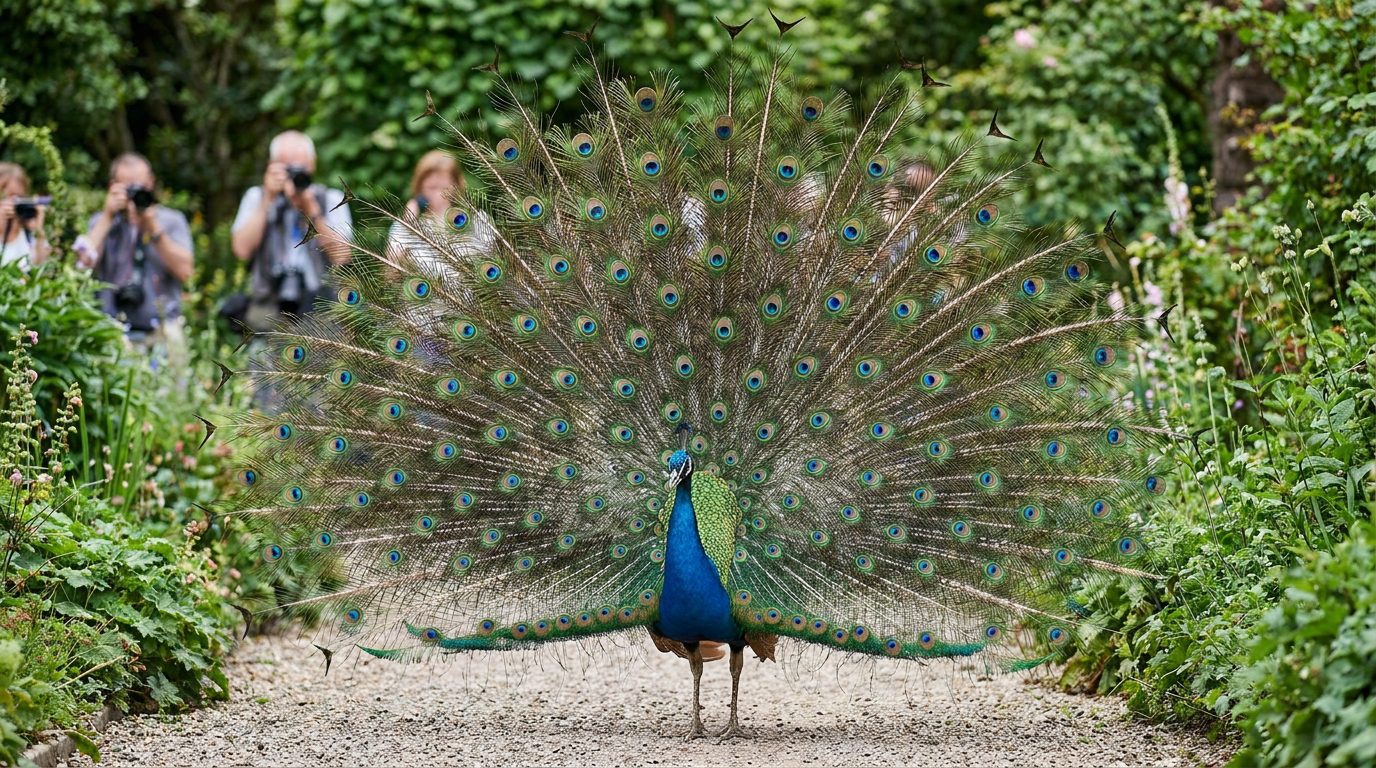
A peacock fan is a display of the vibrant and iridescent tail feathers of a peacock, typically used by the male peacock during courtship displays to attract a mate.
What are the different types of peacock fans?
There are two main types of peacock fans: the Indian Peafowl (or peacock) and the Green Peafowl. The Indian Peafowl is known for its bright blue and green plumage, while the Green Peafowl has more metallic green and bronze feathers.
How do peacocks use their fans?
Male peacocks use their fans as part of their courtship displays to attract females. They will spread their tail feathers into a fan shape and strut around, shaking their feathers to create a rustling sound and to display their vibrant colors.
What is the significance of the peacock fan in different cultures?
The peacock fan has been a symbol of beauty, royalty, and immortality in various cultures. In Hinduism, the peacock is associated with the goddess Saraswati, while in Greek mythology, the peacock is associated with the goddess Hera.
How can I care for a peacock fan?
To care for a peacock fan, it is important to keep the feathers clean and dry to maintain their vibrant colors. Avoid exposing the feathers to direct sunlight for extended periods, as this can cause fading. Additionally, store the fan in a cool, dry place when not in use to prevent damage.

