
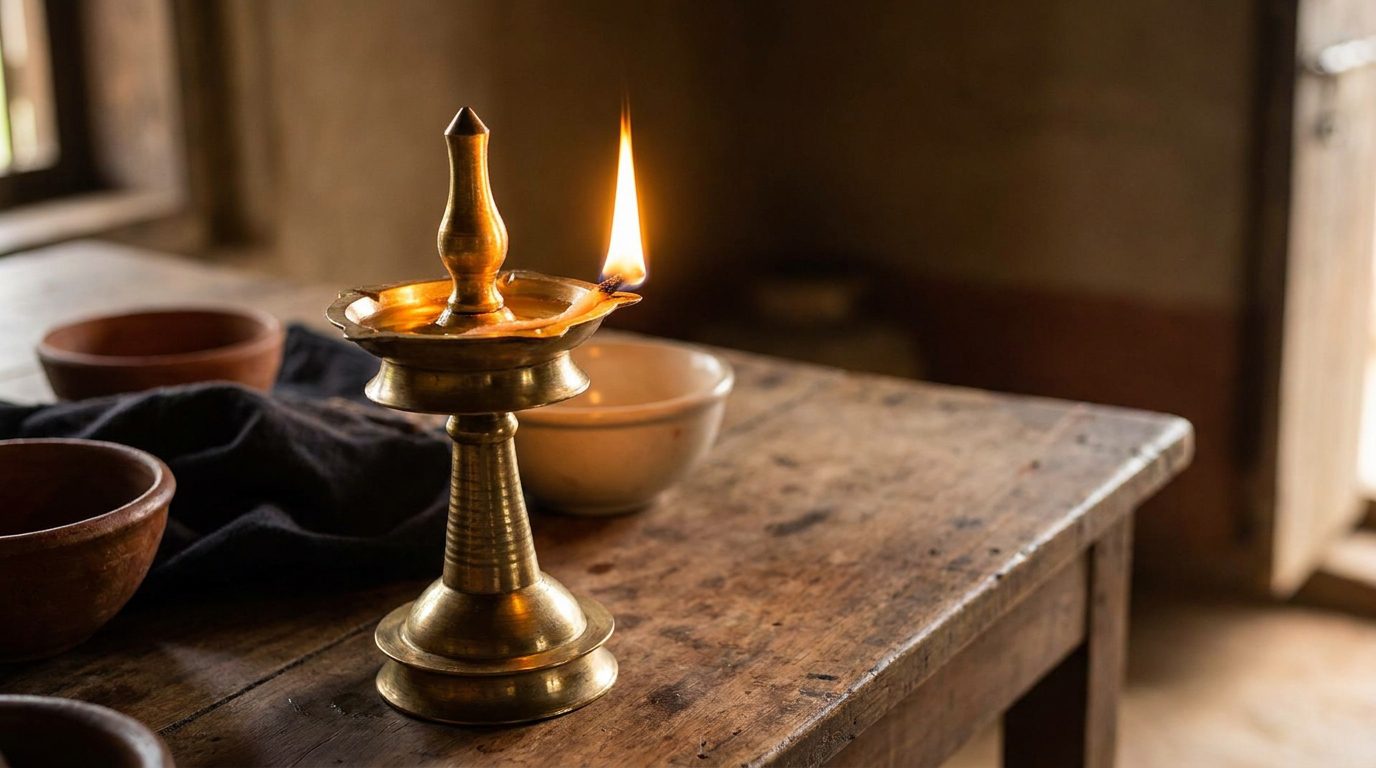
Lighting a ghee lamp is one of the simplest and most beautiful devotional practices in Bhakti Yoga. A small cotton wick, a spoonful of pure ghee, and a sincere heart can transform an ordinary room into a sacred space. The flame reminds us that divine love is not far away. It is present, gentle, and ready to awaken within us.
In the Bhakti tradition, a ghee lamp is more than a ritual object. It is an offering of love. When we light a lamp before the Lord, before a sacred image, or before our personal place of prayer, we are quietly saying, “May my heart become bright. May my life be used in service. May ignorance be removed by divine grace.”
Whether you are new to Bhakti Yoga or have been practicing for years, this guide will help you understand the meaning, method, and mood of offering a ghee lamp with devotion.
A ghee lamp, often called a diya or deepa, is a small lamp fueled by ghee, which is clarified butter. In Sanskrit, deepa means “lamp” or “light.” In many devotional homes and temples, ghee lamps are lit during prayer, meditation, kirtan, and arati.
Arati is a Sanskrit word that refers to a loving offering of light, incense, flowers, water, and other sacred items to the Divine. In Bhakti Yoga, arati is not performed as a mechanical ceremony. It is a way of welcoming God, honoring God, and offering our senses back to their source.
What Is Ghee?
Ghee is butter that has been gently heated until the water and milk solids are removed, leaving behind a golden, fragrant, clarified butter. In the Vedic tradition, ghee is considered pure and sacred. It is used in cooking, yajna fire offerings, Ayurvedic healing, and temple worship.
When used in a lamp, ghee burns with a soft, steady glow. Its natural purity makes it a beloved offering in many Bhakti communities.
What Is a Diya?
A diya is a small lamp traditionally made of clay, brass, copper, or silver. It holds the ghee and wick. Diyas are often used in home worship, temple ceremonies, festivals like Diwali, and daily devotional practice.
Even if you do not have a traditional diya, you can still offer a ghee lamp using a safe, heat-resistant small bowl or lamp designed for oil or ghee.
Why Use a Cotton Wick?
The wick is usually made from clean cotton. Cotton absorbs the ghee and allows the flame to burn steadily. Spiritually, the wick can remind us of the individual soul reaching toward God. The ghee is our devotion, and the flame is the light of divine remembrance.
The Spiritual Meaning of the Ghee Lamp
In Bhakti Yoga, every offering carries meaning. The ghee lamp is not simply about creating light in a physical sense. It is about inviting spiritual light into our heart.
The Bhagavad-gita, one of the most treasured scriptures of Bhakti Yoga, teaches that the Supreme Lord accepts even a simple offering when it is made with love. In Bhagavad-gita 9.26, Sri Krishna says that if one offers Him a leaf, a flower, fruit, or water with devotion, He accepts it.
The principle is simple and profound: God is not hungry for our things. God is moved by our love.
Light as a Symbol of Divine Knowledge
The flame of the ghee lamp represents spiritual knowledge, purity, and divine presence. Just as one small lamp can remove darkness from a room, one sincere prayer can begin to remove confusion from the heart.
In the Upanishadic mood, seekers pray to be led from darkness to light. This does not only mean outer darkness. It means moving from forgetfulness to remembrance, from selfishness to service, from fear to trust, and from separation to love.
Offering the Best of Ourselves
Ghee is considered a precious substance. To offer ghee in a lamp is to offer something valuable. But the deeper offering is internal.
We are offering our attention.
We are offering our time.
We are offering our desire to be purified.
We are offering our heart to God.
In Bhakti, even a small act becomes spiritually powerful when done with sincerity.
The Flame and the Heart
A steady flame can teach us steadiness in devotion. Sometimes the mind is restless, like a flame disturbed by wind. Yet by regular prayer, chanting, service, and good association, the heart gradually becomes calm.
When we light a ghee lamp, we can pray, “May my devotion become steady. May my mind become peaceful. May my words and actions bring light to others.”
Benefits of Lighting a Ghee Lamp
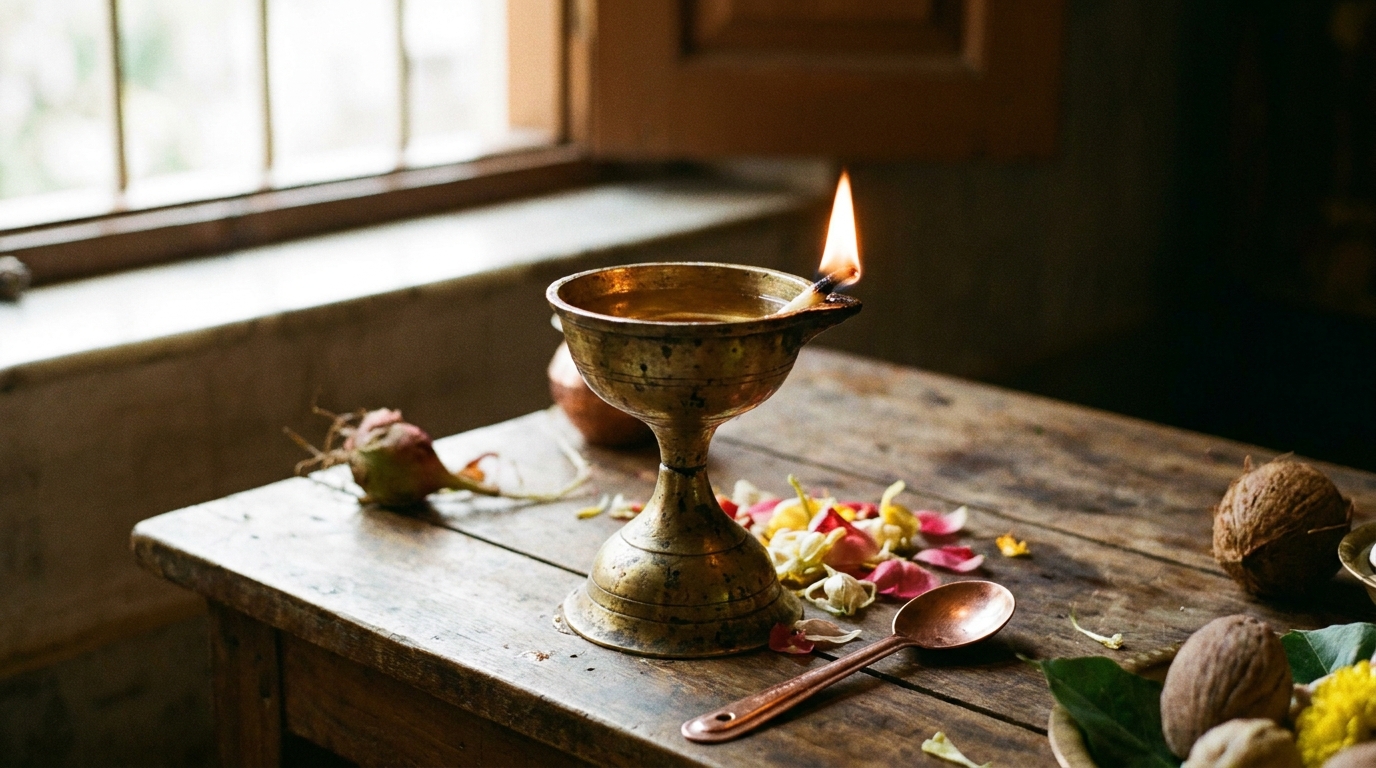
The greatest benefit of lighting a ghee lamp is the opportunity to remember God with love. Still, this simple practice can also support our daily spiritual rhythm in many practical ways.
It Creates a Sacred Atmosphere
Lighting a lamp naturally changes the feeling of a space. The warm glow invites quietness. It signals to the mind and heart that this is a time for prayer, chanting, reflection, or gratitude.
A small home altar, meditation corner, or prayer shelf can become a place of refuge when we regularly light a ghee lamp there.
It Helps Build a Daily Devotional Routine
Bhakti Yoga is practical. It is not only philosophy. It is a way of living in loving connection with God.
Lighting a lamp each morning or evening can help us create a daily rhythm. Even five minutes of sincere practice can become spiritually meaningful. You might light the lamp, chant a mantra, offer a prayer, read a verse from scripture, or sit quietly in gratitude.
It Supports Mantra Meditation and Chanting
Chanting is central to Bhakti Yoga. A mantra is a sacred sound vibration that helps the heart remember the Divine. The most widely known Bhakti mantra is the maha-mantra, which means “great mantra”:
Hare Krishna Hare Krishna
Krishna Krishna Hare Hare
Hare Rama Hare Rama
Rama Rama Hare Hare
“Hare” calls upon the divine energy of the Lord. “Krishna” means the all-attractive Supreme Person. “Rama” means the source of spiritual joy. Chanting these names is a simple and powerful way to awaken love for God.
Lighting a ghee lamp before chanting can help gather the mind and create a devotional mood.
It Encourages Inner Cleanliness
When we light a lamp, we often naturally clean the area around it. We may wipe the altar, arrange flowers, or sit more attentively. This outer cleanliness encourages inner cleanliness.
In Bhakti, cleanliness is not only about appearance. It is about creating a welcoming place for God in our lives.
It Becomes an Offering of Love
The heart of Bhakti Yoga is seva, which means service. Lighting a lamp is a form of seva. It says, “I am here to serve. I am here to remember. I am here to love.”
When we approach the ghee lamp in this way, even a small flame becomes a sacred act.
Check out our latest articles at https://thebhaktihouse.org/blog.
How to Make a Ghee Lamp at Home
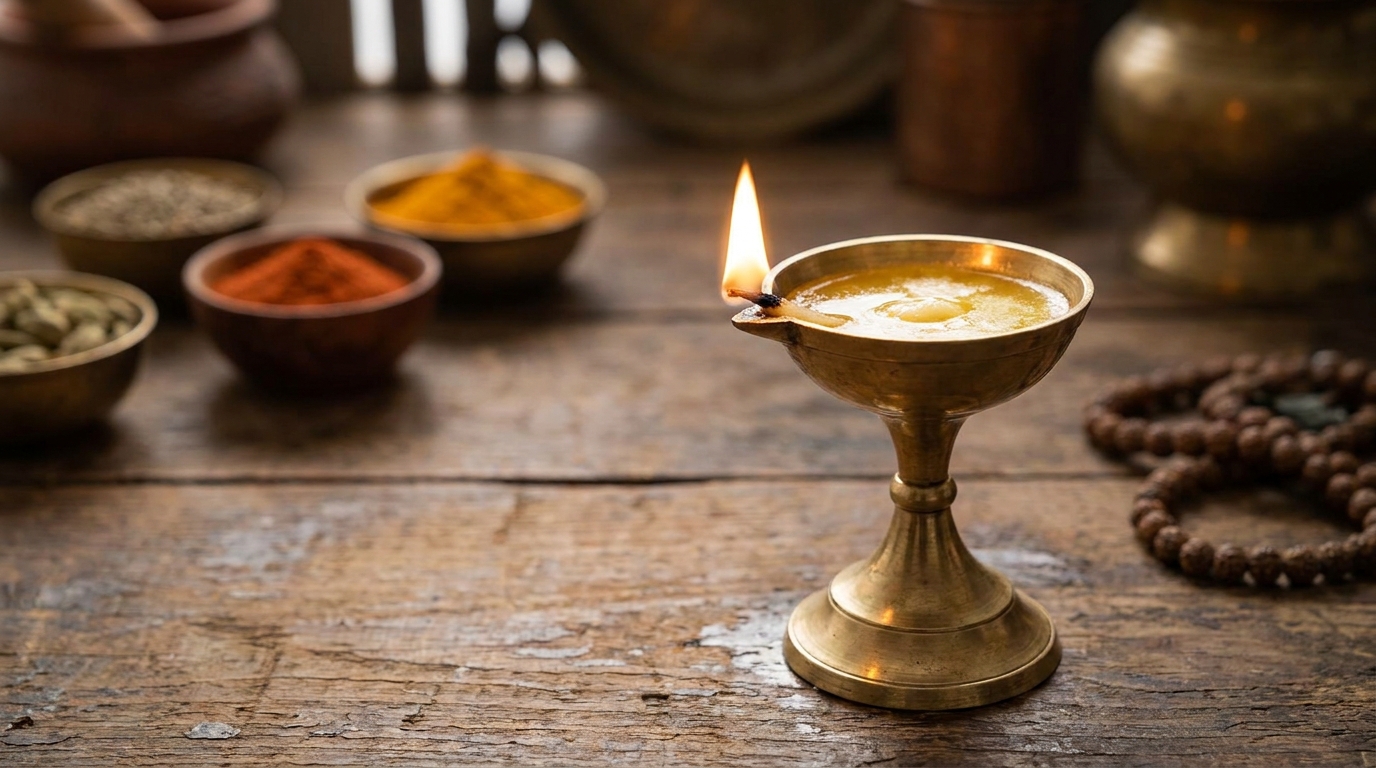
Making a ghee lamp is simple. You do not need to be an expert. You only need a few clean items, a safe space, and a devotional intention.
What You Will Need
To make a basic ghee lamp, gather:
- A small diya or heat-safe lamp holder
- Pure ghee
- A clean cotton wick
- A match or lighter
- A small spoon
- A stable plate or tray
- Optional: flowers, incense, prayer beads, or a sacred image
If possible, keep these items only for devotional use. This helps create a sense of sacredness and care.
Choosing the Right Ghee
Use pure cow ghee if available. In many Bhakti traditions, cow ghee is especially honored because the cow is seen as gentle, nourishing, and sacred. However, if cow ghee is not available, use the best quality ghee you can find.
Some people make their own ghee at home. Others purchase it from a trusted source. The main point is to offer it with sincerity and respect.
Preparing the Wick
You can buy ready-made cotton wicks or roll your own from clean cotton.
To roll a simple wick:
- Take a small piece of cotton.
- Roll it gently between your fingers into a thin strand.
- Make one end slightly pointed, where the flame will burn.
- Place the wick in the diya so one end rests in the ghee and the pointed tip rises above the edge.
Some devotees make longer wicks for larger lamps and smaller wicks for daily home worship. Start small and simple.
Adding the Ghee
Place a small amount of ghee in the diya. If the ghee is solid, you can soften it slightly by placing it near warmth or gently melting a small portion.
The wick should be soaked in ghee, with the tip exposed. Do not overfill the lamp. A little ghee is enough for a short offering.
Lighting the Lamp
Before lighting, take a moment to become present. You may fold your hands, close your eyes, or offer a simple prayer.
Then light the wick carefully.
As the flame appears, you can softly say:
“Dear Lord, please accept this offering. May this light remind me to live in Your service.”
You may also chant the maha-mantra, sing a devotional song, or sit in silence.
How to Offer a Ghee Lamp in Bhakti Yoga
Offering a ghee lamp can be as simple or as elaborate as your circumstances allow. The most important ingredient is bhava, a Sanskrit word meaning devotional feeling or loving mood.
A Simple Daily Offering
For a simple home practice:
- Wash your hands.
- Clean the altar or prayer space.
- Place the ghee lamp safely before the sacred image, scripture, or prayer focus.
- Light the lamp.
- Offer a prayer or chant a mantra.
- Sit quietly for a few moments.
- Let the lamp burn safely, or extinguish it respectfully if needed.
This may take only five minutes, but it can nourish your entire day.
Offering the Lamp During Arati
During arati, the lamp is traditionally offered in graceful circular motions before the Lord. In many temples, a lamp is waved before the altar while devotees sing.
If you are doing this at home, keep it simple and safe. You can gently move the lamp in circles while praying. If you are unsure of formal procedures, do not worry. Offer with humility.
A simple pattern is to offer the lamp in circles before the feet, the heart, and the full form of the Lord. But if this feels unfamiliar, simply hold the lamp before your altar and pray sincerely.
Offering with Kirtan
Kirtan is devotional singing, often in call-and-response form. It is one of the sweetest practices of Bhakti Yoga. Lighting a ghee lamp during kirtan can make the environment feel especially sacred.
If you gather with family, friends, or a spiritual community, you may light the lamp before singing. Let the flame remind everyone that the purpose of kirtan is not performance. It is loving connection.
Offering with Scripture Reading
You can also light a ghee lamp before reading sacred texts such as the Bhagavad-gita, Srimad Bhagavatam, or Ramayana.
In Bhakti, scripture is not read only for information. It is received as spiritual guidance. The lamp can symbolize our prayer: “May divine wisdom illumine my heart.”
Best Times to Light a Ghee Lamp
A ghee lamp can be offered at any sincere moment. Still, certain times are especially favorable for devotional practice.
Morning Worship
Morning is a beautiful time to light a lamp. The day has not yet become busy, and the mind is often clearer. By beginning the day with light, prayer, and remembrance, we set a loving intention.
Even if you have only a few minutes before work, school, or family responsibilities, you can light a lamp and pray, “May I remember You today. May my actions be guided by compassion and service.”
Evening Worship
Evening is another traditional time for lighting lamps. As the sun sets, the ghee lamp brings warmth and peace into the home. It can help the mind release the stress of the day.
Families may gather for evening arati, chanting, or simple gratitude. Children often love the beauty of the lamp and can learn devotion through gentle participation.
Festival Days
Ghee lamps are especially common during festivals such as Diwali, Kartik, Janmashtami, Gaura Purnima, and other sacred days in the Bhakti calendar.
During the month of Kartik, many devotees offer lamps daily to Sri Krishna, especially in His form as Damodara, the child Krishna bound by the love of Mother Yashoda. This practice is connected with the Damodarastakam, a beautiful prayer glorifying Krishna’s loving childhood pastimes.
Before Japa or Meditation
Japa means personal mantra meditation, often using prayer beads. Lighting a lamp before japa can help you enter a focused and prayerful state.
You might sit near the lamp, hold your beads, and chant softly. If the mind wanders, gently return to the sound of the mantra and the meaning of your prayer.
Ghee Lamp Safety and Care
Devotion should be full of love and also full of responsibility. Fire is sacred, but it must be handled carefully.
Use a Stable Surface
Always place your ghee lamp on a stable, heat-resistant surface. A metal tray, ceramic plate, or stone surface can help protect your altar or table.
Avoid placing the lamp near curtains, paper, loose fabric, books, or anything flammable.
Never Leave the Flame Unattended
This is very important. Do not leave a burning ghee lamp unattended. If you need to leave the room, extinguish the flame respectfully and safely.
Spiritual life includes mindfulness. Caring for safety is also service.
Keep Away from Children and Pets
Children can be included in devotional practices, but they should always be supervised around fire. Teach them that the lamp is sacred and must be respected.
Pets may be curious, so keep the lamp in a place where it cannot be knocked over.
Extinguishing the Lamp Respectfully
If possible, let the lamp burn until the ghee is finished. If you must extinguish it, do so carefully. Some devotees prefer not to blow out the flame with the mouth, as the lamp is an offering. Instead, they may use a flower, a small spoon, or a lamp snuffer.
The main point is to act with respect and care.
Cleaning the Lamp
After the lamp has cooled completely, clean it gently. Remove any remaining wick and wipe away residue. A clean lamp supports a clean devotional atmosphere.
If your diya is brass or copper, you may polish it regularly. This can also become a meditation on service: “May I keep my heart as clean as this offering place.”
Common Questions About Ghee Lamps
Many people who are new to Bhakti Yoga have simple, sincere questions. Please know that questions are welcome. Bhakti is a path of relationship, and relationships grow through honest inquiry.
Can I Use Oil Instead of Ghee?
Yes, oil lamps are also used in many traditions. Sesame oil, mustard oil, and other natural oils may be offered. However, ghee is especially cherished in many Bhakti practices because of its purity and connection with Vedic worship.
If ghee is available, it is wonderful to use. If not, offer what you can with devotion.
Do I Need a Formal Altar?
No. A formal altar is beautiful, but not required. You can begin with a clean shelf, a small table, or a quiet corner. You may place a sacred image, a scripture, flowers, or simply a candle-like ghee lamp offered with prayer.
God sees the heart before the arrangement.
Can Beginners Offer a Ghee Lamp?
Absolutely. Bhakti Yoga welcomes beginners. You do not need to know every mantra or ritual detail. You can start with a simple prayer.
Try saying:
“Dear God, I am new to this. Please accept this small light and guide me toward love, truth, and service.”
That is a beautiful beginning.
What If My Mind Wanders?
The mind wanders for everyone. Do not be discouraged. When you notice your mind has wandered, gently return to the lamp, the mantra, or your prayer.
Bhakti is not about pretending to be perfect. It is about returning again and again with sincerity.
Can I Light a Ghee Lamp for Someone Else?
Yes. You may light a lamp and pray for the wellbeing of family, friends, ancestors, or anyone in need. You can pray for healing, peace, guidance, and spiritual upliftment.
At the same time, we remember that the deepest prayer is not to control outcomes, but to ask for divine grace, wisdom, and loving service.
The Ghee Lamp in Bhakti Scriptures and Tradition
The offering of light appears throughout Vedic and Bhakti traditions. While practices vary among lineages and communities, the heart remains the same: honoring the Divine with love.
Bhagavad-gita: Love Is the Essential Offering
As mentioned earlier, Bhagavad-gita 9.26 teaches that Krishna accepts simple offerings made with devotion. This verse gives hope to everyone. We may not have wealth, scholarship, or perfect discipline, but we can offer love.
A ghee lamp becomes powerful when it is offered in this spirit. The flame may be small, but the intention can be vast.
Srimad Bhagavatam: Hearing and Remembering God
The Srimad Bhagavatam, a central Bhakti scripture, emphasizes hearing about, chanting, and remembering the Lord. Lighting a lamp can support these practices by creating a sacred time and place.
When we sit before the lamp and hear sacred stories, chant holy names, or remember Krishna’s qualities, our heart gradually becomes purified.
The Damodara Tradition
During Kartik, devotees often offer lamps to Krishna as Damodara. Damodara means “He whose belly was bound by a rope.” This refers to a beloved story in which Mother Yashoda binds child Krishna with love.
The story teaches a deep Bhakti truth: the Supreme Lord, who cannot be bound by anything material, becomes bound by the love of His devotee.
When devotees offer lamps during Kartik, they are praying to be bound to God not by fear, but by love.
Light as Service, Not Superstition
It is important to understand the ghee lamp as a devotional offering, not as a superstition. The lamp is not a magic object. It is a tool for remembrance, surrender, and love.
The transformation happens in the heart. The lamp helps us turn toward God.
Creating a Ghee Lamp Practice at Home
A lasting spiritual practice does not need to be complicated. In fact, the practices we can sustain with love are often simple.
Start Small
Begin with one ghee lamp offering per week, or even once a month. If daily practice feels natural, wonderful. If not, do not feel guilty.
Bhakti grows through sincerity, not pressure.
Connect the Lamp with Chanting
You might decide: “Whenever I light the lamp, I will chant one round of japa,” or “I will sing one kirtan,” or “I will chant the maha-mantra three times.”
This makes the practice complete: light for the eyes, sacred sound for the ears, prayer for the heart.
Offer Your Day
In the morning, you can light the lamp and mentally place your day before God.
Offer your work.
Offer your relationships.
Offer your challenges.
Offer your hopes.
This brings Bhakti Yoga into daily life, not only into a prayer room.
Include Family or Friends
If you live with others, invite them gently. Do not force. Devotion blossoms best in an atmosphere of kindness.
You might say, “I’m going to light a lamp and chant for a few minutes. You’re welcome to join.”
A home where people gather for prayer, even briefly, becomes spiritually nourished.
Keep the Mood Personal
The ghee lamp is not only a ritual. It is an expression of relationship. Speak to God honestly. Thank Him. Ask for guidance. Share your struggles. Pray for others.
Bhakti Yoga teaches that the Divine is not distant or impersonal. The Lord is the loving source of all, and we are invited into a living relationship.
Ghee Lamp Checklist for Beginners
If you are ready to begin, here is a simple checklist.
Before You Light
- Choose a safe, quiet place.
- Clean the area.
- Place the diya on a heat-safe tray.
- Add ghee and a cotton wick.
- Keep matches or a lighter nearby.
- Make sure nothing flammable is close.
- Take a breath and remember your intention.
While the Lamp Burns
- Offer a prayer.
- Chant a mantra.
- Read a verse from scripture.
- Sit in gratitude.
- Watch the flame with a peaceful mind.
- Remember that this is an offering of love.
After the Offering
- Make sure the flame is safely extinguished or fully burned out.
- Let the lamp cool.
- Clean the diya.
- Carry the mood of devotion into your next activity.
A Simple Ghee Lamp Prayer
If you are not sure what to say, you may use this prayer:
“Dear Lord, please accept this small lamp. May its light remind me of Your presence. Please remove the darkness of forgetfulness from my heart. Help me grow in love, humility, service, and compassion. May my thoughts, words, and actions become offerings to You.”
You can also make your own prayer. Speak naturally. Speak honestly. God hears the sincere heart.
Bringing the Light into Daily Life
The true success of lighting a ghee lamp is not only that the flame burns brightly on the altar. It is that something begins to shine within us.
After offering the lamp, we can ask:
“How can I bring light to someone today?”
“How can I speak more kindly?”
“How can I serve without expecting anything?”
“How can I remember God in this situation?”
This is the living heart of Bhakti Yoga. The lamp begins at the altar, but it continues in our choices, our relationships, our work, and our service.
A ghee lamp is small, but its lesson is great. Love begins with one sincere offering. Spiritual life begins with one honest step. The heart brightens little by little through chanting, prayer, service, sacred study, and the company of those who are also seeking divine love.
Wherever you come from, whatever your background, and however much or little you know, you are welcome on the path of Bhakti. You can begin today with a small flame, a simple mantra, a humble prayer, or one act of kindness offered to God.
May the light of devotion grow gently in your heart. Everyone is welcome to take one sincere step toward God.
FAQs
What is a ghee lamp?
A ghee lamp is a traditional Indian oil lamp made from clarified butter, known as ghee. It is commonly used in religious and spiritual ceremonies, as well as for decorative and symbolic purposes.
How is a ghee lamp made?
To make a ghee lamp, ghee is poured into a small vessel or container, and a cotton wick is placed in the center. The wick is then lit, and the ghee serves as the fuel to keep the flame burning.
What are the benefits of using a ghee lamp?
Using a ghee lamp is believed to have spiritual and symbolic significance in Hinduism and other Indian religions. It is also said to purify the air and create a soothing and calming atmosphere.
How is a ghee lamp used in religious ceremonies?
In religious ceremonies, a ghee lamp is often lit and placed on an altar or in front of a deity as an offering. It is also used to symbolize the presence of the divine and to dispel darkness and ignorance.
Are there any safety precautions to consider when using a ghee lamp?
When using a ghee lamp, it is important to keep it away from flammable materials and to place it on a stable surface. It is also advisable to keep it out of reach of children and pets, and to never leave it unattended while lit.

