
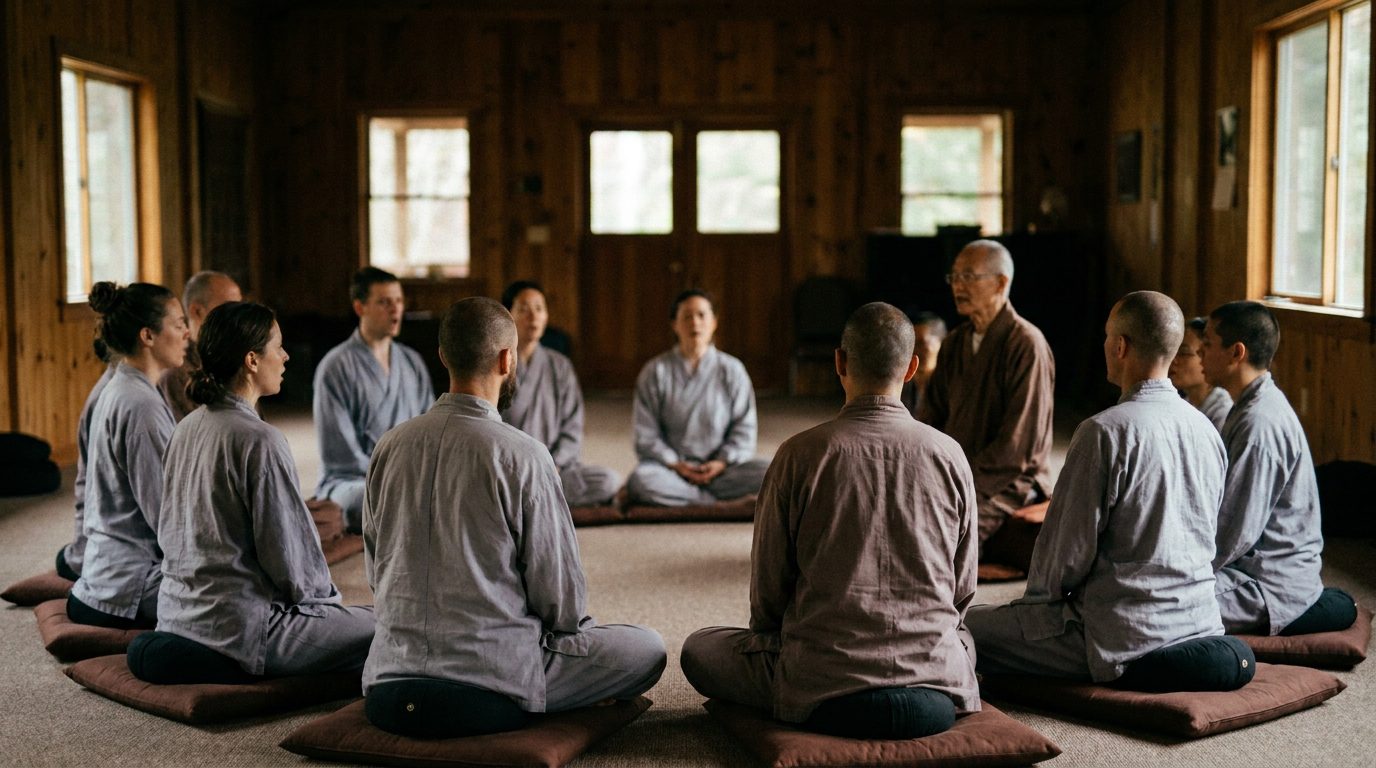
In Bhakti Yoga, the path of loving devotion, chanting is not just a spiritual technique. It is a relationship.
When we chant the names of God, we are calling out to the Divine with our heart. We are turning our attention away from the noise of the world and toward the One who has always been lovingly present within us.
For many in the Bhakti tradition, the central practice is chanting the Hare Krishna maha-mantra:
Hare Krishna Hare Krishna
Krishna Krishna Hare Hare
Hare Rama Hare Rama
Rama Rama Hare Hare
The word mantra means a sacred sound that helps free the mind. Maha means “great.” So the maha-mantra is understood as the “great sacred sound” for awakening love of God.
But Bhakti teachers often explain that the deepest power of chanting is revealed when we chant offenselessly. This does not mean we must be perfect before we begin. It means we approach the Holy Name with sincerity, humility, respect, and a willingness to grow.
Offenseless chanting is not about fear. It is about love.
It is about learning to chant in a way that opens the heart rather than hardens it. It is about gradually letting go of pride, distraction, judgment, and selfish motives, so that the name of God can shine within us more fully.
What Is Offenseless Chanting?
Chanting as a Loving Exchange
In Sanskrit, the sacred name of God is called nama. In Bhakti Yoga, God’s name is not considered separate from God. This is a profound and beautiful teaching.
When we chant Krishna’s name, or any genuine name of God with love, we are not simply making sound. We are entering into spiritual contact.
The Padma Purana, an important devotional scripture, teaches that the Holy Name is fully spiritual and complete. Bhakti saints explain that God is present in His name with compassion and accessibility. We may not yet have pure vision. We may not always feel spiritually advanced. But the Holy Name comes to us in sound, meeting us exactly where we are.
This is why chanting is such a practical and merciful path. We do not need wealth, scholarship, social status, or an ideal life situation. We can begin with the voice we have, the breath we have, and the heart we have today.
The Meaning of “Offense”
The Sanskrit word often used is aparadha. It can be translated as “offense,” but it also has a deeper meaning: that which takes us away from loving attention.
In devotional life, an offense is not merely breaking a rule. It is an attitude or action that blocks the natural flow of love between the soul and God.
So when we speak of “offenseless chanting,” we are speaking about chanting without those inner barriers that keep us from receiving the full mercy of the Holy Name.
A person may chant softly, imperfectly, and with many distractions, yet still be deeply sincere. That sincerity is precious. Offenseless chanting grows from that sincerity.
Not Perfection, But Direction
It is important to understand this clearly: offenseless chanting does not mean we never struggle.
Everyone struggles.
The mind wanders. The heart feels dry. Old habits return. We may chant while thinking about work, family, pain, responsibilities, or the long list of things we need to do.
But Bhakti Yoga is compassionate. The path is not about pretending to be pure. It is about turning again and again toward God.
If we chant with the desire to improve, to serve, to become humble, and to love more deeply, then we are moving in the direction of offenseless chanting.
Why the Holy Name Is So Powerful
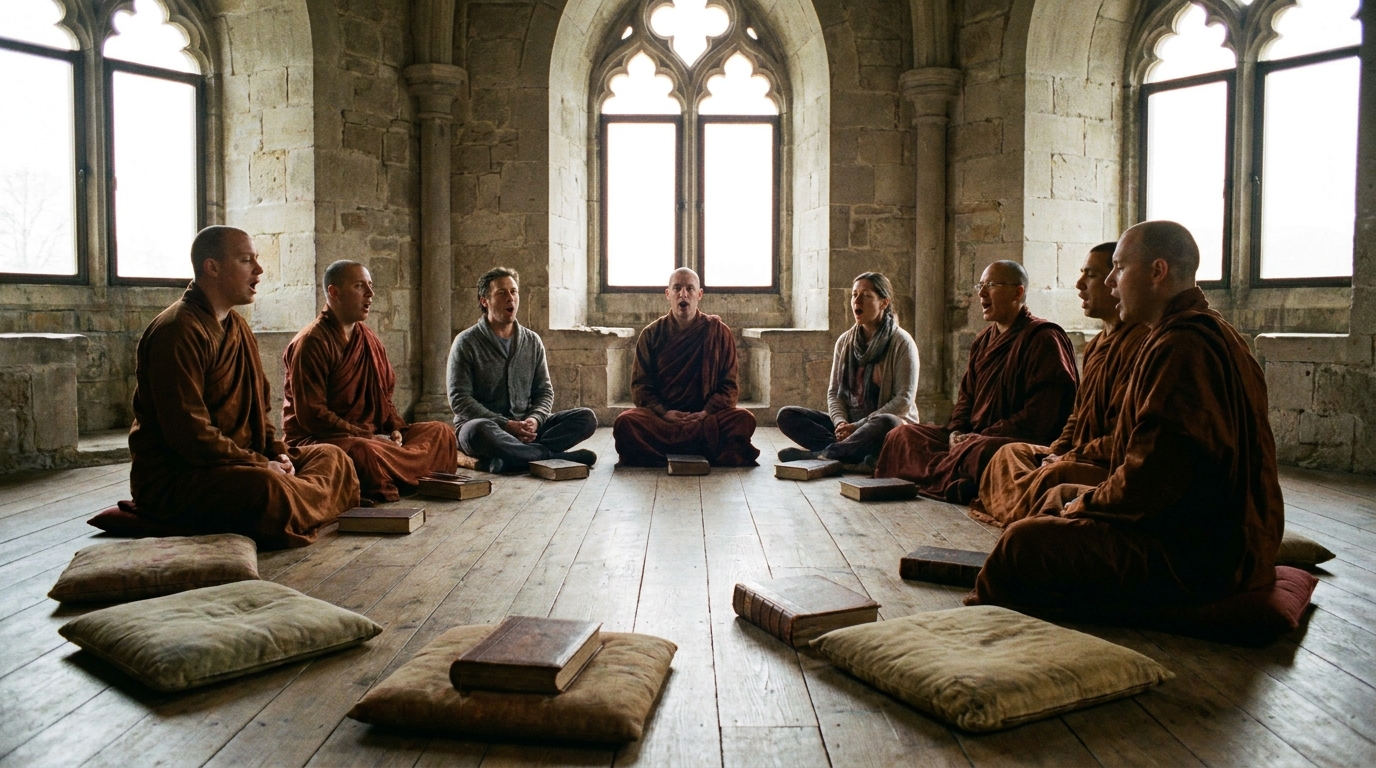
The Holy Name Cleanses the Heart
One of the most beloved teachings of Sri Chaitanya Mahaprabhu, the great teacher of divine love and congregational chanting, is found in the Shikshashtakam, His eight verses of instruction.
He begins:
“Glory to the chanting of the Holy Name, which cleanses the mirror of the heart.”
This image is simple and beautiful.
Our heart is like a mirror. Its natural purpose is to reflect love, truth, and our eternal relationship with God. But over time, the mirror becomes covered with dust: fear, envy, anger, pride, grief, selfish desire, and forgetfulness.
Chanting wipes away that dust.
Sometimes the cleaning is gentle. Sometimes it brings up things we did not expect. We may become aware of old wounds, unhealthy patterns, or inner resistance. This is not a sign that chanting is failing. It may be a sign that chanting is working.
The Holy Name reveals what needs healing and gives us strength to continue.
Chanting Awakens Our Original Love
In Bhakti Yoga, the soul is understood as eternal, spiritual, and naturally connected to God. This loving connection is not something artificial that must be forced upon us. It is already within us.
The practice of chanting awakens what is already there.
The Bhagavad-gita teaches that God is seated in everyone’s heart. Krishna says, “I am seated in the hearts of all living beings.” This means no one is spiritually abandoned. No one is too far away. No one is disqualified from grace.
When we chant, we are responding to the presence of God within the heart.
Even if our chanting feels small, distracted, or uncertain, it is heard.
The Name Meets Us Personally
One of the most comforting truths of Bhakti Yoga is that God is personal. Krishna is not distant energy or cold judgment. Krishna means “the all-attractive one,” the Divine Person who draws the heart through beauty, kindness, wisdom, and love.
When we chant Krishna’s name, we are not calling into emptiness. We are calling to a loving Person.
This personal quality transforms chanting from a ritual into a relationship.
We can chant in joy. We can chant through tears. We can chant when we are confused. We can chant when we feel grateful. We can chant when we have no words left except the name of God.
The Holy Name can hold all of it.
Check out our latest posts at https://thebhaktihouse.org/blog.
The Ten Offenses to Avoid in Chanting

A Compassionate Framework for Growth
Bhakti scriptures and teachers describe ten offenses to avoid while chanting the Holy Name. These are not meant to discourage us. They are like signs on a path, helping us avoid obstacles and move safely toward deeper love.
The purpose is not to judge ourselves harshly or judge others. The purpose is to protect the tender plant of devotion growing in the heart.
Srila Rupa Goswami, a great Bhakti teacher, uses the image of devotion as a bhakti-lata, a creeper of devotion. Like a young plant, our spiritual life needs watering, sunlight, and protection. Chanting waters the plant. Avoiding offenses protects it.
1. Disrespecting Devotees
The first offense is to criticize or disrespect those who are sincerely devoted to God.
This is especially important because Bhakti grows in the company of loving hearts. If we become proud, fault-finding, or harsh toward others on the spiritual path, our own chanting becomes covered.
This does not mean we ignore harmful behavior or lose discernment. Healthy boundaries are important. But we can avoid unnecessary criticism, gossip, and the habit of looking down on others.
A practical prayer before chanting may be:
“May I honor the devotion in others. May I not think myself better than anyone.”
2. Thinking God’s Names Are Material or Imaginary
Another offense is to think that the Holy Name is ordinary sound or a product of imagination.
In Bhakti, sacred sound is spiritual. We may not perceive its full power at first, just as a person with closed eyes may not see the sun. But the sun is still shining.
When we chant with faith, even a small amount of faith, we allow the spiritual nature of the name to gradually reveal itself.
Faith in Bhakti does not have to be blind. It can begin as openness:
“Let me try. Let me listen. Let me see how this practice transforms my heart.”
3. Disobeying or Dismissing the Guidance of Spiritual Teachers
Authentic spiritual teachers help us understand how to chant and live with devotion. To dismiss their guidance out of pride can slow our growth.
A true teacher does not exploit or control. A true teacher helps us remember God, become humble, and live with integrity.
For those new to Bhakti Yoga, this may simply mean learning from trustworthy sources, reading scripture with care, and receiving guidance from sincere practitioners.
4. Minimizing the Scriptures
Bhakti scriptures such as the Bhagavad-gita, Srimad-Bhagavatam, and the writings of the saints are gifts of wisdom. They help us understand the heart behind the practice.
To reject them as ordinary literature, without thoughtful consideration, can weaken our spiritual foundation.
At the same time, we do not need to understand everything immediately. Scripture can be approached gradually, with humility and prayer.
A simple approach is:
“Let me hear with an open heart. Let me apply one teaching in my life today.”
5. Considering the Glories of Chanting to Be Exaggeration
The scriptures speak very highly of chanting. They say the Holy Name can purify the heart, awaken love of God, and carry us beyond material suffering.
At first, these claims may feel very large. But the invitation is to practice and experience.
We may begin by noticing small changes. Maybe chanting brings peace. Maybe it softens anger. Maybe it helps us pause before speaking harshly. Maybe it gives us strength in difficult moments.
These small changes are rays of a much greater light.
6. Interpreting the Holy Name According to Our Own Agenda
Sometimes we may try to reduce chanting to something that fits our limited plans. We may think, “I will chant so I can get what I want,” or “I will use this practice to become admired,” or “I will make God serve my desires.”
Bhakti invites us into a different mood.
Instead of using the Holy Name for our purposes, we learn to offer ourselves to the Holy Name.
The prayer becomes:
“Please guide me. Please purify my desires. Please help me serve with love.”
7. Committing Wrong Actions While Depending on Chanting to Erase Them
Another offense is to knowingly continue harmful behavior while thinking, “It does not matter. I can just chant and be forgiven.”
The Holy Name is merciful, but love should not be manipulated.
If chanting is real, it should gradually make us more honest, kind, responsible, and compassionate. We may still make mistakes, but we do not want to use God’s mercy as an excuse to remain careless.
True chanting gives us courage to change.
8. Equating Chanting With Ordinary Religious Rituals Done for Material Gain
Many religious and spiritual practices can bring blessings, but the chanting of the Holy Name is especially meant for awakening pure love of God.
If we reduce chanting to a tool for wealth, success, fame, or power, we miss its deepest gift.
It is natural to bring our needs to God. We can pray for help. But as our chanting matures, we begin to pray not only, “Please give me what I want,” but also, “Please help me want what brings me closer to You.”
9. Instructing the Faithless Without Sensitivity
Bhakti is meant to be shared, but sharing should be done with kindness and respect.
If someone is not ready or interested, forcing sacred teachings upon them may create resistance. Offenseless sharing means honoring people’s dignity and freedom.
We can live the teachings, answer sincere questions, and offer the Holy Name with warmth. We do not need to pressure anyone.
Love invites. It does not coerce.
10. Maintaining Pride, Attachment, and Lack of Faith Even After Hearing the Glories of the Name
The final offense includes remaining indifferent, proud, or deeply attached to selfish habits even after hearing about the power of chanting.
This is something we all need to examine gently.
Are we chanting while still holding tightly to ego? Are we asking God to enter our heart while keeping parts of it locked? Are we chanting with our lips but resisting surrender?
Again, this is not a reason for despair. It is a reason for prayer.
“Dear Lord, I am attached. I am proud. I am distracted. But I want to want You. Please help me.”
That prayer is powerful.
The Stages of Chanting: From Shadow to Pure Love
Nama-aparadha: Chanting With Offenses
Nama-aparadha means chanting the Holy Name while still covered by offenses.
Most of us begin here.
We chant, but the mind wanders. We chant, but we still criticize. We chant, but we still cling to selfish desires. We chant, but we do not yet understand the sacredness of what we are doing.
This stage is not hopeless. It is the beginning of purification.
The Holy Name is so merciful that even imperfect chanting has spiritual effect. If we continue sincerely, our chanting can become clearer.
Nama-abhasa: The Clearing Stage
Nama-abhasa means a glimpse or reflection of the Holy Name. It is like the early light before sunrise.
At this stage, many obstacles begin to fade. The heart becomes softer. Faith becomes stronger. We may feel genuine remorse for past mistakes, not in a heavy or shame-filled way, but in a cleansing way. We begin to prefer spiritual nourishment over temporary distractions.
The Srimad-Bhagavatam tells the story of Ajamila, a man who had fallen into a life of wrongdoing. At the time of death, he called out the name “Narayana,” which is a name of God, though he was calling his son by that name. Still, the power of the Holy Name protected him and gave him another chance for spiritual awakening.
This story shows the extraordinary mercy of God’s name. Even a shadow of chanting can bring transformation. How much more powerful, then, is chanting with sincere intention?
Shuddha-nama: Pure Chanting
Shuddha-nama means the pure Holy Name, chanting without offense and with awakened love.
This is the goal of Bhakti Yoga.
Pure chanting is not mechanical. It is full of feeling, surrender, humility, and love. The chanter does not seek fame, power, or even liberation from suffering. The chanter longs only to love and serve God.
Sri Chaitanya Mahaprabhu expressed this mood beautifully:
“O Lord, I do not desire wealth, followers, beautiful pleasures, or even liberation. My only prayer is to have causeless devotion to You, birth after birth.”
This is the heart of offenseless chanting.
It is love without bargaining.
Practical Ways to Cultivate Offenseless Chanting
Begin With Humility
Before chanting, take a moment to become inwardly quiet.
You might offer a simple prayer:
“Dear Krishna, dear Lord, please allow me to chant with sincerity. Please help me hear Your name. Please remove what blocks my heart from love.”
Humility does not mean thinking we are worthless. It means recognizing that we are dependent on grace.
A humble heart is open. And an open heart can receive.
Listen Carefully
Chanting is not only speaking. It is hearing.
Bhakti teachers often say that attentive hearing is the soul of chanting. When you chant on beads, in kirtan, or quietly at home, try to hear each syllable.
Hare Krishna Hare Krishna
Krishna Krishna Hare Hare
Hare Rama Hare Rama
Rama Rama Hare Hare
If the mind wanders, gently bring it back. Not with anger. Not with frustration. Just return.
Every return is an offering.
Chant Regularly
Love grows through steady practice.
If you are new, begin with a small and realistic commitment. You might chant one round on japa beads, or chant for five minutes each morning, or join a weekly kirtan.
Japa means personal, meditative chanting, often done on beads. Kirtan means chanting together, usually with music and call-and-response singing.
Both are powerful. Japa helps us become personally focused. Kirtan helps us experience shared devotion and spiritual community.
The key is consistency.
A little chanting every day can transform the direction of a life.
Avoid Criticism and Gossip
Because criticism of devotees is considered especially harmful to chanting, we can make a conscious effort to reduce gossip and harsh speech.
This does not mean we become naive. It means we speak truth with care and avoid unnecessary fault-finding.
A helpful practice is to ask before speaking:
“Is it true? Is it necessary? Is it kind? Will it help devotion grow?”
If not, silence may be a better offering.
Serve Others
Chanting becomes deeper when joined with service.
In Sanskrit, service is called seva. Seva means offering our energy for the pleasure of God and the benefit of others.
Service can be simple: cooking with love, helping at a temple or spiritual gathering, encouraging someone, cleaning, sharing prasadam, caring for family, supporting spiritual community, or offering your talents in devotion.
Prasadam means food offered to God with love and then received as mercy. Sharing prasadam is a beautiful form of Bhakti because it nourishes both body and soul.
When we serve, our chanting becomes less self-centered. We begin to pray not only for our own peace but for the well-being of all.
Forgive and Ask Forgiveness
Offenseless chanting grows in a heart that is willing to repair relationships.
If we have hurt someone, we can ask forgiveness. If someone has hurt us, we can pray for the strength to release bitterness in a healthy way.
Forgiveness does not always mean immediate closeness or ignoring harm. Sometimes boundaries are needed. But internally, we can ask God to free us from hatred.
A heart softened by forgiveness chants more deeply.
Keep Good Association
In Bhakti, spiritual company is called sadhu-sanga. Sadhu means a sincere spiritual person, and sanga means association.
The people we spend time with influence our desires, speech, habits, and faith. When we spend time with those who value chanting, prayer, service, and compassion, our own devotion becomes stronger.
Good association may include attending kirtan, reading with others, joining a study group, visiting a temple, listening to classes, or sharing honest spiritual conversations.
No one grows alone.
Common Struggles in Chanting
“My Mind Is Too Distracted”
This is one of the most common experiences.
The mind is restless by nature. In the Bhagavad-gita, Arjuna says the mind is more difficult to control than the wind. Krishna does not deny this. He says it can be controlled by practice and detachment.
So if your mind wanders, you are not disqualified. You are simply human.
Chant anyway.
Each time you return to the sound, you are strengthening your spiritual muscles.
“I Don’t Feel Anything”
Sometimes chanting feels dry.
This can be discouraging, especially when we hear others speak about deep experiences. But feelings come and go. The Holy Name is working even when we do not feel dramatic emotion.
Just as medicine works even before we feel fully healed, chanting works gradually in the heart.
Try not to measure your chanting only by emotion. Measure it also by sincerity, steadiness, and the small ways your life becomes more aligned with love.
“I Feel Unworthy”
Many people feel they are not pure enough to chant.
But the Holy Name is especially for those who need mercy. If only the perfect could chant, who would begin?
Bhakti is not a path for showing God how qualified we are. It is a path for receiving the grace that makes us whole.
Come as you are. Chant as you are. Offer what you have.
The Holy Name will guide you forward.
The Fruits of Offenseless Chanting
A Softer Heart
As chanting becomes more sincere, the heart becomes softer.
We may become more patient, more compassionate, more willing to listen, more sensitive to the presence of God in others.
This softness is not weakness. It is spiritual strength.
A soft heart can forgive. A soft heart can serve. A soft heart can receive divine love.
Freedom From Lower Desires
Offenseless chanting gradually frees us from desires that do not truly nourish the soul.
This does not mean we lose our personality or become lifeless. Rather, our desires become purified. We begin to want what is good, lasting, loving, and spiritually meaningful.
The taste for chanting replaces the taste for things that once controlled us.
In Sanskrit, this higher taste is called rasa, spiritual flavor or loving sweetness. Bhakti is full of rasa because the soul is made for loving relationship with God.
Deep Peace and Inner Shelter
Life will still bring challenges. Chanting does not mean we avoid all difficulty.
But offenseless chanting gives us shelter within difficulty.
We begin to feel that we are not alone. God is present. The Holy Name is present. Grace is present.
Even in uncertainty, we can chant.
Even in loss, we can chant.
Even in joy, we can chant.
The Holy Name becomes a home for the heart.
Love of God
The ultimate fruit of offenseless chanting is prema, pure love of God.
Prema is not ordinary affection. It is the soul’s highest joy: selfless, intimate, eternal love for the Divine.
Bhakti scriptures teach that this love is the true purpose of life. Not simply to become peaceful. Not simply to become moral. Not simply to escape suffering. But to awaken our loving relationship with God and live in that love.
Offenseless chanting carries us toward this highest gift.
Bringing Offenseless Chanting Into Daily Life
Chant in the Morning
Morning is a sacred time. The mind is often quieter, and the heart can be more receptive.
Even a few minutes of chanting before entering the demands of the day can change the atmosphere of your mind.
You might light a candle, sit before a sacred image, hold japa beads, or simply sit peacefully and chant.
Let the first sounds of your day be holy.
Chant While Walking or Traveling
If your life is busy, chanting can come with you.
You can softly chant while walking, driving, cooking, or doing simple tasks. Of course, give full attention where safety is needed. But throughout the day, the Holy Name can become a companion.
Instead of filling every empty space with noise, we can fill some of those spaces with prayer.
Chant With Others
Kirtan is one of the most joyful ways to experience the power of the Holy Name.
When people gather and chant together, something beautiful happens. Voices become one offering. Differences soften. The heart remembers what it was made for.
You do not need to be an expert singer. You do not need to know all the melodies. You can simply listen, respond, clap, pray, or sit quietly.
In kirtan, everyone is welcome.
Offer Your Day
At the end of chanting, offer your day to God.
You might pray:
“May my thoughts, words, and actions today be pleasing to You. May I remember You. May I serve others with kindness. May Your name stay with me.”
This helps chanting move beyond a morning practice and become a way of living.
Offenseless Chanting Is a Journey of Grace
Offenseless chanting is powerful because it invites us into the heart of Bhakti Yoga: loving connection with God.
It teaches us to chant with humility, hear with attention, avoid criticism, honor scripture, serve others, and depend on divine mercy. It helps us move from distracted chanting to clearer chanting, and from clearer chanting toward pure love.
But we should never become discouraged by the distance between where we are and where we hope to be.
The Holy Name is compassionate.
Krishna is compassionate.
The path of Bhakti is compassionate.
Every sincere chant matters. Every humble prayer matters. Every small effort to avoid offense and grow in love matters.
Whether you are new to chanting or have been practicing for many years, you can begin again today. You can take one bead, one breath, one prayer, one moment of honest calling.
God hears the heart.
At The Bhakti House, we warmly welcome seekers of all backgrounds, traditions, and life stories. You do not have to have everything figured out. You do not have to be perfect. You are invited to come closer through chanting, prayer, service, community, and love.
Take one sincere step toward God today. Chant one Holy Name with humility. Offer one prayer from the heart. Serve one person with kindness. That one step is precious, and by grace, it can open the door to a lifetime of devotion.
FAQs
What is offenseless chanting?
Offenseless chanting refers to the practice of chanting without causing harm or offense to others. It is often associated with spiritual or religious practices where individuals engage in chanting as a form of meditation or devotion.
What are the benefits of offenseless chanting?
Offenseless chanting is believed to have various benefits, including promoting inner peace, reducing stress and anxiety, and fostering a sense of connection with a higher power or spiritual realm. It is also thought to have a calming effect on the mind and body.
How is offenseless chanting practiced?
Offenseless chanting is typically practiced by repeating sacred or meaningful words, phrases, or mantras either silently or aloud. It is often done in a peaceful and respectful manner, with the intention of creating a positive and harmonious atmosphere.
Are there specific traditions or religions that practice offenseless chanting?
Offenseless chanting is a common practice in various spiritual and religious traditions, including Hinduism, Buddhism, and certain forms of Christianity. It is also found in other cultural and indigenous practices around the world.
Can offenseless chanting be offensive to others?
While offenseless chanting is intended to be respectful and non-harmful, it is important to be mindful of the cultural and religious sensitivities of others. It is possible for chanting to be perceived as offensive if it is done in a disrespectful or inappropriate manner, or if it infringes upon the beliefs or practices of others.

