

In every age, people search for peace. We try to find it in security, relationships, health, success, simplicity, or silence. These are meaningful parts of life, yet even when many things are going well, the heart may still feel restless.
Bhakti Yoga offers a very beautiful and practical way forward: remembering God with love.
One of the most accessible practices in Bhakti is Nama Smarana. In Sanskrit, nama means “name,” and smarana means “remembrance.” So Nama Smarana means “remembering the Divine Name.” It is the practice of calling upon God through sacred names, prayerful repetition, chanting, or quiet remembrance.
This practice is not reserved for monks, scholars, or people who already feel spiritually advanced. It is for all of us. It is for the tired parent, the busy student, the anxious worker, the grieving heart, the seeker with questions, and the devotee who simply wants to love God more deeply.
At The Bhakti House, we often share that Bhakti Yoga is the yoga of the heart. It is not only philosophy. It is a way of living, loving, serving, praying, singing, and growing closer to the Divine in everyday life.
Nama Smarana is one of the sweetest ways to begin.
What Is Nama Smarana?
Nama Smarana is the remembrance of God through the sacred name. This may be practiced through chanting aloud, singing in community, softly repeating a mantra, praying with beads, or simply remembering the Divine Name in the heart during daily activities.
In Bhakti traditions, the Divine Name is not considered an ordinary sound. The name of God is understood to carry God’s presence, mercy, and love. When we chant with sincerity, we are not merely saying words. We are turning our heart toward the One who is always near.
Understanding “Nama” — The Sacred Name
The word nama means “name.” In many spiritual traditions, names of God are treasured because each name reveals something beautiful about the Divine.
For example:
- Krishna means “the all-attractive one.”
- Rama means “the source of joy and spiritual delight.”
- Govinda means “the one who gives pleasure to the senses, the cows, and the earth.”
- Hari means “the one who removes suffering and spiritual darkness.”
These names are not meant to be approached only intellectually. They are meant to be received with the heart. Even if we do not understand everything at first, we can begin by calling out sincerely.
Just as a child may not understand all the qualities of a loving parent but still calls “Mother” or “Father” with trust, the soul can call upon God through the Divine Name.
Understanding “Smarana” — Loving Remembrance
Smarana means remembrance. But in Bhakti, remembrance is more than memory. It is a loving turning toward God.
We remember many things each day: responsibilities, worries, plans, disappointments, hopes, and conversations. The mind naturally moves toward what it values or fears. Nama Smarana gently retrains the heart to remember the Divine presence beneath and beyond all circumstances.
This remembrance may happen while walking, cooking, driving, resting, or sitting in prayer. Over time, the Divine Name becomes like a companion. It gives shelter to the mind and nourishment to the soul.
A Practice for Everyone
Some people come to chanting with strong faith. Others come with curiosity. Some come with pain. Some come with doubt. All are welcome.
Nama Smarana does not demand that we pretend to be peaceful. It invites us to bring our real heart. If we are joyful, we chant. If we are confused, we chant. If we are grieving, we chant. If we feel spiritually dry, we chant.
The power is not in our perfection. The power is in the mercy of the Divine Name.
Why the Divine Name Brings Peace
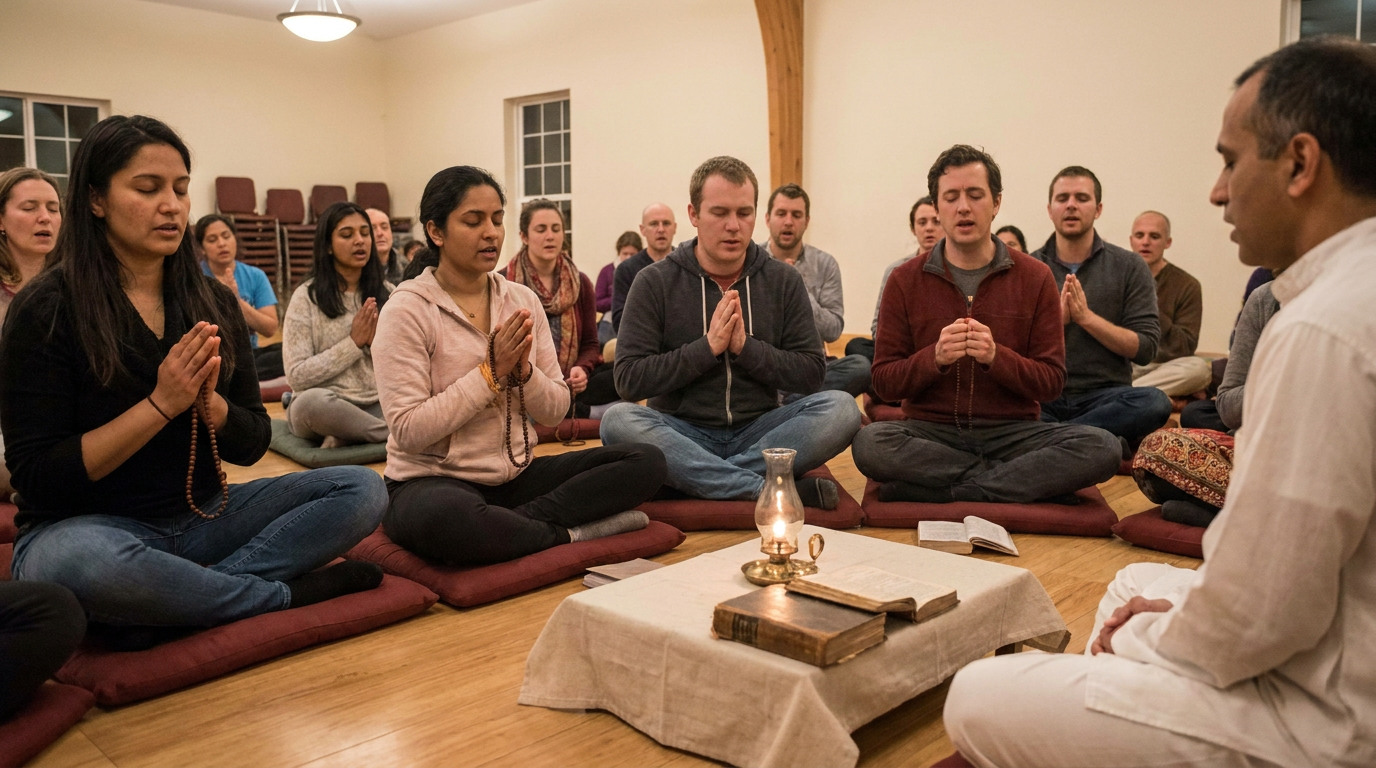
Many of us carry unseen burdens. Anxiety about the future. Regret about the past. Pressure to perform. The ache of loneliness. The pain of loss. The mind can become crowded with noise.
Nama Smarana gives the mind a sacred resting place.
When we chant or remember the Divine Name, we redirect our attention from endless mental loops toward a loving spiritual center. This does not mean that all problems immediately disappear. Rather, we begin to face life from a deeper place.
The Mind Needs a Loving Anchor
The mind is often compared to a restless wind. In the Bhagavad Gita, Arjuna honestly tells Krishna that the mind is difficult to control, “restless, turbulent, strong, and obstinate” (Bhagavad Gita 6.34). Many of us can relate.
Krishna does not reject Arjuna for saying this. Instead, He teaches that the mind can be trained by practice and detachment. Nama Smarana is one of the most compassionate forms of practice because it gives the mind something sacred, beautiful, and personal to hold onto.
When the mind wanders, we return to the name.
When worry rises, we return to the name.
When pride or anger appears, we return to the name.
This returning is the practice. And each return is meaningful.
Peace Beyond Circumstances
Worldly peace often depends on conditions: “I will feel peaceful when this problem is solved, when this person changes, when I have more money, when I know what will happen next.”
Spiritual peace grows from connection. It comes from remembering, “I am not alone. I belong to God. I can take shelter.”
The Bhagavad Gita teaches that those who remember the Divine with devotion find a peace that is not easily shaken. Krishna says, “Always think of Me, become My devotee, worship Me, and offer your homage unto Me” (Bhagavad Gita 18.65). This is not a cold command. It is a loving invitation into relationship.
Nama Smarana helps us live this teaching in a simple way. By remembering the name, we remember the presence, love, and guidance of God.
Chanting Softens the Heart
Peace is not only quietness. True peace includes humility, compassion, forgiveness, and trust.
The Divine Name gradually softens the heart. It helps loosen the knots of resentment and fear. We may notice that we become a little more patient, a little more grateful, a little more able to pause before reacting.
This transformation may be gentle and gradual, like sunrise. But over time, the light becomes undeniable.
Sure, here is the sentence with the clickable link:
Check out our latest posts on posts.
Finding Strength Through Sacred Remembrance

Nama Smarana does not make us passive. It gives us strength.
In Bhakti Yoga, strength is not only the ability to control outcomes. It is the courage to remain connected to God while serving, loving, grieving, working, and growing. The Divine Name gives inner strength because it reminds us of who we truly are.
We are not merely the body, the mind, the job, the role, or the story others tell about us. We are spiritual beings, beloved parts of the Divine.
Strength in Difficult Times
When life becomes heavy, spiritual practice can feel difficult. Yet these are often the moments when Nama Smarana becomes most precious.
You may not have the energy for elaborate rituals. You may not know what to pray. You may feel too tired to read scripture. But you can softly repeat a name of God.
“Hari.”
“Krishna.”
“Rama.”
“Govinda.”
“God, please guide me.”
The Divine Name can be whispered through tears. It can be repeated in a hospital room, on a bus, before a hard conversation, or during sleepless nights.
The Srimad Bhagavatam, one of the cherished scriptures of Bhakti, describes hearing and chanting about God as purifying for the heart. It teaches that by sincere hearing and chanting, the heart becomes cleansed of troubling desires and confusion (Srimad Bhagavatam 1.2.17). Practically, this means that when we make space for sacred sound, the heart slowly becomes clearer and stronger.
Strength to Serve
Bhakti Yoga is not only about personal peace. It is also about loving service. The Sanskrit word seva means “service offered with devotion.” When we remember God, we become better able to serve others without becoming empty or resentful.
Nama Smarana nourishes the inner life so that our outer actions can become more compassionate.
We may serve our family with more patience.
We may work with more integrity.
We may listen to others with more presence.
We may offer our talents with less ego and more gratitude.
Sacred remembrance helps us see service not as a burden, but as an offering.
Strength to Begin Again
One of the great gifts of the Divine Name is that it welcomes us back.
We may fall into old habits. We may become distracted. We may go days or weeks without practice. We may feel unworthy. But the name is still there, waiting like a lamp in the window.
In Bhakti, sincerity matters more than spiritual performance. We can begin again at any moment.
One sincere repetition of God’s name can become the first step home.
The Scriptural Foundation of Nama Smarana
Nama Smarana is deeply rooted in the Bhakti scriptures. The saints and teachers of the Bhakti tradition have long praised the chanting and remembrance of God’s names as a powerful path for spiritual awakening, especially in this age of distraction and difficulty.
The Bhagavad Gita: Remembering God in Daily Life
In the Bhagavad Gita, Krishna repeatedly encourages remembrance. He teaches Arjuna not to abandon life, but to spiritualize life by remembering Him while doing one’s duty.
Krishna says, “Therefore, always remember Me and fight” (Bhagavad Gita 8.7). For Arjuna, “fight” referred to his specific duty as a warrior in a sacred context. For us, the practical message is this: remember God while living your life.
Remember God while parenting.
Remember God while working.
Remember God while studying.
Remember God while facing hard choices.
Remember God while healing.
Bhakti is not an escape from responsibility. It is a way to bring divine consciousness into responsibility.
The Srimad Bhagavatam: Hearing and Chanting
The Srimad Bhagavatam gives great importance to sravanam and kirtanam. Sravanam means “hearing” about God, and kirtanam means “chanting” or “glorifying” God. These are among the nine famous practices of Bhakti.
The Bhagavatam teaches that hearing and chanting the Divine Name and qualities awaken devotion in the heart. This is practical and deeply hopeful. We do not have to manufacture spiritual love by force. We can place ourselves in contact with sacred sound, and devotion gradually awakens.
Just as sunlight naturally warms the body, the Divine Name naturally warms the heart when received with sincerity.
The Holy Name in the Age of Distraction
Many Bhakti teachers point to the special importance of chanting in this age, often described in Sanskrit as Kali-yuga. This term refers to an age marked by quarrel, confusion, spiritual forgetfulness, and distraction.
Whether or not one is familiar with this traditional framework, we can all recognize the symptoms: overstimulation, anxiety, division, and a constant pull away from inner stillness.
The Kali-Santarana Upanishad especially praises the chanting of the Maha Mantra:
**Hare Krishna Hare Krishna
Krishna Krishna Hare Hare
Hare Rama Hare Rama
Rama Rama Hare Hare**
The word Hare is a call to the Divine energy, the compassionate spiritual power of God. Krishna and Rama are names of the Supreme Lord, invoking divine attraction, joy, and love. The mantra is a prayer: “O Lord, O Divine Energy of the Lord, please engage me in loving service.”
This mantra can be sung joyfully in kirtan, chanted softly on beads, or repeated inwardly as a prayer of surrender.
Practical Ways to Practice Nama Smarana
One of the blessings of Nama Smarana is that it can meet you where you are. You do not need a perfect schedule, a perfect voice, or a perfect meditation space. Begin simply. Begin sincerely.
Chanting Japa
Japa means the soft repetition of a mantra, often using prayer beads. In many Bhakti traditions, devotees use a string of 108 beads called a mala. Each bead helps the practitioner repeat the mantra with attention and prayer.
If you are new, you might begin with just five minutes a day. Sit comfortably. Take a few breaths. Then repeat the Maha Mantra or another sacred name of God.
Try to hear each word.
When the mind wanders, gently bring it back.
Do not be discouraged by distraction. The act of returning is part of the offering.
Singing Kirtan
Kirtan is devotional singing, often call-and-response. A leader sings a sacred name or mantra, and the group responds. Instruments may be used, such as harmonium, mridanga drum, kartals, guitar, or simply clapping hands.
Kirtan is powerful because it engages the voice, ears, body, mind, and heart. It also reminds us that spiritual life is not only private. We grow through community, shared prayer, and sacred joy.
You do not need to be a good singer. Kirtan is not a performance. It is an offering. The sweetest sound is sincerity.
Silent Remembrance During the Day
Nama Smarana can also be practiced quietly throughout daily life.
You can remember the Divine Name while:
- Washing dishes
- Walking outside
- Waiting in line
- Driving to work
- Preparing food
- Before sending a difficult message
- When waking up or going to sleep
This kind of remembrance transforms ordinary moments into sacred moments. It helps us feel that God is not far away, waiting only in temples or churches or meditation halls. The Divine is present in the kitchen, the car, the workplace, the classroom, and the quiet corners of the heart.
Prayer With the Divine Name
Sometimes chanting naturally becomes prayer.
You may repeat:
“Krishna, please guide me.”
“Rama, please give me strength.”
“Hari, please remove what blocks my love.”
“Govinda, please help me serve.”
Prayer does not have to be polished. Speak honestly. God is not impressed by fancy language as much as by sincerity. The Divine Name gives shape to our longing and helps the heart open.
Nama Smarana and Emotional Healing
Many people come to spiritual practice not because life is easy, but because life has revealed their need for deeper shelter. Nama Smarana can support emotional healing by creating a loving space within the heart.
It is not a replacement for therapy, medical care, or wise human support when those are needed. Bhakti honors the whole person. Spiritual practice and practical care can work together. But sacred remembrance can bring a dimension of healing that touches the soul.
Meeting Anxiety With the Holy Name
Anxiety often pulls the mind into imagined futures. What if this happens? What if I fail? What if I lose what I love?
The Divine Name brings us back to the present moment and into relationship with God. Instead of spiraling alone, we begin to call out.
This simple shift matters.
The name becomes a rope we can hold.
The breath becomes steadier.
The heart remembers, “I am held.”
Even if anxiety does not disappear instantly, we are no longer facing it without spiritual shelter.
Meeting Grief With the Holy Name
Grief can make words feel impossible. In those times, the Divine Name can become a prayer beyond explanation.
Chanting through grief does not mean denying pain. Bhakti is not emotional suppression. The great devotees cry, long, pray, and surrender. The heart is allowed to feel.
Nama Smarana gives grief a sacred direction. Our tears can become offerings. Our longing can become prayer. Our pain can be placed in the hands of the Divine.
Meeting Loneliness With the Holy Name
Loneliness is one of the deep aches of modern life. We may be surrounded by people and still feel unseen. Nama Smarana reminds us that at the deepest level, we are never spiritually alone.
In the Bhakti understanding, God is present in the heart as Paramatma, the indwelling guide and witness. This means the Divine is not distant from our inner life. God knows our fears, hopes, wounds, and longings.
When we chant, we turn toward the One who has been with us all along.
Growing in Devotion Through Daily Practice
The fruit of Nama Smarana is not only calmness. Its deepest fruit is prema, divine love. Bhakti Yoga is a path of love, and the Divine Name gradually awakens our natural love for God.
This growth often happens quietly. We may begin chanting for relief, but over time we discover relationship. We may begin with discipline, but gradually taste sweetness. We may begin by asking for help, and slowly learn to offer ourselves.
Start Small and Stay Steady
It is better to chant a little every day with sincerity than to make an unrealistic promise and become discouraged.
You might begin with:
- Three minutes of chanting in the morning
- One round of japa on beads
- Listening to kirtan while cooking
- Repeating a name of God before meals
- Pausing for one prayer before sleep
Small practices become powerful when they are steady.
In Sanskrit, sadhana means “spiritual practice.” Sadhana is not meant to be harsh or mechanical. It is a loving structure that helps us remember what matters most.
Create a Sacred Space
If possible, create a small place in your home for prayer and chanting. It may include a picture of Krishna, Rama, Radha, saints, sacred texts, flowers, a candle, or anything that helps you remember God with reverence.
This space does not need to be elaborate. A simple, clean corner can become a doorway to devotion.
When you sit there regularly, the heart begins to recognize: “This is where I return. This is where I remember.”
Let the Name Shape Your Character
True chanting is not separate from how we live. The Divine Name invites us into transformation.
If we chant but remain careless with others, the practice is still incomplete. If we remember God, we are also called to honor God’s presence in every living being.
Nama Smarana naturally encourages:
- Humility
- Compassion
- Truthfulness
- Forgiveness
- Gratitude
- Service
- Simplicity
The goal is not to appear spiritual. The goal is to become more loving.
Chanting in Community and the Gift of Sangha
While Nama Smarana can be practiced alone, community can deeply nourish the journey. In Sanskrit, sangha means spiritual community or holy association. It refers to the company of people who support one another in remembering God.
At The Bhakti House, this spirit of welcome is central. People come from different cultures, faith backgrounds, life experiences, and levels of familiarity with Bhakti. Some know the mantras by heart. Others are hearing them for the first time. Everyone is invited to participate at their own pace.
Why Community Matters
The spiritual path can feel difficult when walked alone. We may become distracted, discouraged, or unsure. Community helps us remember.
When we chant with others, our faith is strengthened.
When we hear others sing, our own heart opens.
When we serve together, we experience Bhakti as a living path.
When we share prasadam, sacred vegetarian food offered to God, we taste the sweetness of devotion in a simple and joyful way.
Kirtan as Shared Prayer
Kirtan has a special ability to dissolve barriers. People may enter the room with different beliefs, languages, or personal struggles, yet the sacred sound creates a shared space of prayer.
No one has to be perfect.
No one has to impress.
No one has to understand everything.
We simply bring our voices, our listening, and our hearts.
The Maha Mantra and other divine names become a bridge—between people, between the mind and heart, and between the soul and God.
Serving Together
Community is not only about chanting together. It is also about serving together. Bhakti becomes practical when we cook, clean, welcome guests, care for one another, support spiritual programs, and offer our time and talents for a higher purpose.
Service protects chanting from becoming self-centered. Chanting fills service with love.
Together, they form a balanced and beautiful path.
Common Questions About Nama Smarana
Many sincere seekers have questions when they first encounter chanting and remembrance. Questions are welcome. Bhakti is not afraid of honest inquiry.
Do I Need to Be Hindu to Chant?
No. The Divine Name is not limited by labels. While Nama Smarana is deeply rooted in the Bhakti tradition of India, the practice of calling on God with love is universal.
People from many backgrounds chant sacred names as a way to pray, meditate, heal, and grow spiritually. You are welcome to approach the practice with respect, curiosity, and sincerity.
What If I Do Not Understand Sanskrit?
Understanding can help, but it is not required for the practice to be meaningful. Sanskrit mantras carry spiritual sound vibration, and their meanings can be learned gradually.
Just as music can touch the heart before we understand every word, sacred sound can nourish us even as we are learning. Over time, studying the meanings of the names can deepen love and attention.
What If My Mind Wanders?
It will. This is normal.
Do not judge yourself harshly. The mind has been wandering for a long time. Gently return to the sound of the name. Again and again.
Each return is an act of devotion.
How Long Should I Chant?
Begin with what is realistic. Five minutes daily is a beautiful start. If you feel inspired, increase gradually.
Some devotees chant a fixed number of rounds on beads each day. Others include kirtan, prayer, and remembrance throughout the day. The most important beginning is consistency with sincerity.
Can Chanting Really Change My Life?
Yes, but often in ways that are deep and gradual. Nama Smarana may not change every external situation immediately, but it changes how we relate to life. It purifies the heart, strengthens faith, softens ego, and awakens love.
Over time, we may find that the name becomes our refuge, our strength, and our joy.
Bringing Nama Smarana Into Everyday Life
The beauty of Nama Smarana is that it belongs in real life. It is not only for retreats or quiet mornings. It can become woven into the rhythm of your day.
Morning Remembrance
Before reaching for your phone, take a few moments to chant or pray. Even one minute of sincere remembrance can shape the day.
You might say:
“Dear Lord, please let my thoughts, words, and actions today be an offering.”
Then chant the Divine Name softly.
Mealtime Gratitude
Before eating, pause and offer gratitude. In Bhakti, food can be offered to God with love and then received as prasadam, meaning “mercy” or “grace.”
You can simply pray:
“Thank You for this food. May it nourish me for loving service.”
Then remember the Divine Name.
Transitions and Stressful Moments
Use transitions as reminders: before a meeting, after a phone call, when entering your home, or before beginning work.
Instead of rushing unconsciously from one task to another, pause and chant once or twice. This creates sacred space in the middle of daily life.
Evening Reflection
At night, take a few moments to look back on the day with honesty and compassion.
Where did I remember God?
Where did I forget?
Where can I grow?
Then chant the Divine Name and rest in the mercy of beginning again tomorrow.
The Deeper Gift: Remembering Our Eternal Relationship
At its heart, Nama Smarana is not a technique. It is relationship.
The soul longs for loving connection with God. Bhakti teaches that this relationship is eternal, but it may be covered by forgetfulness. The Divine Name clears the covering.
When we chant, we are not trying to become something artificial. We are awakening what is already deepest within us: our natural identity as beloved servants and lovers of the Divine.
From Sound to Shelter
At first, the mantra may feel like sound.
Then it may become peaceful.
Then it may become familiar.
Then it may become shelter.
Then, by grace, it becomes love.
This journey cannot be forced, but it can be invited. Every sincere repetition matters. Every moment of remembrance plants a seed.
The Mercy Is Greater Than Our Effort
It is natural to feel imperfect. We may think, “My chanting is distracted. My devotion is small. My faith is weak.”
But Bhakti reminds us that God’s mercy is greater than our weakness. The Divine Name is compassionate. It meets us in our condition and gently lifts us.
Our part is to keep turning toward the name with humility.
Not with pride.
Not with pressure.
Not with performance.
Just with sincerity.
One Name Can Open the Heart
The saints of Bhakti often speak of the immense power of even one sincere name of God. We may not fully understand this power, but we can begin to taste it.
One sincere “Krishna” can interrupt despair.
One sincere “Rama” can bring courage.
One sincere “Hari” can soften anger.
One sincere prayer can open a door that felt closed.
This is the gift of Nama Smarana: the Infinite becomes accessible through the name.
An Invitation to Take One Sincere Step
If you are longing for peace, begin with the Divine Name.
If you are searching for strength, begin with the Divine Name.
If you are curious about Bhakti Yoga, begin with the Divine Name.
You do not need to have everything figured out. You do not need to belong to a certain background. You do not need to feel spiritually qualified. Come as you are.
Chant softly. Listen deeply. Pray honestly. Serve where you can. Let the heart be gradually nourished.
Bhakti Yoga is a practical path of love—love expressed through chanting, prayer, service, community, scripture, and daily remembrance. Nama Smarana is one of its most merciful gifts, because the Divine Name is always available.
Wherever you are today, everyone is welcome to take one sincere step toward God.
FAQs
What is Nama smarana?
Nama smarana is a spiritual practice in Hinduism that involves the constant remembrance or chanting of the name of a deity, such as Rama, Krishna, or Shiva. It is considered a form of meditation and a way to connect with the divine.
What is the significance of Nama smarana?
Nama smarana is believed to have the power to purify the mind, remove negative thoughts, and bring about inner peace and spiritual growth. It is also considered a means to attain liberation (moksha) and to develop a closer relationship with the chosen deity.
How is Nama smarana practiced?
Nama smarana is typically practiced through the repetition of a mantra or the continuous chanting of the name of the chosen deity. This can be done individually or in a group setting, and it is often accompanied by the use of prayer beads (japa mala) to keep track of the repetitions.
What are the benefits of Nama smarana?
Practitioners believe that Nama smarana can lead to mental clarity, emotional stability, and a sense of inner peace. It is also thought to cultivate devotion, humility, and a deeper understanding of the divine nature.
Are there any specific guidelines for practicing Nama smarana?
While there are no strict rules for practicing Nama smarana, it is generally recommended to choose a quiet and clean environment, maintain a regular practice schedule, and approach the practice with sincerity, faith, and devotion. Additionally, some traditions may have specific guidelines for the pronunciation and repetition of the deity’s name.

