
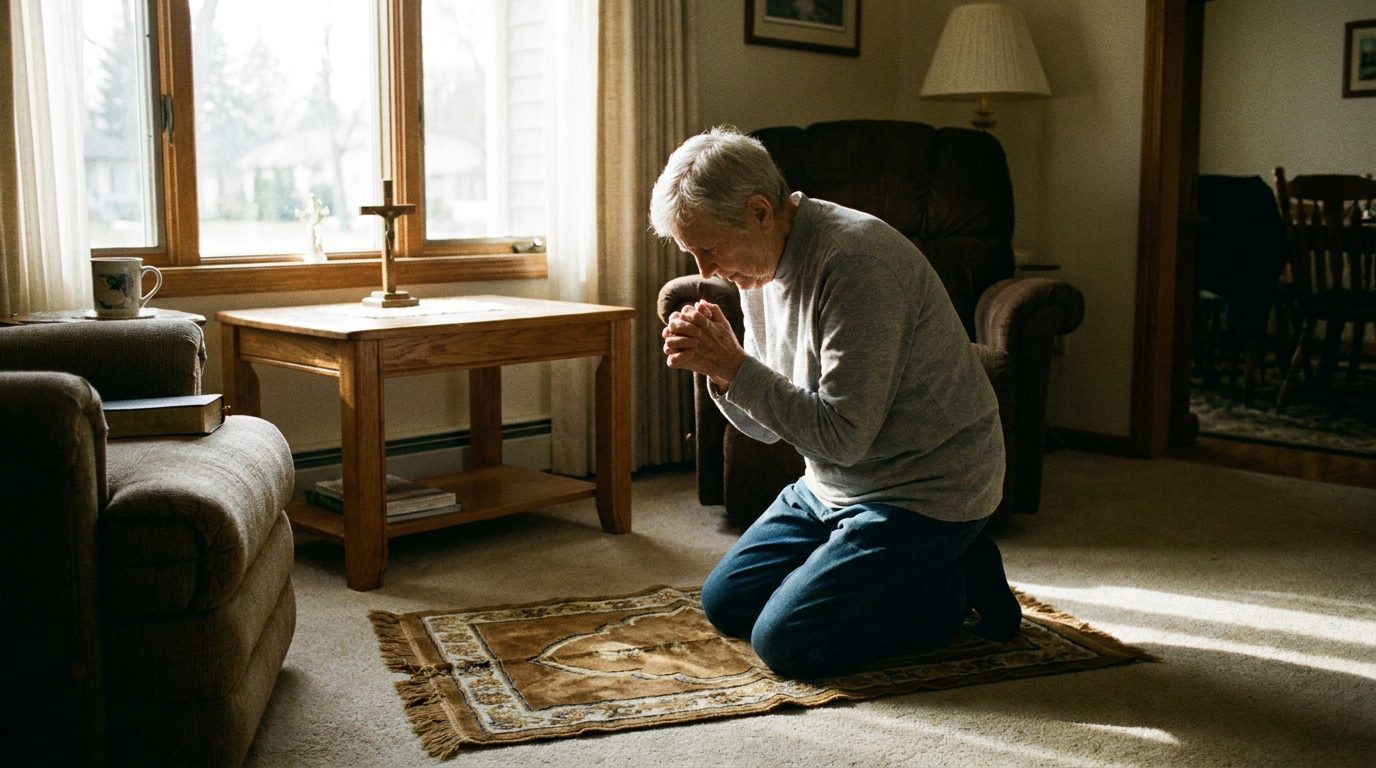
Daily prayer is one of the simplest and most powerful ways to bring the heart closer to God.
You do not need to be a scholar, monk, priest, or perfect person to pray. You only need a sincere heart. Prayer is the soul’s natural language. It is the gentle turning of our attention toward the Divine, the loving source of all life.
In the path of Bhakti Yoga, prayer is not only a religious practice. It is a relationship. Bhakti means “devotion” or “loving service.” Yoga means “connection.” So Bhakti Yoga is the path of reconnecting with God through love.
For some, God may be known as Krishna, Rama, Vishnu, Allah, Christ, the Divine Mother, the Supreme, or simply the loving presence within all beings. At The Bhakti House, we welcome sincere seekers of all backgrounds. The heart of prayer is not about labels. It is about love, humility, surrender, and spiritual growth.
Daily prayers help us remember what truly matters. They bring peace to the mind, clarity to the heart, and strength to the soul. In a busy world filled with noise, prayer becomes a sacred pause. It reminds us: “I am not alone. I am guided. I am loved. I can serve.”
Prayer as a Daily Anchor
Life can move quickly. Responsibilities, relationships, work, family, and worries can pull our minds in many directions.
A daily prayer practice gives us an anchor. Even five minutes of sincere prayer can change the mood of the day. It helps us begin from a place of gratitude rather than stress, devotion rather than distraction.
In the Bhagavad-gita, one of the most beloved scriptures of Bhakti Yoga, Krishna says:
“Always think of Me, become My devotee, worship Me, and offer your homage unto Me.”
Bhagavad-gita 18.65
This teaching is not meant to burden us. It is an invitation. God is lovingly saying, “Remember Me. Bring Me into your life. Let our relationship be real.”
Daily prayer helps us do exactly that.
Prayer Is for Everyone
Some people worry, “I do not know how to pray properly.”
But prayer does not have to be polished. It does not have to sound poetic. It can be as simple as:
“Dear God, please guide me today.”
“Thank You for this life.”
“Please help me become more loving.”
“I am struggling. Please be with me.”
“I offer this day to You.”
These simple prayers, when spoken with sincerity, are deeply spiritual. God is not impressed by complicated language. God is touched by sincerity.
The Spiritual Power of Daily Prayer
Prayer transforms us from the inside out. It does not always change our outer situation immediately, but it changes the way we meet life.
Through daily prayer, we gradually become more peaceful, grateful, patient, forgiving, and spiritually awake.
Prayer Opens the Heart
The heart often becomes covered by fear, pain, pride, disappointment, or stress. Prayer gently softens those coverings.
When we pray, we become honest before God. We stop pretending. We admit our need for grace. This humility is powerful.
In Bhakti Yoga, humility is not weakness. It is spiritual strength. It means we understand that we are not the ultimate controller. We are souls, beloved parts of the Divine, meant to live in loving relationship with God and all beings.
A humble prayer may sound like:
“Dear Lord, I do not have everything figured out. Please help me walk with honesty, kindness, and devotion.”
Such a prayer opens the heart to grace.
Prayer Purifies the Mind
The mind is often filled with worries, desires, regrets, and endless thoughts. Daily prayer helps purify the mind by directing it toward something higher.
Instead of constantly circling around “me” and “mine,” prayer brings us into remembrance of God’s presence. This remembrance is called smaranam in Sanskrit, meaning “remembering.”
Smaranam is one of the nine devotional practices described in Bhakti tradition. It means lovingly remembering the Divine throughout the day. Prayer is one of the most natural ways to practice remembrance.
When the mind remembers God, it becomes calmer. It gains perspective. It becomes less controlled by temporary fears.
Prayer Builds Inner Strength
Spiritual life does not mean we will never face difficulty. Everyone experiences challenges. But prayer gives us inner strength to face them with courage and faith.
When we pray daily, we slowly learn to trust that there is a loving wisdom beyond our limited understanding. We may not always know why something is happening, but we can ask God to guide us through it.
This is especially important in moments of grief, uncertainty, or change. Prayer becomes a shelter.
“Please help me accept what I cannot change. Please give me the strength to do what is right. Please keep my heart close to You.”
Such prayers can carry us through difficult seasons.
How to Begin a Daily Prayer Practice

Beginning a daily prayer practice does not need to be complicated. The key is consistency and sincerity.
Start small. Start where you are. The goal is not to perform perfectly. The goal is to build a loving habit of turning toward God every day.
Choose a Simple Time
It can be helpful to pray at the same time each day.
Many people like to pray in the morning because it sets the tone for the day. Morning prayer is like offering the first flower of the day to God.
Others may pray at night, reflecting on the day and offering gratitude before sleep. Some pray before meals, before work, while walking, or during a quiet moment in the car.
Choose a time that feels realistic.
You might begin with:
- Five minutes after waking
- A short prayer before breakfast
- A prayer during your lunch break
- Ten minutes before bed
- A peaceful moment before chanting or reading scripture
A small daily practice is better than an ambitious plan that becomes overwhelming.
Create a Sacred Space
A sacred space can support your prayer life. It does not need to be large or fancy.
You may create a small altar or prayer corner with items that inspire devotion, such as:
- A picture of Krishna, Radha, Rama, Jesus, a saint, or a sacred symbol
- A candle or lamp
- Fresh flowers
- Incense
- Prayer beads
- A scripture or devotional book
- A clean cloth or simple offering
In Bhakti Yoga, we often keep pictures or forms of the Divine as a way to focus the mind and heart. These sacred images are not “ordinary pictures.” They help us remember God’s personal presence and loving nature.
If you do not have a sacred space, that is okay. God hears prayers everywhere. A sincere heart is the most sacred place.
Begin with Gratitude
Gratitude is one of the easiest ways to enter prayer.
Before asking for anything, pause and say thank you.
You may pray:
“Thank You for this breath.”
“Thank You for another day.”
“Thank You for the people who support me.”
“Thank You for guiding me, even when I do not see the whole path.”
Gratitude changes the atmosphere of the heart. It helps us notice grace in ordinary life.
In Bhakti Yoga, gratitude naturally leads to seva, or service. Seva means “loving service offered to God and others.” When we feel thankful, we want to give back. Prayer and service nourish each other.
Speak Honestly
Prayer is a relationship, and every real relationship includes honesty.
You can tell God what is in your heart. Your hopes, fears, confusion, pain, joy, and longing can all become part of prayer.
You might say:
“God, I feel anxious today.”
“I want to trust You more.”
“Please help me forgive.”
“Please show me how to serve.”
“Please help me remember You.”
There is no need to hide. God already knows our hearts. Prayer helps us become aware and open.
Check out our latest articles at https://thebhaktihouse.org/blog.
Different Forms of Prayer in Bhakti Yoga

Bhakti Yoga offers many beautiful forms of prayer. Some are quiet and personal. Others are musical, joyful, and shared in community.
All sincere forms of prayer can help the heart awaken in devotion.
Personal Prayer
Personal prayer is speaking to God in your own words.
This may happen silently or aloud. It may be structured or spontaneous. You may kneel, sit, stand, walk, or bow. The external form is less important than the inner mood.
A simple personal prayer might be:
“Dear Lord, please let my thoughts, words, and actions be pleasing to You today. Please help me be kind. Please help me remember that everyone I meet is Your child. May my life become an offering of love.”
This kind of prayer brings devotion into daily life.
Scriptural Prayer
Many traditions offer sacred prayers that have been passed down through generations. These prayers carry deep spiritual power because they have been spoken by saints, teachers, and devotees with great love.
In Bhakti Yoga, prayers from the Bhagavad-gita, Srimad-Bhagavatam, and the songs of saints are often recited and meditated upon.
The Srimad-Bhagavatam, a central Bhakti scripture, is filled with prayers of devotees calling out to the Lord with love, surrender, and wisdom. One beautiful teaching from the Bhagavatam is that hearing and chanting about God cleanses the heart.
The Bhagavatam explains that by regularly hearing sacred teachings and remembering the Lord, the heart becomes purified of unwanted things. Practically, this means our selfishness, envy, fear, and confusion gradually lose their hold on us.
Scriptural prayers help us learn how great souls pray. They teach us what to desire: not simply comfort or success, but devotion, wisdom, compassion, and remembrance of God.
Chanting as Prayer
Chanting is one of the most important practices in Bhakti Yoga.
In Sanskrit, mantra means “a sacred sound that frees the mind.” Man means “mind,” and tra means “to protect or deliver.” A mantra helps lift the mind from anxiety and reconnect it with the Divine.
The most well-known mantra in the Bhakti tradition is the Hare Krishna maha-mantra. Maha means “great,” so maha-mantra means “the great mantra.”
Hare Krishna, Hare Krishna,
Krishna Krishna, Hare Hare,
Hare Rama, Hare Rama,
Rama Rama, Hare Hare
This mantra is a prayer asking to be engaged in loving service to God.
“Hare” calls upon the divine energy of the Lord, the compassionate spiritual energy that helps us return to love. “Krishna” means “the all-attractive one.” “Rama” means “the source of spiritual joy.”
Chanting can be done softly on beads, called japa, or together with music in kirtan. Japa is personal mantra meditation. Kirtan is congregational chanting, often with instruments and call-and-response singing.
Both are forms of prayer. Both awaken the heart.
Prayer Through Service
In Bhakti Yoga, service is prayer in action.
When we cook with love, care for our family, help someone in need, clean a sacred space, support a community, or offer our talents to uplift others, we can do it as seva.
Seva means loving service. It is not just volunteering. It is serving with the mood, “This is an offering to God.”
You can turn ordinary activities into prayer by offering them inwardly:
“God, may this work be useful.”
“May this meal nourish others.”
“May these words bring peace.”
“May my actions reflect Your love.”
This makes spiritual life practical. Prayer is not only something we do with folded hands. It is something we live.
A Simple Daily Prayer Routine
If you are new to daily prayer, it may help to follow a simple rhythm. You can adjust it according to your life, tradition, and heart.
The purpose is not to create pressure. The purpose is to create a doorway to grace.
Morning Prayer
Begin the day by turning toward God before reaching for your phone or entering the rush of responsibilities.
You might sit quietly, take a few deep breaths, and pray:
“Dear God, thank You for this new day. Please guide my thoughts, words, and actions. Help me serve with humility. Help me remember You. May I bring kindness wherever I go.”
Then you may chant a mantra, read a short verse, or sit in silence.
Even three to five minutes can make a difference.
Midday Remembrance
During the day, pause briefly to remember God.
This can be as simple as closing your eyes for one breath and saying:
“Thank You.”
“Please guide me.”
“Let me serve.”
“Hare Krishna.”
These small pauses keep the heart connected.
In the Bhagavad-gita, Krishna teaches that we can remember Him while doing our duties. This is very practical. Bhakti is not only for temples or retreat centers. It can be lived in offices, kitchens, classrooms, hospitals, homes, and busy streets.
Prayer Before Meals
Food is a beautiful opportunity for prayer.
Before eating, pause and offer gratitude. In Bhakti Yoga, food offered to God with love is called prasadam. Prasadam means “mercy” or “grace.” The idea is simple: when we prepare and offer food to God with devotion, eating becomes sacred.
A simple meal prayer might be:
“Dear Lord, thank You for this food. May it be offered with love. May it nourish my body, mind, and soul. May I use this energy in service.”
This practice helps us eat with awareness and gratitude.
Evening Reflection
At the end of the day, take a few moments to reflect.
Ask yourself gently:
- Where did I feel grateful today?
- Where did I act with love?
- Where could I have been more patient?
- What do I need to offer to God?
- Who can I pray for tonight?
Then pray:
“Dear God, thank You for carrying me through this day. Please forgive my mistakes and help me learn from them. Please bless those who are suffering. Please let me rest in Your care.”
Evening prayer helps release the day and sleep with a peaceful heart.
Praying Through Difficult Times
Prayer becomes especially meaningful when life feels heavy.
When we are facing loss, illness, conflict, loneliness, or uncertainty, prayer may not remove all pain immediately. But it gives us a place to bring our pain. It reminds us that we do not have to carry everything alone.
When You Feel Anxious
Anxiety often makes the mind run toward the future. Prayer brings us back into God’s presence now.
Try praying slowly:
“Dear Lord, I feel afraid. Please help me breathe. Please help me trust. Please guide me one step at a time.”
You can also repeat a mantra gently. Let the sacred sound hold your mind.
Hare Krishna, Hare Krishna,
Krishna Krishna, Hare Hare,
Hare Rama, Hare Rama,
Rama Rama, Hare Hare
Do not worry if your mind wanders. Gently return. Each return is part of the prayer.
When You Feel Unworthy
Many people feel they are not “good enough” to pray. But Bhakti Yoga teaches that God’s mercy is greater than our mistakes.
We do not approach God because we are perfect. We approach God because we need love, healing, and guidance.
The saints of the Bhakti tradition often prayed with deep humility. They did not come before God with pride. They came with longing.
A humble prayer may be:
“Dear God, I do not feel worthy, but I still come to You. Please accept whatever sincerity I have. Please help me grow.”
This is a very beautiful prayer.
When You Are Angry or Hurt
Prayer does not mean pretending everything is fine. If you are angry, hurt, or grieving, bring that honestly to God.
You might pray:
“God, my heart is wounded. I do not know how to forgive. Please help me. Please protect me from bitterness. Please teach me what love looks like in this situation.”
Sometimes prayer will guide us to forgive. Sometimes it will guide us to create healthy boundaries. Sometimes it will guide us to seek help.
Prayer is not escape. It is a way of inviting divine wisdom into real life.
The Role of Scripture in Daily Prayer
Scripture gives direction to our prayers. It helps us move beyond temporary desires and awaken deeper spiritual longing.
In Bhakti Yoga, sacred texts are not meant to be read only intellectually. They are meant to be heard with the heart and applied in daily life.
The Bhagavad-gita and Prayer
The Bhagavad-gita is a conversation between Krishna and Arjuna, a warrior facing a deep moral and emotional crisis. Arjuna is confused and overwhelmed. Instead of pretending to be strong, he turns to Krishna for guidance.
This is prayer.
Arjuna says, in essence, “I am confused. Please teach me.”
This teaches us something very important: prayer begins when we become willing to be guided.
Krishna then teaches Arjuna about the soul, duty, devotion, meditation, surrender, and loving remembrance. The Gita’s message is deeply practical. It teaches us to live in the world while keeping our heart connected to God.
The Srimad-Bhagavatam and Hearing
The Srimad-Bhagavatam emphasizes hearing and chanting about God as a powerful spiritual practice. Hearing sacred wisdom is itself a prayerful act when done with humility.
When we read or listen to scripture, we can begin with a short prayer:
“Dear Lord, please let this wisdom enter my heart. Please help me understand what I need to learn. Please help me live with more love.”
This changes reading from information gathering into transformation.
Prayers of the Saints
The Bhakti tradition is rich with songs and prayers from saints such as Mirabai, Tulsidas, Narottama Dasa Thakura, Bhaktivinoda Thakura, and many others.
Their prayers often express longing, surrender, joy, and deep personal relationship with God.
Reading or singing the prayers of saints can help us when we do not know what to say. Their words can carry our hearts toward devotion.
Common Questions About Daily Prayer
Many sincere seekers have questions about prayer. These questions are welcome. Spiritual life grows through honest inquiry.
How Long Should I Pray Each Day?
Start with what you can do consistently.
Five sincere minutes every day is better than one hour once a month. Over time, your prayer may naturally grow.
You may begin with:
- One minute of gratitude
- Three minutes of personal prayer
- Five minutes of mantra chanting
- One short verse from scripture
- A prayer before sleep
Let your practice be simple and steady.
Do I Need to Pray in Sanskrit?
No. God understands every language.
Sanskrit mantras are powerful because they carry sacred sound vibrations passed down through realized teachers. But heartfelt prayer in English, Spanish, Hindi, Arabic, Hebrew, or any language is also meaningful.
You can combine both. For example, chant a Sanskrit mantra and then pray in your own words.
The language of sincerity is universal.
What If I Do Not Feel Anything?
This is normal.
Some days prayer feels sweet and peaceful. Other days it feels dry or distracted. Do not be discouraged.
A relationship grows through steady care. If we only pray when we feel inspired, our practice may remain unstable. But when we pray daily, even a little, our heart gradually becomes more receptive.
Keep showing up. God sees your effort.
Can I Pray for Others?
Yes, praying for others is a beautiful expression of compassion.
You can pray for family, friends, strangers, those who are ill, those who are grieving, those who feel lost, and even those with whom you have conflict.
A simple prayer for others:
“Dear Lord, please bless them. Please guide them. Please bring healing, wisdom, and peace to their heart.”
Praying for others expands our love beyond ourselves.
Bringing Prayer Into Everyday Life
Daily prayer is not separate from daily life. It can gently enter everything we do.
Bhakti Yoga teaches that every part of life can become spiritual when offered with love.
Turning Work Into Worship
Work can become worship when done with integrity, humility, and an offering mood.
Before beginning your work, pray:
“May this work be pleasing to You. May I serve honestly. May my efforts help others.”
This helps reduce ego and stress. We still work responsibly, but we remember that the results are ultimately in God’s hands.
Making Relationships Sacred
Prayer can transform relationships.
Before speaking with someone, especially in a difficult moment, silently pray:
“Please help me listen. Please help me speak with kindness. Please help me see this person as a soul.”
This small prayer can prevent many unnecessary conflicts.
Bhakti Yoga invites us to see every living being as part of God. This vision helps us treat others with respect and compassion.
Practicing Prayer With Community
While personal prayer is important, community also nourishes devotion.
Gathering with others for kirtan, scripture discussion, prasadam, and service can strengthen our spiritual life. When voices come together in chanting, the heart often opens in a special way.
Community reminds us that we are not walking alone. We are part of a family of seekers, each trying to take sincere steps toward God.
A Sample Daily Prayer Practice
Here is a simple practice you can try for one week.
Keep it gentle. Let it be an offering, not a burden.
Morning: Offer the Day
Sit quietly for five minutes.
Pray:
“Dear God, thank You for this day. Please guide me. Please help me remember You and serve with love.”
Then chant the Hare Krishna maha-mantra three times, or repeat any sacred name of God that is meaningful to you.
Afternoon: Pause and Remember
Take one minute during the day.
Place your hand on your heart and pray:
“Please help me act with love in this moment.”
Then take three slow breaths.
Evening: Reflect and Release
Before bed, reflect on your day.
Thank God for three things.
Offer one mistake or difficulty.
Pray for one person.
End with:
“Dear Lord, I rest in Your care. Please keep my heart close to You.”
This simple rhythm can bring more peace, devotion, and awareness into daily life.
The Fruit of Daily Prayer
The true fruit of prayer is love.
Not just temporary relief. Not just answered requests. Not just a peaceful feeling. The deepest fruit is a growing relationship with God and a softer heart toward all beings.
As prayer deepens, we may notice small but meaningful changes:
- We become more grateful.
- We react less harshly.
- We feel more guided.
- We become more compassionate.
- We remember God more naturally.
- We want to serve.
- We feel less alone.
These changes may come gradually, like the sunrise. At first, the sky is only slightly lighter. Then slowly, everything becomes illumined.
Daily prayer is like that. Each sincere prayer invites light into the heart.
Prayer Leads to Surrender
In Bhakti Yoga, surrender does not mean giving up in despair. It means lovingly placing ourselves in God’s care.
Surrender says:
“I will do my best, and I trust You with the results.”
“I want Your guidance more than my ego’s control.”
“Please let my life become an offering.”
This kind of surrender brings freedom. We no longer have to carry the illusion that everything depends only on us.
Prayer Awakens Love
Ultimately, Bhakti Yoga is the path of divine love.
Chanting, prayer, service, scripture, and community all help awaken our natural love for God. This love is already within us, but it may be covered. Daily prayer gently uncovers it.
We begin with small prayers. Over time, those prayers become a way of living. The heart starts to remember God not only in formal prayer, but while cooking, working, walking, serving, singing, and caring for others.
This is the beauty of Bhakti: love becomes the center of life.
One Sincere Step Toward God
Daily prayer is a doorway open to everyone.
You do not need to be perfect. You do not need to know all the scriptures. You do not need to change everything overnight. You can begin right where you are, with one honest prayer.
God is near. The Divine is not far away from the sincere heart.
Today, you might simply say:
“Dear God, please guide me. Please help me love. Please help me take one sincere step toward You.”
That one step matters.
At The Bhakti House, all are welcome: the curious, the faithful, the unsure, the joyful, the grieving, the beginner, and the lifelong seeker. Come as you are. Bring your questions, your hopes, your voice, your silence, your longing.
May your daily prayers become a gentle path of love, chanting, service, healing, and spiritual growth. And may every sincere step bring you closer to the loving shelter of God.
FAQs
What are the five daily prayers in Islam?
The five daily prayers in Islam are Fajr (dawn), Dhuhr (midday), Asr (afternoon), Maghrib (sunset), and Isha (night).
What are the specific times for each daily prayer?
The specific times for each daily prayer vary based on the position of the sun and are as follows: Fajr – before sunrise, Dhuhr – after midday until the time for Asr, Asr – from the time the sun begins to decline until just before sunset, Maghrib – just after sunset, and Isha – from just after sunset until midnight.
What are the essential components of performing a daily prayer?
The essential components of performing a daily prayer include purification (wudu or ghusl), facing the qibla (the direction of the Kaaba in Mecca), reciting specific verses from the Quran, and performing specific physical movements such as standing, bowing, prostrating, and sitting.
What is the significance of daily prayers in Islam?
Daily prayers are considered one of the Five Pillars of Islam and are a fundamental act of worship and submission to Allah. They serve as a means of maintaining a strong connection with Allah, seeking forgiveness, and expressing gratitude.
What are the benefits of performing daily prayers regularly?
Regularly performing daily prayers is believed to bring spiritual, mental, and physical benefits, including increased mindfulness, discipline, inner peace, and a sense of community and unity among Muslims. It also serves as a reminder of the transient nature of life and the importance of prioritizing one’s relationship with Allah.

