

Mādhurya-rasa is one of the most beautiful, intimate, and often misunderstood teachings in the Bhakti tradition.
The Sanskrit word mādhurya means “sweetness,” and rasa means “spiritual taste,” “relationship,” or “loving mood.” In Bhakti Yoga, rasa describes the different ways the soul can love and relate to the Divine. Mādhurya-rasa refers to the mood of divine love expressed as the deepest, most intimate devotion to Śrī Krishna, the all-attractive Supreme Person.
Because this subject uses the language of romance, it can be easily misunderstood—especially when viewed through the lens of ordinary human desire. But the saints of Bhakti have always taught that mādhurya-rasa is not about material passion. It is not a license for indulgence, fantasy, or careless behavior. It is the purest expression of selfless love, where the soul desires only the happiness of God.
To approach this topic properly, we need humility. We do not enter the inner chambers of divine love with pride, curiosity, or entitlement. We enter by service, prayer, chanting, and sincere purification of the heart.
As the Bhagavad-gītā teaches, “By devotion one can truly know Me” (bhaktyā mām abhijānāti, Bhagavad-gītā 18.55). Divine love is not understood by intellect alone. It is revealed to a heart softened by devotion.
What Is Mādhurya-rasa?
The Sweetest Form of Loving Relationship
In Bhakti Yoga, the soul’s eternal nature is to love and serve God. Different devotees relate with Krishna in different loving moods. Some love Him with peaceful reverence. Some serve Him as a master. Some love Him as a friend. Some love Him as a child. And some love Him in the mood of divine beloved.
Mādhurya-rasa is this last and most intimate relationship: loving Krishna as the supreme beloved.
In the Bhakti scriptures, especially the Śrīmad-Bhāgavatam and the writings of the Goswāmīs of Vṛndāvana, the highest examples of this love are the gopīs, the cowherd maidens of Vṛndāvana, and above all Śrīmatī Rādhārāṇī, Krishna’s eternal beloved and the embodiment of pure devotion.
Their love is not ordinary romance. It is not self-centered. It is not about what they can receive from Krishna. It is completely centered on Krishna’s joy.
Love Without Possessiveness
In worldly love, we often say, “I love you,” but hidden inside may be, “Please make me happy. Please fulfill me. Please belong to me.”
Mādhurya-rasa is different. The heart says, “May You be happy, Krishna. May Your joy be complete. Let me serve Your happiness, even if I receive nothing in return.”
This is why the love of the gopīs is praised as the highest devotion. Their love is not possessive; it is offering. It is not demanding; it is surrendered. It is not based on ego; it is born from the deepest spiritual identity of the soul.
The Meaning of “Rasa” in Bhakti
The word rasa is important. It does not simply mean emotion. It means the spiritual flavor of a loving exchange with God.
Just as sugar can be tasted only by the tongue, divine rasa can be tasted only by the awakened heart. Scriptures, teachers, and practices can guide us, but the taste of devotion is experienced through sincere spiritual life.
This is why Bhakti is practical. We chant, pray, serve, hear sacred wisdom, and associate with devotees—not merely to gather information, but to awaken love.
Why Mādhurya-rasa Is So Often Misunderstood
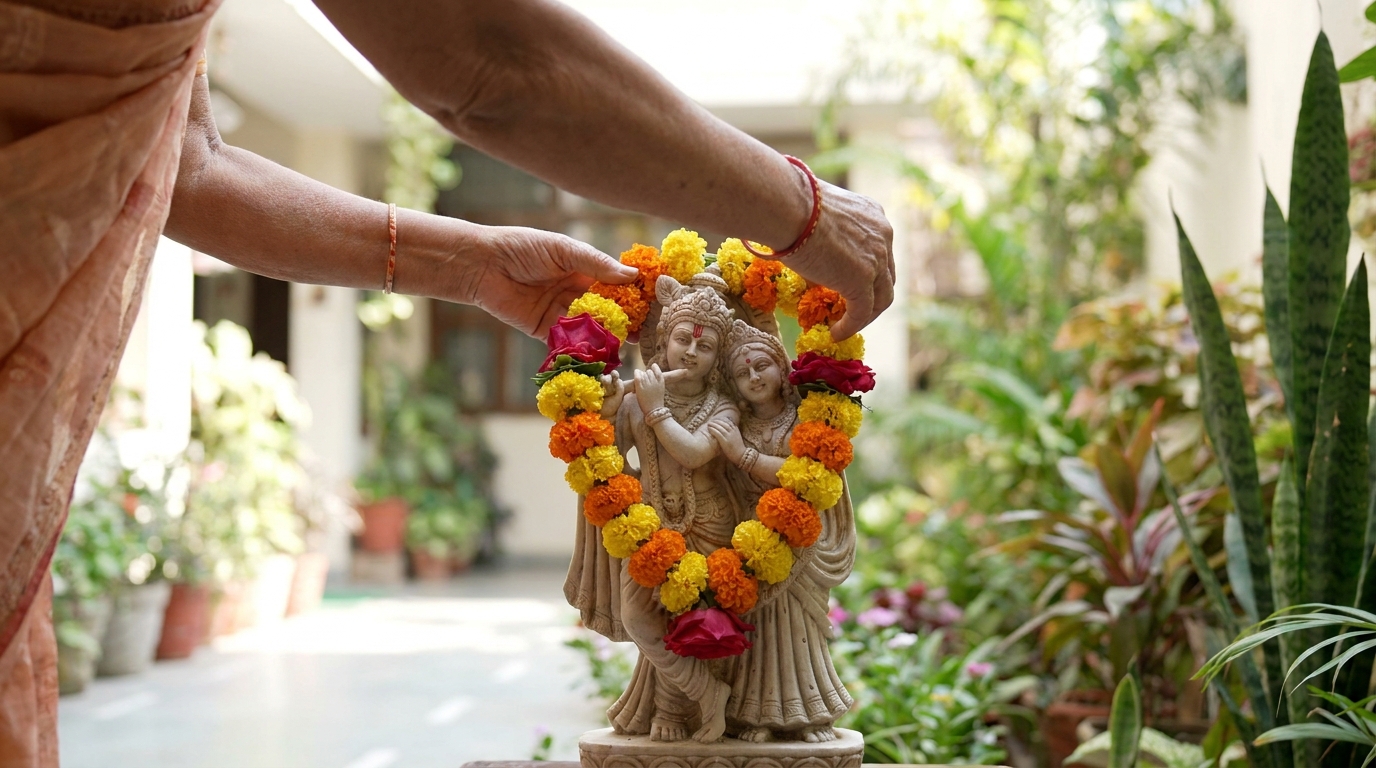
Confusing Spiritual Love with Material Desire
The greatest misunderstanding of mādhurya-rasa is to mistake it for ordinary sensual or romantic attraction.
Material desire asks, “How can I enjoy?” Pure devotion asks, “How can I serve?”
This one difference changes everything.
The pastimes of Krishna and the gopīs are described in sacred texts such as the Śrīmad-Bhāgavatam, especially in the Tenth Canto. But these pastimes are not meant to be approached casually or separated from the whole path of devotion. They are the highest teachings, and they rest upon a foundation of humility, discipline, purity, and service.
Śrīla Rūpa Goswāmī, one of the great teachers of the Bhakti tradition, carefully explains devotional moods in Bhakti-rasāmṛta-sindhu and Ujjvala-nīlamaṇi. He does not present mādhurya-rasa as a sentimental idea. He presents it as a profound spiritual reality, approached through proper guidance and purified devotion.
Imitation Is Not Realization
Another misunderstanding is the idea that one can “practice” mādhurya-rasa by imitating the external behavior of advanced souls.
But Bhakti is never about pretending.
If the heart is still filled with pride, envy, lust, greed, and the need for recognition, then imitation of advanced devotional moods becomes spiritually dangerous. It can confuse the practitioner and mislead others.
True Bhakti begins with honesty: “My heart is not yet pure, but I want to love God. Please guide me.”
This humble beginning is more pleasing to Krishna than any artificial display of elevated emotion.
Sacred Intimacy Requires Sacred Foundation
In ordinary life, intimacy without trust, commitment, and maturity can be harmful. In spiritual life, the principle is even deeper.
Mādhurya-rasa is the most intimate form of devotion, but it is not the starting point for most practitioners. We begin with hearing, chanting, remembering, serving, praying, and living a life that gradually becomes centered on God.
The Śrīmad-Bhāgavatam explains that by regularly hearing about Krishna in the association of sincere devotees, the heart is cleansed of impurities. This cleansing is essential. Without purification, we project our own desires onto sacred teachings.
With purification, we begin to glimpse their true meaning.
Please visit our website for more information on our articles: articles.
The Gopīs: The Highest Example of Selfless Devotion
Who Are the Gopīs?
The gopīs are the cowherd maidens of Vṛndāvana, the sacred village where Krishna performed His childhood and youth pastimes. In the Bhakti tradition, they are not considered ordinary human beings. They are eternal associates of Krishna, embodiments of pure love.
Their devotion is celebrated because it is total, spontaneous, and free from selfish calculation.
When Krishna plays His flute, the gopīs leave everything to go to Him. On the surface, this may appear like ordinary romantic attraction. But the saints explain that Krishna’s flute represents the divine call of the soul. The gopīs’ response represents the soul’s complete surrender to God.
They are not running toward worldly pleasure. They are running toward the source of all love.
The Love of Śrīmatī Rādhārāṇī
Śrīmatī Rādhārāṇī is honored in the Bhakti tradition as the supreme devotee of Krishna. She is the fullest expression of divine love. Her heart contains the highest depth of compassion, sweetness, surrender, and longing.
To understand Krishna deeply, devotees also seek the mercy of Rādhā. She teaches us how to love Krishna—not for our own enjoyment, but for His joy.
In many Bhakti communities, devotees chant the names of Rādhā and Krishna together because divine love is not complete without the devotee and the Lord. Rādhā shows the perfection of devotion, and Krishna receives and reciprocates that love.
Separation as a Form of Union
One of the most mysterious teachings of mādhurya-rasa is that separation from Krishna can increase love even more than direct meeting.
In ordinary life, separation often feels only painful. But in pure devotion, longing for Krishna becomes a deep form of remembrance. The heart becomes completely absorbed in Him.
The gopīs’ longing is not despair without hope. It is love intensified. Their every thought, word, breath, and tear becomes an offering.
For practitioners, this teaches something very practical: even when we feel far from God, that longing can become sacred. If we turn our absence into prayer, our loneliness into chanting, and our searching into service, then separation becomes a doorway to deeper devotion.
The Role of Chanting in Purifying the Heart
The Holy Name Reveals the Heart’s True Desire
In Bhakti Yoga, chanting the names of God is central. The Sanskrit word kīrtana means singing or glorifying the Divine, and japa means soft, personal repetition of sacred mantras.
One of the most widely chanted mantras in the Bhakti tradition is:
Hare Krishna Hare Krishna
Krishna Krishna Hare Hare
Hare Rama Hare Rama
Rama Rama Hare Hare
This mantra is a prayer. “Hare” calls upon the divine energy of the Lord, especially understood by many devotees as Rādhā. “Krishna” means the all-attractive one. “Rama” means the source of spiritual joy.
In simple words, the mantra means: “O Lord, O Divine Mother, please engage me in Your loving service.”
This is the heart of Bhakti. Not “God, serve my desires,” but “Please teach me how to serve love.”
Chanting Protects Us from Misunderstanding
When we chant sincerely, the heart gradually becomes clear. We begin to see the difference between love and attachment, devotion and performance, surrender and control.
This is especially important when approaching teachings like mādhurya-rasa. Without purification, we may interpret sacred love through our own conditioning. With chanting, prayer, and guidance, the heart becomes more capable of receiving divine truth.
The Holy Name is not separate from Krishna. Bhakti teachers explain that God is fully present in His names. So when we chant, we are not simply repeating sounds. We are entering relationship.
From Desire to Devotion
Most of us begin spiritual life with mixed motives. We may want peace, healing, belonging, clarity, or relief from suffering. There is no shame in this. God welcomes us as we are.
But through chanting, our desires are gradually transformed.
At first we may pray, “Please help me.” Later, “Please guide me.” Deeper still, “Please use my life in service.” And one day, by grace, “May Your happiness be my happiness.”
That movement—from self-centered desire to selfless love—is the path toward the essence of mādhurya-rasa.
Mādhurya-rasa Is Not Escapism
Divine Love Deepens Responsibility
Sometimes people imagine that mystical devotion means escaping the world. But real Bhakti makes us more compassionate, more responsible, and more present.
If we truly honor the love of Rādhā and Krishna, we will become kinder in our relationships, more truthful in our speech, more humble in our service, and more careful with the hearts of others.
Mādhurya-rasa is not an excuse to avoid emotional maturity. It calls us into deeper purity.
The love of the gopīs is not selfish emotional intensity. It is complete dedication. If we want even a drop of that mood, we can begin by asking: “How can I love more honestly today? How can I serve without needing recognition? How can I remember God in this moment?”
Healing the Split Between Human Love and Divine Love
Many seekers carry wounds from love—loss, betrayal, disappointment, loneliness, or confusion. When they hear about divine romantic love, it may stir tenderness or discomfort.
Bhakti does not ask us to deny our human experience. Rather, it helps us heal and spiritualize the heart.
Human love becomes healthier when connected to divine love. We stop asking other people to be God for us. We stop demanding perfect fulfillment from imperfect relationships. We learn to love others as souls, not objects of our need.
In this way, devotion to Krishna does not make us less human. It makes us more whole.
The Body, the Mind, and the Soul
Mādhurya-rasa belongs to the soul, not the temporary body or restless mind.
This distinction is essential.
The body experiences attraction and sensation. The mind experiences imagination and emotion. The soul, however, longs for eternal loving relationship with God.
Bhakti does not hate the body or reject the mind. It simply puts them in their proper place. The body becomes an instrument of service. The mind becomes a place of remembrance. The soul awakens to its natural love.
Guidance, Scripture, and the Shelter of Devotees
Why We Need Authentic Guidance
Because mādhurya-rasa is subtle and sacred, it should be approached under proper guidance. In Bhakti, this guidance comes through guru, sādhu, and śāstra.
Guru means spiritual teacher.
Sādhu means saintly persons or sincere devotees.
Śāstra means sacred scripture.
These three help us stay balanced. A genuine teacher does not exploit sacred topics. Saintly association inspires humility and service. Scripture protects us from inventing our own version of spirituality.
This is especially important today, when spiritual ideas can be taken out of context and mixed with personal ambition, sensuality, or emotional projection.
The Śrīmad-Bhāgavatam’s Careful Progression
The Śrīmad-Bhāgavatam does not begin with the rāsa-līlā, the sacred dance of Krishna and the gopīs. It gradually builds a foundation of philosophy, devotion, surrender, and purification.
This is meaningful.
Before hearing about the most intimate pastimes of Krishna, we are taught who we are, who God is, what material life is, how devotion works, and how the heart becomes purified.
The rāsa-līlā is not entertainment. It is revelation. It is the crown jewel of divine love, meant to be received with reverence and a cleansed heart.
The Example of Śrī Caitanya Mahāprabhu
Śrī Caitanya Mahāprabhu, who appeared in Bengal over 500 years ago, is deeply revered in the Gaudiya Vaishnava tradition as Krishna in the mood of Rādhā. He came to share the chanting of the Holy Name and the path of divine love.
Although He tasted the highest moods of mādhurya-rasa internally, externally He taught everyone to chant, serve, honor devotees, and live humbly.
His famous instruction from the Śikṣāṣṭakam says:
“One should chant the Holy Name of the Lord in a humble state of mind, thinking oneself lower than a blade of grass, more tolerant than a tree, offering respect to all, and expecting no respect in return.”
This is the doorway.
Not pride. Not imitation. Not spiritual performance.
Humility opens the heart to love.
Practical Ways to Honor Mādhurya-rasa Today
Begin with Sincere Chanting
We can begin simply.
Set aside a few minutes each day to chant God’s names. You may chant the Hare Krishna mantra, or another name of God that is sacred in your tradition. Chant with attention. Chant with prayer. Chant not to impress anyone, but to reconnect your heart.
Even one sincere name of God can begin to soften the heart.
Offer Your Daily Life
Bhakti is not limited to temples or retreats. It can be practiced in the kitchen, at work, in family life, in study, in art, in caregiving, and in quiet moments of struggle.
Before beginning an activity, pause and pray: “May this be an offering.”
This transforms ordinary life into service. The Sanskrit word seva means loving service. Seva is one of the safest and most powerful ways to grow spiritually because it turns the heart outward in love.
Read Sacred Texts with Reverence
If you feel drawn to the teachings of Rādhā and Krishna, read under guidance and with prayer. Begin with foundational texts like the Bhagavad-gītā and then the Śrīmad-Bhāgavatam. Read the writings of realized teachers who emphasize humility, purity, and service.
Do not rush to the most intimate topics. Let the heart be prepared.
Spiritual life is not a race. Love grows naturally when nourished properly.
Serve Devotees and All Beings
One of the most practical ways to honor the mood of divine love is to serve others.
Feed someone. Listen deeply. Encourage a struggling soul. Help create sacred spaces. Offer your talents. Clean the temple floor. Cook with devotion. Share kindness without needing applause.
The heart that serves becomes eligible to understand love.
Pray for Purity, Not Position
Instead of praying, “Let me be advanced,” we can pray, “Let me be sincere.”
Instead of asking for spiritual experiences, we can ask for a cleaner heart.
A simple prayer may be:
“O Krishna, please remove what blocks my love. Please protect me from pride and imitation. Please teach me to serve with humility. Please let me remember You.”
This prayer is beautiful because it is honest.
The Essence: Love That Exists Only for Krishna’s Joy
Beyond Sentiment
The essence of mādhurya-rasa is not heightened emotion, poetic language, or romantic symbolism. These may surround it, but they are not the essence.
The essence is pure, selfless, intimate love for Krishna.
It is the soul’s complete dedication to the happiness of the Divine Beloved. It is love without bargaining. Love without ego. Love without separate interest.
This is why it is considered the highest sweetness.
A Love We Can Respect Before We Understand
We may not fully understand mādhurya-rasa, and that is okay.
Sacred things can be honored before they are realized. A child may not understand the depth of a parent’s sacrifice, but they can still receive the love. In the same way, we may not grasp the inner love of the gopīs, but we can bow our heads and pray for a life of sincerity.
In Bhakti, reverence protects sweetness. Humility protects intimacy.
The First Step Is Already Sacred
For most of us, the immediate practice is not to imagine ourselves in the highest spiritual mood. The immediate practice is to chant sincerely, avoid harm, serve others, hear about Krishna, and keep turning the heart toward God.
This is not lesser. This is the path.
Every sincere prayer matters. Every humble act of service matters. Every moment of remembrance matters. Every time we choose love over ego, we take one step closer to our eternal nature.
Everyone Is Welcome on the Path of Love
Bhakti Yoga is a path for everyone.
You do not need to be born into a particular culture. You do not need to know Sanskrit. You do not need to have a perfect past or a perfectly peaceful mind. You do not need to pretend to be advanced.
You can begin from wherever you are.
Mādhurya-rasa may be the most intimate and elevated expression of divine love, but its essence calls to every heart: love God sincerely, serve with humility, chant with faith, and let your life become an offering.
If this sacred subject awakens curiosity, let that curiosity become prayer. If it awakens longing, let that longing become chanting. If it awakens humility, let that humility become service.
The door of Bhakti is open. Krishna sees the sincerity of the heart more than the perfection of the performance.
May we approach the sweetness of divine love with clean hands, soft hearts, and bowed heads. May we never reduce sacred love to ordinary desire. May we honor the gopīs, Śrīmatī Rādhārāṇī, and the great saints by walking the path they have illuminated: the path of selfless devotion.
Everyone is welcome to take one sincere step toward God today—one prayer, one chant, one act of service, one offering of the heart.
FAQs
What is Mādhurya-rasa?
Mādhurya-rasa is a concept in Indian aesthetics and philosophy that refers to the aesthetic experience of sweetness, particularly in relation to the divine. It is often associated with the devotional relationship between a devotee and a deity, particularly in the context of Hinduism.
Why is Mādhurya-rasa often misunderstood?
Mādhurya-rasa is often misunderstood because it is a complex and nuanced concept that is deeply rooted in the philosophical and cultural traditions of India. Additionally, the concept of Mādhurya-rasa is often interpreted differently by different schools of thought within Hinduism, leading to varying understandings and interpretations.
What are some common misconceptions about Mādhurya-rasa?
Some common misconceptions about Mādhurya-rasa include viewing it solely as a romantic or erotic concept, misunderstanding its significance in the context of devotional relationships, and oversimplifying its meaning to just sweetness or beauty without considering its deeper philosophical implications.
How can one gain a better understanding of Mādhurya-rasa?
Gaining a better understanding of Mādhurya-rasa requires studying the philosophical and literary texts of Hinduism, particularly those related to bhakti (devotion) and rasa (aesthetic experience). Engaging with knowledgeable scholars and practitioners, as well as participating in devotional practices, can also help deepen one’s understanding of Mādhurya-rasa.
What is the significance of Mādhurya-rasa in Hindu devotional traditions?
Mādhurya-rasa holds significant importance in Hindu devotional traditions as it represents the intimate and loving relationship between a devotee and the divine. It is considered the highest form of devotional experience, characterized by deep emotional attachment, love, and sweetness in the devotee’s relationship with the deity.

