
The Heart’s Deepest Longing
Every person is looking for something.
We may call it peace, meaning, belonging, healing, truth, purpose, or love. Some search through family, work, creativity, study, travel, or service. Some search through silence and meditation. Some come to spiritual life after success and still feel empty. Others come through pain, loss, or a quiet inner question: “Is there more than this?”
Bhakti Yoga begins with great compassion for this human search.
Bhakti means loving devotion. Yoga means union, connection, or a path that brings us back to our original wholeness. So Bhakti Yoga is the path of reconnecting with the Divine through love.
In the Bhakti tradition, the highest goal is not simply to become peaceful, powerful, knowledgeable, or even liberated from suffering. These may come along the way, like flowers blooming beside the path. But the ultimate purpose of Bhakti is deeper and more beautiful: to awaken pure love for God and live in that love eternally.
This pure love is called prema in Sanskrit. Prema means divine love—love that is selfless, joyful, intimate, and free from selfish desire. It is not sentimental emotion, and it is not religious performance. It is the soul’s natural affection for the Supreme Person, known by many names across sacred traditions. In Bhakti scriptures, God is often called Krishna, meaning “the all-attractive one,” or Bhagavan, “the Supreme Being who possesses all beauty, wisdom, strength, fame, wealth, and renunciation.”
The highest goal of Bhakti is to remember who we truly are: beloved servants, friends, and children of God. It is to live with a heart softened by chanting, prayer, humility, and service. It is to love God not for what we can get, but because love itself is the soul’s deepest nature.
Bhakti Is More Than a Practice: It Is a Relationship
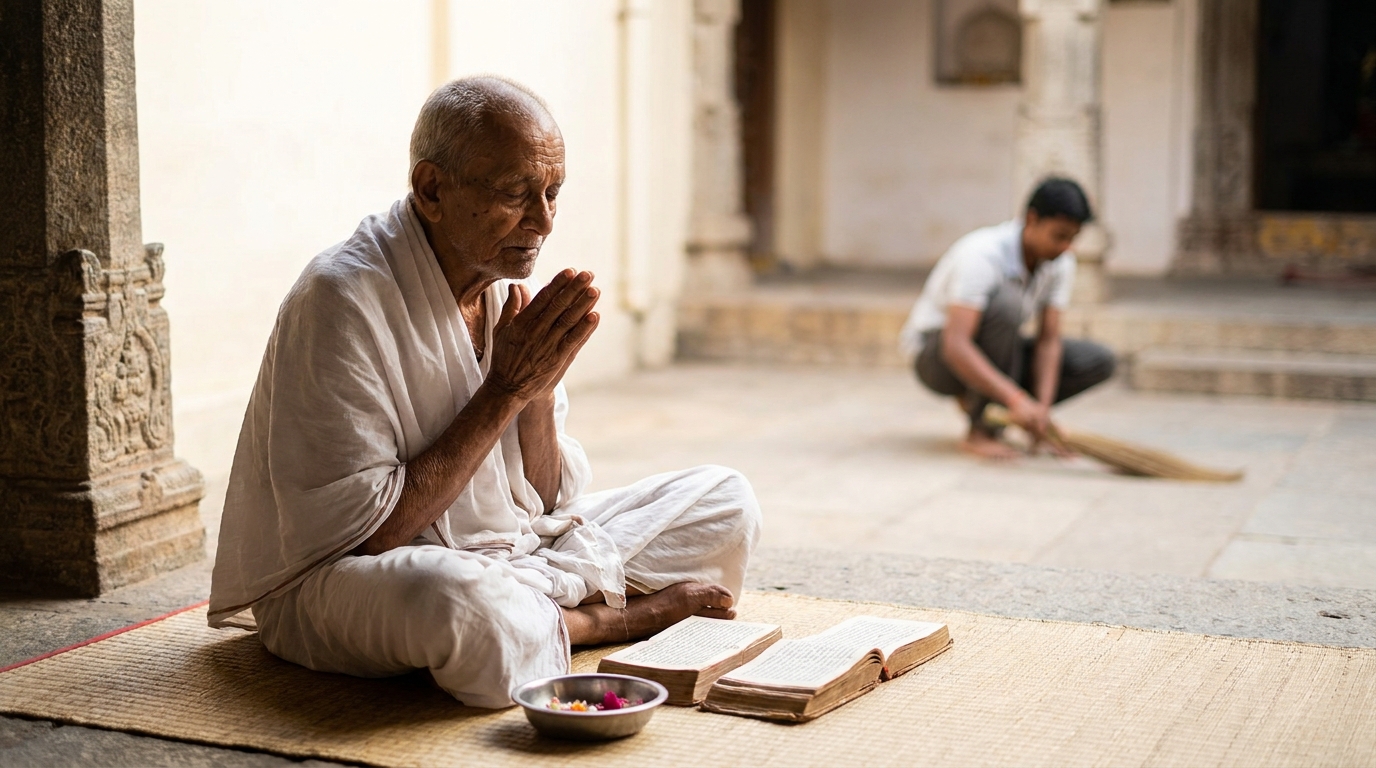
Many spiritual paths emphasize discipline, knowledge, meditation, or moral purification. Bhakti includes all of these, but its center is relationship.
In Bhakti Yoga, God is not only an abstract force or distant creator. God is the loving source of all existence, present in every heart and accessible through sincere devotion. The soul is not meant to be isolated, dry, or self-sufficient. The soul is meant to love and be loved.
This is why Bhakti can feel so natural. We already know something about love. We love our families, friends, communities, teachers, pets, and the earth. We sacrifice for those we care about. We sing for love, cry for love, work for love, and hope for love.
Bhakti teaches that all love has its origin in God. Every loving exchange in this world is a small reflection of the infinite love between the soul and the Divine.
Devotion Begins Where We Are
A person does not need to be perfect to begin Bhakti. In fact, Bhakti often begins when we honestly admit that we are not perfect.
We may come with doubts, wounds, habits, questions, and mixed motivations. We may feel spiritually unqualified. We may not understand Sanskrit, scripture, philosophy, or ritual. We may not even know what we believe about God.
Still, we can begin.
We can chant one holy name. We can offer one prayer. We can bow our head with sincerity. We can serve someone with compassion. We can say, “Dear God, if You are there, please guide me.”
Bhakti is wonderfully merciful because it is based on sincerity, not spiritual status. The Bhagavad-gita, one of the central scriptures of Bhakti Yoga, says that even a simple offering—a leaf, a flower, fruit, or water—can be accepted by God when offered with love and devotion.
This means the smallest act can become sacred when the heart is involved.
The Shift From Taking to Offering
Much of ordinary life trains us to ask, “What can I get?” Bhakti gently transforms this into, “What can I offer?”
This does not mean we reject our needs or pretend we have no pain. Rather, we learn to bring everything into relationship with God. Our work becomes an offering. Our food becomes an offering. Our speech becomes an offering. Our home becomes a place of remembrance. Our relationships become opportunities to practice patience, forgiveness, and kindness.
The highest goal of Bhakti is not escape from life, but the sanctification of life. Every moment becomes a chance to remember, love, and serve.
Understanding the Highest Goal: Prema, Pure Love of God
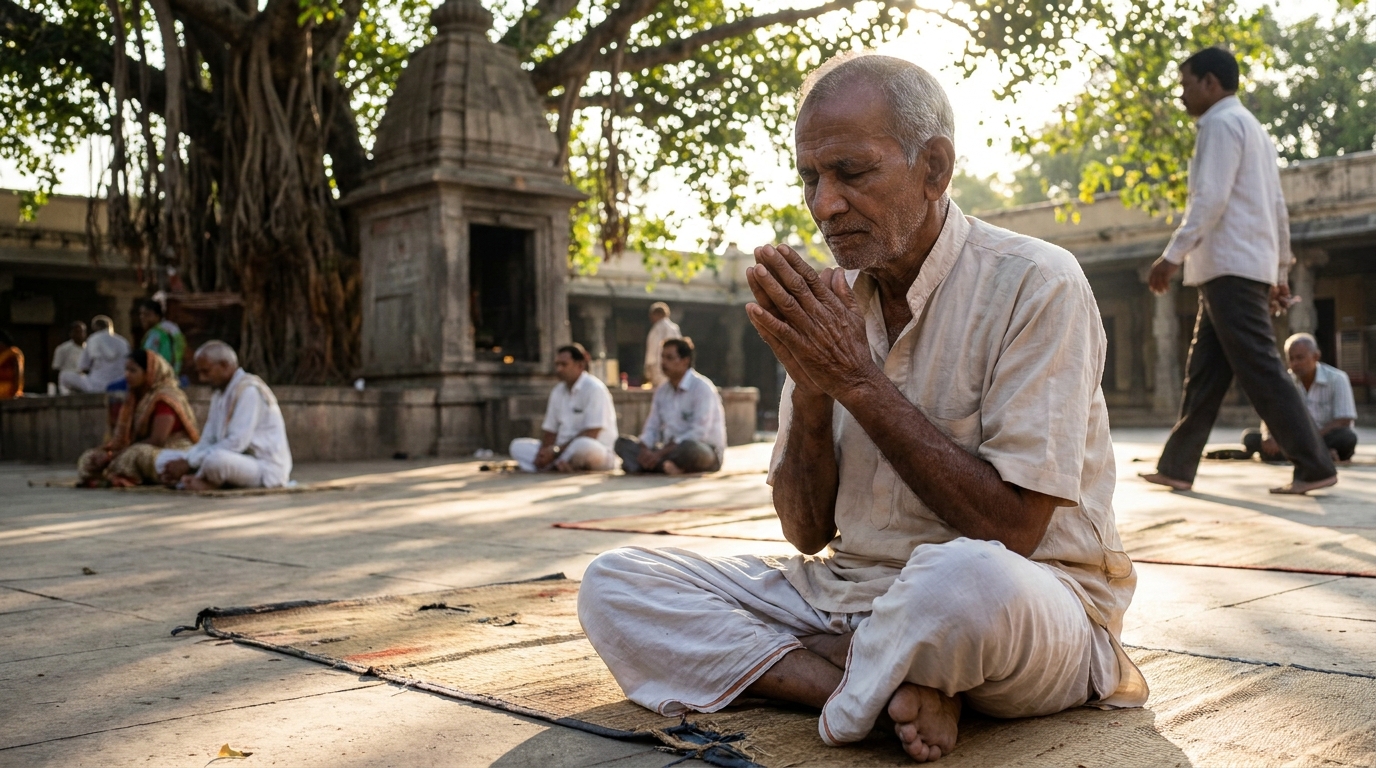
The ultimate purpose of Bhakti is prema—pure love of God.
This love is described throughout Bhakti scriptures as the mature fruit of spiritual life. It is not forced. It is not artificial. It awakens naturally when the heart is purified through devotion.
The Srimad-Bhagavatam, a beloved Bhakti scripture, teaches that the highest spiritual practice is that which awakens loving devotion to the Supreme Lord. It also explains that this devotion should be ahaituki and apratihata.
Ahaituki means “without selfish motive.” Apratihata means “uninterrupted” or “not blocked by circumstances.”
In simple language, pure devotion is love that does not depend on external conditions. It is not, “I will love God if my life goes the way I want.” It is, “I want to love and serve God in all circumstances, because that love is my true life.”
This is a very high state. Most of us are not there yet. And that is okay. Bhakti is a path. We grow step by step.
Pure Love Is Not Selfish Desire
In the beginning, we may approach God with many desires.
We may pray for protection, healing, clarity, success, forgiveness, relief, or comfort. The Bhagavad-gita honors this beginning. Krishna says that people come to Him for different reasons: distress, curiosity, desire for prosperity, or a sincere search for truth.
Bhakti does not shame these motivations. A child may first approach a parent for food, shelter, or help. But over time, the relationship deepens. The child begins to love the parent not only for gifts, but for who the parent is.
Similarly, as devotion matures, our prayer changes.
At first we may say, “God, please give me what I want.”
Later we may say, “God, please help me want what is good.”
Eventually the heart longs to say, “God, please let me love You and serve You. Let my life become pleasing to You.”
This is the journey from self-centered spirituality to love-centered spirituality.
Pure Love Is Personal and Alive
Prema is not merely calmness or emptiness. It is full of life.
In Bhakti tradition, the soul’s love for God can be expressed in many sacred moods: reverence, service, friendship, parental affection, and intimate love. These are not material emotions projected onto God. Rather, our purest human emotions are reflections of eternal spiritual relationships.
The great saints of Bhakti speak of God as infinitely majestic and yet wonderfully approachable. Krishna may be worshiped as the Supreme Lord of all universes, and also loved as the playful cowherd boy of Vrindavan. Vrindavan is the sacred land in India where Krishna’s intimate pastimes of love are celebrated.
This teaches us something profound: the highest truth is not cold or impersonal. The highest truth is loving, beautiful, relational, and full of sweetness.
Discover a wealth of knowledge by exploring our insightful articles. Our articles cover a wide range of topics to inspire and educate. Stay informed and engaged by reading our latest articles.
Liberation Is Precious, But Love Goes Further
Many spiritual seekers think the final goal is liberation. In Sanskrit, liberation is called moksha or mukti. It means freedom from material bondage, freedom from repeated suffering, and freedom from the false ego—the mistaken identity that says, “I am only this body, this mind, this story.”
Bhakti deeply respects liberation. To be free from illusion, selfishness, and suffering is a great blessing.
But Bhakti scriptures reveal that love goes even further.
The highest devotees do not desire liberation for its own sake. They desire loving service. Why? Because the soul is not satisfied merely by freedom from suffering. The soul is satisfied by positive loving relationship with God.
Imagine a person released from prison. Freedom is wonderful. But what comes next? The person still needs home, love, purpose, and belonging. In the same way, liberation removes bondage, but prema gives the soul its true home.
Freedom From Ego Opens the Door to Service
The ego wants to be the center. It wants recognition, control, praise, and security. It fears being overlooked. It compares itself constantly to others.
Bhakti softens this ego by teaching us to place God at the center.
This is not self-hatred. It is healing. When God is at the center, we do not have to carry the impossible burden of being the center of everything. We become free to serve, love, forgive, and grow.
The Bhagavad-gita teaches that the wise person sees with equal vision. Such a person recognizes the spiritual nature within all beings. This vision naturally leads to compassion.
When we understand that every living being is connected to God, service becomes natural. Feeding someone, listening to someone, caring for the earth, protecting animals, encouraging a friend, or chanting for the welfare of others—all of this becomes part of devotion.
The Devotee’s Prayer
The mood of pure Bhakti is beautifully expressed in the prayers of Sri Chaitanya Mahaprabhu, a great saint and divine teacher in the Bhakti tradition who spread the chanting of God’s names with deep compassion.
In one prayer, He says:
“O Lord, I do not want wealth, followers, beautiful companions, or even liberation. I only want causeless devotion to You, birth after birth.”
This prayer reveals the highest goal of Bhakti with great simplicity.
The devotee is not bargaining with God. The devotee is not saying, “I will serve You if You reward me.” The devotee is saying, “Let me love You always. That is enough.”
This is the heart of Bhakti.
The Path to the Highest Goal Is Practical and Daily
Although the highest goal of Bhakti is profound, the path is very practical. We do not need to wait for a perfect life or a quiet monastery to begin. Bhakti can be practiced in a busy home, on the way to work, in a hospital room, at school, in the kitchen, in grief, in joy, and in ordinary moments.
The practices of Bhakti are simple, but they carry deep spiritual power because they connect us directly with God.
Chanting the Holy Names
Chanting is central to Bhakti Yoga. In Sanskrit, chanting sacred names of God is called nama-sankirtana when done together in community, and japa when repeated softly or privately, often on prayer beads.
The holy name is not considered a symbol only. Bhakti scriptures teach that God is personally present in His names. When we chant with sincerity, we are associating with the Divine.
One of the most well-known Bhakti mantras is the maha-mantra, meaning “the great mantra”:
Hare Krishna Hare Krishna
Krishna Krishna Hare Hare
Hare Rama Hare Rama
Rama Rama Hare Hare
Hare addresses the divine energy of God. Krishna means the all-attractive Lord. Rama means the source of spiritual joy.
A simple way to understand this mantra is as a prayer: “O Lord, O divine energy of the Lord, please engage me in loving service.”
Chanting cleanses the heart. It steadies the mind. It brings comfort during difficulty. It awakens devotion little by little. Even if the mind wanders, the sound itself is purifying. We gently return, again and again, like bringing a child back into a loving embrace.
Prayer as Honest Conversation
Prayer in Bhakti does not need to be formal or impressive. It can be deeply honest.
We can pray with gratitude: “Thank You for this day.”
We can pray with pain: “Please help me. I feel lost.”
We can pray with surrender: “Please guide my steps.”
We can pray with longing: “Let me remember You.”
Prayer opens the heart. It reminds us that we are not alone. The Supreme Lord, known in the Bhagavad-gita as the friend of all living beings, is present within the heart as Paramatma, the indwelling guide.
When we pray sincerely, we begin to notice guidance—in scripture, in conscience, in spiritual teachers, in life lessons, and in the quiet strengthening of the heart.
Service as Love in Action
In Bhakti, service is called seva. Seva means loving service offered for the pleasure of God.
Service may include helping in a temple or spiritual community, cooking and offering food to God, sharing wisdom, cleaning, singing, teaching, caring for others, or using one’s talents in a devotional way.
But seva is not limited to religious spaces. A parent caring for a child can practice seva. A nurse comforting a patient can practice seva. An artist creating with prayer can practice seva. A person doing honest work with humility can practice seva.
The key is consciousness. We ask, “How can this action become an offering?”
When service is connected to devotion, it purifies the heart from selfishness and brings joy that ordinary achievement cannot provide.
The Role of Scripture, Saints, and Community
The path of Bhakti is personal, but we do not walk it alone.
Scripture gives us wisdom. Saints give us example. Community gives us encouragement. Together, they help us stay steady when the mind becomes distracted or the heart becomes discouraged.
Scripture as a Lamp for the Heart
Authentic Bhakti scriptures are like lamps on the path. They do not exist simply for debate or information. They are meant to transform the heart.
The Bhagavad-gita teaches devotion through the loving dialogue between Krishna and Arjuna, a warrior facing confusion and crisis. Arjuna is overwhelmed on the battlefield, unsure of what is right. Krishna does not reject him for his weakness. Instead, He guides him patiently toward wisdom, duty, surrender, and devotion.
This is deeply practical for us. We also face inner battlefields—fear, grief, temptation, responsibility, and uncertainty. The Gita teaches us to act with integrity, remember God, offer our work, and take shelter in divine guidance.
The Srimad-Bhagavatam expands this devotion through stories, prayers, and teachings about the Lord and His devotees. It repeatedly shows that God is conquered not by power, wealth, or scholarship, but by love.
The Bhakti-rasamrita-sindhu, written by Srila Rupa Goswami, carefully explains the science of devotion—how devotion begins, grows, matures, and becomes pure love. It helps us understand that Bhakti has stages, and that sincere practice gradually awakens deep spiritual emotion.
Saints Show What Love Looks Like
Saintly devotees make Bhakti visible.
They show us humility, compassion, steadiness, joy, and surrender. They remind us that the goal is real because they live something of it.
In the Bhakti tradition, saints like Prahlada, Mirabai, Tukaram, the Six Goswamis of Vrindavan, Srila Prabhupada, and many others are honored because they centered their lives on loving God and serving others.
Their lives were not always easy. Many faced hardship, misunderstanding, opposition, or sacrifice. Yet their devotion deepened. This teaches us that Bhakti is not dependent on comfort. Love can grow even in struggle.
Community Helps Us Continue
Spiritual community is called sanga, meaning association. Good association supports the heart.
When we chant together, hear scripture together, honor sacred food together, and serve together, our faith becomes nourished. We remember what matters. We receive encouragement from others who are also trying sincerely.
Community also teaches humility. We learn patience, forgiveness, cooperation, and respect. No community is perfect because people are growing. But a sincere devotional community can become a sacred place of healing and transformation.
At The Bhakti House, the spirit of community is simple: everyone is welcome to come closer to God through chanting, prayer, wisdom, service, and loving connection.
Obstacles on the Path and How Bhakti Transforms Them
Every sincere seeker meets obstacles. This is not a sign of failure. It is part of purification.
Bhakti is gentle, but it is also honest. It brings our attachments, fears, pride, and wounds into the light so they can be healed.
Distraction and the Wandering Mind
One common obstacle is distraction. We sit to chant, and the mind runs everywhere. We try to pray, and thoughts scatter.
Bhakti teaches patience. The mind has been wandering for a long time, so we should not expect instant stillness. We simply return to the holy name. We return to prayer. We return to service.
Each return is an offering.
Even if our chanting feels imperfect, it is still valuable. The practice itself gradually changes the heart. Like water shaping stone over time, the holy name works deeply and faithfully.
Doubt and Spiritual Honesty
Doubt may also arise. Is God real? Does chanting matter? Am I making progress? Can someone like me truly become devoted?
Bhakti does not require pretending. Honest questions can become part of the path when held with sincerity and humility.
We can bring doubts to scripture, prayer, and wise devotees. We can ask for guidance. We can keep practicing gently while understanding unfolds.
Faith in Bhakti is not blind denial of questions. It is a growing trust developed through experience, association, and grace.
Pride and the Need for Humility
Pride can enter spiritual life quietly. We may begin to think, “I know more,” “I practice better,” or “I am more advanced.”
Bhakti protects us through humility.
Sri Chaitanya Mahaprabhu taught that one should chant the holy name in a humble state of mind, more tolerant than a tree, ready to offer respect to others without demanding honor for oneself. This teaching is not meant to make us feel small in a harmful way. It is meant to free us from the heavy armor of ego.
Humility means living in truth: everything we have is a gift, and every soul is dear to God.
Pain and the Mystery of Grace
Suffering can challenge devotion. When life hurts, we may wonder why God allows pain.
Bhakti does not always give quick answers, but it offers shelter. It teaches that God is with us in suffering, not absent from it. The Lord in the heart knows our pain completely. He can transform even difficult experiences into steps toward wisdom, compassion, and surrender.
Sometimes our deepest prayers are born from broken places. Sometimes tears water the seed of devotion.
This does not mean we should glorify suffering or avoid seeking help. Bhakti supports compassionate care, emotional healing, honest friendship, and wise action. It simply reminds us that no pain is beyond the reach of divine love.
Living for the Pleasure of God
As Bhakti matures, our guiding question becomes: “What will please God?”
This is not a fearful question. It is a loving one.
When we love someone, we naturally want to bring them joy. A child draws a picture for a parent. A friend prepares a meal. A spouse speaks a kind word. Love wants to give.
In Bhakti, the devotee wants to offer the heart, the mind, the words, the actions, and the whole life to God.
Offering Food With Love
One beautiful daily practice is offering food to God before eating. In Sanskrit, sanctified food is called prasadam, meaning “mercy” or “grace.”
The practice is simple. We prepare vegetarian food with care and cleanliness. We place it before a picture or form of the Lord. We pray, “Dear Lord, please accept this offering.” Then we honor the food as prasadam.
This transforms eating into worship. It reminds us that food is a gift—from the earth, from the labor of many beings, and ultimately from God. Prasadam nourishes both body and soul.
Work as Worship
Many people wonder how to practice spirituality while living active lives. The Bhagavad-gita gives a powerful answer: offer your work to God.
This does not always mean changing jobs. It means changing consciousness.
A teacher can teach as service. A business owner can act with honesty and generosity. A student can study with discipline and gratitude. A caregiver can serve with patience. A musician can sing for upliftment. A leader can lead with humility.
When work is offered to God, it becomes purified. We still act responsibly, but we are less controlled by ego, anxiety, and the hunger for praise.
Relationships as Sacred Ground
Bhakti also transforms relationships.
If every living being is part of God, then every interaction matters. Our words can heal or harm. Our listening can become service. Our forgiveness can become devotion. Our boundaries can become expressions of wisdom and care.
Family life, friendship, marriage, community, and even conflict can become sacred ground for spiritual growth.
The highest goal of Bhakti is not to love God in isolation while neglecting others. Love of God naturally expands into compassion for all beings.
The Sweetness of Surrender
One of the most important words in Bhakti is surrender. In Sanskrit, surrender is called saranagati. It means taking shelter of God with trust.
Surrender can sound frightening if we imagine it as losing ourselves. But in Bhakti, surrender means returning to our true self. It means letting go of the illusion that we are separate from God or independent controllers of life.
Krishna concludes the Bhagavad-gita with a deeply loving invitation: “Abandon all varieties of separate duty and surrender unto Me. I will protect you. Do not fear.”
This is not a command of domination. It is the call of divine love: “Come home. Trust Me. You are not alone.”
Surrender Happens Step by Step
Most of us cannot surrender everything at once. Bhakti allows gradual growth.
Today we may surrender a few minutes to chanting. Tomorrow we may surrender a harmful habit. Later we may surrender resentment, pride, fear, or the need to control outcomes.
Each act of surrender brings freedom.
We begin to understand: God is not taking from us. God is freeing us from what keeps us from love.
Trusting God’s Timing
Surrender also means trusting divine timing.
We may want quick transformation. We may want immediate answers. But spiritual growth is often organic. Seeds grow in hidden ways before anything appears above the soil.
Our task is to water the seed of devotion through hearing, chanting, prayer, service, and good association. God gives the growth.
This helps us remain patient and hopeful. Even if progress feels slow, sincere Bhakti is never wasted.
The Highest Goal Is Available to Everyone
One of the most beautiful truths of Bhakti is that divine love is not reserved for a spiritual elite.
The holy name can be chanted by anyone. Prayer can be offered by anyone. Service can be done by anyone. God’s mercy can reach anyone.
Bhakti welcomes the scholar and the beginner, the confident and the uncertain, the joyful and the grieving, the lifelong practitioner and the person taking their very first step. It welcomes people of all backgrounds, cultures, ages, and life stories.
The qualification is sincerity.
The Soul’s Original Nature
Bhakti teaches that the soul is eternal, conscious, and full of potential love. We are not merely bodies. We are not our mistakes. We are not our wounds. We are not the labels the world gives us.
Our deepest identity is spiritual.
In Sanskrit, the soul is called atma. The atma is part of God, meant for loving relationship with God. Just as a spark belongs to fire and a drop belongs to the ocean, the soul belongs to the Divine.
The highest goal of Bhakti is not to become something unnatural. It is to awaken what is already within us.
Grace Is Greater Than Our Limitations
We may feel unqualified. We may think, “My mind is too restless,” “My past is too heavy,” or “My devotion is too small.”
But Bhakti is carried by grace.
Grace does not mean we do nothing. It means our small efforts are met by God’s great mercy. We take one step, and God helps us take the next. We offer one sincere chant, one honest prayer, one act of service, and the path opens.
The holy name is especially merciful because it meets us wherever we are. We do not need wealth, status, education, or perfect circumstances. We can simply begin.
Taking One Sincere Step Toward God
The highest goal of Bhakti is pure love of God—prema. It is the soul’s ultimate fulfillment, beyond selfish desire, beyond fear, beyond even the desire for liberation. It is loving relationship with the Supreme Person, lived through chanting, prayer, service, remembrance, humility, and compassion.
This goal may sound very high, and it is. But the path begins simply.
Chant one mantra with attention.
Offer one prayer from the heart.
Read one verse of sacred wisdom.
Serve one person with kindness.
Offer one meal, one task, one day to God.
Sit with others who are seeking truth and love.
Bhakti does not ask us to become perfect before we begin. It invites us to begin so that love can gradually purify and awaken us.
Wherever you are coming from, whatever your background, and however near or far you may feel from God, you are welcome. The door of devotion is open. The holy name is available. The Lord in the heart is patiently waiting.
May we each take one sincere step toward God today, trusting that even the smallest offering made with love is precious on the path of Bhakti.
FAQs
What is the highest goal of Bhakti?
The highest goal of Bhakti is to develop an intense and loving relationship with the divine, ultimately leading to self-realization and union with the divine.
How is the highest goal of Bhakti different from other spiritual paths?
The highest goal of Bhakti focuses on developing a deep emotional connection with the divine through love and devotion, whereas other spiritual paths may emphasize knowledge, meditation, or self-discipline.
What are some common practices associated with achieving the highest goal of Bhakti?
Common practices include chanting mantras, singing devotional songs, performing rituals, attending religious gatherings, and engaging in acts of service and charity.
Can anyone achieve the highest goal of Bhakti?
Yes, anyone can achieve the highest goal of Bhakti regardless of their background, beliefs, or circumstances. It is open to all who approach it with sincerity and devotion.
What are some benefits of striving for the highest goal of Bhakti?
Benefits include inner peace, spiritual growth, a sense of connection with the divine and others, increased compassion, and ultimately liberation from the cycle of birth and death.

