
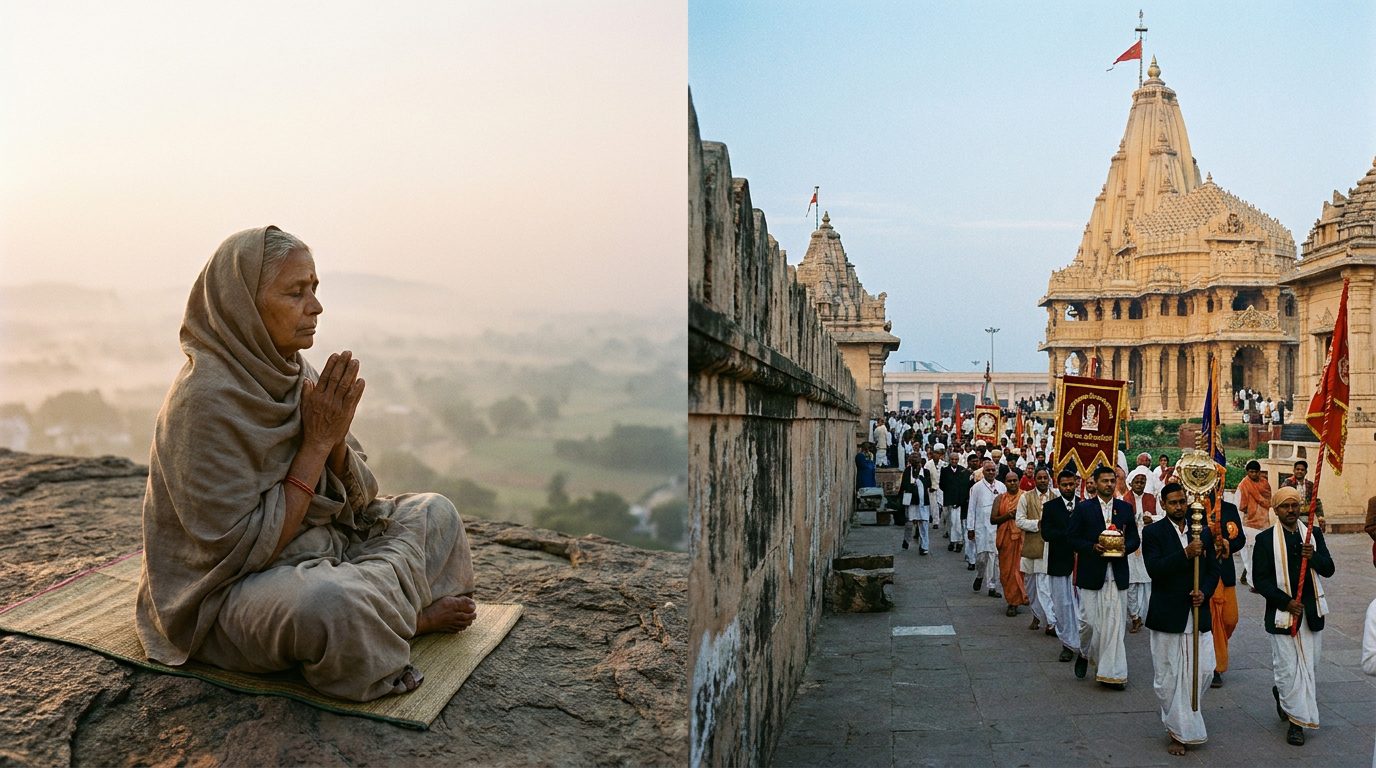
A Gentle Beginning: Why This Question Matters
Many sincere people ask, “What is the difference between Bhakti and religion?” Sometimes this question comes from curiosity. Sometimes it comes from pain. A person may have grown up with religion but felt judged, pressured, or disconnected from the heart. Another person may love God deeply but feel unsure where they belong. Someone else may be spiritually open, but not tied to any formal tradition.
Wherever you are coming from, you are welcome here.
In simple words, religion often refers to a system of beliefs, practices, community, identity, and sacred duties. Bhakti, on the other hand, means loving devotion to God. The Sanskrit word bhakti comes from a root that means “to share,” “to serve,” or “to be lovingly connected.” Bhakti is not merely an idea about God. It is a relationship with God.
Religion can give us structure. Bhakti gives that structure a heart.
Faith can help us believe. Devotion helps us love.
A person may be religious and full of Bhakti. A person may also practice Bhakti without strongly identifying with a particular religious label. The heart of Bhakti Yoga is not about proving who is “in” or “out.” It is about awakening love for the Divine, whom many Bhakti traditions lovingly call Krishna, Rama, Vishnu, Radha, the Supreme Lord, or simply God.
Bhakti Yoga is a practical path. It invites us to chant, pray, serve, listen, remember, cook with love, offer our daily work, and gradually soften the heart. It is not limited to a temple, church, mosque, synagogue, monastery, yoga studio, or home altar. Bhakti can be lived wherever there is sincerity.
Understanding Religion with Respect and Clarity
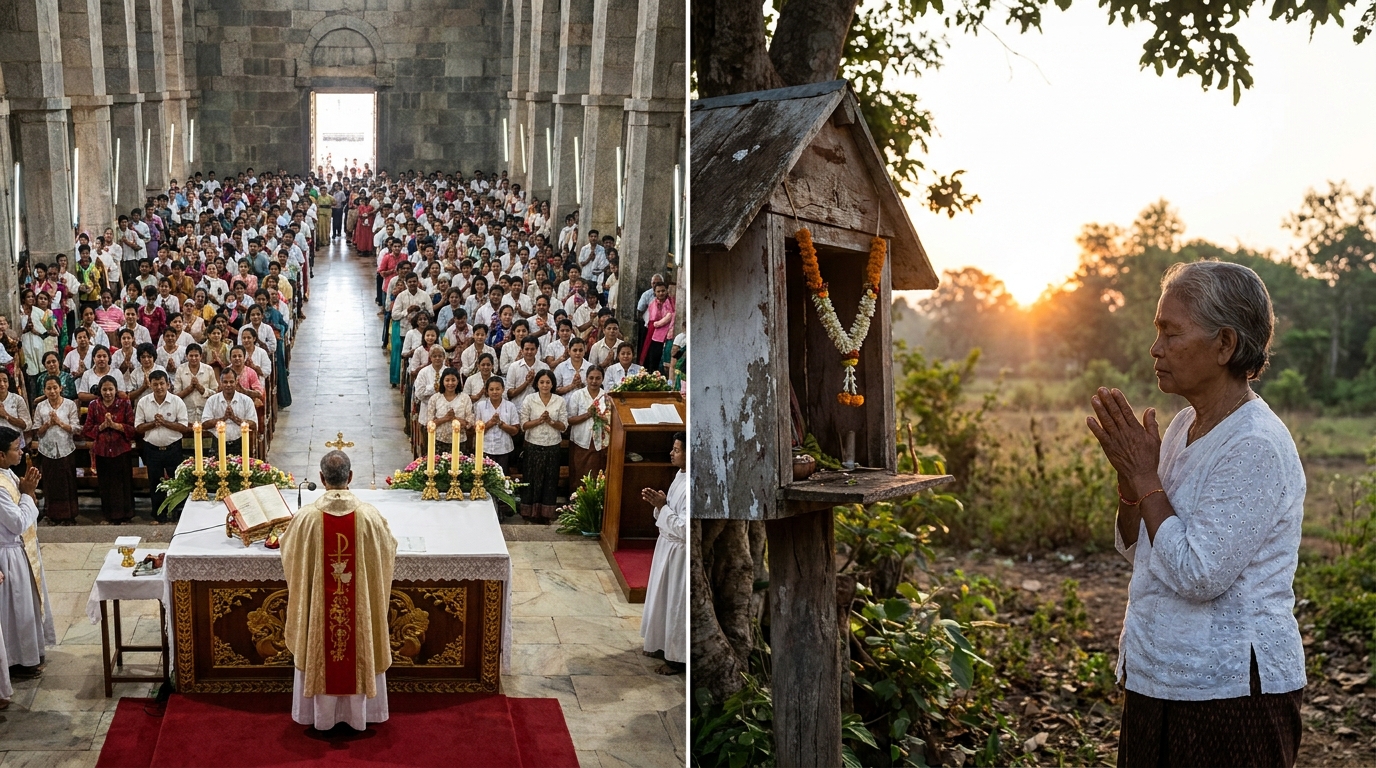
Religion is a sacred word for many people. For others, it carries complicated emotions. To understand the difference between Bhakti and religion, we should first look at religion with humility, not criticism.
At its best, religion helps human beings remember what is holy. It teaches moral values, offers sacred stories, gives rituals for important life moments, and creates community. Religion can remind us that life is more than material success. It can help us honor birth, marriage, death, grief, celebration, service, and the mystery of existence.
Many of the world’s religions have produced saints, mystics, poets, healers, servants, and lovers of God. So Bhakti is not “against religion.” In fact, Bhakti often blossoms beautifully within religious traditions.
The challenge is that religion, like any human institution, can sometimes become external. It can become focused on labels, rules, social status, fear, or cultural identity. When religion loses love, it can feel dry. When religion loses humility, it can become prideful. When religion loses compassion, it can wound the very people it was meant to serve.
Bhakti gently brings us back to the heart.
Religion as a Map, Not the Destination
A map is helpful when we are traveling. It shows us roads, directions, and landmarks. But a map is not the same as arriving at the destination.
In the same way, religious teachings, rituals, communities, and scriptures can guide us toward God. They are precious maps. But the destination is a living relationship with the Divine.
Bhakti does not throw away the map. Bhakti asks us to use the map to actually walk toward love.
For example, lighting a candle, singing a hymn, bowing before an altar, attending a service, or reciting a prayer can all be meaningful religious acts. But Bhakti asks: Is my heart present? Am I remembering God with love? Am I becoming kinder? Am I learning to serve?
If the answer is yes, religion and Bhakti are working together beautifully.
When Religion Becomes Identity Alone
Sometimes religion becomes mainly about identity: “I am this,” “you are that,” “our group is right,” “your group is wrong.” Identity can provide belonging, but it can also create separation if we forget the deeper purpose.
Bhakti reminds us that every soul is beloved by God. In the Bhagavad Gita, one of the most important Bhakti scriptures, Krishna teaches that He is the source of all beings and that all sincere spiritual paths ultimately seek Him, even if people understand Him in different ways.
This does not mean all teachings are exactly the same. Traditions have real differences. But Bhakti invites us to meet those differences with humility, not hostility. A devotional heart does not need to insult another person’s path in order to love its own.
Understanding Bhakti as the Path of Loving Devotion
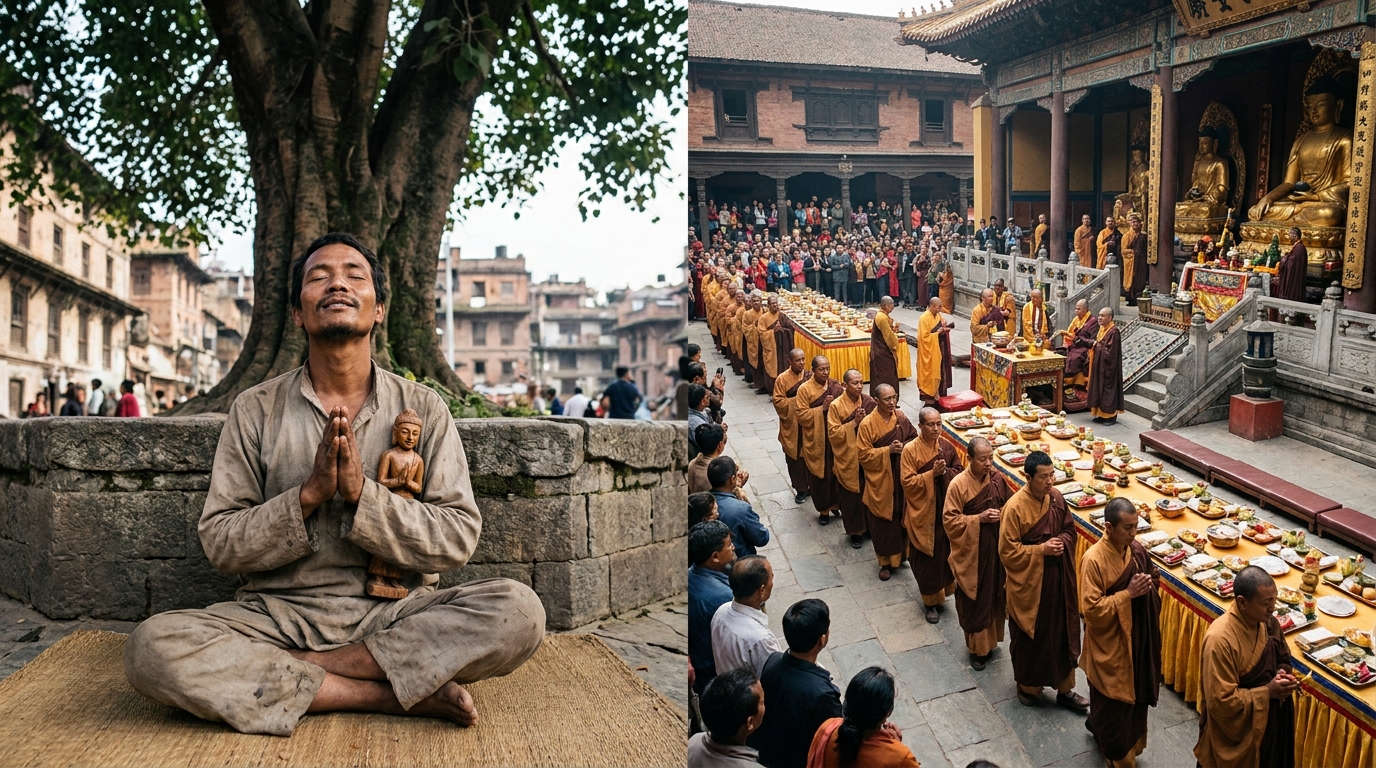
Bhakti Yoga is often called the yoga of love. The word yoga means “connection” or “union.” So Bhakti Yoga means the path of connecting with God through love and devotion.
This love is not sentimental only. It is active. It is lived. It becomes chanting, prayer, service, compassion, forgiveness, study, surrender, and remembrance. Bhakti is love in motion.
In the Narada Bhakti Sutra, a treasured text on devotion, Bhakti is described as supreme love for God. This love is not based on what we can get from God. It is not a business exchange. It is the soul’s natural affection awakening again.
Bhakti teaches that we are not merely bodies or minds. We are spiritual beings, souls, with an eternal relationship with the Divine. Our deepest hunger is not only for pleasure, success, approval, or comfort. Our deepest hunger is for love—pure love, divine love, love that does not disappear.
Bhakti Is Personal
One of the beautiful qualities of Bhakti is that it sees the Divine as personal. God is not only a distant force, law, or energy. God is the supreme beloved, the source of all beauty, compassion, wisdom, and relationship.
In many Bhakti traditions, Krishna is worshiped as the all-attractive Supreme Person. The name Krishna means “the one who attracts everyone.” Devotees may also worship Rama, Narayana, Vishnu, Radha, Sita, Lakshmi, or other sacred forms of the Divine. These forms are not seen as imaginary symbols, but as ways God lovingly reveals Himself to the heart.
For someone new to Bhakti, this may feel different. That is okay. Bhakti does not demand that we force belief. It invites us to begin with sincerity: “God, if You are there, please guide me. Please help me know You. Please teach me how to love.”
That simple prayer is already Bhakti.
Bhakti Is Practical, Not Abstract
Bhakti is not only philosophy. It is something we practice in daily life.
We can chant sacred names, such as the Hare Krishna mantra:
*Hare Krishna, Hare Krishna, Krishna Krishna, Hare Hare
Hare Rama, Hare Rama, Rama Rama, Hare Hare*
In this mantra, Hare calls out to the divine energy of love, often understood as Radha, the compassionate feminine aspect of God. Krishna means the all-attractive Lord. Rama means the source of spiritual joy. The mantra is a prayer: “O Lord, O divine energy of the Lord, please engage me in loving service.”
We can also pray in our own words. We can offer our food before eating. We can read sacred wisdom. We can serve others. We can sing. We can sit quietly and remember God. We can try to act with kindness in our families, workplaces, and communities.
Bhakti grows through small sincere steps.
I recently discovered a website with insightful articles on mindfulness and meditation. The articles provide practical tips for incorporating spirituality into daily life. If you’re interested in personal growth, these articles are a must-read.
Devotion vs. Faith: How They Are Related but Not the Same
Faith and devotion are deeply connected, but they are not identical.
Faith is trust. It is the willingness to believe, to open, to take a step even when we do not see the whole path. Faith may begin as a quiet feeling: “There is something more.” Or, “God is real.” Or, “This practice is helping me.” Faith gives us courage to begin.
Devotion is love expressed through relationship. Devotion includes faith, but it goes further. Devotion says, “I not only believe in God; I want to love God. I want to serve. I want my life to become an offering.”
A person may have faith that God exists, but not yet feel much devotion. That is normal. Devotion develops through practice, grace, and sincere association with spiritually minded people.
A person may also feel devotion before they can explain their beliefs clearly. They may hear chanting and cry. They may feel peace while praying. They may feel drawn to serve. The heart often understands before the intellect catches up.
Faith Can Be a Doorway
Faith is like opening the door. Without some faith, we may never begin spiritual practice. We may remain outside, analyzing the house but never entering.
In the Bhagavad Gita 4.39, Krishna says that a faithful person who is devoted and self-controlled attains spiritual knowledge and peace. This is a practical teaching. Faith does not mean blind belief. It means trusting enough to practice sincerely.
For example, if someone chants for ten minutes each morning, they may not immediately understand everything about Bhakti philosophy. But if they continue with sincerity, the heart becomes clearer. Peace begins to grow. The mind becomes softer. The person starts to feel, “This is real. This is nourishing me.”
Faith matures through experience.
Devotion Is the Heart’s Offering
Devotion is not measured by outer appearance. It is measured by sincerity.
Someone may wear religious clothing, know many scriptures, or perform elaborate rituals. These can be beautiful when offered with love. But Bhakti asks what is happening inside. Is there humility? Is there gratitude? Is there a desire to please God? Is there compassion toward others?
In the Bhagavad Gita 9.26, Krishna says:
“If one offers Me with love and devotion a leaf, a flower, a fruit, or water, I accept it.”
This verse is one of the sweetest teachings in Bhakti Yoga. God does not say, “Offer Me something expensive.” He does not say, “Offer Me only if you are perfect.” He says that even a simple offering—a leaf, a flower, a fruit, or water—is accepted when offered with love.
This is the difference between external religion and living devotion. The outer gift may be small, but the love makes it sacred.
The Role of Scriptures in Bhakti and Religion
Both religion and Bhakti may include scriptures, but they approach them in a particular spirit.
Religion may study scripture for doctrine, law, history, or identity. These are important. Bhakti studies scripture to awaken love for God and learn how to live in that love.
Bhakti scriptures are not meant to remain on the shelf or only in the intellect. They are meant to enter the heart. They teach us how to see the world, how to remember God, how to serve others, and how to transform ordinary life into sacred life.
The Bhagavad Gita: Devotion in the Middle of Life
The Bhagavad Gita is a conversation between Krishna and Arjuna on a battlefield. This setting is meaningful. Spiritual life is not only for peaceful retreats or perfect conditions. Arjuna is confused, overwhelmed, and responsible for difficult decisions. In that moment, Krishna teaches him yoga, wisdom, action, meditation, and devotion.
One of the central teachings of the Gita is that we can offer our work to God. In 9.27, Krishna says that whatever we do, whatever we eat, whatever we offer or give away, and whatever austerity we perform should be done as an offering to Him.
This makes Bhakti very practical. A parent caring for a child can practice Bhakti. A student studying honestly can practice Bhakti. A nurse serving patients, an artist creating beauty, a cook preparing food, a friend listening with compassion—all can offer their actions to God.
Bhakti is not escape from life. It is the spiritualization of life.
The Srimad Bhagavatam: Hearing About God with Love
The Srimad Bhagavatam, also called the Bhagavata Purana, is a beloved scripture in the Bhakti tradition. It is filled with stories, prayers, songs, and teachings about the Lord and His devotees.
One important teaching of the Bhagavatam is that hearing about God purifies the heart. This is why Bhakti communities often gather for kirtan and satsang. Kirtan means devotional chanting, usually sung together. Satsang means gathering in the company of truth or spiritually sincere people.
When we hear sacred stories, chant holy names, and sit with people who are trying to love God, something changes within us. The heart remembers what it was made for.
The Narada Bhakti Sutra: Love Beyond Motivation
The Narada Bhakti Sutra teaches that pure Bhakti is love without selfish motive. This is not easy for most of us in the beginning. Often we approach God because we need help, healing, peace, protection, or answers. That is not wrong. God is compassionate, and we can bring everything to Him.
But as devotion matures, we begin to love God not only for what He gives, but for who He is.
This is a tender journey. We do not need to pretend to be advanced. We can begin honestly: “Lord, I have desires. I have fears. I have confusion. But please help me love You more purely.”
That honesty is pleasing to God.
Ritual, Rules, and Relationship: Finding the Living Center
One of the most important differences between Bhakti and religion is how we understand rules and rituals.
Religion often includes rules: what to eat, how to pray, when to gather, how to dress, what to avoid, how to worship. Bhakti traditions also have practices and guidelines. But in Bhakti, the purpose of rules is to support loving remembrance of God.
Rules are not meant to make us proud. They are meant to help us become free.
Rituals are not meant to be empty performance. They are meant to engage the body, mind, senses, and heart in devotion.
When Ritual Becomes an Expression of Love
Imagine someone making tea for a beloved guest. They choose the cup carefully. They boil the water, prepare the leaves, and serve with attention. The outer action matters because love is present.
In Bhakti, offering incense, flowers, food, lamps, songs, or prayers can be like this. The ritual gives form to affection. It helps us remember: “God is not an abstract idea to me. God is my beloved Lord. Let me serve with care.”
Even simple rituals can carry deep meaning. Placing a flower on an altar, bowing before a sacred image, lighting a candle, or singing one mantra can be a way of saying, “I remember You. I love You. Please accept this small offering.”
When Rules Need Compassion
Spiritual guidelines can help purify the heart, but they must be held with compassion. People come to Bhakti from many backgrounds. Some are new to chanting. Some are healing from trauma. Some are raising families, working long hours, or carrying grief. Some have practiced for years. Some are just beginning.
Bhakti does not ask us to compare ourselves harshly with others. It asks us to take the next sincere step.
A guideline may be ideal, but growth is gradual. The heart opens through encouragement, not shame. A loving teacher, community, or spiritual friend helps us move forward with honesty and hope.
The goal is not to become externally impressive. The goal is to become more loving, more humble, more connected to God.
Bhakti as a Universal Invitation
Bhakti is rooted in ancient Indian spiritual wisdom, especially the Vaishnava traditions that worship Vishnu, Krishna, Rama, and their divine forms. At the same time, the essence of Bhakti speaks to the universal human longing for divine love.
People of many backgrounds can appreciate Bhakti. A Christian may understand Bhakti as loving surrender to God. A Muslim may recognize the beauty of remembrance and service. A Jew may connect with prayer, sacred song, and covenantal love. A Buddhist may appreciate the softening of ego and cultivation of compassion. A person with no formal religion may find in Bhakti a direct and heartfelt way to approach the Divine.
This does not erase differences between traditions. Rather, it honors the sincerity of every seeker.
Bhakti is not about converting the heart into a social category. It is about turning the heart toward God.
The Holy Name Is Open to Everyone
One of the most generous teachings of Bhakti Yoga is the power of the holy name. The holy names of God are considered non-different from God Himself. This means that when we chant with sincerity, we are not merely making sound. We are entering divine presence.
The Hare Krishna mantra is especially loved in the Gaudiya Vaishnava tradition, a devotional lineage centered on Krishna and Radha. But Bhakti includes many names of God. The essential principle is to call out with love.
You do not need to be perfect to chant. You do not need to understand Sanskrit fully. You do not need to belong to a certain group. You can begin where you are.
Chant softly in the morning. Sing in the car. Repeat the name of God while walking. Join a kirtan if you feel drawn. Let the sound carry your heart.
Service Makes Love Tangible
In Bhakti, service is called seva. Seva means loving service offered for the pleasure of God and the upliftment of others.
Service may be cooking a meal, cleaning a temple, helping at a gathering, caring for a child, feeding someone hungry, listening to a friend, supporting a spiritual community, or using your talents in a meaningful way.
Seva protects Bhakti from becoming self-centered. It reminds us that love is not only something we feel. Love is something we give.
When service is offered to God, even ordinary actions become sacred. Washing dishes can become devotion. Sweeping the floor can become meditation. Preparing food can become prayer. Speaking kindly can become worship.
Common Misunderstandings About Bhakti and Religion
Because Bhakti and religion overlap, people sometimes misunderstand both. Let us gently clarify a few common confusions.
Bhakti Is Not Just Emotion
Bhakti includes emotion, but it is not merely emotionalism. True devotion is steadying. It shapes character. It teaches patience, humility, discipline, and compassion.
A person may feel deep joy in kirtan and still need to practice forgiveness at home. A person may cry during prayer and still need to speak truthfully, act responsibly, and serve others. Bhakti is not an escape into spiritual feelings. It is the transformation of the whole person.
In the Bhakti tradition, emotions are purified by being connected to God. Instead of being ruled by anger, envy, pride, or fear, we gradually learn to offer our heart to the Divine.
Religion Is Not Always Empty
Some people say, “I am spiritual, not religious,” because they have experienced religion as rigid or hurtful. That pain deserves compassion. At the same time, we should not assume all religion is empty.
For many people, religious tradition is a home. It carries sacred language, family memory, community support, and spiritual discipline. Religion can be a vessel that protects devotion across generations.
The problem is not structure itself. The problem is structure without love. Bhakti brings warmth into structure, like a lamp placed inside a house.
Bhakti Is Not Sectarian Pride
Bhakti is devotion to God, not pride in being a devotee. If someone thinks, “I am more spiritual than others because I chant,” they have missed the mood of Bhakti.
The great Bhakti saints often prayed for humility. Sri Chaitanya Mahaprabhu, a 15th-century saint and teacher who spread the chanting of Krishna’s names, taught that one should chant the holy name with humility, tolerance, and respect for others.
This is a powerful test of devotion. Is my practice making me softer? Am I becoming more patient? Do I honor others? Am I less controlled by ego?
Bhakti grows best in a humble heart.
How to Practice Bhakti in Everyday Life
Bhakti Yoga is wonderfully practical. You do not need to move to an ashram or change everything overnight. You can begin with simple daily practices that invite God into your life.
Begin with a Simple Prayer
Prayer is honest conversation with God. You can pray formally or spontaneously. You can speak aloud or silently. You can pray with beautiful words, or with tears, or with no words at all.
A simple Bhakti prayer might be:
“Dear Lord, please guide me today. Help me remember You. Help me serve with love. Please purify my heart.”
This kind of prayer opens the inner door. It does not require perfection. It only requires sincerity.
Chant a Little Every Day
Chanting is one of the most recommended practices in Bhakti Yoga, especially in this age when the mind is busy and distracted.
You might begin with five minutes a day. Chant the Hare Krishna mantra, or another name of God that is sacred to you. Use beads if helpful, or simply repeat the mantra while sitting quietly.
Do not worry if the mind wanders. Gently return to the sound. The practice itself is purifying. Over time, chanting becomes less like a task and more like taking shelter.
Offer Your Food
In Bhakti, food offered to God with love becomes prasadam, which means “mercy” or “grace.” The practice is simple. Before eating, pause and offer the food to God.
You might say:
“Dear Lord, thank You for this food. Please accept it with love. May it nourish me for Your service.”
If you have an altar or sacred image, you can place the food there for a few moments. If not, offer it in your heart. This practice turns eating into gratitude and reminds us that life is a gift.
Serve Someone with Devotional Intention
Choose one act of service each day and consciously offer it to God. It may be small: sending an encouraging message, cleaning a shared space, giving your full attention to someone, donating, cooking, volunteering, or helping without needing recognition.
Before serving, inwardly say, “May this be pleasing to You.”
This changes the quality of the action. Service becomes an offering, not a burden.
Read a Few Lines of Sacred Wisdom
Reading Bhakti scripture nourishes the mind and heart. You might read a few verses from the Bhagavad Gita, a story from the Srimad Bhagavatam, or teachings from Bhakti saints.
Read slowly. Ask, “How can I live this today?” One verse practiced sincerely is more powerful than many pages read with distraction.
Spiritual knowledge is meant to become spiritual life.
The Inner Signs of Growing Bhakti
How do we know if Bhakti is growing? Not by how spiritual we appear, but by how the heart is changing.
We may notice more gratitude. We may feel drawn to chant or pray. We may become less interested in harming others. We may recover more quickly from anger. We may feel compassion where we once felt judgment. We may want our work, relationships, and choices to be aligned with love.
Bhakti also reveals what needs healing. Sometimes when we begin spiritual practice, we become more aware of our pride, fear, envy, or restlessness. This is not failure. It is grace. When light enters a room, we see what needs cleaning.
God is patient. The path of devotion is not about instant perfection. It is about sincere turning, again and again.
Love Deepens Through Association
In Bhakti, spiritual community is very important. The Sanskrit word sadhu-sanga means association with saintly or sincere devotees. We become shaped by the company we keep.
When we spend time with people who chant, serve, study, and try to live with devotion, our own faith becomes stronger. We remember what matters. We feel encouraged. We learn by example.
A Bhakti community should be a place of welcome, humility, and spiritual growth. It should help people move closer to God, not make them feel small or excluded. Healthy spiritual association gives both guidance and compassion.
Growth Includes Both Joy and Surrender
Bhakti brings joy, but it also asks for surrender. Surrender does not mean losing ourselves in an unhealthy way. It means offering our ego, control, and selfishness to God so our true self can awaken.
In the Bhagavad Gita 18.66, Krishna invites Arjuna to surrender unto Him and promises protection. This verse can sound big, even intimidating. Practically, surrender begins in small ways:
“Lord, I do not know everything. Please guide me.”
“Lord, help me let go of what keeps me from You.”
“Lord, let my life become an offering.”
Surrender is not a one-time performance. It is a daily softening into trust.
Bringing Bhakti and Religion Together with Love
So, what is the difference between Bhakti and religion?
Religion is often the outer path: beliefs, rituals, communities, sacred laws, traditions, and identity.
Bhakti is the inner essence: loving devotion, personal relationship with God, heartfelt service, chanting, prayer, and surrender.
Religion without Bhakti can become dry. Bhakti without grounding can become vague or unstable. When they come together in a healthy way, religion becomes alive with love, and Bhakti becomes supported by wisdom and practice.
The question is not, “Should I choose Bhakti or religion?” The deeper question is, “How can my spiritual life become more loving, sincere, and connected to God?”
If your religion helps you love God and serve others, honor it. If you are seeking beyond religious labels, begin with sincere devotion. If you have been hurt by religion, let Bhakti gently remind you that God’s love is not limited by human failure. If you are new to spirituality, take one small step and see how your heart responds.
God meets sincerity.
You do not need to have everything figured out. You do not need perfect faith. You do not need a flawless past. Bhakti begins right where you are—with one prayer, one chant, one offering, one act of service, one honest moment of turning toward the Divine.
Everyone is welcome to take one sincere step toward God today. Chant one holy name. Offer one heartfelt prayer. Serve one person with love. Sit quietly and say, “Lord, please guide me.” That step matters. In Bhakti, no sincere offering is ever lost.
FAQs
What is Bhakti?
Bhakti is a spiritual practice or path in Hinduism that emphasizes devotion and love towards a personal god or goddess. It involves developing a deep and personal relationship with the divine through prayer, rituals, and worship.
How is Bhakti different from religion?
While religion typically refers to a set of beliefs, practices, and rituals followed by a group of people, Bhakti is more focused on the emotional and personal aspect of spirituality. Bhakti emphasizes the importance of love, devotion, and surrender to a higher power, rather than strict adherence to religious rules and regulations.
Can Bhakti be practiced within a religious framework?
Yes, Bhakti can be practiced within the context of various religions, including Hinduism, Sikhism, and even Christianity. Many religious traditions incorporate elements of Bhakti, such as devotional singing, prayer, and acts of service performed out of love for the divine.
What are some common practices associated with Bhakti?
Common practices associated with Bhakti include chanting or singing hymns in praise of the divine, performing rituals and ceremonies to express devotion, visiting temples or sacred sites, and engaging in acts of selfless service for the benefit of others.
Is Bhakti considered a form of yoga?
Yes, Bhakti is often referred to as the yoga of devotion. While traditional yoga practices focus on physical postures (asanas) or breath control (pranayama), Bhakti yoga emphasizes the cultivation of love, devotion, and surrender as a means of achieving spiritual union with the divine.

