
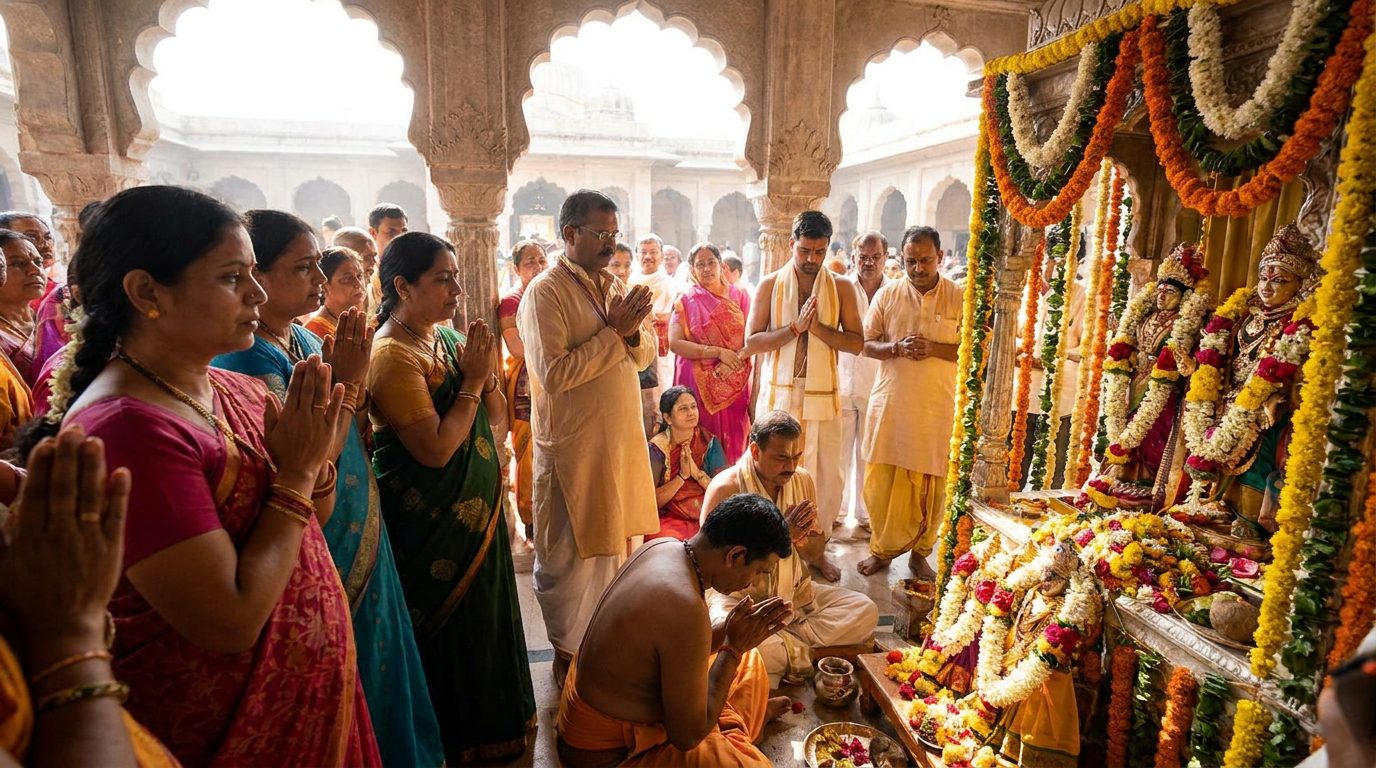
In the vast ocean of Bhakti Yoga, there is no love more celebrated, more mysterious, or more deeply instructive than the devotion of Śrīmatī Rādhārāṇī. She is the supreme devotee, the embodiment of pure love for the Divine, and the eternal companion of Lord Śrī Kṛṣṇa. Her love is not ordinary affection — it is the highest expression of what the soul can offer to God.
Whether you are new to the Bhakti path or have been walking it for years, the story and spirit of Rādhā can transform the way you understand devotion. Her example teaches us that love for God is not about perfection — it is about sincerity, surrender, and a heart that refuses to stop reaching for the Divine.
At The Bhakti House, we believe that everyone can learn from Rādhā’s love. You don’t need to be a scholar or a saint. You just need a willing heart.
Who Is Rādhārāṇī?
Rādhārāṇī (often lovingly called Rādhā) is understood in the Bhakti tradition as the hlādinī-śakti of Lord Kṛṣṇa — His pleasure potency. In simple terms, She is the personification of God’s own capacity to love and experience joy. She is not separate from Kṛṣṇa but is His most intimate energy, His greatest devotee, and the queen of all devotion.
The Caitanya Caritāmṛta, one of the most important texts in Gauḍīya Vaiṣṇavism (the Bhakti tradition founded by Śrī Caitanya Mahāprabhu), explains this beautifully. Kṛṣṇadāsa Kavirāja Gosvāmī writes:
> “The pleasure potency of Kṛṣṇa gives Kṛṣṇa the power to enjoy transcendental bliss. The very nature of that pleasure potency is Śrīmatī Rādhārāṇī.” (Caitanya Caritāmṛta, Ādi-līlā 4.68–69, vedabase.io)
This means that when we speak of Rādhā, we are speaking of love itself — the love that exists within God and flows outward to embrace every living being.
Why Understanding Rādhā’s Love Matters for Everyone
You might wonder: why should I, as a modern person seeking spiritual growth, care about the love story of Rādhā and Kṛṣṇa? The answer is simple — because Her love reveals the blueprint for our own spiritual journey.
Every soul has an inherent, eternal relationship with God. That relationship is based on love. But most of us have forgotten it. We search for love in relationships, careers, achievements, and possessions, yet we still feel an emptiness that nothing material can fill. Rādhā’s devotion shows us that the deepest fulfillment comes from directing our love toward the Supreme Person.
As Śrīla Prabhupāda, the founder of ISKCON and a beloved teacher in the Bhakti tradition, once explained:
> “Rādhārāṇī is the tenderness of the love of Godhead. Her position is that She is always the topmost devotee.” (Lecture, Rādhāṣṭamī, 1969)
Her example is not meant to intimidate us. It is meant to inspire us. If pure, selfless love for God is possible, then each small step we take in that direction has immeasurable value.
The Nature of Rādhā’s Devotion
Love Without Conditions
What makes Rādhā’s love extraordinary is that it is completely unconditional. She does not love Kṛṣṇa to gain something — not liberation (mukti), not heavenly pleasures, not even the removal of suffering. She loves simply because love itself is Her very nature.
This is what the Bhakti scriptures call prema — pure, selfless, ecstatic love for God. It is the highest goal of Bhakti Yoga, far beyond mere religious duty or spiritual knowledge.
The Caitanya Caritāmṛta describes this quality:
> “Pure love for Kṛṣṇa does not depend on any external cause. It is completely natural and spontaneous. It flows from the heart without any motivation for personal benefit.” (Caitanya Caritāmṛta, Madhya-līlā 22.107, vedabase.io)
Rādhā is the ultimate expression of this spontaneous love. And She invites each of us to taste even a drop of it.
Love in Separation
One of the most profound aspects of Rādhā’s devotion is Her experience of viraha — the intense longing She feels when separated from Kṛṣṇa. In Bhakti philosophy, this separation is not seen as a tragedy. It is actually considered the highest stage of love, because it intensifies devotion to an almost unbearable sweetness.
Many of us can relate to this on a human level. Haven’t we all experienced moments when the absence of someone we love made our hearts ache with longing? Rādhā’s viraha sanctifies that experience and shows us that longing for God is itself a form of deep connection with Him.
Śrī Caitanya Mahāprabhu, who is understood by devotees to be Kṛṣṇa Himself appearing in the mood of Rādhā, expressed this longing in His famous prayer:
> “O Govinda! Feeling Your separation, I am considering a moment to be like twelve years or more. Tears are flowing from my eyes like torrents of rain, and I am feeling all vacant in the world in Your absence.” (Śikṣāṣṭaka, Verse 7, vedabase.io)
This verse captures the essence of Rādhā’s heart — a love so intense that even a moment without the Beloved feels like an eternity.
Rādhā in Worship and Practice
Chanting the Holy Names
One of the most accessible and powerful ways to connect with the spirit of Rādhā’s devotion is through chanting. In the Bhakti tradition, the Hare Kṛṣṇa mahā-mantra is the great chant for deliverance:
Hare Kṛṣṇa, Hare Kṛṣṇa, Kṛṣṇa Kṛṣṇa, Hare Hare / Hare Rāma, Hare Rāma, Rāma Rāma, Hare Hare
The word “Hare” is a direct address to Rādhā — to Her divine energy and compassion. Every time we chant “Hare,” we are calling out to Rādhārāṇī, asking for Her grace to help us love Kṛṣṇa purely.
Śrīla Prabhupāda explained that Rādhārāṇī is the mercy manifestation of God. While Kṛṣṇa might consider whether a soul is qualified, Rādhā always advocates on our behalf. She is the compassionate mother who never turns anyone away.
The Festival of Rādhāṣṭamī
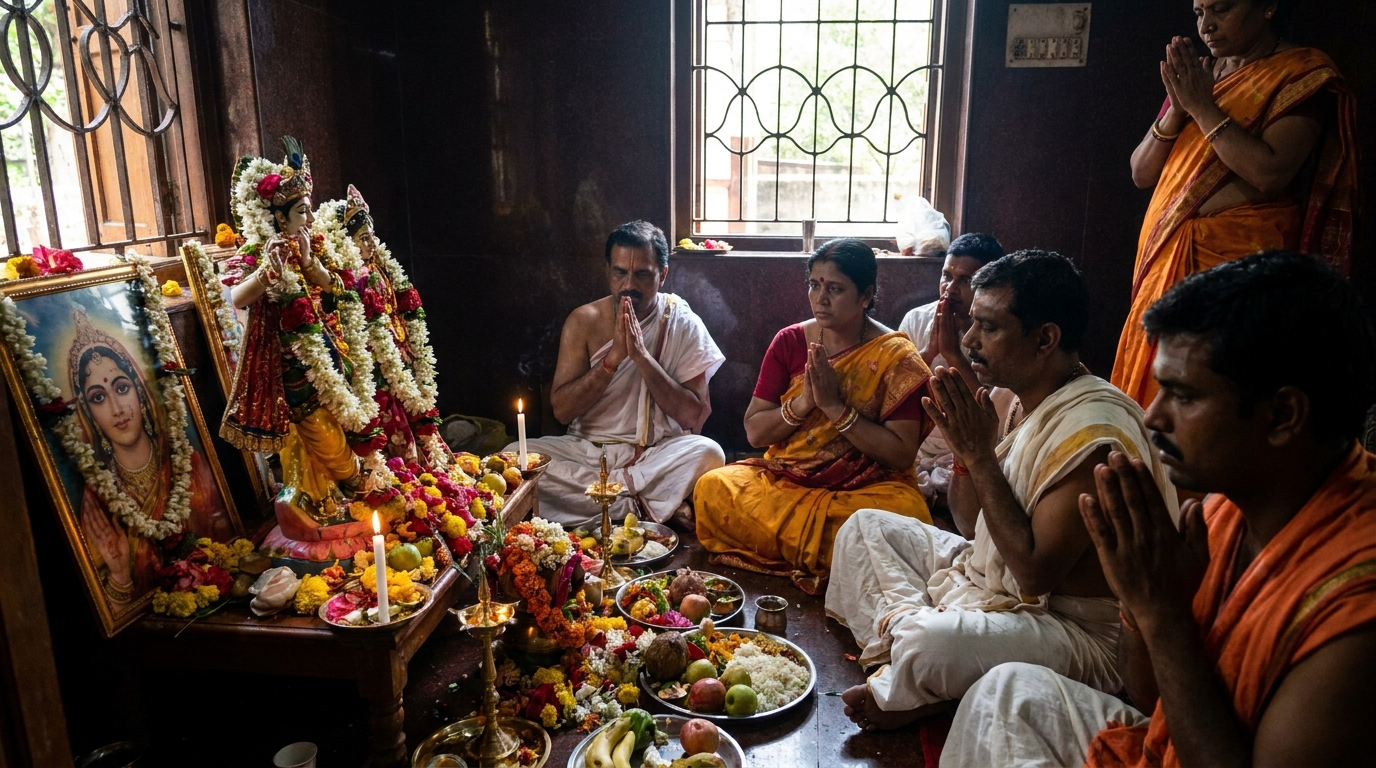
Rādhāṣṭamī is the sacred celebration of Rādhārāṇī’s appearance in this world. Devotees observe this day with fasting, chanting, prayer, and beautiful worship (pūjā). It is a day to remember Her glories, read about Her pastimes, and pray for the blessing of pure devotion.
Even if you are new to Bhakti, you can observe this day simply by setting aside time for sincere prayer, chanting the holy names with extra attention, and meditating on the quality of selfless love that Rādhā embodies.
Service as an Expression of Love
Rādhā’s devotion is not passive. It is expressed through constant, joyful service to Kṛṣṇa. In the spiritual world of Vṛndāvana, She is always engaged in preparing offerings, singing, dancing, and creating beauty for His pleasure.
This teaches us something deeply practical: love is an action. Bhakti Yoga is not just about feeling devotion in our hearts — it is about expressing it through our hands, our voices, our time, and our energy.
You can serve in so many ways: cooking a simple meal and offering it to God with love, helping in your local temple or spiritual community, sharing kind words, or simply being present for someone who needs you. Every act of service done with a spirit of love is a reflection of Rādhā’s mood.
Check out our website for more articles: more articles.
Rādhā’s Love as the Gateway to Understanding God
Beyond Fear and Formality
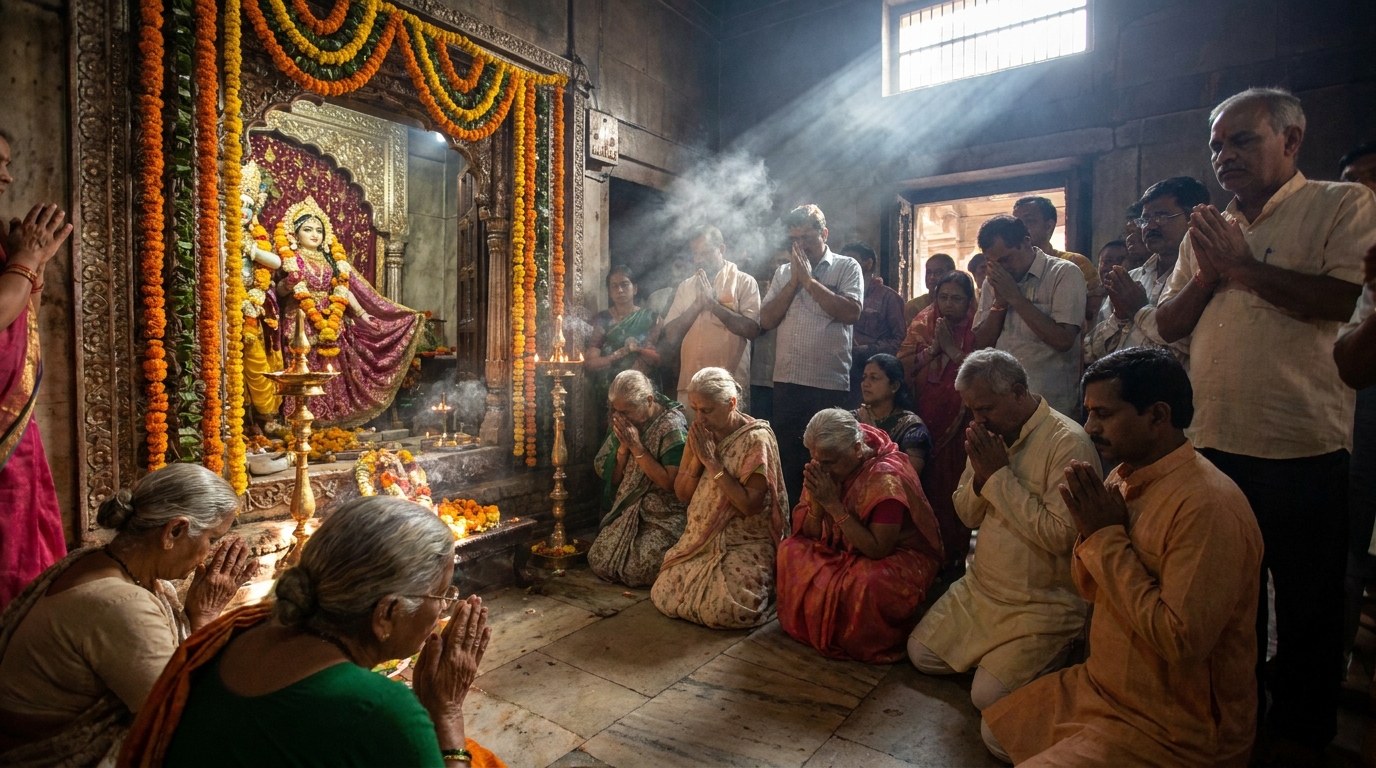
Many people approach God with a sense of fear, obligation, or formality. While reverence for the Divine is natural and beautiful, Rādhā’s example shows us something deeper — that God desires an intimate, personal relationship with each of us.
The Śrīmad-Bhāgavatam (also known as the Bhāgavata Purāṇa) teaches us that the residents of Vṛndāvana, especially Rādhā and the gopīs (the cowherd maidens), had such intimate love for Kṛṣṇa that they forgot He was the Supreme Lord. They simply loved Him as their dearest friend, their beloved, the center of their lives.
> “The gopīs of Vṛndāvana have given up the association of their husbands, sons, and other family members, who are very difficult to give up, and they have forsaken the path of chastity to take shelter of the lotus feet of Mukunda, Kṛṣṇa, which one should search for by Vedic knowledge. Oh, let me be fortunate enough to be one of the bushes, creepers, or herbs in Vṛndāvana, because the gopīs trample them and bless them with the dust of their lotus feet.” (Śrīmad-Bhāgavatam 10.47.61, vedabase.io)
This verse, spoken by the great sage Uddhava, reveals that even the most learned scholars aspire to have the selfless love of the gopīs, with Rādhā at their head.
The Teacher of All Teachers
In many Bhakti lineages, Rādhārāṇī is honored not only as the greatest devotee but as the original spiritual teacher. She teaches by Her example. She shows us that vulnerability is strength, that longing is connection, and that giving everything for love is not loss — it is the ultimate gain.
When we study Her pastimes, we are not reading mythology. We are receiving a living transmission of divine love. Each story, each prayer, each song about Rādhā is a doorway into a deeper understanding of what it means to truly love God.
Walking the Path of Rādhā’s Love Today
Practical Steps for Your Daily Life
You don’t have to live in a temple or renounce the world to walk in the spirit of Rādhā’s devotion. Here are some simple, heartfelt ways to begin:
Chant with sincerity. Even a few minutes of chanting the Hare Kṛṣṇa mahā-mantra each day can open your heart in ways you never expected. Remember, every “Hare” is a prayer to Rādhā.
Pray for devotion, not just things. Instead of asking God only for material blessings, try praying for the desire to love Him more. This is the prayer Rādhā inspires.
Serve with love. Whatever you do — cooking, cleaning, working, caring for others — try to do it as an offering. Imagine you are serving Kṛṣṇa through every act of kindness.
Read and listen. Spend time with Bhakti scriptures like the Śrīmad-Bhāgavatam and Caitanya Caritāmṛta. Let the stories of Rādhā and Kṛṣṇa nourish your soul.
Seek good company. Surround yourself with people who inspire your spiritual growth. In the Bhakti tradition, this is called sādhu-saṅga — the association of sincere spiritual seekers.
An Invitation From the Heart
At The Bhakti House, we hold a deep reverence for Śrīmatī Rādhārāṇī and the path of love She illuminates. We also hold a deep reverence for you — wherever you are on your journey. You are welcome here, exactly as you are.
The beauty of Bhakti Yoga is that you don’t need to have all the answers or even understand everything about Rādhā to begin. You just need to take one sincere step. Chant one mantra with feeling. Offer one prayer with honesty. Perform one act of service with love.
Rādhārāṇī’s compassion is limitless. She sees the sincerity in every heart, no matter how small the offering. As Kṛṣṇa Himself promises in the Bhagavad-gītā:
> “If one offers Me with love and devotion a leaf, a flower, a fruit or water, I will accept it.” (Bhagavad-gītā 9.26, vedabase.io)
If God accepts a simple leaf offered with love, imagine how much He treasures the sincere longing of your heart.
You are welcome on this path. You are welcome at this table of love. Take one step, and the Divine will take a thousand steps toward you.
FAQs
What is the significance of Rādhā in Hinduism?
Rādhā is considered to be the embodiment of love and devotion in Hinduism. She is believed to be the eternal consort of Lord Krishna and is revered as the ultimate devotee of Krishna.
How do devotees worship Rādhā?
Devotees worship Rādhā through various rituals and practices such as singing devotional songs, offering flowers, incense, and food, and performing dance and drama depicting the love between Rādhā and Krishna.
What are some popular Rādhā temples in India?
Some popular Rādhā temples in India include the Shri Radhavallabh Vrindavan Temple in Vrindavan, the Shri Radha Rani Temple in Barsana, and the Shri Radha Madan Mohan Temple in Vrindavan.
What are some important festivals dedicated to Rādhā?
Some important festivals dedicated to Rādhā include Radhastami, which celebrates the appearance day of Rādhā, and Holi, which commemorates the playful and colorful pastimes of Rādhā and Krishna.
How does Rādhā’s worship differ from other forms of worship in Hinduism?
Rādhā’s worship is unique in its emphasis on pure, selfless love and devotion. Devotees of Rādhā often focus on the emotional and spiritual aspects of worship, rather than the ritualistic or philosophical aspects.

