
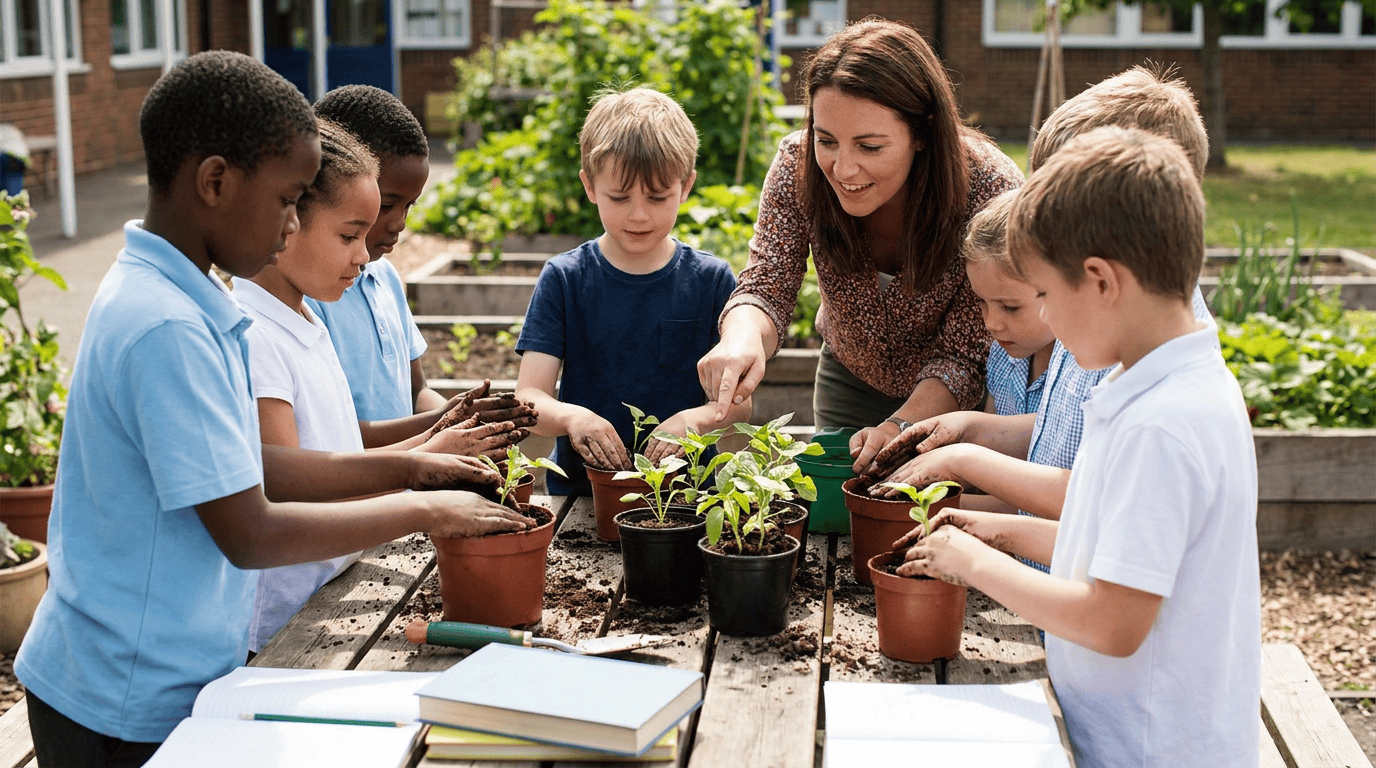
Every child is a sacred soul, full of dignity, potential, and spiritual beauty. In the Bhakti tradition, we do not see children as empty vessels to be filled, but as beloved persons to be guided, protected, and encouraged. Education, at its deepest level, is not only about information, grades, or career success. It is about helping a child grow in wisdom, compassion, self-discipline, devotion, and purpose.
Bhakti Yoga, the path of loving devotion to God, offers a heart-centered approach to children and education. It honors the whole child: body, mind, heart, character, and soul. Whether you are a parent, teacher, caregiver, grandparent, or community member, you have a sacred opportunity to help children become kind, thoughtful, spiritually aware human beings.
This guide is for people of all backgrounds. You may be new to Bhakti, already practicing, or simply looking for a more loving, values-based approach to education. Wherever you are, you are welcome here.
In Bhakti Yoga, one of the foundational teachings is that every living being is an eternal soul. In Sanskrit, the word atma means the true self, the spiritual being within the body. This means a child is not merely a developing brain, a personality type, or a future worker. A child is an eternal soul temporarily growing through the experience of childhood.
This simple understanding can transform the way we educate.
When we see children as sacred souls, we become more patient. We listen more deeply. We guide rather than control. We correct with love, not anger. We understand that education is not just about producing achievement, but about nurturing character, devotion, and inner strength.
The Child Is Not an Object to Control
Many adults unintentionally treat children as projects. We may feel pressure to shape them into what society expects, what family tradition demands, or what our own unfulfilled dreams desire. But Bhakti invites us to ask a more humble question:
“How can I serve this child’s highest good?”
This does not mean children should have no boundaries. Loving guidance is essential. But the mood changes. Instead of trying to possess or dominate, we become caretakers. We remember that the child belongs first to God.
In the Bhagavad-gita, Lord Krishna teaches that He is present in the heart of all living beings. This means God is present in the heart of every child. Education becomes sacred when we teach with reverence for that presence.
Every Child Has a Unique Nature
The Sanskrit word svabhava means one’s natural qualities or inner tendency. Every child has a unique nature. Some are quiet and reflective. Some are active and adventurous. Some love music, others love building, reading, serving, organizing, caring for animals, or asking deep questions.
A wise education does not force every child into the same mold. It helps each child discover their God-given gifts and use them in a meaningful, loving way.
Bhakti education asks:
How can this child’s nature be guided toward service, wisdom, and devotion?
The Purpose of Education in Bhakti Yoga
Modern education often focuses on external success: grades, exams, college admissions, income, and social status. These things may have their place, but they are incomplete without inner development.
Bhakti Yoga teaches that the highest purpose of life is to awaken love for God and live in harmony with that love. This love is called bhakti, which means devotion, loving service, or heartfelt connection with the Divine.
So, from a Bhakti perspective, education should help children grow in four important ways: spiritually, emotionally, intellectually, and practically.
Education Should Awaken the Heart
A truly educated child is not simply one who can memorize facts. A truly educated child learns how to love, forgive, serve, pray, and live with gratitude.
In Bhakti, the heart is central. Chanting, prayer, sacred stories, music, and service all help soften and awaken the heart. Children naturally respond to beauty, rhythm, kindness, and meaning. When spiritual practices are offered gently and joyfully, they can become lifelong sources of strength.
For example, a child may learn to chant a simple mantra. A mantra is a sacred sound vibration that helps focus the mind and connect the heart with God. The Hare Krishna mantra is one well-known Bhakti mantra:
Hare Krishna, Hare Krishna, Krishna Krishna, Hare Hare
Hare Rama, Hare Rama, Rama Rama, Hare Hare
This mantra is a prayer asking to be engaged in loving service. Children do not need complex philosophy to begin. They can chant, sing, dance, clap, and feel joy in the presence of God.
Education Should Build Character
Character is the foundation of a meaningful life. Skills without character can become harmful. Intelligence without compassion can become pride. Success without humility can leave the heart empty.
Bhakti education emphasizes qualities such as:
- Truthfulness
- Compassion
- Cleanliness
- Self-control
- Gratitude
- Respect
- Service
- Humility
- Courage
- Forgiveness
These qualities are not developed through lectures alone. Children learn them by seeing them lived. A calm parent teaches peace. A forgiving teacher teaches mercy. A grateful home teaches contentment.
The Srimad-Bhagavatam, a beloved Bhakti scripture, repeatedly shows the power of saintly qualities. Through stories of great devotees such as Prahlada, Dhruva, and the Pandavas, children can learn faith, perseverance, humility, and trust in God.
Education Should Prepare Children for Real Life
Bhakti is not separate from daily life. It is practical spirituality. Children need to learn how to care for their bodies, manage emotions, communicate kindly, work responsibly, and make wise choices.
A holistic education includes practical skills:
- Cooking healthy food
- Caring for nature
- Managing time
- Understanding money simply and ethically
- Solving conflicts peacefully
- Serving family and community
- Learning how to rest and reflect
- Using technology responsibly
When these skills are connected to devotion, daily life becomes sacred. Cooking can become an offering. Cleaning can become service. Studying can become discipline. Friendship can become compassion in action.
Creating a Loving Learning Environment
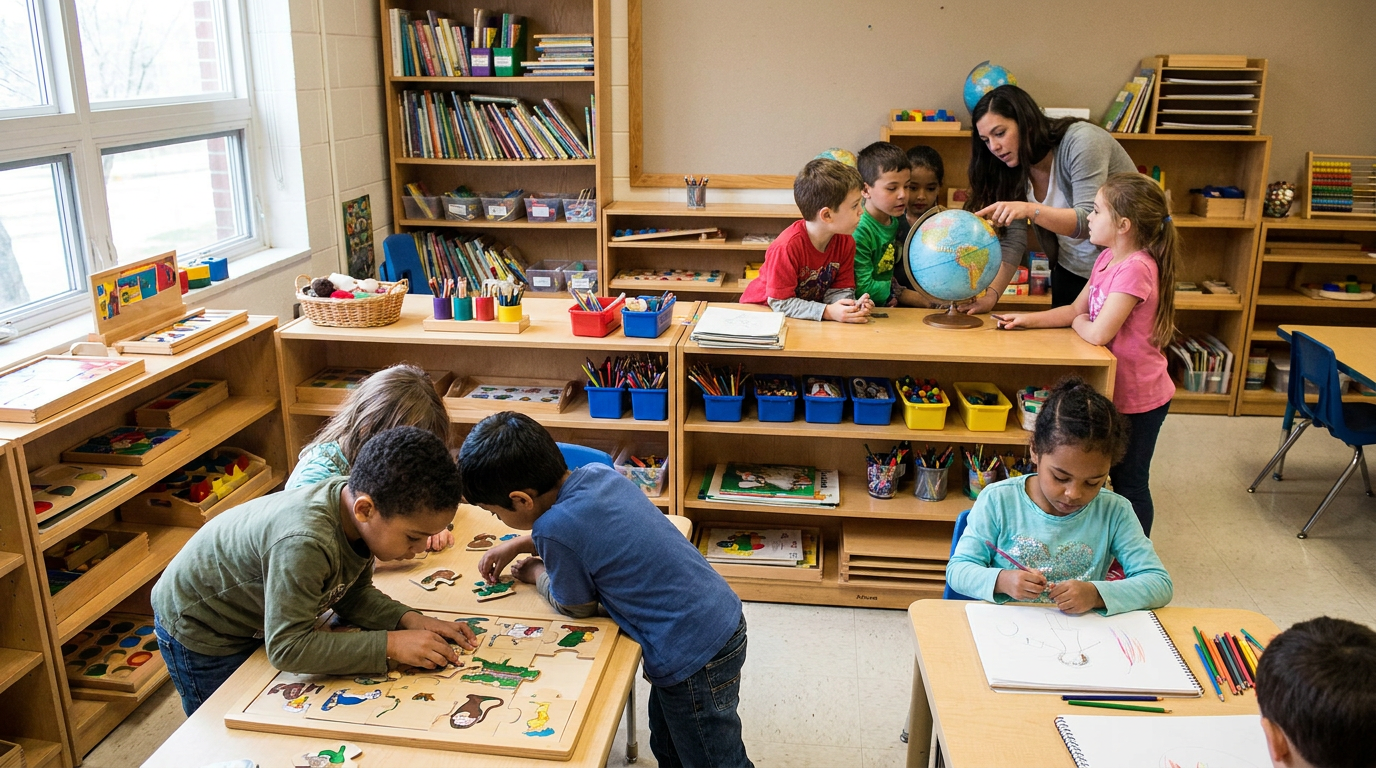
Children thrive in environments where they feel safe, seen, and loved. Before deep learning can happen, the child’s nervous system needs to feel secure. Fear may produce short-term obedience, but love produces long-term growth.
A Bhakti-centered learning environment is warm, structured, respectful, and spiritually nourishing.
Safety and Trust Come First
A child who feels constantly criticized may become anxious, defensive, or disconnected. A child who feels safe can be curious, honest, and open to guidance.
This does not mean adults should avoid correction. Children need boundaries. But correction should be given in a way that protects the relationship.
A helpful question for parents and educators is:
“Am I correcting this child to help them grow, or am I reacting because I feel frustrated?”
Taking a breath before speaking can be a spiritual practice. In Sanskrit, sadhana means spiritual practice or discipline. For adults, patient communication is part of our sadhana. We practice seeing the child with compassion, even in difficult moments.
Rhythm Helps Children Feel Grounded
Children benefit from predictable rhythms. A healthy daily rhythm can include:
- Waking and sleeping at regular times
- Morning prayer or chanting
- Nourishing meals
- Focused study
- Outdoor movement
- Creative play
- Service tasks
- Family reading or sacred storytelling
- Quiet time before bed
Rhythm does not need to be rigid. It is like a gentle riverbank that helps the day flow. When children know what to expect, they often feel calmer and more cooperative.
Beauty Matters in Education
Bhakti is full of beauty: music, flowers, sacred art, lamps, incense, poetry, and festivals. Beauty helps children connect with the sacred through the senses.
A learning space can include simple devotional elements:
- A clean prayer corner or altar
- Pictures of Krishna, Rama, saints, or sacred symbols
- Fresh flowers or leaves
- Soft chanting in the background
- Natural materials
- Children’s artwork
- Books that inspire kindness and wisdom
The goal is not to impress. The goal is to create an atmosphere that gently reminds the child: “Life is sacred. You are loved. God is near.”
Sure, here is the sentence with the clickable link:
I love to visit The Bhakti House for spiritual inspiration.
Spiritual Practices for Children
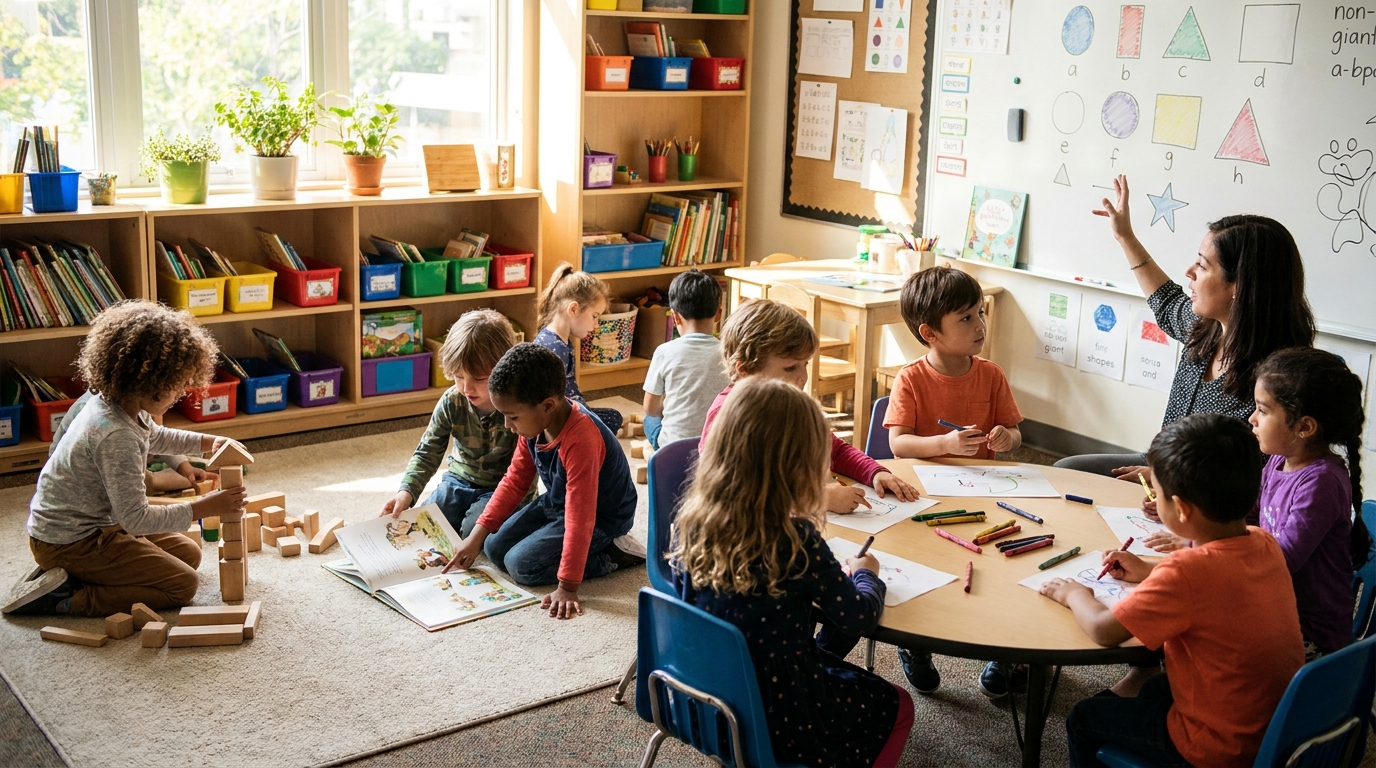
Children learn best through experience. Spiritual education should not be heavy, forced, or fear-based. It should be joyful, simple, and sincere.
Bhakti Yoga offers many accessible practices for children and families.
Chanting and Kirtan
Kirtan means devotional singing, often in a call-and-response style. It is one of the most joyful practices in Bhakti Yoga. Children often love kirtan because it includes music, rhythm, movement, and community.
You do not need to be a professional singer. A simple home kirtan can include:
- One person singing a mantra
- Others repeating
- Clapping or small instruments
- A few minutes of dancing
- A closing prayer
Even five minutes can change the atmosphere of a home.
The Bhagavad-gita teaches that the mind can be a friend or an enemy depending on how it is trained. Chanting helps train the mind gently by giving it a sacred sound to rest upon. For children, this can become a powerful tool for calming, focusing, and feeling connected.
Prayer in a Child’s Own Words
Prayer does not need to be formal. Children can be encouraged to speak to God honestly.
They might pray:
“Dear Krishna, please help me be kind today.”
“Dear God, thank You for my family.”
“Please help my friend feel better.”
“Please help me when I feel scared.”
This teaches children that God is not distant. God is a loving person who hears the heart.
In Bhakti, Krishna means “the all-attractive Lord.” Many traditions have different names for God, and Bhakti welcomes sincere prayer from the heart. Children should understand that God’s love is not limited by language, culture, or background.
Offering Food with Love
One of the most practical Bhakti practices for children is offering food to God before eating. In Sanskrit, food offered with love is called prasadam, which means mercy or grace.
A simple offering can be:
“Dear Lord, thank You for this food. Please accept it with our love.”
Then the family can pause for a moment of gratitude.
This practice teaches children:
- Food is sacred
- Gratitude matters
- We are dependent on God, nature, and others
- Eating can be mindful and spiritual
Children can help wash vegetables, stir ingredients, set the table, or place a small portion on an offering plate. Service becomes natural when it is woven into daily life.
Sacred Stories and Scripture
Children love stories. Bhakti scriptures are filled with stories that teach courage, devotion, friendship, and faith.
Some beautiful stories for children include:
- Prahlada’s faith in Lord Vishnu even during difficulty
- Dhruva’s determination and prayer
- Krishna’s childhood pastimes in Vrindavan
- Hanuman’s devotion to Lord Rama
- The Pandavas’ trust in Krishna
These stories should be shared with sensitivity and practical meaning. Instead of only asking, “What happened?” we can ask:
“What quality did this devotee show?”
“How can we practice that today?”
“What would you do if you felt afraid?”
“How did God protect or guide them?”
Scripture becomes alive when it helps children navigate real life.
Academic Education with Spiritual Values
Bhakti education does not reject academics. Reading, writing, mathematics, science, history, art, and critical thinking all have value. The question is not whether children should learn academics, but how they should learn them and what purpose guides the learning.
Knowledge becomes beautiful when it leads to humility and service.
Learning as Service
Children can be taught that studying is not only for personal success. It can also be an offering.
A child who learns medicine may one day heal others. A child who learns farming may nourish communities. A child who learns music may uplift hearts. A child who learns technology may use it ethically to serve.
This gives learning meaning beyond competition.
Before study time, a child can say a simple prayer:
“May I learn with focus and use what I learn to help others.”
This transforms education into devotion.
Encouraging Curiosity, Not Just Performance
Many children feel pressure to perform. Grades can become a source of fear or identity. While assessment has a role, children need to know they are loved beyond achievement.
A spiritually healthy approach encourages curiosity:
“What did you discover today?”
“What question are you wondering about?”
“What was difficult, and how did you keep trying?”
“How can this knowledge help someone?”
In Bhakti, humility is important. Humility does not mean thinking we are worthless. It means understanding that all gifts come from God and can be used in service. Children who learn humility can be confident without becoming arrogant.
Science and Spiritual Wonder
Science can deepen spiritual appreciation when taught with wonder. Studying the human body, ecosystems, planets, water cycles, and living beings can awaken gratitude and awe.
A Bhakti teacher might say:
“Look how carefully everything is arranged. How can we care for this creation with respect?”
Children can learn environmental responsibility as a spiritual duty. In the Bhakti tradition, nature is not merely a resource; it is God’s energy. Caring for animals, rivers, soil, trees, and food is part of devotion.
Emotional and Moral Education
A child’s emotional life deeply affects learning. If children do not understand their feelings, they may struggle to focus, connect, or make good choices. Bhakti offers both spiritual tools and moral guidance for emotional growth.
Helping Children Name Feelings
Children need language for their inner world. Adults can help by gently naming emotions:
“It seems like you feel disappointed.”
“You may be feeling nervous.”
“Are you angry because that felt unfair?”
“It’s okay to feel sad. I’m here with you.”
When feelings are acknowledged, children often become more open to guidance.
Bhakti does not ask us to suppress emotions. It teaches us to offer them. A child can learn, “When I feel sad or angry, I can talk to God. I can chant. I can ask for help. I can choose what to do next.”
Discipline as Loving Guidance
Discipline means teaching, not punishment. Children need clear boundaries, but those boundaries should be rooted in love and consistency.
Helpful discipline includes:
- Explaining expectations clearly
- Giving choices when appropriate
- Using natural consequences
- Repairing harm through apology or service
- Praising sincere effort
- Avoiding shame-based language
- Modeling the behavior we want to see
For example, if a child speaks harshly, we can guide them to apologize and practice kinder words. If they make a mess, they can help clean it. This teaches responsibility without humiliation.
Teaching Compassion and Service
In Sanskrit, seva means service. Seva is one of the most important practices in Bhakti Yoga. Children naturally become happier when they feel useful and connected.
Simple service activities include:
- Helping prepare prasadam
- Feeding guests
- Making cards for someone who is sick
- Cleaning a temple, home, or community space
- Caring for younger children
- Donating toys or clothes
- Helping in a garden
- Offering water to plants
- Participating in food distribution
Service teaches children that love is active. It is not only a feeling; it is something we do.
The Role of Parents, Teachers, and Community
Children are shaped not only by lessons, but by the people around them. A child’s education is strongest when parents, teachers, and community work together.
In Bhakti, spiritual community is called sanga, which means association or company. Good sanga nourishes faith, values, and positive habits.
Parents as First Teachers
Parents are a child’s first and most influential teachers. The home atmosphere leaves a deep impression.
A devotional home does not need to be perfect. It needs sincerity. Children do not require flawless parents; they need humble parents who are willing to grow, apologize, pray, and keep trying.
Some simple practices for parents:
- Chant together, even briefly
- Eat prasadam as a family
- Read one sacred story a week
- Speak respectfully in the home
- Let children see you pray
- Invite questions
- Apologize when you make mistakes
- Celebrate holy days with joy
- Serve others together
Children learn devotion when they see devotion lived naturally.
Teachers as Guides and Caregivers
A teacher’s influence can last a lifetime. In the Bhakti tradition, a teacher is honored because they help bring light. The Sanskrit word guru means one who removes darkness through knowledge. Not every schoolteacher is a spiritual guru, but every sincere teacher can carry a guiding role.
A Bhakti-minded educator asks:
“How can I help this child become wise, kind, and connected to God?”
Teachers can create classrooms where children feel respected, where learning is meaningful, and where values are practiced daily.
Community as Extended Family
Children need more than individual instruction. They need community. Festivals, kirtans, service days, children’s classes, family gatherings, and shared meals all help children feel part of something sacred and joyful.
Community gives children role models beyond their parents. They see older youth serving, adults chanting, elders sharing wisdom, and families supporting one another.
This is especially important in a world where many children feel isolated or overly connected to screens. Spiritual community gives them belonging.
Technology, Media, and the Modern Child
Modern children are growing up in a digital world. Technology can be useful, but without guidance it can also distract, overstimulate, and shape values in unhealthy ways.
Bhakti education encourages mindful use of technology, not fear or rejection.
Creating Healthy Digital Boundaries
Children need loving limits around screens. These boundaries may include:
- No screens during meals
- No devices before morning prayer or study
- Limited entertainment time
- Parent-approved content
- No devices in bedrooms at night
- Regular outdoor play
- Screen-free family time
- Conversations about what they watch
The goal is not control for its own sake. The goal is protecting attention, imagination, sleep, emotional health, and spiritual sensitivity.
Teaching Discernment
Children need to learn not only what to avoid, but how to think.
Helpful questions include:
“Does this content make my heart peaceful or restless?”
“Does it teach kindness or selfishness?”
“Is it true?”
“Would I feel comfortable watching this with someone I respect?”
“Does this bring me closer to the person I want to become?”
In Bhakti, the mind is precious. What we hear and see affects consciousness. Consciousness means the state of our awareness. Children can understand this simply: “What we put into our minds shapes how we feel and act.”
Replacing, Not Just Removing
If we remove screens without offering meaningful alternatives, children may feel deprived. Better options include:
- Music and kirtan
- Art and crafts
- Outdoor games
- Reading
- Cooking
- Gardening
- Building projects
- Drama and storytelling
- Service activities
- Time with friends and family
Children need joy. Bhakti is not dry restriction. It is a higher taste: a more nourishing happiness.
Different Educational Paths for Different Families
Families may choose public school, private school, homeschooling, co-ops, temple-based education, or hybrid models. There is no single path that fits every child or family.
The key question is: “How can we support this child’s spiritual, emotional, moral, and academic growth in our current situation?”
Public and Private School Families
If your child attends public or private school, you can still create a strong spiritual foundation at home.
Helpful practices include:
- Morning prayer before school
- Packing prasadam or offering lunch mentally
- Discussing school experiences with compassion
- Helping children navigate peer pressure
- Encouraging friendships with kind children
- Creating evening spiritual routines
- Attending weekly sanga or kirtan
Children can learn to live spiritually even in non-spiritual environments when they feel supported.
Homeschooling and Home Education
Homeschooling can offer flexibility and a deeply values-based environment. Families can integrate academics with devotion, nature, service, and practical life skills.
A Bhakti homeschool rhythm might include:
- Morning chanting
- Scripture story
- Academic lessons
- Outdoor time
- Cooking and offering lunch
- Art or music
- Service project
- Quiet reading
- Reflection or gratitude before bed
However, homeschooling also requires patience, structure, and community support. Parents should seek help, rest, and sanga so they do not become overwhelmed.
Temple and Community-Based Education
Some communities offer children’s programs, Sunday schools, gurukula-inspired classes, youth groups, or festival activities. The word gurukula traditionally means “the teacher’s family” or a school centered around spiritual guidance.
Modern community programs can help children learn:
- Scripture
- Sanskrit prayers
- Kirtan
- Drama
- Devotional music
- Cooking
- Values
- Service
- Festival traditions
- Friendship with other spiritually minded children
When these programs are loving and age-appropriate, they can deeply nourish children’s faith.
Common Challenges in Children’s Education
Every family faces challenges. Bhakti does not promise that life will be easy, but it gives us spiritual tools to meet difficulties with faith and wisdom.
When a Child Resists Spiritual Practice
Sometimes children do not want to chant, pray, or attend programs. This can worry parents, but force often creates more resistance.
Try making spiritual practice:
- Shorter
- More joyful
- Musical
- Interactive
- Connected to stories
- Child-led at times
- Free from pressure
- Consistent but gentle
A child may not always show interest outwardly, but impressions are being planted. In Sanskrit, these impressions are called samskaras. Positive spiritual samskaras can awaken later in life.
When Parents Feel Inadequate
Many parents feel they are not doing enough. But devotion begins with sincerity, not perfection.
If you can offer one prayer, one kind word, one sacred song, one meal with gratitude, one apology, one act of service—this matters.
Krishna says in the Bhagavad-gita that He accepts even a leaf, a flower, fruit, or water when offered with devotion. The offering does not need to be grand. It needs to be sincere.
This is deeply encouraging for family life. God sees the love behind our efforts.
When Children Ask Difficult Questions
Children may ask:
“Where is God?”
“Why do bad things happen?”
“Do I have to believe this?”
“Are other religions wrong?”
“What happens after death?”
Welcome these questions. Questions are not the enemy of faith. Honest inquiry can deepen understanding.
You might say:
“That is a very thoughtful question. Let’s explore it together.”
Bhakti scriptures encourage sincere inquiry. Faith does not mean never asking. It means seeking truth with humility.
Practical Daily Bhakti Education Plan
A simple daily plan can help families bring spiritual education into normal life without feeling overwhelmed.
Morning: Begin with Connection
Even 10 minutes can make a difference.
Try:
- Light a candle or sit near an altar
- Chant one round or sing one mantra
- Offer a simple prayer
- Read one verse or short story
- Set an intention for the day
Example intention:
“Today I will try to speak kindly.”
Afternoon: Learn and Serve
During the day, connect learning with service.
Examples:
- Math through cooking measurements
- Science through gardening
- Writing thank-you notes
- Art for a festival or altar
- Reading stories of saints and heroes
- Helping prepare prasadam
This helps children see that learning is alive and useful.
Evening: Reflect and Give Thanks
Before bed, create a peaceful closing.
Ask:
“What are you grateful for today?”
“Did you help anyone?”
“Was anything hard?”
“Would you like to say a prayer?”
End with a soft mantra, a story, or a simple blessing.
A child who falls asleep feeling loved and connected carries that peace into the heart.
Raising Children for a Life of Love and Purpose
Education is not a race. Childhood is not a competition. A child’s heart is a garden. It needs sunlight, water, protection, patience, and time.
Bhakti Yoga gives us a beautiful vision for children and education. It teaches us to see each child as an eternal soul, to guide them according to their nature, to nourish their love for God, and to help them serve the world with kindness and wisdom.
The goal is not to create perfect children or perfect families. The goal is to walk together toward God with sincerity.
Some days will feel peaceful. Other days will feel messy. There may be tears, mistakes, questions, resistance, and exhaustion. Still, every small act of devotion counts. Every prayer counts. Every story, every song, every shared meal, every apology, every moment of patience, every act of service plants a seed.
And seeds grow.
A Gentle Invitation for Every Family
Wherever you are beginning, begin there.
You do not need to change everything at once. Choose one sincere step:
- Sing one mantra with your child
- Say one prayer before meals
- Read one sacred story this week
- Offer one meal with gratitude
- Do one act of service together
- Visit a kirtan or spiritual gathering
- Speak one more loving word today
God meets us in sincerity. Every child, every parent, every teacher, and every seeker is welcome on the path of Bhakti. Take one humble step toward God, and trust that divine love will guide the next.
FAQs
What are the different types of education for children?
There are various types of education for children, including public schools, private schools, charter schools, homeschooling, and online education.
What are the key factors to consider when choosing a school for a child?
When choosing a school for a child, it’s important to consider factors such as the school’s academic reputation, extracurricular activities, class size, location, and the teaching philosophy of the school.
What are some effective study habits for children?
Effective study habits for children include creating a designated study space, setting a regular study schedule, breaking down tasks into manageable chunks, using mnemonic devices, and practicing active learning techniques.
How can parents support their child’s education at home?
Parents can support their child’s education at home by creating a positive learning environment, establishing a routine for homework and study time, communicating with teachers, and encouraging a love for reading and learning.
What are the benefits of extracurricular activities for children’s education?
Extracurricular activities can provide children with opportunities to develop social skills, leadership abilities, time management, and teamwork, as well as explore their interests and passions outside of the classroom.

