

The Chaitanya-charitamrita is one of the most treasured books in the Bhakti Yoga tradition. It tells the life, teachings, and inner devotional mood of Sri Chaitanya Mahaprabhu, a great saint and divine teacher who appeared in Bengal, India, over 500 years ago.
In simple words, Chaitanya-charitamrita means “the nectar of the character and life of Chaitanya.” The word Chaitanya refers to Sri Chaitanya Mahaprabhu. Charita means “life” or “activities,” and amrita means “nectar,” something spiritually nourishing and eternal.
This sacred book was written by Srila Krishnadasa Kaviraja Goswami, a humble and deeply realized devotee. Though he wrote in his later years, his words are full of clarity, sweetness, philosophy, and devotion. For followers of Bhakti Yoga, the Chaitanya-charitamrita is not only a biography. It is a guidebook for the heart.
It helps us understand how to love God, how to chant with sincerity, how to serve others, and how to grow spiritually in daily life.
A Scripture of Love and Devotion
The heart of the Chaitanya-charitamrita is bhakti, which means loving devotional service to God. Bhakti is not dry theory or blind ritual. It is a living relationship. It is the soul reaching toward the Supreme with humility, affection, and trust.
Sri Chaitanya Mahaprabhu taught that the highest goal of life is prema-bhakti, pure love of God. This love is not selfish or temporary. It is the soul’s natural love awakened.
The Chaitanya-charitamrita shows this love through philosophy, poetry, prayer, and the lives of saints. It welcomes seekers into a path where chanting, hearing, service, and compassion become ways to draw closer to God.
Who Is Sri Chaitanya Mahaprabhu?
Sri Chaitanya Mahaprabhu appeared in 1486 in Navadvipa, Bengal. He is honored in the Gaudiya Vaishnava tradition as Krishna Himself appearing in the mood and golden complexion of Srimati Radharani, Krishna’s greatest devotee.
This may sound deep or unfamiliar at first. Simply put, devotees understand that God came as Sri Chaitanya to teach the world how to love God—not from a distant throne, but by personally living as a devotee.
He chanted God’s names, cried in prayer, served devotees, honored scripture, and shared divine love freely with everyone—regardless of birth, education, background, gender, or social position.
Why the Chaitanya-charitamrita Matters Today
Many people today are spiritually hungry. We may have information, technology, and material comfort, yet still feel restless inside. The Chaitanya-charitamrita speaks directly to this inner hunger.
It teaches that the soul is not satisfied by temporary things alone. We need meaning. We need connection. We need love that does not fade. Bhakti Yoga offers a practical way to rediscover that love through relationship with God.
A Practical Path for Modern Seekers
The Chaitanya-charitamrita is filled with profound theology, but it is also very practical. It teaches us to:
- Chant the holy names of God
- Hear spiritual wisdom regularly
- Offer our work and talents in service
- Associate with sincere spiritual people
- Practice humility and compassion
- Pray honestly from the heart
- See every person as spiritually valuable
These practices are simple, but they are powerful. You do not need to be born into a particular culture to begin. You do not need to know Sanskrit. You do not need to be perfect.
Bhakti begins wherever we are.
A Message for All Backgrounds
Sri Chaitanya Mahaprabhu’s movement was revolutionary because He welcomed everyone. He taught that love of God is the birthright of every soul.
In the Chaitanya-charitamrita, we see people from many walks of life transformed by devotion: scholars, householders, renunciants, villagers, government officials, and people considered socially outcast. Mahaprabhu saw beyond labels. He saw the soul.
This is one reason the text remains so relevant. In a divided world, the Chaitanya-charitamrita reminds us that spiritual life is not about superiority. It is about humility, service, and love.
The Author: Srila Krishnadasa Kaviraja Goswami

The author of the Chaitanya-charitamrita, Srila Krishnadasa Kaviraja Goswami, is one of the great saintly teachers in the Gaudiya Vaishnava tradition.
He wrote the book in Vrindavan, the sacred land of Krishna’s pastimes, under the blessings of the devotees there. He considered himself unqualified, yet his humility became the doorway for divine inspiration.
Writing with Humility
Again and again, Krishnadasa Kaviraja Goswami expresses deep humility. He does not present himself as a great author. He sees himself as a servant of the devotees and asks for their blessings.
This mood is important. In Bhakti Yoga, knowledge is not meant to make us proud. True spiritual wisdom softens the heart.
The author’s humility teaches us how to approach sacred texts. We do not come merely to collect information. We come to receive grace. We come with respect, curiosity, and a willingness to be changed.
Receiving from Earlier Saints
Krishnadasa Kaviraja Goswami did not invent a new path. He carefully received teachings from previous saints, especially Srila Rupa Goswami, Srila Sanatana Goswami, and Srila Raghunatha Dasa Goswami.
These teachers were direct followers of Sri Chaitanya Mahaprabhu. They preserved His teachings on devotion, scripture, spiritual practice, and the deepest moods of divine love.
This matters because authentic Bhakti Yoga is passed through parampara, a Sanskrit word meaning “spiritual lineage” or “disciplic succession.” In parampara, wisdom is lovingly carried from teacher to student, generation after generation.
Sure, here is the sentence with the clickable link:
I love to visit The Bhakti House for spiritual inspiration and community.
The Structure of the Chaitanya-charitamrita
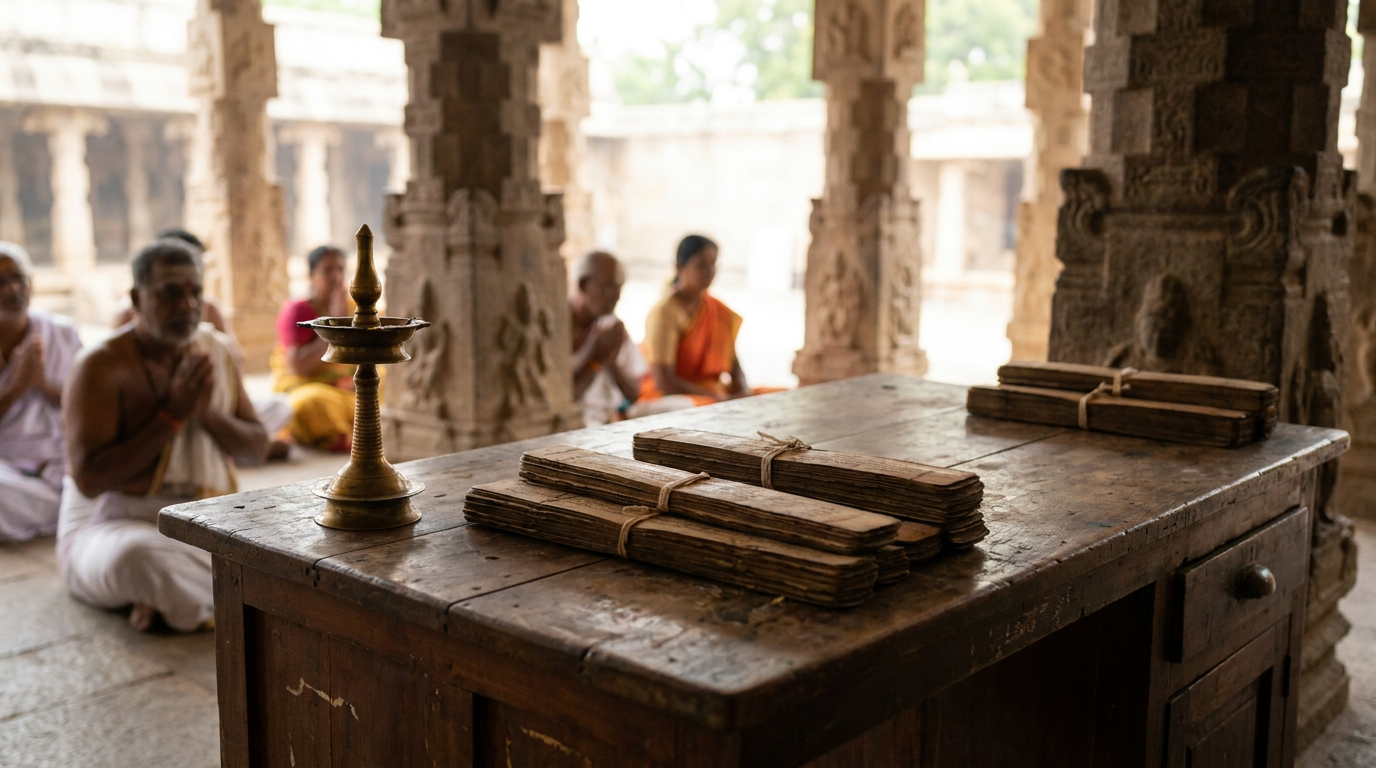
The Chaitanya-charitamrita is divided into three main sections: Adi-lila, Madhya-lila, and Antya-lila. The word lila means “divine pastime” or “sacred activity.” It suggests that God’s actions are not forced by karma or need. They are expressions of love and spiritual joy.
Each section reveals a different part of Sri Chaitanya Mahaprabhu’s life and teachings.
Adi-lila: The Beginning
The Adi-lila, or beginning section, introduces the spiritual identity of Sri Chaitanya Mahaprabhu and His associates. It explains deep truths about Krishna, Radha, the holy name, and the purpose of Mahaprabhu’s appearance.
One of the essential teachings here is that Sri Chaitanya came to spread sankirtana, the congregational chanting of God’s holy names.
The famous maha-mantra is:
Hare Krishna, Hare Krishna, Krishna Krishna, Hare Hare
Hare Rama, Hare Rama, Rama Rama, Hare Hare
“Hare” calls out to the divine energy of the Lord, especially Srimati Radharani. “Krishna” means “the all-attractive one.” “Rama” means “the source of spiritual joy.” This mantra is a prayer: “O Lord, O divine energy of the Lord, please engage me in Your loving service.”
The Adi-lila teaches that chanting is not just a sound meditation. It is a loving call to God.
Madhya-lila: The Middle Pastimes
The Madhya-lila describes many of Sri Chaitanya Mahaprabhu’s travels, conversations, and teachings. This section is especially rich in practical instruction.
Here we find Mahaprabhu’s teachings to Srila Rupa Goswami and Srila Sanatana Goswami, two great saints who helped organize and explain the path of Bhakti Yoga.
The Madhya-lila includes the famous conversation with Ramananda Raya, where Mahaprabhu explores the highest stages of devotion. It also includes the story of His journey through South India, where He shared the holy name widely and embraced people from many communities.
This section shows devotion in motion: walking, singing, teaching, serving, forgiving, and uplifting others.
Antya-lila: The Final Pastimes
The Antya-lila, or final section, focuses on Sri Chaitanya Mahaprabhu’s later years in Jagannatha Puri. These chapters reveal His deepest emotions of love for Krishna.
At times, these passages are very elevated and may feel difficult for new readers. They describe intense spiritual longing known as vipralambha-bhava, the mood of love in separation. In Bhakti, separation from God can deepen remembrance and intensify love.
For everyday readers, the practical lesson is simple and beautiful: love means remembering the beloved. In spiritual life, even our longing, our tears, and our sense of incompleteness can become sacred when turned toward God.
Core Teachings of the Chaitanya-charitamrita
The Chaitanya-charitamrita offers many teachings, but several stand at the center of its message.
We Are Eternal Souls
A foundational teaching of Bhakti Yoga is that we are not merely the body or mind. We are atma, eternal spiritual souls.
The body changes from childhood to adulthood to old age, and the mind changes constantly. But the conscious self—the “I” who experiences these changes—continues.
The Bhagavad-gita also teaches this truth: “The soul is never born and never dies” (Bhagavad-gita 2.20). The Chaitanya-charitamrita builds on this understanding and explains that the soul’s nature is to love and serve God.
Our Natural Relationship with God
One of the most quoted teachings from the Chaitanya-charitamrita is:
jivera svarupa haya krishnera nitya-dasa
“The true nature of the living being is to be an eternal servant of Krishna.”
At first, the word “servant” may sound uncomfortable, especially if we associate service with oppression or loss of freedom. But in Bhakti, service means loving relationship.
A mother serves her child out of love. A friend serves a friend through kindness. In the spiritual sense, to serve God means to love God with our whole being. This service is not forced. It is the soul’s joy.
Chanting the Holy Name
Sri Chaitanya Mahaprabhu taught that the chanting of God’s names is the most accessible spiritual practice for this age.
In Sanskrit, this is called nama-sankirtana. Nama means “name,” and sankirtana means “collective glorification” or “chanting together.”
The Chaitanya-charitamrita explains that God and God’s name are spiritually non-different. This means that when we chant sincerely, we are not simply producing sound. We are associating with the Divine.
Chanting can be done softly on beads, sung with others in kirtan, or repeated quietly in the heart. The main ingredient is sincerity.
Humility as the Doorway to Grace
Sri Chaitanya Mahaprabhu gave a beautiful instruction in His Shikshashtakam, eight verses of spiritual teaching:
“One should chant the holy name of the Lord in a humble state of mind, thinking oneself lower than a blade of grass, more tolerant than a tree, free from pride, and ready to offer respect to all.”
This verse is also quoted and deeply honored in the Chaitanya-charitamrita. It gives the inner mood for chanting.
Humility does not mean hating ourselves. It means becoming honest, open, and free from the need to dominate. A humble heart can receive grace.
Key People in the Chaitanya-charitamrita
The Chaitanya-charitamrita introduces many extraordinary devotees. Each one teaches us something unique about Bhakti Yoga.
Nityananda Prabhu: Compassion Without Limit
Nityananda Prabhu is the close associate of Sri Chaitanya Mahaprabhu and is honored as an embodiment of divine mercy. He especially reached out to those who felt lost, broken, or unqualified.
His compassion teaches us that no one is too far from grace. Spiritual life is not only for the disciplined and pure. It is also for the weary, the imperfect, and the searching.
Nityananda Prabhu’s life reminds us to extend kindness to others and to ourselves.
Advaita Acharya: Calling the Lord with Prayer
Advaita Acharya prayed intensely for the Lord to appear and uplift the world. He worshiped Krishna with Ganges water and tulasi leaves, crying out for divine mercy.
Tulasi is a sacred plant loved by Krishna, and offering tulasi leaves is a traditional act of devotion.
Advaita Acharya shows us the power of prayer. Even one sincere person, praying with longing for the welfare of others, can invite great spiritual change.
Srila Rupa Goswami: The Science of Devotion
Srila Rupa Goswami received deep teachings from Sri Chaitanya Mahaprabhu and later wrote important books on Bhakti Yoga, including Bhakti-rasamrita-sindhu, “The Nectar of Devotion.”
He explained devotion as both a practice and a relationship. He described how hearing, chanting, remembering, serving, worshiping, praying, and surrendering can awaken love of God.
Through Rupa Goswami, the Chaitanya-charitamrita teaches that love is not vague sentiment. Bhakti is a beautiful, practical science of the heart.
Haridasa Thakura: Faith in the Holy Name
Haridasa Thakura is known as the great teacher of the holy name. Though born in a Muslim family, he became one of the most honored saints in Mahaprabhu’s movement.
This is deeply meaningful. Sri Chaitanya Mahaprabhu honored devotion above social identity. Haridasa Thakura’s life shows that sincere chanting and faith are spiritually powerful beyond external labels.
He chanted the holy names constantly and endured hardship with patience and compassion.
How to Read the Chaitanya-charitamrita
For new readers, the Chaitanya-charitamrita can feel vast. It contains theology, poetry, biography, and advanced devotional emotions. It is okay to go slowly.
Sacred reading is not a race. It is a relationship.
Begin with Respect and Prayer
Before reading, you might pause and offer a simple prayer:
“Dear Lord, please help me understand what is good for my soul. Please guide me toward love, humility, and service.”
This simple mood can transform reading into spiritual practice.
In Bhakti, hearing sacred wisdom is called sravanam. It is one of the main limbs of devotion. When we hear or read with sincerity, the heart becomes gradually purified.
Read with Guidance
Because the Chaitanya-charitamrita contains deep spiritual truths, it is helpful to read with the guidance of trusted teachers and authentic commentaries.
Many people read the translation and purports of His Divine Grace A.C. Bhaktivedanta Swami Prabhupada, who brought Gaudiya Vaishnava teachings to a global audience. His explanations help connect the ancient text with practical modern life.
Reading in community can also be very nourishing. A study group, temple class, or online discussion can help us ask questions and stay inspired.
Do Not Worry If Everything Is Not Clear
Some sections may feel immediately understandable. Others may feel mysterious. That is natural.
The goal is not to master the book intellectually in one sitting. The goal is to let the teachings enter the heart over time.
Even one verse, one story, or one instruction can change our life if we practice it sincerely.
The Chaitanya-charitamrita and Bhakti Yoga Practice
The beauty of the Chaitanya-charitamrita is that it does not leave devotion in the pages of a book. It invites us to live devotion.
Chanting as Daily Connection
A simple way to begin is by chanting the Hare Krishna maha-mantra every day. You might start with five minutes in the morning or evening.
You can chant aloud, softly, or in song. If you have japa beads, you can chant one round. If not, you can simply repeat the mantra with attention and prayer.
The purpose is not performance. The purpose is connection.
When the mind wanders, gently return to the sound. When the heart feels dry, continue with patience. When gratitude arises, offer it.
Prayer as Honest Conversation
Prayer in Bhakti does not need to be complicated. You can speak to God honestly:
“Please help me.”
“Please guide me.”
“Please let me serve.”
“Please help me love You.”
“Please bless those who are suffering.”
The Chaitanya-charitamrita is full of prayerful moods. Devotees cry out, praise, confess, thank, and surrender. This teaches us that God is personal and approachable.
Service as Love in Action
Service, or seva, means offering our energy for God’s pleasure and the welfare of others.
Seva can be simple:
- Cooking and offering vegetarian food with love
- Helping at a temple or spiritual gathering
- Supporting someone who is struggling
- Sharing kirtan or spiritual wisdom
- Cleaning a sacred space
- Using your skills in art, music, writing, organizing, or care
In Bhakti, service purifies the heart because it shifts us from “What can I get?” to “How can I love?”
Association with Devotees
Spiritual association is called sadhu-sanga. A sadhu is a saintly person or sincere practitioner, and sanga means association.
The Chaitanya-charitamrita strongly emphasizes the power of sadhu-sanga. Our hearts are shaped by the company we keep. When we spend time with people who chant, serve, and seek God sincerely, our own devotion becomes stronger.
Even if you are new, you are welcome. You do not need to pretend. Come as you are, listen, chant, ask questions, and grow at your own pace.
Important Themes in the Chaitanya-charitamrita
The Chaitanya-charitamrita is like an ocean. We can never exhaust its depth, but we can learn to appreciate its main currents.
Divine Love Is the Highest Goal
The text repeatedly teaches that the highest treasure is not wealth, power, fame, or even liberation from suffering. The highest treasure is love of Krishna.
This love is called prema. Prema is pure love, free from selfish desire. It is the full blossoming of the soul.
In ordinary life, love is often mixed with fear, need, or expectation. Spiritual love gradually becomes selfless, joyful, and steady.
God Is Both Great and Intimately Loving
The Chaitanya-charitamrita honors God as unlimited, all-powerful, and the source of everything. At the same time, it reveals God as deeply personal, beautiful, playful, and loving.
Krishna is not only the Supreme Truth. He is also the divine beloved, friend, child, and master of His devotees.
This balance is central to Bhakti Yoga. Awe and reverence are there, but they mature into affection and intimacy.
Compassion Is Essential
Sri Chaitanya Mahaprabhu did not keep divine love hidden. He distributed it widely through chanting and teaching.
A true practitioner of Bhakti becomes concerned for others. Not in a judgmental way, but with tenderness. We remember that everyone is searching for happiness, and everyone is dear to God.
Compassion may begin with a smile, a kind word, a meal, a prayer, or an invitation to chant.
Common Questions About the Chaitanya-charitamrita
Many sincere readers have questions when approaching this sacred text. Questions are welcome. In Bhakti Yoga, honest inquiry is part of growth.
Is the Chaitanya-charitamrita Only for Hindus?
No. While the Chaitanya-charitamrita comes from the Gaudiya Vaishnava tradition of India, its message is for the soul, and the soul is beyond labels.
Anyone can read it. Anyone can chant. Anyone can pray. Anyone can practice devotion.
Sri Chaitanya Mahaprabhu’s gift is universal: the awakening of love of God through the holy name.
Do I Need to Understand Sanskrit?
No. Sanskrit and Bengali terms appear in the text, but good translations explain them. Learning a few words can be helpful, but the essence is devotion.
Words like bhakti meaning devotion, seva meaning service, nama meaning the holy name, and prema meaning pure love are simple doorways into a rich spiritual world.
What matters most is sincerity.
Is This Book Advanced?
Yes and no. Some parts are very advanced, especially the descriptions of Sri Chaitanya Mahaprabhu’s inner moods in the Antya-lila. At the same time, the book contains practical teachings for everyone.
A beginner may appreciate the stories, the chanting, the humility, and the compassion. A lifelong practitioner may continue discovering deeper meanings.
Like the ocean, the Chaitanya-charitamrita allows each person to enter according to their capacity.
The Chaitanya-charitamrita in Daily Life
A complete guide to the Chaitanya-charitamrita would be incomplete without asking: How does this sacred book change the way we live?
Its teachings are meant to touch ordinary moments.
In the Morning
Begin the day with remembrance. Chant the maha-mantra, read a few verses, or offer a prayer.
Even five sincere minutes can set a spiritual direction for the day.
In Relationships
Practice humility and respect. Sri Chaitanya Mahaprabhu taught us to offer honor to others without demanding honor for ourselves.
This can transform family life, friendships, work, and community. Bhakti is not escape from relationships. It teaches us how to make relationships sacred.
In Work and Responsibility
Offer your work to God. Whether you are caring for children, studying, leading a team, cleaning, creating, or serving customers, you can inwardly pray, “May this be pleasing to You.”
This simple offering brings devotion into daily duty.
In Difficulty
When life is painful, the Chaitanya-charitamrita gives us shelter. It teaches that longing, humility, and dependence on God are not weaknesses. They can become openings for grace.
Chanting during difficulty may not remove every external problem immediately, but it can bring strength, clarity, and companionship from within.
A Simple Way to Begin Studying
If you are new to the Chaitanya-charitamrita, here is a gentle approach.
Start with Foundational Sections
You may begin with the introduction and early chapters of Adi-lila. Then explore selected teachings in Madhya-lila, especially Mahaprabhu’s instructions to Rupa Goswami and Sanatana Goswami.
If you are reading with a group or teacher, ask for a recommended reading path.
Keep a Devotional Journal
As you read, write down:
- A verse or phrase that touched you
- A question you have
- A quality you admire in a devotee
- One practice you want to try
- A prayer inspired by the reading
This helps the book become personal, not just informational.
Pair Reading with Practice
After reading, chant. After chanting, serve. After serving, reflect. This rhythm brings the teachings to life.
The Chaitanya-charitamrita is best understood not only by study, but by practice.
The Lasting Gift of the Chaitanya-charitamrita
The Chaitanya-charitamrita is a sacred invitation into the heart of Sri Chaitanya Mahaprabhu. It gives philosophy for the mind, stories for the imagination, practices for daily life, and love for the soul.
It teaches that God is not far away. God is present in the holy name. God is present in sincere prayer. God is present in the company of devotees. God is present when we serve with love.
Most of all, it teaches that divine love is possible. Not just for saints of the past. Not just for scholars or renunciants. For all of us.
Wherever you come from, whatever your history, whatever your questions, you are welcome on the path of Bhakti Yoga. You can begin with one sincere step: chant one mantra, offer one prayer, read one verse, serve one person, or simply turn your heart toward God and ask for guidance.
May Sri Chaitanya Mahaprabhu’s mercy bring light, humility, courage, and love into your life. Everyone is welcome to take one sincere step toward God today.
FAQs
What is Chaitanya-charitamrita?
Chaitanya-charitamrita is a biographical work on the life and teachings of the 16th-century Indian saint, Sri Chaitanya Mahaprabhu. It is considered one of the most important texts in the Gaudiya Vaishnavism tradition.
Who wrote Chaitanya-charitamrita?
Chaitanya-charitamrita was written by Krishnadas Kaviraj Goswami, a prominent figure in the Gaudiya Vaishnavism tradition. He composed the text in the 16th century, drawing from his own experiences and the accounts of other disciples of Chaitanya Mahaprabhu.
What is the significance of Chaitanya-charitamrita?
Chaitanya-charitamrita is highly revered in the Gaudiya Vaishnavism tradition as it provides a comprehensive account of the life, teachings, and philosophy of Sri Chaitanya Mahaprabhu. It is considered a foundational text for understanding the devotional practices and theological principles of the tradition.
What are the main themes covered in Chaitanya-charitamrita?
The main themes covered in Chaitanya-charitamrita include the life of Chaitanya Mahaprabhu, his teachings on bhakti (devotion) and the practice of sankirtan (congregational chanting), his interactions with his followers and opponents, and the theological underpinnings of Gaudiya Vaishnavism.
Where can one access Chaitanya-charitamrita?
Chaitanya-charitamrita is widely available in print and digital formats. It can be found in libraries, bookstores, and online platforms. Additionally, many Gaudiya Vaishnavism temples and centers provide access to the text for study and reference.

