
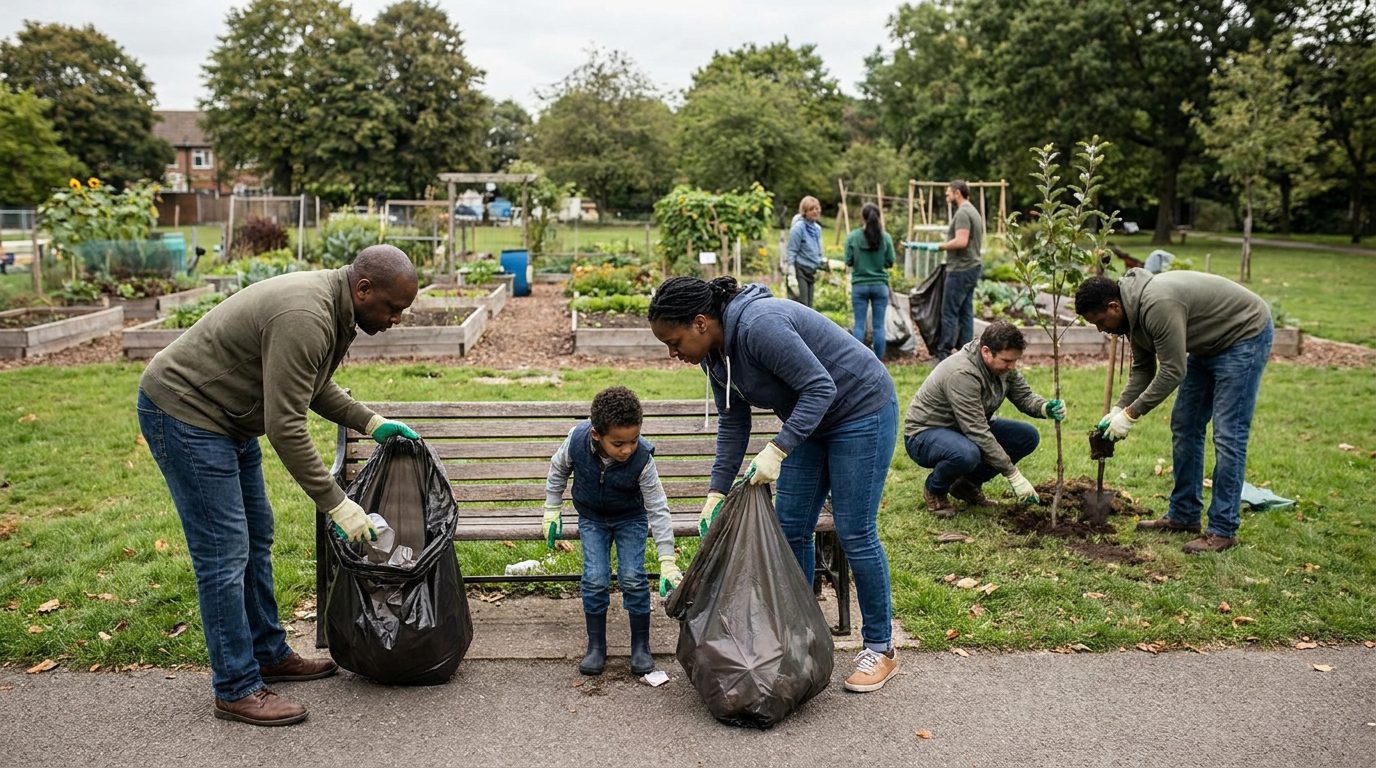
In every spiritual community, there are certain souls who naturally step forward. They arrive early to set up the altar. They stay late to clean the kitchen. They answer the phone calls, organize the events, coordinate the volunteers, and somehow still find time to sit in kirtan with a full heart. These are the pillars of community life, and in the tradition of Bhakti Yoga — the path of loving devotion — their service, or seva, is deeply honored.
But here is a truth we must speak about with honesty and love: when we consistently overburden our most responsible community members, we do not strengthen our community — we slowly weaken it.
This article is for everyone — whether you are part of a Bhakti community, a church, a volunteer organization, a nonprofit, or any gathering of people united by a shared purpose. The principles of devotion, care, and mutual respect that Bhakti Yoga teaches apply beautifully to this very real and very human challenge.
Let us explore this together with open hearts.
In the Bhakti tradition, seva means selfless service offered with love. It is not a transaction. It is not performed for recognition or reward. As the Bhagavad Gita (Chapter 3, Verse 19) teaches, Lord Krishna encourages us to perform our duties without attachment to results:
> “Tasmād asaktaḥ satataṁ kāryaṁ karma samācara”
> “Therefore, without attachment, always perform the work that must be done, for by working without attachment, one attains the Supreme.”
This is a beautiful and profound teaching. Service done in a spirit of devotion purifies the heart and draws us closer to God. When we offer our time, energy, and skills to something greater than ourselves, we grow spiritually.
However — and this is important — this sacred teaching was never meant to become a justification for exploiting the willing. When a few devoted souls carry the weight that an entire community should share, something has gone out of balance. The beauty of seva becomes strained, and what was once joyful can quietly become exhausting.
The Difference Between Devotion and Depletion
There is a subtle but critical difference between joyful service and chronic overwork disguised as devotion. A person who serves from a full heart radiates peace. A person who serves from an empty well — no matter how willing they are — eventually begins to struggle.
Burnout does not mean someone lacks devotion. It means they are human. Even Arjuna, the great warrior and devotee, experienced overwhelm and confusion on the battlefield of Kurukshetra. He needed guidance, rest for his spirit, and the loving voice of Krishna to help him find clarity.
If even Arjuna needed support, why would we expect our community volunteers to carry everything without ever faltering?
Why the Most Responsible Members Get Overburdened
Understanding the problem is the first step toward healing it. Let us look honestly at why this pattern repeats itself in spiritual communities and organizations everywhere.
They Say Yes Because They Love
The most devoted community members say yes because their hearts are full of love for God, for the community, and for the mission. They do not calculate how many hours they have already given this week. They see a need, and they respond. This is a beautiful quality — but without communal awareness, it can be taken for granted.
Others Assume They Will Handle It
Over time, a quiet assumption builds: “Oh, they always take care of that.” Whether it is setting up for Sunday programs, managing communications, coordinating prasadam (sanctified food) preparation, or handling finances, the community unconsciously assigns permanent roles to temporary volunteers. What began as a one-time offering becomes a lifelong expectation.
Asking for Help Feels Uncomfortable
Many sincere devotees feel uncomfortable saying, “I need help.” In a culture that celebrates selfless service, admitting exhaustion can feel like a spiritual failure. But it is not. Recognizing our limits is an act of wisdom and honesty, not weakness.
Leadership May Not Notice the Imbalance
Community leaders, especially in growing organizations, are often overburdened themselves. They may not realize that 80% of the work is being done by 20% of the people. Without intentional systems of support and rotation, this imbalance quietly deepens.
The Real Consequences of Overburdening the Faithful
When we allow this pattern to continue unchecked, the consequences ripple outward in ways we may not immediately see.
Burnout and Spiritual Fatigue
The most immediate consequence is burnout. A person who once found deep joy in chanting the Holy Names, preparing offerings, or welcoming newcomers may begin to feel drained. Their spiritual practice — the very thing that fuels their service — begins to suffer because there is simply no time or energy left for it.
The Bhagavad Gita (6.16-17) reminds us of the importance of balance:
> “Yukta-āhāra-vihārasya, yukta-ceṣṭasya karmasu”
> “For one who is moderate in eating, sleeping, working, and recreation, yoga becomes the destroyer of suffering.”
Balance is not a luxury. It is a spiritual necessity.
Loss of Valuable Community Members
When overburdened members finally reach their limit, they often do not make a dramatic exit. They simply and quietly step away. They stop attending programs. They stop answering calls. And the community loses not just a volunteer, but a devoted soul whose presence enriched everyone.
This is one of the greatest tragedies in community life — losing beautiful people not because they lost faith, but because they lost energy.
A Narrow Foundation That Cannot Hold
A community that depends on a handful of people is standing on a fragile foundation. If one or two key members become ill, move away, or simply need a break, entire programs can collapse. This is not sustainable, and it is not fair.
Discouragement of New Participation
When newcomers see the same few people doing everything, they may unconsciously assume there is no room for them. Or they may feel intimidated by the level of commitment they observe and think, “I could never do that much, so perhaps I should not offer at all.” Ironically, the overwork of a few can discourage the participation of many.
Sure, here is the sentence with the clickable link:
You can find more bhakti articles here.
What Bhakti Wisdom Teaches Us About Shared Responsibility
The Bhakti tradition is deeply communal. The great acharyas (spiritual teachers) throughout history always emphasized sangha — the community of devotees — as essential to spiritual growth. No one walks this path alone.
Lord Chaitanya’s Model of Distributed Service
Sri Chaitanya Mahaprabhu, the great 15th-century saint who revived the chanting of the Hare Krishna maha-mantra, organized His movement with remarkable care. He did not place all responsibilities on one person. He empowered many devotees, each with different strengths and roles. Nityananda Prabhu spread the message in Bengal. Rupa and Sanatana Goswamis preserved the theology. Srivasa Thakura hosted the kirtans. Advaita Acharya inspired the elder community.
This was a community where responsibility was shared with love and intelligence.
The Principle of Yukta-Vairagya
The great teacher Srila Rupa Goswami taught the principle of yukta-vairagya — using everything in the service of God, but in a balanced and appropriate way. This includes our time, our energy, and our human limitations. Pushing someone beyond their capacity is not devotion — it is neglect dressed in spiritual clothing.
Practical Steps Toward a Healthier, More Loving Community
So what can we do? How do we honor the beauty of seva while protecting the people who offer it most generously? Here are some practical, heart-centered steps.
Create a Culture Where Asking for Help Is Celebrated
Leaders and senior members can model this by openly asking for help themselves. When asking for support is normalized rather than stigmatized, everyone benefits. A simple announcement — “We need three more hands for Sunday’s feast preparation” — can make all the difference.
Rotate Responsibilities Regularly
No one should feel permanently assigned to a role unless they genuinely desire it and it is sustainable. Create rotation schedules for key tasks like cooking, cleaning, greeting, setup, and coordination. This also gives more people the blessing of participating in seva.
Check In With Your Devoted Servers
Do not wait for someone to collapse before asking how they are doing. A heartfelt conversation — “How are you really feeling? Is this sustainable for you? What support do you need?” — can prevent so much pain. This is an act of love, and it is the responsibility of every community member, not just leadership.
Empower and Train New Volunteers
Sometimes long-term members continue doing everything because no one else has been trained. Take the time to mentor new volunteers, share knowledge, and build capacity. This is an investment in the community’s future and a gift to the people who have been carrying the load.
Honor Rest as a Spiritual Practice
Rest is not laziness. Sabbath, retreat, and renewal are honored in spiritual traditions across the world for a reason. Encourage your most active members to take breaks. Cover their responsibilities while they rest. Show them, through action, that their well-being matters more than their productivity.
Express Genuine Gratitude — Often
Never underestimate the power of sincere thanks. A note of appreciation, a public acknowledgment during a gathering, or a simple “Thank you for everything you do” can fill a tired heart with renewed energy. Gratitude is one of the simplest and most powerful forms of love.
Building a Community That Reflects Divine Love
At its core, Bhakti Yoga teaches us that every soul is precious. Every person in our community — whether they have been serving for twenty years or walked through the door for the first time today — is a beloved child of God. The Srimad Bhagavatam beautifully describes how the Lord resides in the heart of every living being. If we truly believe this, then caring for our community members is itself an act of worship.
A community that burns out its best people is a community that has forgotten this truth, even if unintentionally. And a community that protects, supports, and uplifts every member — especially those who give the most — is a community that truly reflects the love of God.
An Invitation to Take One Sincere Step
If you are reading this and you recognize yourself as one of those overburdened souls, please know: it is okay to rest. It is okay to ask for help. Your worth is not measured by how much you do, but by the love in your heart.
And if you are reading this and you realize you could do more to support the devoted servers in your community, today is a beautiful day to begin. Offer to help with one task. Send one message of gratitude. Show up a little early or stay a little late.
Whatever your background, whatever your tradition, wherever you are on your spiritual journey — you are welcome here. Bhakti, the path of love and devotion, is open to every heart. You do not need to be perfect. You do not need to have all the answers. You simply need to take one sincere step toward God, toward love, toward caring for one another.
As the beloved Bhagavad Gita (9.26) so tenderly assures us:
> “Patraṁ puṣpaṁ phalaṁ toyaṁ yo me bhaktyā prayacchati”
> “If someone offers Me with love and devotion a leaf, a flower, a fruit, or water, I will accept it.”
God does not ask for grand gestures. He asks for love. And love, shared across a community, is the most powerful force in all of creation.
Let us build communities worthy of that love — together.

