
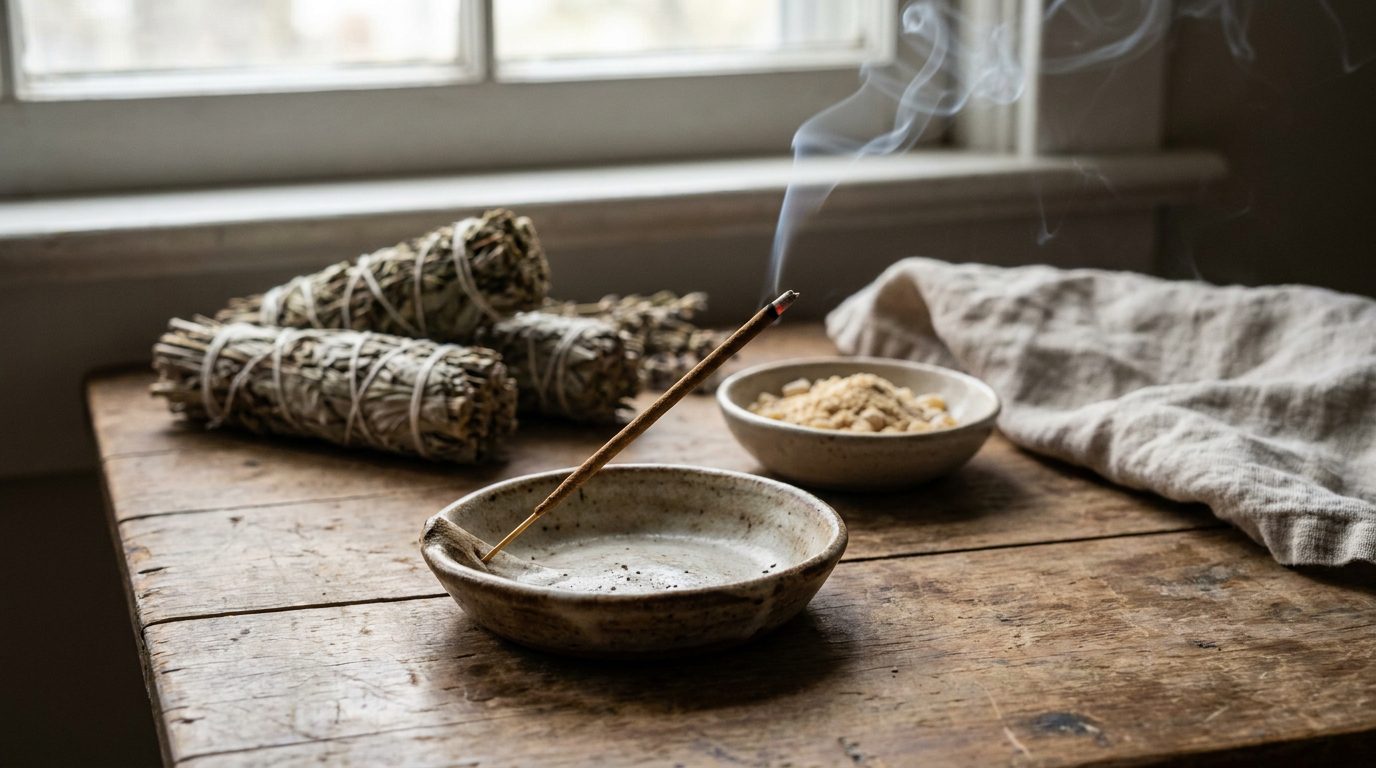
Incense has a gentle way of changing the atmosphere of a room. A small flame touches the tip of a stick, a thread of smoke rises, and suddenly the heart remembers: this space can be sacred. This moment can be offered. This life can be lived in loving connection with God.
In Bhakti Yoga, the path of devotion, incense is not just a pleasant fragrance. It is an expression of love. It is a simple offering made with the hands, the senses, and the heart. Whether you are new to spiritual practice, returning after some time, or already walking a devotional path, learning the art of offering incense can bring more presence, gratitude, and sacredness into your daily life.
Bhakti Yoga teaches that God is personal, loving, and accessible. We can approach the Divine through chanting, prayer, service, remembrance, and heartfelt offerings. Incense is one of those offerings. It invites us to slow down, become mindful, and say with humility, “Dear Lord, please accept this small act of love.”
Offering incense means presenting fragrance to God with devotion. In Sanskrit, the language of many Bhakti scriptures, incense is often called dhupa. The act of worship or offering is called puja, which simply means honoring, worshiping, or serving the Divine.
In Bhakti, we understand that everything already belongs to God. The flowers, the food, the water, the light, the fragrance, and even our ability to offer them are all gifts. So when we offer incense, we are not giving God something He lacks. Rather, we are returning a gift with love.
Incense as an Offering of the Senses
Our senses are powerful. They often pull us outward toward distraction, desire, and restlessness. Bhakti Yoga gently teaches us to spiritualize the senses by engaging them in loving service.
We use the voice to chant sacred names.
We use the ears to hear wisdom and prayer.
We use the hands to serve.
We use the eyes to behold sacred images.
And we use the sense of smell to honor God through fragrance.
When incense is offered with sincerity, the fragrance becomes part of our devotional meditation. It reminds us that love can be expressed through simple, tangible actions.
A Symbol of Purification
The rising smoke of incense is often seen as a symbol of purification. Just as fragrance fills a room, devotion can fill the heart. Just as smoke rises upward, our prayers rise toward God.
Of course, true purification is not only external. It is not merely about making a space smell beautiful. It is about inviting humility, sincerity, and remembrance into the heart. Incense can support that inner movement.
A Universal Gesture of Reverence
Many spiritual traditions use incense: Hindu, Buddhist, Christian, Jewish, Islamic, Indigenous, and other sacred cultures have all used fragrance in worship or ceremony. This reminds us that the human heart naturally longs to honor the sacred.
In Bhakti Yoga, we welcome readers of all backgrounds. You do not need to be born into a certain culture, know Sanskrit, or have a perfect home altar to begin. If you have a sincere heart, you can offer incense as a prayer.
The Bhakti Understanding of Offering
Bhakti means devotion, loving service, or love for God. It is not just a philosophy. It is a way of living. Every action can become spiritual when done with love and offered to the Divine.
The Bhagavad-gita, one of the most beloved Bhakti scriptures, gives a beautiful teaching on offering. Lord Krishna says:
“If one offers Me with love and devotion a leaf, a flower, fruit, or water, I will accept it.”
— Bhagavad-gita 9.26
This verse is simple and profound. Krishna does not ask for wealth, status, or perfection. He asks for love and devotion. The Sanskrit word bhaktya means “with devotion.” That is the heart of the offering.
The Heart Matters Most
You may have the finest incense in the world, but if it is offered with pride or distraction, something essential is missing. You may have only one simple stick of incense, but if it is offered with humility, gratitude, and love, it becomes spiritually meaningful.
In Bhakti, intention matters deeply. The external ritual supports the internal offering. We offer the incense, but we also offer our mind, our breath, our gratitude, our longing, and our desire to grow.
God Accepts Love
A loving parent is touched not by the price of a child’s gift, but by the child’s affection. In the same way, the Lord sees the devotion behind what we offer.
This is encouraging for everyone. You do not need to wait until your life is peaceful, your mind is pure, or your habits are perfect. Bhakti begins wherever we are. We take one sincere step, and God kindly helps us take the next.
Offering as Relationship
Bhakti Yoga is relational. We are not simply meditating on an abstract idea. We are cultivating loving relationship with the Supreme Person, known by many names: Krishna, Rama, Vishnu, Narayana, Govinda, Allah, Yahweh, God, the Divine Beloved.
In the Bhakti tradition, names like Krishna mean “the all-attractive one,” and Govinda means “the one who gives joy to the senses, the cows, and the land.” These names help us remember that God is not distant. God is loving, beautiful, and near.
Offering incense becomes a small act of relationship. It says, “I remember You. I honor You. Please guide my heart.”
How to Choose Incense for Devotional Offering
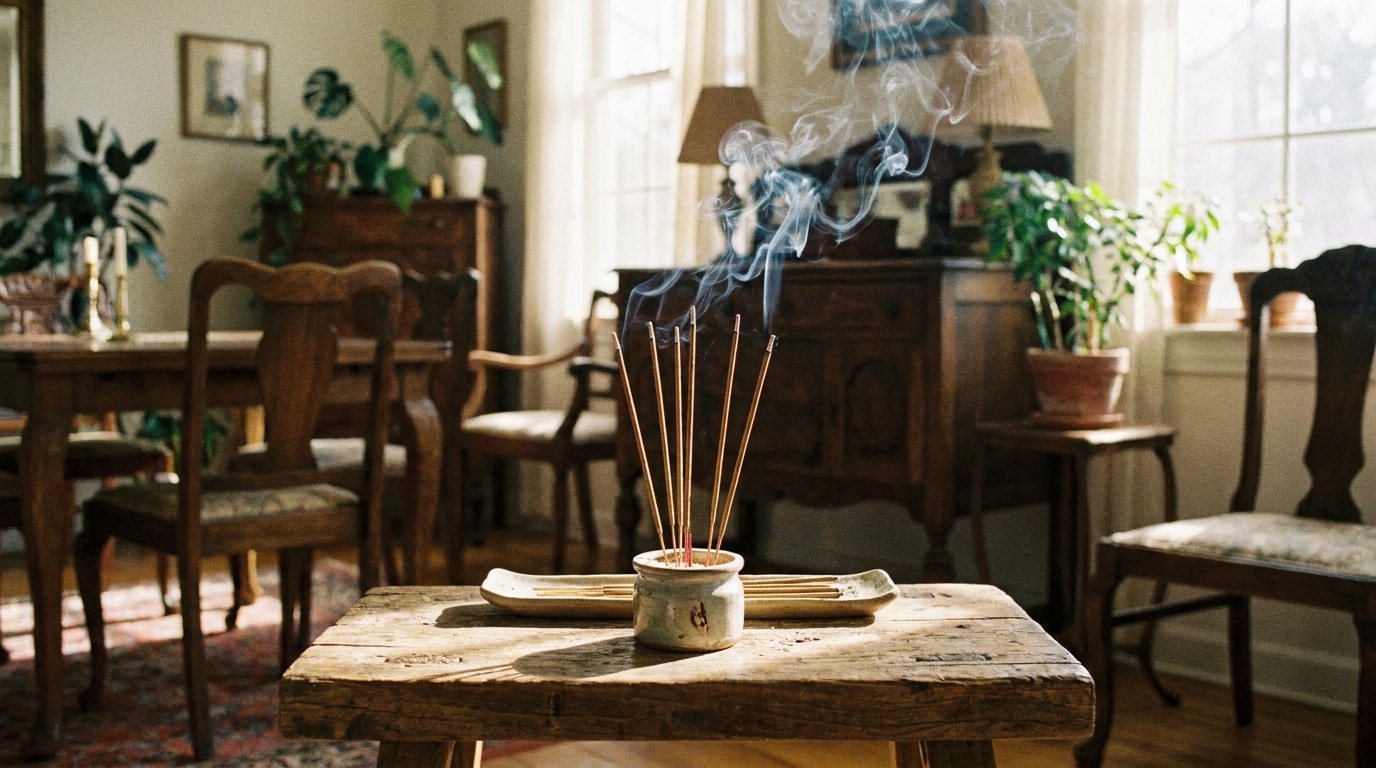
Choosing incense can be simple. You do not need to feel overwhelmed by the many options. The main principles are cleanliness, quality, and sincerity.
Natural Ingredients Are Best
When possible, choose incense made with natural ingredients such as sandalwood, frankincense, resin, herbs, flowers, or essential oils. Natural incense tends to be gentler and more suitable for prayer and meditation.
Some inexpensive incense contains synthetic perfumes or chemicals that may create heavy smoke or irritation. If you or someone in your home is sensitive to smoke, use a lighter option, burn only a small amount, or consider offering essential oil fragrance instead.
Bhakti is practical and compassionate. The purpose of incense is to support devotion, not to cause discomfort.
Traditional Fragrances in Bhakti
Certain fragrances are especially loved in devotional worship.
Sandalwood is cooling, peaceful, and often associated with sacredness.
Frankincense has a deep, resinous fragrance used in many spiritual traditions.
Jasmine is sweet and uplifting, often connected with beauty and devotion.
Rose carries a mood of love, softness, and gratitude.
Tulasi, also spelled Tulsi, is sacred in the Bhakti tradition. Tulasi is a holy plant dear to Krishna. Incense made with Tulasi should be treated respectfully.
You can choose a fragrance that helps your mind become peaceful and prayerful.
Incense Sticks, Cones, Powders, and Resins
Incense comes in several forms.
Incense sticks are easy to use and common for home worship.
Incense cones are compact and burn steadily.
Powder incense may be sprinkled on charcoal, often in traditional ceremonies.
Resins such as frankincense or copal are burned on charcoal and produce a rich fragrance.
For beginners, incense sticks are usually the simplest. As your practice grows, you may explore other forms if they feel appropriate.
Ethical and Respectful Sourcing
Whenever possible, buy incense from trusted sources that use fair, ethical, and sustainable ingredients. Spiritual practice includes care for others and the Earth. A devotional life is not separate from compassion.
If you purchase incense from a temple, devotional shop, or spiritual community, your offering may also support service, education, and sacred spaces.
Please visit our website for more information on our articles: articles.
Preparing a Sacred Space for Incense Offering
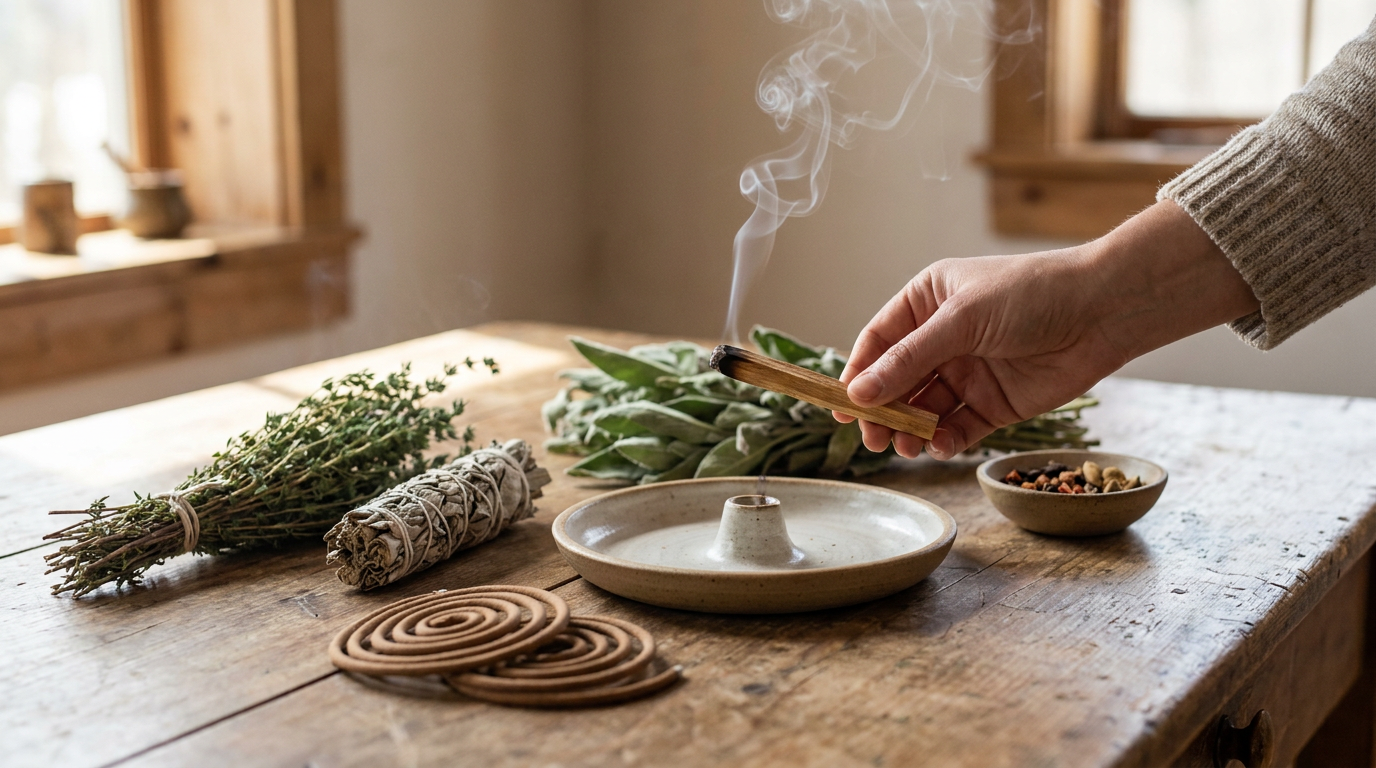
Before offering incense, it helps to prepare the space. This does not need to be elaborate. A clean table, a small shelf, or a quiet corner can become a place of prayer.
Creating a Simple Home Altar
An altar is a sacred place where we turn our attention toward God. In Bhakti Yoga, an altar may include a picture or form of Krishna, Rama, Vishnu, Radha-Krishna, Lord Chaitanya, or other beloved forms of the Divine. Some people may keep a picture of their spiritual teacher, saints, sacred texts, or symbols of God according to their tradition.
If you are new, begin simply. You might place:
A clean cloth
A sacred image or symbol
A candle or lamp
A small cup of water
Flowers, if available
An incense holder
The altar is not for decoration only. It is a place of meeting. It invites us to pause, bow inwardly, and reconnect.
Cleanliness as Respect
In Bhakti, cleanliness is an expression of care. Before offering incense, you may wash your hands, tidy the altar, and make sure the incense holder is clean and safe.
This is not about anxiety or perfectionism. It is about love. Just as we clean our home before welcoming a dear guest, we clean the altar to honor the Lord.
Safety and Ventilation
Incense involves fire, so practical care is important.
Use a stable incense holder.
Keep incense away from curtains, paper, and anything flammable.
Do not leave burning incense unattended.
Make sure ashes fall safely.
Open a window if needed.
Be mindful of children, pets, elders, and anyone with asthma or respiratory sensitivity.
A devotional offering should be safe, peaceful, and considerate.
Step-by-Step Guide: How to Offer Incense
The art of offering incense is simple, but each step can be filled with meaning. You may adapt this guide according to your tradition, home, and capacity.
Step 1: Pause and Become Present
Before lighting the incense, take a moment to breathe. Let the body soften. Let the mind settle.
You might silently pray:
“Dear Lord, please help me offer this with love.”
This small pause turns a routine action into a sacred act.
Step 2: Light the Incense
Hold the incense stick carefully and light the tip with a match or candle. Let it burn for a moment, then gently blow out the flame so the tip glows and releases smoke.
As you light it, remember that devotion is like fire. Even a small spark can grow when protected and nourished.
Step 3: Offer the Incense to God
If you have an altar, hold the incense respectfully and offer it before the sacred image or symbol. Traditionally, incense may be circled clockwise before the Lord. You can make three or seven gentle circles, depending on your practice.
If you do not know the traditional method, simply hold the incense with reverence and pray from the heart.
You may say:
“My Lord, please accept this incense.”
Or:
“Krishna, please accept this offering of fragrance with my love.”
Or simply:
“Thank You. Please guide me.”
The exact words are less important than sincerity.
Step 4: Offer to the Sacred Texts, Teachers, and Devotees
In many Bhakti homes and temples, after offering to Krishna or the main form of God on the altar, the incense is also offered to sacred scriptures, spiritual teachers, and devotees.
This honors the path through which divine grace comes to us. We are not walking alone. We receive wisdom from saints, teachers, community, and scripture.
Step 5: Place the Incense Safely
After offering, place the incense in the holder. Make sure it is secure and the ashes will fall safely.
Then sit or stand quietly for a moment. Let the fragrance remind you of your prayer.
Step 6: Chant, Pray, or Meditate
Incense offering naturally pairs with chanting and prayer. In Bhakti Yoga, chanting the holy names of God is central. This practice is called kirtan when sung together, and japa when chanted softly or personally, often on beads.
A simple mantra, or sacred sound prayer, is the Hare Krishna maha-mantra:
Hare Krishna Hare Krishna
Krishna Krishna Hare Hare
Hare Rama Hare Rama
Rama Rama Hare Hare
“Maha-mantra” means “great mantra.” This prayer calls upon the Divine energy of love, asking to be engaged in loving service.
You may chant one round, sing softly, read a verse, or simply sit in gratitude.
Traditional Incense Offering in Bhakti Worship
In more formal Bhakti worship, incense is often part of arati, a ceremony of offering various items to the Lord. The word arati refers to a devotional ceremony in which light, incense, water, cloth, flowers, and other items may be offered.
Incense in Arati
During arati, incense is usually one of the first items offered. The priest or devotee may ring a bell while offering incense in graceful circles before the Deity, the sacred form of the Lord.
The bell invites the mind to focus. The fragrance purifies the atmosphere. The music and chanting lift the heart. Together, the senses become engaged in devotion.
For someone new, temple worship may feel mysterious at first. But at its heart, arati is simple: God is being honored as the beloved guest, the Lord of the heart, and the center of our lives.
Deity Worship and Personal Presence
In Bhakti traditions, especially in Vaishnavism, the sacred form of God on the altar is called the Deity or murti. A murti is not considered an idol in the ordinary sense. Rather, it is a merciful form through which God agrees to receive our service and love.
Just as a national flag is more than cloth because it represents a country, the Deity is honored as a real and sacred presence of the Lord. Through this form, we can offer incense, flowers, food, and prayers in a personal way.
Learning from a Temple or Teacher
If you want to practice more traditional incense offering, it is helpful to learn from a trusted temple, teacher, or devotional community. Bhakti is received through relationship. We learn not only techniques, but mood: humility, respect, and loving intention.
At The Bhakti House and in many devotional communities, the emphasis is not on judging who is advanced or who knows the most. The emphasis is on helping every person take a sincere step closer to God.
The Inner Meaning of Incense Offering
Ritual becomes powerful when we understand its inner meaning. Incense can teach us many lessons for spiritual life.
Letting the Heart Become Fragrant
A fragrant heart is a heart softened by devotion. It carries kindness, forgiveness, patience, and gratitude. When we offer incense, we can pray that our character also becomes pleasing to God.
We may ask:
“May my words become gentle.”
“May my actions become helpful.”
“May my thoughts become purified.”
“May my life carry the fragrance of devotion.”
In this way, incense offering becomes a mirror. It invites us to become the offering.
The Smoke of Surrender
Surrender in Bhakti does not mean giving up in a hopeless way. It means trusting God with love. The Sanskrit word saranagati means taking shelter or surrendering to the Divine.
As incense burns, it gives itself completely. It does not hold back its fragrance. This can inspire us to offer our time, talents, worries, and hopes to God.
We might pray:
“Dear Lord, I do not know how to control everything. Please help me serve You with trust.”
Transforming the Home Atmosphere
A home where incense is offered with prayer can gradually become more peaceful. Not because incense is magic, but because daily devotional practice changes the consciousness of the people who live there.
When we pause to offer incense, chant, read, or pray, we interrupt the rush of ordinary life. We create a rhythm of remembrance. Children may observe it. Guests may feel it. Our own hearts may begin to depend on it.
Even five minutes of sincere daily practice can make a difference.
When and How Often Should You Offer Incense?
There is no harsh rule for beginners. Bhakti grows through consistency and affection, not pressure.
Morning Offering
Morning is a beautiful time to offer incense. The mind is often clearer, and the day has not yet become crowded with responsibilities.
A simple morning practice may include:
Lighting incense
Offering a short prayer
Chanting the Hare Krishna mantra or another name of God
Reading one verse from scripture
Asking, “How can I serve today?”
This can set a devotional tone for the whole day.
Evening Offering
Evening incense offering can help close the day with gratitude. After work, study, parenting, or many responsibilities, we may come before God and release the burdens we have carried.
You can pray:
“Thank You for carrying me through this day. Please forgive my mistakes. Please help me remember You.”
This practice can bring healing and rest.
Before Scripture Reading or Chanting
Offering incense before reading sacred texts can help create a respectful mood. Scriptures such as the Bhagavad-gita, Srimad-Bhagavatam, and other Bhakti writings are not merely books of information. They are invitations into divine relationship.
Before reading, you might offer incense and pray:
“May I hear with humility. May this wisdom enter my heart.”
On Special Days and Festivals
Incense is often offered during holy days, kirtans, home gatherings, and festivals such as Janmashtami, the appearance day of Lord Krishna; Rama Navami, celebrating Lord Rama; Gaura Purnima, honoring Lord Chaitanya; and Ekadashi, a sacred day for deepening devotion.
But remember, the most important special day is today. Any day can become sacred when we remember God.
Common Questions About Offering Incense
Many people feel shy when beginning devotional practices. Questions are natural. Bhakti welcomes honest inquiry.
Do I Have to Be Hindu to Offer Incense?
No. Bhakti Yoga is a path of love for God, open to all sincere people. It comes through the ancient Vedic tradition, but its essence is universal: love, prayer, chanting, service, and remembrance.
You are welcome to honor God according to your heart and background. If you are drawn to Krishna and the Bhakti tradition, you can begin respectfully and learn step by step.
What If I Do Not Have an Altar?
You can still offer incense. Choose a clean, quiet place. Place a sacred image, scripture, or simple symbol of God there. Even if you have nothing external, you can offer the incense mentally with prayer.
Bhakti is not limited by circumstance. God sees the heart.
Can I Offer Incense Without Knowing Mantras?
Yes. Mantras are beautiful and powerful, but you can begin with simple prayer in your own words.
You might say:
“Dear God, please accept this offering.”
“Please help me love You.”
“Please guide my life.”
As you grow, you may learn traditional prayers and mantras. Let your practice develop naturally.
What If My Mind Wanders?
The mind wanders for almost everyone. Do not be discouraged. When you notice distraction, gently return to the prayer, the fragrance, the sacred name, or the presence of God.
Bhakti is not about pretending to be advanced. It is about returning again and again with sincerity.
Is Incense Required in Bhakti Yoga?
No single external item is required for love. The essence of Bhakti is devotion. However, incense can support our practice by engaging the senses and creating a sacred atmosphere.
If you cannot use incense because of health, housing rules, or personal reasons, you can offer a flower, water, candle, food, song, or heartfelt prayer.
Incense Offering as Daily Spiritual Practice
The beauty of Bhakti Yoga is that spiritual life can be woven into ordinary life. Offering incense is one small thread in that sacred weaving.
Connect Incense with Chanting
Chanting is the heart of Bhakti practice. The sacred names of God are understood to carry God’s presence. When we chant, we are not simply repeating sounds. We are calling out to the Divine.
Offering incense before chanting can help the mind transition from busyness to devotion. The fragrance signals, “Now I am turning toward God.”
Even if you chant for just five minutes, do it with attention and affection.
Connect Incense with Service
Service, or seva, means loving service offered to God and all living beings. After offering incense, ask yourself:
“Who can I serve today?”
“Can I speak more kindly?”
“Can I help someone without needing recognition?”
“Can I offer my work to God?”
This is where ritual becomes life. The incense may burn for a few minutes, but the spirit of offering can continue all day.
Connect Incense with Gratitude
Gratitude opens the heart. While incense burns, name three things you are thankful for. They can be very simple: breath, food, shelter, friendship, sunlight, the chance to begin again.
Gratitude helps us see God’s kindness in daily life.
Connect Incense with Spiritual Growth
Spiritual growth does not always look dramatic. Often it is quiet. We become a little more patient. We forgive a little sooner. We remember to pray before reacting. We become less centered on ourselves and more available to love.
A daily incense offering can become a gentle anchor for that growth.
Scriptural Reflections on Offering and Devotion
Bhakti scriptures give us deep wisdom, but they also speak to everyday life. Their teachings can guide our incense offering with greater understanding.
Bhagavad-gita: Offer What You Do
In the Bhagavad-gita 9.27, Krishna says:
“Whatever you do, whatever you eat, whatever you offer or give away, and whatever austerities you perform—do that as an offering to Me.”
This teaching expands worship beyond the altar. Incense offering is a beginning, but the goal is to offer our whole life. Cooking, working, parenting, studying, cleaning, creating, resting—everything can be offered.
The incense teaches the mood: “This is for You.”
Srimad-Bhagavatam: Hearing and Chanting
The Srimad-Bhagavatam, a treasured Bhakti scripture, repeatedly glorifies hearing and chanting about God. Hearing sacred wisdom and chanting divine names cleanse the heart.
Incense can prepare us for that hearing and chanting. It creates a mindful environment, but the deeper purification comes through sincere remembrance of God.
Chaitanya Tradition: The Holy Name
Lord Chaitanya, a great saint and incarnation of divine love in the Bhakti tradition, taught that chanting the holy names is the most accessible spiritual practice for this age.
He shared the mood that anyone can chant: regardless of background, education, wealth, or past mistakes. Incense, music, prayer, and community can support this chanting, but the holy name itself is the heart.
This is very hopeful. We can begin now.
Practical Tips for a Meaningful Incense Offering
A complete guide to offering incense should include both devotional mood and practical wisdom. Here are simple tips to help your practice become steady and heartfelt.
Keep It Simple
Do not make the practice so complicated that you avoid it. One stick of incense, one prayer, and one sincere moment can be enough.
As love grows, details may grow naturally.
Be Consistent
A small daily practice is often more transformative than an occasional elaborate ritual. Try offering incense at the same time each day, even if briefly.
Consistency builds sacred rhythm.
Avoid Mechanical Worship
Ritual can become automatic if the heart is absent. To avoid this, pause before offering and remember why you are doing it.
Ask:
“Who am I offering this to?”
“What am I grateful for?”
“What do I want to surrender today?”
Include the Whole Family
If appropriate, invite children, partners, roommates, or friends to participate. Let it be gentle and welcoming, not forced.
Children may enjoy ringing a bell, placing flowers, or saying a simple prayer. In this way, devotion becomes part of family culture.
Respect Shared Spaces
If you live with others, be considerate. Ask before burning incense. Use mild fragrance. Keep ventilation in mind. Love for God should also appear as kindness toward the people around us.
Travel Practice
When traveling, you may not be able to burn incense. You can still offer mentally. Carry a small picture, prayer beads, or scripture. Offer your breath, your chanting, and your gratitude.
Bhakti travels with the heart.
Mistakes to Avoid When Offering Incense
Mistakes are part of learning. There is no need to feel fear. Still, a few reminders can help keep your practice respectful and safe.
Treating Incense as Mere Decoration
Incense can make a room smell nice, but devotional offering is more than ambiance. Try to connect the act with prayer and remembrance.
Even a few sincere words can transform the experience.
Using Overpowering Smoke
Too much smoke can disturb the body and mind. Choose gentle incense and burn only what is needed. If a full stick is too much, you may extinguish it safely after offering.
Moderation supports devotion.
Forgetting Fire Safety
Never leave incense unattended. Always use a proper holder. Make sure ashes are contained. Spiritual practice should be responsible.
Comparing Your Practice to Others
Someone else may have a beautiful altar, memorized prayers, or formal training. Be inspired, but do not compare. God accepts sincere love.
Your offering matters.
Bringing the Fragrance of Bhakti Into Daily Life
The true art of offering incense is not only in how we hold the stick, light the flame, or circle it before the altar. The deeper art is learning to live as an offering.
If we offer incense but speak harshly, the practice is inviting us to grow.
If we offer fragrance but carry resentment, the practice is inviting us to forgive.
If we offer smoke rising upward but keep our hearts closed, the practice is inviting us to surrender.
This is not meant to discourage us. It is meant to encourage honest, beautiful growth. Bhakti Yoga is a practical path of love. It begins with simple acts and gradually transforms the whole person.
When we chant, we offer our voice.
When we pray, we offer our heart.
When we serve, we offer our energy.
When we read scripture, we offer our attention.
When we prepare food and offer it to God, we offer nourishment.
When we light incense, we offer fragrance—and with it, our desire to remember and love the Divine.
A Simple Incense Offering You Can Try Today
If you would like to begin, here is a very simple practice:
Choose a quiet place.
Place a sacred image, scripture, or symbol of God before you.
Light one stick of incense safely.
Hold it with respect.
Say, “Dear Lord, please accept this offering of fragrance. Please help me remember You and serve with love.”
Offer the incense before the altar.
Place it in the holder.
Chant the Hare Krishna mantra, another sacred name of God, or a prayer from your heart.
Sit quietly for one minute in gratitude.
That is enough for a beginning. If you do it sincerely, it is beautiful.
Everyone Is Welcome to Begin
The art of offering incense is really the art of offering the heart. It is a small doorway into a life of devotion, where ordinary moments become sacred through love.
You do not need to be perfect. You do not need to know everything. You do not need to have a large altar, expensive incense, or formal training. Come as you are.
Bhakti Yoga welcomes the sincere soul. Through chanting, prayer, service, scripture, community, and simple offerings, the heart gradually awakens.
May the fragrance of your incense remind you that God is near. May your home become a place of peace. May your life carry the gentle aroma of kindness, humility, and devotion.
Everyone is welcome to take one sincere step toward God today.
FAQs
What is incense?
Incense is a substance that is burned to produce a fragrant aroma. It is often used in religious or spiritual ceremonies, as well as for meditation, aromatherapy, and to create a pleasant atmosphere.
What are the different types of incense?
There are several types of incense, including stick incense, cone incense, coil incense, and loose incense. Each type has its own unique characteristics and burning methods.
How is incense traditionally offered?
In many cultures, incense is offered as a form of worship or reverence. It is often placed in a censer or incense holder and then lit, allowing the fragrant smoke to rise as a symbolic offering.
What are the benefits of burning incense?
Burning incense can have a variety of benefits, including creating a calming atmosphere, masking unpleasant odors, and promoting relaxation and focus during meditation or prayer.
Are there any safety considerations when burning incense?
It is important to burn incense in a well-ventilated area and to use a proper incense holder to prevent fire hazards. It is also recommended to avoid inhaling the smoke directly and to be mindful of any potential allergies or sensitivities to certain fragrances.

