
A Sacred Welcome to Syama-kunda
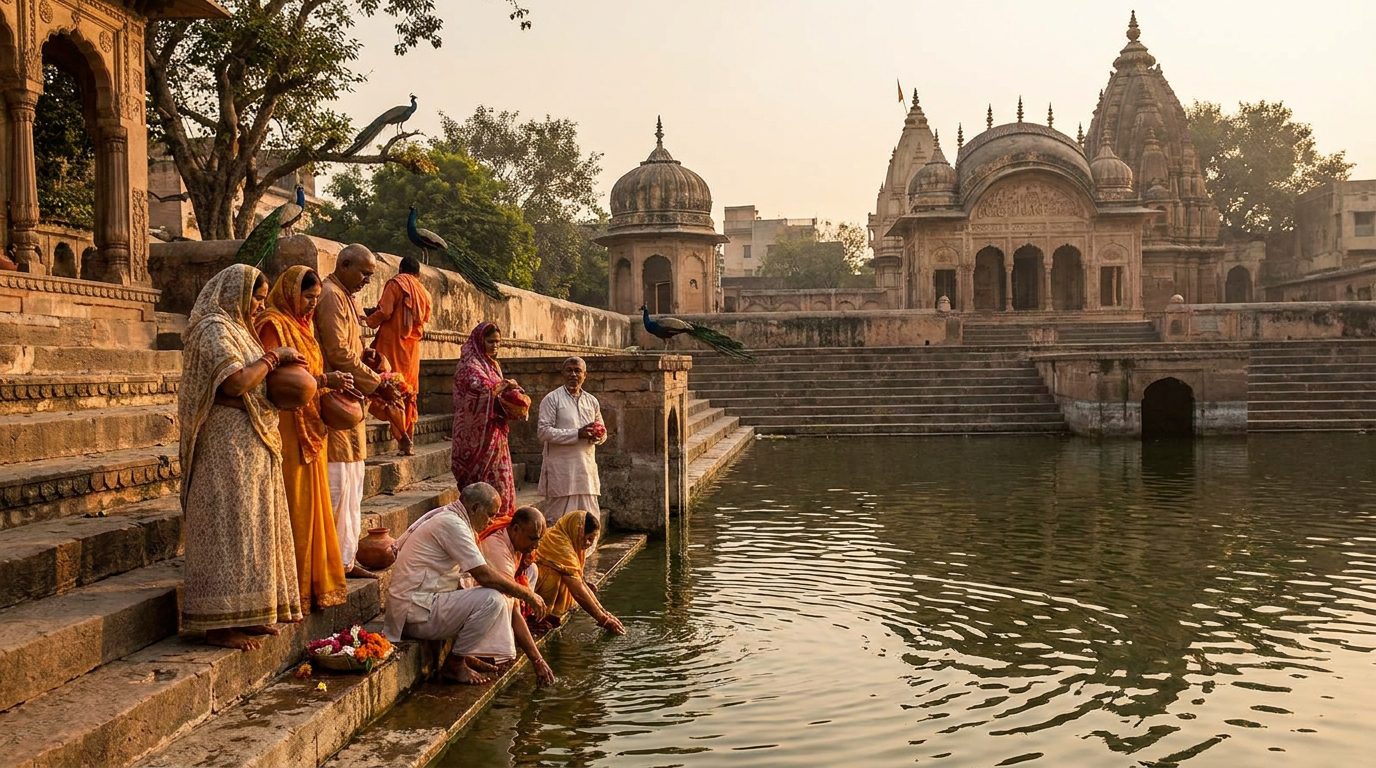
Syama-kunda, also spelled Shyama-kunda, is one of the most sacred lakes in the village of Radha-kunda, near Govardhan Hill in Vrindavan, India. For followers of Bhakti Yoga—the path of loving devotion to God—Syama-kunda is not simply a historical site or a peaceful body of water. It is a place of deep prayer, remembrance, chanting, and spiritual longing.
The word kunda means “pond” or “sacred lake.” Syama is a beautiful name of Krishna, meaning “dark-hued,” like a fresh raincloud. So Syama-kunda means “the sacred lake of Syama, Krishna.”
People come here from many backgrounds: lifelong practitioners, curious travelers, scholars, seekers, and pilgrims who may not yet know exactly what they are searching for. All are welcome. In the Bhakti tradition, sacred places are not meant to impress us from a distance; they invite the heart to soften, to listen, and to take one sincere step toward God.
Syama-kunda is closely connected with Radha-kunda, the sacred lake of Srimati Radharani, Krishna’s beloved. Together, Radha-kunda and Syama-kunda are revered as among the holiest places in all of Vraja, the sacred land of Krishna’s childhood and loving pastimes.
The Spiritual History of Syama-kunda
The history of Syama-kunda is treasured in the hearts of devotees because it is rooted in Krishna’s intimate pastimes in Vrindavan. These stories are not only ancient narratives; they are meditations on divine love, humility, playfulness, and the sweetness of God’s relationship with His devotees.
Krishna and the Demon Aristasura
According to the Bhakti scriptures and the oral tradition of Vraja, Syama-kunda appeared after Krishna defeated a demon named Aristasura. Aristasura came in the form of a huge bull and threatened the peaceful residents of Vrindavan.
Krishna, the protector of His devotees, killed Aristasura and restored safety to the community. But after this event, Srimati Radharani and the gopis—the cowherd maidens of Vraja—playfully told Krishna that because the demon had appeared in the form of a bull, Krishna needed to purify Himself.
In Vedic culture, the cow and bull are honored as sacred, gentle beings. The gopis’ words were spoken in loving humor, but Krishna accepted their challenge with affection.
The Appearance of Syama-kunda
Krishna then struck the ground with His heel, creating a great hollow. He called all the holy rivers and sacred waters to enter that place. In response, the personified holy rivers came and filled the pond. This became Syama-kunda, the sacred lake of Krishna.
The gopis, led by Srimati Radharani, then created their own kunda nearby. With their bangles and hands, they dug the earth and formed what became Radha-kunda. The two sacred lakes stand side by side, representing the loving exchange between Krishna and Radha.
This is not only a story about sacred geography. It is a window into Bhakti itself. God is not presented as distant, cold, or unreachable. Krishna is playful, relational, and lovingly conquered by the devotion of His devotees.
The Teachings Behind the Pastime
The appearance of Syama-kunda teaches us that devotion is not mechanical. It is living, personal, and full of loving exchange.
In Bhakti Yoga, the goal is not simply to become religious in an external way. The heart’s real longing is to love and be loved by God. Syama-kunda reminds us that Krishna responds to sincere devotion, even when that devotion comes through playful words, simple offerings, songs, tears, or humble prayers.
For modern seekers, this is deeply practical. We may not live in Vrindavan, and we may not understand all the philosophy at once. But we can begin with sincerity. We can chant God’s names, offer our food with gratitude, pray honestly, serve others, and remember that divine love is the heart of spiritual life.
Syama-kunda in Bhakti Scripture and Tradition
Syama-kunda is honored in many Vaishnava traditions, especially in the Gaudiya Vaishnava lineage, which follows the teachings of Sri Chaitanya Mahaprabhu. Sri Chaitanya, a 15th-century saint and incarnation of divine love, revealed the deep importance of Radha-kunda and Syama-kunda to the world.
The Glory of Radha-kunda and Syama-kunda
In Sri Upadesamrita, a short but profound text by Srila Rupa Goswami, the sacred places of Vraja are described with great reverence. Rupa Goswami explains that Mathura is spiritually exalted because Krishna appeared there, Vrindavan is even more special because Krishna performed His childhood pastimes there, Govardhan Hill is especially dear because Krishna lifted it and performed many loving pastimes there, and Radha-kunda is the most sacred because it is filled with the highest love of Srimati Radharani.
Although this verse specifically glorifies Radha-kunda, Syama-kunda is inseparable from it. Together, the two kundas form one sacred heart of divine love. Pilgrims usually visit both, offering respects to Radha and Krishna with deep humility.
The tradition teaches that Syama-kunda is Krishna’s own sacred bathing place, and Radha-kunda is Radharani’s. To walk around them, chant near them, or simply sit quietly on their banks can become a prayer.
Sri Chaitanya Mahaprabhu’s Discovery
Over time, the original kundas became partially hidden. When Sri Chaitanya Mahaprabhu visited Vraja, He revealed the location of Radha-kunda and Syama-kunda. The Chaitanya Charitamrita, a central scripture of Gaudiya Vaishnavas, describes how He recognized the sacred site and bathed there with great devotion.
This moment is important because it shows that sacred places may sometimes become hidden externally, but they remain alive spiritually. When a pure devotee reveals them, the world receives access again to their mercy.
Sri Chaitanya Mahaprabhu did not teach a path of pride or spiritual achievement. He taught chanting the holy names of God with humility, compassion, and longing. His most well-known prayer includes the words trinad api sunichena, meaning one should be humbler than a blade of grass and more tolerant than a tree. This mood is especially important at Syama-kunda.
The Goswamis and the Culture of Vraja
After Sri Chaitanya Mahaprabhu, His followers, especially the Six Goswamis of Vrindavan, preserved and explained the sacred geography, theology, and devotional practices of Vraja. They lived simply, wrote deeply, and showed that the highest spiritual life is rooted in humility, service, and remembrance of Radha and Krishna.
Syama-kunda is part of this living tradition. It is not only a place to take photographs or gather information. It is a place to learn how to see with the heart.
The Sanskrit word darshan means “sacred seeing.” In Bhakti, darshan is not just looking at something holy. It is allowing ourselves to be seen by the Divine. When we come before Syama-kunda, we may offer this simple prayer: “Please help me remember You. Please purify my heart. Please let me serve with love.”
Discover a wealth of knowledge by exploring our insightful articles. Our articles cover a wide range of topics to inspire and educate. Stay informed and engaged with our regularly updated articles.
The Culture of Syama-kunda Today
Syama-kunda is located in Radha-kunda village, a small but spiritually intense place near Govardhan. The atmosphere is different from a large temple complex. The lanes are narrow, the life is simple, and sacredness is woven into daily village rhythms.
Daily Devotional Life Around the Kunda
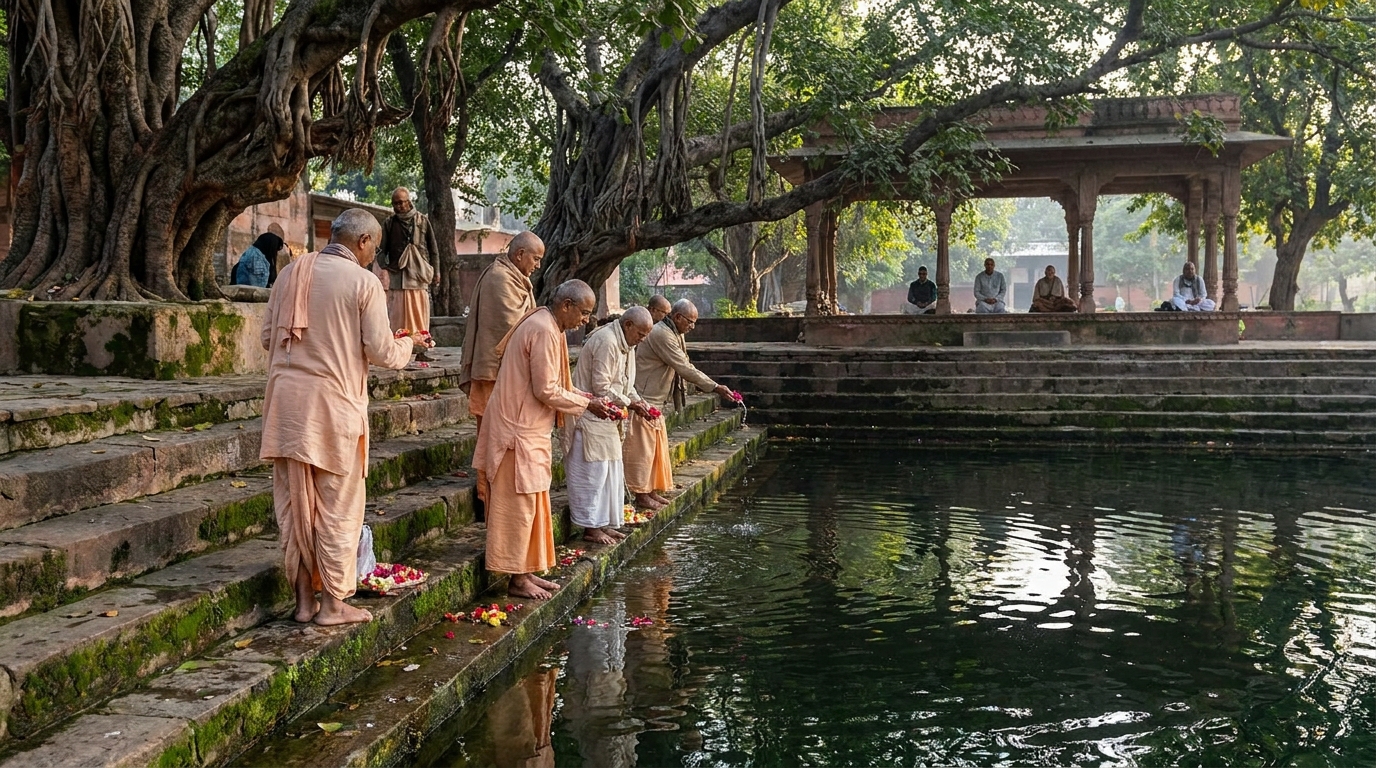
In the early morning, pilgrims and local residents walk around Radha-kunda and Syama-kunda in a practice called parikrama. Parikrama means “circumambulation,” or walking around a sacred place with reverence. It is a moving prayer.
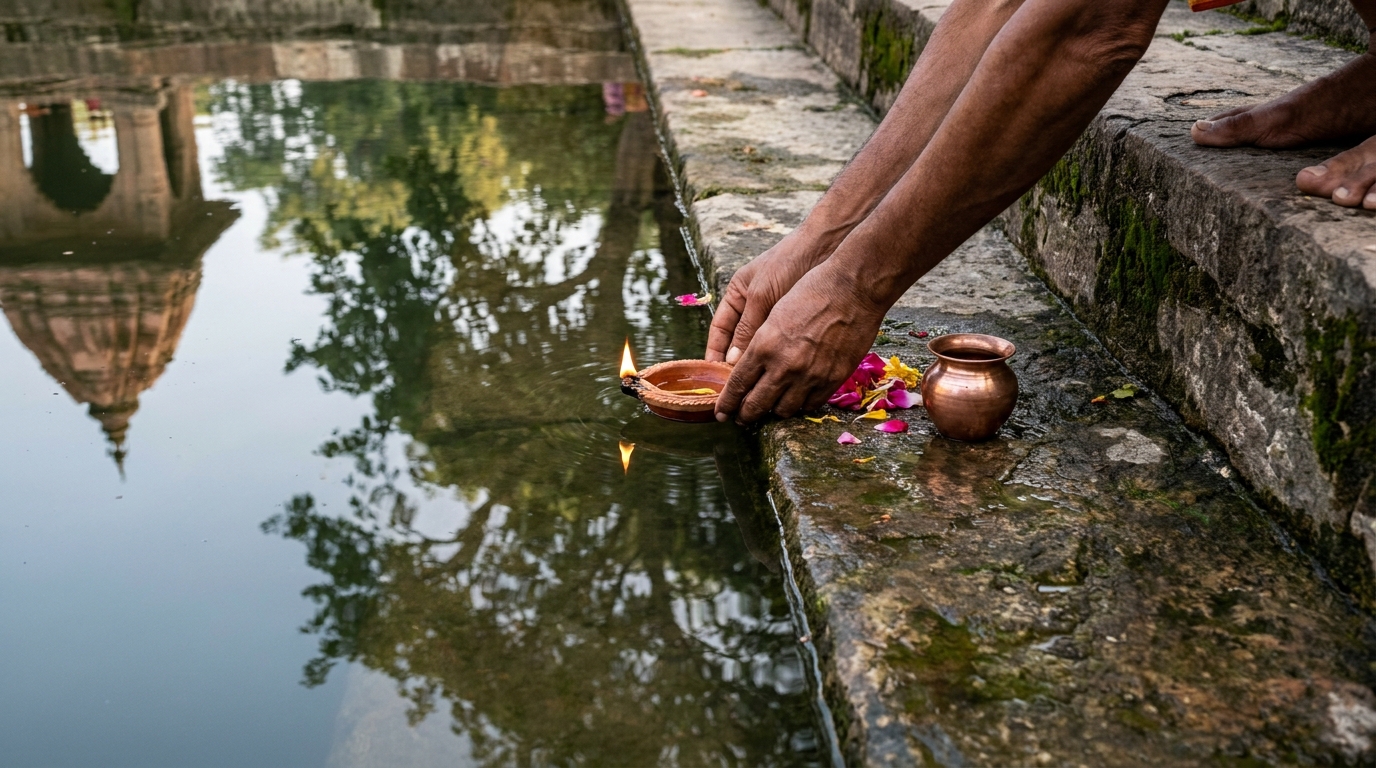
Some people chant on beads as they walk. The beads are called japa mala, and they help practitioners focus while chanting God’s names. Others sing kirtan, devotional call-and-response chanting. Some sit quietly and read scripture. Some offer flowers, lamps, or simple prayers.
The most famous mantra in the Gaudiya Vaishnava tradition is the Hare Krishna maha-mantra:
Hare Krishna, Hare Krishna, Krishna Krishna, Hare Hare
Hare Rama, Hare Rama, Rama Rama, Hare Hare
The word maha means “great,” and mantra means a sacred sound that helps free the mind and awaken the heart. Chanting this mantra is a practical way to connect with Krishna wherever we are. At Syama-kunda, the chanting feels especially tender because the place itself is filled with remembrance.
Festivals and Sacred Times
Syama-kunda and Radha-kunda become especially vibrant during holy days. One of the most important is Bahulashtami, the night when many devotees honor the appearance of Radha-kunda. Pilgrims gather in large numbers, bathe reverently, chant, and pray.
Kartik, the sacred month usually falling in October and November, is also a deeply significant time in Vraja. During Kartik, many devotees offer lamps to Krishna, sing the Damodarastakam prayers, and increase their chanting and service. Radha-kunda and Syama-kunda become filled with pilgrims from around the world.
Yet even outside festival times, the kundas remain powerful. Sometimes the quiet days allow for deeper reflection. A person may sit at the water’s edge, hear the temple bells, watch a sadhu chant, and feel something gentle awaken inside.
Sadhus, Pilgrims, and Local Residents
The culture around Syama-kunda includes sadhus, priests, families, shopkeepers, visiting pilgrims, and international practitioners. A sadhu is a spiritual practitioner, often one who has dedicated life fully to devotion and renunciation.
It is important to approach the residents and sadhus of Radha-kunda respectfully. This is their home, their sacred environment, and their place of lifelong service. A humble attitude opens doors that tourism alone cannot.
Bhakti culture teaches that we should not see sacred places as objects for our consumption. We are guests. We come to receive mercy, to learn, and to serve.
Main Attractions Near Syama-kunda
Although Syama-kunda itself is the heart of the visit, the surrounding area offers many sacred places connected with Krishna’s pastimes and the lives of great saints. A complete guide to Syama-kunda should include the places that naturally form part of a pilgrim’s journey.
Radha-kunda
Radha-kunda is directly beside Syama-kunda and is honored as the sacred lake of Srimati Radharani. In Bhakti theology, Radharani is the highest expression of love for Krishna. She is the embodiment of pure devotion.
Many pilgrims first offer respects to Syama-kunda and then to Radha-kunda, or they circumambulate both together. The mood is not hurried. One may simply fold the hands, bow the head, and pray for the grace to love God sincerely.
Radha-kunda and Syama-kunda are connected physically and spiritually. They represent the eternal loving exchange of Radha and Krishna. To visit one without honoring the other would feel incomplete.
Govardhan Hill
Syama-kunda is near Govardhan Hill, one of the most beloved sacred sites in Vraja. Krishna lifted Govardhan Hill to protect the residents of Vrindavan from devastating rains sent by Indra, the king of heaven. For seven days, Krishna held the hill like an umbrella.
Govardhan is worshiped as a form of Krishna and as the greatest servant of Krishna. The hill provides caves, grasses, minerals, water, and beautiful settings for Krishna’s pastimes.
Many pilgrims perform Govardhan parikrama, walking approximately 21 kilometers around the hill. Radha-kunda and Syama-kunda are important stops on this sacred route.
Manasi Ganga
Manasi Ganga is another sacred water site near Govardhan. The name means “the Ganges manifested from the mind.” According to tradition, Krishna manifested the holy Ganges there by His desire so that the residents of Vraja could receive sacred blessings without leaving their beloved land.
Manasi Ganga is surrounded by temples and ghats, or steps leading down to the water. Many pilgrims visit it before or after coming to Syama-kunda.
Kusum Sarovar
Kusum Sarovar is a beautiful sandstone reservoir near Radha-kunda and Govardhan. Kusum means “flower,” and the place is connected with the gathering of flowers for Radha and Krishna’s loving pastimes.
Architecturally, Kusum Sarovar is striking, with elegant chhatris, domed memorial structures, and peaceful water. Devotees often sit here for chanting, reading, and reflection. For travelers interested in culture and photography, it is visually impressive, but it should still be approached with respect as a sacred site.
Temples and Samadhis Around Radha-kunda
The area around Syama-kunda includes several temples and samadhis. A samadhi is the sacred resting place or memorial of a saint. These places remind pilgrims that Bhakti is carried through generations by those who lived and practiced with sincerity.
You may find temples dedicated to Radha and Krishna, Lord Shiva in his form as protector of the holy place, and various Vaishnava saints. Each temple has its own rhythm of worship, offering, bells, incense, and chanting.
When entering temples, it is best to dress modestly, remove shoes, avoid loud conversation, and follow the guidance of local devotees.
Practical Guide for Visiting Syama-kunda
A visit to Syama-kunda can be life-changing when approached with humility and preparation. Practical awareness helps us honor the sacred place and the people who serve there.
How to Reach Syama-kunda
Syama-kunda is located in Radha-kunda village, close to Govardhan in Uttar Pradesh, India. Many visitors travel from Vrindavan, Mathura, or Delhi.
From Mathura or Vrindavan, pilgrims often hire a taxi or take local transport toward Govardhan and Radha-kunda. The travel time can vary depending on traffic and road conditions. From Delhi, the journey usually takes several hours by car.
Radha-kunda’s lanes can be narrow and busy, especially during festival times. It is wise to travel with patience, keep belongings secure, and allow extra time.
Best Time to Visit
The cooler months from October to March are generally more comfortable for visiting Syama-kunda. Kartik is spiritually powerful but also crowded. If you wish for a quieter experience, consider visiting outside the main festival rush.
Early morning is a beautiful time for parikrama and meditation. The air is cooler, the village is waking gently, and many devotees are chanting. Evening can also be peaceful, with lamps, temple sounds, and soft devotional music.
Summer can be very hot, so travelers should be careful about hydration, sun protection, and rest.
Bathing at Syama-kunda
Many scriptures and devotees glorify bathing in Radha-kunda and Syama-kunda. However, this should be approached with great reverence, not as ordinary swimming.
Some teachers advise that pilgrims may sprinkle a few drops of water on their head rather than fully bathing, especially if they are new to the tradition or unsure of proper etiquette. The essential mood is devotion, not external display.
If you choose to bathe, dress modestly, follow local guidance, avoid soap or any pollutants, and maintain a prayerful mood. The waters are sacred and should be treated with the deepest respect.
Etiquette for Pilgrims and Visitors
Syama-kunda is a holy place and a living village. Simple etiquette makes the visit more meaningful for everyone.
Dress modestly and respectfully. Avoid loud behavior, especially near temples and ghats. Do not litter. Ask before photographing people, sadhus, rituals, or private worship. Be cautious about stepping into temple areas without understanding the local customs.
If someone offers guidance or blessings, receive respectfully, but also be mindful and discerning. Donations can be offered thoughtfully, ideally to established temples, trusted service projects, or sincere local caretakers.
Above all, come with humility. In Bhakti, the heart’s posture matters more than the body’s location. A person can stand at the holiest place and remain distracted, or sit quietly with sincerity and receive deep grace.
The Inner Meaning of Syama-kunda for Bhakti Yoga
For those practicing Bhakti Yoga, Syama-kunda is more than a destination. It is a teacher. It quietly asks us: What are you truly seeking? What kind of love do you want to cultivate? How can your life become an offering?
Bhakti Yoga as a Practical Path of Love
Bhakti Yoga means the yoga of devotion. The word bhakti comes from a Sanskrit root meaning loving service or devotion. It is not limited by nationality, language, age, gender, or social background. Bhakti is the soul’s natural movement toward God.
The practices of Bhakti are simple but deep:
Chanting God’s names with attention and feeling.
Offering prayers in our own words.
Serving others as children of God.
Reading sacred wisdom and applying it.
Offering food, work, talents, and time with gratitude.
Remembering Krishna throughout the day.
Syama-kunda embodies this path because its history is filled with love, playfulness, purification, and sacred exchange. It reminds us that the highest truth is personal and relational.
Chanting as a Way to Enter the Mood of Vraja
One does not need to be a scholar to begin Bhakti Yoga. Chanting is open to everyone. The holy names are considered non-different from God, meaning that when we chant sincerely, we are not simply reciting words; we are inviting divine presence into the heart.
At Syama-kunda, many pilgrims chant softly while walking around the sacred waters. But the practice can continue anywhere—at home, in a car, on a walk, before sleep, or during a difficult moment.
A simple beginning may be to chant the Hare Krishna mantra for five minutes daily. Not as a performance. Not with pressure. Just as an offering: “Krishna, please let me remember You.”
Prayer, Service, and Spiritual Growth
Prayer at Syama-kunda may be very simple. “Please purify my heart.” “Please help me love.” “Please guide my family.” “Please let me serve.” God hears sincere prayer, even when our words are imperfect.
Service is also essential. In Bhakti, love becomes real through service. We can serve by helping maintain holy places, feeding pilgrims, supporting spiritual communities, caring for family members, showing kindness to strangers, or offering our work to God.
Spiritual growth does not always feel dramatic. Sometimes it looks like becoming more patient, more honest, more forgiving, and more grateful. Syama-kunda teaches that sacred love is both mystical and practical. It touches the deepest heart and then asks us to live differently.
Tips for a Meaningful Pilgrimage
A pilgrimage to Syama-kunda is not only about reaching a place. It is about becoming receptive. With a little preparation, the journey can nourish the soul for years.
Prepare the Heart Before You Go
Before visiting, read or hear about the appearance of Radha-kunda and Syama-kunda. Learn a few basic prayers or chants. If possible, hear from qualified devotees who understand the mood of Vraja.
Set an intention. You might pray, “May this visit help me become more humble, more loving, and more devoted.” This simple intention can transform the experience.
It is also helpful to reduce distractions. Sacred places often speak softly. If we arrive only with a tourist mind, we may miss the deeper invitation.
Walk Slowly and Listen Deeply
When you arrive, do not rush. Walk slowly. Notice the devotees chanting. Notice the bells, the water, the temples, the dust of Vraja, the cows moving through the lanes, the old walls touched by generations of prayer.
In Bhakti, listening is sacred. The Sanskrit word sravanam means hearing, especially hearing about God. Listen to kirtan. Listen to scripture. Listen to the wisdom of sincere devotees. And listen inwardly for the quiet movement of grace.
Keep the Mood After Returning Home
The real success of pilgrimage is not only what we feel while we are there, but how we live afterward. If Syama-kunda inspires even one new devotional habit, the journey continues.
You might begin a daily chanting practice. You might read a few verses of the Bhagavad-gita. You might offer your meals to Krishna with a simple prayer. You might choose one act of service each week.
Krishna says in the Bhagavad-gita that if one offers Him a leaf, a flower, fruit, or water with love and devotion, He accepts it. This verse is wonderfully hopeful. God is not asking for wealth or perfection. He is asking for love.
Honoring Syama-kunda With a Humble Heart
Syama-kunda is a place of beauty, mystery, and mercy. Its history carries the sweetness of Krishna’s pastimes. Its culture is alive with chanting, parikrama, prayer, festivals, and service. Its nearby attractions—Radha-kunda, Govardhan Hill, Manasi Ganga, Kusum Sarovar, and many temples—make the area one of the most spiritually rich destinations in India.
Yet the deepest attraction of Syama-kunda is not only what we can see. It is what the heart can receive. This sacred lake invites us to remember Krishna, honor Radharani, and enter the path of Bhakti Yoga with sincerity.
Wherever you come from, whatever your background, and however new or experienced you may be, you are welcome in the path of devotion. You do not need to have everything figured out. You can begin with one sincere step: chant one mantra, offer one prayer, serve one person, read one sacred verse, or simply ask God to guide you.
May Syama-kunda bless us with humility, remembrance, and the courage to love. Everyone is welcome to take one sincere step toward God.
FAQs
What is Syama-kunda?
Syama-kunda is a sacred pond located in Vrindavan, India, known for its association with the pastimes of Lord Krishna.
Why is Syama-kunda considered significant?
Syama-kunda is believed to be the place where Radha and Krishna would meet and perform their divine pastimes, making it a highly revered site for devotees.
What is the best time to visit Syama-kunda?
The best time to visit Syama-kunda is during the month of Kartik (October-November) when many festivals and celebrations take place in Vrindavan.
Are there any rituals or ceremonies associated with Syama-kunda?
Devotees often perform a ritualistic bath in Syama-kunda during the month of Kartik to purify themselves and seek blessings from Radha and Krishna.
Is there any specific dress code or behavior expected at Syama-kunda?
Visitors are expected to dress modestly and maintain a respectful demeanor while visiting Syama-kunda, as it is considered a sacred and spiritual place for devotees.

