

For many seekers, the Sunday Feast is the first doorway into the living heart of Bhakti Yoga. Some come because a friend invited them. Some come for the music. Some come for the vegetarian meal. Some come carrying questions, hopes, grief, curiosity, or a quiet longing for something deeper.
Wherever you are coming from, you are welcome.
The Sunday Feast is more than an event. It is a weekly spiritual gathering centered on love, devotion, community, sacred sound, and nourishing food. In the Bhakti tradition, spirituality is not meant to stay locked inside a book or reserved only for saints. It is meant to be lived—with our voices, our hands, our hearts, our relationships, and even our meals.
This complete guide will help you understand what the Sunday Feast is, what to expect, why it matters, and how you can participate in a way that feels natural and sincere.
The Sunday Feast is a joyful weekly gathering rooted in Bhakti Yoga, the yoga of love and devotion. “Bhakti” means loving devotion to God, and “Yoga” means connection. So Bhakti Yoga is the path of reconnecting with the Divine through love.
At a Sunday Feast, people gather to chant sacred names, hear spiritual wisdom, pray, serve, honor vegetarian food offered with devotion, and build community. It is open to everyone—whether you are new to spirituality, deeply practiced in another faith, curious about yoga philosophy, or simply seeking peace.
A Gathering of the Heart
At its essence, the Sunday Feast is not about performance or perfection. It is about presence.
You do not need to know Sanskrit. You do not need to dress a certain way. You do not need to have all your beliefs figured out. You can simply come as you are.
In the Bhakti tradition, the heart is awakened through sincere spiritual practice. The Sunday Feast offers a gentle space where the heart can soften through chanting, reflection, prayer, service, and sacred community.
A Tradition of Sharing Love
The Sunday Feast has long been a central part of Bhakti communities around the world. It reflects the generous mood of the saints: spiritual life should be shared freely, with kindness and hospitality.
In the Bhagavad-gita, one of the most beloved Bhakti scriptures, Krishna says:
“Whoever offers Me with love and devotion a leaf, a flower, fruit, or water, I accept it.”
— Bhagavad-gita 9.26
This simple verse reveals something beautiful: God is not looking for wealth, status, or elaborate offerings. God is touched by love. The Sunday Feast is built on this principle—simple offerings made with devotion become spiritually powerful.
What Happens at a Sunday Feast?
Every Bhakti community may organize the Sunday Feast a little differently, but most gatherings include kirtan, spiritual discussion, prayer, worship, service opportunities, and prasadam, which is sacred vegetarian food.
If it is your first time, it can help to know what to expect.
Kirtan: Chanting Sacred Names
One of the main parts of the Sunday Feast is kirtan. Kirtan means call-and-response chanting, usually accompanied by instruments like harmonium, mridanga drum, kartals cymbals, guitar, or other devotional music.
The most well-known mantra chanted in many Bhakti communities is the Hare Krishna maha-mantra:
Hare Krishna, Hare Krishna, Krishna Krishna, Hare Hare
Hare Rama, Hare Rama, Rama Rama, Hare Hare
A mantra is a sacred sound vibration that helps focus the mind and awaken the heart. “Maha-mantra” means “great mantra.” In simple terms, this chant is a prayer asking to be engaged in loving service to God.
You do not have to sing loudly. You can listen. You can hum. You can close your eyes. You can let the sound carry you.
In the Bhakti tradition, chanting is not just music. It is prayer in motion. It is meditation with the heart open.
Spiritual Talk: Wisdom for Daily Life
The Sunday Feast often includes a talk or discussion based on Bhakti scriptures such as the Bhagavad-gita, Srimad-Bhagavatam, or the teachings of great saints and teachers.
These talks are meant to be practical. They may explore questions like:
How can I live with more compassion?
How do I find peace in a restless world?
What is the soul?
How can I deal with anger, anxiety, or grief?
What does it mean to serve God in daily life?
How can spiritual practice strengthen relationships?
Bhakti wisdom reminds us that we are more than the body and mind. We are spiritual beings, part of God, meant for loving connection.
In the Bhagavad-gita, Krishna explains that the soul is eternal and cannot be destroyed by any material force. This teaching is not meant to make us detached in a cold way. Rather, it helps us live with courage, compassion, and spiritual perspective.
Arati: Offering Light and Love
Many Sunday Feasts include arati, a devotional ceremony where items such as incense, a lamp, water, flowers, and other offerings are presented to the Lord.
The word “arati” refers to a ceremony of worship. It may look unfamiliar at first, but its meaning is simple: we offer beautiful things to God as an expression of love.
The lamp represents light. The flowers represent beauty. The incense represents fragrance. The music represents the heart’s longing. Everything is offered with gratitude.
Participants may stand, sing, watch, pray, or meditate. There is no pressure. The ceremony is an invitation to remember that life itself can become an offering.
Prasadam: Sacred Vegetarian Food
After the chanting and spiritual program, everyone is usually invited to share a vegetarian feast called prasadam.
“Prasadam” means mercy or grace. It refers to food that has been lovingly prepared and offered to God before being served. In Bhakti Yoga, food is not only nutrition for the body; it can also nourish the soul.
A Sunday Feast meal may include rice, dal, vegetables, salad, chutney, breads, sweets, and other delicious preparations. The exact menu varies, but the spirit is always the same: food is cooked with care, offered with devotion, and shared with everyone.
Many people first experience the sweetness of Bhakti through prasadam. A warm plate of sanctified food can speak directly to the heart.
Why the Sunday Feast Matters

In a world where many people feel isolated, hurried, or spiritually disconnected, the Sunday Feast offers something deeply needed: sacred community.
It reminds us that spiritual life is not only private meditation. It is also shared song, shared wisdom, shared service, and shared meals.
A Place to Belong
Many people arrive at a Sunday Feast wondering if they will fit in. They may not know the songs. They may not understand the rituals. They may feel shy.
But Bhakti community is meant to be welcoming. The deeper principle is that every living being is part of God’s family.
In the Bhagavad-gita, Krishna says that He is the seed-giving father of all living beings. This means that beyond nationality, religion, background, age, gender, language, or life story, we are spiritually connected.
The Sunday Feast is a place to remember that belonging is not earned by impressing others. It is discovered by reconnecting with our spiritual nature.
A Weekly Reset for the Soul
Life can be demanding. Work, family responsibilities, news, social media, and personal struggles can fill the mind with noise.
The Sunday Feast gives us a sacred pause.
Through chanting, hearing, prayer, and prasadam, the heart can be refreshed. We may arrive tired but leave lighter. We may arrive confused but leave with one clear step. We may arrive lonely but leave feeling held by community.
This weekly rhythm is powerful. Just as the body needs regular meals, the soul needs regular nourishment.
A Practical Path, Not Just a Philosophy
Bhakti Yoga is beautifully philosophical, but it is not only a set of ideas. It is a way of living.
The Sunday Feast teaches Bhakti through practice:
We chant, and the mind becomes calmer.
We hear wisdom, and the heart gains direction.
We serve, and selfishness begins to soften.
We eat prasadam, and ordinary food becomes sacred.
We gather with others, and devotion becomes supported.
This is why the Sunday Feast is such a gift. It gives us a practical experience of spiritual life.
Please visit our website for more information on our articles: articles.
The Core Elements of Bhakti Yoga at the Sunday Feast
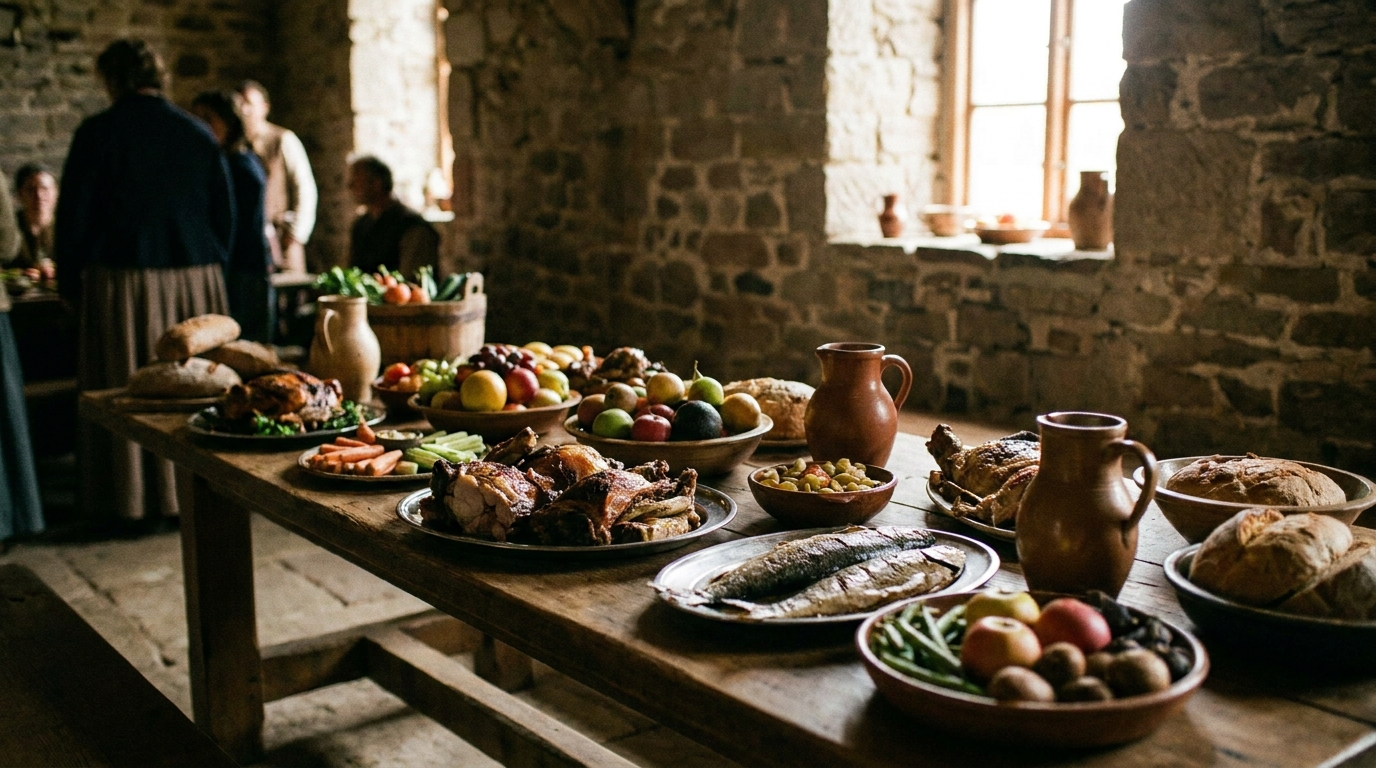
The Sunday Feast is a complete introduction to the main practices of Bhakti Yoga. These practices are simple, accessible, and deeply transformative when done with sincerity.
Chanting: Opening the Heart Through Sacred Sound
Chanting is one of the most recommended practices for this age because it can be done by anyone, anywhere.
The Sanskrit word “nama” means name. In Bhakti, the names of God are considered spiritually potent. When we chant names such as Krishna, Rama, Govinda, Gopala, Hari, or other divine names, we are not merely making sound. We are calling out to the Divine.
The Srimad-Bhagavatam teaches that hearing and chanting about God purifies the heart. This purification is not about becoming judgmental or rigid. It means the heart becomes clearer, kinder, more loving, and more connected to its true purpose.
At the Sunday Feast, kirtan creates a shared sacred atmosphere where people can experience this directly.
Prayer: Speaking Honestly with God
Prayer in Bhakti does not need to be formal or complicated. It can be as simple as:
“Please guide me.”
“Please help me love You.”
“Please help me serve.”
“Please help me forgive.”
“Please help me take one step closer.”
The great Bhakti teachers often prayed with humility, not demanding from God but asking to be transformed by love.
At the Sunday Feast, prayer may happen during chanting, during arati, before honoring prasadam, or silently in the heart. Every sincere prayer matters.
Service: Love in Action
In Sanskrit, devotional service is called seva. Seva means offering our time, energy, talents, and care in service to God and others.
At a Sunday Feast, seva may look like cooking, cleaning, greeting guests, setting up cushions, washing pots, serving food, arranging flowers, playing instruments, teaching children, or simply making someone feel welcome.
No service is small when it is offered with love.
The Bhagavad-gita teaches that whatever we do can be offered to God. This means daily life itself can become spiritualized. Work, family, cooking, creativity, and kindness can all become part of Bhakti when offered with devotion.
Association: Growing Through Spiritual Friendship
Bhakti scriptures emphasize the importance of sadhu-sanga, or association with spiritually minded people. “Sadhu” means a saintly or sincere devotee, and “sanga” means association.
This does not mean we only spend time with perfect people. Rather, it means we seek the company of those who inspire us to remember God and live with more love.
The Sunday Feast offers this kind of association. We meet people who are also trying, learning, serving, and growing. We encourage each other. We learn from each other. We walk together.
What to Expect If You Are New
If you are attending a Sunday Feast for the first time, you may have a few questions. Please know that it is completely normal to feel curious or uncertain.
You are welcome exactly as you are.
Do I Need to Be Hindu or Have a Specific Belief?
No. The Sunday Feast is open to people of all backgrounds.
Bhakti Yoga comes from the Vedic tradition of India, and many of its practices use Sanskrit names, scriptures, music, and devotional forms. But the essence of Bhakti is universal: love of God.
People from many faith traditions and spiritual backgrounds find meaning in the Sunday Feast. Some come as lifelong practitioners. Some come as seekers. Some come simply to experience peace, music, food, and community.
There is no pressure to identify a certain way. You are invited to participate at your own pace.
What Should I Wear?
You can wear comfortable, modest clothing. Some people wear traditional devotional clothing like saris, kurtas, or dhotis. Others wear everyday clothes.
The most important thing is not what you wear, but the mood you bring. Come respectfully and comfortably.
In some spaces, shoes may be removed before entering the temple room or sacred gathering area. This is a simple sign of respect and cleanliness.
Do I Have to Chant or Join the Rituals?
You are free to participate as much or as little as you feel comfortable.
You can sing along during kirtan, or simply listen. You can stand during arati, or sit quietly. You can ask questions after the talk, or just reflect silently.
Bhakti grows through sincerity, not pressure.
If something is new to you, it is okay to observe. Over time, what once felt unfamiliar may begin to feel deeply meaningful.
Is the Food Free?
In many Bhakti communities, Sunday Feast prasadam is offered freely or by donation. The spirit is generosity.
Donations are often welcomed because they help support the temple, community programs, food distribution, events, and future feasts. But no one should feel embarrassed if they cannot give. Receiving prasadam with gratitude is also a blessing.
The Spiritual Meaning of the Feast
Food holds a special place in Bhakti Yoga. Eating is something we do every day, so Bhakti teaches us how to make this daily act sacred.
From Food to Grace
In ordinary consciousness, we may think, “This food is for my enjoyment.” In Bhakti consciousness, we learn to think, “This food is a gift from God. Let me offer it back with love.”
This shift changes everything.
When food is prepared with devotion and offered to God, it becomes prasadam—grace. Honoring prasadam means receiving God’s mercy with gratitude.
The Bhagavad-gita encourages offering food to Krishna before eating. This simple practice helps us remember that we are dependent on divine gifts: the earth, rain, sunlight, farmers, cooks, and the life energy within every ingredient.
Vegetarianism and Compassion
Sunday Feast meals are vegetarian, and often free from onion, garlic, eggs, meat, and fish according to traditional devotional cooking standards.
This is connected to the principle of ahimsa, or nonviolence. Ahimsa means avoiding harm as much as possible. In Bhakti, compassion is not limited to human beings. All living beings are understood to be souls.
Choosing vegetarian food offered to God is a practical way to cultivate kindness, purity, and gratitude.
For newcomers, this may be a new experience. There is no need to feel judged. Bhakti invites us to grow step by step.
Cooking as Meditation
Cooking for the Sunday Feast is itself a spiritual practice.
Devotional cooking means preparing food cleanly, attentively, and lovingly. The cook tries to remember, “I am cooking for God and for God’s children.” This mood transforms the kitchen into a sacred space.
Even cutting vegetables, stirring dal, kneading dough, or washing dishes can become meditation when done with devotion.
How to Participate More Deeply
After attending one or two Sunday Feasts, you may feel inspired to go deeper. There are many gentle ways to do that.
Come Regularly
Consistency helps the heart absorb spiritual nourishment.
Coming once can be beautiful. Coming regularly can be transformative. Week by week, the chanting becomes more familiar, the philosophy becomes clearer, the community becomes warmer, and the practices begin to take root.
You do not have to change your whole life overnight. Simply making space for spiritual nourishment each week is a powerful beginning.
Ask Questions
Bhakti Yoga welcomes sincere questions.
In the Bhagavad-gita, Krishna encourages approaching spiritual teachers with humility, inquiry, and service. Questions are not a sign of weakness; they are part of the path.
You might ask:
What does Krishna mean?
Why do we chant?
How do I begin a home practice?
What is the meaning of the altar?
How can I apply Bhakti at work or school?
How do I deal with doubts?
A healthy spiritual community should make room for honest inquiry.
Try a Simple Home Practice
The Sunday Feast can inspire a daily practice at home.
You might begin with five minutes a day:
Chant the Hare Krishna mantra softly.
Read one verse from the Bhagavad-gita.
Offer a simple prayer.
Prepare a small vegetarian meal and offer it to God.
Reflect on one way to serve someone with kindness.
Small practices done sincerely can gradually reshape the heart.
Volunteer in Service
If you feel comfortable, ask how you can help.
Maybe you can chop vegetables, greet guests, clean after the feast, help with setup, share skills, assist with children’s programs, support outreach, or invite a friend.
Service connects us more deeply to the community and the purpose behind the gathering.
In Bhakti, serving is not about becoming important. It is about becoming available.
The Sunday Feast and Spiritual Growth
The Sunday Feast is both joyful and transformative. Over time, it can help us grow in humility, gratitude, compassion, discipline, and love.
Learning Humility
Humility in Bhakti does not mean thinking badly of ourselves. It means understanding that we are not the center of everything. We are beloved parts of God, meant to serve with love.
Chanting helps soften pride. Service helps soften selfishness. Prasadam helps soften entitlement. Community helps soften isolation.
The more we practice, the more we may realize: spiritual life is not about becoming superior. It is about becoming sincere.
Healing the Restless Mind
Many of us carry restless thoughts and emotional burdens. Bhakti does not ask us to pretend these struggles do not exist. Instead, it gives us tools to bring them into relationship with God.
Chanting gives the mind a sacred focus. Prayer gives the heart a place to be honest. Scripture gives wisdom. Service gives purpose. Community gives support.
The Sunday Feast brings all these together in one nourishing experience.
Growing in Love
The highest goal of Bhakti Yoga is prema, pure love of God. This love is not sentimental or temporary. It is the soul’s natural love, awakened and purified.
Every Sunday Feast is a small invitation into that love.
When we chant, we practice love.
When we listen, we practice love.
When we serve prasadam, we practice love.
When we welcome someone new, we practice love.
When we remember God, we practice love.
Spiritual growth is not always dramatic. Sometimes it looks like becoming a little more patient, a little more grateful, a little more prayerful, a little more willing to serve.
Bringing the Sunday Feast Mood Into Daily Life
The Sunday Feast does not have to end when the program ends. Its spirit can come home with us.
Make Your Home a Sacred Space
You can create a small sacred corner with a picture of Krishna, a candle, flowers, scripture, or anything that helps you remember God.
Spend a few minutes there each day chanting, reading, or praying. Even a small space can become spiritually powerful when used with sincerity.
Offer What You Eat
Before eating, pause and offer gratitude.
If you feel inspired, you can prepare vegetarian food and offer it to Krishna with a simple prayer:
“My dear Lord, please accept this offering made with love.”
Then honor the food as prasadam. This practice brings devotion into everyday life in a very practical way.
Chant During the Day
You can chant while walking, driving, cooking, cleaning, or sitting quietly.
Sacred sound can accompany ordinary moments and make them sacred. Even one round of mantra meditation, one song, or a few sincere repetitions of God’s names can change the atmosphere of the heart.
Serve the People Around You
Bhakti is not separate from kindness.
Serving God includes serving God’s children. Listening patiently, feeding someone, forgiving, encouraging, helping, and speaking truth with compassion can all become devotional offerings.
The Sunday Feast teaches us to receive love and then share it.
Common Questions About the Sunday Feast
Many sincere newcomers have practical questions. Here are a few simple answers.
Can I Bring My Children?
Yes, children are usually very welcome. The Sunday Feast can be a beautiful family experience with music, colors, stories, food, and community.
Children may not sit still the whole time, and that is okay. Bhakti is meant to be alive and joyful.
Can I Invite a Friend?
Absolutely. The Sunday Feast is a wonderful place to bring friends, family members, neighbors, or coworkers who may be curious.
You do not need to explain everything perfectly. Just invite them warmly and let them experience it.
What If I Feel Emotional During Kirtan?
That is completely natural.
Sacred chanting can touch deep places in the heart. Sometimes people feel joy, peace, tears, longing, or release. You are safe to experience what arises.
Bhakti honors the heart. Emotions can become part of prayer when offered sincerely.
What If I Do Not Understand Everything?
No one understands everything at first. Spiritual life unfolds gradually.
The Sunday Feast is not an exam. It is an invitation. Come, listen, chant, honor prasadam, ask questions, and allow the path to reveal itself step by step.
A Simple Guide for Your First Sunday Feast
If you are preparing to attend, here is a gentle guide.
Before You Arrive
Come with an open heart. You may want to arrive a few minutes early so you can settle in, remove your shoes if needed, and meet someone from the community.
If you have dietary questions, ask kindly. If you are unsure where to sit or what to do, someone will be happy to help.
During the Program
Listen to the kirtan. Join if you feel inspired. During the talk, receive what is meaningful and let the rest unfold with time.
If there is arati, you can stand, sing, watch, or quietly pray. There is no pressure to imitate what others are doing.
During Prasadam
Receive the meal with gratitude. In many communities, people sit together and honor prasadam in a relaxed, joyful mood.
This is a wonderful time to meet others. You can introduce yourself simply: “This is my first time.” Most devotees will be very happy to welcome you.
After the Feast
If you enjoyed the experience, consider coming again. You may also ask about classes, kirtan nights, japa meditation, scripture study, seva opportunities, or community programs.
The Sunday Feast can be the beginning of a beautiful spiritual journey.
The Deeper Invitation
The Sunday Feast is not only about Sunday. It is about remembering who we are.
We are not simply consumers, workers, students, parents, partners, or bodies moving through time. We are souls. We are loved by God. We are meant to love. We are meant to serve. We are meant to awaken.
Bhakti Yoga teaches that the path back to God is not far away. It begins with one sincere sound, one sincere prayer, one sincere act of service, one sincere meal offered with love, one sincere step.
You may come to the Sunday Feast for music and find meditation.
You may come for food and find grace.
You may come for community and find spiritual family.
You may come with questions and find a path of love.
The beauty of Bhakti is that God accepts sincerity. Not perfection. Not qualification. Not background. Sincerity.
So wherever you are on your journey, you are warmly invited. Come chant, pray, listen, serve, honor prasadam, and grow in love. Everyone is welcome to take one sincere step toward God.
FAQs
What is a Sunday feast?
A Sunday feast is a traditional meal typically enjoyed on Sundays, often consisting of a larger and more elaborate spread than a regular weekday meal. It is a time for families and friends to come together and enjoy good food and company.
What are some common dishes served at a Sunday feast?
Common dishes served at a Sunday feast may include roast meats such as beef, lamb, or chicken, along with roasted vegetables, mashed potatoes, gravy, Yorkshire pudding, and other side dishes. Desserts like apple pie, crumbles, or trifles are also popular choices.
How can I plan and prepare for a Sunday feast?
To plan and prepare for a Sunday feast, it’s important to decide on the menu in advance, create a shopping list, and allocate enough time for cooking and preparation. It’s also helpful to consider any dietary restrictions or preferences of your guests.
What are some tips for hosting a successful Sunday feast?
Some tips for hosting a successful Sunday feast include setting the table in an inviting manner, preparing as much food in advance as possible, and ensuring that there are enough seating and serving dishes for everyone. It’s also important to create a warm and welcoming atmosphere for your guests.
Are there any cultural or religious significance associated with a Sunday feast?
In some cultures and religious traditions, the Sunday feast holds special significance as a time for communal gathering and celebration. For example, in Christianity, the Sunday feast may be associated with the observance of the Sabbath and the sharing of a meal after religious services.

