
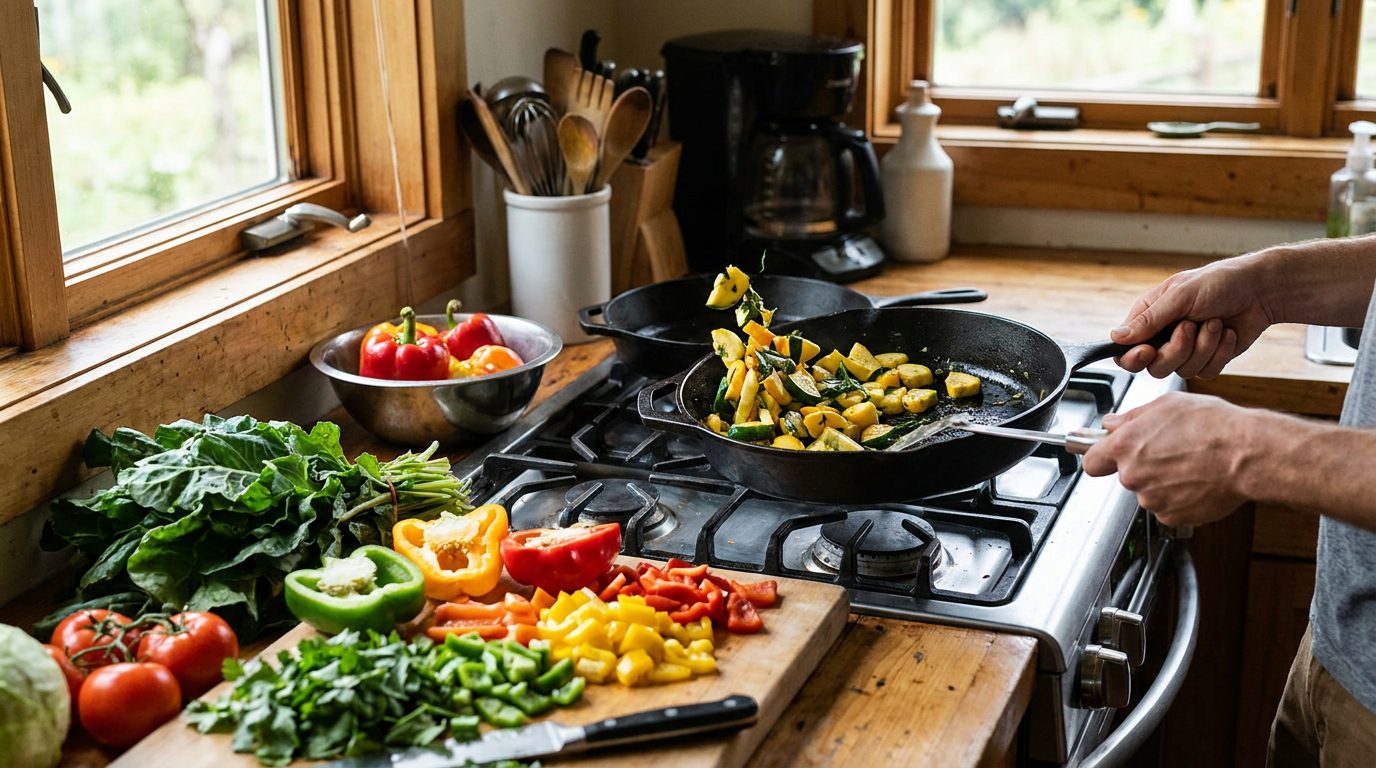
Vegetarian devotional cooking is a beautiful way to turn an ordinary kitchen into a sacred space. Whether you are new to Bhakti Yoga, returning to a spiritual practice, or simply curious about cooking with more love and intention, you are warmly welcome here.
In Bhakti Yoga, the path of devotion, cooking is not only about preparing food. It is a way of expressing love for God. It is a practice of gratitude, prayer, simplicity, and service. We cook with clean hands, a thoughtful heart, and the humble wish that what we prepare may nourish others—body, mind, and soul.
In Sanskrit, the word bhakti means loving devotion. It is the natural love of the soul for the Divine. The word yoga means connection. So Bhakti Yoga is the path of reconnecting with God through love.
One of the most practical and joyful ways to practice Bhakti is through preparing and offering food. In the Bhakti tradition, food offered to God with love is called prasadam, which means “mercy” or “grace.” Prasadam is not ordinary food. It is food that has been prepared with devotion and offered with prayer. When we receive it, we receive spiritual nourishment as well as physical nourishment.
You do not need to be an expert cook. You do not need fancy equipment. You do not need to know many Sanskrit words. You can begin with what you have, where you are, with sincerity. A simple bowl of rice, vegetables, fruit, or warm soup can become devotional when offered with love.
Why Vegetarian Cooking Matters in Bhakti Yoga
Vegetarian cooking has long been honored in the Bhakti tradition because it supports compassion, clarity, and spiritual awareness. The goal is not to judge others, but to grow gently in love.
Cooking with Compassion
A central principle in spiritual life is ahimsa, a Sanskrit word meaning nonviolence or non-harming. Ahimsa invites us to live in a way that causes as little harm as possible to other living beings.
In the Bhagavad-gita, Lord Krishna explains that all living beings are spiritual souls. Each being is dear to God. When we begin to see life in this way, our choices naturally become more compassionate.
Vegetarian devotional cooking helps us practice kindness in a very practical way. We choose grains, fruits, vegetables, legumes, nuts, seeds, herbs, and dairy when appropriate and ethically sourced. We prepare them with respect. We remember that the earth, the sun, the rain, the farmers, the cooks, and God’s mercy have all come together to bring this food to our table.
Food That Supports a Peaceful Mind
Bhakti Yoga teaches that what we eat affects our consciousness. In the Bhagavad-gita 17.8, Krishna describes foods in the mode of goodness as those that increase life, purity, strength, health, happiness, and satisfaction. These foods are fresh, wholesome, nourishing, and pleasing to the heart.
Simple vegetarian meals often support a calm and clear mind. Freshly cooked rice, dal, vegetables, chapatis, soups, fruit, and lightly spiced dishes can help us feel grounded and peaceful.
This does not mean devotional food must be bland. Bhakti cooking can be full of flavor, color, and joy. Spices like cumin, coriander, turmeric, ginger, cardamom, cinnamon, and black pepper can bring warmth and depth to a meal. The key is balance. We cook to nourish, not to agitate.
A Way to Serve Others
In Bhakti, service is called seva. Seva means offering our time, energy, talents, and care for the pleasure of God and the benefit of others.
Cooking is one of the most natural forms of seva. When we prepare a meal for family, friends, guests, neighbors, or a spiritual gathering, we are serving in a deeply personal way. Food says, “You are cared for.” Prasadam says, “You are loved by God.”
Even if you cook only for yourself, it can still be seva. You are caring for the body and mind that have been given to you as instruments for spiritual growth.
Setting Up a Beginner’s Devotional Kitchen
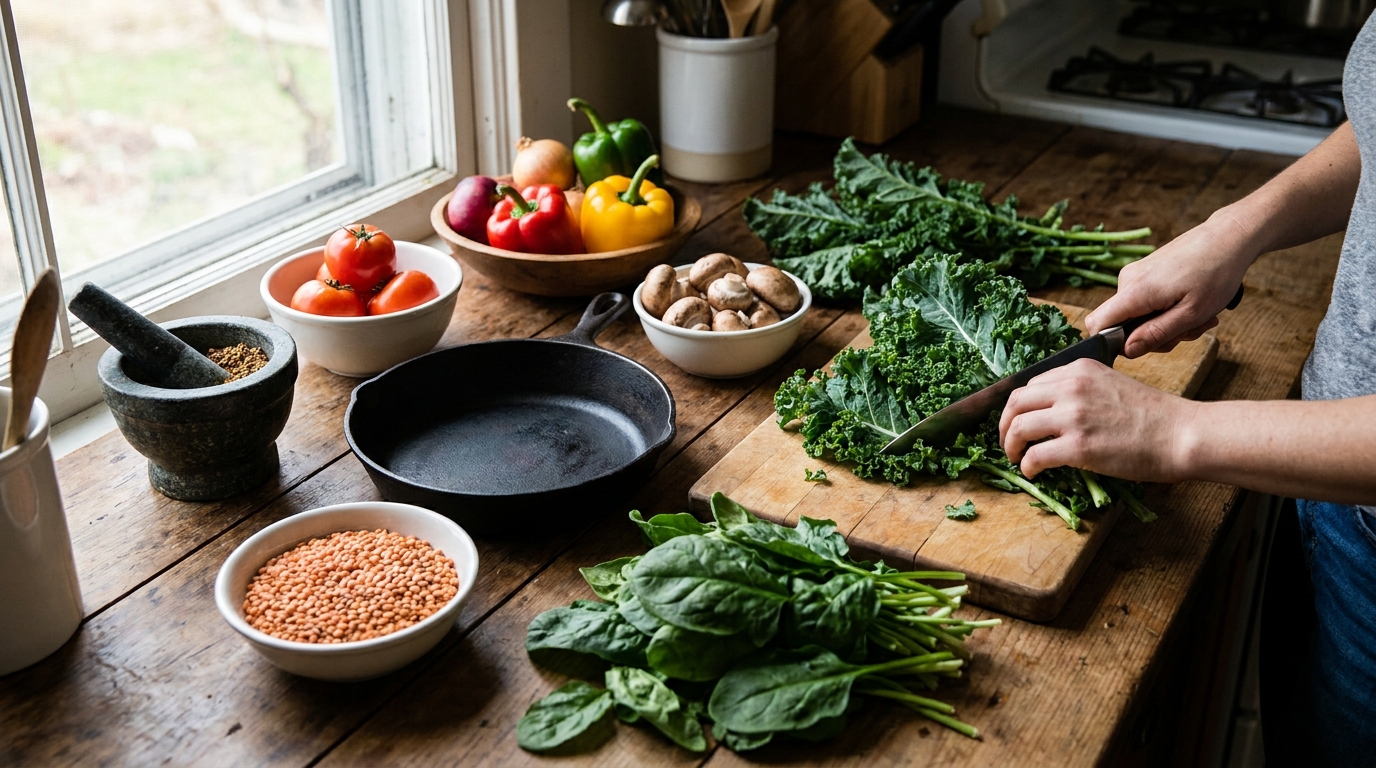
You do not need to completely change your kitchen overnight. Begin simply. Make your cooking space clean, peaceful, and welcoming.
Keep It Clean and Calm
Cleanliness is an important part of devotional cooking. Before you begin, wash your hands, clean the counter, and organize your ingredients. This helps the mind become calm and focused.
You may like to play soft kirtan, devotional chanting, or peaceful spiritual music while cooking. Kirtan means chanting the names of God, often with music. Many people find that chanting while cooking brings joy and steadiness to the heart.
Try to avoid cooking in anger, stress, or distraction when possible. Of course, life is not always perfect. Children need attention. Phones ring. Work is busy. Still, even in the middle of real life, we can pause, breathe, and remember: “I am cooking as an offering.”
Begin with Simple Ingredients
A beginner’s devotional kitchen can be built around a few basic vegetarian ingredients:
- Rice or other grains such as quinoa, oats, barley, or millet
- Lentils and beans, such as mung dal, red lentils, chickpeas, or black beans
- Fresh vegetables, especially seasonal ones
- Fresh fruits
- Whole wheat flour or other flours for simple breads
- Ghee or oil
- Basic spices like turmeric, cumin, coriander, ginger, black pepper, cinnamon, and cardamom
- Salt, used thoughtfully
- Fresh herbs like cilantro, parsley, basil, or mint
- Nuts, seeds, and raisins for special dishes
In many Bhakti traditions, especially those following Krishna devotion, cooks avoid offering meat, fish, eggs, onions, garlic, mushrooms, alcohol, and highly processed foods. If this is new to you, do not feel discouraged. Learn gradually. Ask questions. Try one recipe at a time.
The deeper principle is to cook foods that are pure, compassionate, and pleasing to offer to God.
Create a Small Offering Space
If possible, create a simple place where you can offer food. It may be a small altar, a clean shelf, or a peaceful corner with a picture of Krishna, Radha, Vishnu, Rama, Jesus, a saint, or any form of God you lovingly worship.
The Bhakti tradition is deeply personal. God is not far away. God is a person who receives love. When we place food before the Divine with sincerity, the act becomes prayer.
You can keep a small plate or bowl used especially for offerings. It does not need to be expensive. The most important ingredient is devotion.
Sure, here is the sentence with the clickable link:
Check out our latest posts on posts.
Understanding Prasadam: Food Offered with Love
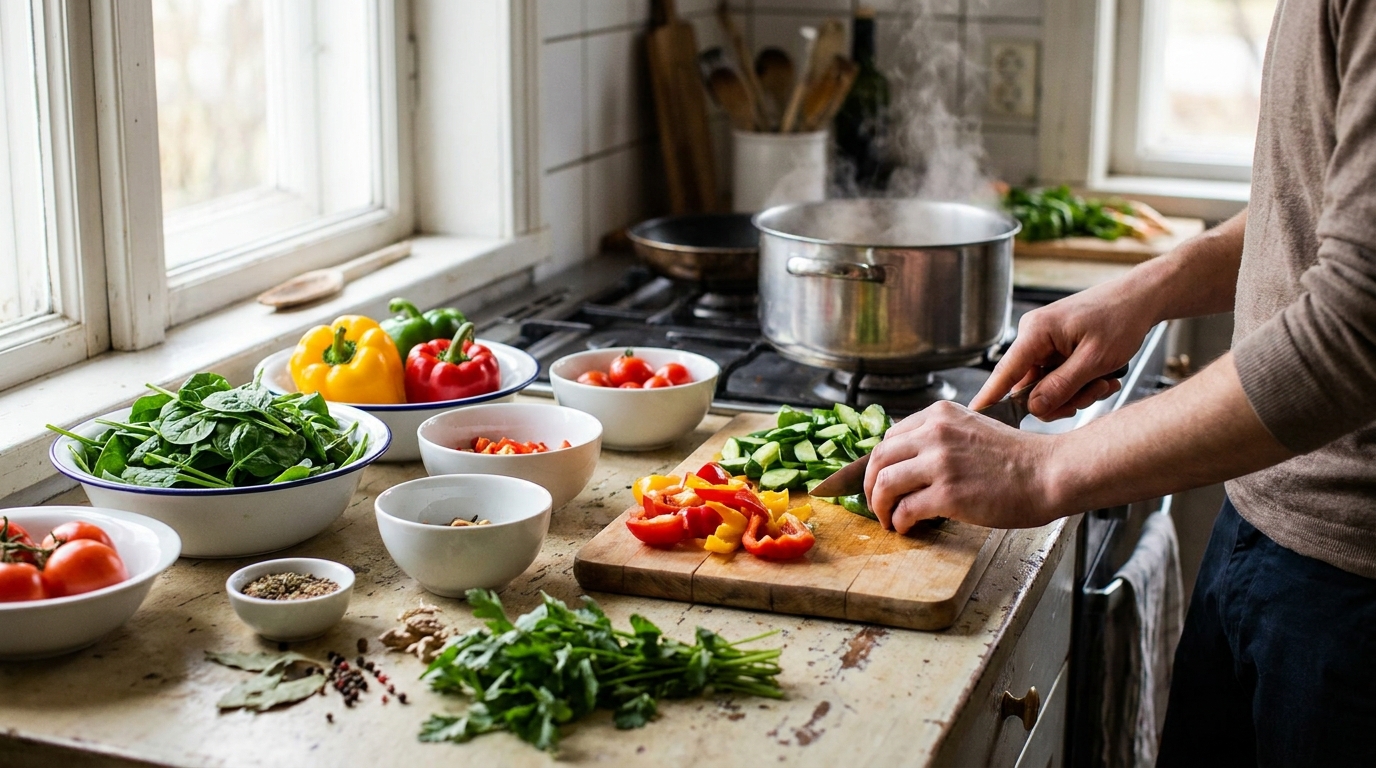
Prasadam is one of the sweetest gifts of Bhakti Yoga. It is spiritualized food—food that has been offered to God and then received with gratitude.
The Heart of the Offering
In Bhagavad-gita 9.26, Lord Krishna says:
“If one offers Me with love and devotion a leaf, a flower, a fruit, or water, I will accept it.”
This verse is very kind. Krishna does not ask for wealth, status, complicated rituals, or rare ingredients. He asks for love and devotion.
A leaf. A flower. A fruit. Water.
This means anyone can make an offering. A child can offer. A beginner can offer. A person with a small kitchen can offer. A person with little money can offer. God sees the heart.
How to Offer Food Simply
Here is a beginner-friendly way to offer food:
- Cook without tasting the food while it is being prepared, if possible. Since the meal is first for God, we offer it before enjoying it ourselves. With practice, you will learn to season by experience.
- Place a portion of each preparation on a clean plate or in a clean bowl.
- Put the plate before your altar or in your offering space.
- Say a simple prayer. You may speak naturally from the heart:
“Dear Lord, please accept this food prepared with love. May it nourish us and help us remember You.”
- You may also chant the Hare Krishna maha-mantra:
Hare Krishna, Hare Krishna, Krishna Krishna, Hare Hare / Hare Rama, Hare Rama, Rama Rama, Hare Hare
This mantra is a prayer asking to be engaged in loving service to God.
- Leave the offering for a few minutes.
- Return the offered food to the main meal or serve it respectfully.
There is no need to be anxious. Devotion grows through practice. The offering is not a performance. It is a loving exchange.
Receiving Prasadam with Gratitude
After offering, we do not simply “eat.” We receive prasadam.
Before eating, pause for a moment. Offer thanks. Remember that this food is a gift. Try to eat peacefully, without rushing. If you are with others, share kindly. If you are alone, know that you are not spiritually alone. God is present in the offering, in the gratitude, and in the nourishment.
Simple Vegetarian Devotional Meals for Beginners
Beginning devotional cooking can be joyful and very practical. You can start with a few reliable meals and slowly expand.
Rice, Dal, and Vegetables
A classic beginner meal is rice, dal, and vegetables. Dal means split lentils or beans, and it also refers to the soup or stew made from them.
A simple dal can be made with red lentils or split mung beans. Rinse the dal well, cook it with water and turmeric until soft, then season with cumin, ginger, salt, and a little ghee or oil. Add fresh cilantro at the end if you like.
Serve with steamed rice and a vegetable dish. This meal is affordable, nourishing, and easy to digest. It is also deeply satisfying.
Simple Vegetable Sabji
Sabji means a cooked vegetable dish. It can be dry, moist, mild, or spicy depending on the style.
For a beginner sabji, choose one or two vegetables such as potatoes, cauliflower, carrots, green beans, zucchini, peas, or cabbage.
Warm a little ghee or oil. Add cumin seeds or ground cumin. Add turmeric and coriander. Add chopped vegetables and a little salt. Cook until tender. Finish with fresh herbs and a squeeze of lemon if appropriate.
This kind of dish teaches you the foundation of devotional cooking: fresh ingredients, gentle spices, and attentive care.
Khichari: A Comforting One-Pot Meal
Khichari is a soft, nourishing dish made from rice and dal cooked together. It is often considered healing, simple, and comforting.
To make a basic khichari, cook equal parts rice and split mung dal with plenty of water, turmeric, cumin, ginger, and vegetables if desired. Cook until soft and porridge-like. Add ghee at the end for richness.
Khichari is wonderful for beginners because it is forgiving. If it becomes too thick, add water. If it is too thin, cook a little longer. It is warm, gentle, and easy to offer.
Fruit, Yogurt, and Simple Sweets
Devotional cooking also includes sweet offerings. You can begin with fresh fruit arranged beautifully on a plate. Fruit is one of the simplest and most natural offerings.
If you use dairy, yogurt with fruit and honey can be a lovely preparation. Rice pudding, known in many Indian traditions as kheer, is another beloved devotional sweet made with rice, milk, sugar, and cardamom.
Sweet dishes remind us that spiritual life is not dry. Bhakti is full of sweetness. But sweets are best prepared and honored with balance, gratitude, and moderation.
Cooking as Meditation and Prayer
Devotional cooking is not only about the final dish. The whole process can become meditation.
Chant While You Cook
Chanting brings the mind back to God. You may softly chant the Hare Krishna maha-mantra, repeat a name of God from your own tradition, or play devotional music in the background.
The names of God are considered sacred sound. In Bhakti, the Divine name and the Divine presence are deeply connected. When we chant, we invite remembrance into the heart.
If you are chopping vegetables, chant. If you are stirring soup, chant. If you are washing dishes, chant. The kitchen becomes a temple through remembrance.
Offer Your Effort, Not Perfection
Many beginners worry: “What if I make a mistake?” “What if the food is too salty?” “What if I do not know the proper prayers?”
Please be gentle with yourself.
Bhakti is not about perfectionism. It is about sincerity. Of course, we try to cook nicely. We learn. We improve. We respect the tradition. But God is not looking for flawless technique. God is looking for love.
In the Bhagavad-gita 2.47, Krishna teaches that we have a right to perform our duty, but we are not the controllers of the results. This can be applied in the kitchen too. Cook with care, offer the result, and let go.
Let Cooking Soften the Heart
As you cook devotionally, you may notice subtle changes. You may become more patient. You may feel more grateful. You may start thinking about others’ well-being. You may waste less. You may eat more peacefully.
These are signs of spiritual growth.
The kitchen can reveal our inner state. If we are rushed, distracted, or frustrated, we may see it clearly. Rather than becoming discouraged, we can use that awareness as a prayer: “Dear Lord, please help me cook with a peaceful heart. Please help me serve.”
Beginner-Friendly Devotional Cooking Principles
You do not need to memorize many rules at once. These simple principles can guide you.
Cook Fresh When Possible
Freshly cooked food is especially valued in devotional traditions. It carries life, warmth, and care. Try to cook what you can offer and honor that day.
This does not mean you can never use leftovers or prepare ahead, especially in busy family life. But as a practice, fresh cooking helps us become more intentional and connected.
Use Spices with Awareness
Spices are gifts. They can support digestion, bring flavor, and make simple ingredients joyful.
Start with a few:
- Turmeric for color and warmth
- Cumin for earthiness
- Coriander for gentle sweetness
- Ginger for heat and digestion
- Cardamom for sweet dishes
- Cinnamon for warmth
- Black pepper for mild spice
Do not feel pressured to use many spices at once. A simple dish made with two or three spices can be wonderful.
Avoid Waste and Practice Gratitude
Devotional cooking teaches respect. Try to use ingredients wisely. Save vegetable scraps for broth if suitable. Cook reasonable portions. Share extra prasadam with others.
Before throwing food away, pause and consider the effort behind it: the soil, the rain, the farmers, the transport, the cooking, the mercy of God. Gratitude naturally reduces waste.
Serve with Kindness
The way food is served matters. Even a simple meal becomes special when offered with kindness.
Serve others before yourself when appropriate. Speak gently. Avoid criticism at the table. Create a peaceful mood. Prasadam is best honored in an atmosphere of gratitude.
If serving children, newcomers, or guests, explain simply: “This food has been prepared and offered with love.” Let them receive according to their comfort.
A Simple Devotional Cooking Plan for Your First Week
If you are new, begin with a realistic plan. Spiritual life grows best when it is steady and joyful.
Day One: Offer Fruit and Water
Start with the simplest offering. Wash and cut fresh fruit. Place it on a clean plate with a small cup of water. Offer it with a prayer.
This helps you understand the heart of the practice without pressure.
Day Two: Cook Rice and Vegetables
Make plain rice and a simple vegetable sabji. Offer the meal. Notice how it feels to cook without rushing and to receive the food as prasadam.
Day Three: Try a Simple Dal
Cook red lentil dal with turmeric, cumin, ginger, and salt. Serve with rice. This is a foundational meal you can return to again and again.
Day Four: Make Khichari
Prepare a one-pot khichari with rice, mung dal, and vegetables. Offer it and enjoy its comforting simplicity.
Day Five: Share Prasadam
Cook something simple and share it with one person. It may be a family member, friend, neighbor, or coworker. Do not force anything. Just share with love.
Day Six: Cook While Chanting
Choose any simple meal and focus on chanting while cooking. Notice the difference in your consciousness.
Day Seven: Reflect and Give Thanks
At the end of the week, reflect gently. What did you learn? What felt natural? What felt challenging? Offer your reflections to God. Spiritual growth includes honest self-awareness.
Common Questions from Beginners
It is natural to have questions. Devotional cooking is simple at heart, but the details unfold over time.
Do I Have to Be Hindu to Practice Devotional Cooking?
No. Bhakti Yoga is a path of love for God, and sincere people of all backgrounds are welcome to learn and practice. Many people from different cultures and faith traditions appreciate the practice of cooking with prayer, gratitude, and compassion.
If you have your own name for God, you may pray in that way. The essential principle is to prepare food with love and offer it sincerely.
What If I Cannot Cook Indian Food?
That is completely fine. Devotional cooking is not limited to Indian recipes.
You can offer vegetarian soups, salads, pasta without onion or garlic, roasted vegetables, bread, rice dishes, fruit bowls, oatmeal, lentil stews, and many other foods. The offering is made by devotion, not by nationality.
Indian vegetarian cooking is rich and deeply connected to many Bhakti traditions, so it is helpful to learn. But the heart of the practice can enter many cuisines.
Why Avoid Tasting Before Offering?
In devotional cooking, we prepare the food first for God. Just as we would not eat from a plate before serving an honored guest, we avoid tasting before offering.
This may take practice. You can learn to season by smell, experience, and measurement. If you are cooking for health needs or are still learning, do your best without anxiety. Over time, this practice becomes natural.
Can Children Help?
Yes, children can be wonderful devotional cooks. They can wash vegetables, stir batter, roll small chapatis, arrange fruit, or help place the offering plate.
Children often understand devotion very naturally. Teach them gently: “We are cooking for Krishna,” or “We are offering this to God with love.” Keep the mood joyful, not heavy.
What If My Family Is Not Vegetarian?
Be patient and kind. Bhakti grows through love, not pressure. You can begin by cooking vegetarian meals for yourself or offering one meal a week. Share prasadam without argument. Let the taste and the mood speak.
Spiritual change is often gradual. A peaceful example is more powerful than criticism.
Bringing Devotional Cooking into Daily Life
The beauty of Bhakti Yoga is that it enters ordinary life. You do not need to leave your home or abandon your responsibilities. Your kitchen, your table, your grocery shopping, and your family meals can all become part of your spiritual path.
Grocery Shopping as a Spiritual Practice
Before shopping, pause and pray: “May I choose ingredients that can be offered with love.” Select fresh, wholesome foods when possible. Think about who you will cook for. Remember that even shopping can be seva when done with devotional intention.
Try to buy seasonal produce. Support local farmers when you can. Be mindful of packaging and waste. These small choices can become expressions of care for God’s creation.
Washing Dishes as Service
Washing dishes may not seem spiritual at first. But in Bhakti, any humble service can become sacred when done for God.
After cooking and honoring prasadam, cleaning the kitchen completes the offering. A clean kitchen welcomes future service. While washing, you can chant softly or simply give thanks.
Feeding Others as an Act of Love
The Bhakti scriptures often praise the sharing of prasadam. Food offered to God carries kindness, and when we share it, we share spiritual blessing.
You might bring prasadam to a friend who is struggling, cook for a community gathering, offer a meal to guests, or share a simple sweet after kirtan. Even a small offering can touch someone’s heart.
Growing Slowly and Joyfully
Please remember: devotional cooking is a lifelong practice. You do not need to master everything quickly.
Begin with one offering. Learn one recipe. Chant one mantra. Share one plate. Clean one corner of your kitchen. Each sincere step matters.
In the Srimad-Bhagavatam, a beloved Bhakti scripture, we learn again and again that God is conquered by love. Not by wealth, not by pride, not by complicated qualifications—but by love. This is the hope of Bhakti Yoga.
Your kitchen can become a place where love is practiced daily. The cutting board can become an altar of attention. The stove can become a place of prayer. The meal can become mercy. The act of feeding others can become worship.
Simple vegetarian devotional cooking is not only for advanced practitioners. It is for beginners, families, students, elders, busy workers, seekers, and anyone who wants to live with more gratitude and compassion.
You are welcome to start exactly where you are. Offer a piece of fruit. Cook a pot of dal. Whisper a prayer. Chant one round of the holy names. Share prasadam with a friend. Take one sincere step toward God, and trust that God lovingly receives it.
FAQs
What is devotional cooking?
Devotional cooking is the practice of preparing food as an offering to a deity or as a part of a spiritual practice. It is often done with a sense of mindfulness and gratitude.
What are some simple vegetarian dishes for beginners?
Some simple vegetarian dishes for beginners include lentil soup, vegetable stir-fry, chickpea curry, quinoa salad, and roasted vegetable pasta.
How can I incorporate devotional elements into my cooking practice?
You can incorporate devotional elements into your cooking practice by setting an intention for your meal, saying a prayer or mantra while cooking, and offering the food to a deity or spiritual figure before consuming it.
Are there any specific ingredients commonly used in devotional cooking?
Common ingredients used in devotional cooking include ghee, spices like turmeric and cumin, fresh fruits and vegetables, grains like rice and quinoa, and lentils and legumes.
What are the benefits of devotional cooking for beginners?
Devotional cooking can help beginners develop a sense of mindfulness and gratitude in their cooking practice, as well as deepen their connection to their spiritual or religious beliefs. It can also provide an opportunity for self-reflection and a sense of purpose in the kitchen.

