
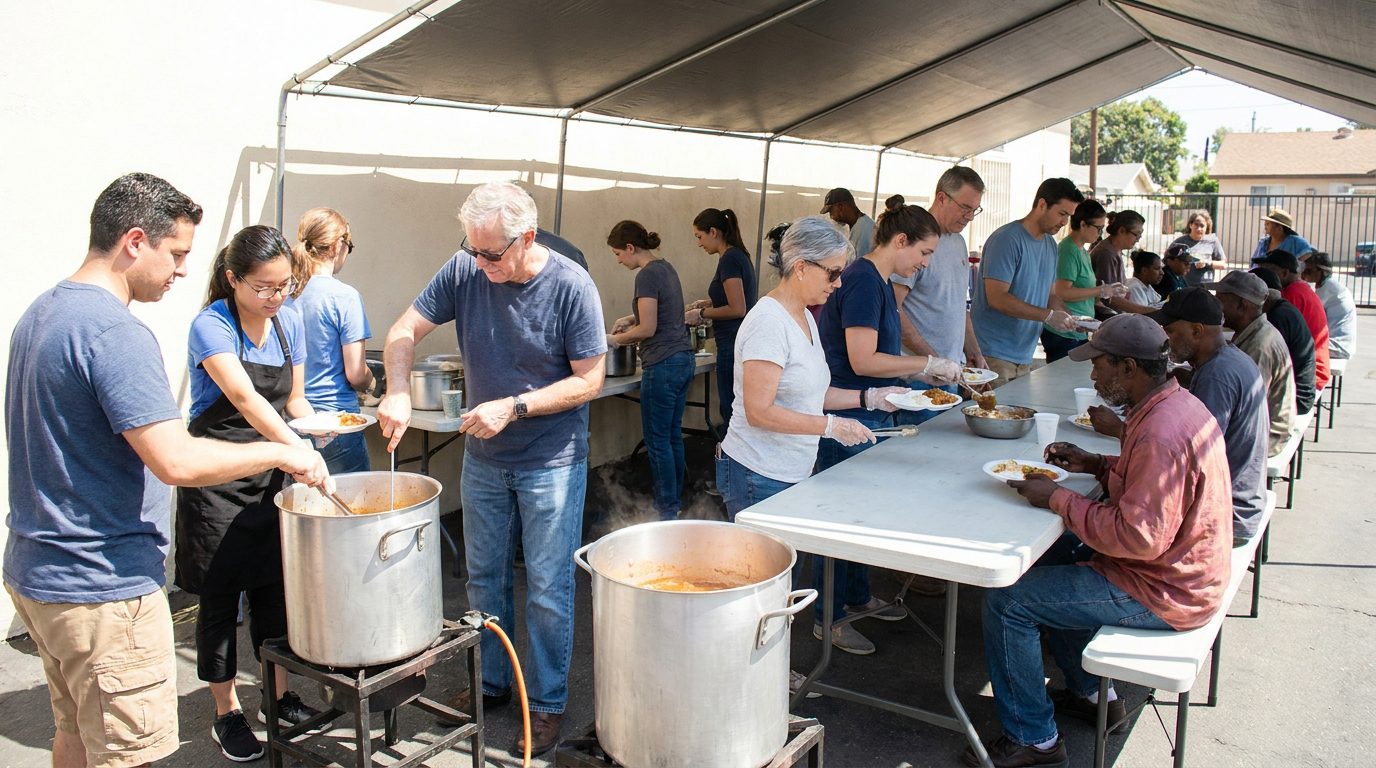
There is a beautiful moment that happens on the spiritual path — a quiet, almost invisible shift — when we stop asking, “What can I get?” and start whispering, “How can I give?” This shift is the heartbeat of seva, the Sanskrit word for selfless service, and it is one of the most transformative practices in Bhakti Yoga.
Seva is not about being perfect. It is not about grand gestures or exhausting ourselves to prove our devotion. At its simplest, seva is love in action. It is the natural overflow of a heart that has been touched by something greater than itself and wants to share that sweetness with others.
Whether you are new to the Bhakti path or have been chanting and praying for years, the practice of seva has something precious to offer you. It meets you exactly where you are. And no matter your background, your tradition, or where you are in your spiritual journey, you are warmly welcome here.
Let us explore together what it means to cultivate a genuine culture of service — in our hearts, in our homes, and in our communities.
The word seva comes from the Sanskrit root sev, which means “to serve” or “to honor.” In the Bhakti tradition, seva is not just volunteer work or charitable activity — though it can certainly include those things. Seva is an act of devotion. It is service offered with love, without expectation of reward, recognition, or return.
In the Bhagavad Gita (Chapter 3, Verse 19), Lord Krishna lovingly encourages Arjuna:
> “Therefore, without attachment, always perform the work that must be done, for by working without attachment, one attains the Supreme.”
This verse carries a profound invitation. We are not asked to stop acting in the world. We are asked to change why we act. When we shift our motivation from personal gain to loving offering, even the smallest task becomes sacred.
Seva as an Expression of Love
In Bhakti Yoga, everything circles back to love — prema. Seva is simply what love looks like when it rolls up its sleeves. A mother feeding her child is performing seva. A friend listening patiently is performing seva. A stranger holding the door open with a genuine smile — that, too, can be seva.
The key ingredient is not what we do, but the spirit behind it. When our service flows from a sincere desire to express love for God and for all living beings, it purifies the heart in ways that no amount of intellectual study alone can accomplish.
Seva Is for Everyone
One of the most beautiful things about seva is that it does not require special qualifications. You do not need to be a scholar, a monk, or a lifelong practitioner. You simply need a willing heart. The Bhakti tradition teaches that God sees our sincerity, not our skill. A small act of service offered with genuine love is infinitely more valuable than a grand performance done for applause.
Why Seva Matters: The Spiritual Benefits of Service
You might wonder — if Bhakti is the path of love and devotion, why is service so important? Can we not simply chant, pray, and meditate? Of course, those practices are essential and deeply powerful. But seva does something unique. It takes our inner devotion and gives it hands and feet. It brings our love out of the meditation room and into the lived world.
Seva Softens the Ego
One of the greatest obstacles on the spiritual path is the ego — that persistent voice that says, “I am the doer. I am important. What about me?” Seva gently dissolves this illusion. When we serve others without seeking credit, we practice surrendering our false sense of self. Over time, this creates space for something much more beautiful to emerge — genuine humility.
The great Bhakti saint Chaitanya Mahaprabhu taught:
> “One should be more humble than a blade of grass, more tolerant than a tree, ready to offer respect to others, and without expectation of respect for oneself. In such a state, one can chant the holy name constantly.”
This is the spirit of seva. It is humility in motion.
Seva Deepens Our Connection with God
In the Bhakti worldview, God resides in the heart of every living being. The Bhagavata Purana (Srimad Bhagavatam) beautifully describes how the Supreme Lord is present in all creatures. When we serve others with this awareness, we are not just helping a person or cleaning a space — we are offering our love to the Divine who dwells within all things.
This understanding transforms the mundane into the miraculous. Washing dishes at the temple becomes an offering. Cooking a meal for a neighbor becomes prayer. Listening to someone who is hurting becomes worship.
Seva Purifies the Heart
The Bhakti tradition often speaks of the heart as being covered by layers of dust — anarthas, or unwanted habits and attachments. Seva acts like a gentle, steady rain that washes this dust away. Each act of selfless service clears a little more space for devotion, gratitude, and peace to grow.
How to Practice Seva in Daily Life
You do not need to move to an ashram or join a monastery to practice seva. The beauty of this path is that it can be woven into the fabric of your everyday life, right where you are.
Start Small and Start Sincere
Begin with what is in front of you. Can you help a coworker who is overwhelmed? Can you prepare a meal for your family with extra care and presence? Can you pick up litter in your neighborhood as an offering to the earth?
The size of the act does not matter. What matters is the love with which it is done.
Offer Your Unique Gifts
Each of us has been given unique talents, abilities, and passions. Seva is most joyful and sustainable when it flows from our natural gifts. If you love to cook, serve through food. If you love music, serve through kirtan (devotional chanting). If you are good with numbers, offer to help a community organization with its finances. If you are a good listener, simply be present for someone who needs to be heard.
The Bhagavad Gita (Chapter 18, Verse 46) reminds us:
> “By worshiping the Lord through the performance of one’s own natural duty, a person can attain perfection.”
Your unique contribution is needed and valued. There is no hierarchy in seva.
Chant While You Serve
One of the sweetest practices in Bhakti is to combine seva with the chanting of God’s holy names. Whether you are silently repeating a mantra on your japa beads or softly singing a kirtan melody while you work, this practice keeps the heart anchored in devotion even as the hands are busy serving.
The Hare Krishna Maha Mantra — Hare Krishna, Hare Krishna, Krishna Krishna, Hare Hare, Hare Rama, Hare Rama, Rama Rama, Hare Hare — is a beautiful companion for any act of service.
Serve Without Keeping Score
This can be one of the most challenging aspects of seva, especially in a culture that constantly measures worth through productivity and recognition. True seva asks us to let go of keeping score. We serve, and then we release. We do not tally our good deeds or compare our contributions with others.
This is a practice of trust — trusting that God sees, that the act itself is the reward, and that the love we pour into the world is never wasted.
Sure, here is the sentence with the clickable link:
You can find more bhakti articles here.
Building a Culture of Seva in Community
Seva is beautiful as a personal practice, but it becomes truly transformative when it is woven into the fabric of a community. At The Bhakti House, we believe that spiritual community — sangha — and service go hand in hand.
Creating Welcoming Spaces
A culture of seva begins with creating spaces where everyone feels welcome, valued, and safe. This means greeting newcomers with warmth, making room for different backgrounds and perspectives, and ensuring that no one feels like an outsider. When people feel genuinely welcomed, their natural desire to serve awakens on its own.
Sharing Prasadam: The Gift of Sanctified Food
One of the most beloved forms of seva in the Bhakti tradition is the preparation and sharing of prasadam — food that has been lovingly prepared and offered to God before being shared with others. Prasadam is not just a meal. It is spiritual nourishment. It is grace you can taste.
Cooking together, offering the food with prayers and mantras, and then sharing it freely with anyone who comes — this is seva at its most beautiful. It nourishes the body, the heart, and the soul, all at once.
Mentoring and Supporting One Another
A culture of seva also means looking out for one another on the spiritual path. More experienced practitioners can gently mentor newcomers. Friends can encourage each other to keep chanting, keep praying, and keep showing up — even on the hard days. This mutual care and support is itself a profound form of service.
Serving the Wider World
Bhakti seva does not stop at the temple door or the community center walls. A true culture of service naturally extends outward — feeding the hungry, caring for the environment, supporting the vulnerable, and sharing the gifts of spiritual practice with anyone who is open to receiving them.
The Bhagavata Purana describes the highest devotees as those who are para-dukha-dukhi — those who feel the suffering of others as their own. This compassion is not a burden. It is the natural fruit of a heart that has been softened by love.
Overcoming Obstacles to Seva
Like any spiritual practice, seva comes with its own challenges. It is helpful to acknowledge these honestly so that we can move through them with grace.
When Service Leads to Burnout
Sometimes, in our eagerness to serve, we give beyond our capacity and end up exhausted, resentful, or depleted. This is not true seva — it is self-neglect wearing the mask of devotion. It is important to remember that taking care of yourself is not selfish. You are also a beloved child of God. Rest when you need to rest. Set loving boundaries. Sustainable service comes from a place of fullness, not emptiness.
When the Ego Sneaks In
It is entirely natural for the ego to try to claim ownership of our service. “Look at how much I did. Look at how devoted I am.” When you notice this happening, do not judge yourself harshly. Simply smile at the ego’s antics, offer a prayer of humility, and gently return your attention to the spirit of offering. This awareness itself is a sign of spiritual growth.
When We Feel Our Service Is Too Small
The mind sometimes whispers that our contributions are not enough — that what we have to offer is too ordinary, too insignificant. The Bhakti tradition lovingly disagrees. In the Bhagavad Gita (Chapter 9, Verse 26), Lord Krishna says:
> “If one offers Me with love and devotion a leaf, a flower, a fruit, or water, I will accept it.”
God does not need our offerings. God cherishes the love behind them. Your small, sincere act of service is received with immense tenderness by the Divine.
The Heart of Seva: Love Given Freely
At the end of the day, seva is not a transaction. It is not a strategy for spiritual advancement or a way to earn God’s favor. It is simply love, given freely, because that is what love does — it gives.
When we cultivate a culture of seva — in our hearts, in our families, in our communities — we create a little pocket of the spiritual world right here on earth. We create a space where people are seen, where kindness is the norm, and where the presence of God is felt not just in prayer, but in every shared meal, every helping hand, and every warm smile.
You Are Welcome Here
Wherever you are on your journey, please know this: you are welcome. You do not need to have all the answers. You do not need to know the Sanskrit terms or the scriptures by heart. You simply need a willing heart and the courage to take one sincere step.
Maybe that step is chanting God’s name for the first time. Maybe it is cooking a meal for someone with a little extra love. Maybe it is simply showing up and being present.
Whatever your step looks like, it matters. It is seen. And it is deeply, deeply cherished.
May we all grow together in love and service. Hare Krishna. 🙏

