
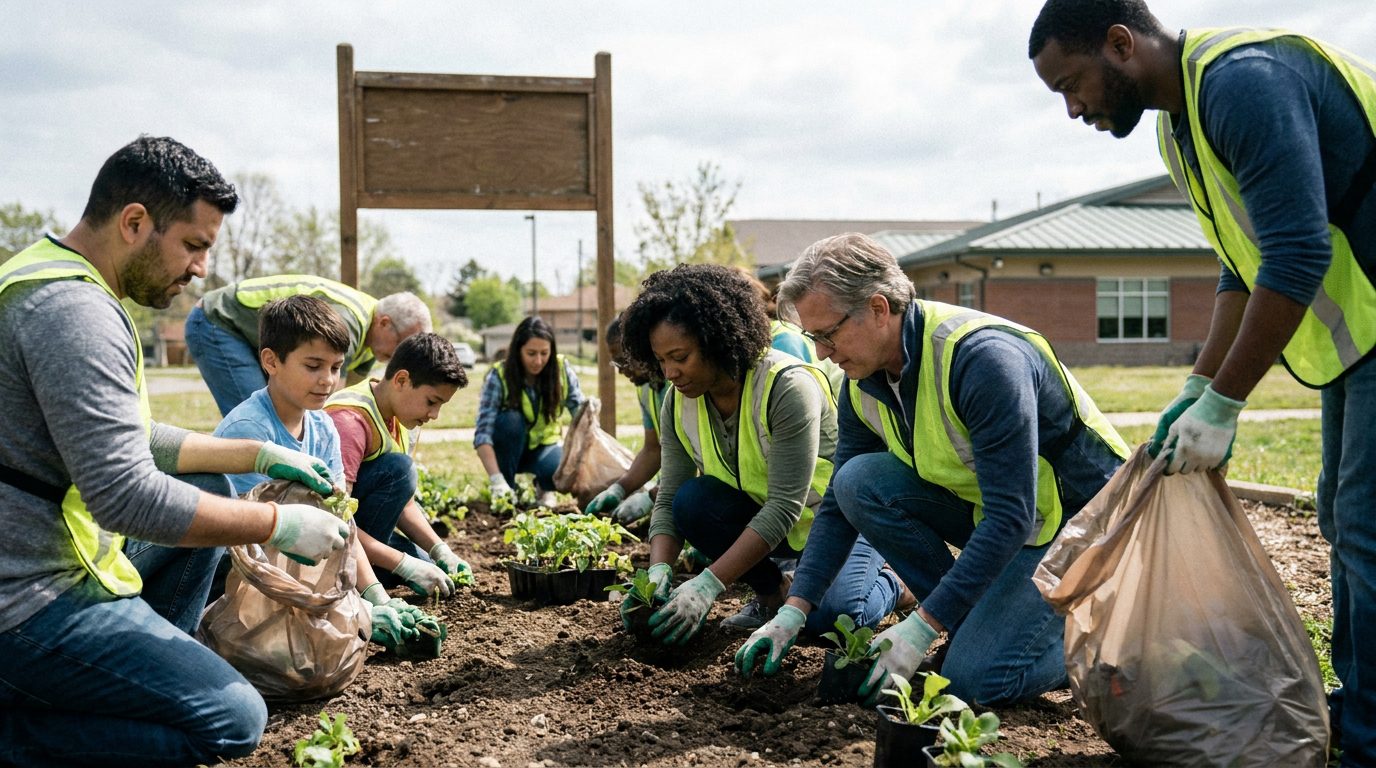
Welcome, dear reader. Whether you’ve been walking a spiritual path for years or you’re simply curious about how love and service can transform your life, we’re so glad you’re here. At The Bhakti House, we believe that everyone—regardless of background, belief, or experience—has a beautiful capacity to serve, to love, and to grow.
In the tradition of Bhakti Yoga, the yoga of devotion and love, service isn’t just something we do with our hands. It’s something we do with our hearts. And when we step into community service with that spirit, something remarkable happens: our perspectives shift. We begin to see the world differently. We begin to see ourselves differently.
This article explores how participation in community service—especially when rooted in devotion, sincerity, and love—can profoundly change the way we think, feel, and relate to the world around us.
In many spiritual traditions, service is considered one of the highest forms of practice. In the Bhakti tradition, this is known as Seva—a Sanskrit word that simply means “selfless service.” But it’s more than just volunteering or helping out. Seva is service offered with love, without expecting anything in return, as an offering to God and to all living beings.
The Bhagavad Gita, one of the most beloved scriptures in the Bhakti tradition, beautifully teaches:
> “Whatever you do, whatever you eat, whatever you offer or give away, and whatever austerities you perform—do that as an offering to Me.” (Bhagavad Gita 9.27)
This verse reminds us that even the simplest acts of service can become sacred when offered with devotion. Cooking a meal for someone in need, cleaning a shared space, listening to a friend who is struggling—all of these become spiritual practices when done with a sincere heart.
Community service matters because it takes us out of the small world of “me and mine” and connects us to something much larger. It connects us to each other. And ultimately, it connects us to God.
Service as a Mirror
One of the most powerful things about community service is that it holds up a mirror. When we serve others, we often discover things about ourselves—our patience, our prejudices, our capacity for compassion, and our hidden strengths.
Many people who begin serving in their communities report that they started out thinking they were going to “help” others, only to realize that they were the ones being helped. This is the beautiful paradox of Seva. The more we give, the more we receive—not in material terms, but in understanding, humility, and inner peace.
The Bhakti Perspective on Giving
In Bhakti Yoga, we understand that everything belongs to God. Our time, our talents, our energy—these are all gifts. When we share those gifts through service, we’re not losing anything. We’re simply returning love to the Source of all love.
The great Bhakti saint Chaitanya Mahaprabhu taught that the highest service is to bring joy to others and to help souls reconnect with the Divine. He didn’t distinguish between rich or poor, high or low. He saw every person as a beloved child of God, worthy of kindness and care.
This perspective transforms community service from a duty into a delight.
How Participation Shifts Our Inner World
When we actively participate in service, something begins to change inside us. It doesn’t always happen overnight, but gradually, our hearts soften, our minds open, and our sense of identity expands.
From Isolation to Connection
Modern life can be incredibly isolating. Many people feel disconnected from their neighbors, their communities, and even from themselves. Participation in community service breaks through that isolation. It creates real, meaningful connections between people who might never have crossed paths otherwise.
In Sanskrit, there’s a beautiful word for spiritual community: Sangha (or Satsanga, meaning “association with truth”). When we come together to serve, we create Sangha. We create a space where people feel seen, valued, and supported. And in that space, healing happens—for everyone involved.
From Judgment to Compassion
One of the most profound shifts that service can bring is the movement from judgment to compassion. When we serve in a food kitchen, for example, we may arrive with assumptions about the people we’re serving. But as we look into their eyes, hear their stories, and share a meal together, those assumptions begin to dissolve.
We start to see that everyone is carrying something. Everyone has struggles. Everyone deserves kindness.
The Srimad Bhagavatam, another cherished Bhakti scripture, describes the quality of a true devotee as one who is “compassionate to all living beings” (Srimad Bhagavatam 3.25.21). Compassion isn’t just a nice idea in the Bhakti tradition—it’s a living practice, and community service is one of the most direct ways to cultivate it.
From Pride to Humility
Service has a wonderful way of humbling us—in the best possible sense. When we roll up our sleeves and do simple, unglamorous work for the benefit of others, our ego naturally begins to quiet down.
In Bhakti, humility is considered essential. As Chaitanya Mahaprabhu expressed in his famous Shikshashtakam prayers:
> “One should be humbler than a blade of grass, more tolerant than a tree, always offering respect to others, and expecting no respect for oneself.”
This isn’t about thinking less of yourself. It’s about thinking of yourself less. And when you’re busy feeding someone who is hungry, comforting someone who is grieving, or cleaning up after a community event, there’s simply less room for the ego to run the show.
Real Stories: When Service Changes Everything
Across communities around the world, there are countless stories of people whose lives have been transformed by participation in service. While every story is unique, certain themes emerge again and again.
The Volunteer Who Found Purpose
Many people come to community service during a difficult season of life—after a loss, during a transition, or in the midst of searching for meaning. Through the simple act of showing up for others, they often discover a sense of purpose they didn’t know they were looking for.
In the Bhakti tradition, we would say that the soul is naturally inclined toward love and service. When we align our actions with that natural inclination, we feel a deep sense of fulfillment that no amount of material success can provide.
The Community That Healed Together
Some of the most powerful service experiences happen after collective hardship—natural disasters, economic downturns, or social upheaval. In these moments, communities come together not because it’s convenient, but because it’s necessary. And in that coming together, something sacred emerges.
People who might have been divided by politics, religion, or culture find common ground in the shared act of caring for one another. Walls come down. Trust is built. And the community emerges stronger and more connected than before.
Children Who Grow Through Giving
When young people are given the opportunity to participate in service, the impact can be life-changing. Studies consistently show that children and teenagers who engage in community service develop greater empathy, stronger social skills, and a deeper sense of responsibility.
From a Bhakti perspective, introducing children to Seva is one of the most beautiful gifts we can offer them. It teaches them, from an early age, that their lives have meaning beyond personal achievement—that they are part of a larger family, a larger story, a larger love.
Sure, here is the sentence with the clickable link:
Check out our website for more bhakti articles.
Practical Ways to Begin Serving With a Devotional Heart
You don’t need to have everything figured out to begin serving. You don’t need to be a saint. You just need to be willing to show up with sincerity.
Here are some simple, practical ways to bring the spirit of Bhakti into your service:
Start Where You Are
You don’t need to travel across the world to serve. Look around your own neighborhood, your own community, your own family. Is there someone who needs a helping hand? A listening ear? A warm meal?
Service begins in the small, everyday moments. As the saying goes, “If you can’t feed a hundred people, feed just one.”
Chant and Pray Before You Serve
In the Bhakti tradition, we often begin our activities with Kirtan (devotional chanting) or prayer. This helps us set our intention, center our hearts, and remember that we’re not just doing tasks—we’re making offerings of love.
Even a simple prayer like, “Dear Lord, please use my hands to serve, my voice to comfort, and my heart to love” can transform the quality of your service.
Serve Without Expecting Recognition
This is one of the most challenging and most rewarding aspects of Seva. When we serve without seeking praise, attention, or reward, we free ourselves from the ego’s grip and open ourselves to a much deeper kind of joy.
The Bhagavad Gita calls this Nishkama Karma—action performed without attachment to the results. It doesn’t mean we don’t care about outcomes. It means we trust that our sincere efforts are enough, and we leave the rest to God.
Bring Others Along
Service is even more powerful when done in community. Invite a friend, a family member, or a neighbor to join you. Create opportunities for collective Seva. When we serve together, we strengthen our bonds, multiply our impact, and create a culture of care that ripples outward in ways we may never fully see.
The Ripple Effect: How Shifted Perspectives Transform Communities
When individuals shift their perspectives through service, the impact doesn’t stop with them. It ripples outward into their families, their workplaces, their neighborhoods, and beyond.
Building a Culture of Kindness
Every act of service, no matter how small, contributes to a culture of kindness. When one person shows up with generosity and love, it inspires others to do the same. Over time, this creates a community where compassion is the norm, not the exception.
Breaking Down Barriers
Community service brings together people of different ages, backgrounds, beliefs, and experiences. In serving side by side, we discover our shared humanity. We realize that what unites us is so much greater than what divides us.
This is deeply aligned with the Bhakti understanding that all living beings are part of one spiritual family. As the Bhagavad Gita teaches:
> “The humble sage, by virtue of true knowledge, sees with equal vision a learned scholar, a cow, an elephant, a dog, and an outcast.” (Bhagavad Gita 5.18)
When we serve with this vision of equality, we become instruments of healing in a world that desperately needs it.
Creating Lasting Change
Shifted perspectives lead to shifted actions. People who have been transformed by service don’t just go back to their old ways of thinking. They carry their new understanding with them into every area of life. They become more compassionate parents, more empathetic coworkers, more engaged citizens, and more loving human beings.
This is the real impact of participation on community service. It’s not just about the hours logged or the projects completed. It’s about the hearts that are opened, the minds that are expanded, and the lives that are forever changed.
You Are Welcome Here: An Invitation to Take One Step
If this article has stirred something in your heart, we want you to know: that stirring is real. That quiet voice inside you that says, “I want to love more, serve more, grow more”—that’s the voice of your own beautiful soul.
You don’t have to be perfect. You don’t have to have all the answers. You don’t even have to call yourself spiritual. You just have to be willing to take one sincere step.
In the Bhakti tradition, we believe that God meets us wherever we are. If we take one step toward the Divine, the Divine takes ten steps toward us. And service—sincere, loving, humble service—is one of the most beautiful steps we can take.
Whether it’s chanting a prayer, offering a meal, cleaning a park, sitting with someone who is lonely, or simply smiling at a stranger, your service matters. Your love matters. You matter.
At The Bhakti House, our doors and our hearts are open to everyone. Whatever your background, whatever your story, you are welcome here. Come as you are. Serve as you can. And watch as love transforms everything.
Take one sincere step toward God today. That step is enough.

