
Understanding Selfless Love in Bhakti Yoga
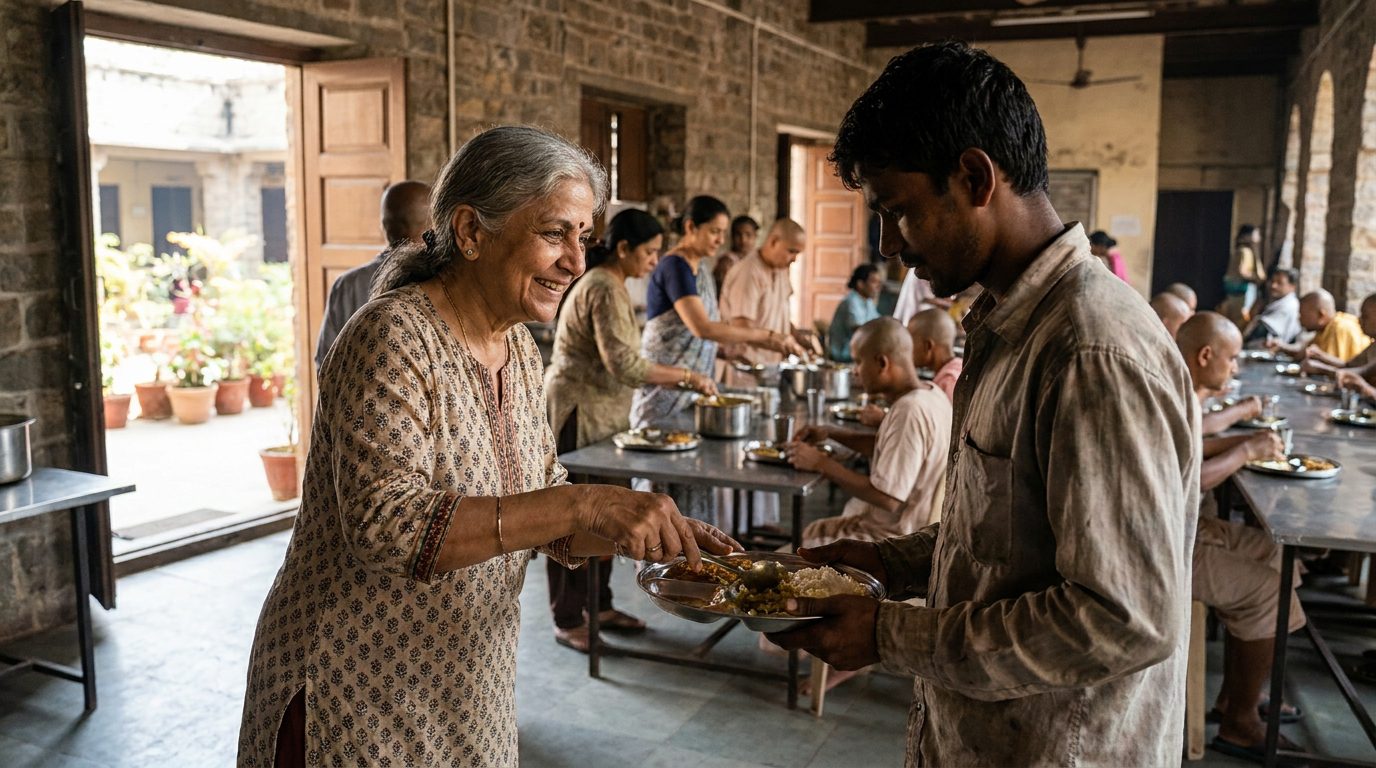
Selfless love is the heart of Bhakti Yoga. In Sanskrit, the word bhakti means loving devotion, heartfelt service, or devotion offered with love. Yoga means connection. So Bhakti Yoga is the path of reconnecting with the Divine through love.
This love is not ordinary sentiment. It is not based on what we can get, how we are seen, or whether life goes according to our plan. Selfless love in Bhakti Yoga is love offered freely to God, to others, and to all living beings because we begin to recognize the sacred presence within everyone.
In the Bhagavad Gita, one of the most beloved texts of the Bhakti tradition, Lord Krishna says:
“Whatever you do, whatever you eat, whatever you offer or give away, and whatever austerities you perform—do that, O son of Kunti, as an offering to Me.”
— Bhagavad Gita 9.27
This simple teaching opens a doorway. Bhakti Yoga is not separate from daily life. It is not only practiced in temples, ashrams, or quiet meditation rooms. It can be practiced while cooking, working, raising children, caring for elders, studying, creating art, or walking through a busy city.
The essence is the offering. When the heart says, “May this be for You,” ordinary actions become sacred.
Selfless love does not mean we erase ourselves or ignore our needs. Rather, it means we gradually move from “How can everything serve me?” to “How can my life become an offering of love?” This shift is gentle, practical, and deeply healing.
Bhakti Yoga teaches that the soul is naturally loving. Beneath our fears, wounds, and distractions, there is a spiritual longing to love and be loved by God. Selfless devotion helps uncover that original nature.
The Difference Between Ordinary Attachment and Divine Devotion
Love is a word we use often, but Bhakti Yoga invites us to look more deeply. Much of what we call love is mixed with attachment, expectation, or fear. We may love someone, but also want them to behave in certain ways so we feel secure. We may serve others, but secretly hope to be noticed or praised. We may pray, but mainly ask God to fulfill our desires.
This is not wrong. It is simply human. Bhakti Yoga meets us where we are.
Attachment Asks, Devotion Offers
Attachment often says, “I love you because you make me happy.” Devotion says, “I love because love is my nature, and I want to please the Divine.”
Attachment can become anxious. It depends on outcomes. If things go our way, we feel loving. If they do not, the heart may close. Divine devotion slowly teaches us to love beyond convenience.
In Sanskrit, selfless devotional love is sometimes called prema. Prema means pure love, love without selfish motive. It is considered the highest fruit of Bhakti Yoga. Most of us may not feel pure prema at every moment, but every sincere prayer, every chant, every small act of service moves us closer to that sacred love.
Bhakti Does Not Reject Human Love
Bhakti Yoga does not ask us to stop loving our families, friends, communities, or the world. Instead, it teaches us to spiritualize our relationships.
We begin to see loved ones not as possessions, but as souls. We remember that each person belongs to God. Our care becomes less controlling and more compassionate. We learn to listen better, forgive more deeply, and serve without needing constant recognition.
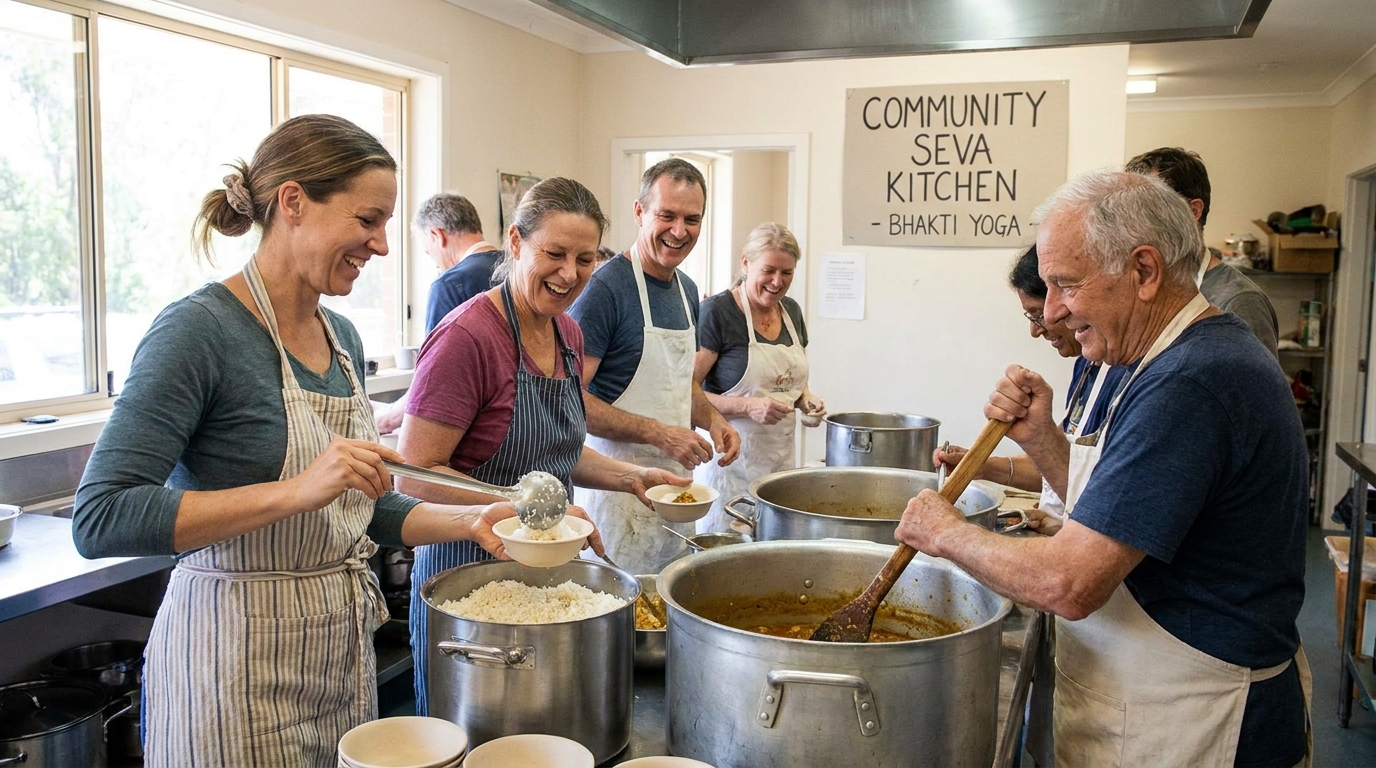
This is very practical. A parent feeding a child, a friend sitting with someone in grief, a volunteer serving food, a nurse caring for the sick, a teacher encouraging a student—all of these can become Bhakti when done with love and remembrance of God.
The Scriptural Foundation of Selfless Devotion
The path of Bhakti Yoga is ancient, yet beautifully alive today. Its teachings are found in sacred texts such as the Bhagavad Gita, the Srimad Bhagavatam, the Narada Bhakti Sutra, and the devotional songs and lives of saints.
These scriptures do not simply give philosophy. They show us how to live with a soft heart in a difficult world.
The Bhagavad Gita: Offering the Heart to God
The Bhagavad Gita is a sacred conversation between Krishna, the Divine speaker, and Arjuna, a warrior facing a painful moral crisis. Arjuna is confused, overwhelmed, and unsure of his duty. Krishna guides him through wisdom, meditation, action, and devotion.
One of the Gita’s most tender teachings appears when Krishna says:
“Always think of Me, become My devotee, worship Me, and offer your homage unto Me. Thus you will come to Me without fail.”
— Bhagavad Gita 18.65
This is not a command of fear. It is an invitation of love. Krishna is saying, “Bring your mind to Me. Bring your heart to Me. Let your life become connected with Me.”
For many of us, the mind runs in so many directions—toward worries, plans, regrets, and endless distractions. Bhakti gives the mind a loving center. We do not force the mind into emptiness. We gently bring it back to the Divine through remembrance, chanting, prayer, and service.
The Srimad Bhagavatam: Hearing and Remembering
The Srimad Bhagavatam, also called the Bhagavata Purana, is one of the great devotional scriptures of India. It celebrates the beauty of God, the lives of devotees, and the sweetness of loving relationship with the Divine.
A famous verse describes nine practices of devotion:
“Hearing and chanting about Lord Vishnu, remembering Him, serving His feet, worshiping Him, offering prayers, becoming His servant, becoming His friend, and surrendering everything to Him.”
— Srimad Bhagavatam 7.5.23
These nine practices are not rigid steps. They are doorways. Some people feel drawn to chanting. Others to prayer. Others to service. Others to study or quiet remembrance. Bhakti Yoga welcomes many temperaments, as long as the heart is turning toward love.
The Narada Bhakti Sutra: Love Beyond Selfish Desire
The Narada Bhakti Sutra is a short and profound text on devotion. It describes Bhakti as supreme love for God. It teaches that pure devotion is not motivated by personal gain, fame, or even liberation. It is love for love’s sake.
This may sound very high, and it is. But we can begin simply.
We might pray, “Dear God, I do not yet know how to love selflessly. Please teach me. Please purify my heart. Please help me serve with sincerity.”
That prayer itself is Bhakti.
Discover a wealth of knowledge by exploring our insightful articles. Our articles cover a wide range of topics to enhance your understanding. Stay informed and inspired by reading our latest articles.
The Practices That Awaken Selfless Love
Bhakti Yoga is not only a belief system. It is a lived path. Through daily practice, the heart becomes softer, the mind becomes clearer, and our love becomes less selfish.
The practices of Bhakti are simple enough for anyone to begin, yet deep enough to transform a lifetime.
Chanting the Holy Names
One of the most important practices in Bhakti Yoga is kirtan, which means devotional chanting, often done with music and community. Another form is japa, which means softly repeating a sacred mantra, often on prayer beads.
A mantra is a sacred sound or prayer that helps focus the mind and awaken the heart. In many Bhakti traditions, the Hare Krishna mantra is especially treasured:
Hare Krishna, Hare Krishna, Krishna Krishna, Hare Hare
Hare Rama, Hare Rama, Rama Rama, Hare Hare
“Hare” addresses the Divine energy of love. “Krishna” means the all-attractive Lord. “Rama” means the source of spiritual joy. Chanting is a way of calling out to God with humility and affection.
You do not need to be perfect to chant. You do not need a beautiful voice. You do not need to understand everything intellectually. The power of chanting is in sincerity. When we chant, we make space for God in the heart.
Chanting can be joyful and musical, or quiet and meditative. It can be done alone at home, in the car, on a walk, or together with others in community. Over time, the holy names become a shelter.
Prayer as Honest Relationship
Prayer in Bhakti Yoga is not only asking for things. It is relationship.
We can speak to God honestly: “I am grateful.” “I am confused.” “I am hurting.” “Please guide me.” “Please help me love.” “Please accept this offering.”
A humble prayer is never wasted. Even if we feel far from God, the act of turning toward the Divine begins to soften the distance.
Some people pray formally with traditional prayers. Others speak naturally from the heart. Both are welcome. Bhakti is not about performance. It is about sincerity.
Seva: Service Offered With Love
The Sanskrit word seva means service. In Bhakti Yoga, service is not merely doing good deeds. It is serving as an offering to God.
Seva may look like cooking a meal for others, cleaning a sacred space, helping at a community gathering, caring for someone in need, sharing wisdom, supporting spiritual projects, or simply being kind when no one is watching.
The spirit of seva is, “Let this be for You.”
This intention changes the heart. Work that once felt ordinary becomes sacred. Service that once fed the ego becomes a path of purification. We begin to serve not because we are superior, but because we are grateful.
Sacred Study and Reflection
Bhakti Yoga also encourages svadhyaya, or sacred study. Reading scriptures and teachings of saints gives the mind spiritual nourishment.
Even a few minutes each day with the Bhagavad Gita, Srimad Bhagavatam, or devotional poetry can reshape our inner life. We begin to hear a higher voice than the voice of anxiety or material pressure.
But sacred study is not meant only for gathering information. The real question is: “How can I live this today?”
If we read about compassion, can we practice patience with one person? If we read about surrender, can we release one worry into God’s hands? If we read about chanting, can we chant with attention for a few minutes?
In Bhakti, knowledge becomes meaningful when it leads to love.
Selfless Love in Daily Life
Many people wonder, “How can I practice Bhakti Yoga when my life is so busy?” This is a beautiful and honest question. The good news is that Bhakti Yoga is not limited to a particular lifestyle. It can be woven into daily life, moment by moment.
Selfless love grows through small, consistent choices.
Turning Work Into Worship
Whatever your work may be, it can become part of your spiritual path. Before beginning the day, you might pause and pray:
“May my words, thoughts, and actions today be an offering. Please help me serve with integrity, kindness, and devotion.”
This simple intention can transform the atmosphere of the day. We still do our responsibilities, but with a deeper purpose. We become less focused on personal credit and more focused on serving well.
This does not mean accepting injustice or unhealthy conditions. Bhakti includes wisdom. We can set boundaries, seek fairness, and care for our well-being while still cultivating a heart of devotion.
Practicing Love in Relationships
Relationships often reveal where our love is still mixed with ego. Family, friendship, marriage, community, and even conflict can become classrooms for Bhakti.
Selfless love may mean listening without interrupting. It may mean apologizing sincerely. It may mean forgiving gradually, while still maintaining healthy boundaries. It may mean serving someone without announcing it. It may mean seeing the soul beneath someone’s difficult behavior.
Bhakti does not make us passive. It makes us more compassionate and more courageous. Divine love helps us speak truth with kindness and act with humility.
Eating as an Offering
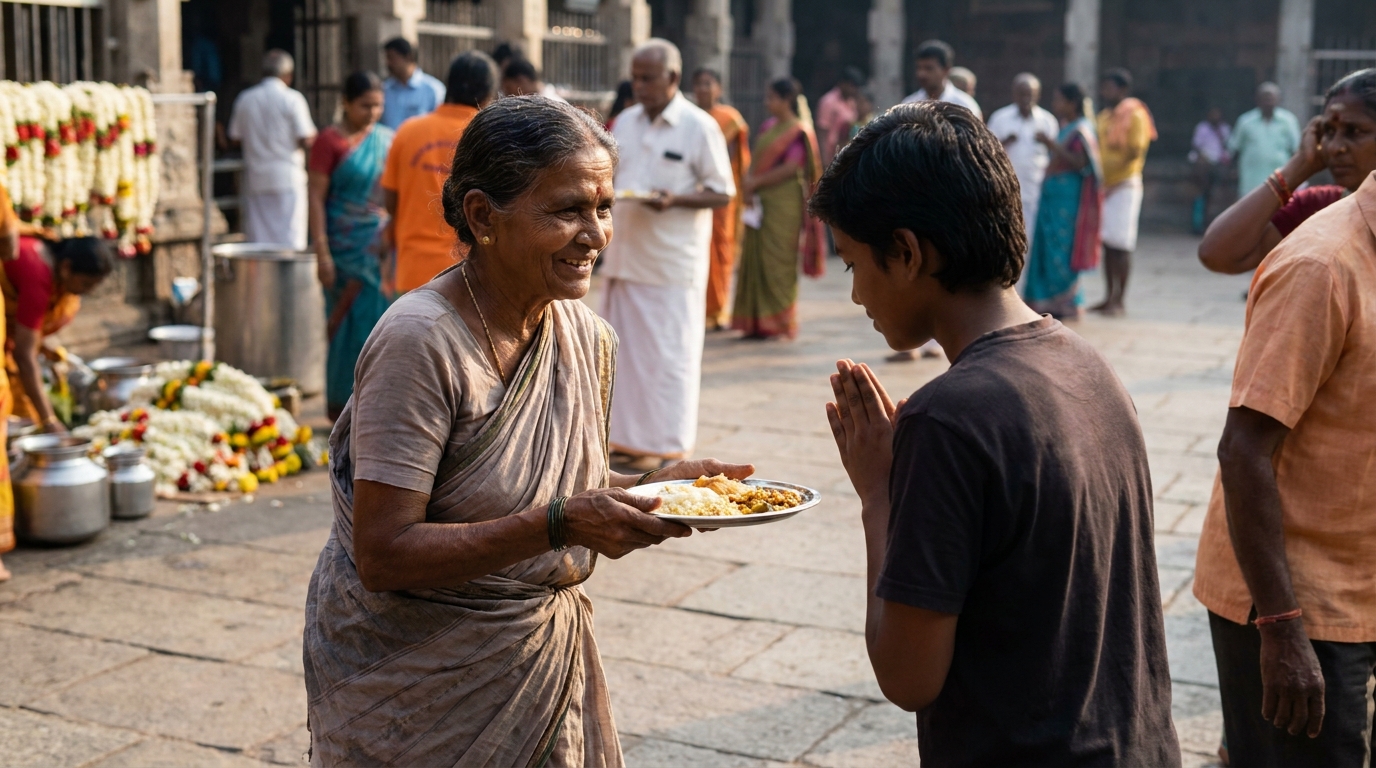
One simple and powerful Bhakti practice is offering food to God before eating. In Sanskrit, sanctified food is called prasadam, which means mercy or grace.
Before a meal, you can pause and say a prayer of gratitude: “Dear Lord, thank You for this food. May it be offered with love. May it nourish this body so I can serve.”
In many Bhakti traditions, food is prepared with devotion, offered to Krishna, and then shared as prasadam. This practice reminds us that life is sustained by grace. It also brings mindfulness, gratitude, and compassion into the act of eating.
Serving the World Without Losing the Heart
The world has much suffering. Sometimes caring people feel overwhelmed. Bhakti Yoga gives us a way to serve without becoming spiritually empty.
We remember that we are not the ultimate controller. We do our part with love, and we place the results in God’s hands. This is not indifference. It is humble service.
When service is rooted in devotion, it becomes sustainable. We are nourished by prayer, chanting, spiritual community, and remembrance. Then our activism, charity, caregiving, and daily kindness can flow from a deeper source.
The Inner Transformation of Bhakti Yoga
Selfless love does not usually appear all at once. It unfolds gradually, like a flower opening toward the sun. Bhakti Yoga honors the process.
At first, we may approach God with many desires. We may want peace, healing, clarity, protection, or relief from suffering. These prayers are valid. God is kind. The scriptures show that even turning toward the Divine with personal need can begin the journey.
Over time, something changes. We begin to want not only what God can give us, but God Himself. We begin to love the Divine presence, the holy names, the teachings, the devotees, and the opportunity to serve.
From Ego-Centered Living to God-Centered Living
The ego says, “I am the center.” Bhakti gently teaches, “God is the center, and I am loved as part of God’s family.”
This shift brings relief. We no longer have to carry the impossible burden of controlling everything. We can act sincerely, pray deeply, and trust more fully.
God-centered living does not make life dull or restrictive. It makes life meaningful. Joy becomes less dependent on outer circumstances. Even challenges become opportunities to remember God and grow in compassion.
Humility as a Doorway to Love
Humility is essential in Bhakti Yoga. But humility does not mean hating ourselves or thinking we are worthless. True humility means seeing clearly: everything we have is a gift, and every soul is worthy of respect.
A humble heart can receive grace. It can learn. It can apologize. It can serve. It can chant without pride and pray without pretending.
The great Bhakti saint Sri Chaitanya Mahaprabhu offered a famous teaching:
“One should chant the holy name of the Lord in a humble state of mind, thinking oneself lower than a blade of grass, more tolerant than a tree, free from all sense of false prestige, and ready to offer respect to others.”
This teaching is not meant to discourage us. It shows the mood in which chanting becomes deep. When the heart is humble and respectful, divine love can flow more freely.
Purification Through Practice
As we practice Bhakti, we may notice parts of ourselves we did not see before: impatience, pride, envy, selfish motives, or restlessness. This can feel uncomfortable, but it is actually grace.
Spiritual practice is like bringing light into a room. The light reveals dust, not to shame us, but so the room can be cleaned.
In Bhakti Yoga, purification happens through loving connection. We chant, pray, serve, study, and associate with sincere seekers. Gradually the heart becomes clearer. We become more forgiving, more grateful, and more able to love without demanding so much in return.
Community, Compassion, and the Bhakti Home
Bhakti Yoga is deeply personal, but it is not meant to be lonely. Spiritual community, or sanga, is a precious support. Sanga means association—keeping company with people who encourage our devotion and remind us of our higher purpose.
In a world that often celebrates competition, spiritual community helps us remember cooperation. In a culture that often rewards self-promotion, Bhakti community teaches service. In times of loneliness, it gives us a place to chant, learn, share, and grow.
Everyone Can Belong
A true Bhakti space welcomes sincere seekers from all backgrounds. You may come from a particular religious tradition, no religious tradition, or a place of uncertainty. You may be new to Sanskrit words, unsure how to chant, or carrying questions about God.
You are welcome.
Bhakti Yoga does not demand that we arrive perfect. It invites us to arrive honestly. The path begins wherever we are.
The soul’s longing for love is universal. Whether someone says “God,” “Krishna,” “the Divine,” “the Lord,” or uses another sacred name, the heart’s sincere turning toward the Highest is honored.
Serving Each Other as Sacred Practice
Community also gives us practical opportunities to grow in selfless love. It is easy to imagine ourselves loving when we are alone. It is more revealing to practice love with real people—people with different opinions, personalities, and needs.
In community, we learn patience. We learn to share. We learn to encourage others. We learn to receive help with gratitude. We learn that devotion is not only mystical feeling, but also washing dishes, setting up chairs, welcoming guests, cooking meals, and caring for one another.
These simple acts become beautiful when offered with devotion.
Obstacles on the Path of Selfless Love
Every sincere practitioner faces obstacles. This does not mean we are failing. It means we are walking a real path.
Bhakti Yoga gives us tools to keep going with humility and hope.
When the Heart Feels Dry
Sometimes chanting feels joyful. Other times it feels mechanical. Sometimes prayer flows easily. Other times we feel distant from God. This is natural.
In those moments, we can continue gently. Love matures through steadiness. We do not practice only when we feel inspired. We practice because the relationship matters.
Even a dry prayer can be sincere: “Dear Lord, I do not feel much today, but I am here. Please help me remember You.”
That honesty is precious.
When Selfish Motives Appear
We may notice that we want praise for our service. We may compare ourselves to others. We may want to be seen as spiritual. Again, this is human.
Rather than becoming discouraged, we can offer even these motives to God: “Please purify my intention. Help me serve for Your pleasure, not my ego.”
Bhakti is not about pretending to be pure. It is about becoming purified through sincere practice.
When Life Becomes Painful
Pain can test our faith. Loss, illness, disappointment, and uncertainty may make us wonder where God is.
Bhakti does not always give quick answers, but it gives shelter. We can cry before God. We can chant through tears. We can lean on spiritual community. We can remember that divine love is present even when life is difficult to understand.
Many saints have taught that suffering, when brought into prayer, can deepen the heart. It can make us more compassionate, more dependent on grace, and more eager for real spiritual shelter.
Simple Ways to Begin Practicing Bhakti Yoga Today
If you are new to Bhakti Yoga, you do not need to change everything at once. Begin with one sincere step. Small daily practices, done with love, are powerful.
Chant for a Few Minutes
Choose a sacred mantra, such as the Hare Krishna mantra, and chant for five minutes a day. You may chant aloud, softly, or in your mind. Listen to the sound. When the mind wanders, gently return.
The goal is not perfection. The goal is connection.
Offer One Daily Action
Pick one action each day and consciously offer it to God. It could be making tea, sending an email, caring for a child, studying, cooking, cleaning, or walking.
Before you begin, pause and say, “May this be an offering of love.”
This simple practice can gradually transform your whole life.
Read One Verse or Teaching
Spend a few minutes with a sacred text like the Bhagavad Gita. Read slowly. Ask, “What is one thing I can practice today?”
Spiritual wisdom becomes alive when it touches our choices.
Practice One Act of Hidden Service
Do something kind without seeking credit. Clean something, encourage someone, give quietly, pray for someone, or help in a way that no one may notice.
Hidden service is very purifying because it trains the heart to love beyond recognition.
End the Day With Gratitude
Before sleeping, remember three blessings from the day. Then offer the day to God: the good, the difficult, the unfinished, and the unknown.
Gratitude softens the heart and helps us rest in grace.
The Fruit of Divine Devotion
The fruit of Bhakti Yoga is love. Not just an idea of love, but a living, growing, transforming love.
As devotion deepens, we may find that our priorities change. We become less attracted to things that harden the heart. We become more drawn to simplicity, truthfulness, compassion, and remembrance of God.
We may still have challenges. We may still feel sadness, fear, or struggle. But we are no longer alone in the same way. The heart begins to trust that God is near.
Selfless love in Bhakti Yoga brings meaning to ordinary life. It teaches us that every moment can be connected with the Divine. Every relationship can become more sacred. Every difficulty can become a call to surrender. Every gift can become an offering.
The saints of Bhakti show us that divine devotion is not dry religion. It is a path of song, tears, joy, service, friendship, surrender, and deep belonging. It is the soul awakening to its eternal relationship with God.
And this path is open to everyone.
You do not need to be born into a certain culture. You do not need to know Sanskrit. You do not need to have a perfect past or a perfectly peaceful mind. You only need sincerity—the willingness to turn your heart toward God and take one step.
Maybe that step is chanting one mantra. Maybe it is offering one meal. Maybe it is praying honestly for the first time in years. Maybe it is joining a community gathering, serving someone with kindness, or reading one verse of scripture with an open heart.
Wherever you are, you are welcome. May your heart be encouraged. May your life become filled with devotion. May you discover, one sincere step at a time, the beautiful path of selfless love in Bhakti Yoga—the path that leads the soul home to God.
FAQs
What is Bhakti Yoga?
Bhakti Yoga is a spiritual path in Hinduism that emphasizes the practice of devotion and selfless love towards a personal god or goddess. It is considered one of the paths to spiritual realization and union with the divine.
How does selfless love play a role in Bhakti Yoga?
Selfless love is a central aspect of Bhakti Yoga, as practitioners aim to cultivate a deep and unconditional love for their chosen deity without expecting anything in return. This love is believed to purify the heart and lead to spiritual growth and union with the divine.
What are some examples of selfless love in Bhakti Yoga?
Examples of selfless love in Bhakti Yoga include acts of service, devotion, and surrender to the deity. Practitioners may engage in rituals, prayers, and meditation as expressions of their love and devotion, all done without attachment to personal gain.
How does selfless love benefit the practitioner in Bhakti Yoga?
Selfless love in Bhakti Yoga helps practitioners transcend their ego and selfish desires, leading to a deeper connection with the divine. It is believed to bring inner peace, joy, and a sense of fulfillment, ultimately leading to spiritual liberation.
Can anyone practice selfless love in Bhakti Yoga?
Yes, anyone can practice selfless love in Bhakti Yoga regardless of their background or beliefs. The key is to cultivate a genuine and sincere love for the deity of one’s choice, with the intention of selflessly serving and surrendering to the divine.

