

What Is Sangha?
Sangha means spiritual community. It is a Sanskrit word that can be translated as “association,” “assembly,” or “company.” In simple terms, sangha is the circle of people who help us remember what matters most.
In Bhakti Yoga, sangha is especially precious because the heart is shaped by the company it keeps. If we spend time with people who value prayer, compassion, chanting, humility, and service, those qualities naturally begin to awaken within us. Spiritual life becomes less like a lonely climb and more like a shared walk toward God.
The Bhakti tradition teaches that we are not meant to grow alone. We are relational beings. We learn love through relationship. We learn patience through relationship. We learn forgiveness through relationship. And through the loving association of sincere seekers, we begin to remember our eternal relationship with the Divine.
Sangha is not only a group of people in a room. It is a sacred environment. It is the feeling of being welcomed as you are, while also being lovingly encouraged to grow. It is the sound of voices chanting together. It is the quiet strength of praying beside others. It is the simple joy of serving, listening, sharing a meal, or speaking about God with an open heart.
In Bhakti Yoga, the path of devotion, sangha supports the practices that nourish the soul: chanting sacred names, hearing spiritual wisdom, offering prayer, serving others, and learning to live with love.
Why Sangha Matters on the Spiritual Path
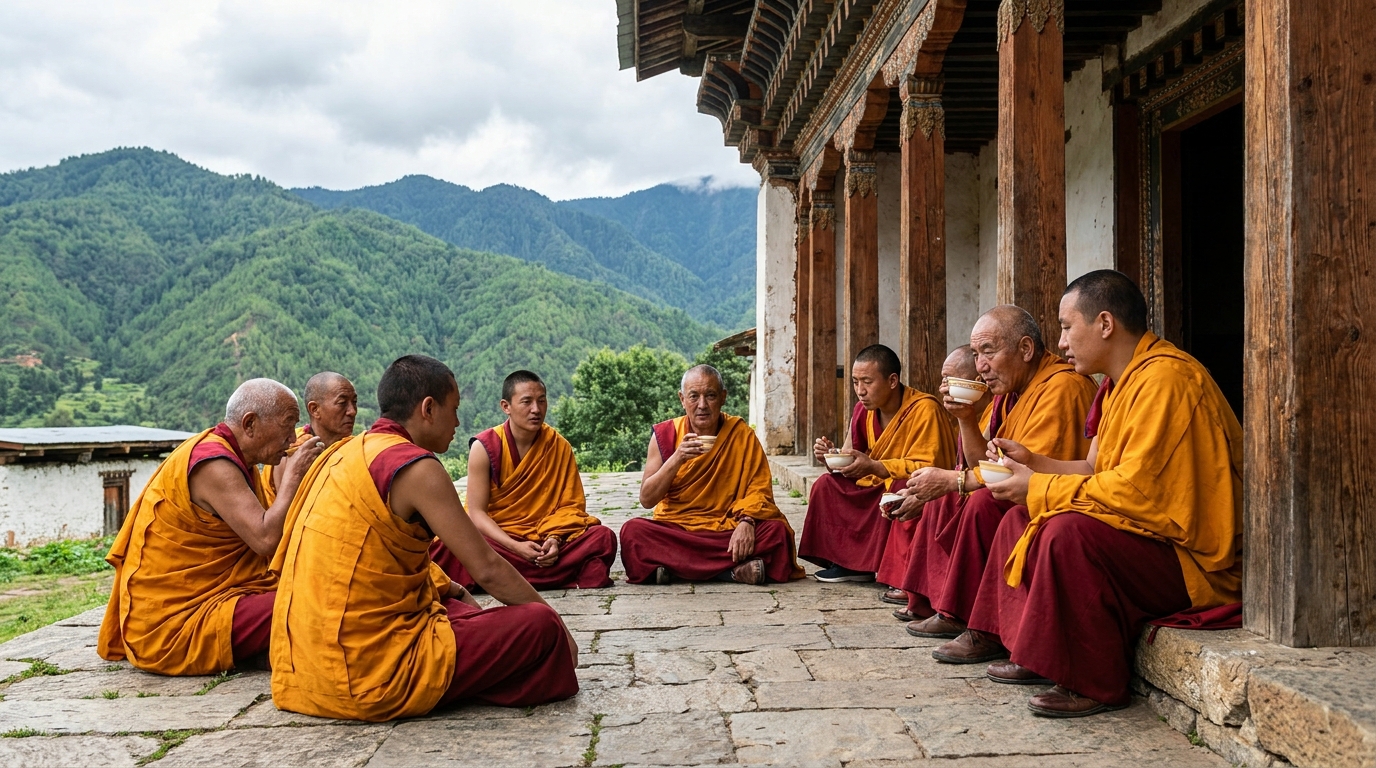
Spiritual life is beautiful, but it is not always easy. We may begin with inspiration, but then face distraction, doubt, loneliness, old habits, or emotional heaviness. Sangha helps us keep going.
When we are surrounded by sincere spiritual company, we remember our deeper purpose. We see that others are also trying, stumbling, learning, and returning to God again and again. This gives us courage.
Sangha Helps Us Remember Who We Are
Bhakti Yoga begins with a simple but life-changing understanding: we are not merely the body, mind, job title, social role, or past mistakes. We are souls, eternal spiritual beings, beloved by God.
The Bhagavad Gita, one of the central scriptures of Bhakti Yoga, explains that the self is eternal and cannot be destroyed by material changes. This teaching is comforting, but it can be hard to remember in daily life. When we are with devotees, or sincere practitioners, we are reminded gently: “You are more than what you are going through. You are held by grace.”
Sangha keeps spiritual truth alive in practical ways. A kind word, a shared chant, a thoughtful discussion, or a moment of prayer can bring us back to our real identity.
Sangha Strengthens Our Practice
Most people know the experience of starting a spiritual practice and then struggling to continue. We may want to chant, meditate, read scripture, or pray every day, but life becomes busy. Our attention scatters.
In sangha, practice becomes supported. We may gather for kirtan, which is devotional singing or chanting. We may hear from sacred texts. We may share reflections. We may take part in seva, or selfless service. These shared rhythms help spiritual life become steady.
Just as a small flame is protected when placed with other flames, our faith becomes brighter in spiritual company.
Sangha Softens the Heart
True sangha is not only about learning ideas. It is about becoming more loving.
In community, we are invited to listen, forgive, serve, and care. We encounter people with different personalities, cultures, histories, and perspectives. This can be challenging, but it is also a sacred training ground.
Bhakti Yoga is the yoga of love. Love becomes real when it is practiced. Sangha gives us opportunities to practice love in ordinary moments: washing dishes after a gathering, welcoming someone new, offering encouragement, sharing food, or choosing humility when misunderstandings arise.
Sangha in Bhakti Scriptures
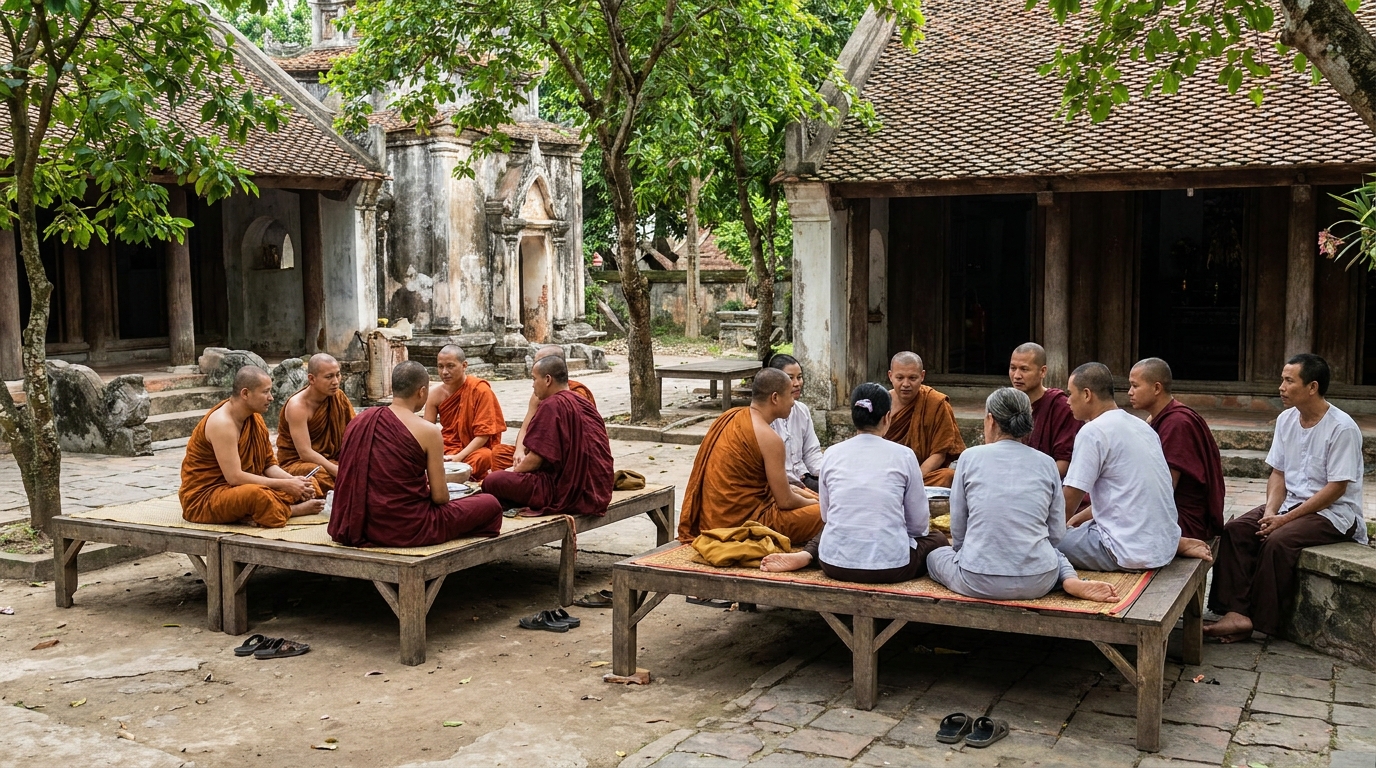
Bhakti scriptures speak again and again about the importance of spiritual association. These teachings are not meant to create separation from others, but to help us understand the power of influence and the beauty of uplifting company.
The Bhagavad Gita and Devotional Friendship
In the Bhagavad Gita, Lord Krishna speaks to Arjuna not as a distant authority, but as a friend and guide. Their conversation takes place in a moment of crisis, when Arjuna feels confused and overwhelmed. Krishna does not shame him. He teaches him with compassion, wisdom, and love.
This is a beautiful picture of spiritual sangha. We all need guidance that is both truthful and kind. We need friends who help us turn toward God when life feels heavy.
Krishna says in the Gita that those who are devoted to Him “enlighten one another” and find joy in speaking about Him. This does not mean we must speak in a religious or formal way all the time. It means that when God is at the center, our conversations can become nourishing. We can help each other see life through the lens of devotion, trust, and divine purpose.
The Srimad Bhagavatam and Hearing in Community
The Srimad Bhagavatam, a beloved Bhakti scripture, places great emphasis on hearing spiritual wisdom in the company of devotees. Hearing, or shravanam in Sanskrit, is one of the main practices of Bhakti Yoga.
Why is hearing so important? Because what we hear enters the heart. If we constantly hear messages of fear, comparison, anger, and material success, our consciousness becomes shaped by those messages. But when we hear about God’s qualities, the lives of saints, the nature of the soul, and the path of love, the heart becomes cleansed and uplifted.
The Bhagavatam describes spiritual hearing as a powerful medicine. In sangha, we receive this medicine together. We listen, reflect, ask questions, and allow sacred wisdom to become part of our daily choices.
The Power of Sadhu-Sanga
A key phrase in Bhakti tradition is sadhu-sanga. Sadhu means a saintly person or sincere devotee. Sanga means association. So sadhu-sanga means keeping company with those who are sincerely trying to live in devotion.
This does not mean we only associate with perfect people. In this world, everyone is growing. A sadhu is not necessarily someone with a special robe, title, or external appearance. A sadhu is someone whose heart is turned toward God, who inspires us to become more sincere, humble, compassionate, and prayerful.
The Bhakti tradition teaches that even a little sadhu-sanga can transform a life. Sometimes one conversation, one kirtan, one act of kindness, or one invitation to pray can open the heart in a way we never expected.
Discover a wealth of knowledge by exploring our insightful articles. Our articles cover a wide range of topics to enhance your understanding. Stay informed and inspired by reading our latest articles.
The Essential Qualities of Healthy Sangha
Not every group automatically becomes a healing spiritual community. Healthy sangha is cultivated with care. It grows through shared values, humility, respect, and sincere spiritual purpose.
A true Bhakti sangha should feel like a place where people can come closer to God, not a place where they are judged, pressured, or made to feel small.
Welcoming All Backgrounds
A healthy sangha welcomes people of all backgrounds. Bhakti Yoga is not limited by nationality, age, race, gender, social status, or previous religious experience. The soul is beyond all temporary labels, and God’s love is available to everyone.
Some people come from Hindu traditions. Some come from Christian, Muslim, Jewish, Buddhist, Sikh, Indigenous, or interfaith backgrounds. Some come with no religious background at all. Some are simply curious. All can be welcomed with warmth.
The heart of Bhakti is not about forcing identity. It is about inviting the soul into relationship with the Divine through love.
A welcoming sangha makes space for questions. It does not demand that everyone know the Sanskrit words, the songs, or the customs immediately. It explains things simply. It honors sincere seeking.
Humility and Service
Humility is one of the foundations of Bhakti Yoga. Humility does not mean thinking we are worthless. It means recognizing that everything sacred comes by grace. It means being willing to learn, to listen, and to serve.
Seva, or selfless service, is a central practice in sangha. Service may look like cooking, cleaning, setting up chairs, caring for guests, teaching children, leading chants, offering donations, helping with technology, or simply noticing someone who feels alone.
In Bhakti, service is not “lesser” than meditation. Service can be meditation when offered with love. Through seva, the heart becomes purified of selfishness and grows in devotion.
Honesty and Safety
Spiritual community should be a place of truth. This includes emotional honesty, ethical responsibility, and care for people’s well-being.
Healthy sangha does not hide harm or use spiritual language to avoid accountability. It does not pressure people to ignore their needs or boundaries. It honors the dignity of each person.
In a mature sangha, leaders serve rather than dominate. Questions are welcomed. Concerns are heard. People are encouraged to grow spiritually in a way that is steady, sincere, and grounded.
Bhakti is a path of love, and love must include safety, respect, and integrity.
Shared Spiritual Focus
Sangha is warm and relational, but it is more than social gathering. Its center is spiritual purpose.
In Bhakti sangha, that purpose is to remember God, serve God, and learn to love God and all beings. This shared focus gives the community depth. It keeps gatherings from becoming only entertainment, debate, or social networking.
When chanting, prayer, scripture, and service are at the center, sangha becomes a sacred space where the heart can awaken.
Core Practices of Bhakti Sangha
Bhakti Yoga is practical. It gives us simple ways to reconnect with God in daily life. Sangha helps these practices become joyful and sustainable.
Chanting the Holy Names
Chanting is one of the most loved practices in Bhakti Yoga. The Sanskrit word mantra means a sacred sound that helps free the mind. In Bhakti, mantras are often names of God. By chanting God’s names, we invite divine presence into the heart.
One well-known mantra is the maha-mantra, or “great mantra”:
Hare Krishna Hare Krishna
Krishna Krishna Hare Hare
Hare Rama Hare Rama
Rama Rama Hare Hare
Krishna means “the all-attractive one.” Rama means “the source of spiritual joy.” Hare is a call to the divine energy of God, often understood as a prayer to be engaged in loving service.
Chanting can be done softly alone, called japa, usually with prayer beads. It can also be sung together in kirtan, a call-and-response form of devotional music.
In sangha, kirtan becomes a shared offering. Some people sing loudly. Some listen quietly. Some clap, dance, or close their eyes. There is no need to perform. The heart of chanting is sincerity.
Hearing Sacred Wisdom
Bhakti sangha often includes talks or discussions from scriptures such as the Bhagavad Gita, Srimad Bhagavatam, or writings of great saints and teachers.
The purpose of hearing is not merely information. It is transformation. We hear so that our hearts may become softer, our choices wiser, and our relationship with God deeper.
A practical Bhakti discussion may explore questions like:
How can I remember God during a busy workday?
How do I deal with anger or envy?
What does it mean to serve my family spiritually?
How can I chant when my mind is restless?
How do I see others with compassion?
Good spiritual hearing connects timeless wisdom with real life.
Prayer From the Heart
Prayer is the soul speaking to God. It does not need to be fancy. It does not need to be in Sanskrit. It does not need to be perfect.
A simple prayer may be:
“Dear Lord, please guide me.”
“Please help me remember You.”
“Please let me serve with love.”
“Please help me forgive.”
“Please make my heart sincere.”
In sangha, prayer can be deeply healing. When people pray together, they remember they are not alone. They place their burdens at the feet of the Divine.
Bhakti encourages personal, loving prayer. God is not distant. God is near, listening, and present in the heart.
Sharing Prasadam
Prasadam means “mercy” or “grace.” In Bhakti, food prepared and offered to God with love becomes prasadam. Sharing prasadam is a beautiful part of sangha.
This practice teaches that even eating can become sacred. We cook with care, offer the food to God, and then receive it with gratitude.
A meal shared in spiritual community can nourish more than the body. It can create friendship, soften loneliness, and remind us that God’s grace is meant to be shared.
Serving Together
Serving together is one of the strongest ways to build sangha. When people join hands for a higher purpose, community deepens naturally.
This may include feeding others, hosting spiritual gatherings, supporting families, visiting the sick, cleaning the temple or home space, caring for the environment, or creating resources that help others grow spiritually.
In Bhakti, service is not only about what we do. It is about the consciousness we bring. Even a small act offered with love can become spiritually powerful.
How to Find or Build Sangha
Many people long for spiritual community but do not know where to begin. Some live near temples, yoga communities, or devotional centers. Others live far away. Some feel shy or unsure. Some have been hurt by communities in the past and are learning to trust again.
The good news is that sangha can begin with one sincere connection.
Start Where You Are
If you are new to Bhakti Yoga, begin gently. Attend a kirtan, join a scripture study, visit a temple, listen to an online class, or meet with one spiritually minded friend.
You do not have to understand everything right away. You do not have to dress a certain way or know every practice. Come with openness. Ask sincere questions. Notice whether the community encourages humility, kindness, service, and remembrance of God.
If you cannot attend in person, online sangha can also be helpful. While it may not replace the warmth of face-to-face connection, it can still support chanting, learning, and encouragement.
Look for Sincere Qualities
When seeking sangha, look for qualities that nourish spiritual growth:
People speak respectfully.
Scripture is shared with humility and practical relevance.
Newcomers are welcomed, not pressured.
Service is valued more than status.
Chanting and prayer are central.
Leaders show accountability and compassion.
Different backgrounds are treated with dignity.
The atmosphere inspires you to remember God.
No community is perfect. But a healthy sangha will be sincerely trying to grow in love and truth.
Build Small and Sincere
If there is no Bhakti community near you, you can begin small.
Invite one or two friends to chant together. Read a verse from the Bhagavad Gita and discuss how it applies to daily life. Cook a simple meal and offer it to God. Share reflections. Pray for one another. Serve someone in need.
A sangha does not need to be large to be sacred. If the intention is sincere, even a small gathering can become a place of grace.
Krishna says in the Bhagavad Gita that even a small offering, such as a leaf, flower, fruit, or water, is accepted when offered with devotion. In the same spirit, even a small community offering can be deeply meaningful when it is made with love.
Create Rhythm and Consistency
Community grows through regularity. A weekly or monthly gathering can create a steady spiritual rhythm.
For example, a simple Bhakti sangha gathering may include:
A short welcome
Kirtan or mantra chanting
A reading from scripture
Open discussion
Prayer
Prasadam
A small service project or plan
Consistency helps trust grow. Over time, people begin to feel spiritually at home.
Sangha in Daily Life
Sangha is not only something we attend. It is something we carry into our daily life.
The spirit of sangha can shape how we speak, how we work, how we parent, how we study, how we shop, how we rest, and how we serve. If Bhakti Yoga is the path of love, then every place can become an opportunity to practice devotion.
Family as Sangha
Family life can be a powerful place for spiritual growth. Not every family member may share the same practices or beliefs, and that is okay. Sangha in the home begins with respect, kindness, and sincerity.
You might create small devotional rhythms, such as offering food before meals, chanting softly in the morning, reading a verse together, or ending the day with gratitude.
If family members are not interested, you can still bring the spirit of Bhakti through patience, compassion, and prayer. Sometimes the most powerful teaching is a peaceful example.
Friendship as Sangha
Spiritual friendship is a great blessing. A true spiritual friend does not simply flatter us or agree with everything we do. They care about our soul. They encourage our growth. They remind us of God.
This does not mean conversations must always be serious. Joy, laughter, and honest companionship are all part of healthy friendship. But at the heart of spiritual friendship is a shared desire to become more loving, more truthful, and more devoted.
A simple message like “Have you chanted today?” or “I’m praying for you” can be a form of sangha.
Work as a Place of Service
Many people wonder how spiritual life fits into work. Bhakti Yoga teaches that work can become service when offered to God.
This does not mean we must speak about religion at work. It may mean doing our duties with integrity, treating coworkers with kindness, avoiding harmful speech, and offering the fruits of our labor for a higher purpose.
If we carry the consciousness of sangha into work, we become a source of steadiness and care. Our workplace may not be a formal spiritual community, but we can still act from devotion.
Digital Sangha With Discernment
In today’s world, many people connect through online classes, livestream kirtans, group chats, podcasts, and spiritual social media. These can be wonderful tools.
At the same time, digital spaces require discernment. Not everything labeled spiritual is nourishing. Notice how content affects your heart. Does it increase humility, compassion, and remembrance of God? Or does it increase pride, comparison, argument, or confusion?
Use digital sangha as a support, not a substitute for real inner practice. Let it bring you closer to chanting, prayer, service, and sincere community.
Common Challenges in Sangha
Because sangha includes people, it will include human imperfections. This does not mean spiritual community is false. It means we must approach it with maturity, compassion, and wisdom.
Feeling Like an Outsider
Many newcomers worry they do not belong. They may think, “I don’t know the songs,” “I can’t pronounce the mantras,” “I don’t understand the customs,” or “Everyone seems more spiritual than me.”
Please know: every practitioner began somewhere. No sincere step is small in God’s eyes.
A healthy Bhakti sangha should make space for beginners. If you feel shy, it is okay to observe. It is okay to ask questions. It is okay to participate at your own pace.
God sees the heart, not the performance.
Comparing Our Spiritual Progress
In sangha, we may see people who chant more, know more scripture, serve more visibly, or seem more advanced. This can inspire us, but it can also lead to comparison.
Bhakti is not a competition. Love cannot be measured by external display alone. Each soul has a unique journey.
The Bhagavad Gita encourages us to offer our own nature in service rather than imitate another person’s path. Your sincere prayer, your small daily effort, your honest struggle to remember God—these are valuable.
Instead of comparing, we can appreciate others and ask, “How can their example inspire my next step?”
Navigating Conflict
Conflict can happen in any community. People may misunderstand each other, make mistakes, or have different expectations. In Bhakti, conflict becomes an opportunity to practice humility, truthfulness, forgiveness, and careful speech.
This does not mean avoiding difficult conversations. It means approaching them with prayer and respect.
A simple devotional approach may be:
Pause before reacting.
Pray for guidance.
Listen carefully.
Speak honestly but gently.
Seek understanding.
Take responsibility for your part.
Protect healthy boundaries when needed.
Forgiveness is important, but so is wisdom. Bhakti does not ask us to accept harmful behavior. Love includes clarity.
Avoiding Spiritual Pride
Sometimes spiritual community can unintentionally feed pride. We may begin to think, “My group is better,” “My practice is higher,” or “I know more than others.”
This is dangerous for the heart. The purpose of sangha is to become humble lovers of God, not proud members of an exclusive circle.
The saints of Bhakti often prayed to become servants of the servants of God. This mood protects us. When we remember that devotion is a gift, we become gentle with others.
The Inner Sangha: Keeping Company With Saints Through Their Teachings
Even when we are physically alone, we can keep spiritual company through the words and lives of saints.
Bhakti history is filled with great souls who lived for love of God. Their songs, prayers, commentaries, and examples continue to guide us. When we read their teachings, sing their songs, or remember their lives, we enter their association.
This is a beautiful mercy for anyone who feels isolated. You may be sitting alone in your room, but when you open the Bhagavad Gita, chant the holy names, or read the prayers of a saint, you are not spiritually alone.
Scripture as Living Association
Bhakti scriptures are not only ancient books. They are living invitations. When approached with humility, they speak to the heart.
Reading even a few verses each day can transform our inner atmosphere. We begin to hear a different voice inside—not the voice of fear or ego, but the voice of wisdom and devotion.
A simple practice is to read one verse, pause, and ask:
What is God teaching me here?
How can I apply this today?
What quality can I practice?
How does this help me love more deeply?
This kind of reading becomes a form of sangha.
Remembering the Saints
The lives of saints show us what devotion looks like in action. Some saints expressed love through song. Some through scholarship. Some through service to the poor. Some through renunciation. Some through family life. Some through tireless teaching.
Their diversity reminds us that Bhakti can be lived in many ways. The essence is not external sameness. The essence is loving surrender to God.
When we feel weak, we can pray to be guided by those who walked before us.
How Sangha Deepens Love for God
The ultimate purpose of sangha is not only friendship, comfort, or belonging—though these are beautiful gifts. The deepest purpose is to awaken love for God.
In Sanskrit, pure love for God is called prema. Prema is not ordinary emotion. It is the soul’s natural love, fully awakened and offered to the Divine without selfish demand.
Bhakti Yoga teaches that this love is already within us, but it is covered by forgetfulness, fear, ego, and material desires. Sangha helps remove these coverings.
When we chant together, the heart opens.
When we hear scripture together, wisdom awakens.
When we serve together, selfishness softens.
When we pray together, trust grows.
When we honor prasadam together, gratitude deepens.
When we forgive and keep trying, love matures.
Sangha is like a garden for devotion. The holy names are the rain. Scripture is the sunlight. Service is the soil. Prayer is the fragrance. And the community helps protect the tender plant of bhakti as it grows.
Practical Ways to Begin Today
If your heart is drawn to sangha, you do not need to wait for the perfect moment. You can begin today with one small, sincere step.
Chant One Mantra
Set aside five minutes and chant a name of God. You may chant the maha-mantra, or you may simply repeat a prayerful name that is meaningful to you.
Do not worry if the mind wanders. Gently return. The practice is not about perfection. It is about relationship.
Reach Out to One Spiritual Friend
Send a message to someone who inspires your faith. Ask how they are doing. Share something you are grateful for. Invite them to chant, pray, or read with you.
Sangha often begins with a simple act of connection.
Attend One Gathering
If there is a Bhakti center, temple, kirtan, or spiritual group near you, consider attending one gathering. Come as you are. Listen. Observe. Participate as much as feels natural.
Let your heart experience the power of devotional community.
Offer One Act of Service
Choose one small act of seva. Help someone. Cook a meal. Clean a sacred space. Donate. Encourage a friend. Volunteer. Offer your work to God.
Service brings spiritual life out of theory and into the hands.
Read One Verse
Open the Bhagavad Gita or another sacred text and read one verse slowly. Let it speak to you. Ask how it can guide your day.
Even one verse can become a doorway.
Everyone Is Welcome in the Circle of Devotion
Sangha is one of the great gifts of the spiritual path. It reminds us that we do not have to walk alone. We can gather in humility, chant together, serve together, learn together, and grow together.
Whether you are new to Bhakti Yoga or have practiced for many years, whether you know Sanskrit or have never heard a mantra before, whether your faith feels strong or uncertain, there is room for you.
God is not looking for polished performance. God receives sincerity. A small step taken with a genuine heart can open the way to deep transformation.
May your life be blessed with uplifting company. May you find friends who help you remember your soul. May your home, your work, and your relationships become places of devotion. And may your heart feel encouraged to take one sincere step toward God today.
Everyone is welcome. Come as you are, and take one loving step.
FAQs
What is Sangha?
Sangha is a Sanskrit term that refers to a community of practitioners who come together to support each other in their spiritual journey.
What is the significance of Sangha in Buddhism?
In Buddhism, Sangha is one of the Three Jewels (Buddha, Dharma, Sangha) and plays a crucial role in providing spiritual guidance, support, and a sense of community for practitioners.
What are the different types of Sangha?
There are two main types of Sangha in Buddhism: the monastic Sangha, which consists of ordained monks and nuns, and the lay Sangha, which includes lay practitioners who support and participate in the teachings and practices of Buddhism.
How can one become a part of a Sangha?
To become a part of a Sangha, one can attend meditation sessions, Dharma talks, retreats, and other community events organized by Buddhist centers or temples. It is also possible to formally take refuge in the Three Jewels and become a member of the Sangha.
What are the benefits of being part of a Sangha?
Being part of a Sangha provides practitioners with a sense of belonging, support, and guidance on their spiritual path. It also offers opportunities for learning, growth, and deepening one’s practice through the collective wisdom and experience of the community.

