

Food is one of the most universal languages of love. Every culture has its sacred meals, family recipes, harvest celebrations, and simple moments where people gather around a plate and feel cared for. In Bhakti Yoga, this ordinary daily act becomes a beautiful doorway into spiritual life through sanctified food.
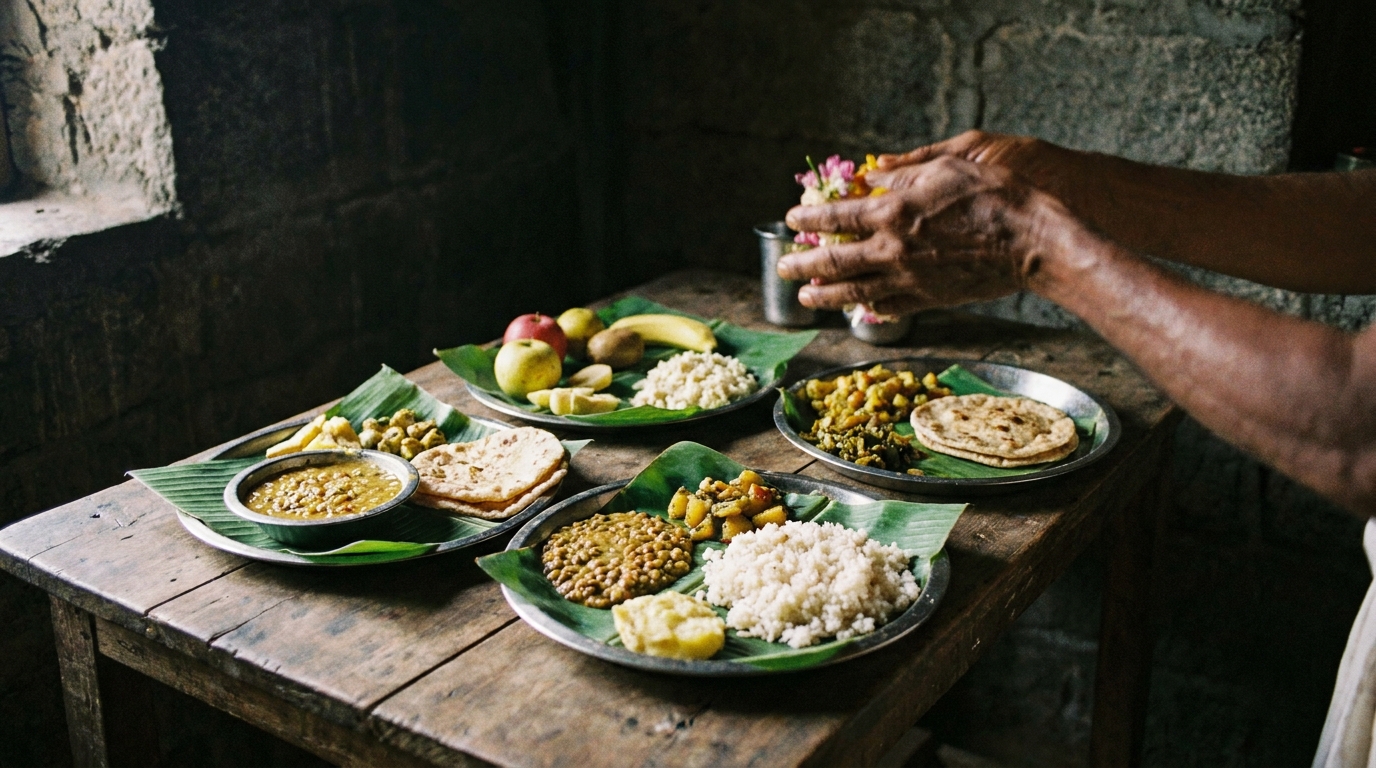
Sanctified food is food prepared and offered with devotion to God. In the Bhakti tradition, it is often called prasadam, a Sanskrit word meaning “mercy” or “grace.” Prasadam is not just vegetarian food, temple food, or “blessed food” in a vague sense. It is food that has been lovingly offered to the Supreme Person—known in the Bhakti scriptures by many names, including Krishna, Rama, Vishnu, and Hari—and then received as a sacred gift.
This guide is for everyone: longtime practitioners, curious seekers, people of faith from different traditions, and anyone who wants to bring more gratitude, peace, and love into daily eating. You do not need to be perfect to begin. You do not need to know Sanskrit, memorize rituals, or have a special kitchen. You can start with sincerity, a simple prayer, and a willing heart.
Sanctified food is food that has been prepared with care and offered to God before being eaten. In Bhakti Yoga, this practice transforms eating from a personal act into a loving exchange.
The Meaning of Prasadam
The Sanskrit word prasadam means “mercy,” “grace,” or “kindness.” When food is offered to God with devotion, it becomes prasadam—food touched by divine grace.
Bhakti scriptures explain that God is complete and does not need anything from us. Still, out of love, He accepts what we offer. In the Bhagavad-gita, Krishna says:
“If one offers Me with love and devotion a leaf, a flower, fruit, or water, I will accept it.”
—Bhagavad-gita 9.26
This verse is simple and profound. Krishna does not ask for wealth, status, or complicated offerings. He asks for love and devotion. A leaf, a flower, fruit, or water offered with love becomes spiritually powerful.
More Than Food: A Relationship
Sanctified food is not mainly about rules. It is about relationship.
When we cook for someone we love, we naturally think, “Will they like this? Is it made nicely? Will this nourish them?” In the same way, Bhakti Yoga invites us to cook for God with affection. We may think, “Krishna, please accept this. I am offering this with love.”
After the offering, we receive the food back as prasadam. This teaches us humility: “This is not mine. It is a gift.” It also teaches gratitude: “God is sustaining me.”
A Universal Spiritual Principle
Many traditions practice some form of blessing food, giving thanks, or eating mindfully. Sanctified food in Bhakti Yoga shares that universal spirit while offering a distinct practice: preparing food specifically for God’s pleasure and then receiving it as divine mercy.
Whether someone comes from a Hindu, Christian, Muslim, Jewish, Buddhist, Sikh, interfaith, or no formal religious background, the heart of the practice is understandable: love, gratitude, purity, and remembrance of the Divine.
Why Sanctified Food Matters in Bhakti Yoga
Bhakti Yoga is the path of loving devotion. It includes chanting sacred names, prayer, meditation, worship, study, service, and compassionate living. Sanctified food is central because it brings devotion into something we do every day.
Eating Becomes Spiritual Practice
We all have to eat. Bhakti Yoga gently asks: What if eating could help us remember God? What if our kitchen could become a place of prayer? What if meals could nourish not only the body but also the heart?
When we prepare and offer food, the ordinary becomes sacred. The stove becomes an altar of service. The spoon becomes an instrument of devotion. The meal becomes a moment of connection.
Food Affects Consciousness
Bhakti teachings explain that food carries subtle influence. The consciousness of the person cooking, the ingredients used, and the intention behind the meal all affect the mind and heart.
Most of us have felt this. Food made with love feels different from food made with anger or carelessness. A meal shared in peace feels different from one eaten in anxiety. Sanctified food is prepared with a peaceful, prayerful mood, helping the mind become calmer and more open to spiritual growth.
Receiving Instead of Consuming
Modern life often trains us to consume: consume food, entertainment, information, and even relationships. Prasadam teaches a different posture: receiving.
When we honor sanctified food, we are not just “eating.” We are receiving mercy. This shift softens the heart. It reminds us that life is a gift and that nourishment ultimately comes from God.
A Practice of Equality and Community
Prasadam has a special place in Bhakti communities because it is shared freely and joyfully. In temples, homes, gatherings, festivals, and outreach programs, sanctified food brings people together.
No matter a person’s background, wealth, education, or social position, everyone can sit together and receive prasadam. This reflects a deep spiritual truth: every living being is loved by God and worthy of compassion.
The Scriptural Foundation of Sanctified Food
Bhakti Yoga is not a modern invention. It is rooted in sacred texts such as the Bhagavad-gita, Srimad-Bhagavatam, and other devotional scriptures. These texts help us understand why offering food is such a meaningful spiritual practice.
Bhagavad-gita: Offering With Love
The Bhagavad-gita 9.26, mentioned earlier, is one of the most important verses about sanctified food:
“If one offers Me with love and devotion a leaf, a flower, fruit, or water, I will accept it.”
The key words are “with love and devotion.” The offering does not need to be elaborate. A simple piece of fruit offered sincerely may be more spiritually meaningful than a grand feast offered for pride or display.
This is deeply encouraging. It means everyone can participate. A student in a small apartment, a parent cooking for children, a busy worker, or an elderly person with limited means can all make offerings pleasing to God.
Bhagavad-gita: Food as Sacrifice
In the Bhagavad-gita 3.13, Krishna explains that those who eat food first offered in sacrifice are freed from reactions, while those who cook only for themselves partake of karma, or the results of self-centered action.
The word “sacrifice” can sound heavy, but in Bhakti it means offering something in love. When food is prepared only for personal enjoyment, it can deepen the sense of “I” and “mine.” But when it is offered to God, the meal becomes purified. It becomes part of a loving exchange, not just a private act of consumption.
Srimad-Bhagavatam: Devotion Over External Show
The Srimad-Bhagavatam repeatedly teaches that God is most pleased by sincere devotion. External arrangements may be simple or grand, but the heart is essential.
This is comforting for anyone beginning the practice. You may not know all the mantras. Your kitchen may be small. Your offering plate may be ordinary. But if your intention is, “Dear Lord, please accept this,” that sincerity is precious.
The Principle of Ahimsa
Sanctified food in the Bhakti tradition is vegetarian, and in many lineages it also avoids eggs, onions, garlic, and certain stimulants. The deeper principle is ahimsa, a Sanskrit word meaning “nonviolence” or “not causing harm.”
Bhakti Yoga teaches that animals are also souls, beloved children of God. By offering plant-based foods—grains, fruits, vegetables, legumes, nuts, seeds, and dairy when obtained responsibly—we try to live with compassion and reduce unnecessary harm.
Check out our latest articles at https://thebhaktihouse.org/blog.
How to Prepare Sanctified Food at Home

You do not need to wait until you visit a temple to receive prasadam. You can begin at home, in your own kitchen, with a simple offering.
Start With Cleanliness
Cleanliness supports a peaceful mind. Before cooking, wash your hands, clean the cooking area, and use fresh ingredients when possible.
This is not about harsh perfectionism. It is about respect. Just as we would tidy the home before welcoming a beloved guest, we clean the kitchen because we are cooking for God.
Choose Offerable Ingredients
In the Bhakti tradition, foods offered to Krishna are vegetarian and prepared without meat, fish, or eggs. Many practitioners also avoid onions, garlic, mushrooms, alcohol, and excessive stimulants because these can agitate the mind or are not traditionally offered in temple worship.
Offerable foods commonly include:
- Fresh fruits and vegetables
- Rice, wheat, oats, and other grains
- Lentils, beans, and dals
- Nuts and seeds
- Milk, yogurt, butter, ghee, and paneer, when sourced with care
- Herbs and mild spices
- Natural sweeteners like jaggery, honey, or sugar
- Water, juices, and herbal drinks
If this feels new, begin simply. Offer fruit, water, rice, bread, or a simple vegetable dish. Bhakti grows through practice, not pressure.
Cook With a Prayerful Mood
While cooking, try to keep a peaceful and devotional atmosphere. You may chant softly, play kirtan, listen to sacred music, or repeat a simple prayer.
Kirtan means chanting God’s names, often in call-and-response singing. Many people chant the maha-mantra:
Hare Krishna, Hare Krishna, Krishna Krishna, Hare Hare
Hare Rama, Hare Rama, Rama Rama, Hare Hare
“Hare” calls upon the divine energy of the Lord. “Krishna” means the all-attractive one. “Rama” means the source of spiritual joy. This mantra is a prayer: “O Lord, please engage me in Your loving service.”
If you are from another faith background, you may pray in the language of your heart. The essence is remembrance and love.
Avoid Tasting Before Offering
Traditionally, the cook does not taste the food before it is offered. This is because the meal is being prepared first for God’s pleasure. After the offering, everyone may taste and enjoy the prasadam.
This can be a beautiful discipline. It teaches us to place God at the center before our own senses. Practically, as you cook more, you learn to season by experience. And if something is imperfect, offer it humbly anyway. God sees the intention.
Make a Simple Offering Plate
Place a small portion of each preparation on a clean plate or bowl used for offerings if possible. Add a cup of water.
Set the plate before a picture or sacred image of Krishna, Vishnu, Rama, or the form of God you worship. If you do not have a sacred image, you can still place the plate in a clean space and offer with sincere prayer.
Offer a Simple Prayer
You can pray in your own words:
“Dear Lord, this food belongs to You. I have prepared it with whatever love I have. Please accept this offering and bless me to serve You and all beings with a grateful heart.”
Many Bhakti practitioners also recite traditional prayers to the spiritual teacher, Lord Chaitanya, and Krishna. If you do not know them yet, do not feel discouraged. Begin with sincerity. Over time, you may learn the traditional mantras as part of your spiritual growth.
Wait and Then Serve
After offering, wait a few minutes. Then transfer the offered food from the offering plate back into the serving dishes or set it aside respectfully. Now the food is prasadam.
Serve it with gratitude. Try not to waste it. Honor it slowly, remembering that it is sacred.
How to Honor Prasadam
In Bhakti Yoga, we often say “honor prasadam” rather than “eat prasadam.” This language reminds us that sanctified food is not ordinary. It is a gift to be received with reverence and joy.
Begin With Gratitude
Before eating, pause. You may offer a short prayer:
“Thank You, Lord, for this prasadam. May it purify my heart and give me strength to love and serve.”
Even a few seconds of gratitude can change the experience of a meal. Instead of rushing, we become present.
Eat Mindfully and Peacefully
Try to eat in a calm environment when possible. Put away distractions for a few minutes. Notice the colors, aromas, and flavors. Remember the kindness of God, the work of nature, the farmers, the cooks, and everyone involved.
This kind of mindful eating is not separate from devotion. It is devotion expressed through attention.
Share With Others
Prasadam becomes even sweeter when shared. You can offer sanctified food to family, friends, neighbors, coworkers, or guests.
You do not need to preach heavily. A warm plate of prasadam often speaks directly to the heart. Many people first experience Bhakti not through philosophy, but through the taste of a lovingly prepared meal.
Treat Prasadam With Respect
Because prasadam is sacred, it should be treated respectfully. Avoid wasting it. Store leftovers properly. If some must be discarded, do so respectfully rather than carelessly.
This helps us cultivate a heart of gratitude and responsibility.
Sanctified Food and Daily Spiritual Growth
The practice of sanctified food is simple, but its effects can be deep. Over time, it can reshape our relationship with food, our home, our habits, and our heart.
It Builds Consistency
Spiritual life grows through steady, sincere practice. Offering food gives us a daily rhythm of remembrance. Even if we feel busy or distracted, we can pause before a meal and reconnect with God.
This is one reason Bhakti Yoga is so practical. It does not ask us to abandon life. It teaches us to spiritualize life.
It Purifies Desire
Much of our struggle in life comes from uncontrolled desire—wanting, craving, consuming, comparing. Sanctified food gently purifies desire by teaching us to enjoy in connection with God.
Bhakti does not reject pleasure. Rather, it transforms pleasure. We learn to enjoy what is offered, what is sacred, what nourishes devotion. This brings a deeper happiness than restless indulgence.
It Supports Compassionate Living
Preparing sanctified food encourages us to think about the origins of what we eat. Was it obtained with kindness? Does it support health, clarity, and compassion? Does it honor the earth and other living beings?
These questions are not meant to create guilt. They are invitations to grow in love. Every sincere improvement matters.
It Makes the Home Sacred
A home where food is offered becomes spiritually nourished. Children may learn gratitude. Guests may feel peace. Couples and families may find a shared spiritual practice. Even a person living alone may feel less alone, knowing that each meal is an offering and a meeting with God.
In this way, the kitchen becomes a small temple, and daily life becomes woven with devotion.
Common Questions About Sanctified Food
Many people have thoughtful questions when they first hear about prasadam. Questions are welcome in Bhakti. Sincere inquiry is part of spiritual growth.
Do I Have to Be Hindu to Offer Food?
No. Bhakti Yoga is a path of the soul, and the soul is beyond labels. While the practice comes from the Vedic and Vaishnava traditions, anyone can offer food to God with sincerity.
If you feel drawn to Krishna, you can offer to Krishna. If you understand God by another name, begin with the name that awakens love and reverence in your heart. Over time, you may naturally learn more about the Bhakti understanding of God’s personal nature.
What If I Make a Mistake?
Mistakes are part of learning. Perhaps you forget an ingredient, taste by habit, become distracted, or feel your prayer is awkward. Do not give up.
Bhakti is not mechanical perfection. It is sincere turning toward God. Learn gently and continue.
Can I Offer Store-Bought Food?
Ideally, food is prepared fresh at home with devotion. However, if you are beginning, traveling, ill, or in difficult circumstances, you can offer simple store-bought vegetarian items such as fruit, bread, nuts, or packaged foods that contain offerable ingredients.
Read labels carefully if you are trying to follow traditional standards. Avoid meat, fish, eggs, alcohol, and ingredients that are not suitable for offering.
Can I Offer Food at a Restaurant?
This is a common question. Food cooked in restaurants is usually not prepared with devotional intention and may contain ingredients that are not offerable. Still, you can pray before eating and ask God to guide you. When possible, choose vegetarian or vegan food and maintain gratitude.
For a formal offering of prasadam, cooking at home or receiving food from a temple or devotee kitchen is best.
Why No Meat, Fish, or Eggs?
Bhakti Yoga sees all living beings as souls. Animals are not objects; they are conscious beings with their own journey. Offering vegetarian food reflects compassion and nonviolence.
Also, Krishna specifically mentions offerings such as leaf, flower, fruit, and water in the Bhagavad-gita. The devotional tradition understands that God accepts foods from the plant and dairy categories when offered with love and prepared according to scriptural guidance.
What About Health Needs and Allergies?
Please care for your body responsibly. If you have allergies, medical conditions, or dietary restrictions, you can still offer food that is appropriate for you. Bhakti is compassionate and practical.
A gluten-free meal, simple fruit, steamed vegetables, lentils, or another suitable dish can all be offered with devotion.
Sanctified Food in Community Life
Prasadam is not only a personal practice. It is also a powerful expression of community, hospitality, and service.
Temple Feasts
Many Bhakti temples offer Sunday feasts or festival meals where visitors can chant, hear spiritual wisdom, and enjoy prasadam together. These gatherings are often warm, lively, and welcoming.
A temple feast is not merely a social meal. It is a spiritual experience. The food has been offered to Krishna, and the sharing of it helps create friendship, joy, and unity.
Food Distribution as Service
Sharing prasadam is a form of seva, a Sanskrit word meaning “service.” Seva is service offered with devotion, without selfish expectation.
Around the world, Bhakti communities distribute sanctified vegetarian meals to students, families, unhoused neighbors, festival-goers, and anyone in need. This service nourishes both body and soul.
The mood is simple: “God has given to us, so let us share with others.”
Hospitality as Devotion
In Bhakti culture, guests are honored. Offering prasadam to a guest is a sacred act of care. Even a small plate of fruit or a cup of tea offered first to God can become a meaningful expression of love.
You do not need a large home or fancy cooking skills. Hospitality begins with the heart.
Simple Ways to Begin Today
If sanctified food feels inspiring but a little unfamiliar, start small. The path of Bhakti is walked one sincere step at a time.
Offer Water
Place a cup of clean water before God and say, “Please accept this.” After a few moments, drink it with gratitude. This is a simple beginning.
Offer Fruit
Wash a piece of fruit, place it on a clean plate, and offer it with prayer. This takes only a few minutes and can become a daily practice.
Offer One Meal a Week
Choose one day each week to cook a vegetarian meal and offer it. As your confidence grows, you may offer more meals.
Chant While Cooking
Play kirtan or softly chant the maha-mantra as you cook. Let the sound of God’s names create a peaceful atmosphere in your kitchen.
Learn One Traditional Prayer
If you feel ready, learn a simple offering prayer from the Bhakti tradition. Learning gradually can deepen your connection and help you feel part of a living lineage.
Visit a Bhakti Gathering
Come to a kirtan, class, festival, or Sunday feast. Receiving prasadam in community can help you understand the practice not just with the mind, but with the heart.
The Heart of Sanctified Food
Sanctified food is a complete spiritual practice hidden inside daily life. It includes love, prayer, chanting, service, humility, gratitude, compassion, and remembrance of God.
Through prasadam, we learn that spiritual life is not far away. It can begin in the kitchen. It can begin with a piece of fruit. It can begin with a whispered prayer.
In Bhakti Yoga, God is not distant or impersonal. He is the loving source of all life, and He kindly accepts even the simplest offering when it is given with devotion. Then He gives it back to us as mercy.
This is the beauty of prasadam: we offer love, and we receive love.
Wherever you are on your spiritual journey, you are welcome. Whether you are confident or questioning, experienced or just beginning, your sincere step matters. Today, you might offer a cup of water, chant one sacred name, say one honest prayer, cook one meal with love, or share prasadam with someone who needs kindness. Everyone is welcome to take one sincere step toward God.
FAQs
What is sanctified food?
Sanctified food refers to food that has been blessed or consecrated for religious or spiritual purposes. It is often considered to be holy or sacred and is used in various religious rituals and ceremonies.
Which religions practice sanctifying food?
Many religions practice the sanctification of food, including Christianity, Judaism, Islam, Hinduism, and Buddhism. Each religion has its own specific rituals and practices for sanctifying food.
What are some examples of sanctified food?
Examples of sanctified food include sacramental bread and wine in Christianity, kosher food in Judaism, halal food in Islam, prasadam in Hinduism, and offerings of food to monks in Buddhism.
What is the significance of sanctified food in religious practices?
Sanctified food is believed to have spiritual or divine qualities and is often used to symbolize the presence of the divine or to establish a connection with the divine. It is also used to express gratitude and devotion to the divine.
How is sanctified food prepared and consumed?
The preparation and consumption of sanctified food vary depending on the specific religious tradition. In some cases, the food is prepared by religious leaders or individuals with specific training, and it is consumed as part of religious rituals or ceremonies. In other cases, the food may be offered to deities or spiritual beings as a form of worship.

